Melike Kara
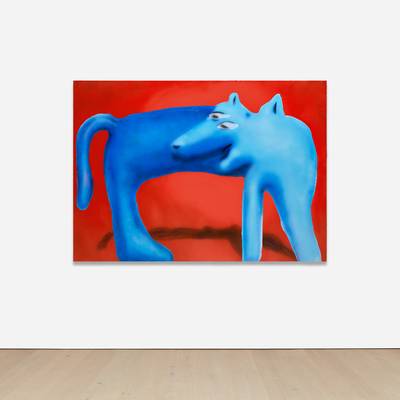
Melike Kara Paints Memory Into Living Color
Artist Spotlight · The Collection Editorial
In recent seasons, Melike Kara has moved quietly but decisively into the front rank of European painting, her work appearing with increasing frequency in serious private collections and institutional discussions alike. Her Berlin gallery, Peres Projects, has positioned her alongside some of the most compelling figurative voices of her generation, and the response from curators and collectors has been one of sustained, deepening attention. There is a growing sense in the art world that Kara is not merely a promising painter to watch but an artist whose body of work already carries genuine weight, offering something rare in contemporary painting: a visual language that is entirely her own. Kara was born in 1985, the child of Kurdish heritage navigating life in Germany, and that particular experience of between ness has never left her work.
Melike Kara
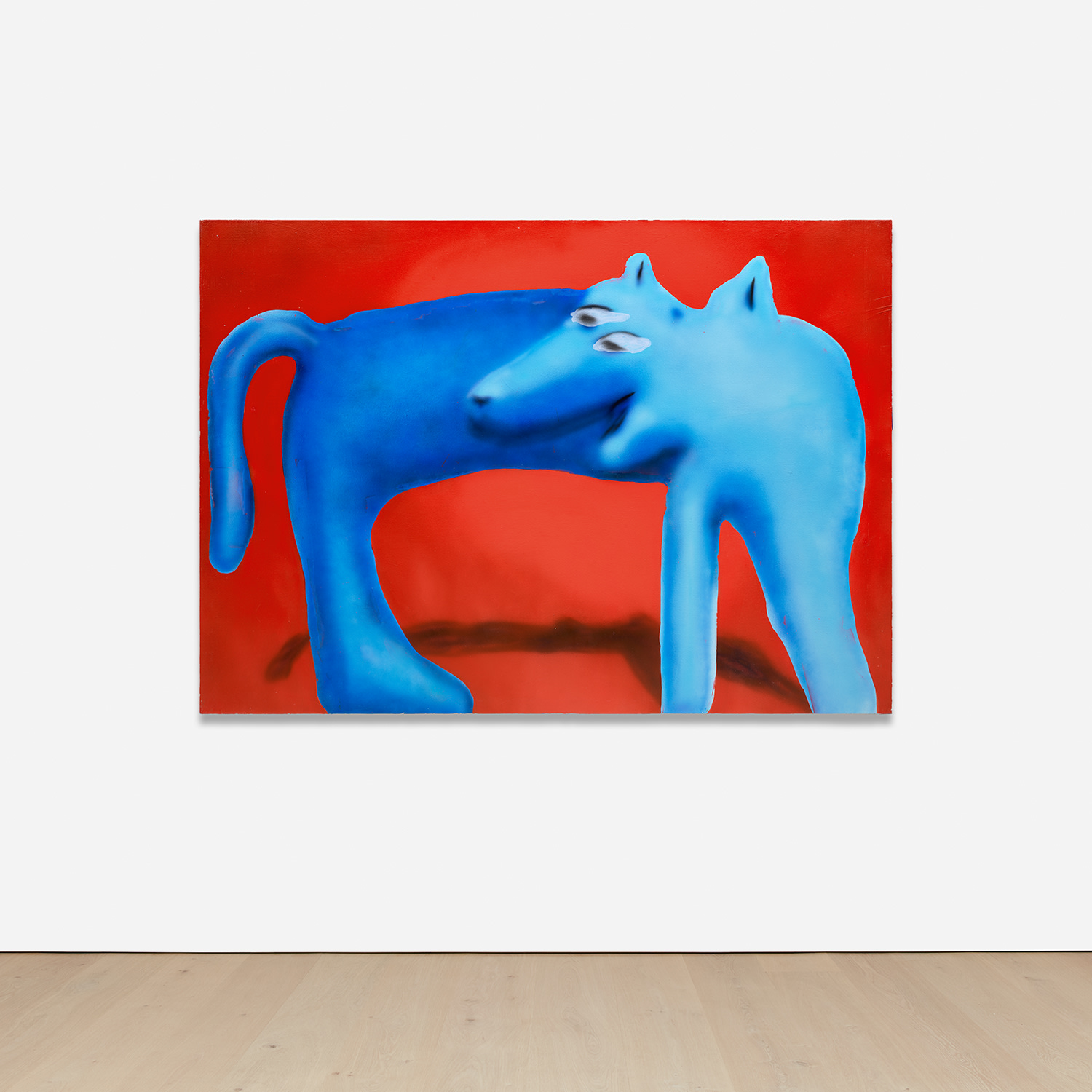
all vanish, 2017
Growing up German Turkish, she inhabited the layered, sometimes tender and sometimes difficult space between cultures, between languages, between the country of her family's roots and the country of her upbringing. These formative tensions did not produce an art of grievance or polemic. Instead, they produced something far more durable: a painterly practice rooted in the poetics of memory, belonging, and the way identity is woven, like fabric, from many different threads at once. Kara trained as a painter with seriousness and rigor, and her development reflects a genuine engagement with the history of figurative painting while refusing to be contained by it.
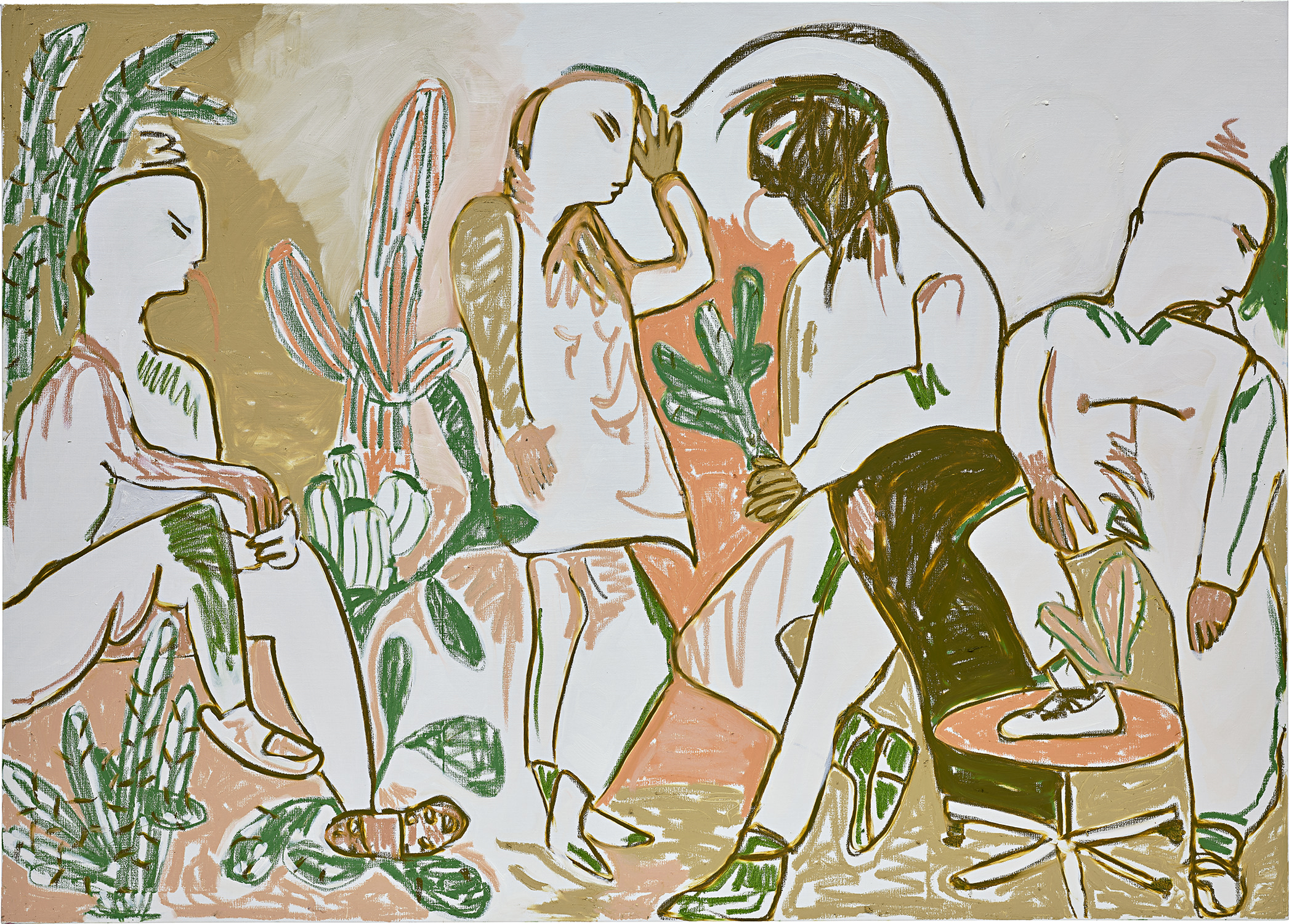
Her early works from around 2015, including the quietly affecting "why do we feel words" and "reflecting a fragrance of white nails / a festival of elapsing memories / coming home," announced an artist who was already working with considerable assurance. Both pieces use acrylic and oil stick on linen, a material choice that would become characteristic, and they demonstrate her gift for creating surfaces that feel simultaneously intimate and archaeological, as though the painting is both a fresh mark and an ancient record. By 2016, works such as "Tankstelle (mother)," "The Vegetable Lamb," and "Swamp Things" showed her expanding her symbolic vocabulary, folding in references to myth, landscape, and domestic life in ways that resist easy interpretation while remaining emotionally available. What distinguishes Kara's practice above all is her approach to surface and palette.
Melike Kara
why do we feel words, 2015
She builds her canvases through layering, using acrylic and oil stick together to create a texture that evokes textiles, weathered walls, and the accumulation of lived experience. Her colors are earthy and muted but never dull: ochres, terracottas, sage greens, and dusty blues that seem to hold light rather than reflect it. Figures emerge from these surfaces in ways that feel simultaneously summoned and half dissolved, present but not fully fixed. This quality speaks to her central preoccupations around memory and identity, the way people and places exist in the mind as impressions, feelings, and partial images rather than crisp photographs.
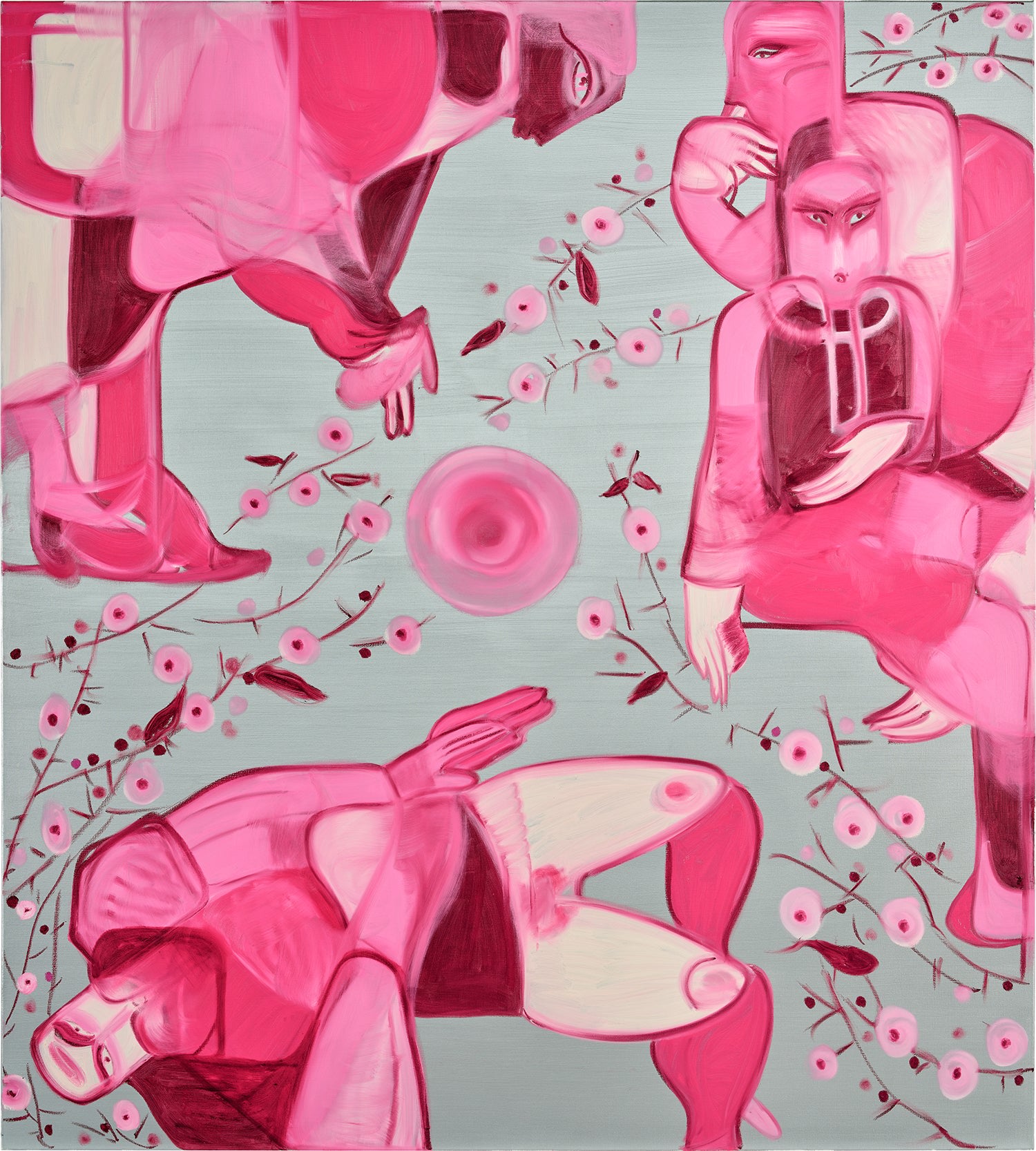
Works such as "all vanish" from 2017 and "Like a Promise (Two)" from the same year exemplify this approach, their titles reinforcing the sense of something beautiful caught at the moment of its disappearance. Her 2020 works mark another shift in confidence and ambition. "Mother's garden," executed in oil stick and acrylic on canvas, and "Everywhere," made on linen, show Kara moving into a more expansive mode without losing any of the intimacy that makes her early work so affecting. The linen ground, with its warm, breathing texture, suits her layered approach especially well.
Melike Kara
Mother's garden, 2020
These paintings feel like places you could inhabit, full of time and tenderness. The recurring figure of the mother in her titles is not accidental. Across her work, maternal presence serves as an anchor point, a way of thinking through intergenerational transmission, the stories and patterns and silences that pass from one generation to the next within diasporic families. For collectors, Kara's work offers something that is increasingly rare on the primary market: a sustained and coherent artistic vision supported by a rigorous gallery relationship, available at a moment before the broader market has fully caught up with what curators and serious private collectors already recognize.
Her works on linen are particularly sought after for the depth and warmth they achieve, and pieces that engage directly with her Kurdish heritage and familial imagery tend to resonate most powerfully with collectors who are drawn to work that carries genuine biographical and cultural weight. The consistency of her material choices, acrylic and oil stick being the throughline across a decade of production, means that her works read as a coherent body rather than a series of stylistic experiments, which only strengthens their long term collecting proposition. In terms of artistic context, Kara belongs to a generation of European painters who have revitalized figurative painting by grounding it in specific personal and political histories. Her work invites comparison with painters such as Cecily Brown for the density and energy of its surfaces, and with artists like Nina Chanel Abney for its willingness to carry cultural and political meaning without becoming didactic.
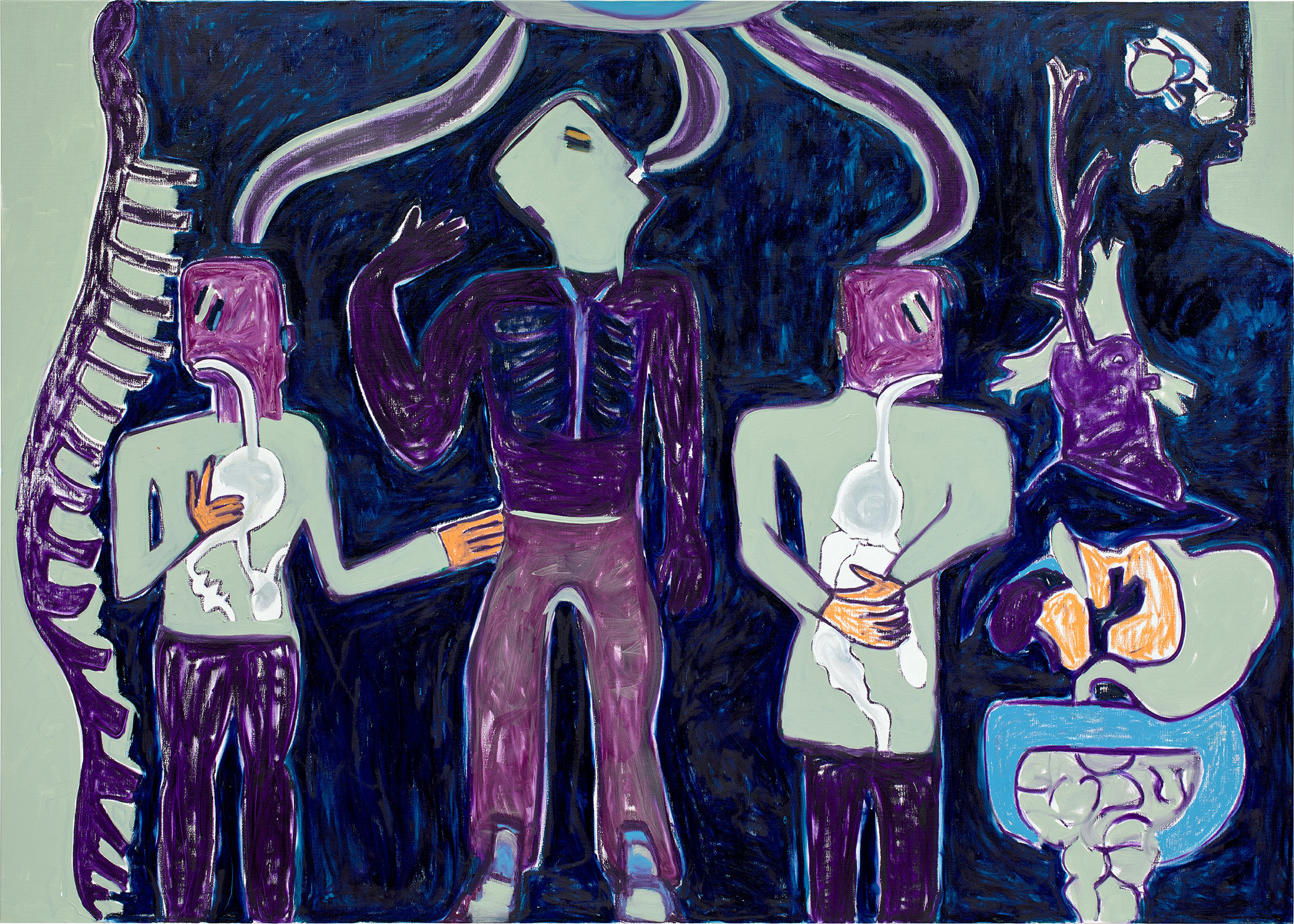
Melike Kara
Tankstelle (mother), 2016
Closer to home, she exists in productive dialogue with the broader constellation of artists working through questions of migration, memory, and the body in contemporary European painting. She is also clearly in conversation with the long tradition of tapestry and textile pattern making within Kurdish visual culture, translating those traditions into the language of contemporary painting with sensitivity and intelligence. Kara's importance to the current moment in art is difficult to overstate. At a time when the art world is urgently asking which voices have been underrepresented and which perspectives offer genuine new ways of seeing, her work provides answers in the most satisfying form possible: not through argument but through painting of the highest quality.
She shows that the Kurdish diaspora experience, and the broader experience of cultural in between ness that so many people share, can be the ground for a visual practice of universal resonance and enduring beauty. To collect her work now is to recognize early what history will almost certainly confirm: that Melike Kara is one of the essential painters of her generation.