Max Liebermann
Max Liebermann, Light Made Gloriously Human
Artist Spotlight · The Collection Editorial
“Drawing is the art of omission.”
Max Liebermann
There are artists who define a movement, and then there are artists who define a city. Max Liebermann did both. Berlin's Alte Nationalgalerie, which holds one of the most significant permanent collections of his work, continues to draw visitors who stand transfixed before his sun drenched beach scenes and shimmering garden paintings, recognizing in them something that feels both historically rooted and urgently alive. In recent years, major German institutions have revisited Liebermann with fresh eyes, situating him not merely as a pioneer of German Impressionism but as a humanist of the highest order, one whose empathy for ordinary life elevated the everyday into the realm of the timeless.
Max Liebermann
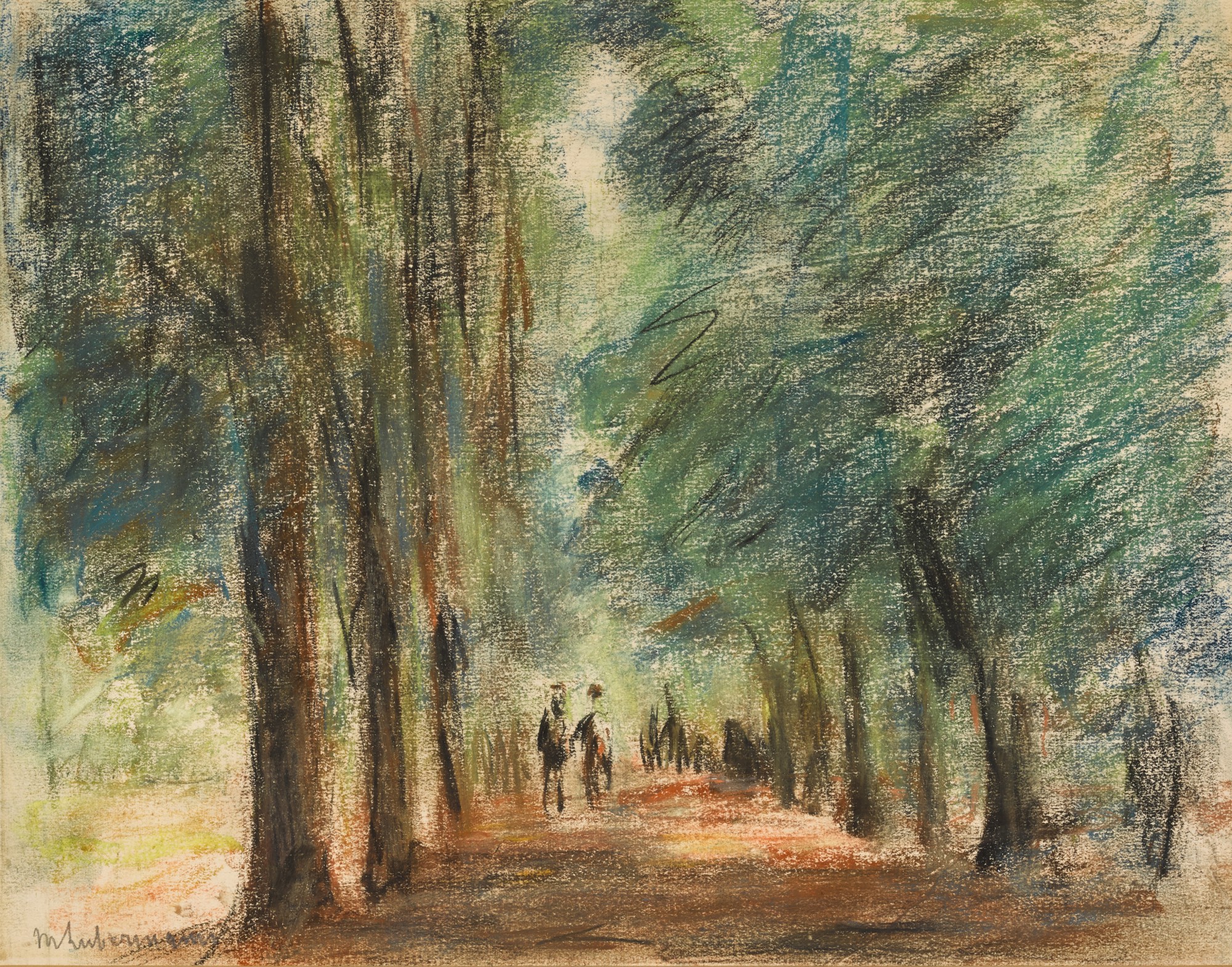
Reiter in der Allee bei Sakrow (Riders in the alley near Sakrow) - recto Stehende Frau in Hut und Mantel (Standing woman with coat and hat) - verso, 1924
Max Liebermann was born in Berlin in 1847 into a wealthy and prominent Jewish family. His grandfather had built a fortune in the textile trade, and his father continued that prosperity, ensuring that young Max grew up in a cultured, comfortable household steps from the Pariser Platz. Yet Liebermann was not drawn to commerce. From an early age, he was transfixed by the act of looking, by the way light fell across a face or a field, by the textures of working life that lay just beyond the gilded walls of his family home.
He studied at the Weimar Art School beginning in the late 1860s, then traveled to the Netherlands and Paris, encounters that would prove transformative and set the course of his entire artistic identity. It was in the Netherlands that Liebermann found his true subject. The Dutch masters, above all Rembrandt and Frans Hals, showed him that ordinary people engaged in ordinary labor could be the protagonists of serious, monumental art. He was equally stirred by the Barbizon painters and by the early work of the French Realists, particularly Jean François Millet, whose unflinching dignity of peasant life resonated deeply.
Max Liebermann
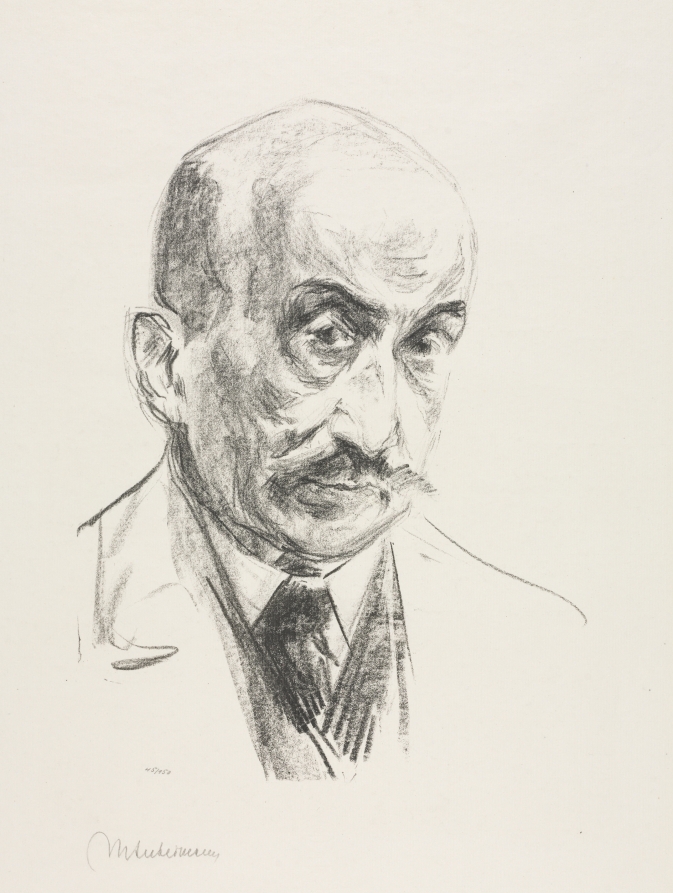
Self-Portrait, 1921
His time in Paris in the 1870s brought him into contact with the Impressionists, whose radical approach to capturing light and atmosphere gradually permeated his brushwork, loosening it, brightening it, infusing his canvases with a new kind of breath. By the time he settled permanently in Berlin, Liebermann had synthesized these influences into something wholly his own: a German Impressionism grounded in social observation and illuminated by northern light. The arc of Liebermann's career is one of continuous, restless evolution. His early works, including large canvases depicting geese pluckers and flax spinners, drew controversy in Germany for their perceived coarseness, their insistence on rural labor as worthy subject matter.
“Art is not a mirror to reflect reality but a hammer with which to shape it.”
Max Liebermann
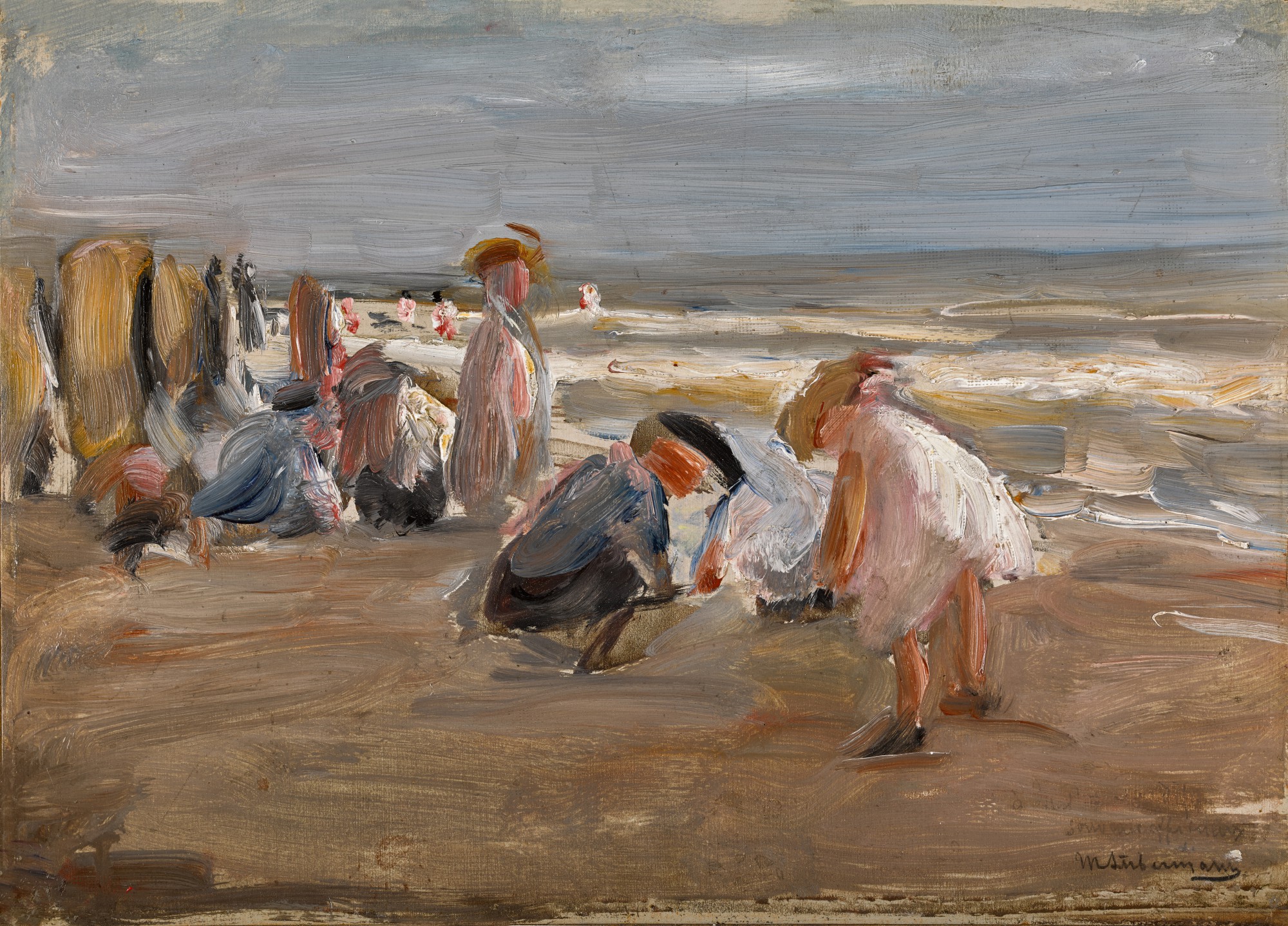
But Liebermann was undeterred. Through the 1880s and 1890s, his palette brightened and his touch grew freer, and he began to paint beach scenes, playgrounds, and public gardens with a joyful, almost musical energy. Works such as the 1898 oil study of children playing on the beach, now among the pieces available on The Collection, capture this period beautifully. The loose, gestural handling of the figures, the way the children seem to tumble and dissolve into the sand and sea air, speaks to a painter working at the height of his expressive powers, someone who had fully internalized Impressionist light without surrendering his commitment to human presence.
Max Liebermann
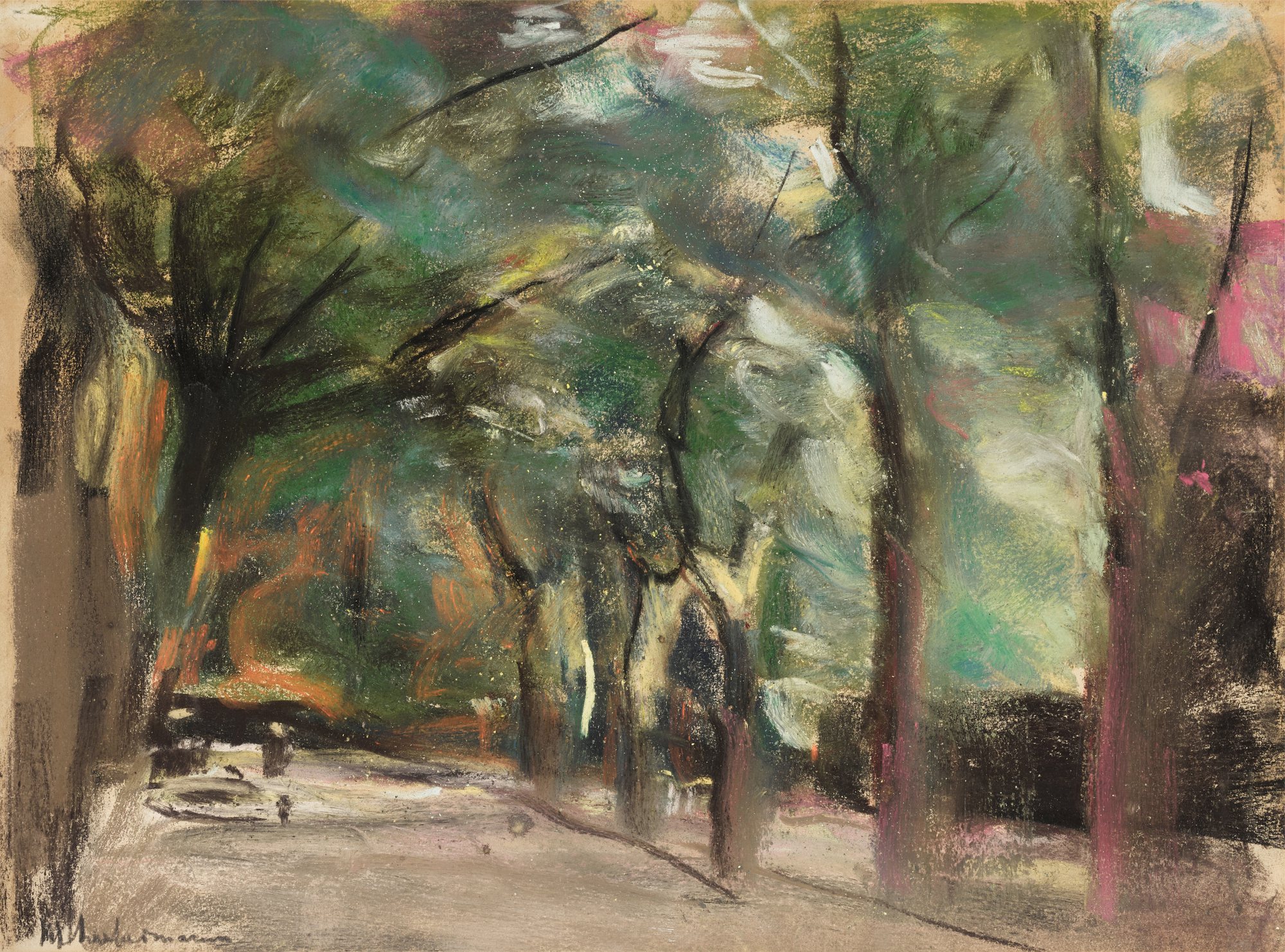
Avenue I, 1924
Liebermann was also a gifted and prolific draughtsman, and this dimension of his practice deserves particular attention. His works on paper, including the charcoal studies of knitting girls from 1895 and his street scenes from the early twentieth century, reveal the disciplined architecture beneath his apparently spontaneous surfaces. These drawings are not preparatory sketches in any diminished sense; they are complete artistic statements, rich in observation and feeling. His lithographic work, represented on The Collection by his 1921 self portrait and his portrait of the writer Arno Holz, demonstrates a command of tone and character that rivals his painted output.
As a printmaker, Liebermann brought the same probing intelligence to the face as he did to landscape, finding in the human countenance a subject of inexhaustible depth. For collectors, Liebermann offers a genuinely compelling combination of art historical significance and aesthetic pleasure. He occupies a rare position as both a founder of the Berlin Secession in 1898, which he led as president, and a bridge between the nineteenth century European tradition and the modernist currents of the twentieth. Works on paper, including pastels, charcoals, and lithographs, provide meaningful points of entry for collectors across a range of budgets, and they represent the full breadth of his formal intelligence.
Max Liebermann
Spielende Kinder am Strand (Children playing on the beach), 1898
The late garden paintings and Havel landscapes, such as the 1932 oil on canvas depicting the Gartenlokal an der Havel, are among the most sought after of his works, prized for their extraordinary quality of light and their sense of private, elegiac contentment. Auction results at the major German houses, particularly Villa Grisebach in Berlin, have consistently confirmed collector appetite for Liebermann across all media and periods. Liebermann belongs to a distinguished international company. His closest parallels in European art are perhaps the Swedish painter Anders Zorn, whose command of outdoor light and figural ease mirrors Liebermann's own, and the Belgian artist Émile Claus, another northern Impressionist drawn to agricultural life and shimmering water.
In the German context, he stands alongside Lovis Corinth and Max Slevogt as one of the three pillars of German Impressionism, a triad whose collective achievement remains underappreciated in the English speaking world relative to its genuine historical importance. Understanding Liebermann is to understand the rich, complex cultural flowering of Wilhelmine and Weimar Germany, a world of salons, intellectual ambition, and artistic courage. The final years of Liebermann's life were shadowed by the rise of National Socialism, which stripped him of his honors and forced his resignation from the Prussian Academy of Arts, an institution he had once led with distinction. He died in Berlin in 1935, in his home beside the Brandenburg Gate, having witnessed the destruction of the world he had helped to build.
Yet his art endures as a testament to everything that world achieved at its finest: an art of warmth, curiosity, and unshakeable faith in the value of the seen world. To collect Liebermann today is to participate in an act of preservation and celebration, to hold close the light of a master who believed, with every mark he made, that beauty and humanity are inseparable.
Explore books about Max Liebermann
Max Liebermann: Das Werk
Wilhelm Valentiner
Max Liebermann: Maler, Zeichner, Graphiker
Eberhard Hanfstaengl
Max Liebermann: 1847-1935
Paret, Peter
Max Liebermann: Centenary Exhibition
National Gallery Berlin
Max Liebermann und seine Zeit
Eberhard Roters
Max Liebermann: The Old Studio
Françoise Forster-Hahn
Max Liebermann: Impressionist
Matthias Eberle