Max Ingrand
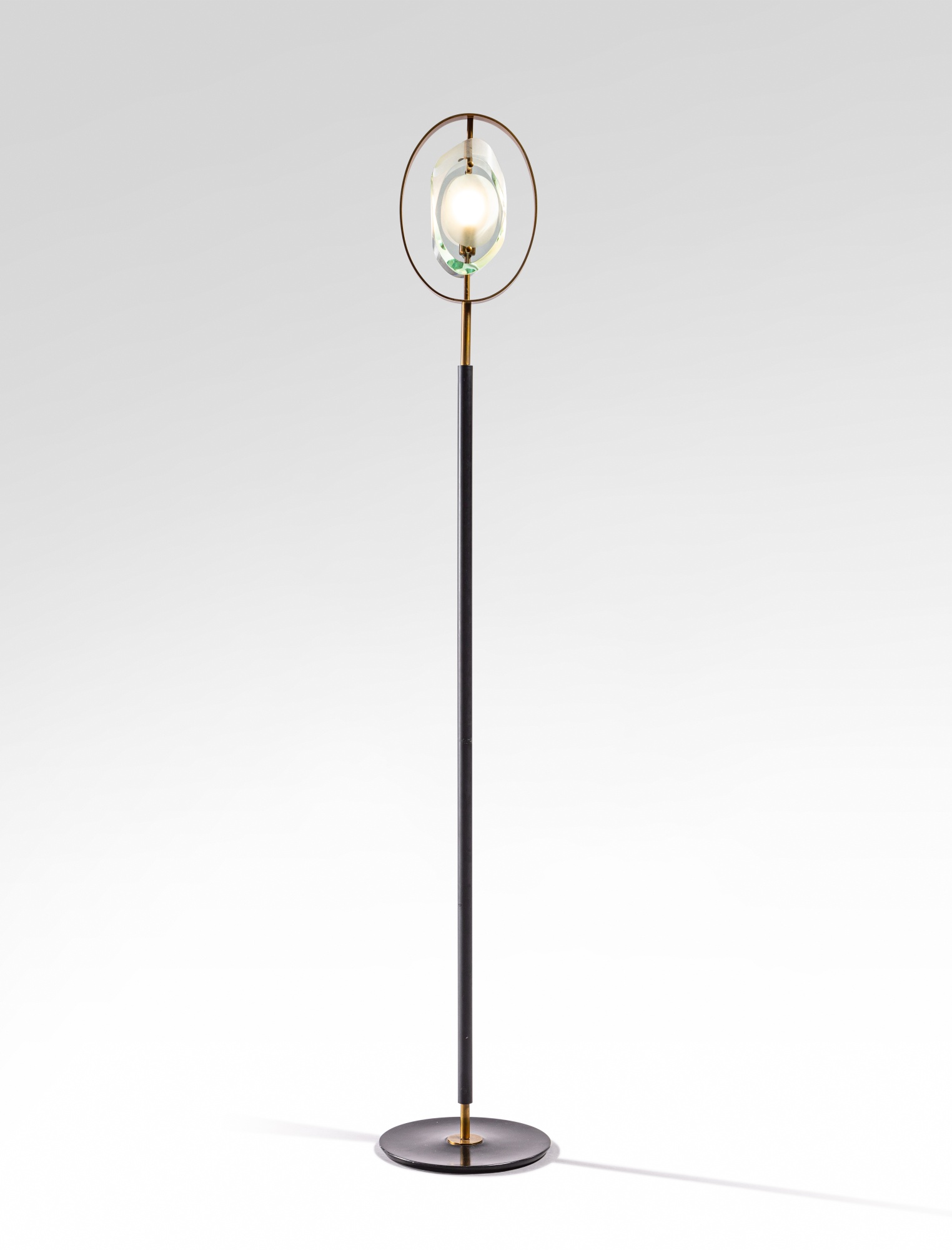
Max Ingrand: Light Made Luminous Art
Artist Spotlight · The Collection Editorial
There is a particular quality of light that stops you in your tracks. It is not the blaze of a chandelier or the cold gleam of a fluorescent tube, but something softer and more insistent, a glow that seems to emanate from within the object itself, as though the glass were alive with captured daylight. This is the sensation that greets anyone who encounters a Max Ingrand Dahlia chandelier for the first time. In recent years, as the decorative arts market has reasserted the importance of mid century French and Italian design at the highest levels of collecting, Ingrand has moved from a position of cherished insider knowledge to something approaching full cultural recognition.
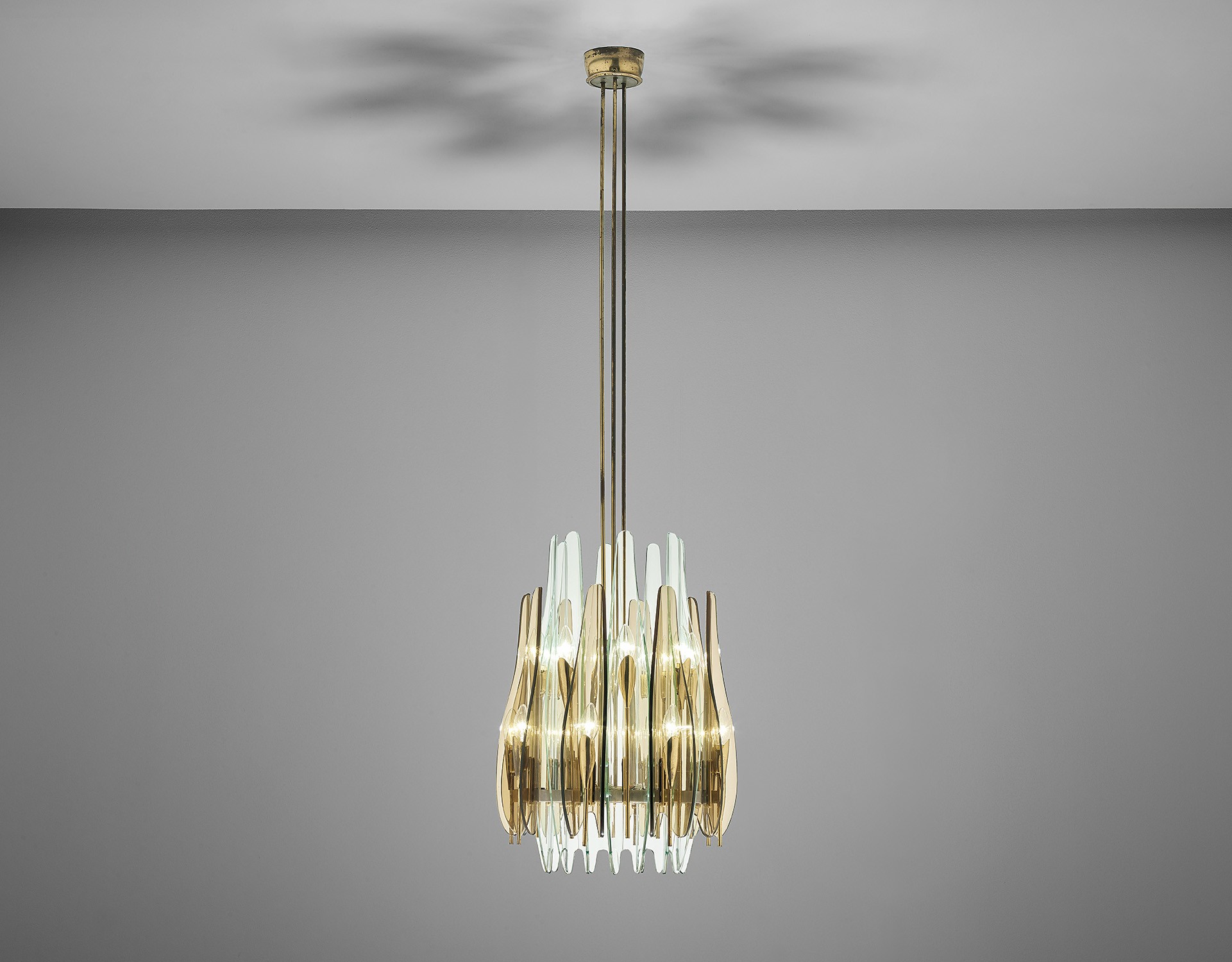
Max Ingrand
'Dahlia' ceiling light, 1955
His pieces now appear regularly in the most carefully assembled interiors and the most discerning private collections across Europe and North America. Maximilien Ingrand was born in France in 1908, at a moment when the applied arts were engaged in one of the great debates of the modern era: could beauty and function coexist, or would the machine age demand a choice between the two? Ingrand grew up surrounded by the traditions of French craft, and his early training was steeped in the history of stained glass, a medium with deep roots in French ecclesiastical and civic life. This foundation gave him something that many of his modernist contemporaries lacked, an intimate understanding of how light behaves when it passes through, refracts around, and is transformed by glass.
Where others approached glass as a surface, Ingrand understood it as a medium with its own interior life. His career took a decisive turn when he became artistic director at Fontana Arte in Milan, a position he held from 1954 to 1968. Fontana Arte, founded by Gio Ponti and Pietro Chiesa in 1933, was already one of the most prestigious design houses in Europe, committed to the idea that great design was also great art. Ingrand arrived at a moment of particular creative energy, and his tenure there produced some of the most enduring objects of the postwar decorative arts canon.
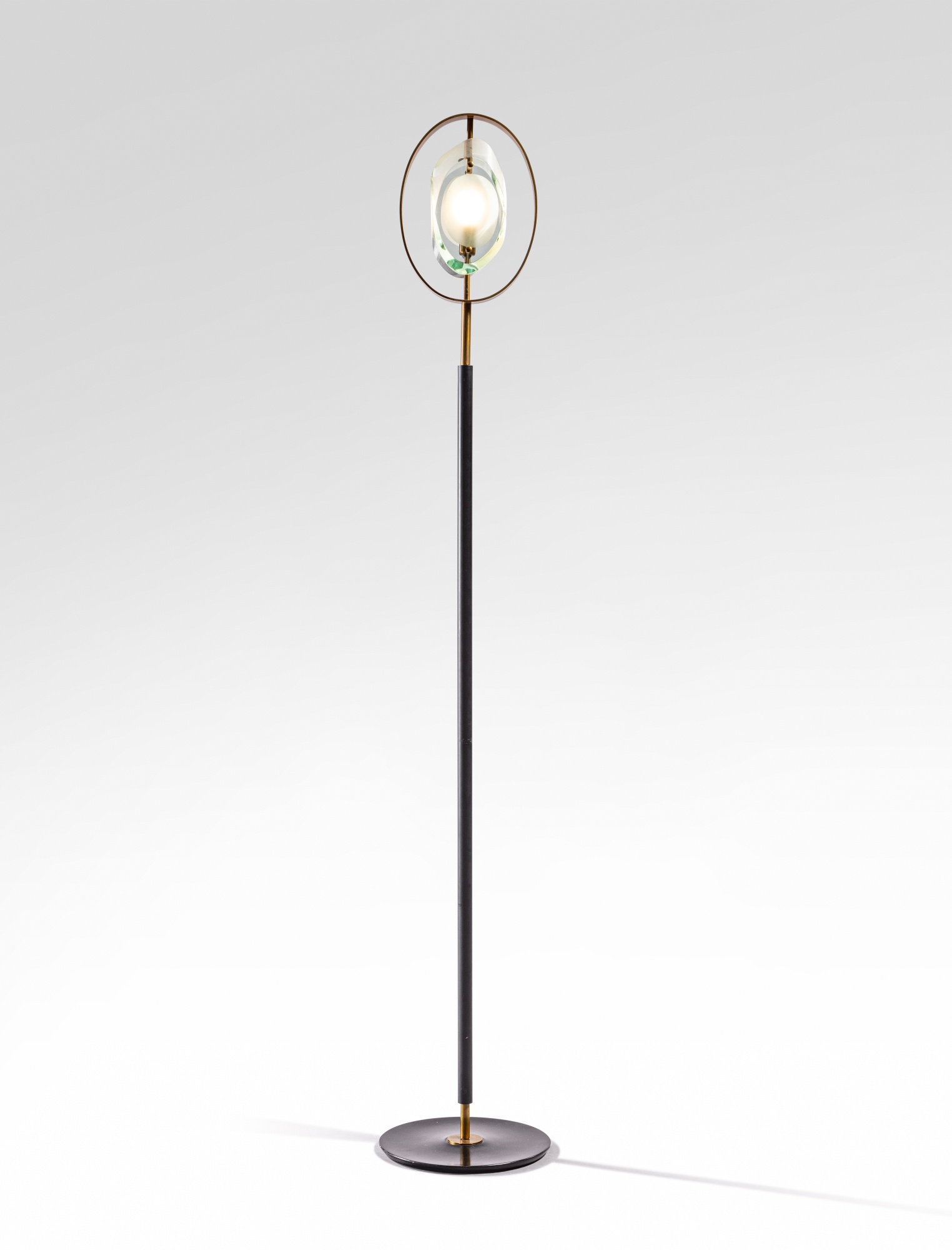
Max Ingrand
Lampadaire, modèle 2020
Working with teams of skilled craftspeople and with Fontana Arte's exceptional resources in glass and metal, he developed a vocabulary of forms that was unmistakably his own: fluid, organic, suffused with light, and possessed of a sculptural confidence that set them apart from the more austere functionalism that dominated much design thinking of the period. The works that bear his name most indelibly are his lighting designs, and among these the Dahlia series occupies a special place. Created in 1955, the Dahlia takes its name from the flower it evokes, with petals of frosted or opalescent glass arranged around a central core in configurations that range from intimate wall sconces to sweeping sixteen armed chandeliers. The model numbers associated with these pieces, 1563 for the chandelier, 1461 for the wall lights, have become a kind of shorthand among collectors and dealers who speak of them with the same fluency that one might bring to a discussion of a Brancusi sculpture or a Prouvé chair.
The Dahlia works achieve something genuinely rare: they are functional objects that reward contemplation as pure form, and they transform any space they inhabit without overwhelming it. Beyond the Dahlia series, Ingrand's output at Fontana Arte encompassed floor lamps, suspension lights, mirrors, and decorative panels of extraordinary refinement. His floor lamp model 2020 is a study in restraint, a piece that uses the simplest possible formal language to create an object of quiet presence. His mirror work, including pieces from 1955, reflects his instinct for the relationship between surface and depth, between reflection and transparency.
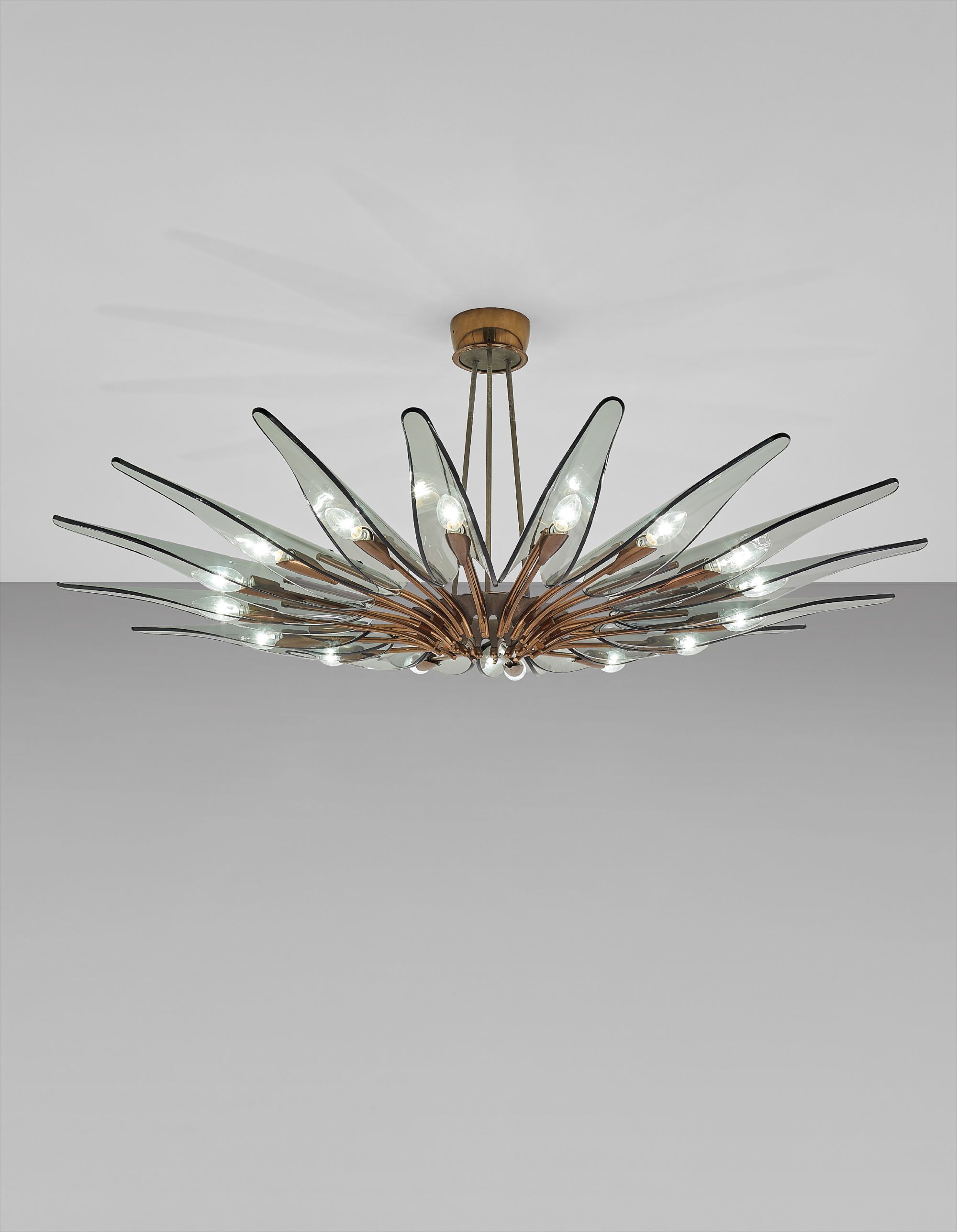
Max Ingrand
'Dahlia' sixteen-armed chandelier, model no. 1563
Throughout his career, Ingrand also created stained glass windows for ecclesiastical settings, bringing to sacred architecture the same sensitivity to luminosity and color that animated his domestic and commercial work. This movement between the sacred and the secular, between the grand public gesture and the intimate domestic object, is one of the qualities that gives his practice its unusual range and authority. For collectors, Ingrand's work offers a compelling combination of aesthetic pleasure and art historical significance. His pieces sit at a crossroads that is increasingly recognized as one of the most fertile in twentieth century design: the intersection of French craft tradition and Italian modernist ambition, of decorative arts and architecture, of the handmade and the industrially refined.
Auction results for strong examples of his Fontana Arte lighting have reflected this growing appreciation, with Dahlia chandeliers and rare variants achieving notable prices at the principal European and American houses. What to look for, experienced collectors will tell you, is condition of the original glass, integrity of the metalwork, and above all the quality of the light that the piece produces when illuminated. An Ingrand at its best is not merely beautiful in repose; it becomes something else entirely when switched on. Ingrand belongs to a constellation of figures who defined the high point of mid century Italian design and its engagement with the decorative arts.
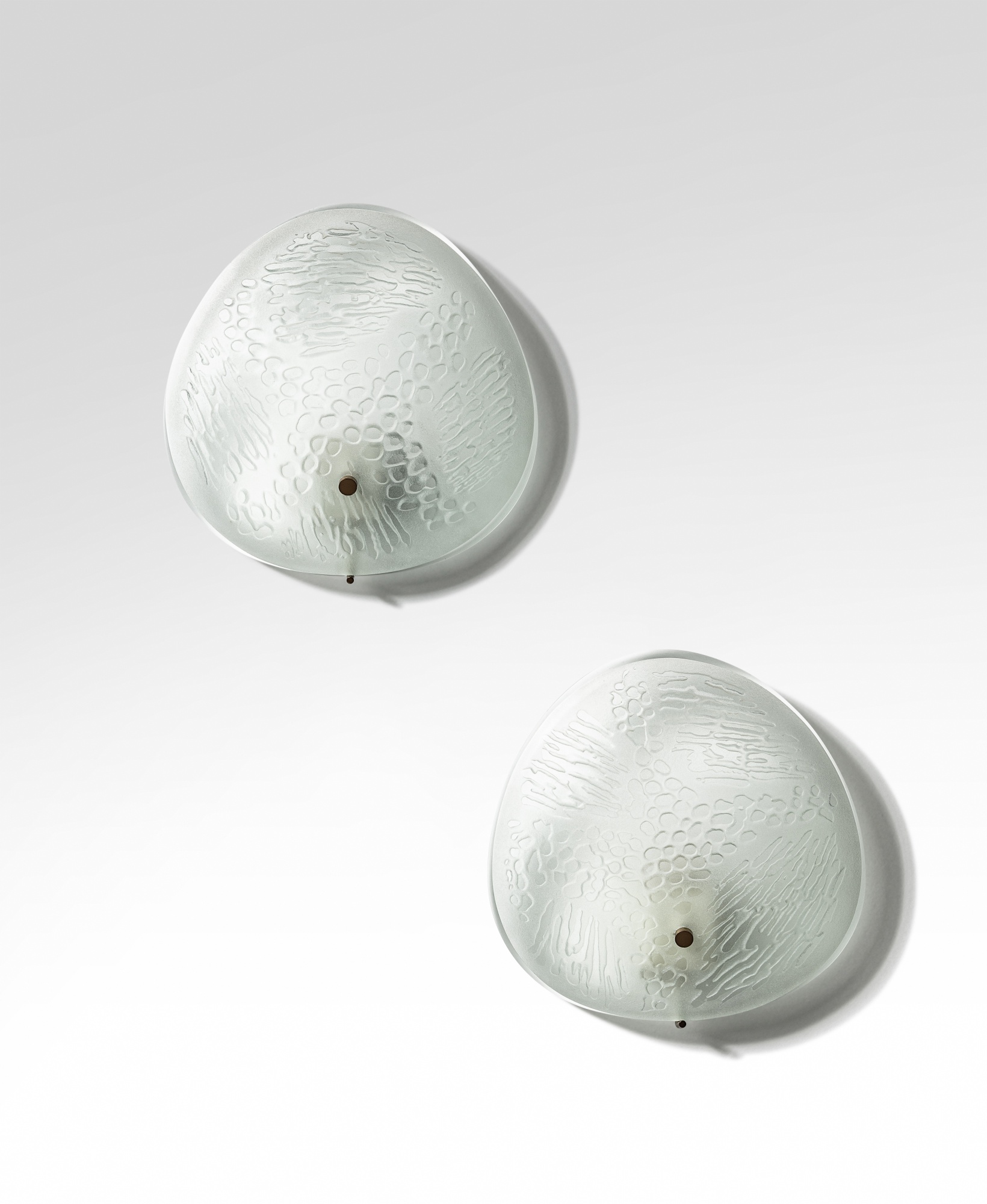
Max Ingrand
Paire d'appliques, modèle 2199
His work at Fontana Arte places him in a lineage that includes Pietro Chiesa, whose own glass work established the house's founding aesthetic, and Gio Ponti, whose polymathic genius shaped the broader culture in which Ingrand flourished. Beyond Fontana Arte, his sensibility connects him to designers such as Carlo Scarpa, whose mastery of glass and light in architectural contexts represents a parallel and equally distinguished tradition, and to Gino Sarfatti, whose approach to lighting as a medium for both function and expression shares important ground with Ingrand's ambitions. Max Ingrand died in 1969, at the age of sixty, leaving behind a body of work that continues to grow in stature with the passage of time. The qualities that define his best pieces, the luminosity, the organic elegance, the sense that light is not merely illuminating an object but is itself the subject, have lost none of their power.
If anything, in an era of over designed and over complicated objects, the clarity of his vision feels more necessary than ever. To live with an Ingrand is to understand what it means when a decorative object achieves the condition of art: it does not merely furnish a room, it changes how the room feels to be in. That is a rare gift, and it is the measure of a great artist.
Explore books about Max Ingrand
Max Ingrand: Maître Verrier du XXe Siècle
François Thiébaut
Max Ingrand et l'Art du Vitrail Moderne
Michel Fleury
Max Ingrand: Verrier et Créateur
Dominique Brisson
L'Œuvre de Max Ingrand
Pierre Cabanne