Max Ernst
Max Ernst: The Dreamer Who Remade Reality
Artist Spotlight · The Collection Editorial
“Creativity is that marvelous capacity to grasp mutually distinct realities and draw a spark from their juxtaposition.”
Max Ernst
In 2024, the Centre Pompidou in Paris reaffirmed what devoted collectors and museum curators have long understood: Max Ernst remains one of the most inexhaustibly rewarding artists of the twentieth century. His works continue to command serious attention at auction, with major paintings and sculptures appearing regularly at Christie's, Sotheby's, and Phillips, where bidders from Europe, the Americas, and Asia compete for access to a body of work that feels simultaneously ancient and startlingly alive. The breadth of his output, from brooding forest canvases to luminous bronze sculptures to tender graphite works on canvas, ensures that there is a Max Ernst for nearly every serious collector, and that discovering one work almost inevitably leads to a deeper, more consuming engagement with the whole. Max Ernst was born on April 2, 1891, in Brühl, a small town near Cologne in Germany.
Max Ernst
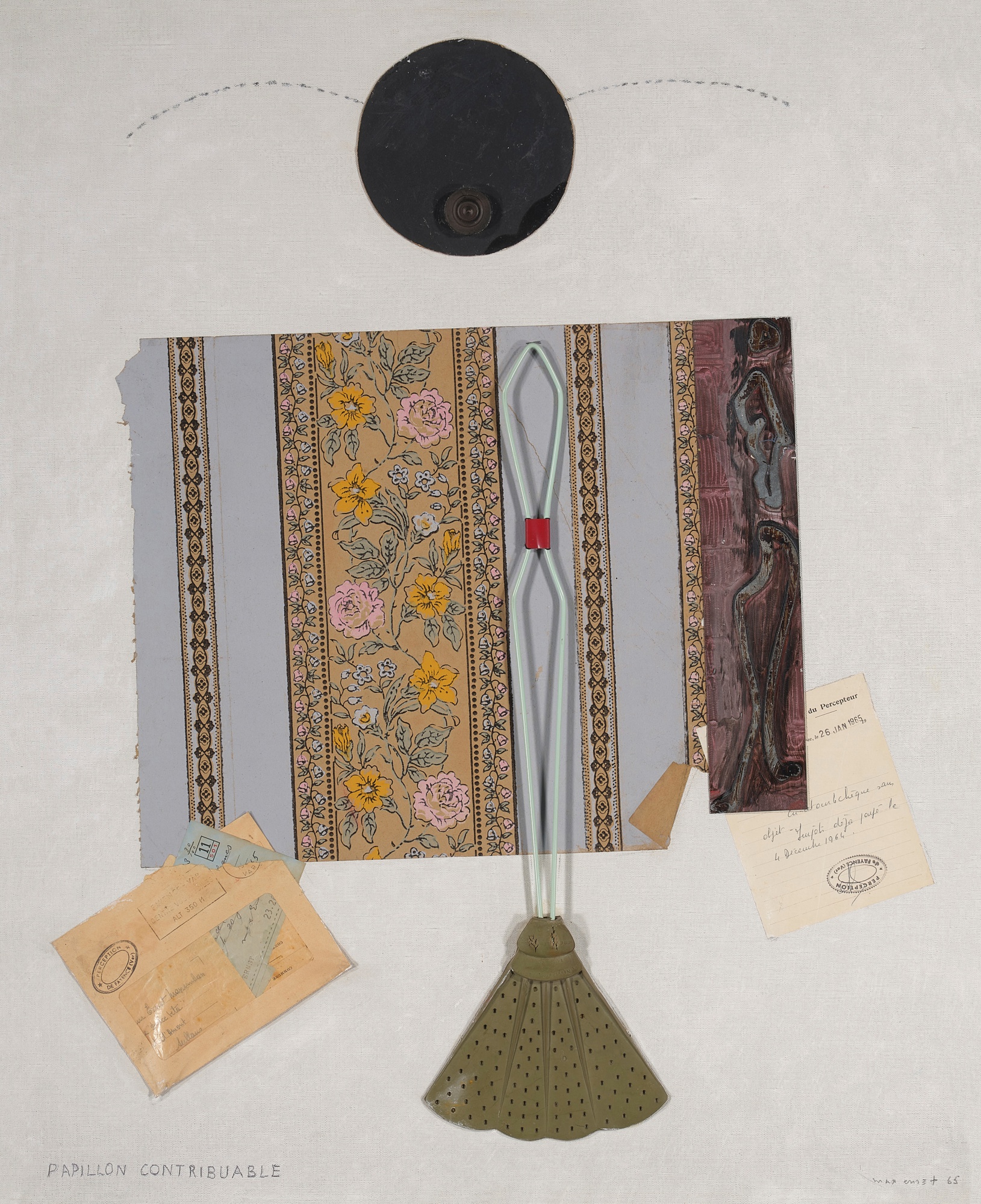
Papillon contribuable, 1965
He was the third of nine children in a devoutly Catholic family, and his father, Philipp Ernst, was an amateur painter who introduced him to the act of mark making at an early age. Ernst studied philosophy and psychology at the University of Bonn, where he also encountered the work of Friedrich Nietzsche and Sigmund Freud, thinkers whose ideas about the unconscious mind would prove formative. He visited psychiatric hospitals and became fascinated by the art made by patients there, a sensitivity that would later inform his entire approach to image making. Before he could complete his studies, the First World War interrupted everything, and Ernst served on both the Western and Eastern fronts, an experience that left him with a permanent distrust of reason and order.
After the war, Ernst threw himself into the avant garde ferment of Cologne, co founding the Cologne Dada group with Johannes Theodor Baargeld and later connecting with Jean Arp. He began making collages from found printed material, cutting up Victorian engravings and scientific illustrations to create images of disturbing and dreamlike incongruity. In 1922 he moved to Paris without a visa, welcomed into the circle forming around André Breton, and became one of the founding figures of Surrealism when the movement was formally announced in 1924. Paris transformed him, and he transformed Paris.
Max Ernst
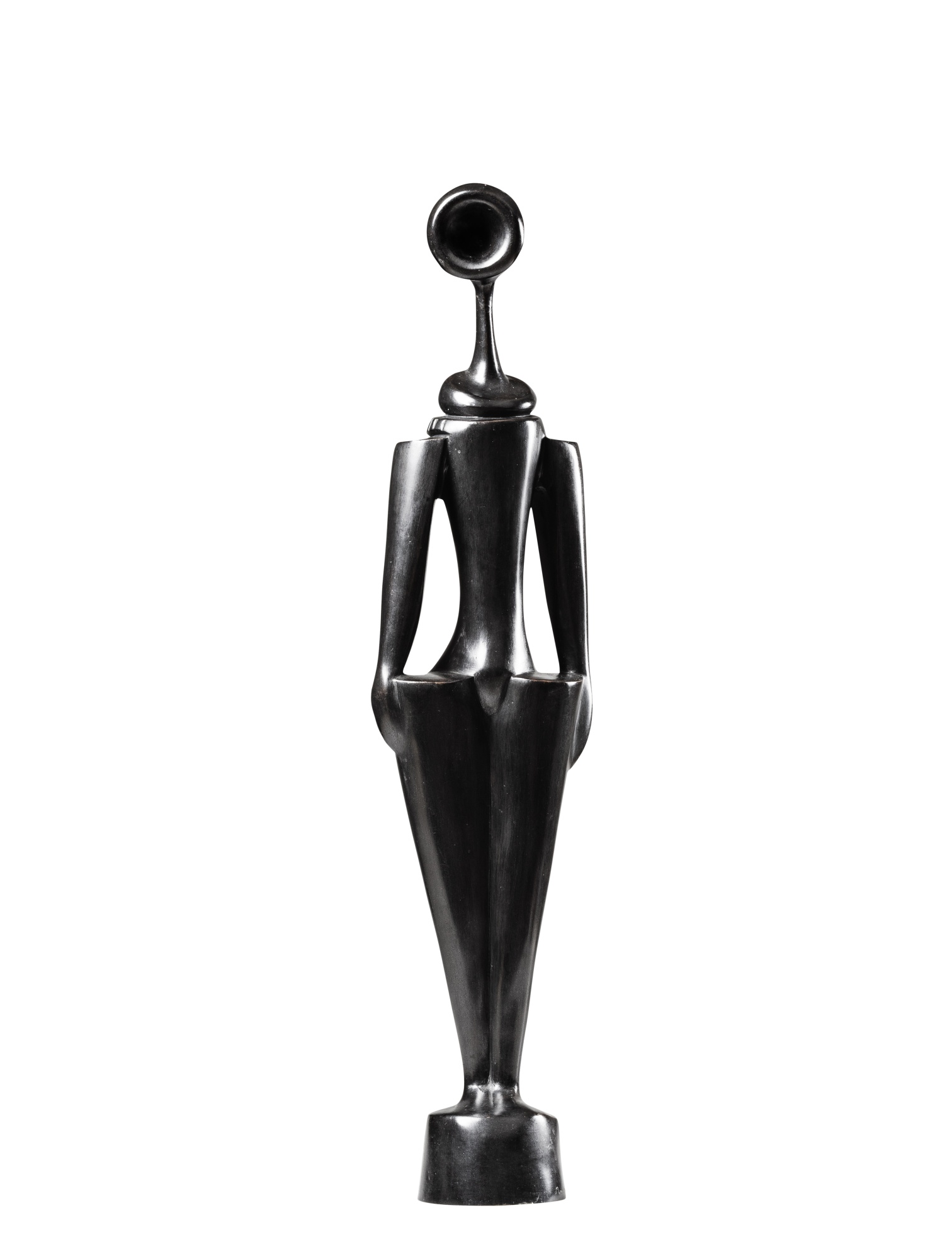
La Parisienne
His invention of frottage in 1925, a technique of rubbing pencil or paint over textured surfaces such as wood grain and wire mesh, unlocked a new visual language and gave Surrealism some of its most haunting imagery. He followed this with grattage, scraping paint across canvas to reveal accidental forms that the artist would then coax into figures, forests, and creatures. The forest became one of Ernst's most enduring and personal subjects. His forest paintings, dense, vertical, primordial, carry an atmosphere of myth and threat that never tips into mere illustration.
“The virtue of pride, which was once the beauty of mankind, has given place to that fount of ugliness, Christian humility.”
Max Ernst, Beyond Painting, 1948
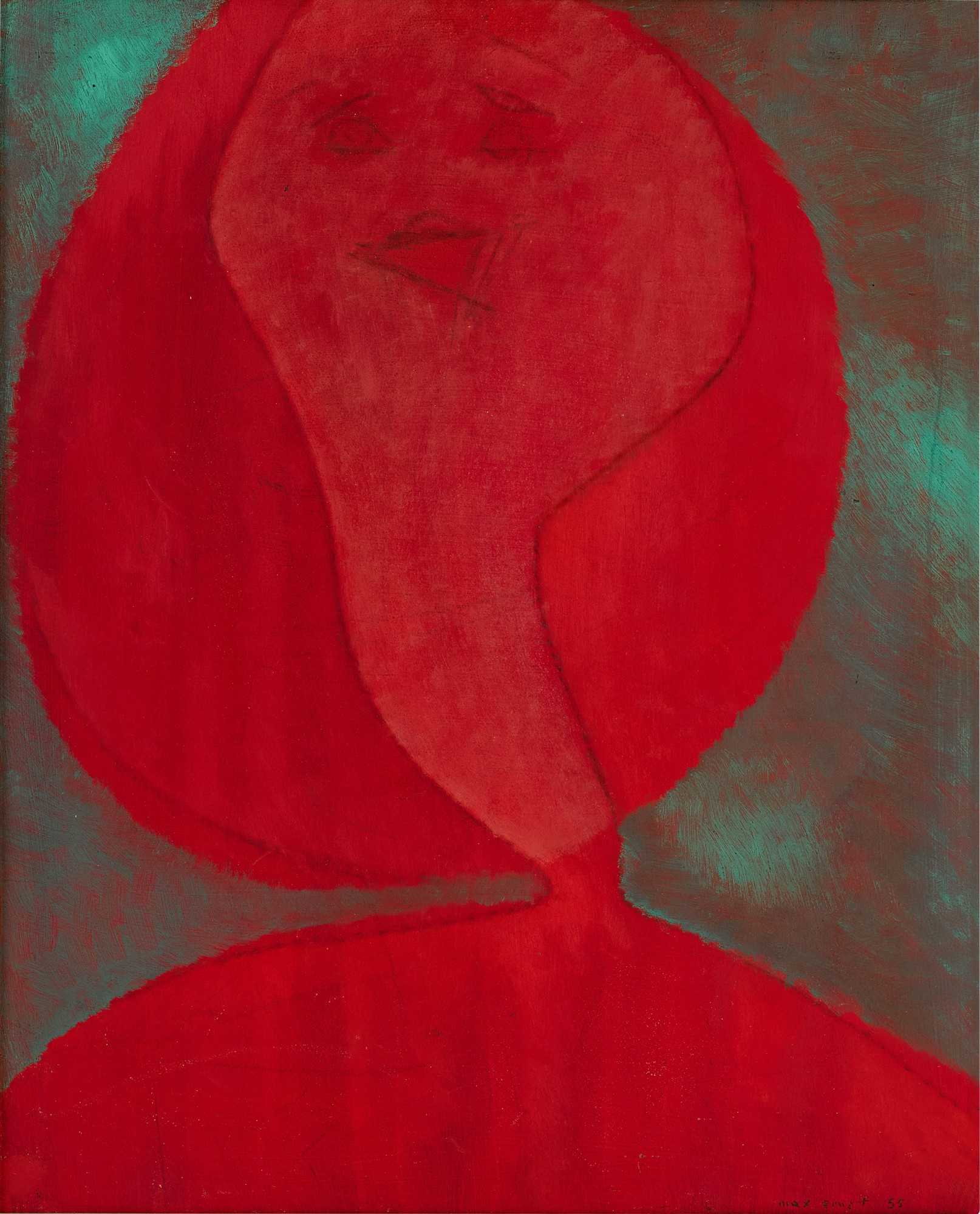
They feel experienced rather than imagined, as though the artist had walked into a place where human logic did not apply and brought back evidence. Works such as the majestic forest prints that appear across his career, including the richly layered lithographs on Rives and Arches paper that collectors prize today, show how fully he inhabited this world. His 1955 oil on panel Le Cri crackles with the same compressed energy, a single arrested moment that seems to hold an entire emotional history within its surface. The 1942 oil on paper Ohne Titel, made during Ernst's turbulent years in America after fleeing the Nazi occupation of France, demonstrates his ability to sustain imaginative intensity even under the most disorienting personal circumstances.
Max Ernst
Le Cri, 1955
Among the works available through The Collection, the range of Ernst's achievement across five decades is immediately apparent. Colombe blanche from 1925 and Oiseau en cage from the same year, the latter in oil on sandpaper laid down on board and housed in the artist's own cork frame, belong to a period of extraordinary invention when Ernst was developing his personal mythology of birds and flight. His alter ego Loplop, the Bird Superior, runs as a thread through much of his output and appears in various guises across paintings, collages, and sculptures. The bronze La Parisienne shows his ease with three dimensional form, and the 1947 Paysage extraordinaire on paper reveals the extraordinary economy with which he could conjure entire worlds.
Papillon contribuable from 1965, in oil and collage on canvas, and Une école de harengs défile sous une lune brune from the same year demonstrate that even in his seventies Ernst was producing work of genuine freshness and invention. From a collecting perspective, Ernst occupies a particularly compelling position in the market. He is canonical enough that museum scholarship continuously deepens the context around his work, yet the breadth and variety of his output means that works across a wide range of price points appear regularly. Collectors new to his practice are often advised to begin with works on paper, where the full range of his technical invention, frottage, grattage, collage, graphite, is on vivid display.
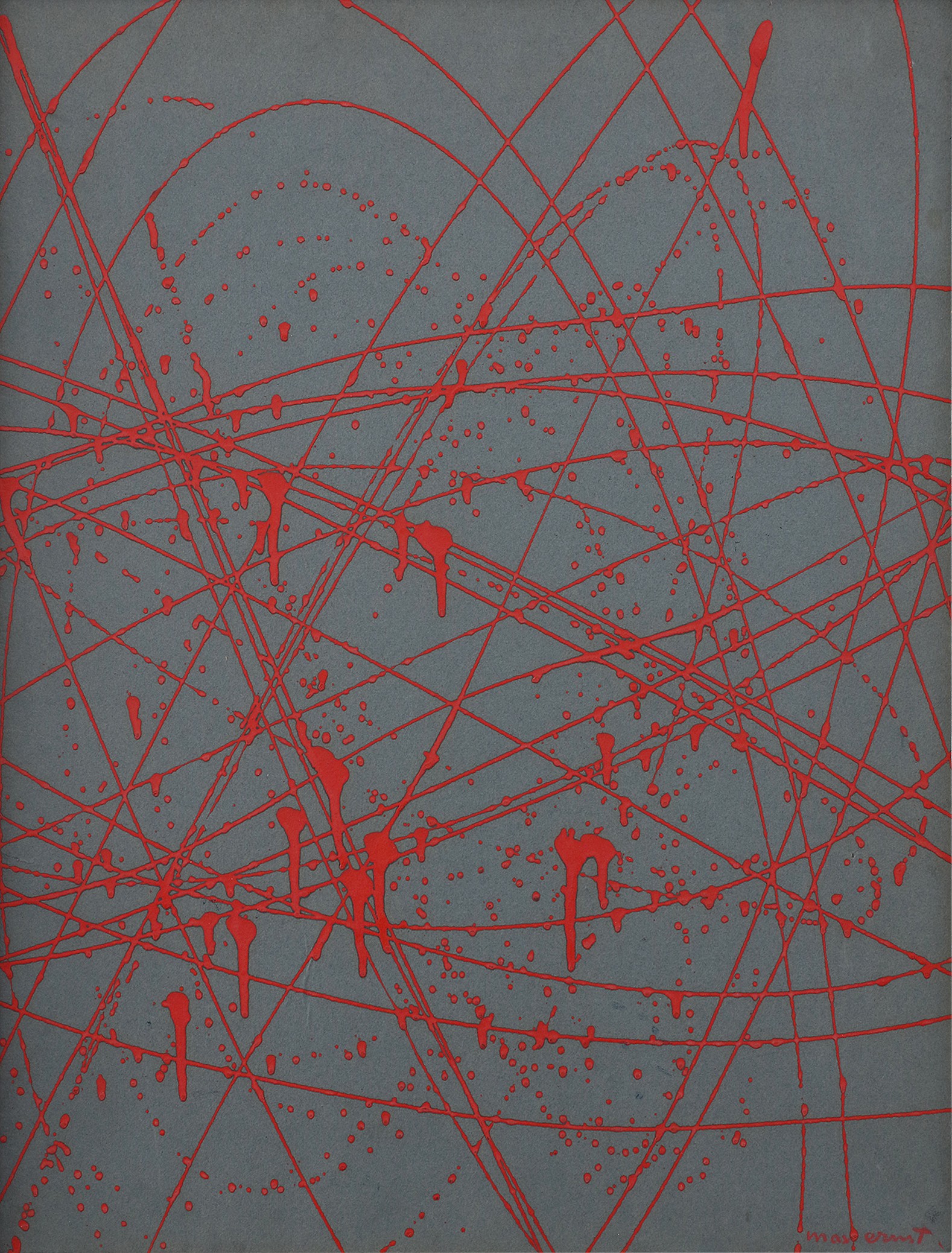
Max Ernst
Ohne Titel (Untitled), 1942
More seasoned collectors seek out the oil paintings from his American years, 1941 to 1953, a period spent largely in New York and Arizona, during which he produced some of the most formally daring work of his career. Provenance records from this period frequently trace back to Peggy Guggenheim, to whom Ernst was briefly married, and whose collection helped introduce his work to an American audience that would eventually come to embrace him deeply. To understand Ernst fully is to understand the company he kept and the ideas he was in dialogue with throughout his life. He was close to Paul Éluard, Joan Miró, Salvador Dalí, and René Magritte within the Surrealist circle, and his technical innovations fed directly into the thinking of the Abstract Expressionists who came after him, particularly Jackson Pollock, who encountered Ernst's decalcomania and chance based methods and found in them a permission to work differently.
The art historical line from Ernst to Pollock to the New York School is not merely speculative; it is documented and acknowledged. In this sense, Ernst is not only a master in his own right but a crucial transmitter of European modernist energy into American postwar culture. Max Ernst died on April 1, 1976, in Paris, one day before what would have been his eighty fifth birthday. He had by then received the Grand Prize for Painting at the Venice Biennale in 1954, been celebrated in retrospectives across Europe and North America, and seen his work enter the permanent collections of virtually every major museum of modern art in the world.
What endures is not merely the biographical achievement but the quality of attention his works demand. Each painting, collage, and sculpture invites the viewer into a mode of seeing that is genuinely other, patient, associative, and willing to find meaning in the accidental. For collectors, that quality is irreplaceable, and it is precisely why Ernst's work continues to feel like a discovery no matter how many times you encounter it.
Explore books about Max Ernst
Max Ernst: A Retrospective
Werner Spies
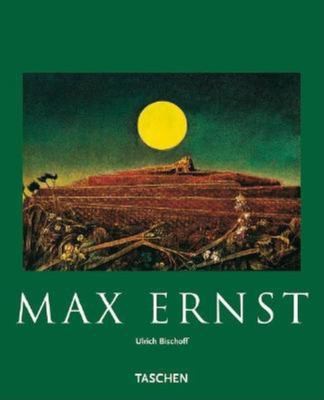
Max Ernst: Life and Work
Ulrich Bischoff
Max Ernst: Oeuvre Catalogue
Werner Spies
Max Ernst: Peintures, Dessins, Collages
Desmond Morris
Max Ernst 1891-1976
Centre Pompidou
Max Ernst: Surrealism and After
Peter Read
The Eye of Silence: Max Ernst 1890-1976
Wieland Schmied
Max Ernst: A Dadaist and Surrealist Master
Lucy Moore