Matthias Schaller
Matthias Schaller Finds Beauty in Stillness
Artist Spotlight · The Collection Editorial
There is a particular quality of attention that defines great conceptual photography, a willingness to sit with an object or a space long enough that it begins to speak. Matthias Schaller has made that quality the cornerstone of a practice spanning decades, earning him a place in significant public and private collections across Europe and beyond. His work has been presented in international exhibitions that reward precisely the kind of sustained looking he himself brings to every subject. To encounter a Schaller photograph for the first time is to feel the uncanny sensation that you have walked into a room just after someone important has left it.
Matthias Schaller
Dis 11
Schaller was born in Germany in 1965, and his formation as an artist reflects the rigorous intellectual culture of Central European visual practice. Germany in the postwar decades produced a remarkable lineage of photographers committed to systematic inquiry and conceptual clarity, and Schaller absorbed that tradition deeply. The influence of the Düsseldorf School, with its emphasis on large format precision and the elevation of documentary photography into fine art, resonates in his approach, though Schaller has always pursued a path distinctly his own. His early development was shaped by an understanding that photography could be both an act of witness and an act of philosophy.
The arc of Schaller's artistic development reveals a mind consistently drawn to the residue of human endeavor rather than to human beings themselves. He has worked across a range of subjects including workspaces, cultural institutions, and archival materials, always circling the same essential question: what does an object or a room tell us about the person who used it or inhabited it? This is photography in the tradition of absence, where meaning accumulates in what is not shown. His practice demands patience from both maker and viewer, and it rewards that patience with images of remarkable depth and clarity.
Matthias Schaller
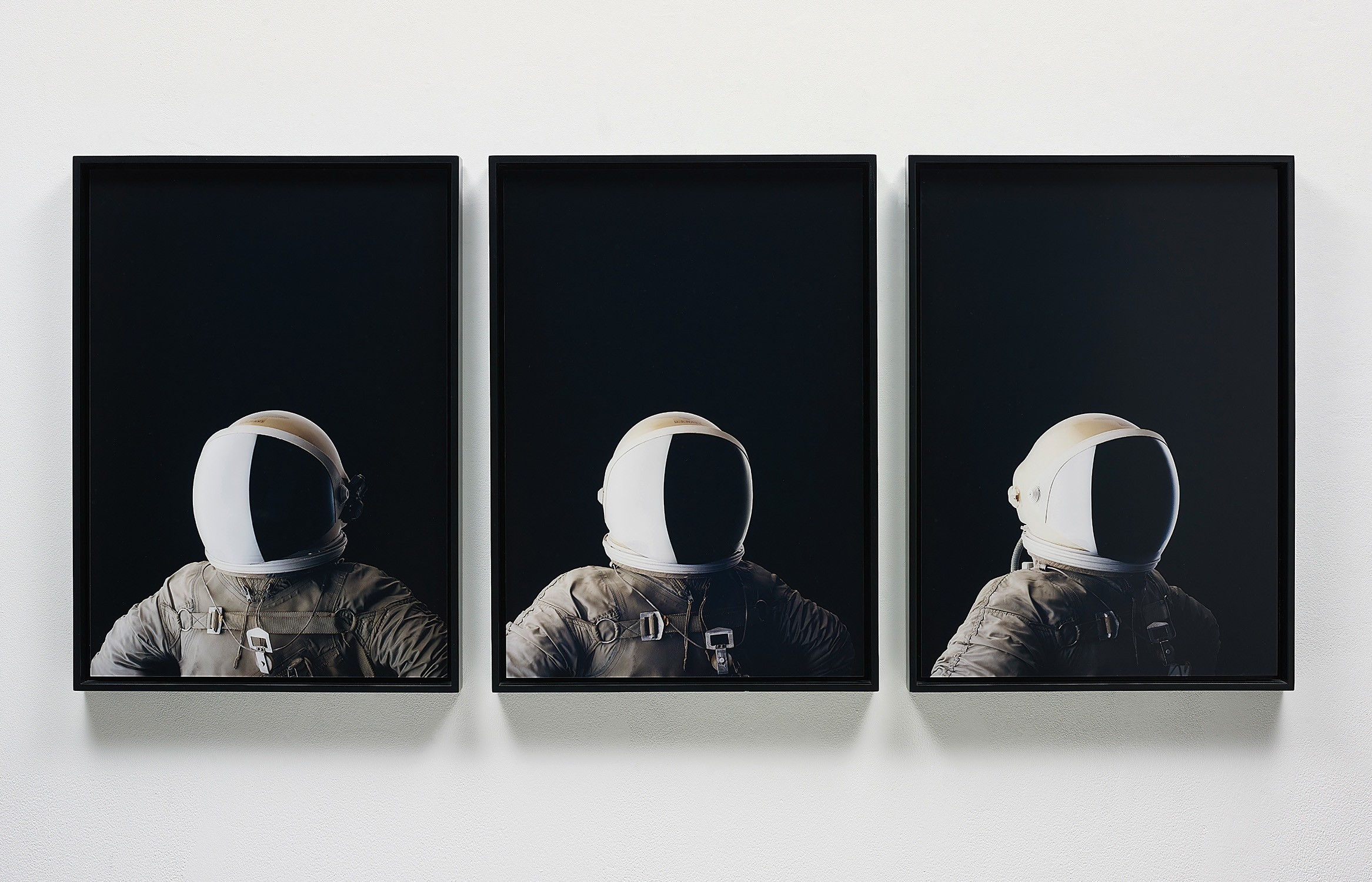
Dis 8 from Disportraits
Among the works that best represent Schaller's vision is his Disportraits series, from which pieces such as Dis 8 and Dis 11 have attracted serious collector attention. Presented as chromogenic prints, with each work face mounted and flush mounted to achieve that characteristic jewel like surface tension, the Disportraits series enacts a quietly radical proposition about portraiture itself. By turning away from the face as the primary carrier of identity, Schaller asks us to reconsider what constitutes likeness and what constitutes presence. The result is a body of work that feels simultaneously classical in its formal precision and genuinely surprising in its conceptual ambition.
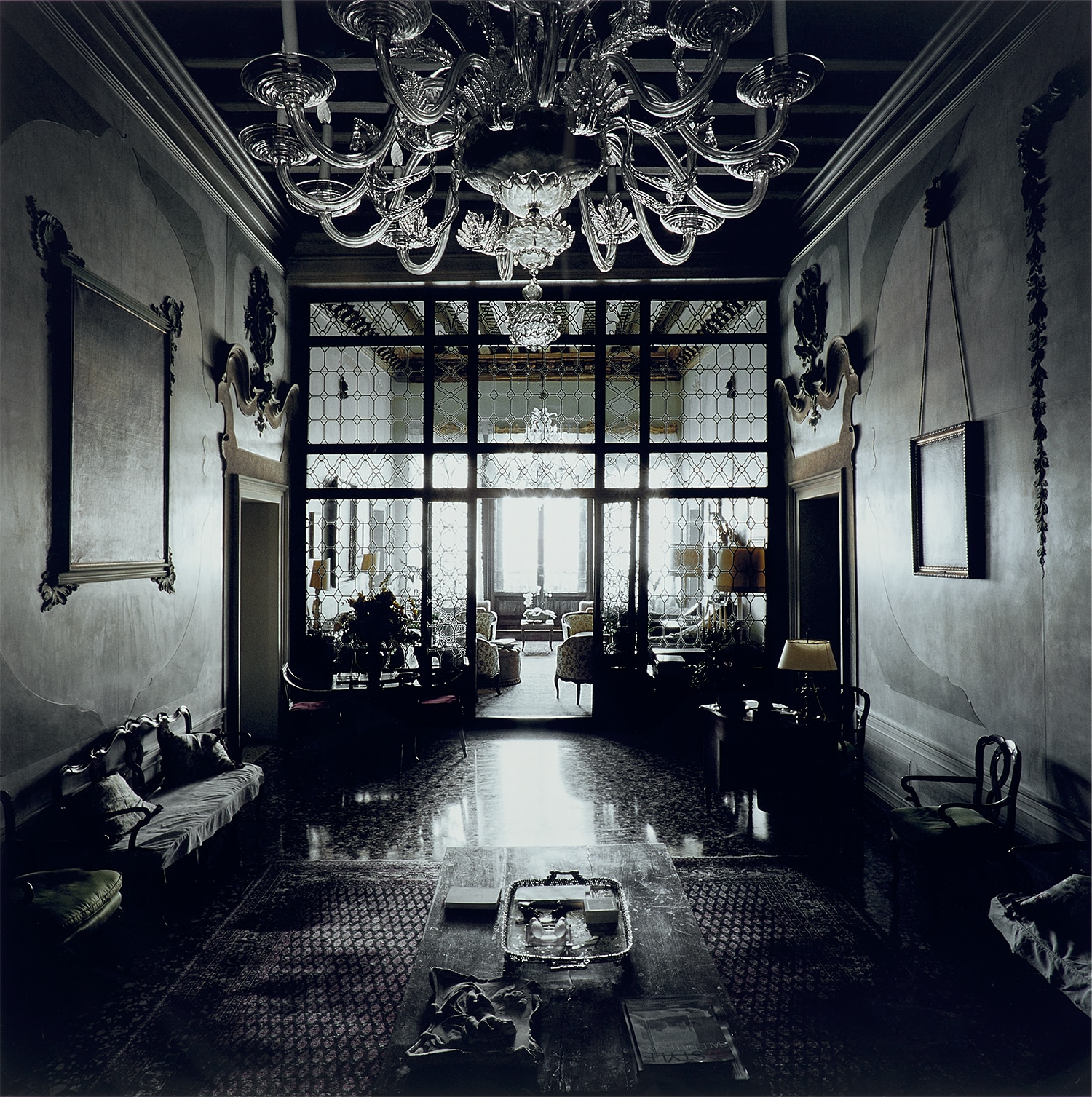
His Controfacciata, Palazzo Mocenigo, a chromogenic print drawn from the world of Venetian architectural heritage, demonstrates the same capacity to transform a specific historical environment into a meditation on time, memory, and the persistence of material culture. The collecting case for Schaller rests on several interconnected strengths. His work occupies a rigorous conceptual space that places him in productive dialogue with artists such as Thomas Struth, Candida Höfer, and Thomas Demand, all of whom have explored the relationship between photography, space, and cultural memory. Like Höfer in her studies of institutional interiors, Schaller understands that an empty room can be one of the most charged subjects available to a photographer.
Matthias Schaller
Controfacciata, Palazzo Mocenigo
Like Demand, he is fascinated by the way images mediate our understanding of reality. Yet Schaller's work possesses its own unmistakable register, cooler than sentiment and warmer than pure document, finding the human in the space between the two. For collectors seeking work that rewards prolonged engagement and holds its intellectual authority over time, Schaller represents an exceptional opportunity. The chromogenic print, Schaller's preferred medium across many of his major series, is itself a meaningful choice.
This analog photographic process produces colors of exceptional richness and stability, and when combined with face mounting the result is an object of genuine physical presence. The surface becomes almost luminous, and the decision to flush mount eliminates any gap between image and support, creating a unity that reinforces the meditative quality of the imagery itself. Collectors who have acquired works from the Disportraits series or from his architectural studies report that the physical experience of living with these works is quite different from the experience of encountering them in reproduction. The work deepens with familiarity rather than yielding its full meaning at a glance.
Within the broader context of art history, Schaller belongs to a generation of German photographers who transformed the international perception of the medium from the 1990s onward. The market for this cohort has matured steadily, with major works by artists in Schaller's orbit held in institutions including the Museum of Modern Art in New York, the Tate collection in London, and numerous European kunsthalles and galleries. Schaller's international exhibition history and his presence in significant private collections signal that his work has already cleared the threshold of institutional validation. For collectors assembling thoughtful collections of postwar and contemporary photography, his work provides an anchor of conceptual seriousness and aesthetic distinction.
What ultimately makes Matthias Schaller matter now, in this particular moment of image saturation and visual noise, is precisely his commitment to slowness. His photographs do not compete for attention through spectacle or scale alone. They earn attention through the quality of thought embedded in every compositional decision, every choice of subject, every considered act of framing. In a culture flooded with images produced and consumed in fractions of a second, Schaller's work insists on duration, on the dignity of sustained attention.
That insistence feels less like a retreat from the contemporary and more like a necessary and generous gift to it. His photographs remind us that looking, done properly, is itself a form of knowledge.