Matías Sánchez
Matías Sánchez Conjures the Golden Age Anew
Artist Spotlight · The Collection Editorial
When Galerie Zink presented works by Matías Sánchez to its international clientele, the response was immediate and telling. Collectors who had spent years pursuing blue chip modernism found themselves transfixed by something they could not quite name: paintings that felt simultaneously ancient and urgently alive, as though Velázquez had stepped through a looking glass and emerged with a wry smile and a surrealist's restless imagination. That friction between the deeply historical and the stubbornly contemporary is precisely what has made this Seville born painter one of the most quietly compelling figures working in European figurative art today. Sánchez was born in Seville in 1973, and the city's weight is present in everything he makes.
Matías Sánchez
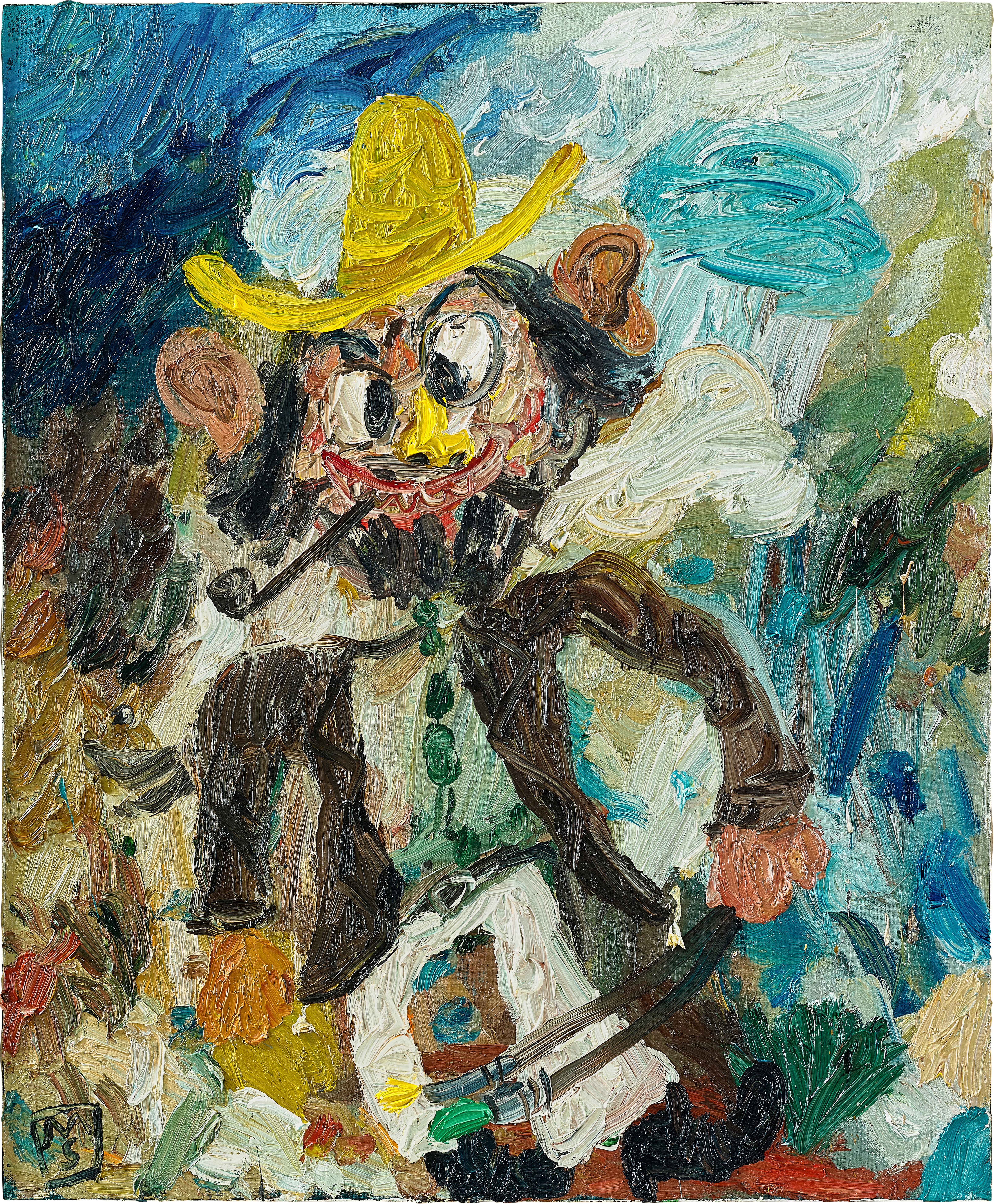
帶煙斗和草帽的畫家
Seville is not merely a backdrop in Spanish cultural memory but a living archive, home to the cathedral, to the alcázar, to the paintings of Murillo and Zurbarán that hang in the Museo de Bellas Artes just steps from where ordinary life unfolds. Growing up surrounded by that density of accumulated image making, by the theatricality of Baroque light and the symbolic seriousness of Golden Age allegory, Sánchez absorbed a visual language that most painters only encounter in art history seminars. For him it was the atmosphere of childhood, the grammar of his native place. His artistic formation built carefully on that foundation rather than rejecting it.
Where many painters of his generation trained in the conceptual frameworks dominant in European academies during the 1990s, Sánchez returned repeatedly to the technical and philosophical concerns of the seventeenth century: the role of chiaroscuro as a vehicle for psychological tension, the use of still life objects as carriers of moral and poetic meaning, the way a figure placed just so against a dark ground can seem to breathe. He studied the old masters not as museum pieces but as living propositions, asking what their solutions might mean when applied to the disoriented, sometimes absurdist conditions of contemporary experience. The breakthrough in Sánchez's practice came through a fusion that sounds contradictory on paper but feels inevitable in person. He grafted the compositional logic of Baroque painting onto a surrealist sensibility, populating his theatrically lit canvases with figures who seem to have wandered in from different centuries and different states of consciousness.
Matías Sánchez
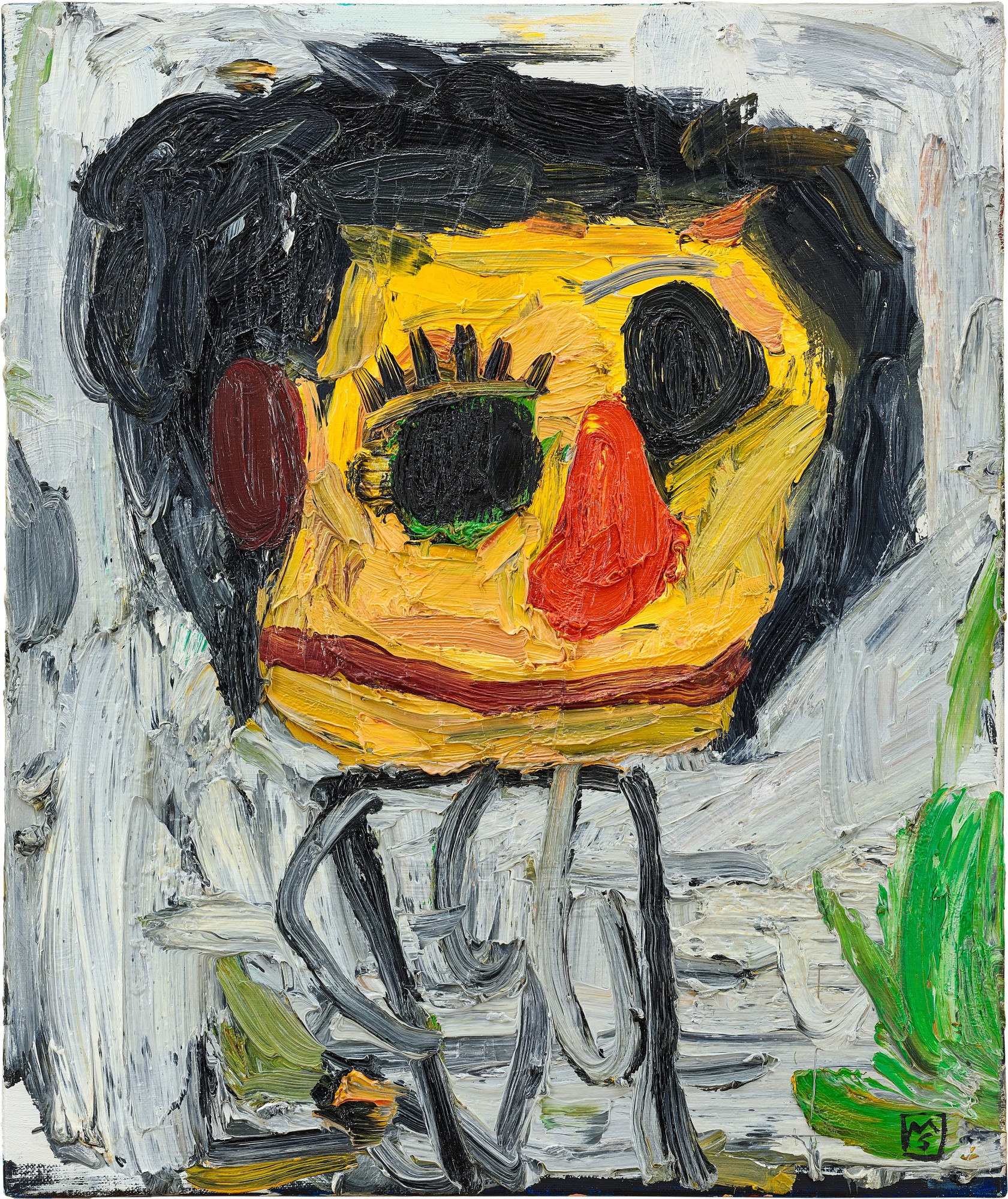
無題
Animals appear alongside human characters without explanation. Symbolic objects, skulls, pipes, hats, windows, accumulate in arrangements that suggest meaning without resolving into allegory. The darkness in his work is not nihilistic but philosophically playful, closer in spirit to the cabinet of curiosities than to any contemporary school of anxiety. Among the works that best demonstrate this synthesis is In Ictu Oculi, painted in 2014, a title borrowed directly from the seventeenth century vanitas tradition, a tradition that contemplated mortality through the language of luxury and beauty.
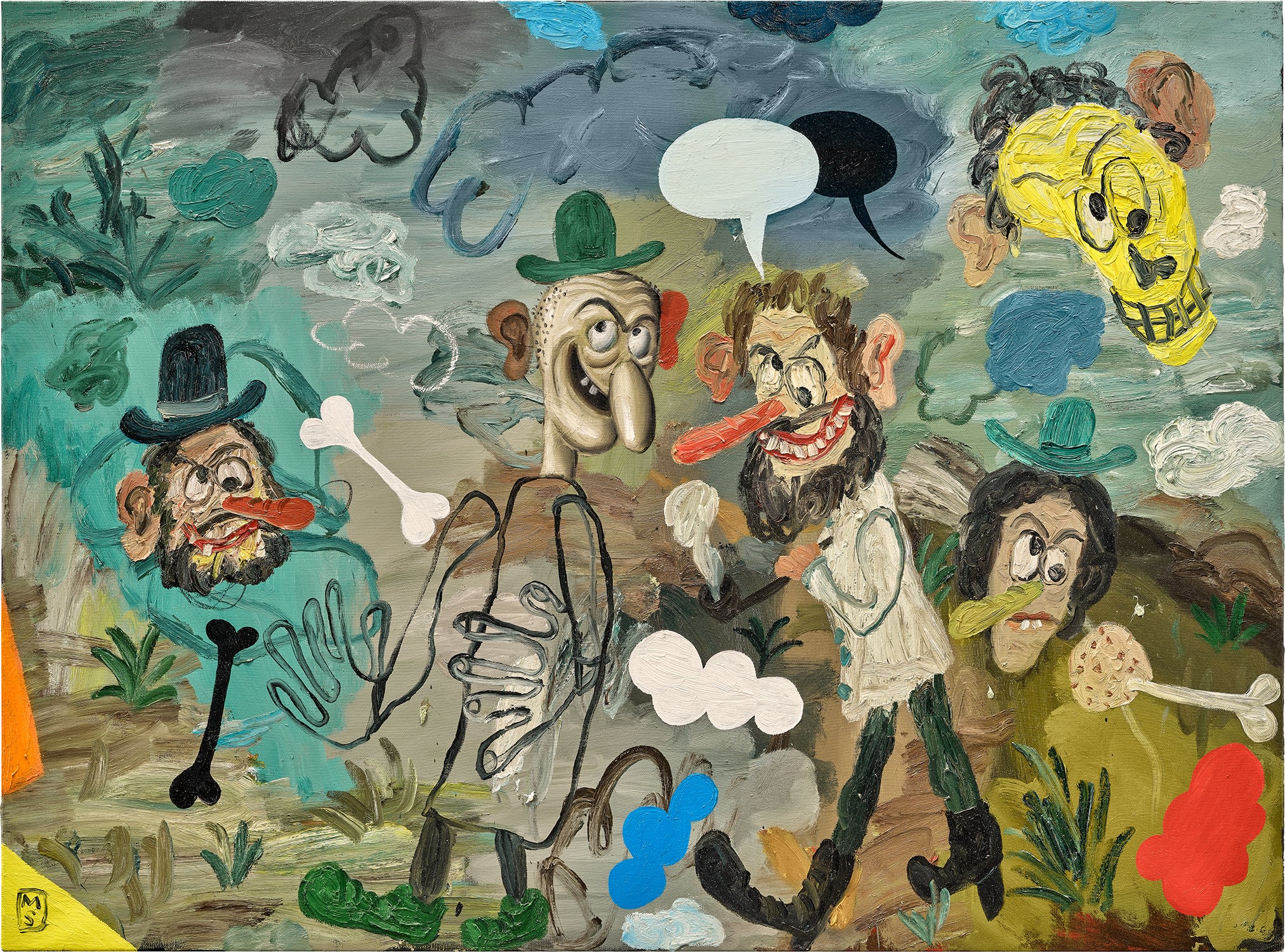
The painting carries that inheritance with full awareness, using dense theatrical light and the kind of symbolic layering that rewards extended looking. El Paseo: Pintores Hablando De Pintura, from 2021, takes a different approach, turning its attention to the social world of painters themselves, figures in conversation, consciousness meeting consciousness, the studio and the street folding together. Pintor a Pleno Sol, also from 2020, captures a painter caught in full sunlight, a condition that is both literal and metaphorical, the artist exposed, working, alive to the moment. These works are not illustrations of ideas.
Matías Sánchez
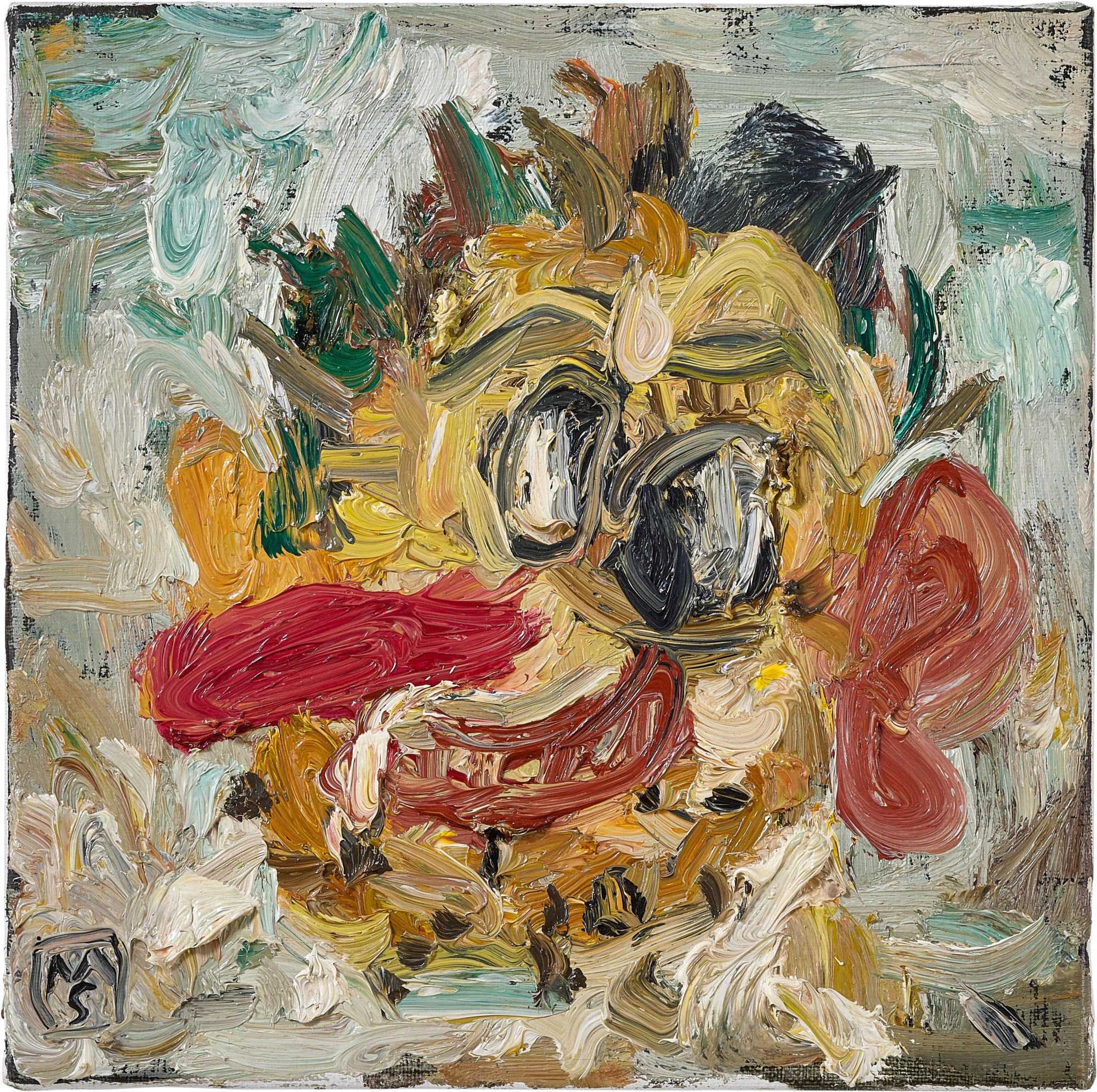
流鼻涕的年輕人
They are the ideas themselves, arrived at through paint. The range of titles across Sánchez's body of work offers its own kind of portrait of the artist's preoccupations. Works bearing Spanish titles sit alongside those rendered in Chinese characters, a detail that speaks to the genuinely international reach his paintings have achieved. Works such as Pintor con sombrero de copa and the skull centered composition rendered with operatic wit in what might be translated as a comic opera scenario show an artist who moves fluidly between solemnity and humor, between the ceremonial and the absurd.
His materials are consistently serious: oil on linen is his preferred surface, a choice that aligns him with the tactile and chromatic ambitions of the old masters and that gives his surfaces a warmth and depth that reproduction can only approximate. For collectors, the appeal of Sánchez's work operates on several levels simultaneously. On a purely visual register, the paintings are seductive and immediately engaging, the kind of work that holds a room without demanding explanation. On a deeper level, they reward the kind of sustained attention that serious collecting cultivates.
Matías Sánchez
El Paseo. Pintores Hablando De Pintura, 2021
Gallery representation through Galerie Zink and Delimbo Gallery, both of which have issued certificates of authenticity for works in private hands, provides the kind of institutional confidence that new collectors rely upon and that experienced collectors take as a signal of sustained seriousness. The market for rigorous contemporary figurative painting with historical roots has deepened considerably over the past decade, and Sánchez sits at an interesting intersection of that demand: European in sensibility, technically ambitious, and genuinely original. The artists who share Sánchez's territory are an instructive constellation. The Spanish tradition from which he draws, running through Zurbarán, Murillo, and the theatrical Baroque painters of the seventeenth century, places him in dialogue with a lineage that also shaped painters like Antonio López García and, further afield, the figurative surrealists of the twentieth century.
His darkly luminous compositions and interest in symbolic accumulation invite comparison with contemporary painters working in what has sometimes been called the new figuration: artists for whom painting's historical conventions are not limitations but instruments. Within that company Sánchez holds his own through the specificity and consistency of his vision. What makes Sánchez matter in 2024 is precisely what has always made the best painters matter: he offers a way of seeing that belongs to no one else. At a moment when the art world cycles rapidly through trends and counter trends, his commitment to the long conversation between painting's past and its present feels not conservative but genuinely radical.
He is an artist who trusts the intelligence of his audience and the depth of his medium, who believes that a canvas carefully made can hold more of human experience than most objects we encounter in a lifetime. That belief is evident in every painting, and it is the reason collectors who find his work tend to return to it, and to him.