Mathias Goeritz
Mathias Goeritz: Poet of Sacred Space
Artist Spotlight · The Collection Editorial
“I want to produce an emotional architecture. I want people to feel something when they enter a space.”
Mathias Goeritz, statement on El Eco, 1953
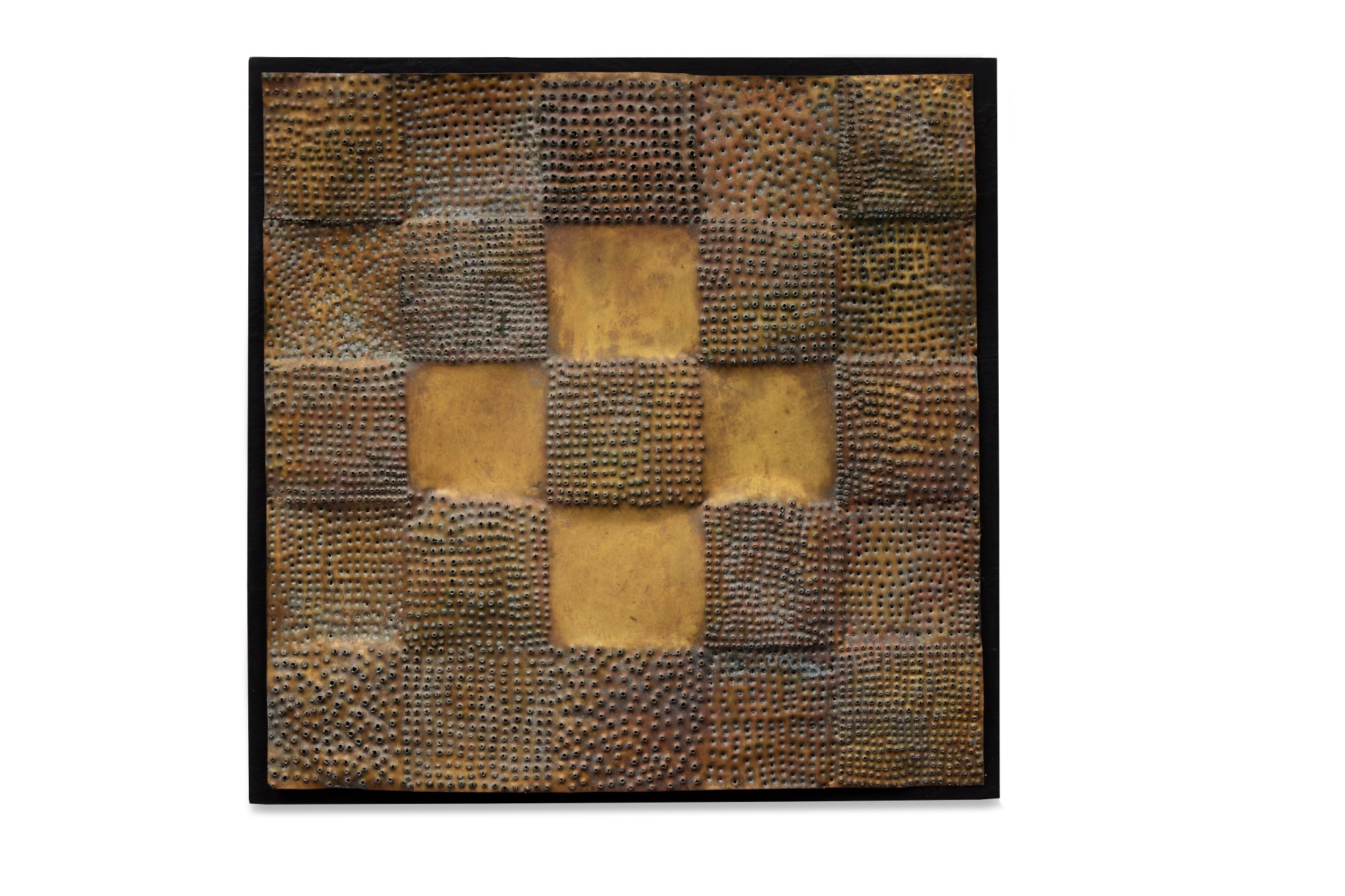
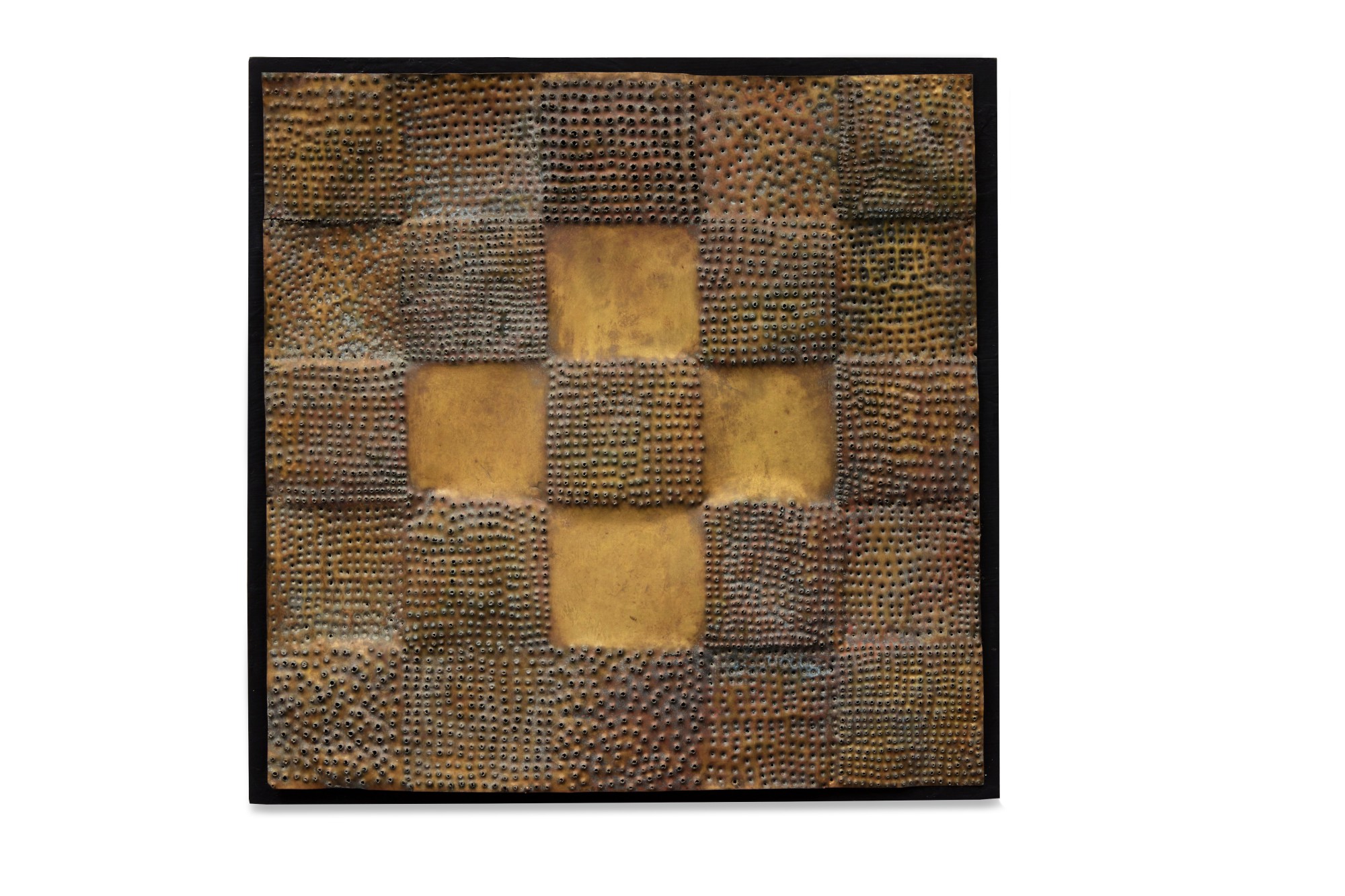
There is a moment, standing before one of Mathias Goeritz's golden Mensajes, when the noise of the contemporary art world falls away entirely. The perforated metal surfaces catch light and hold it, the punctured voids becoming as significant as the material itself, and something quietly spiritual enters the room. It is the kind of encounter that reminds collectors and curators why Goeritz remains one of the most quietly indispensable figures in twentieth century art. His reputation has only deepened in recent decades, with institutions across Mexico, the United States, and Europe continuing to present his work as foundational to understanding the relationship between modernism, spirituality, and public space in the postwar era.
Mathias Goeritz
Mensaje No. 88, Hebreos 11:1, 1962
Goeritz was born in Danzig in 1915, in a city that was itself a kind of threshold, belonging fully to neither Germany nor Poland, suspended between worlds. He studied art history and fine arts in Berlin during the 1930s, coming of age in an atmosphere of intellectual ferment that was simultaneously electrifying and increasingly threatening. As National Socialism tightened its grip on cultural life, Goeritz left Germany, spending time in Morocco and Spain before eventually making his way to Mexico in 1949. That arrival in Mexico City would prove to be the most consequential journey of his life, the moment when a restless, searching European sensibility encountered a culture whose relationship to monumentality, ritual, and the sacred would transform his practice entirely.
Mexico gave Goeritz everything. He joined the faculty of the newly founded Escuela de Arquitectura y Diseño in Guadalajara almost immediately upon his arrival, and his engagement with architecture and urban space would become a defining thread running through his entire career. He was a galvanizing presence in Mexican cultural life, befriending Diego Rivera, becoming close to the architect Luis Barragán, and inserting himself into debates about what modern art could and should do in a public context. His famous El Eco experimental museum, designed and built in Mexico City in 1953, was a provocation and a manifesto simultaneously, a building that declared architecture itself to be emotional sculpture.
Mathias Goeritz
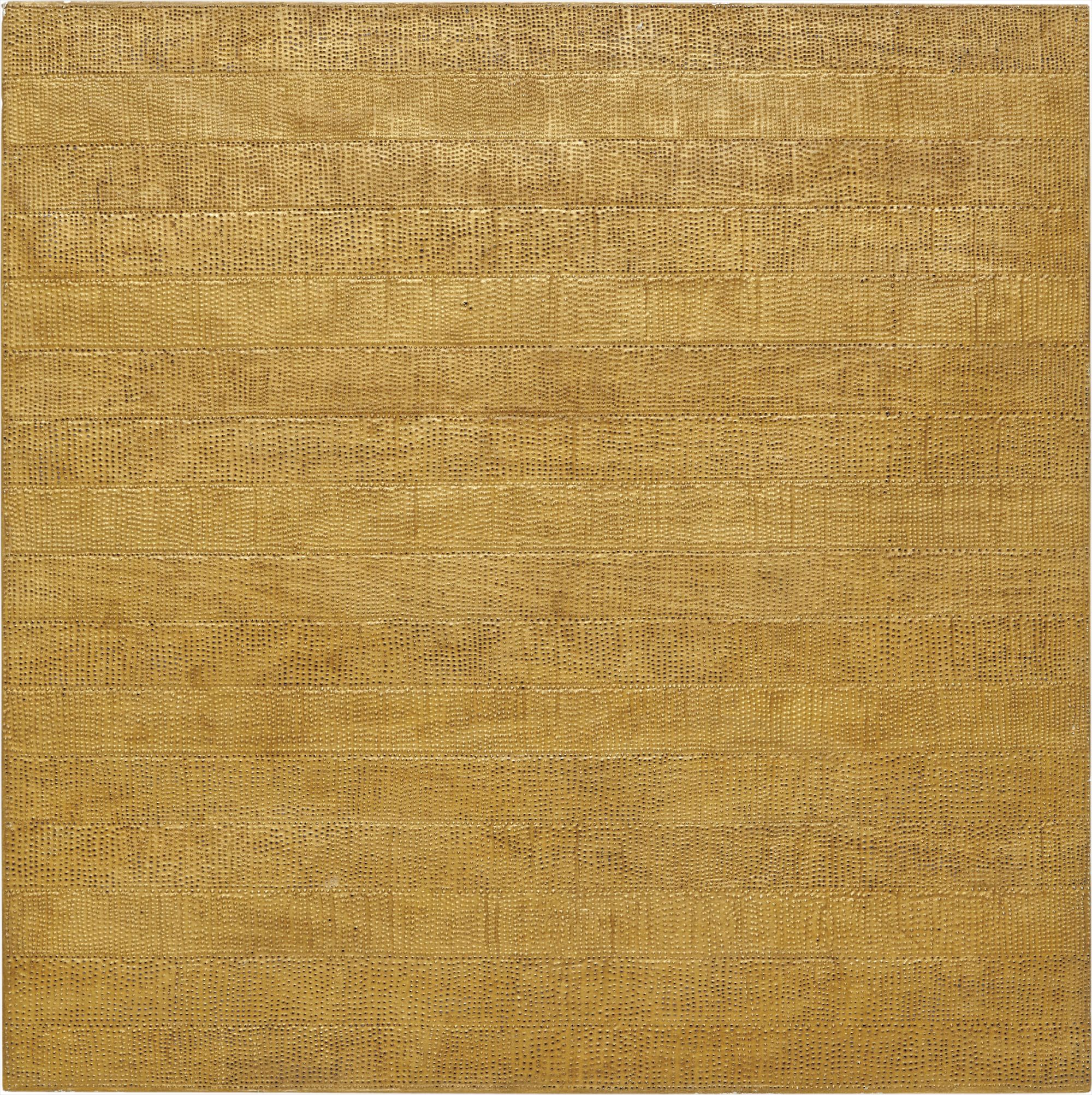
Mensaje dorado
The structure announced the arrival of a major voice who refused to accept any boundary between art forms. The most celebrated chapter of his public work came with the Torres de Satélite, the soaring concrete towers he designed in collaboration with Luis Barragán in 1957 and 1958, erected at the entrance to the Satélite suburb north of Mexico City. These five irregular prismatic towers, painted in bold colors, rising as high as 57 meters, became an iconic landmark and one of the defining works of Latin American modernism. They demonstrated Goeritz's absolute conviction that sculpture could operate at the scale of architecture, that it could orient people within a landscape, and that it could carry an almost liturgical weight in everyday life.
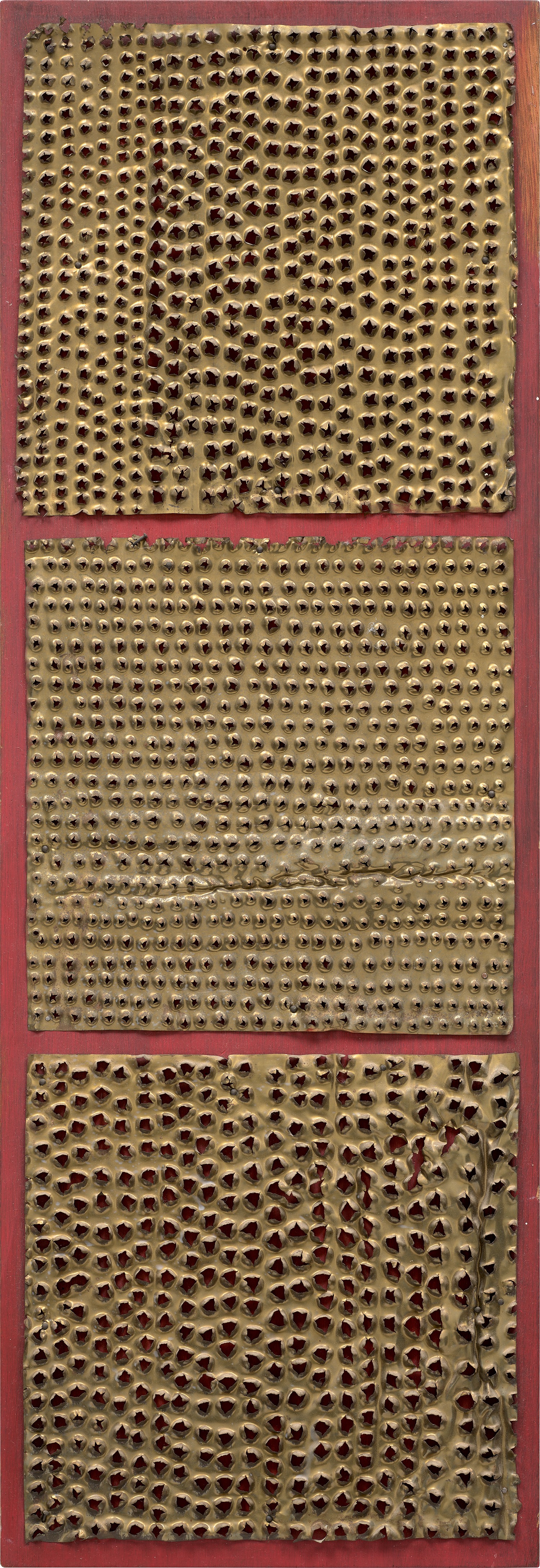
The towers are now inseparable from Mexico City's identity, and their influence on subsequent generations of artists working at the intersection of minimalism and public art is difficult to overstate. Alongside this monumental work, Goeritz developed an intensely intimate body of studio practice centered on what he called his Mensajes, or Messages. These works, which he produced across several decades beginning in the late 1950s, represent his most personal and spiritually charged vision. Using perforated metal sheets, gold paint, nails, and found industrial materials laid on painted wooden grounds, Goeritz created objects that hover between painting and relief sculpture, between the handmade and the industrial, between silence and speech.
Mathias Goeritz
Clouage, 1979
The title Mensaje is not incidental. Goeritz was deeply influenced by his engagement with Jewish mysticism and Christian spirituality, and he understood these works as transmissions, as attempts to make visible something that language alone could not carry. The work titled Mensaje No. 88, Hebreos 11:1, created in 1962, carries its theological source openly, taking its title from the Book of Hebrews, the passage defining faith as the substance of things hoped for and the evidence of things not seen.
The perforated gold surface, radiant and porous at once, becomes a perfect visual equivalent for that definition. Collectors who come to Goeritz's work often describe a similar experience: the works demand slowness. In an era of immediate visual gratification, the Mensajes offer something different, a surface that rewards sustained attention and reveals itself gradually. The gold paint acquires warmth and depth depending on the quality of light, the perforations create rhythms that feel almost musical, and the combination of industrial material with hand application gives each work a paradoxical intimacy.
Mathias Goeritz
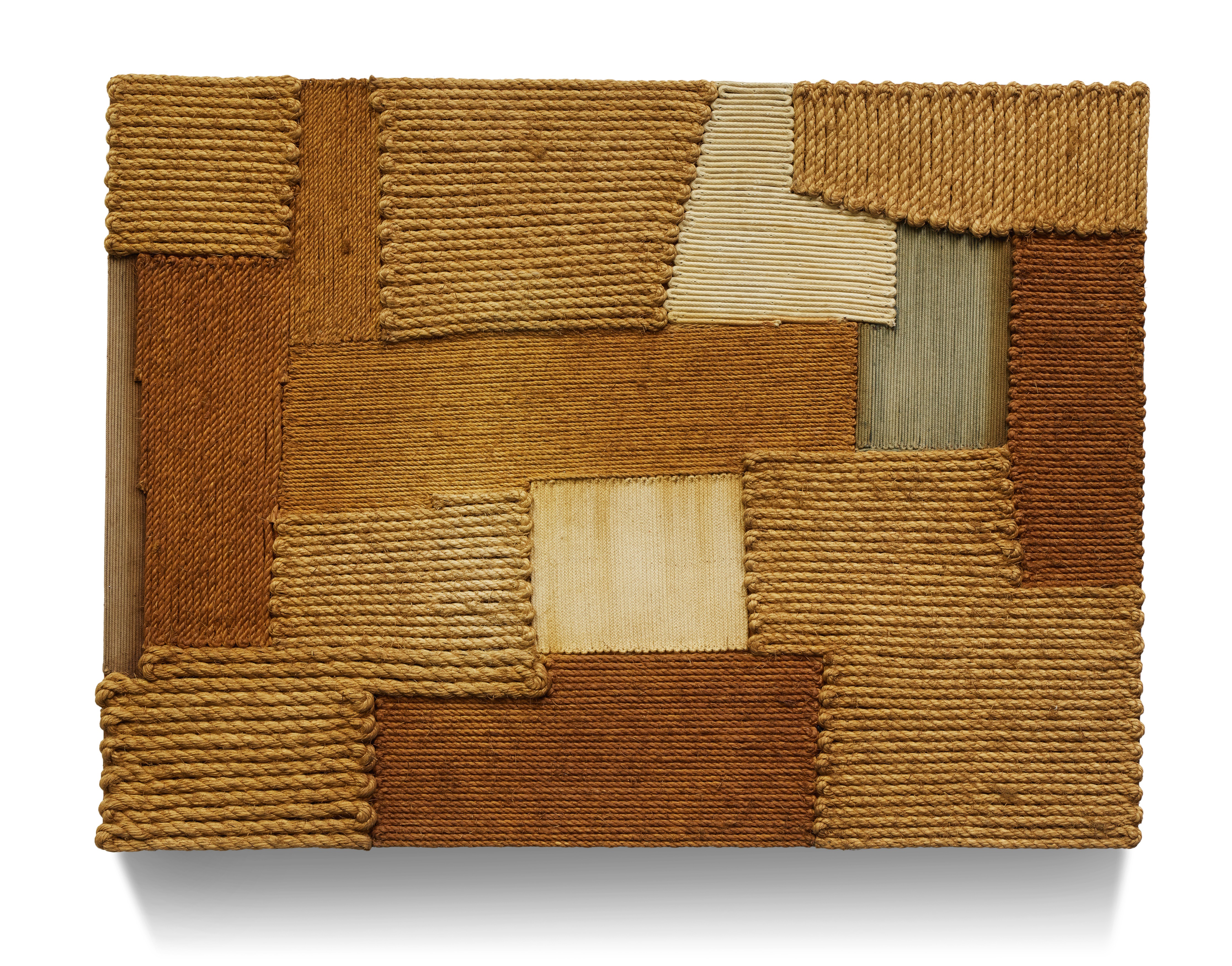
Ensayo no. 1, 1964
Works such as Ensayo no. 1 from 1964, which uses sisal rope on wood to achieve a similarly textured, meditative surface, show Goeritz's willingness to push these investigations into purely tactile and material territory. The collecting market for Goeritz has strengthened considerably in recent years, with serious buyers in Mexico, the United States, and Europe recognizing that his studio works represent exceptional value relative to their historical importance. His presence in major institutional collections, including the Museum of Modern Art in New York and the Museo de Arte Moderno in Mexico City, provides strong context and validation for private collectors.
To place Goeritz within art history is to see how many conversations he was participating in simultaneously, and how often he was ahead of them. His interest in texture, repetition, and industrial materials anticipates aspects of Arte Povera. His concern with the spiritual dimensions of abstract form places him in dialogue with Mark Rothko and Barnett Newman. His public sculpture practice prefigures the ambitions of Richard Serra and Donald Judd, though Goeritz brought a warmth and a mystical intention that sets him apart from the cooler registers of American minimalism.
He was in correspondence and in conversation with artists across the Americas and Europe, and his role as a connector and provocateur in Mexican cultural life was as significant as his role as an object maker. Goeritz died in Mexico City in 1990, having spent more than four decades transforming his adopted country's understanding of what art could be and where it could live. His legacy is the belief that art has a duty to reach beyond the aesthetic, to touch something in the viewer that is closer to faith than to taste. The Mensajes endure because they make that argument not through rhetoric but through the patient, shining fact of their presence.
For collectors, owning a work by Goeritz is to hold a piece of one of the twentieth century's most searching and courageous artistic minds, a mind that crossed continents and categories to ask, over and over, what it means to make something sacred.
Explore books about Mathias Goeritz
Mathias Goeritz
Luis Barragán, Ida Rodríguez Prampolini
Mathias Goeritz: Obra Plástica
Ida Rodríguez Prampolini
Mathias Goeritz: 1909-1990
Various
Mathias Goeritz: Experiments in Form
Edward F. Moore
Goeritz: The Sculptor and Architect
Shifra M. Goldman