Martin Eder
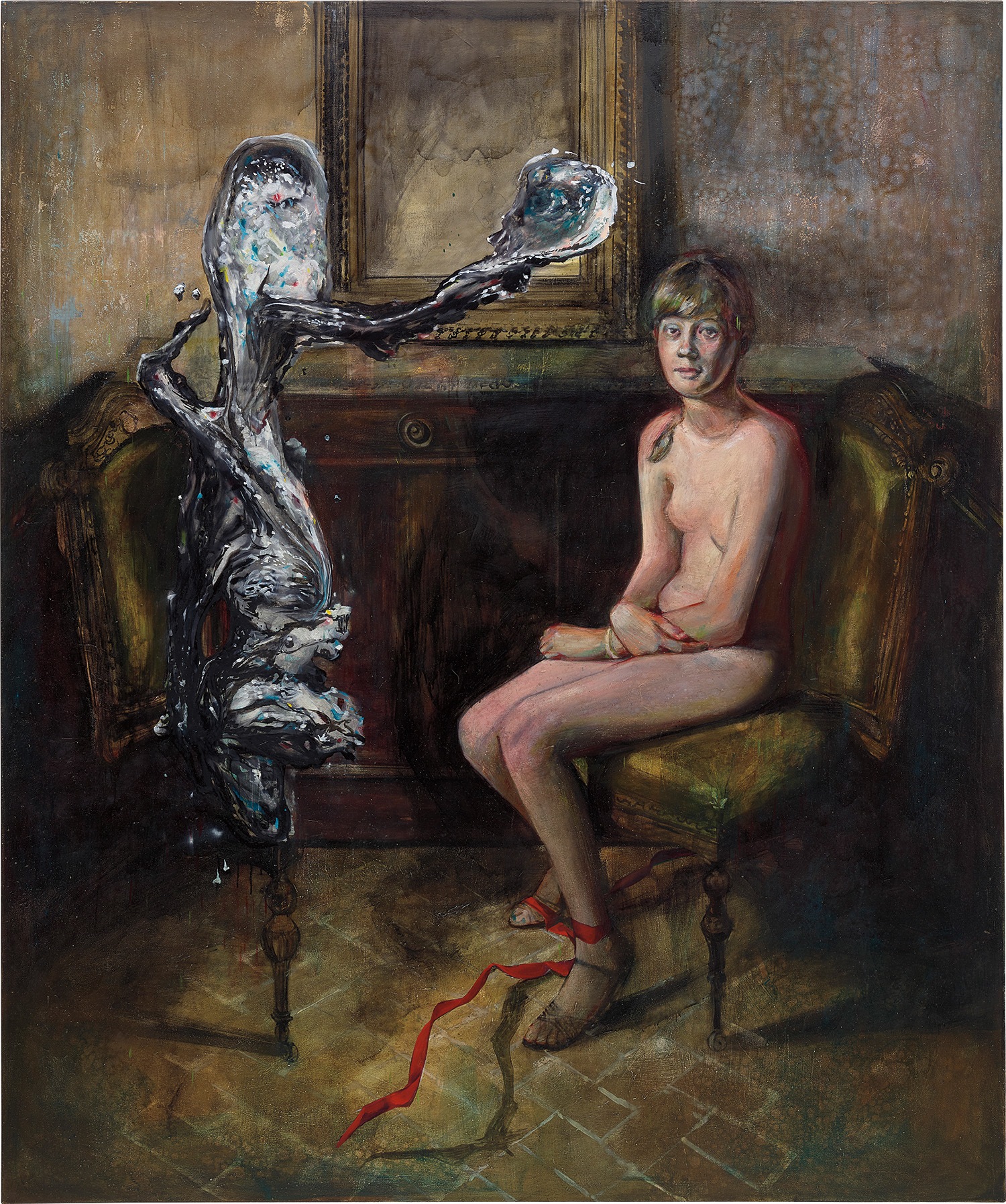
Martin Eder's Gorgeous World of Beautiful Unease
Artist Spotlight · The Collection Editorial
When Kunsthalle Wien opened its doors to Martin Eder's expansive survey exhibition, visitors encountered something they were entirely unprepared for: a world of disarming loveliness that quietly refused to let them look away. Eder's canvases, rendered with a technical fluency that recalls the great academic painters of northern Europe, draw the eye in before revealing their stranger dimensions. The experience is not one of shock but of slow, pleasurable bewilderment, which is precisely what has made this German painter one of the most genuinely compelling figures to emerge from the figurative revival of the early 2000s. Martin Eder was born in 1968 in Germany, coming of age in a cultural moment saturated with competing visual languages.
Martin Eder
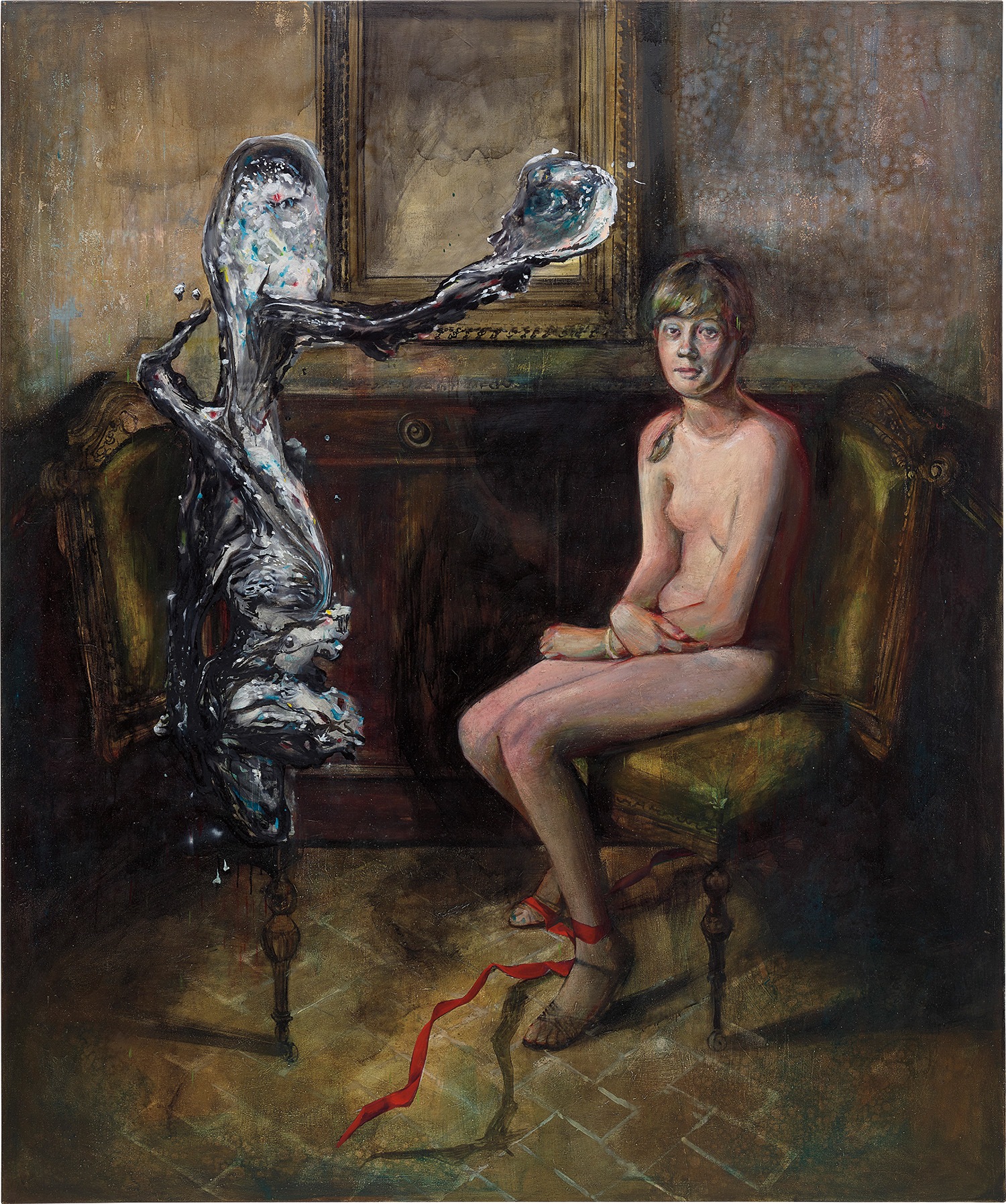
Die Stimme aus Metall, 2003
The postwar German tradition of critical figuration, running from Gerhard Richter through Neo Rauch and the Leipzig School, offered one inheritance. The flood of commercial imagery, advertising aesthetics, and the soft visual grammar of greeting cards and pet photography offered another. Eder absorbed all of it with an omnivorous appetite, developing early an ability to hold contradictory registers of image making in productive tension. His formation was shaped by an acute sensitivity to the way popular culture manufactures desire and innocence simultaneously, and his eventual practice can be read as a sustained inquiry into that manufactured quality.
Eder's artistic development accelerated significantly in the early 2000s, when he began producing the large scale oil paintings that would define his international reputation. The years 2003 and 2004 were particularly fertile, yielding some of the works that collectors and curators still return to as touchstones. In this period he locked in the vocabulary that would carry his practice forward: the velvet atmospheric backgrounds, the hyperrealist rendering of fur and skin and fabric, and the juxtaposition of figures that belonged to entirely different emotional registers placed together as though it were the most natural arrangement in the world. It was in this phase that Eder demonstrated just how thoroughly he had internalized the lessons of old master painting while remaining entirely committed to a contemporary sensibility.
Martin Eder
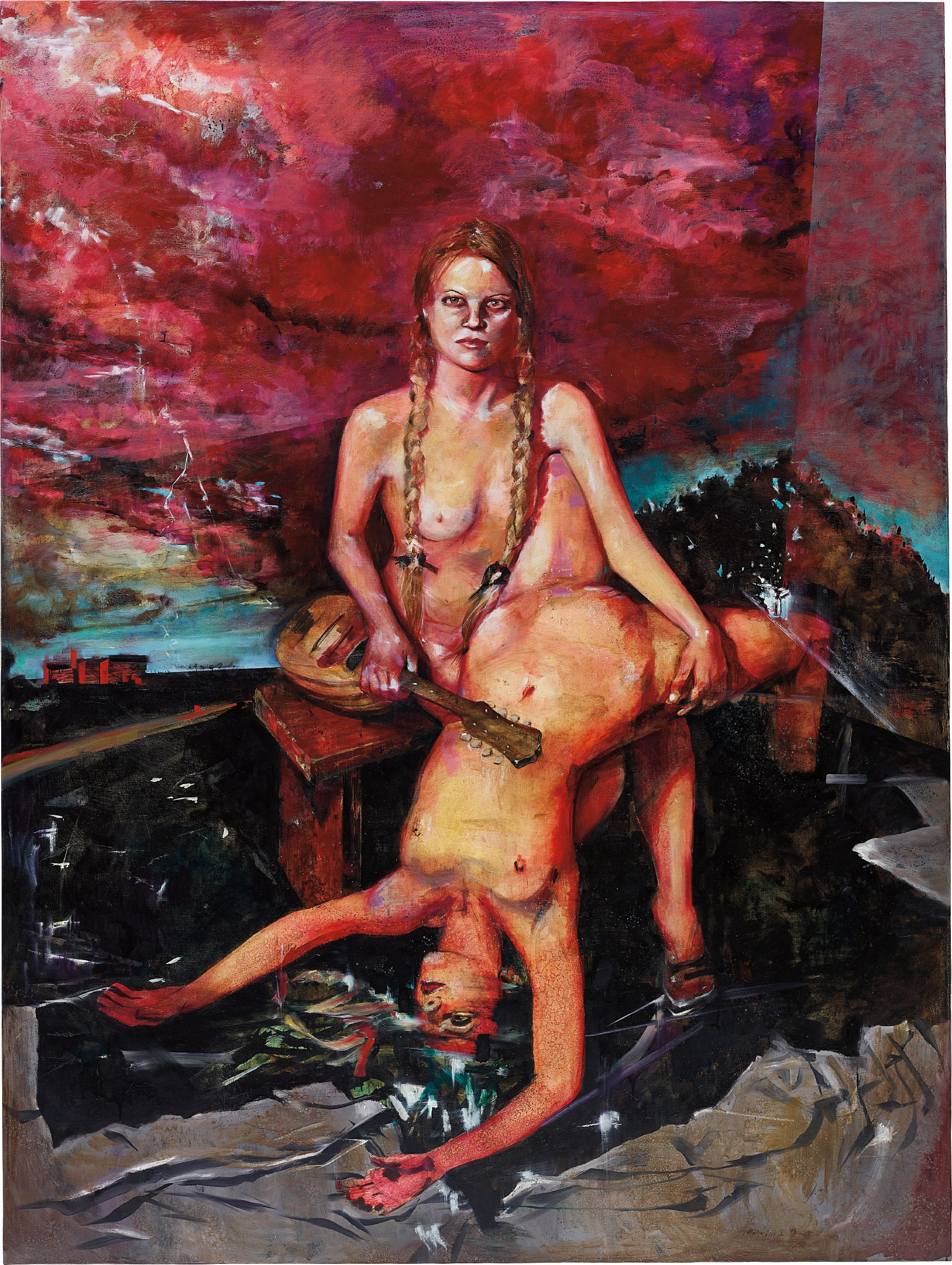
There is no moment to sit, 2004
Among his signature works, Die Stimme aus Metall from 2003 stands as an early demonstration of his full powers. The painting's title, which translates loosely as The Voice from Metal, signals the kind of dissonance Eder cultivates so carefully, a lyrical phrase attached to imagery that unsettles its own lyricism. There is no Moment to Sit, also from 2004, extends this investigation with a restless compositional energy that keeps the viewer moving across the surface, never quite settling into comfort. Mascara Dream Endlessly, from the same year, shows his facility with the language of feminine artifice, treating cosmetic culture with neither condemnation nor celebration but with a kind of forensic tenderness.
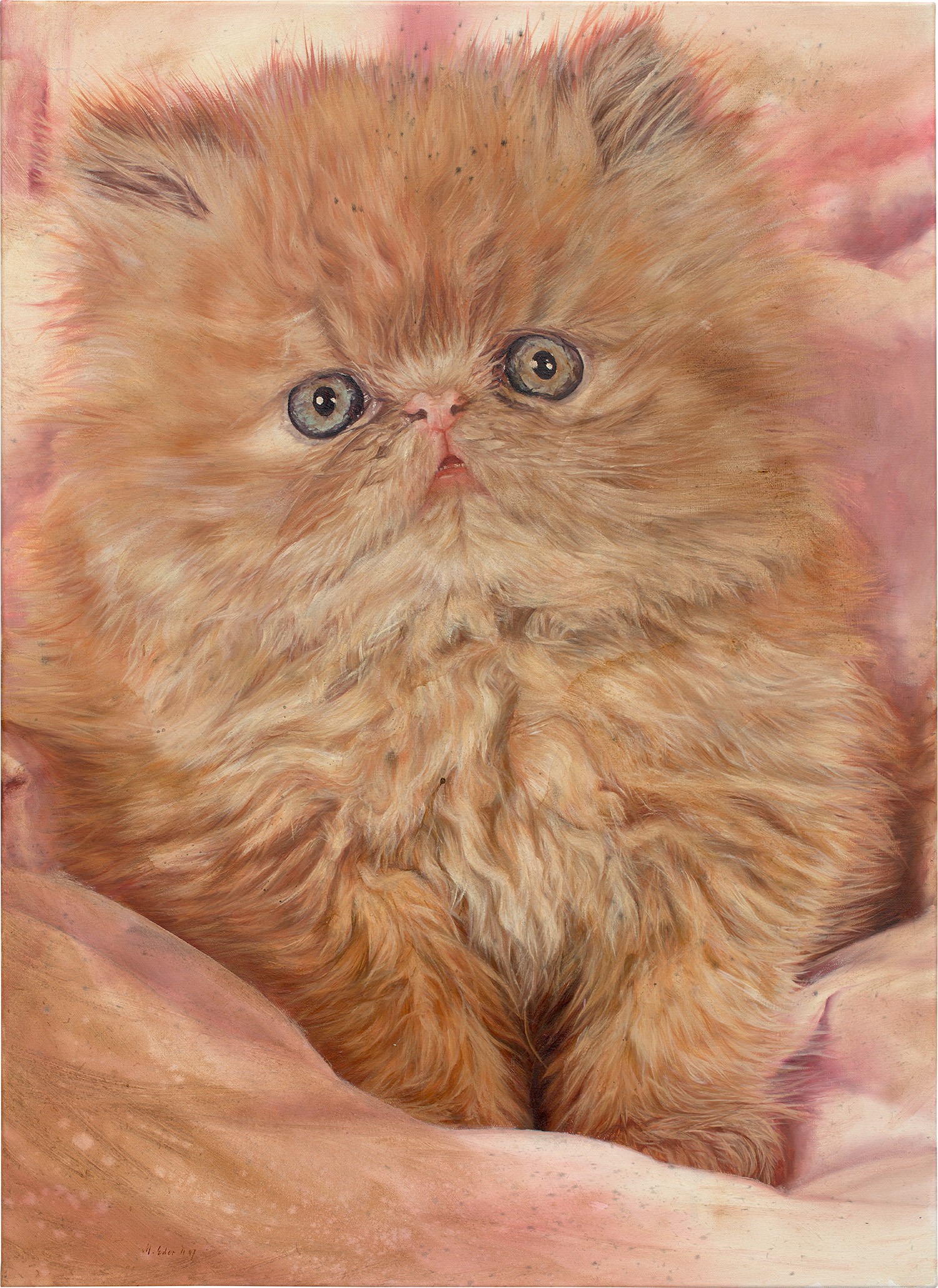
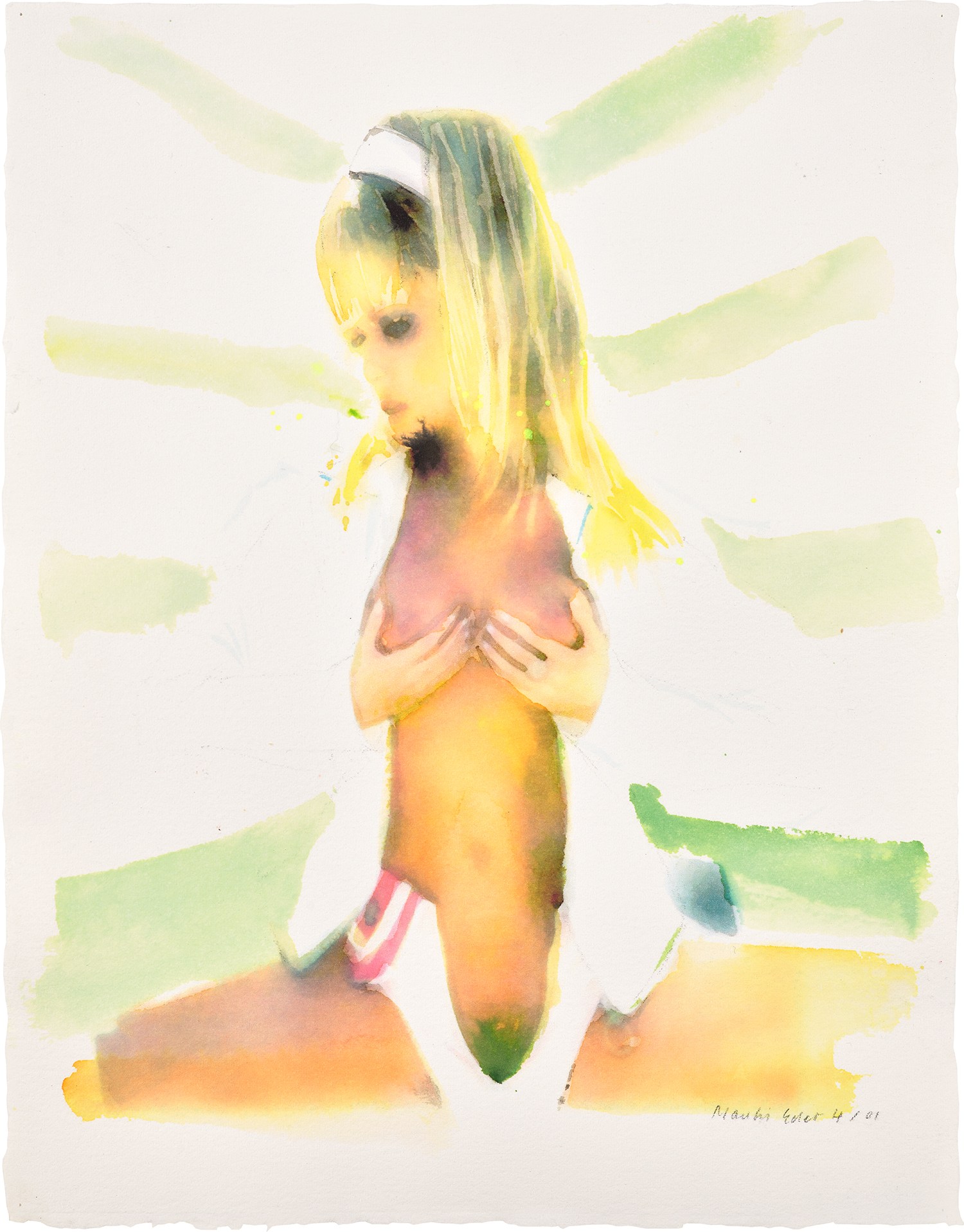
Gespenster from 2007, whose title means Ghosts, represents a maturation of his atmospheric techniques, with figures that seem to dissolve at their edges as though memory itself were the medium. His unique watercolor, airbrush, and graphite works on Arches paper demonstrate the range of his technical command, showing that his skills are not confined to the oil medium but extend across materiality with equal confidence. Collectors are drawn to Eder for reasons that go beyond the obvious technical mastery, though that mastery is considerable and should not be underestimated in a market that increasingly values genuine craft. What distinguishes his work in a collection is its peculiar emotional persistence: these are paintings that continue to do things to the people who live with them.
Martin Eder
Gespenster, 2007
The combination of kitsch imagery elevated through rigorous painting, of softness and strangeness coexisting without resolution, creates an object that resists easy categorization and therefore resists the familiarity that can diminish lesser works over time. For collectors building a body of work around contemporary German painting or the broader figurative revival, Eder occupies a distinct and irreplaceable position. His oil paintings from the early to mid 2000s represent particularly strong collecting opportunities, as this period captures his initial articulation of a fully realized vision. In terms of art historical context, Eder sits in a generative conversation with a lineage of painters who have used technical virtuosity as a vehicle for psychological investigation.
The photorealist tradition informs his surface, while the surrealist willingness to combine incompatible imagery shapes his compositional logic. His interest in kitsch connects him to a broader theoretical conversation that runs from Clement Greenberg through Jeff Koons, though Eder approaches the question from a distinctly painterly and European perspective. Painters such as Neo Rauch, with his dreamlike figurative tableaux, and the broader Leipzig School sensibility, offer points of comparison, though Eder's use of commercial visual culture gives his work a different flavor, warmer and more seductive on the surface, quietly stranger beneath it. The legacy of Martin Eder is still being written, which is one of the most exciting things about engaging with his work right now.
Martin Eder
Martin Eder
He emerged at a moment when figurative painting was reasserting itself against the dominance of conceptual and installation based practices, and he helped demonstrate that the painted surface could still carry genuine intellectual and emotional weight. His exhibitions at institutions including Kunsthalle Wien and Kunstverein Hannover placed him within the serious discourse of European contemporary art while his work simultaneously spoke to audiences without specialist knowledge, which is a rare and valuable combination. As collecting tastes continue to move toward work that rewards sustained attention and demonstrates deep commitment to the painted medium, Eder's position can only strengthen. To own one of his paintings is to own an object that understands the full complexity of how images seduce us, and that understanding is timeless.
Explore books about Martin Eder