Markus Oehlen
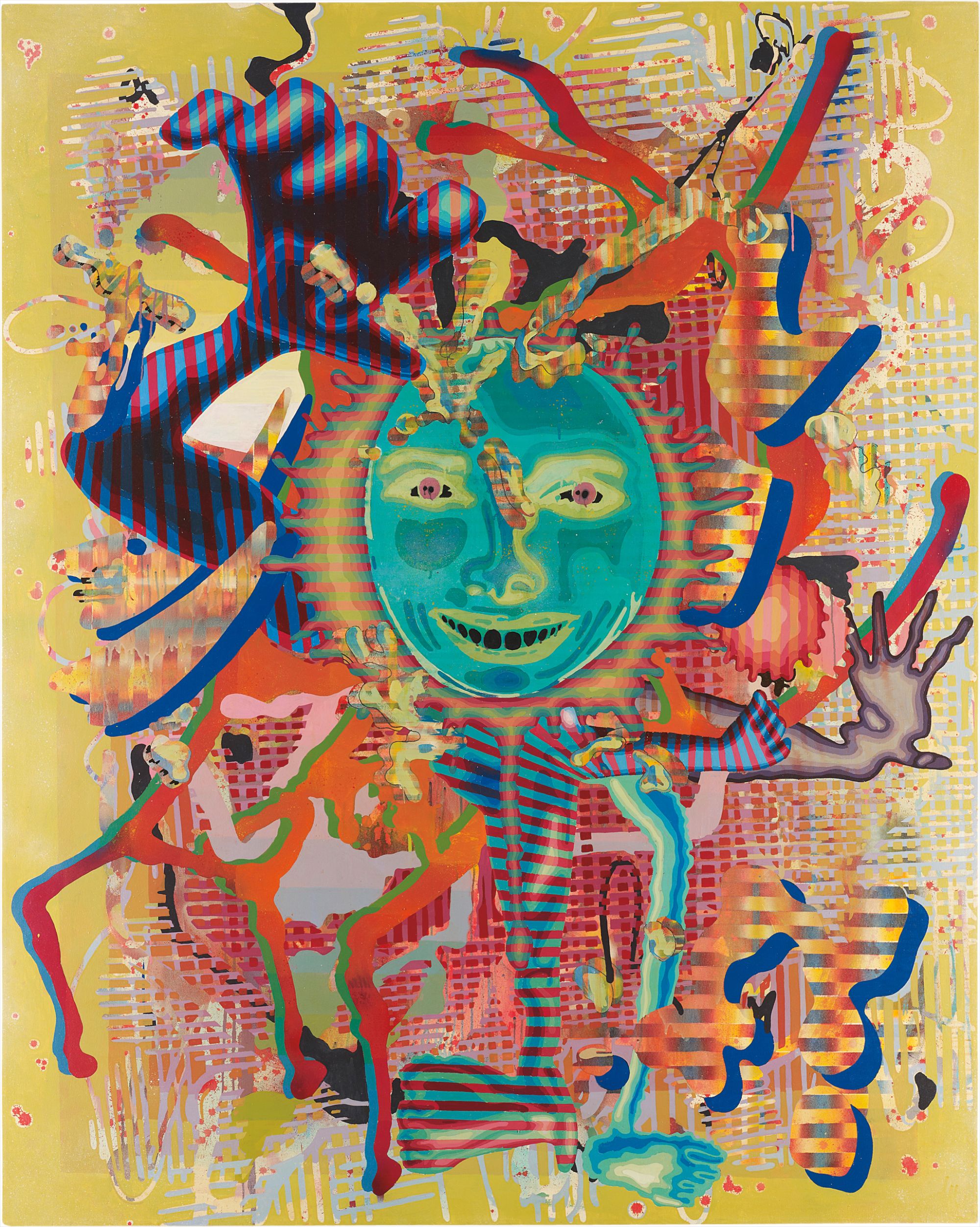
Markus Oehlen, Where Chaos Finds Its Form
Artist Spotlight · The Collection Editorial
When Markus Oehlen's paintings appear on the walls of a serious European gallery, something shifts in the room. There is a feeling of controlled detonation, of noise rendered luminous. In recent years, institutions and collectors across Germany and beyond have renewed their attention to the generation of painters who emerged from Cologne and Düsseldorf in the early 1980s, and Oehlen stands among the most formally rigorous and intellectually alive of that cohort. His work has been the subject of sustained gallery presentations at venues including Galerie Max Hetzler, one of the defining platforms for serious painting in the German and international context, and each showing reaffirms his position as an artist whose relevance only deepens with time.
Markus Oehlen
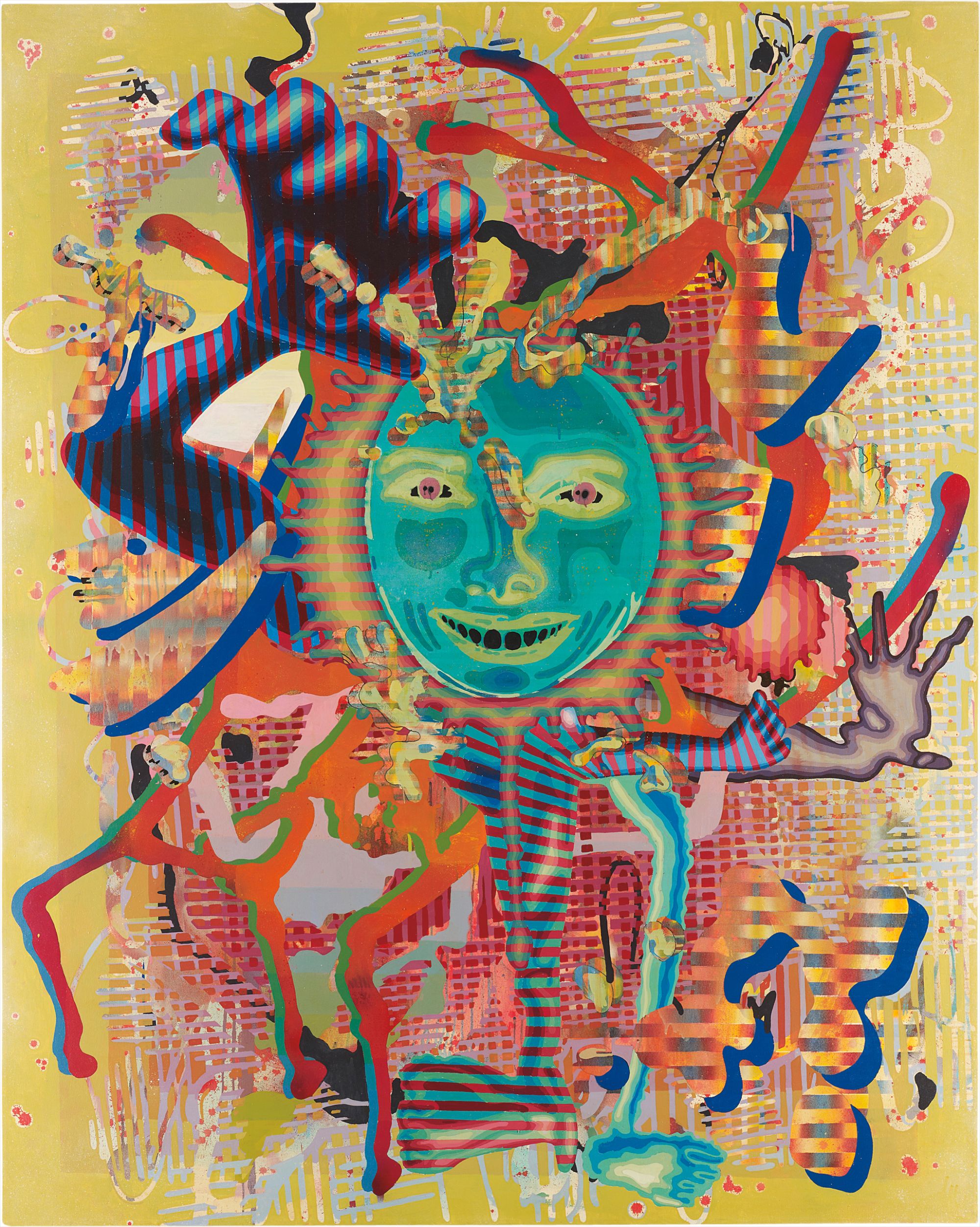
Coral Mix
Markus Oehlen was born in Krefeld, Germany in 1956, a city in the industrial Rhine region that shaped an entire generation of artists through its proximity to Düsseldorf and the extraordinary cultural ferment of postwar West German life. He studied at the Hochschule für Bildende Künste in Hamburg, an institution that in the late 1970s was producing some of the most restless and ambitious young painters in Europe. It was there that he began forming the sensibility that would define his practice: a deep engagement with the history of painting combined with an almost punk willingness to break its conventions from the inside out. His older brother Albert Oehlen would become one of the most celebrated painters of the same generation, and the two shared an artistic dialogue that was formative without being derivative on either side.
The early 1980s in West Germany were an extraordinary moment for painting. The movement loosely grouped under the term Neue Wilde, or the new wild ones, was generating international excitement, and figures like Martin Kippenberger, Werner Büttner, and Georg Herold were producing work that was irreverent, historically loaded, and deeply engaged with popular culture. Markus Oehlen was part of this social and intellectual ecosystem, and his early paintings reflect the energy of that moment: a deliberate scrambling of high and low references, a delight in visual dissonance, and an underlying seriousness about what painting could do and say. He was never merely a participant in a scene, however.
Markus Oehlen
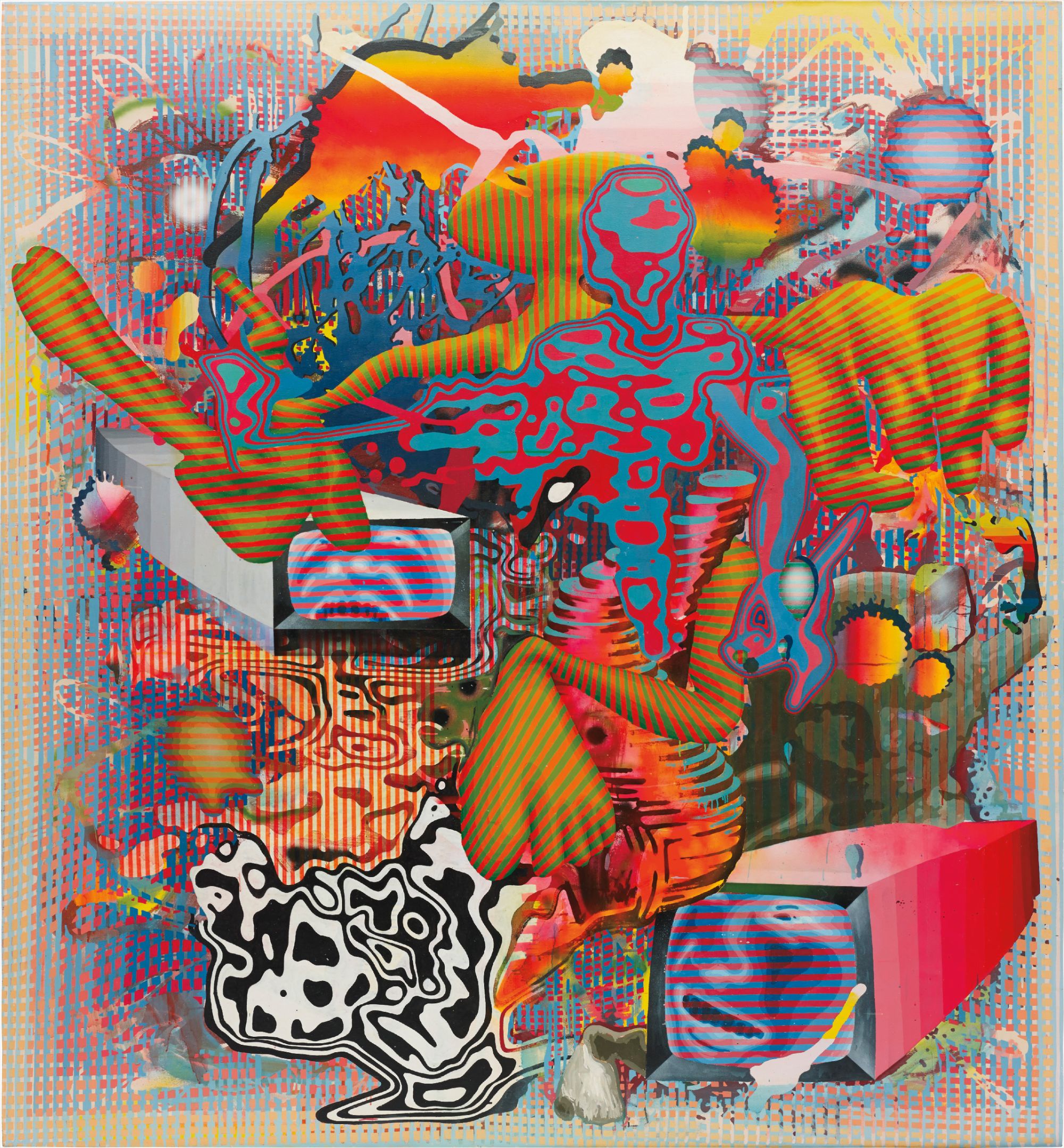
Sohn von Zwielicht
His work consistently pushed toward a personal formal language that set it apart. Over the decades, Oehlen's practice evolved in ways that reward close attention. He became increasingly interested in the structural possibilities of abstraction, in the way that layered marks, commercial spray paint, and gestural oil could create a surface that functions almost like a score of competing frequencies. His paintings from the 1990s and 2000s show a growing confidence in density and scale, canvases where the eye has no single entry point but is instead invited into a sustained navigational experience.
The introduction of spray paint as a primary material was not a concession to decorative effect but rather a deliberate expansion of the painterly vocabulary, allowing him to create atmospheric fields against which his more direct gestural interventions read with even greater tension and specificity. The works available on The Collection offer an instructive window into this mature practice. "Coral Mix" in oil on canvas demonstrates Oehlen's gift for chromatic intelligence, a painting in which the warmth of coral tones is complicated and enriched by the surrounding formal activity, creating a surface that feels both sensuous and structurally exacting. "Sohn von Zwielicht," which translates approximately as Son of Twilight, brings together acrylic and spray paint on canvas in a way that feels characteristic of his most ambitious mode: the title carrying a literary and atmospheric charge while the surface itself remains committed to purely painterly resolution.
Together these works give a sense of an artist who treats each canvas as a complete world, governed by its own internal logic. For collectors, Oehlen represents an unusually compelling proposition within the broader landscape of German painting. His work sits in a lineage that includes not only his contemporaries from the Hamburg and Cologne circles but reaches back to the gestural traditions of late modernism and forward into conversations about digital imagery, information overload, and the persistence of the painted mark. Collectors who have built serious holdings in the work of Albert Oehlen, Christopher Wool, or Günther Förg will find in Markus Oehlen a natural and deeply complementary voice.
His market, while quieter than some of his more commercially prominent peers, reflects a genuine connoisseurship: those who acquire his work tend to do so with conviction and to hold it with care. The art historical context for Oehlen's work is rich and multi directional. He engages with the legacy of abstract expressionism without being beholden to it, responds to the pictorial strategies of Sigmar Polke with something genuinely his own, and participates in the broader European reassessment of what painting can mean in a world saturated with images. The Neue Wilde generation as a whole was doing something that seemed almost perverse at the time: insisting on the relevance of the painted canvas when the art world's critical attention was often directed elsewhere.
That insistence has been vindicated in the decades since, and Oehlen's contribution to it deserves to be more widely celebrated. What makes Markus Oehlen matter today is precisely the quality of sustained attention his work demands and rewards. In an art world that often privileges the quickly legible and the rhetorically declarative, his paintings require something more patient and more open. They ask the viewer to remain with the surface, to let the relationships between marks and layers and tonal fields accumulate into meaning.
This is not difficulty for its own sake but rather the natural expression of an artist who believes that painting, properly pursued, can still do things that no other medium can. For collectors who share that belief, his work is not merely an acquisition but an ongoing conversation.