Mark Tansey
Mark Tansey: Painting Ideas Into Glorious Being
Artist Spotlight · The Collection Editorial
“The painting is a question. It doesn't supply answers so much as it invites the viewer to think.”
Mark Tansey, interview with Jeffrey Weiss, 1992
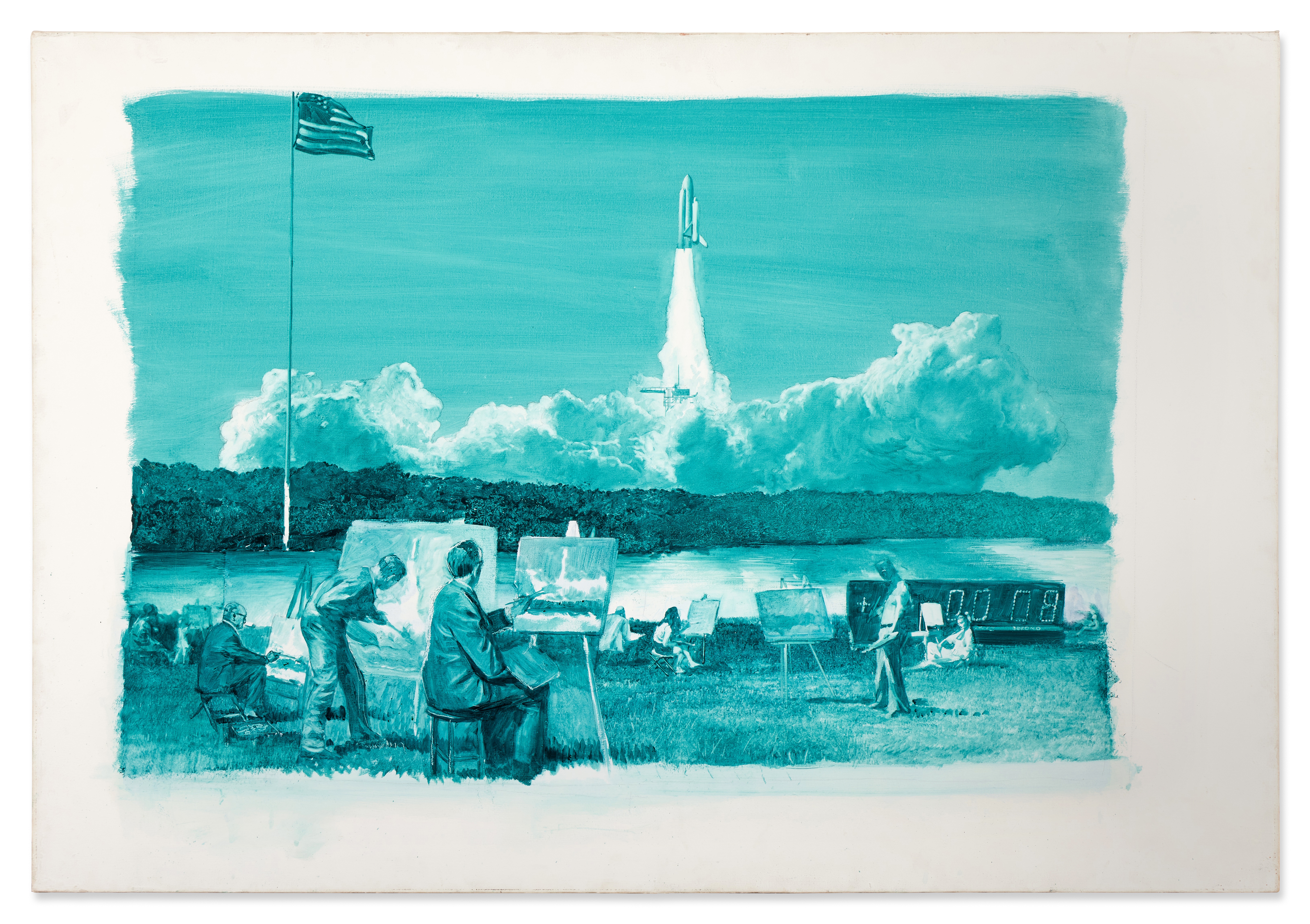
There are painters who render the visible world, and then there is Mark Tansey, who renders the invisible one: the world of ideas, arguments, and philosophical collisions that usually live only in the pages of academic journals and late night debates. When the Metropolitan Museum of Art, the Whitney Museum of American Art, and the Los Angeles County Museum of Art all hold your work in permanent collection, you have achieved something rare. But Tansey has achieved something rarer still. He has made conceptual painting genuinely thrilling to look at, images that reward the eye before they even begin to reward the mind.
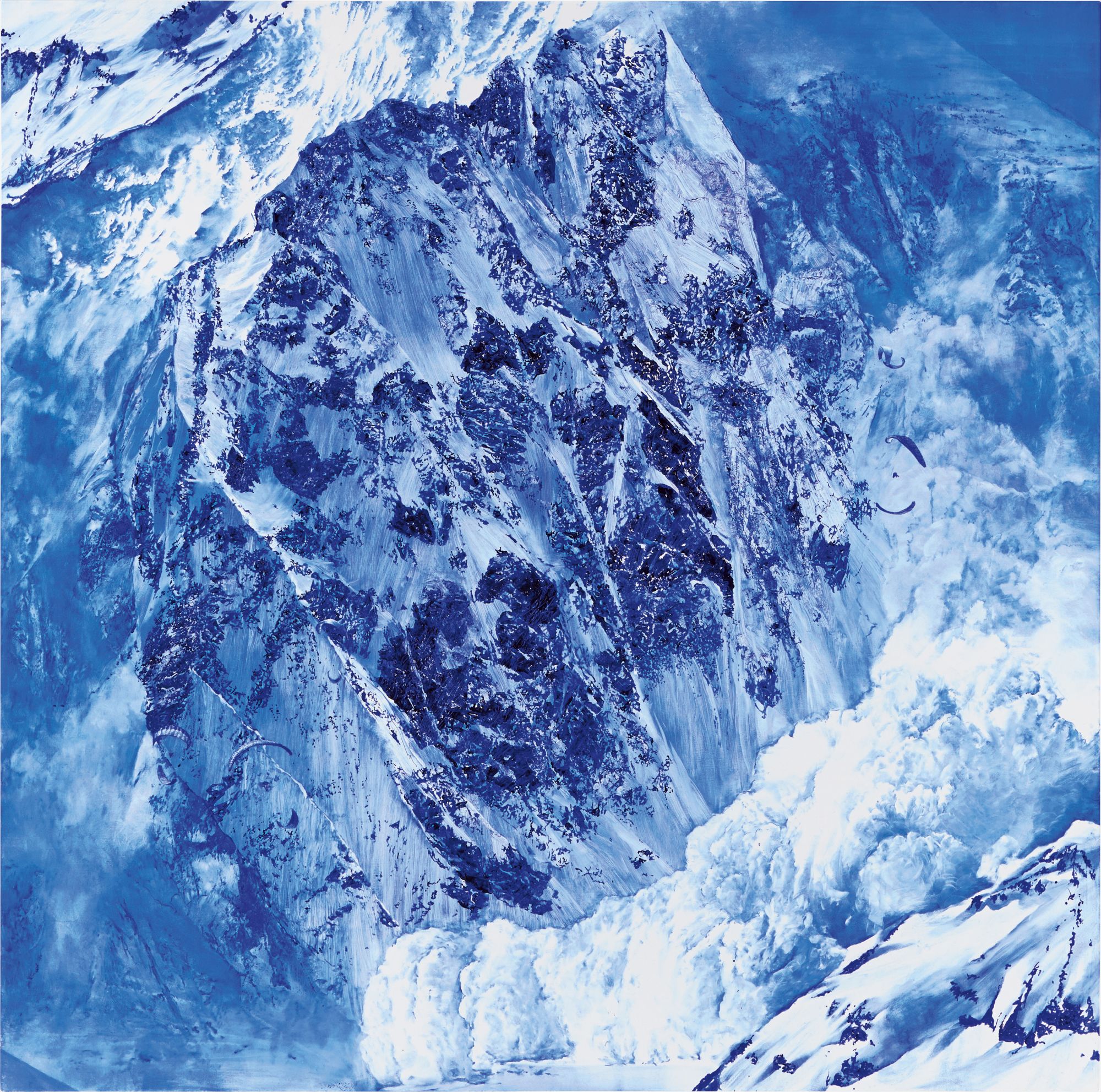
Mark Tansey
Hedge
His reputation, built steadily since the early 1980s, has only deepened with time, and today he stands as one of the most intellectually serious and visually captivating painters working in contemporary American art. Tansey was born in 1949 and came of age in an American art world electrified by the aftermath of Abstract Expressionism and the rise of Conceptualism. He studied at the San Francisco Art Institute and later at Hunter College in New York, where he absorbed not only studio practice but the theoretical ferment swirling through the art world of the 1970s. The writings of Roland Barthes, Jacques Derrida, and other poststructuralist thinkers were reshaping how artists and critics thought about representation, meaning, and the relationship between image and reality.
For most painters, theory remained backdrop. For Tansey, it became subject matter. What makes his formation so unusual is that he approached painting as a kind of research practice. He developed an extensive archive of images, clippings, and visual references that he would recombine and layer using a collage based process before ever touching a canvas.
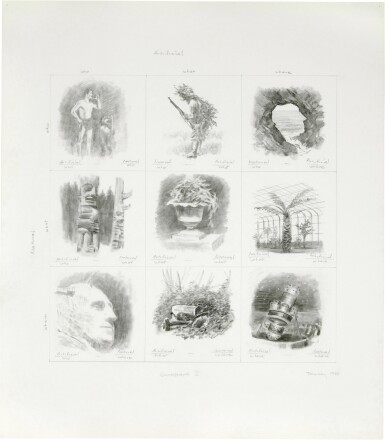
Mark Tansey
Iconograph I, 1984
This working method, deeply considered and almost scholarly in its rigor, gave his paintings their characteristic quality of feeling simultaneously inevitable and completely unexpected. You look at a Tansey and think: of course these elements belong together, and also: how did anyone think to bring them together at all. The signature formal choice that defines Tansey's mature work is his use of monochrome. His canvases are built entirely in a single color, most often a rich earthy brown or a cool, silvery tone, applied and then partially removed to create extraordinary depth and detail.
This technique produces images that feel simultaneously like old photographs, archaeological artifacts, and something altogether new. The monochrome palette is not a limitation but a philosophical statement. By stripping away the seductiveness of color, Tansey forces the viewer to focus on the image itself, on structure, on narrative, on meaning. The result is a kind of painting that feels uniquely honest about what painting does and cannot do.
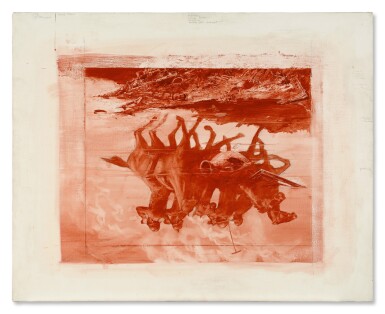
Mark Tansey
Study for Forward Retreat, 1986
Among the works that have come to define his legacy, Action Painting II from 1984 remains one of the most celebrated. In it, a group of painters work furiously on a canvas that is, in fact, a raging wall of water: a waterfall or crashing surf that becomes their subject in a gloriously absurd and profound literalization of the Abstract Expressionist ideal. The 1985 study for this work, held here on The Collection, offers an intimate window into his process, revealing the precision and intelligence that underpins even his most apparently playful conceits. View from Mt.
Hermeneut from 1991 places figures at a mountainous summit surveying a vast and ambiguous landscape, a meditation on interpretation, on the act of looking itself. Library of Babylon from 1994, rendered in two monumental parts, transforms Borges's infinite library into a painted reality of vertiginous beauty. Garden from 2006 and Frieze from 2014 demonstrate the sustained evolution of his practice across decades, each work deepening the conversation his oeuvre has been conducting with art history, philosophy, and the nature of the painted image. For collectors, Tansey represents a genuinely exceptional proposition.
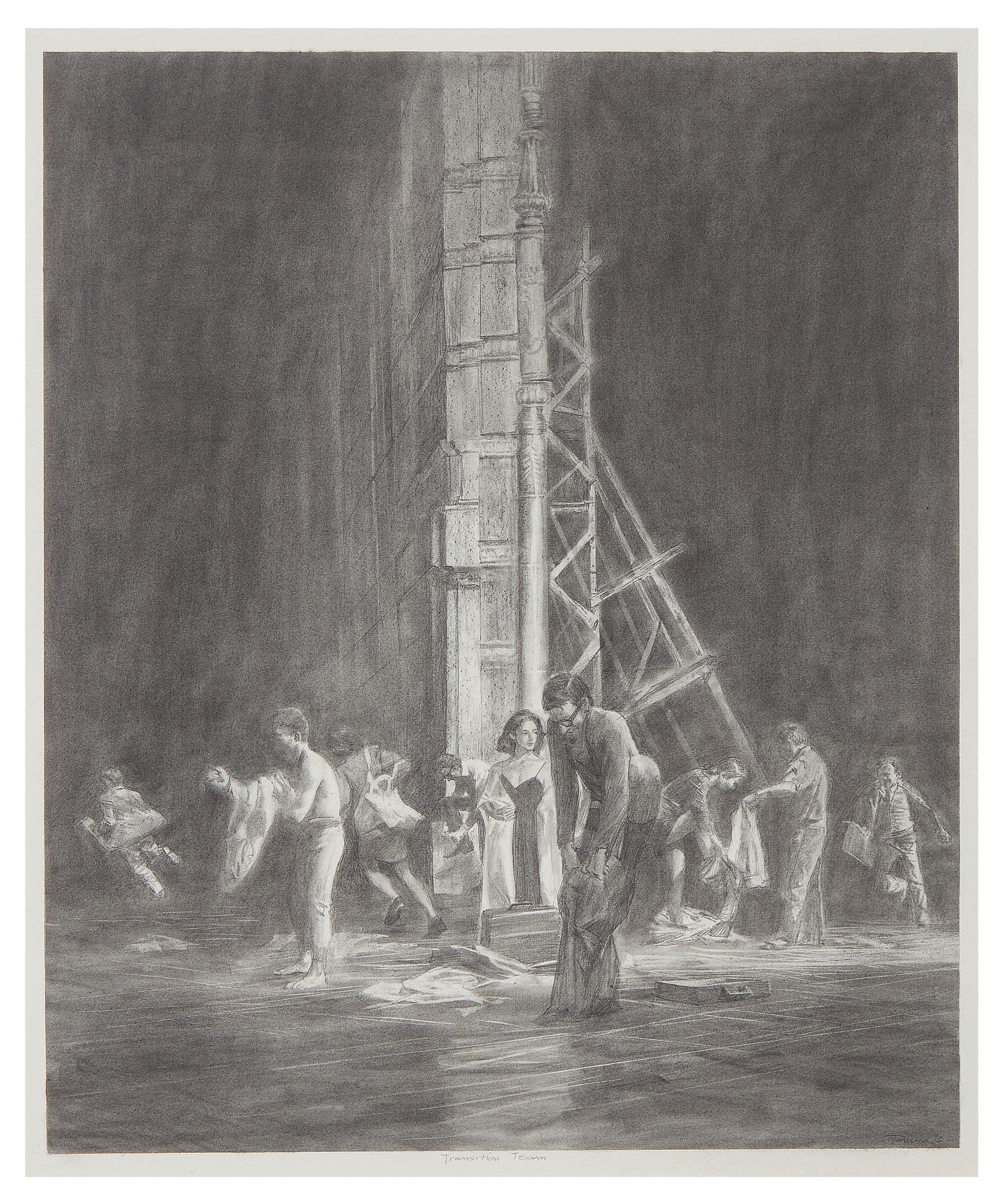
Mark Tansey
Transition Team
His work is held by institutions of the highest caliber, lending any collection that includes him remarkable cultural credibility. Works on paper, including studies such as the graphite Transition Team, offer a more accessible entry point into his practice while carrying the full weight of his conceptual intelligence. Oil paintings, whether large scale canonical works or more intimate canvases, are comparatively rare on the market given the deliberate pace of his production. The labor intensive nature of his process means that each work is genuinely considered, and the secondary market reflects this: collectors who acquire Tansey tend to hold.
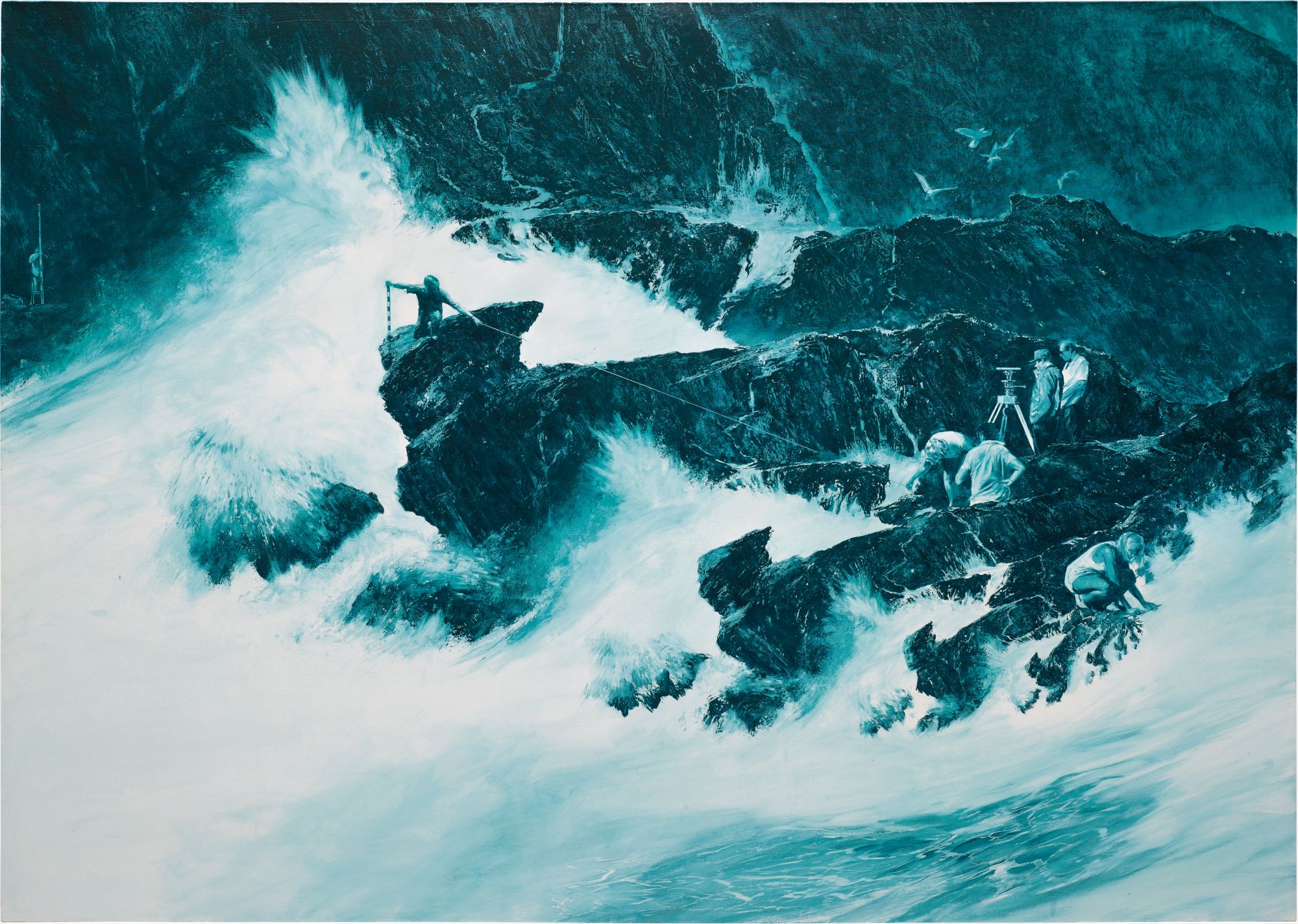
Works like Coastline Measure, Hedge, and Study for Nocturne speak to the range within his practice, from expansive philosophical allegory to quieter, more concentrated meditations. Study for Arrest and the multi panel Library of Babylon demonstrate his ambition with format and scale. In the context of art history, Tansey occupies a position that is entirely his own, though his work invites productive comparison with artists who share his commitment to painting as a vehicle for ideas. Gerhard Richter explored the tension between photography and painting, between representation and abstraction, with comparable intellectual seriousness.
Eric Fischl brought narrative and psychological complexity back to figurative painting during the same decade Tansey was establishing his practice. Neo Expressionist painters like David Salle engaged with appropriation and the layering of cultural references in ways that rhyme with Tansey's archival method. Yet none of these comparisons fully captures what Tansey does, because his specific subject matter, the philosophy and history of art itself, remains uniquely his territory. What endures about Mark Tansey is the generosity of his ambition.
He has spent his career making paintings that trust their viewers completely, that demand not passive appreciation but active, joyful thinking. In an era when the art world often treats difficulty and accessibility as opposites, his work proves they are not. These are paintings you can stand before and simply find beautiful, and then return to and find profound, and then return to again and discover something new. That is not a common achievement.
It is, in fact, an extraordinary one, and it is why Tansey's work continues to matter so deeply to serious collectors, to the great institutions that hold it, and to anyone who believes that painting, at its highest pitch, is one of the most remarkable things a human being can make.
Featured Works
Explore books about Mark Tansey