Mark Manders
Mark Manders Builds Worlds From Silence
Artist Spotlight · The Collection Editorial
“I want to make sculptures that look like they have always existed, like they were found rather than made.”
Mark Manders, interview with Bomb Magazine
In the summer of 2022, the Stedelijk Museum in Amsterdam presented a sweeping survey of Mark Manders that reminded international audiences why this quietly singular Dutch artist has commanded such devoted attention for over three decades. The exhibition drew curators, collectors, and critics who walked through rooms filled with uncanny figures, arrested moments, and objects that seemed to exist just beyond the reach of ordinary language. It was the kind of presentation that confirms an artist not merely as a cultural figure but as a genuine philosopher of form, one whose work asks what it means to freeze time and what survives when everything else falls away. Manders was born in Volkel, in the southern Netherlands, in 1968, and grew up in a country whose visual culture has long balanced rigorous precision with a deep, almost Protestant attention to the material world.
Mark Manders
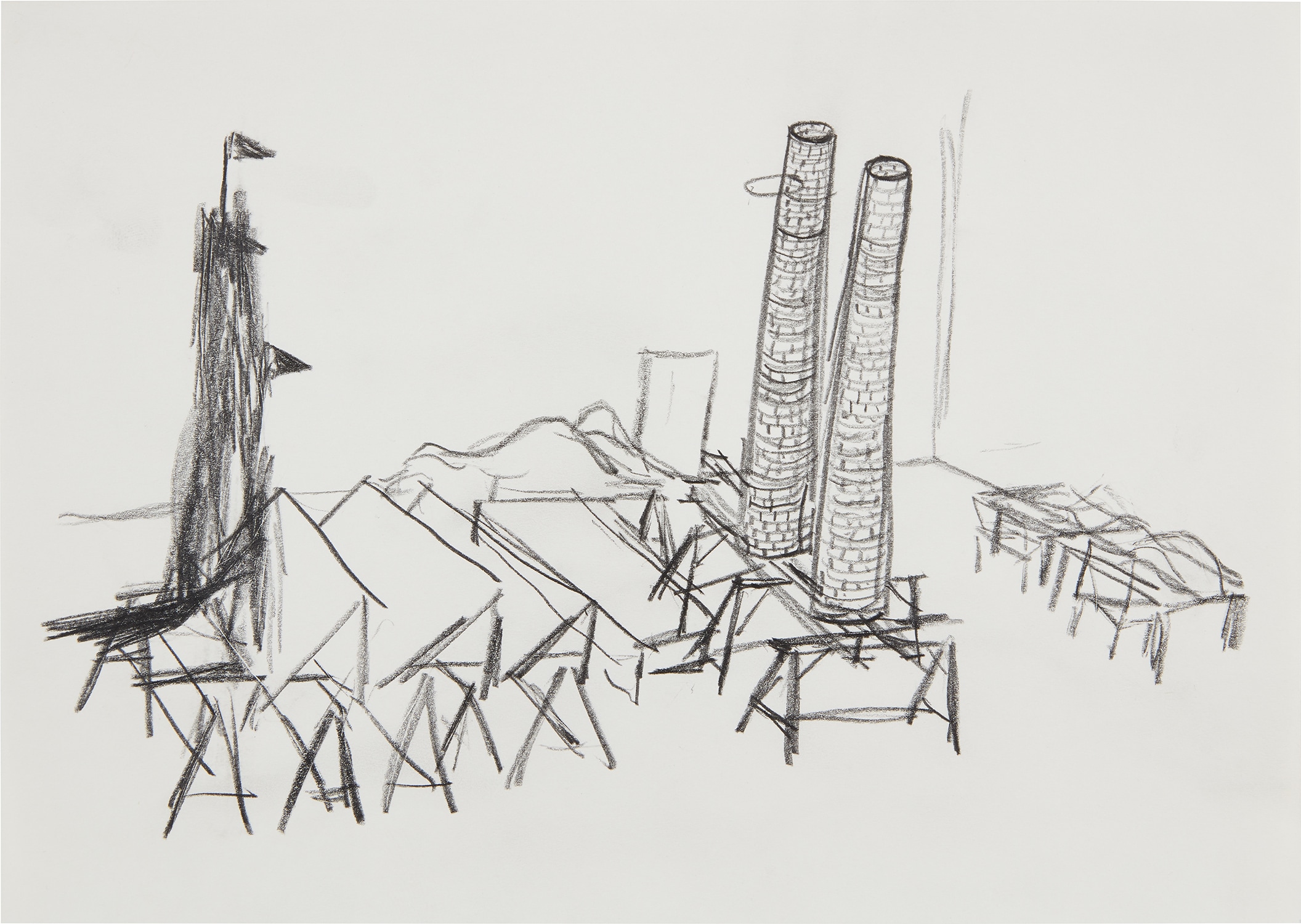
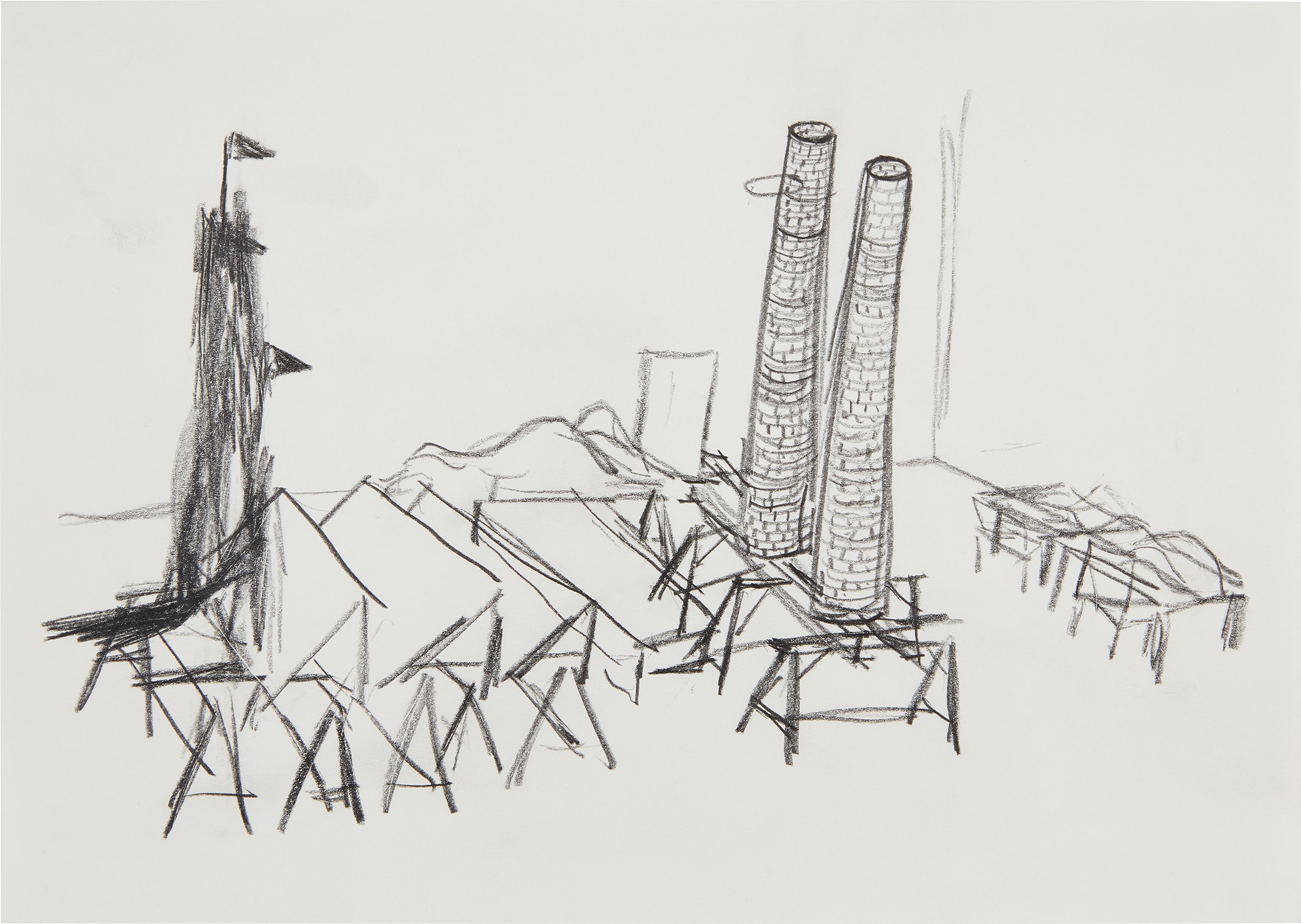
Silent Factory
He studied at the Hogeschool voor de Kunsten in Arnhem during the late 1980s and early 1990s, a period when conceptual practice in Europe was undergoing significant renewal. From the very beginning, Manders framed his entire body of work as a single ongoing project he called Self Portrait as a Building, a conceptual architecture in which every sculpture, drawing, and installation functions as a room or corridor within one imagined structure. This overarching framework gave his practice an unusual coherence and ambition, distinguishing it immediately from the work of his peers. The development of Manders's artistic language over the following decades was marked by a slow, deliberate accumulation of symbols and techniques.
He became known for constructing figures from clay, resin, and iron, often painting them to resemble aged newspaper or raw earth, draining them of color so that they appear to belong to an archaeological dig rather than a contemporary studio. These figures are frequently incomplete, missing hands or faces, frozen mid gesture in a way that feels less like damage than like suspended thought. He has spoken of his interest in language as a physical phenomenon, and many of his works incorporate fragments of text, letters, and words that seem on the verge of forming meaning but never quite resolve into it. This productive ambiguity is one of the great pleasures of encountering his work in person.
Mark Manders
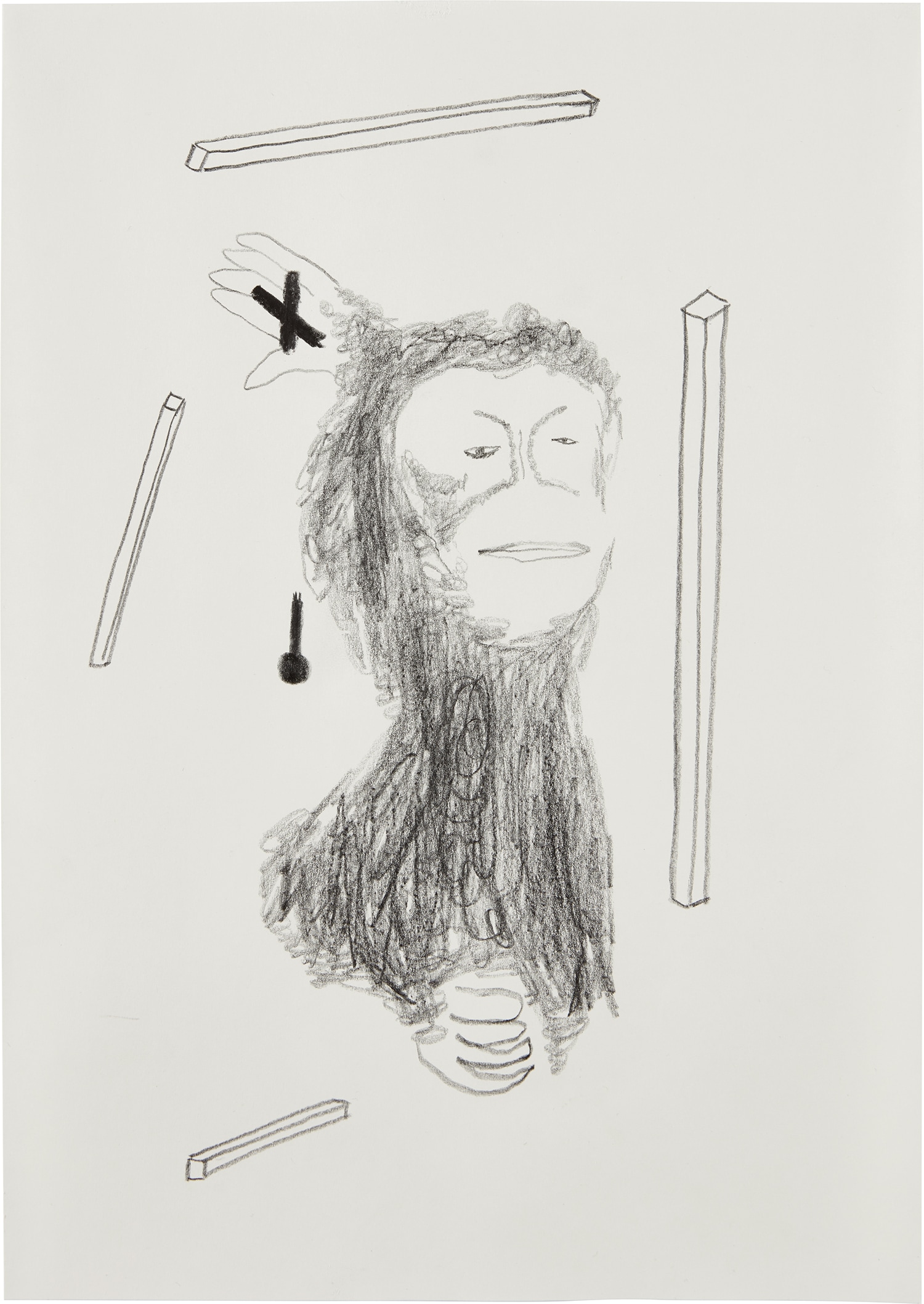
Falling earring
Among his most celebrated sculptures are the Reduced Rooms and the various versions of his clay heads, some of which have been acquired by major institutions including the Museum of Modern Art in New York and the Art Institute of Chicago. His work gained significant international visibility when he represented the Netherlands at the Venice Biennale in 2013, presenting Room with Broken Sentence, an immersive installation that gathered his characteristic figures, props, and textual fragments into a single atmospheric environment. That presentation was widely reviewed as one of the strongest national pavilions of that edition, and it brought a new wave of collectors and institutions into sustained conversation with his practice. The piece demonstrated what has always been most powerful about Manders: his ability to make stillness feel urgent.
The two works available on The Collection offer collectors an intimate window into different registers of his practice. Silent Factory invites reflection on Manders's ongoing fascination with industrial forms, abandoned processes, and the quiet that settles over labor once it has ceased. The work is signed and dated in pencil on the reverse, a characteristic understated authentication that suits an artist who prizes restraint in all things. Falling Earring, a pencil drawing on wove paper, reveals the meditative quality of his works on paper, where line and void work together to produce that particular sensation of something caught mid fall, mid thought, mid becoming.
Drawings by Manders are especially valued by collectors who appreciate the directness of his hand and the way the works on paper feel like preparatory thinking made permanent. From a market perspective, Manders occupies a position of considerable strength among collectors of serious contemporary European sculpture and works on paper. His institutional footprint is substantial, with holdings at the Stedelijk Museum, MoMA, and various private European collections that have followed his work since the 1990s. Works on paper represent an accessible entry point into a practice that, at the level of large sculpture and installation, commands significant prices at auction and in the primary market.
Manders is represented by Tanya Bonakdar Gallery in New York and Zeno X Gallery in Antwerp, both of which have done sustained, intelligent work positioning him within international discourse. Collectors drawn to artists such as Thomas Houseago, Berlinde De Bruyckere, or Luc Tuymans will find in Manders a kindred sensibility: European, materially serious, and deeply invested in what figuration can still accomplish in the twenty first century. Within the broader arc of art history, Manders can be understood in relation to a Northern European tradition that includes the existential sculpture of Alberto Giacometti, the conceptual architecture of Marcel Broodthaers, and the melancholy humanism that runs through so much Flemish and Dutch art from the golden age forward. He is also a figure who resonates with younger artists now working with clay and assembled objects, making his practice feel generative rather than merely historical.
His influence on a generation of sculptors who came of age in the 2000s and 2010s is quietly pervasive, visible in the renewed interest in impermanent materials, unfinished forms, and installations that treat the exhibition space as a kind of fictional interior. What makes Manders lastingly important is his commitment to a single, coherent vision pursued across an entire career without compromise or distraction. His Self Portrait as a Building is one of the most genuinely original conceptual propositions in contemporary art, a framework capacious enough to absorb drawing, sculpture, installation, and writing while remaining philosophically consistent throughout. For collectors, owning a work by Mark Manders is not simply an act of acquisition but an act of entry into a world, one that rewards prolonged looking and continued return.
The silence he constructs is not emptiness but fullness held in reserve, waiting for the right conditions to release everything it knows.
Explore books about Mark Manders
Mark Manders: Sculptures, Drawings, Installations 1986-1997
Various authors
Mark Manders: A Room with a View
Various authors
Mark Manders: Catalogue Raisonné
Various authors
Mark Manders: Core Sample
Mark Manders
Mark Manders: Sculpture Paintings Drawings
Various authors