Mark Francis
Mark Francis: Where Science Becomes Pure Beauty
Artist Spotlight · The Collection Editorial
There is a particular kind of attention that Mark Francis demands from a viewer, one that rewards patience and rewards it generously. In recent years, institutional interest in his practice has continued to deepen, with his works appearing in significant group exhibitions exploring the intersection of painting and scientific inquiry across Europe and the United States. His presence in major private collections and at leading auction houses confirms what those who have followed his career for decades already know: Francis occupies a genuinely singular position in contemporary abstract painting, one that grows more relevant with each passing year as the dialogue between art and science becomes ever more central to cultural life. Francis was born in 1962 in Northern Ireland, a formative circumstance that carries more weight than simple biography might suggest.
Mark Francis
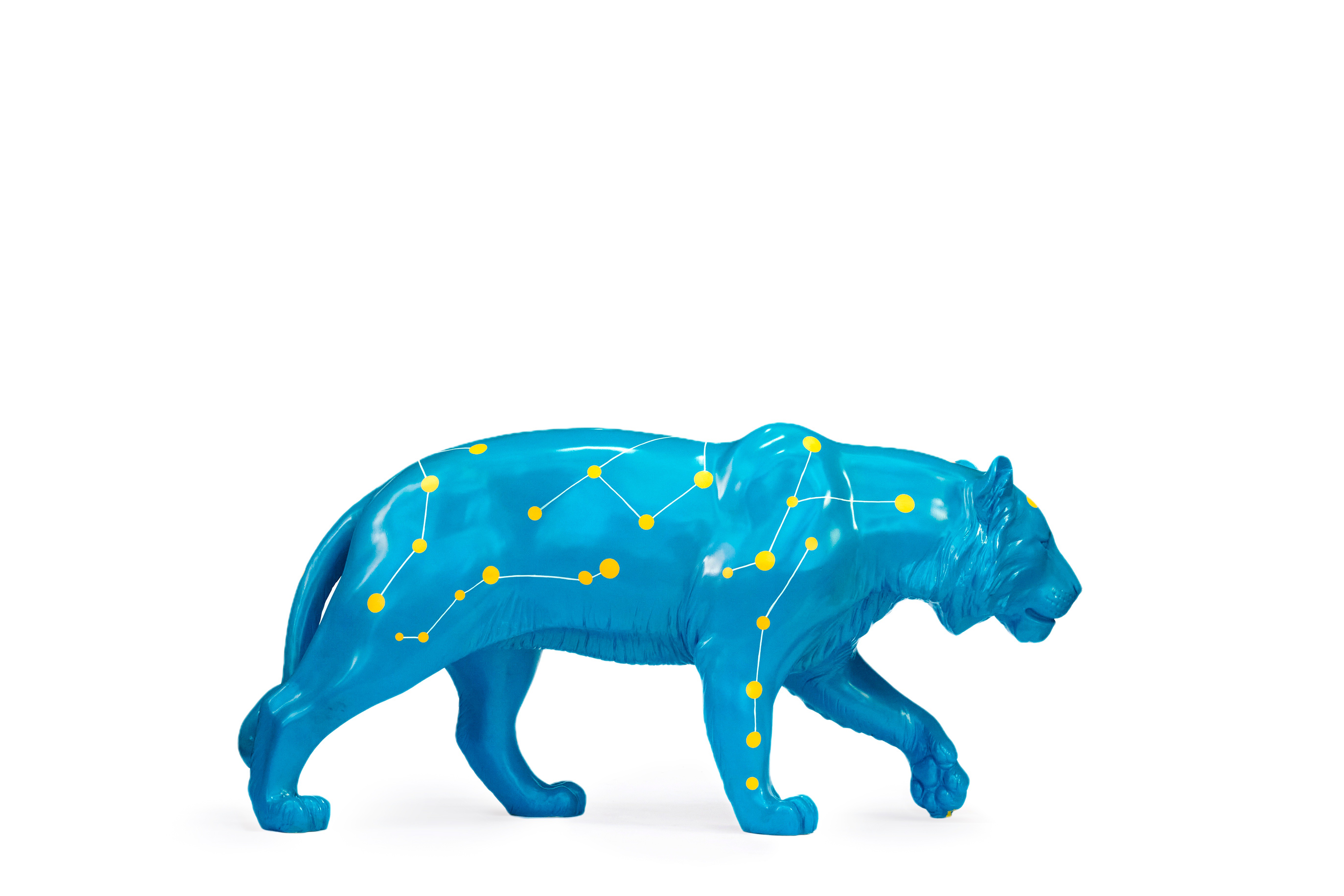
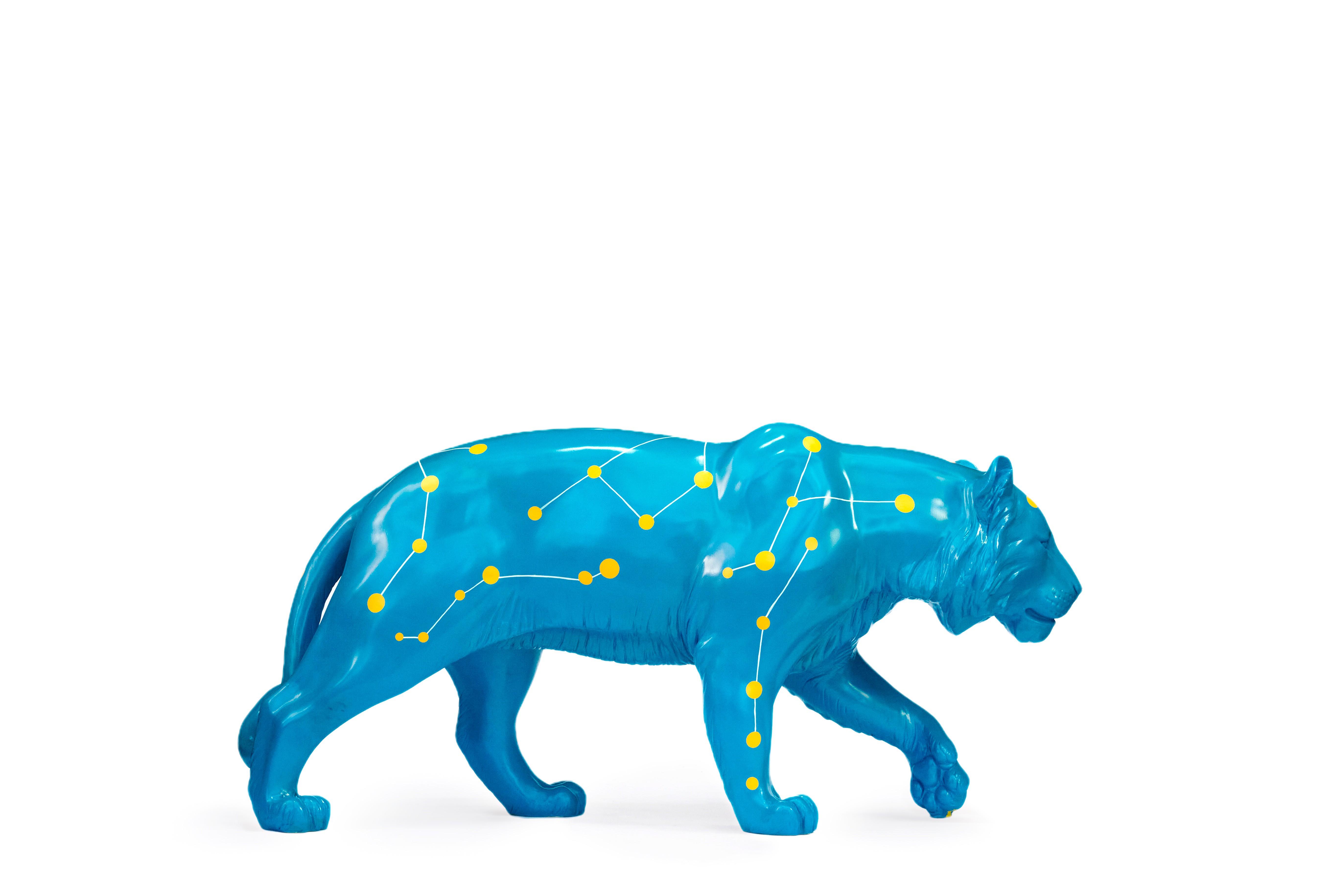
Edge of Forever 永恆邊緣
Growing up during a period of profound social tension, he developed an interior life of considerable intensity, and the discipline and focus that would come to define his painting practice seem rooted in that early experience of finding clarity within complexity. He studied at the Chelsea School of Art and later at the Slade School of Fine Art in London, two institutions that shaped generations of ambitious British painters. It was in London during the late 1980s and early 1990s that Francis found his footing, becoming associated with a generation of British artists who were rethinking the possibilities of abstraction at a moment when figuration dominated the conversation. The development of his practice in the early 1990s represents one of the more quietly radical moves in British painting of that decade.
While many of his contemporaries pursued maximalism, provocation, or the sensational gesture, Francis turned inward and downward, toward the microscopic and the cellular. He began exploring imagery drawn from microbiology, particle physics, and the structural patterns found in scientific photography and research illustration. These were not decorative borrowings but genuine investigations, pursued with the rigor of someone who understood that painting could carry the weight of epistemological inquiry without abandoning its fundamental pleasures. By the mid 1990s his vocabulary was firmly established, and works from this period already display the restrained authority that would become his hallmark.
Mark Francis
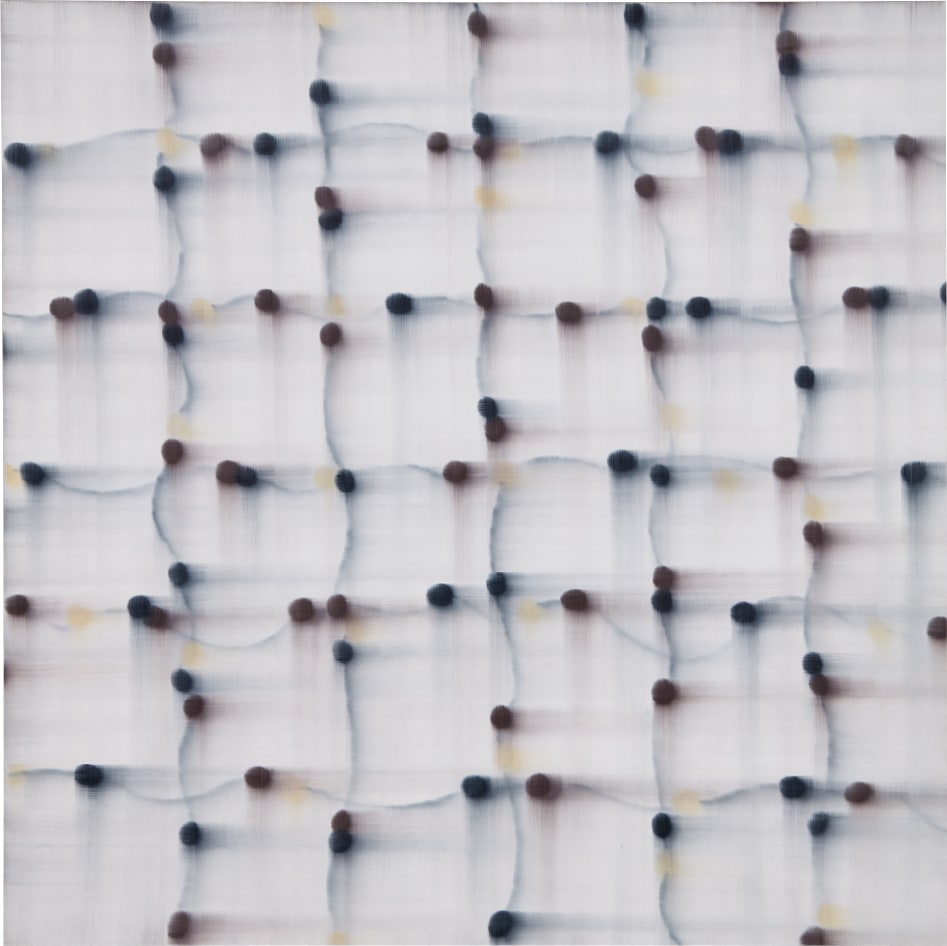
Grid Painting (T.W. VB. IY. + B.), 1997
The paintings from 1995 to 1997 are among his most celebrated and most sought after by collectors. Works such as Growth (Conceal) from 1995 and both Grid Painting (T.W. VB.
IY. + B.) and Abacus (grey) from 1997 demonstrate his extraordinary command of surface and mark. These canvases present intricate, repeating forms that hover between the biological and the geometric, rendered in palettes of such quiet sophistication that they reward extended looking in a way that few works of their era manage.
Mark Francis
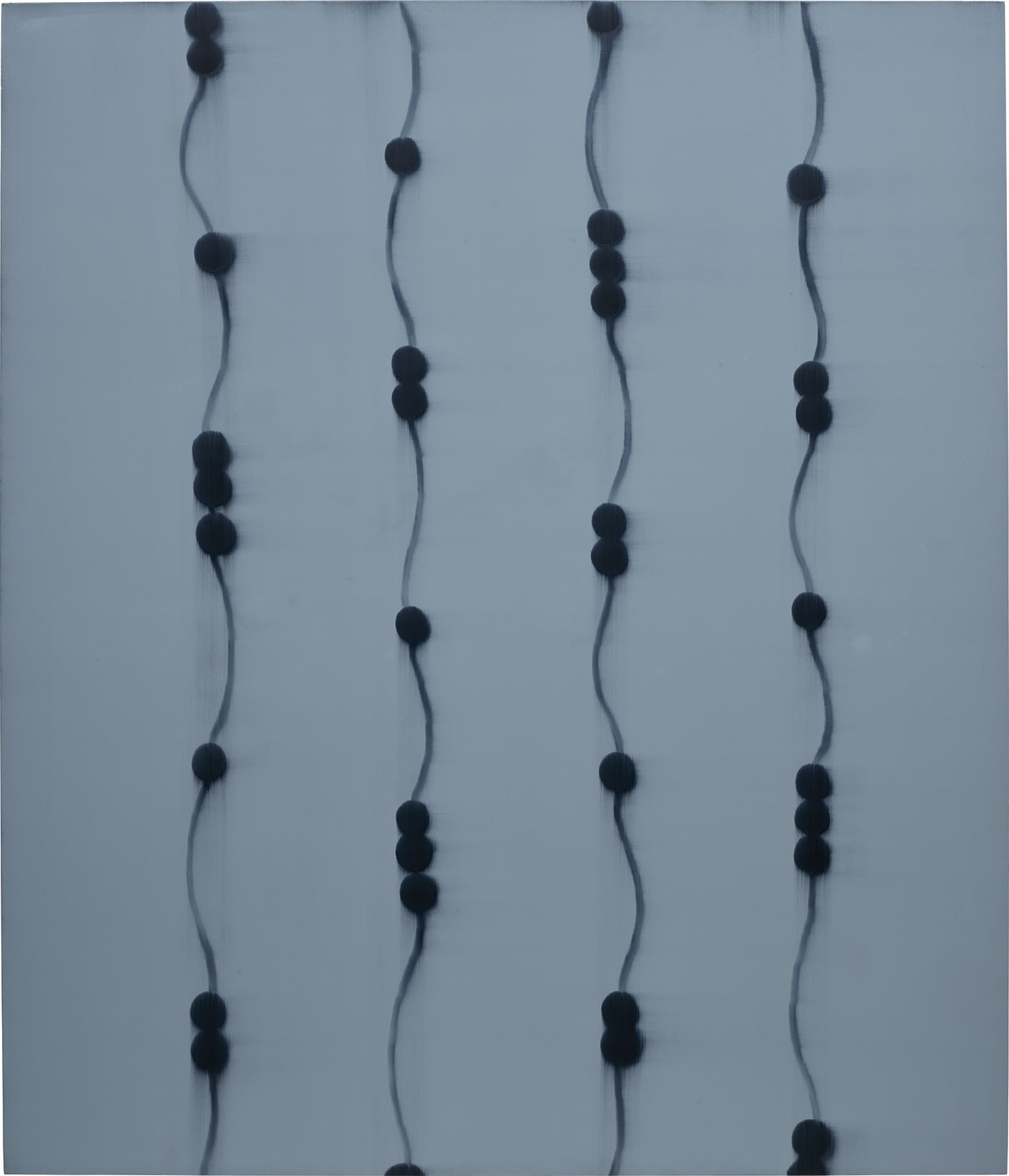
Abacus (grey), 1997
The restrained color, often moving through greys, muted greens, and cool whites, creates a meditative atmosphere that feels simultaneously ancient and urgently contemporary. There is something deeply satisfying about paintings that refuse to shout and instead draw you forward, closer and closer, until you realize you have been standing in front of them for twenty minutes. His practice continued to evolve through the 2000s and into the 2010s with works like Interchange from 2010, Flexus from 2012, Hygiea from 2013, and Mission from 2014. These later paintings show a confidence and a willingness to introduce greater formal complexity, including his move toward acrylic combined with oil, a technical pairing that allows him to build surfaces of greater depth and subtlety.
The work titled Edge of Forever, rendered in acrylic paint on fiberglass with an internal armature, marks an important expansion of his practice beyond the traditional canvas, suggesting an artist who continues to push against the boundaries of his own established methods. The Chinese subtitle, a transliteration of a phrase meaning the edge of eternity, hints at the philosophical reach that has always underlain what might superficially appear to be purely formal concerns. For collectors, the appeal of Francis is both aesthetic and intellectual, a combination that tends to produce lasting devotion rather than fleeting enthusiasm. His works read beautifully in domestic spaces and in institutional settings alike, possessing the rare quality of holding a room without overwhelming it.
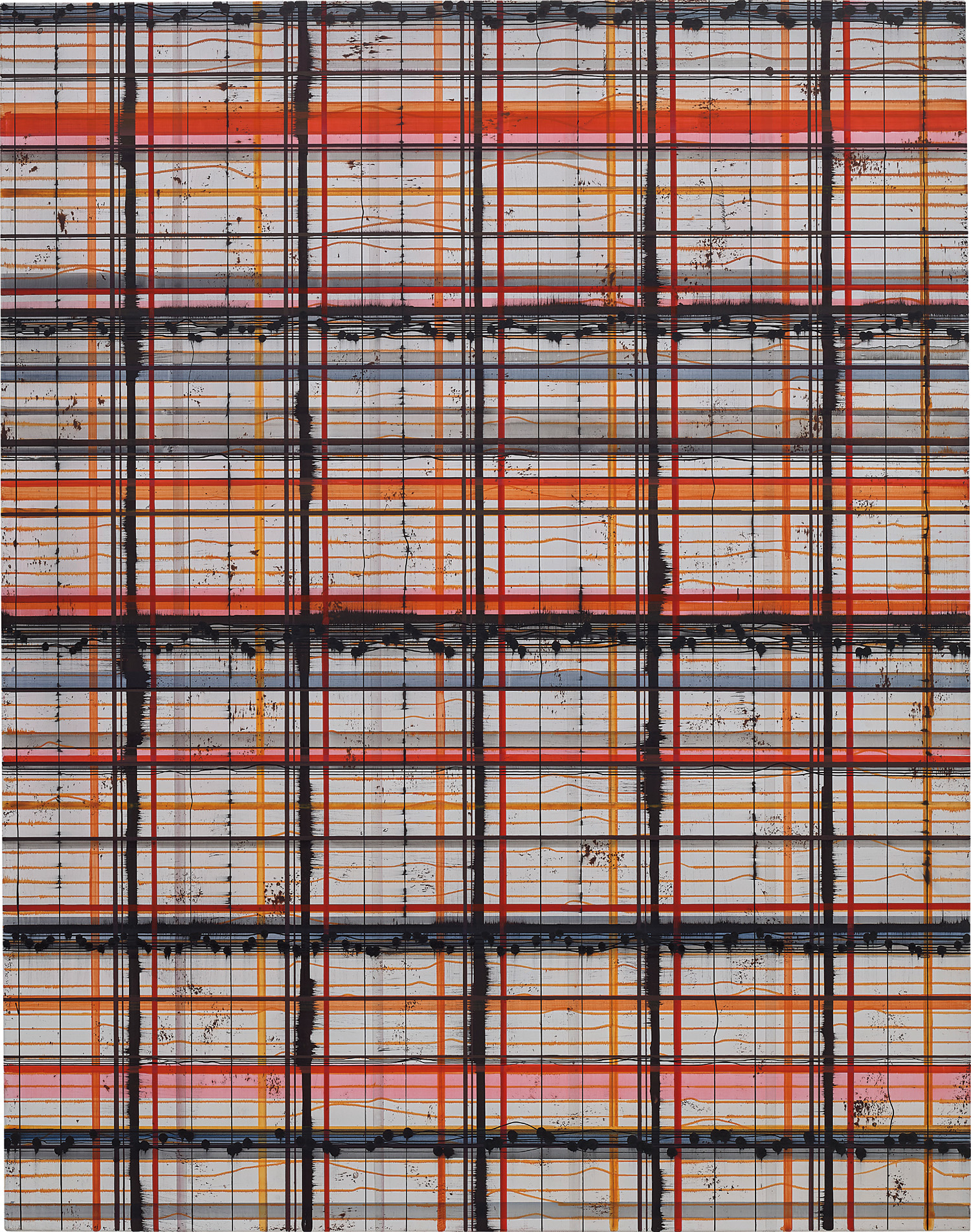
Mark Francis
Interchange, 2010
The limited edition prints co published by World House Editions in Middlebury, Connecticut and Edition Copenhagen represent an accessible point of entry into his practice, while the major paintings from the 1990s and the mature canvases of the 2010s represent serious acquisitions that have appreciated consistently. Collectors who came to him early, drawn by the quiet assurance of those first grey and green compositions, have found themselves holding works of steadily increasing critical and market significance. The technical precision of his surfaces, which require careful handling and benefit from specialist conservation awareness, is something any prospective collector should discuss with their advisor. Within the broader history of abstract painting, Francis sits in a lineage that connects to the analytical abstraction of Agnes Martin, whose ruled lines and restrained palettes created a similarly meditative register, and to the scientific romanticism of artists like Matthew Ritchie and Sarah Sze, who also mine the imagery of knowledge systems for poetic ends.
His Northern Irish formation gives him a perspective somewhat apart from the London mainstream, even as his training and career have been rooted there. He shares with painters like Ian Davenport and Jason Martin a commitment to process and surface as primary carriers of meaning, though his specific iconography of the cellular and the microscopic is entirely his own. In the international context, his work invites comparison with German painters exploring systems and pattern, yet retains a distinctly intimate, almost lyrical quality. The legacy of Mark Francis is still being written, which is precisely what makes collecting his work at this moment so compelling.
He is an artist whose reputation has been built slowly, carefully, and without the artificial inflation of hype, which means the foundation is genuinely solid. As conversations about the relationship between human perception, natural systems, and scientific imaging continue to shape cultural discourse, his paintings feel less like historical artifacts and more like prescient meditations on how we understand the world we cannot see with the naked eye. To own a work by Mark Francis is to participate in one of the more quietly ambitious projects in contemporary painting: the rendering of the invisible world with extraordinary beauty and discipline.
Explore books about Mark Francis
Mark Francis: Paintings and Drawings 1982-1992
Mark Francis, various contributors
Mark Francis
Stuart Morgan
Mark Francis: Recent Paintings
Mark Francis
Mark Francis: Paintings 1995-2005
Various contributors
Mark Francis: New Paintings
Mark Francis