Mario Testino
Mario Testino: The World Through Glamour's Lens
Artist Spotlight · The Collection Editorial
“I want people to look at my pictures and feel joy. That is the simplest way I can put it.”
Mario Testino, interview with Vogue
When the National Portrait Gallery in London mounted its landmark exhibition of Mario Testino's work in 2002, the queues stretched around the building. It was a rare moment in which a living photographer commanded the kind of public devotion more typically reserved for Old Masters or Impressionist blockbusters. The show drew hundreds of thousands of visitors and confirmed what the fashion world had known for two decades: Testino was not merely a commercial photographer but a genuine image maker whose sensibility had reshaped how we see beauty, aspiration, and celebrity in the modern era. Mario Testino was born in Lima, Peru, in 1954, the eldest of seven children in a middle class Catholic family with Italian heritage.
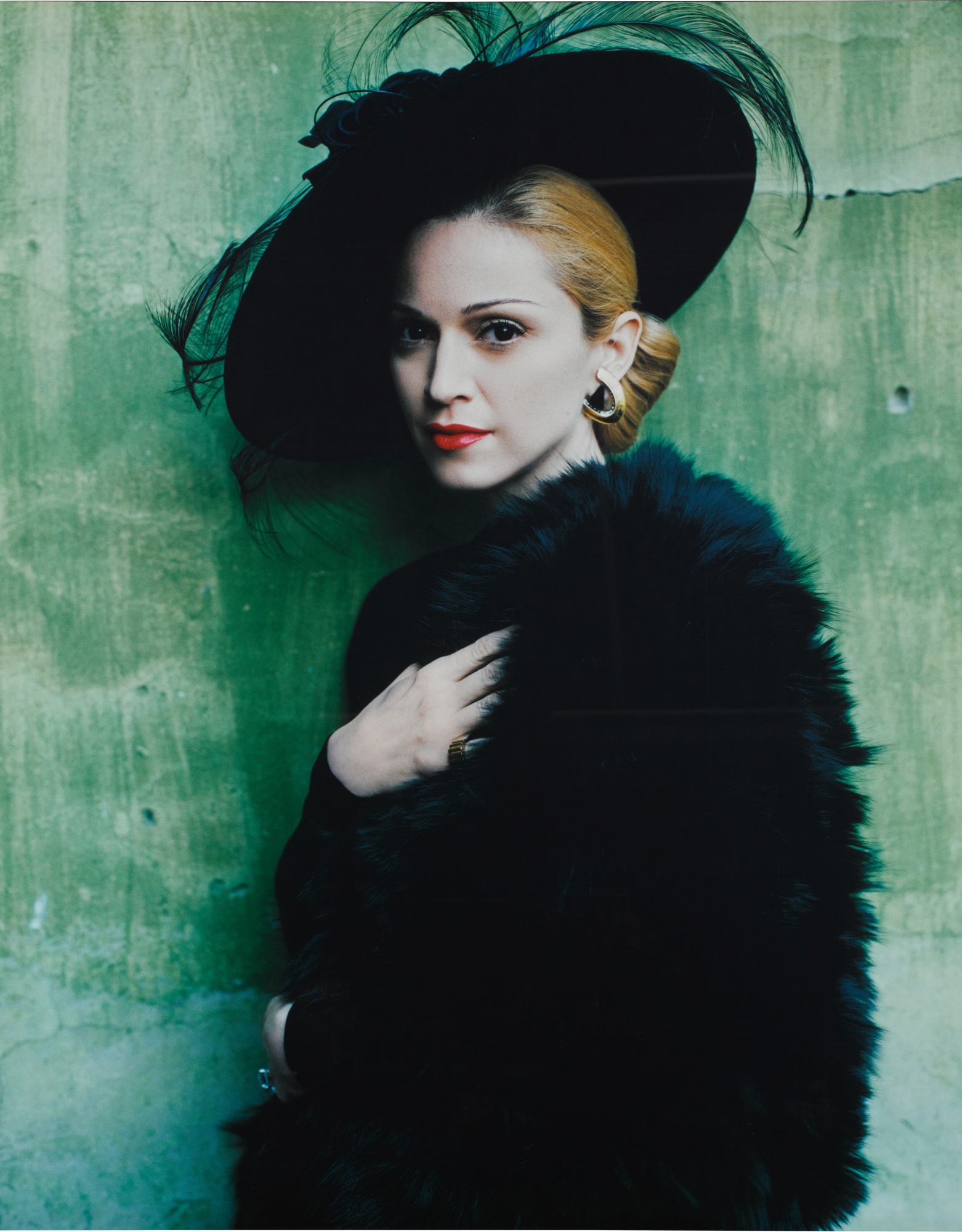
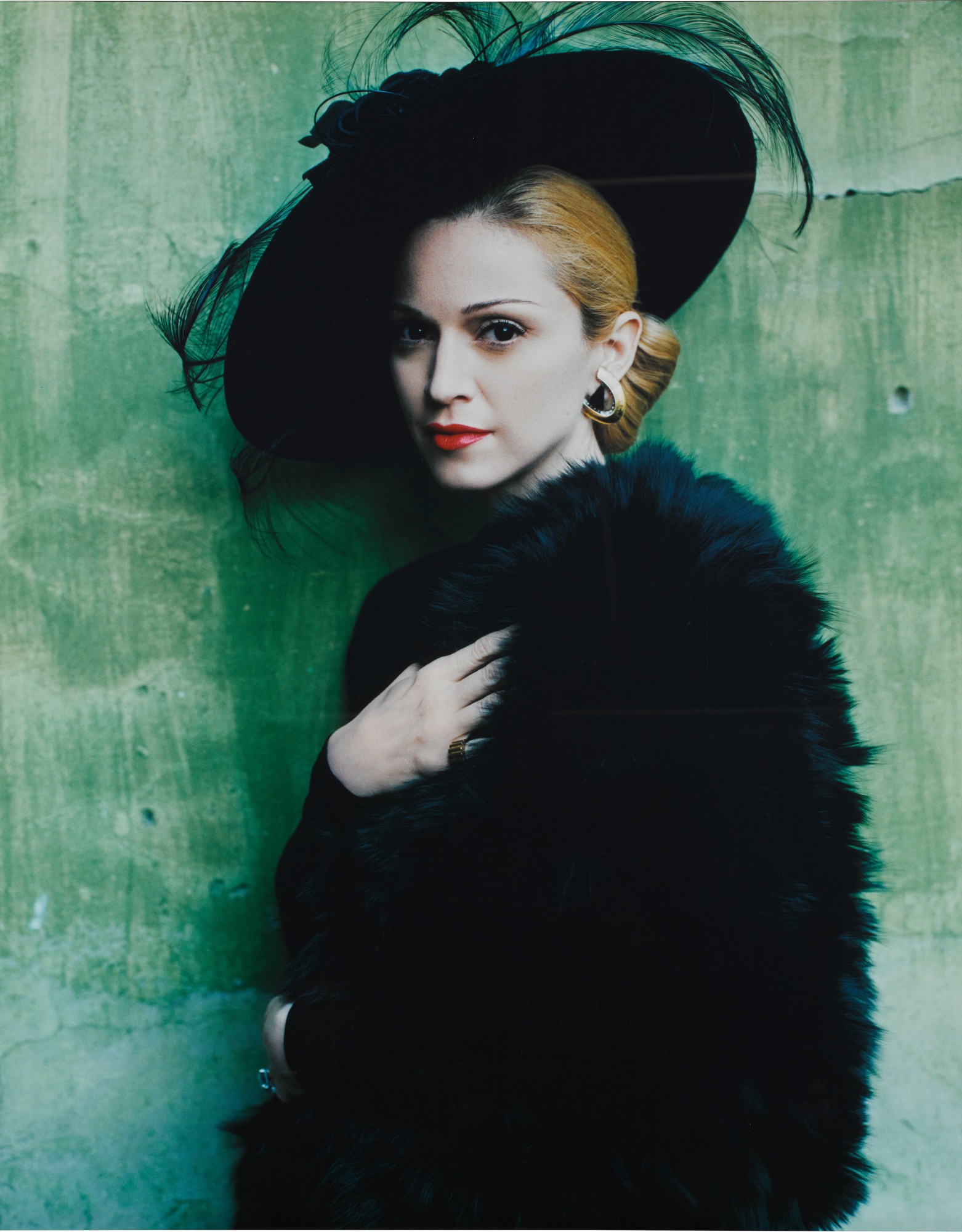
Mario Testino
Madonna, Budapest (Vanity Fair)
His upbringing was warm and socially vivid, and those early years in Lima instilled in him a deep attunement to human presence and an appetite for life lived at full volume. He studied economics and law before a restlessness and a camera led him toward a different vocation entirely. In the late 1970s he arrived in London with little money and no formal photographic training, hustling for work and absorbing the visual culture of a city in creative ferment. That willingness to begin from nothing, to learn by doing, would become a defining characteristic both of his career and of his images.
Testino's rise through the 1980s and into the 1990s was built on a distinctive understanding of collaboration. Where many photographers of his generation approached their subjects with a clinical detachment, Testino preferred warmth and energy. He worked hard to create an atmosphere on set that was joyful, even party like, and that generosity of spirit translated directly onto film. His breakthrough came through commissions for British Vogue and later American Vogue, where his sun drenched, kinetic imagery announced a clear departure from the cooler aesthetic then dominant in fashion photography.
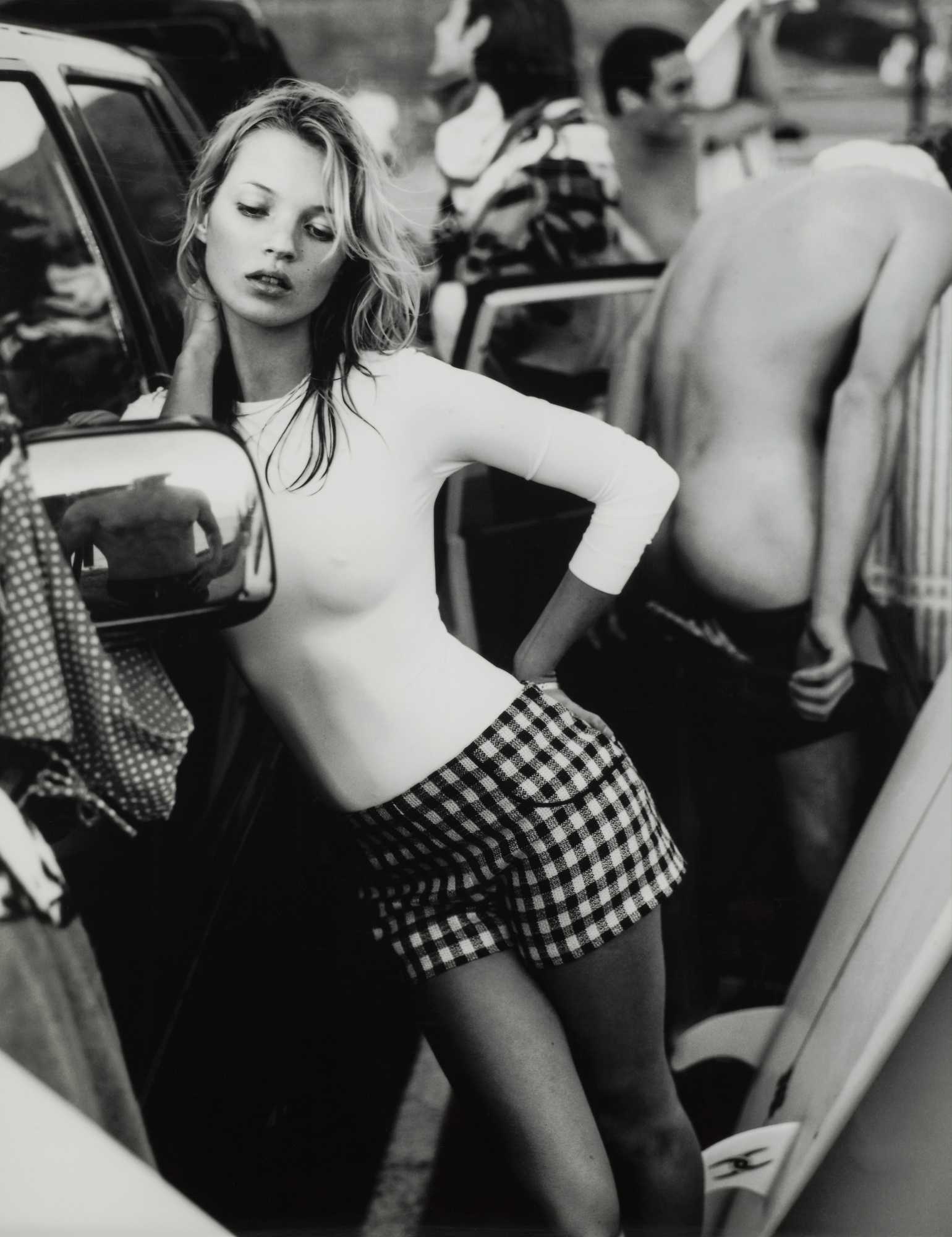
Mario Testino
Kate Moss, Los Angeles (Harper's Bazaar)
Editors and creative directors recognised immediately that his pictures sold not just clothes but a feeling, an aspiration, a sense that the world could be radiant. The works that have come to define his legacy are numerous and varied, but certain images stand as monuments in the history of fashion photography. His portraits of Diana, Princess of Wales, shot for Vanity Fair in 1997 just months before her death, are among the most reproduced and emotionally resonant photographs of the late twentieth century. They showed Diana not as a formal royal subject but as a woman fully alive, laughing, unselfconscious, free.
“Peru gave me everything. The colour, the warmth, the love of people. I carry it in every photograph.”
Mario Testino, MATE Museum opening, Lima, 2012
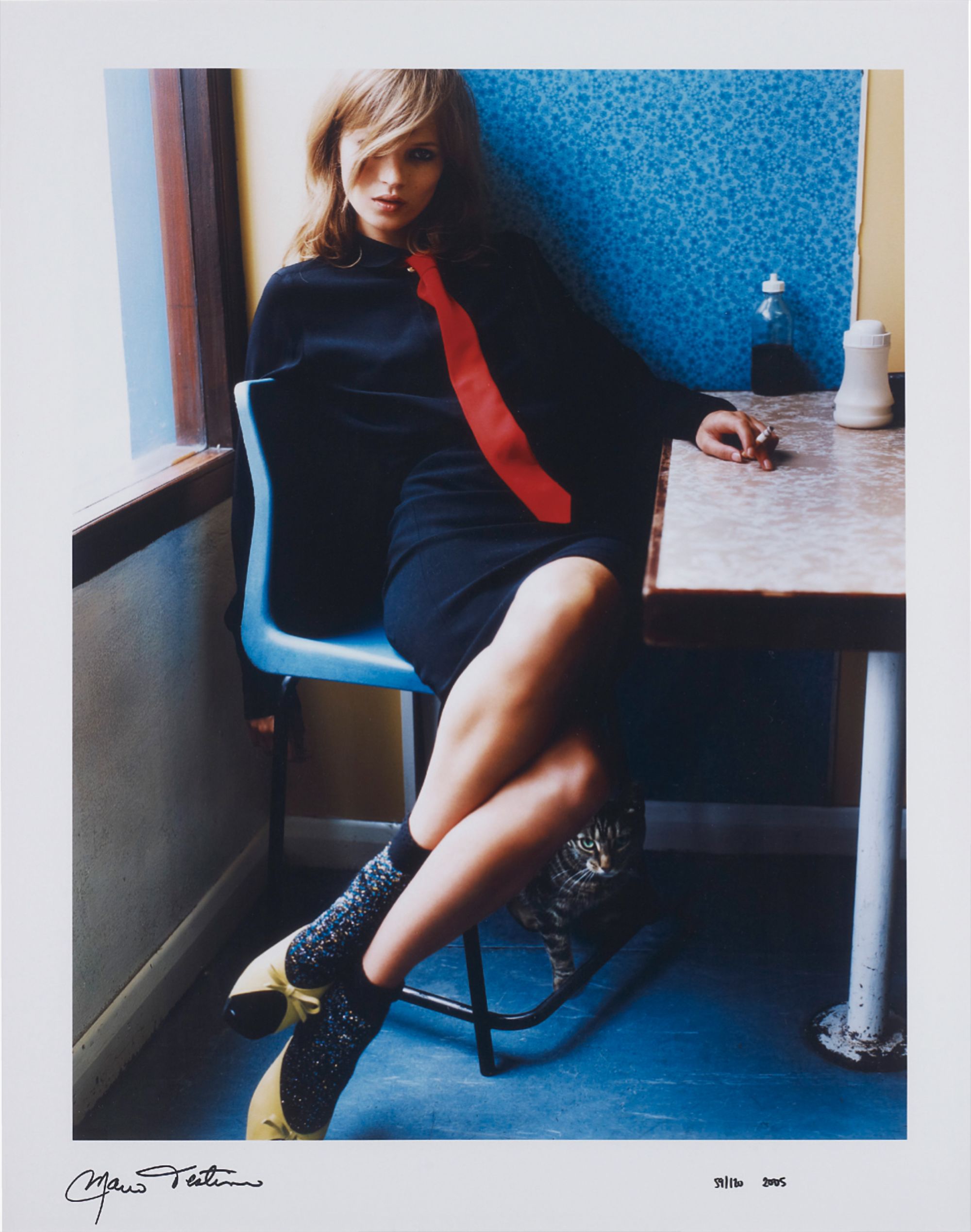
The sitting has since been discussed as much as a document of a historic friendship as it has been as a masterpiece of portraiture. Equally celebrated are his multiple sessions with Kate Moss, a collaboration that extended over more than two decades and produced images that are inseparable from the story of nineties fashion. Works such as Kate Moss, London and Kate at Mine capture a particular quality of informal intimacy that Testino perfected: the sense that the camera has caught something true rather than constructed. His photographs of Gisele Bundchen for Vogue Paris, represented on The Collection under the titles Gisele I and Gisele II, showcase his mastery of colour, movement, and the charged relationship between photographer and subject.
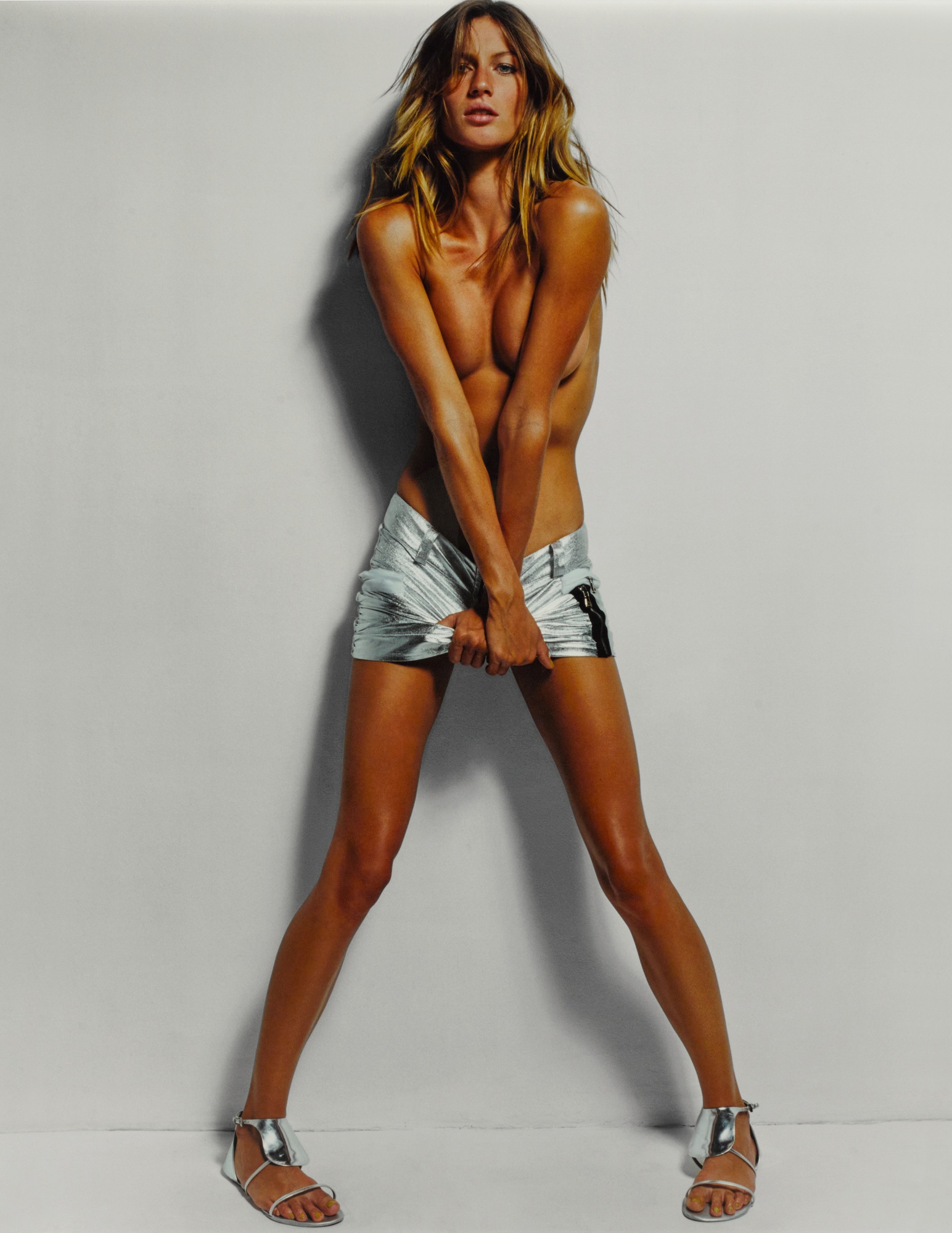
Mario Testino
Gisèle II (Vogue Paris)
The Madonna, Budapest portrait, shot for Vanity Fair, demonstrates his equal command of stillness and psychological presence when working with musicians and cultural figures. As a collecting proposition, Testino occupies a compelling position in the market for fine art photography. His prints are produced in carefully limited editions, often on Chromogenic or Fujiflex Crystal Archive Supergloss papers, and the physical quality of the objects is consistently exceptional. Mural sized works such as Kate at Mine, produced in an edition of just two and flush mounted to aluminium, represent the scale at which his images truly declare themselves, demanding wall space and commanding attention in the way that only the most confident painting or sculpture can.
Collectors drawn to works at this scale are making a statement about the primacy of photography as an art form, and Testino's work rewards that ambition entirely. His prints have appeared regularly at Phillips, Christie's, and Sotheby's, where his most celebrated images consistently attract serious interest from collectors across Europe, the Americas, and the Gulf. For those building a collection with an eye on cultural significance as well as aesthetic pleasure, Testino's work sits naturally alongside that of other photographers who operate at the intersection of fashion, portraiture, and fine art. In terms of artistic lineage and context, Testino belongs to a tradition of glamour portraiture that runs from the studio photography of Horst P.
Mario Testino
Kate in Blue Cafe
Horst and Irving Penn through to Helmut Newton and Richard Avedon. Like those predecessors he understood that fashion photography at its best is a form of psychological portraiture, a negotiation between the photographer's vision and the subject's self presentation. He is also a peer and contemporary of photographers such as Patrick Demarchelier, Peter Lindbergh, and David LaChapelle, each of whom developed a highly individual visual language from within the same commercial context. What distinguishes Testino within that company is his particular talent for creating images that feel simultaneously aspirational and intimate, luxurious and accessible.
His pictures do not intimidate; they invite. Testino has also invested meaningfully in the cultural life of his home country. He founded MATE, the Museo Mario Testino, in the Barranco district of Lima in 2012, a museum dedicated to photography and the visual arts that has become one of the most significant cultural institutions in Peru. The museum houses his own archive alongside work by other photographers and regularly stages exhibitions connecting Peruvian audiences with international contemporary art.
This commitment to Lima reflects a genuine desire to give back to the place that formed him and to situate Peruvian culture within the global conversation about photography and its history. The question of legacy is always complex for an artist whose work has been so thoroughly woven into popular culture, but Testino's standing is secure. His images have defined how an entire generation understood glamour, beauty, and the power of the photographic moment. For collectors on The Collection, acquiring a Testino print is an invitation to engage with one of the genuinely transformative bodies of work in the history of the medium.
These are photographs that have already passed the test of time, and whose capacity to move and delight shows no sign of diminishing.
Explore books about Mario Testino
Mario Testino: Images
Mario Testino
Mario Testino: Portraits
Mario Testino
Mario Testino: SOS Babies
Mario Testino
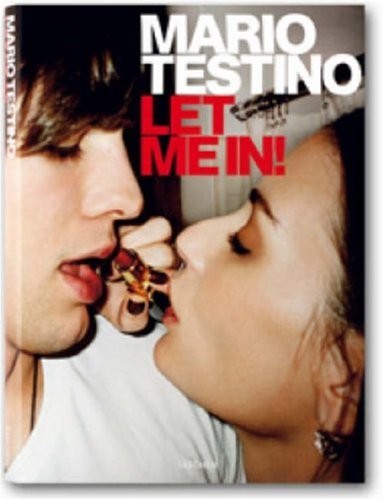
Mario Testino: Let Me In
Mario Testino
Mario Testino: On Sight
Mario Testino, Curated by Gerhard Steidl
Mario Testino: In Your Face
Mario Testino
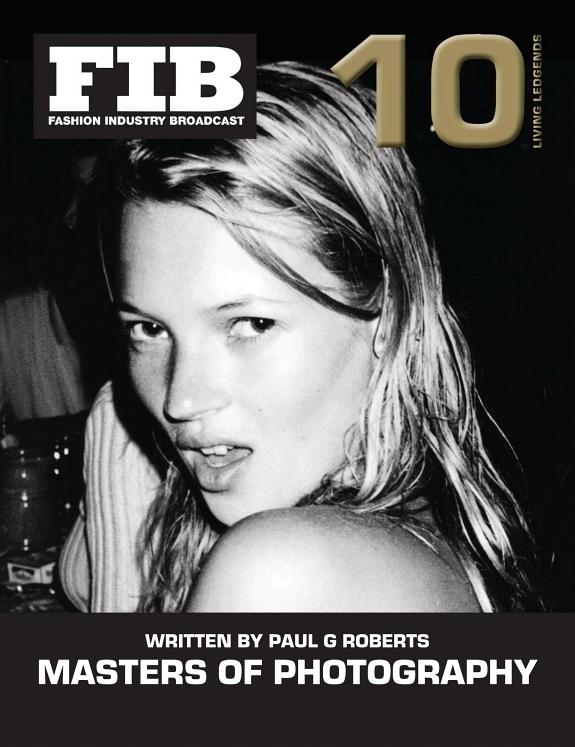
Mario Testino: Kylie
Mario Testino, Kylie Minogue