Marilyn Minter
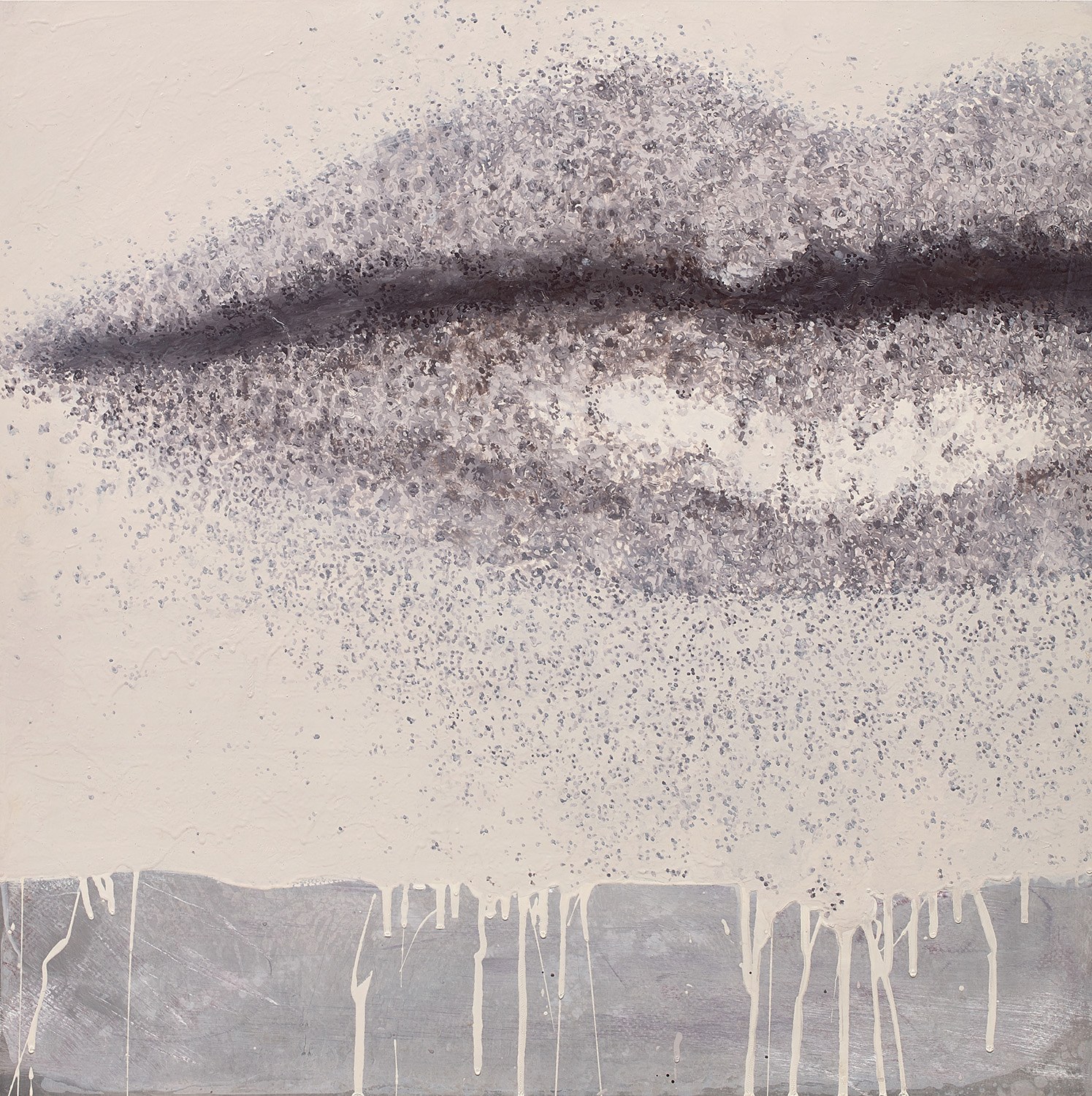
Marilyn Minter Makes Beauty Feel Alive
Artist Spotlight · The Collection Editorial
“I want to make work that seduces people and then makes them question why they are seduced.”
Marilyn Minter
Few living painters command the intersection of desire and discomfort quite like Marilyn Minter. In recent years, her profile has only grown: a major survey at the Contemporary Arts Museum Houston traveled to venues across the United States, and her work continues to appear in the collections of institutions that define the contemporary canon, from the Museum of Modern Art in New York to the San Francisco Museum of Modern Art. At a moment when conversations about representation, the beauty industry, and the politics of the body have moved to the center of cultural life, Minter's decades of engagement with exactly these questions feel not merely relevant but prescient. Minter was born in 1948 and raised in Florida, and her early years carried a weight that would quietly shape everything that followed.
Marilyn Minter
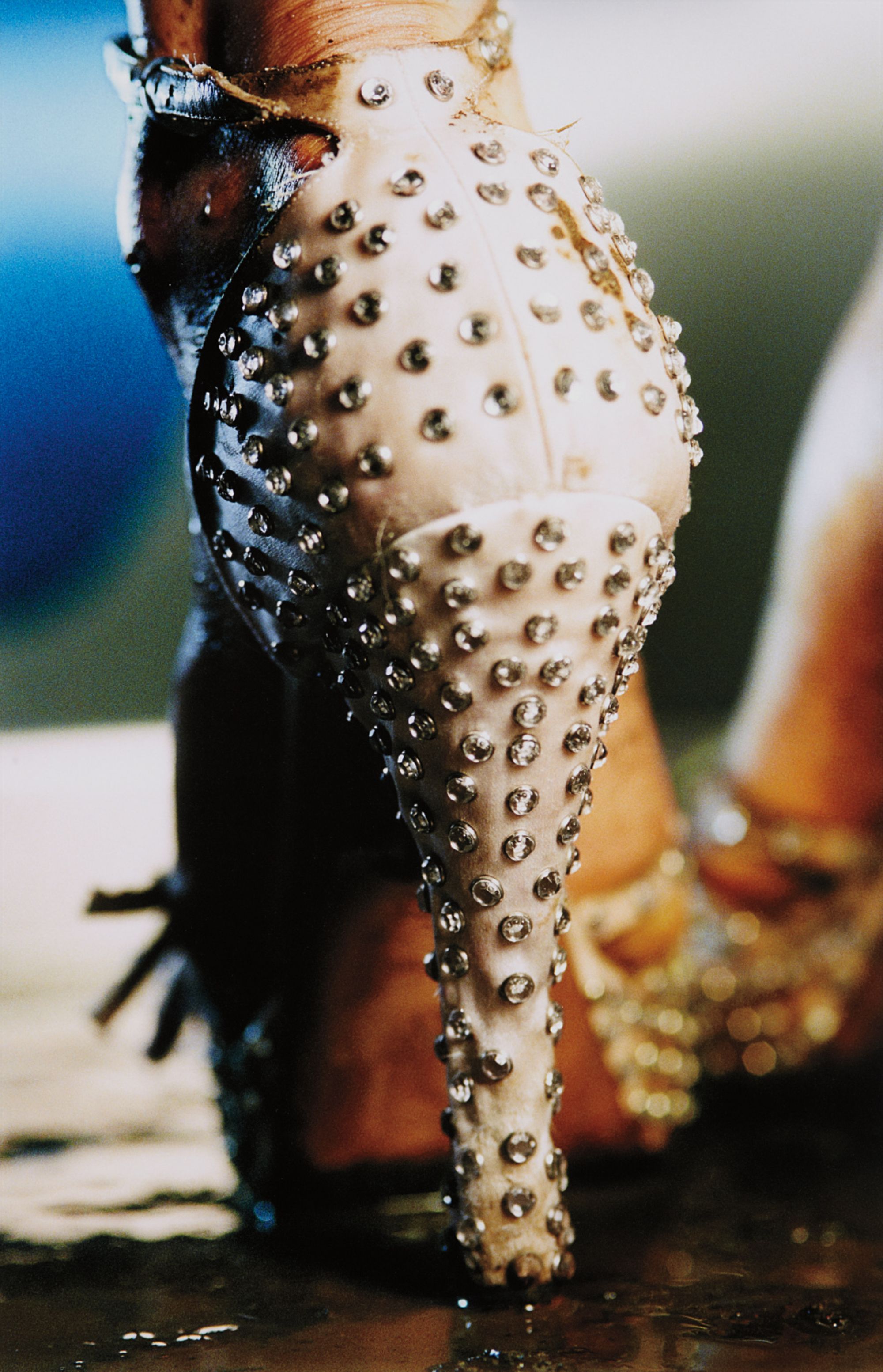
Studs
Her mother struggled with addiction, and Minter photographed her as a teenager in images that were at once unflinching and deeply tender. Those early photographs, which later entered the art world conversation under the title "Coral Ridge Towers," established a template she would return to throughout her career: the camera as a tool for looking honestly at things that polished culture prefers to obscure. There is a reason her work never feels merely decorative, even when it is almost overwhelmingly beautiful. It carries the memory of that early honesty.
She studied at the University of Florida and later earned her MFA from Syracuse University, immersing herself in a period when feminist art practice was redefining what painting and photography could do and who they could speak for. The influence of artists like Cindy Sherman and Barbara Kruger, who were dismantling the grammar of images from within, resonates in Minter's sensibility, though her approach is distinctly her own. Where Sherman disappears into personas and Kruger deploys text as a weapon, Minter works through seduction itself, turning the visual language of advertising and fashion photography into something that implicates the viewer as much as it dazzles them. Her breakthrough into wider recognition came in the early 2000s, when she began producing the large scale enamel paintings on metal that would become her signature.
Marilyn Minter
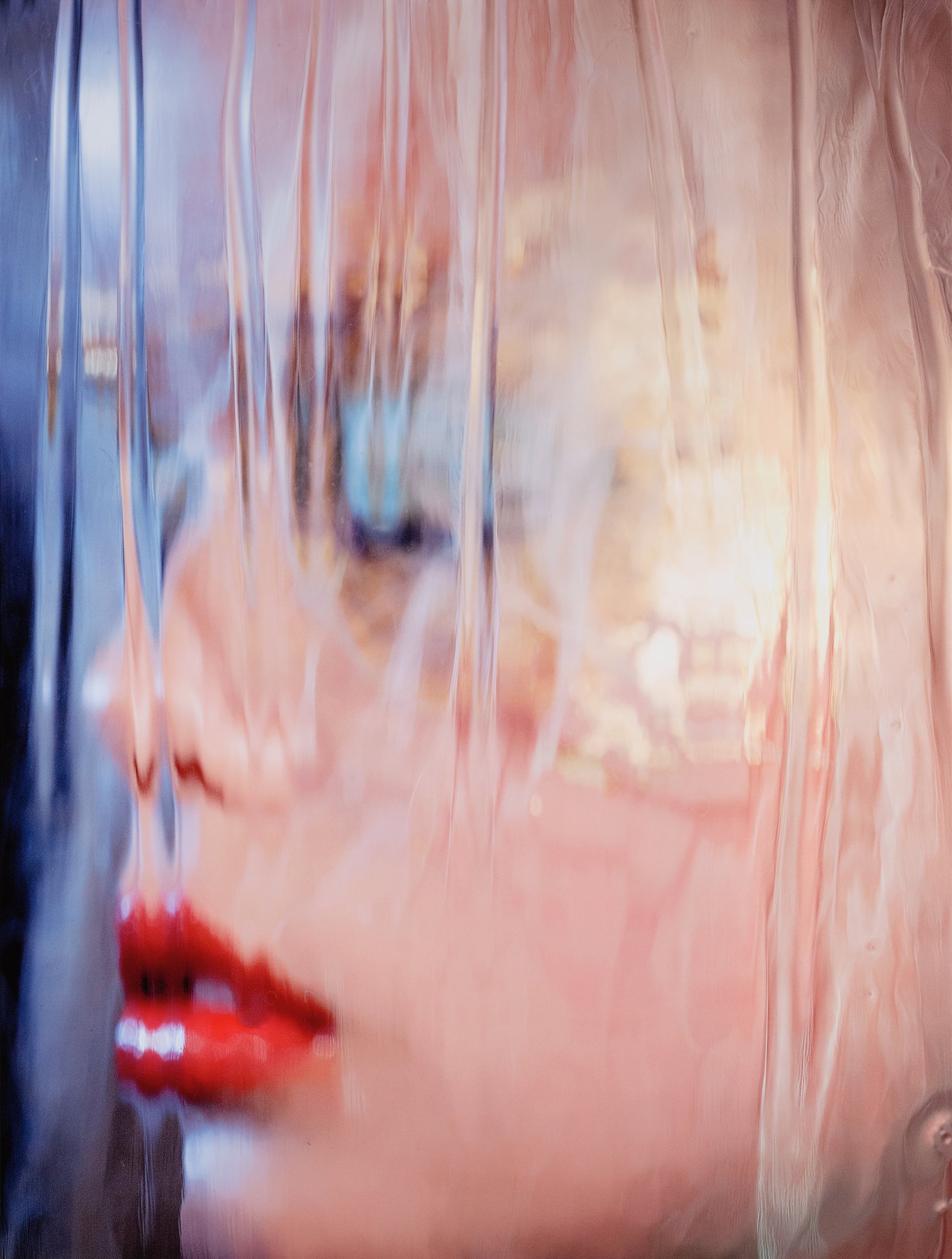
Soda Pop
Works like "Porn Grid" engaged directly with the visual culture of the internet age, and the reception was not without controversy. But Minter has always understood that discomfort and beauty are not opposites. Her paintings of mouths, skin, and eyes filtered through water, condensation, and smeared surfaces create a tension that is almost impossible to resolve: the viewer wants to look and is slightly unsettled by that wanting. That is precisely the point.
“Beauty is a way in. Once I get people in, then I can do what I want with them.”
Marilyn Minter, interview with Bomb Magazine
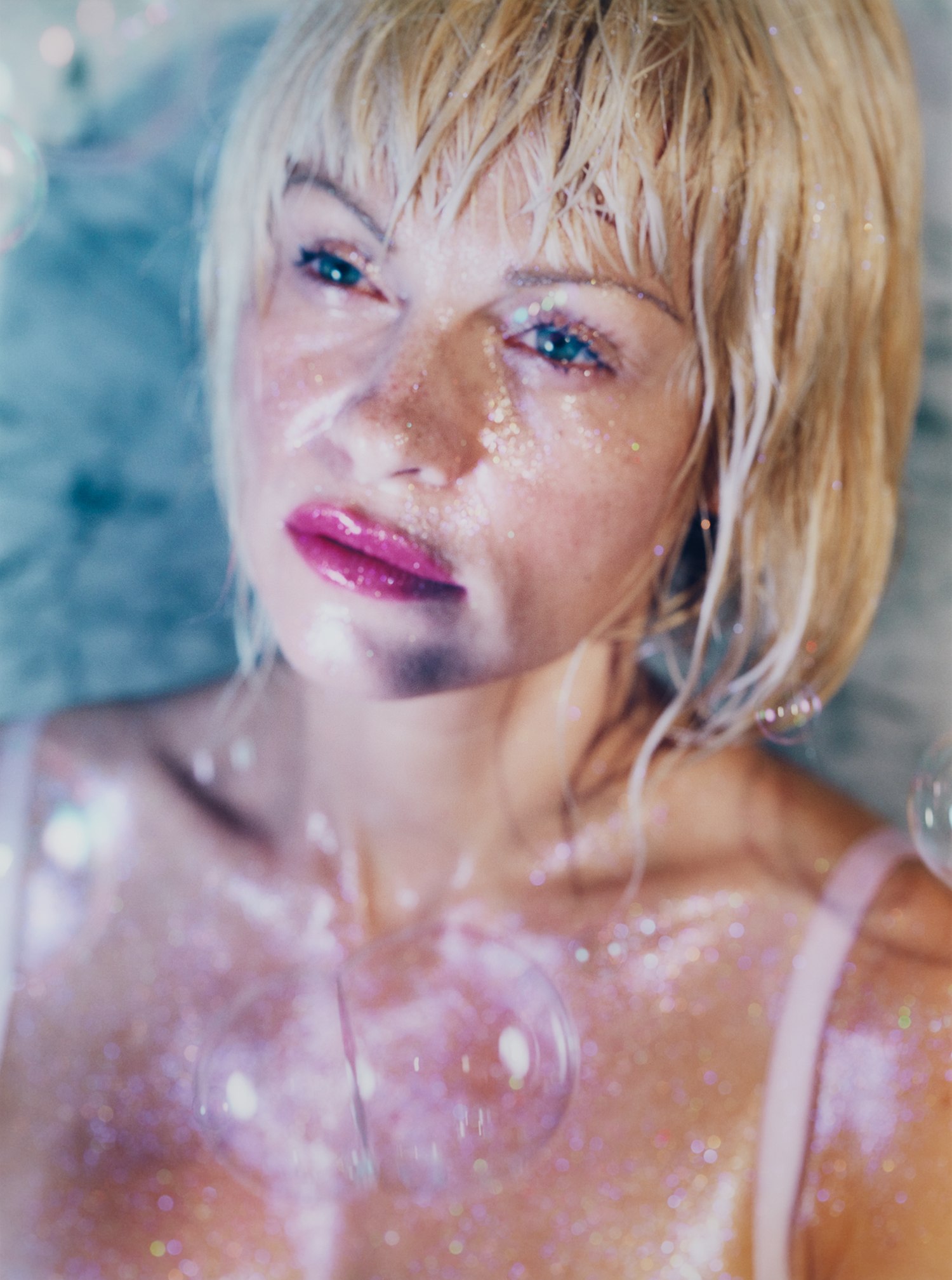
"Sun Spots" and other works in enamel on metal demonstrate her extraordinary technical command, the surfaces shimmering with a photographic fidelity that painting should not, by rights, be able to achieve. The series of chromogenic prints and large format photographs, including works like "Studs," "Double Bubble," and "Plush #24" from 2014, extend this vocabulary into the photographic medium. These works, often face mounted to Plexiglas or presented as Diasec mounted prints, have a physical presence that mirrors the immersive quality of her paintings. The Plexiglas mounting is not merely a presentational choice: it adds another layer of surface between the viewer and the image, another membrane of desire and distance.
Marilyn Minter
Double Bubble
"Emerald City" from 2014 belongs to this same rich period of production, when Minter was working at perhaps the highest pitch of her formal powers, layering glamour and unease with a confidence that few artists working today can match. Collectors have recognized this quality for some time. Her works have appeared at Christie's, Sotheby's, and Phillips, with strong results across both her painting and photographic editions. The chromogenic prints, produced in limited editions and mounted with meticulous care, offer an accessible entry point into her practice without sacrificing the physical and conceptual weight that defines her best work.
For collectors building a thoughtful account of contemporary American art, Minter represents something essential: an artist who engaged with consumer culture not by standing apart from it but by walking directly into its machinery and returning with evidence of both its seductions and its costs. Works on paper and smaller editions offer further opportunities for collectors at varying levels of commitment to the work. In the broader context of art history, Minter belongs to a generation of American artists who came of age in the aftermath of Pop Art and second wave feminism, inheriting both the permission to engage with mass culture and the critical tools to question it. Andy Warhol's fascination with surfaces and celebrity is a clear antecedent, but where Warhol maintained an ironic distance, Minter is frankly involved.
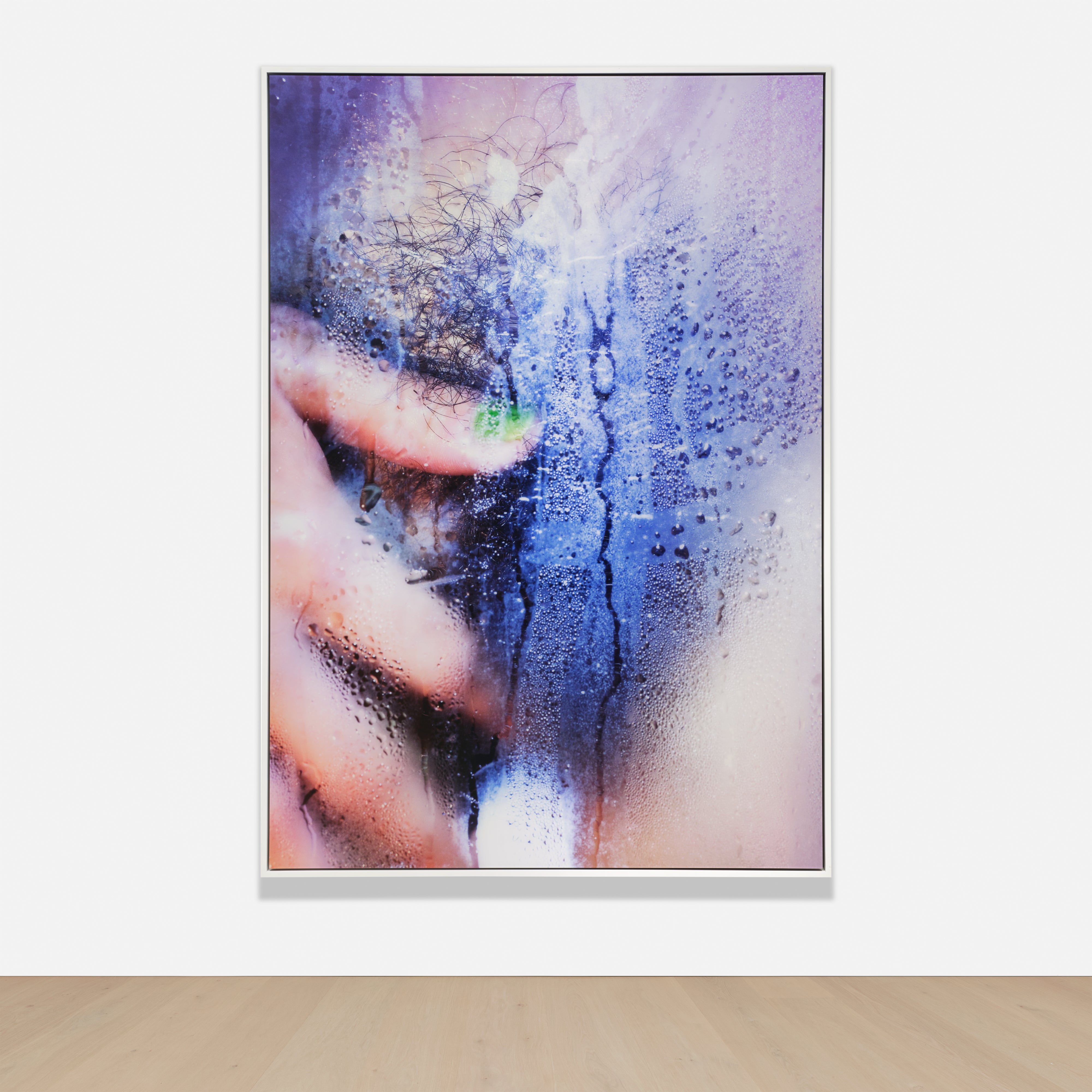
Marilyn Minter
Plush #24, 2014
Richard Prince's engagement with appropriated photography and John Currin's charged relationship with the female figure are useful points of comparison, as are the hyperrealist painters of the 1970s who first demonstrated that painting could match photography's fidelity to the visible world. Minter takes all of this and adds something that is hard to name but unmistakable in the work: a kind of moral seriousness that wears glamour like a costume. Her legacy is already substantial and still accumulating. Exhibitions at Brooklyn Museum and MoMA PS1 have brought her work to broad audiences, and her willingness to engage with political subjects, as seen in works like "Trump Plaque," demonstrates that her critical instincts have never been purely aesthetic.
She has mentored younger artists and spoken publicly about the responsibilities that come with making images of bodies in a culture saturated with them. What Minter offers, finally, is a model for how an artist can spend decades inside a difficult subject and emerge not hardened but deepened: more attuned to beauty, more honest about its costs, and more committed to the idea that painting and photography can still tell the truth.
Explore books about Marilyn Minter