Marie Laurencin
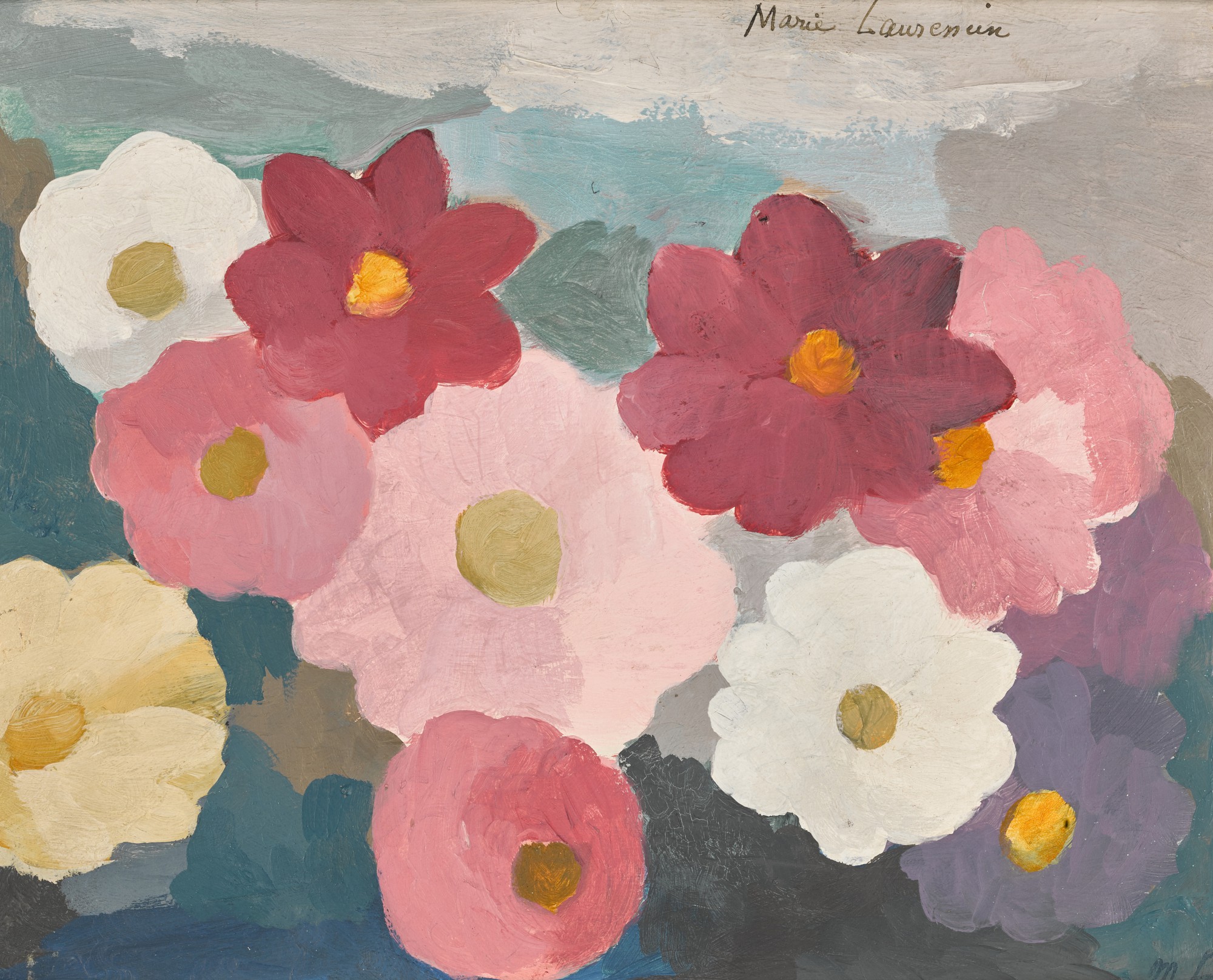
Marie Laurencin: Poetry Made Visible in Paint
Artist Spotlight · The Collection Editorial
“I ask of painting what others ask of poetry, a feeling of transformation that opens a new world.”
Marie Laurencin
There is a moment in the Musée Marie Laurencin in Nagano, Japan, one of the few institutions in the world dedicated entirely to a single woman artist of the early twentieth century, when the full weight of her achievement becomes impossible to ignore. Room after room of pale, luminous figures, soft greys and rose pinks, women and animals suspended in a kind of tender reverie, announce an artist who built an entirely personal visual world and never once apologized for its gentleness. That a Japanese museum recognized her singular importance long before many Western institutions caught up says something both about the reach of her appeal and about how art history has sometimes been slow to reckon with artists who worked in registers other than severity or confrontation. Today, with renewed scholarly attention to women artists of the Parisian avant garde and a robust collector market hungry for her intimate canvases, Marie Laurencin feels more essential than ever.
Marie Laurencin
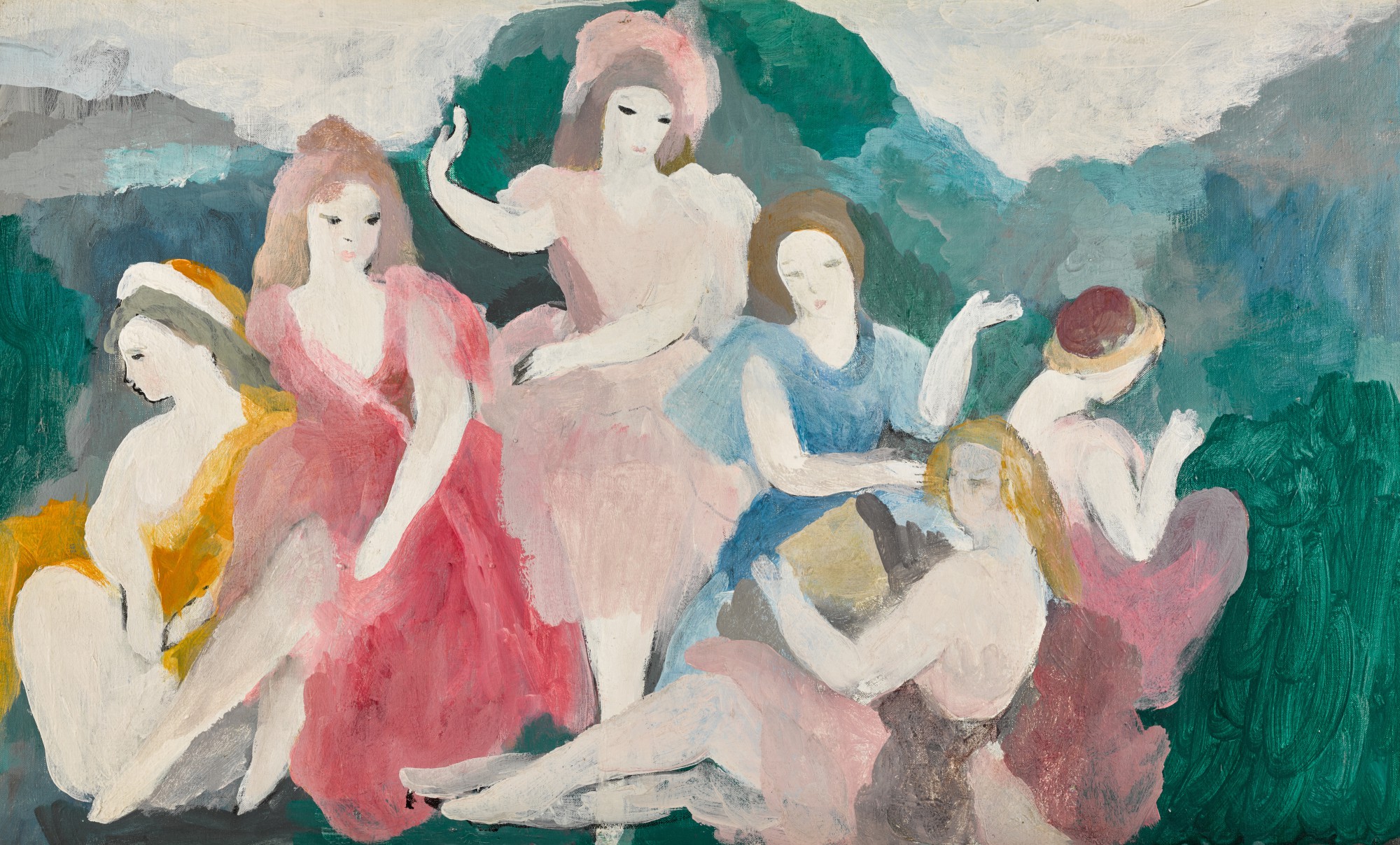
Groupe de six jeunes femmes
She was born in Paris in 1883, the illegitimate daughter of Pauline Meunier, a seamstress, and a father she would not come to know until adulthood. This unconventional origin shaped her understanding of femininity as something navigated outside the established order, constructed through creativity and self invention rather than inherited social position. She trained at the Académie Humbert from around 1902, where she studied porcelain painting before turning fully to fine art, and it was there that her instinct for color as mood rather than description began to assert itself. By her early twenties she had moved in Paris circles that included Georges Braque, and through him she entered the legendary orbit of Pablo Picasso and the poets and painters gathering at the Bateau Lavoir studio in Montmartre.
It was at the Bateau Lavoir that she met Guillaume Apollinaire, the poet who would become her companion for nearly a decade and one of the great romantic partnerships in the history of modernism. Apollinaire championed her work with genuine conviction, and he immortalized her alongside himself, Picasso, and Fernande Olivier in his famous poem "Le Pont Mirabeau" as well as in other writings. Yet Laurencin was never simply a satellite of this world. She exhibited with the Cubists at the Salon des Indépendants in 1907 and appeared in the landmark Section d'Or exhibition of 1912, but her work moved along its own trajectory, absorbing the fragmentation and energy of Cubism while transforming it into something altogether softer and more lyrical.
Marie Laurencin
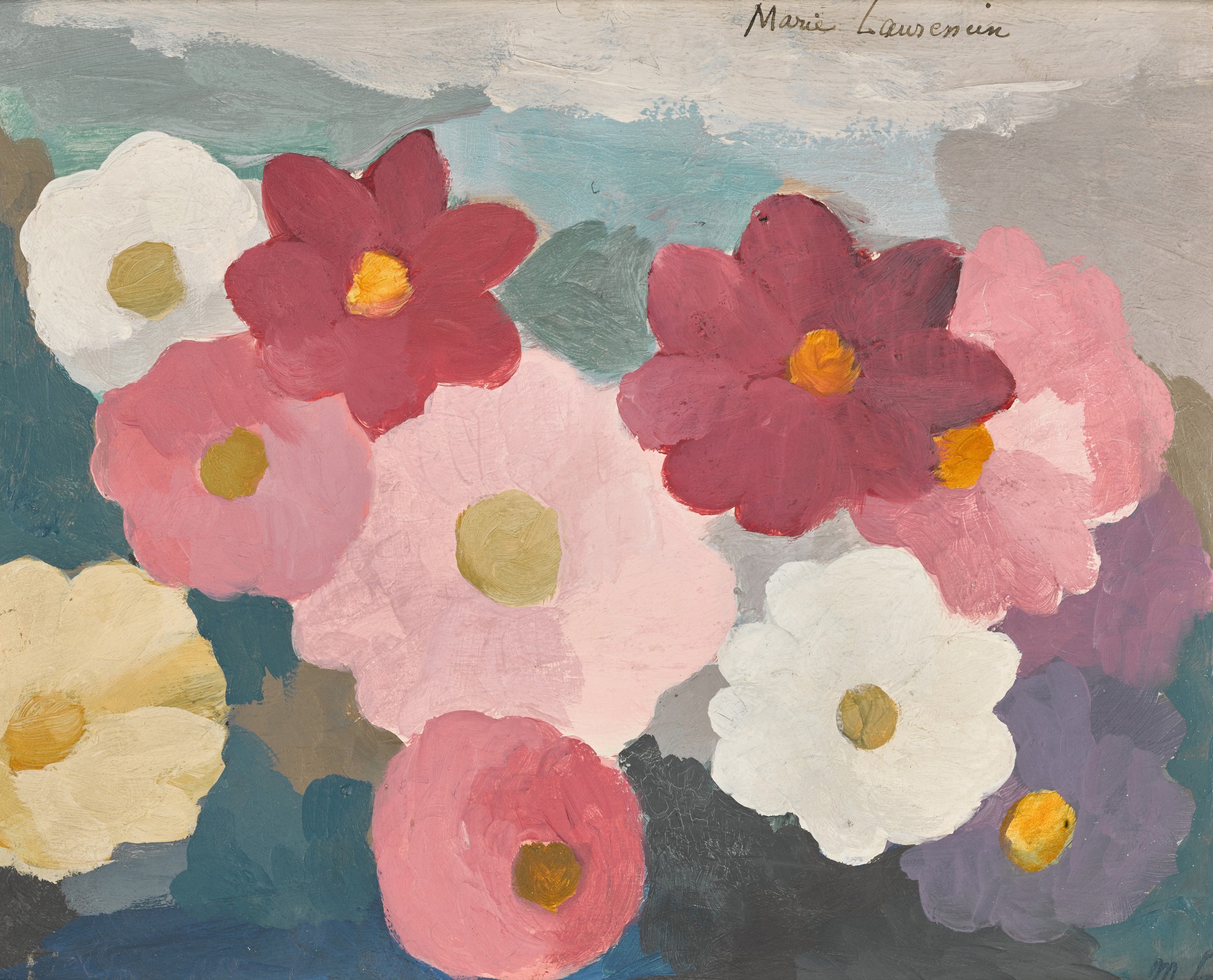
Jeté de fleurs
She was, in the truest sense, in dialogue with the avant garde rather than simply a follower of it. After her separation from Apollinaire and a brief, troubled marriage to the German painter Otto von Wätjen during the First World War that sent her into exile in Spain and then Germany, Laurencin returned to Paris in 1921 and entered the most commercially celebrated and artistically confident period of her career. The 1920s saw her become a sought after figure for portraits of elegant Parisian women, stage design work for Sergei Diaghilev's Ballets Russes, and a presence at the Galerie Paul Rosenberg, one of the most prestigious galleries in Europe. Her palette during this period settled into those iconic harmonies of grey, pink, pale blue, and ivory that collectors immediately recognize.
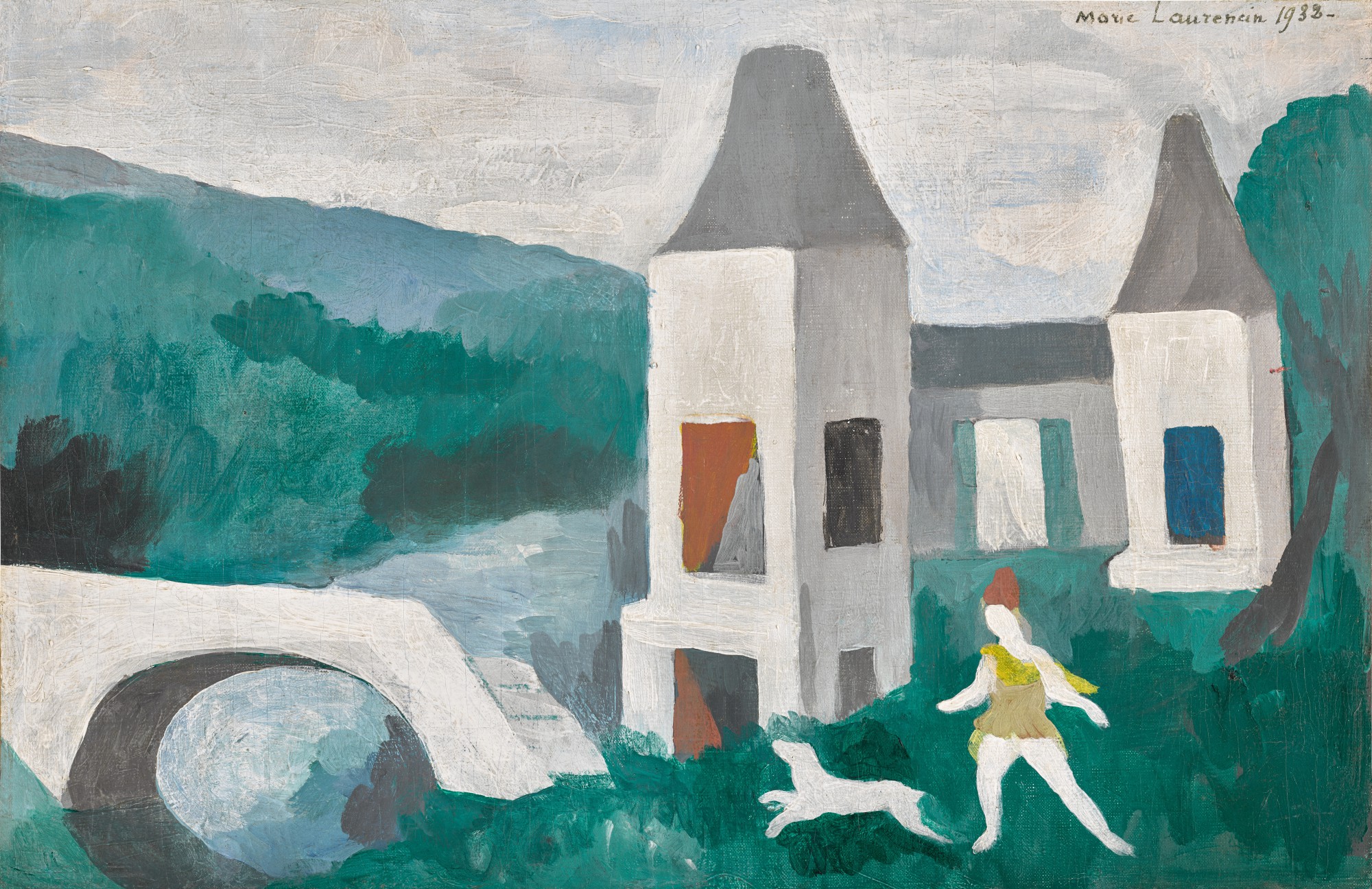
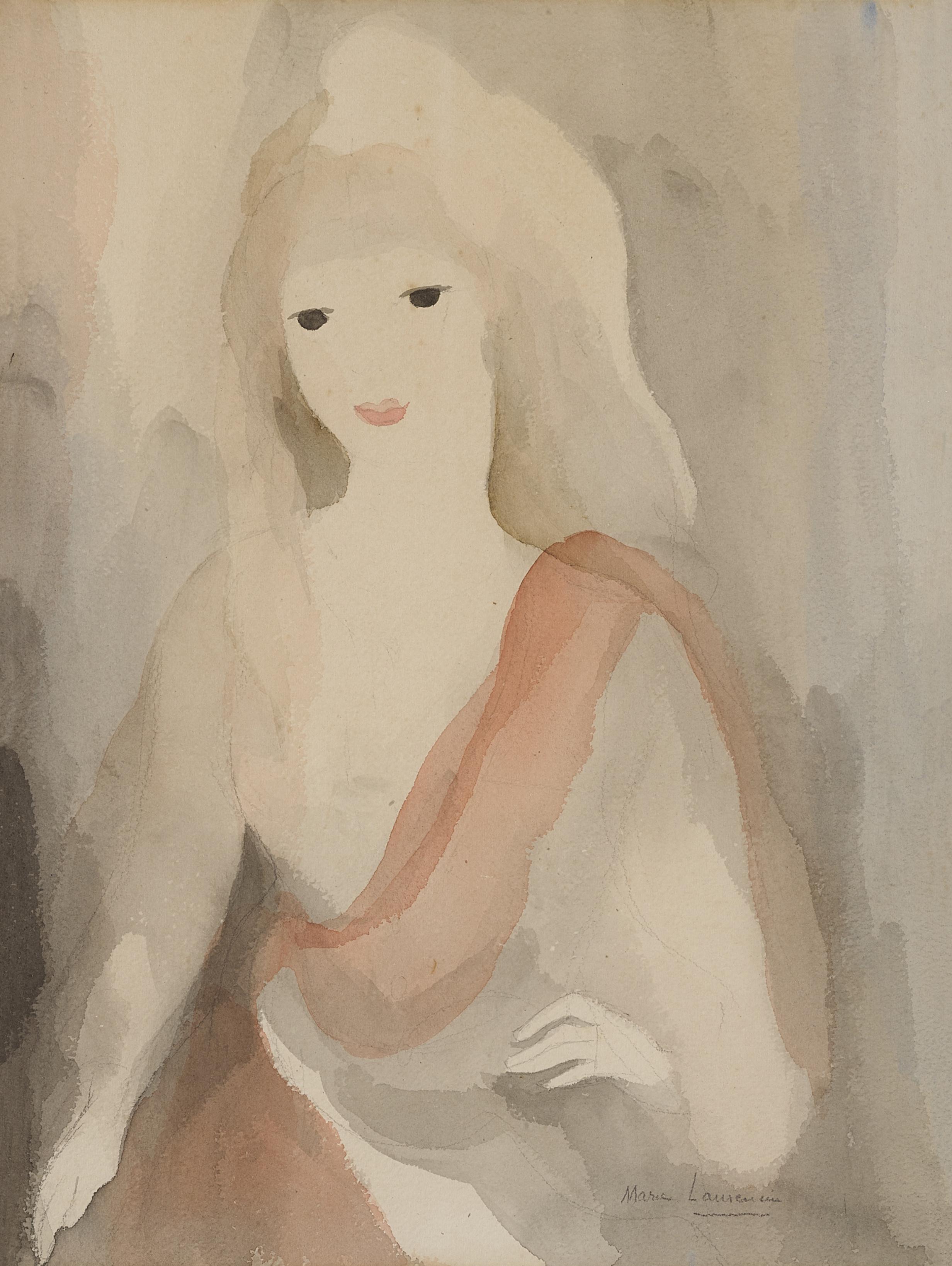
Works such as "Manola" from 1925 exemplify this maturity: figures that seem to float rather than stand, rendered with a confidence in simplification that recalls both Matisse's decorative economy and the delicacy of Rococo masters like Fragonard, yet remain utterly her own. The works available through The Collection span the full range of her practice and offer a rare opportunity to trace her development across mediums and decades. "Groupe de six jeunes femmes" in oil on canvas presents the collective feminine subject she returned to throughout her life: groups of women and girls in states of gentle absorption, seemingly gathered in a world from which the harsher textures of modern life have been consciously excluded. "Jeune femme à l'écharpe rose" from 1929, rendered in watercolor and pencil, shows her graphic sensibility at its most refined, while the 1932 oil "Jeune seigneur devant son palais" reveals her occasionally underappreciated willingness to engage with theatrical and historical subjects.
Marie Laurencin
Jeune seigneur devant son palais, 1932
Her printmaking, represented here by the etching "La Romance," demonstrates that her sensitivity to line was not a happy accident of painting but a deeply cultivated skill across every medium she touched. For collectors, Laurencin presents a compelling and increasingly well documented case. Her auction market has strengthened meaningfully over the past two decades as institutional and scholarly attention to women modernists has intensified. Works on paper, particularly her watercolors from the late 1920s and 1930s, offer points of entry into her world at a range accessible to a broad collecting audience, while her oils carry price levels that reflect both their rarity and their importance.
Condition and provenance are especially significant with Laurencin: her works have circulated through major European and American collections since her lifetime, and pieces with clear histories command strong premiums. Collectors drawn to School of Paris painting, to Fauvism and post Cubist figuration, and to the work of artists such as Suzanne Valadon and Émilie Charmy will find in Laurencin a natural and deeply rewarding counterpart. Placing her within art history requires a willingness to resist the categories that her contemporaries often imposed upon her. She was not a Cubist in the way Braque or Léger were Cubists, not a Fauvist in the way Matisse was, and not a Surrealist, though the dreamlike quality of her imagery sometimes grazes that territory.
Marie Laurencin
Jeune femme à l'écharpe rose, 1929
She was, in the end, her own movement, and that independence is precisely what gives her work its durability. In an era when women artists of the early twentieth century are being returned to the positions of centrality they always deserved, Laurencin stands as one of the most complete and accomplished of all. She died in Paris in 1956, leaving behind a body of work that refused to harden into doctrine or ideology and instead remained, from first to last, a sustained act of poetic vision. To encounter her paintings today is to understand that tenderness is not weakness, and that a world rendered in rose and grey can contain as much truth as one rendered in iron.
Explore books about Marie Laurencin
Marie Laurencin: Catalogue Raisonné of the Prints
Marcelle Laprade

Marie Laurencin
Douglas Cooper
Marie Laurencin: Artist and Muse
Nicole Mangin and Claire Bernardi
Catalogue Raisonné of the Oil Paintings and Pastels
Claudine Grammont
Marie Laurencin: A Woman's Vision
Szymon Symonowicz
The Letters of Marie Laurencin
Jacqueline Marchand
Marie Laurencin: 1883-1956
Denys Sutton

Marie Laurencin and the School of Paris
Robert Motherwell