Marcellina Akpojotor
Marcellina Akpojotor Stitches the World Whole
Artist Spotlight · The Collection Editorial
There is a particular kind of attention that contemporary collectors and curators have been paying to artists working at the intersection of textile practice and painting, and Marcellina Akpojotor has quietly, steadily positioned herself as one of the most compelling voices in that conversation. Her work, rooted in Nigerian cultural heritage and animated by a deep curiosity about memory, womanhood, and everyday joy, has drawn admiring eyes from Lagos to London. With a practice that layers fabric, acrylic, and paper collage into richly textured canvases, Akpojotor is making work that feels both urgently contemporary and timelessly human. Akpojotor was shaped by the visual and material abundance of Nigerian life.
Marcellina Akpojotor
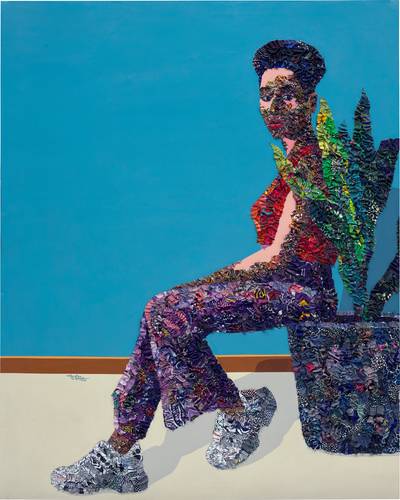
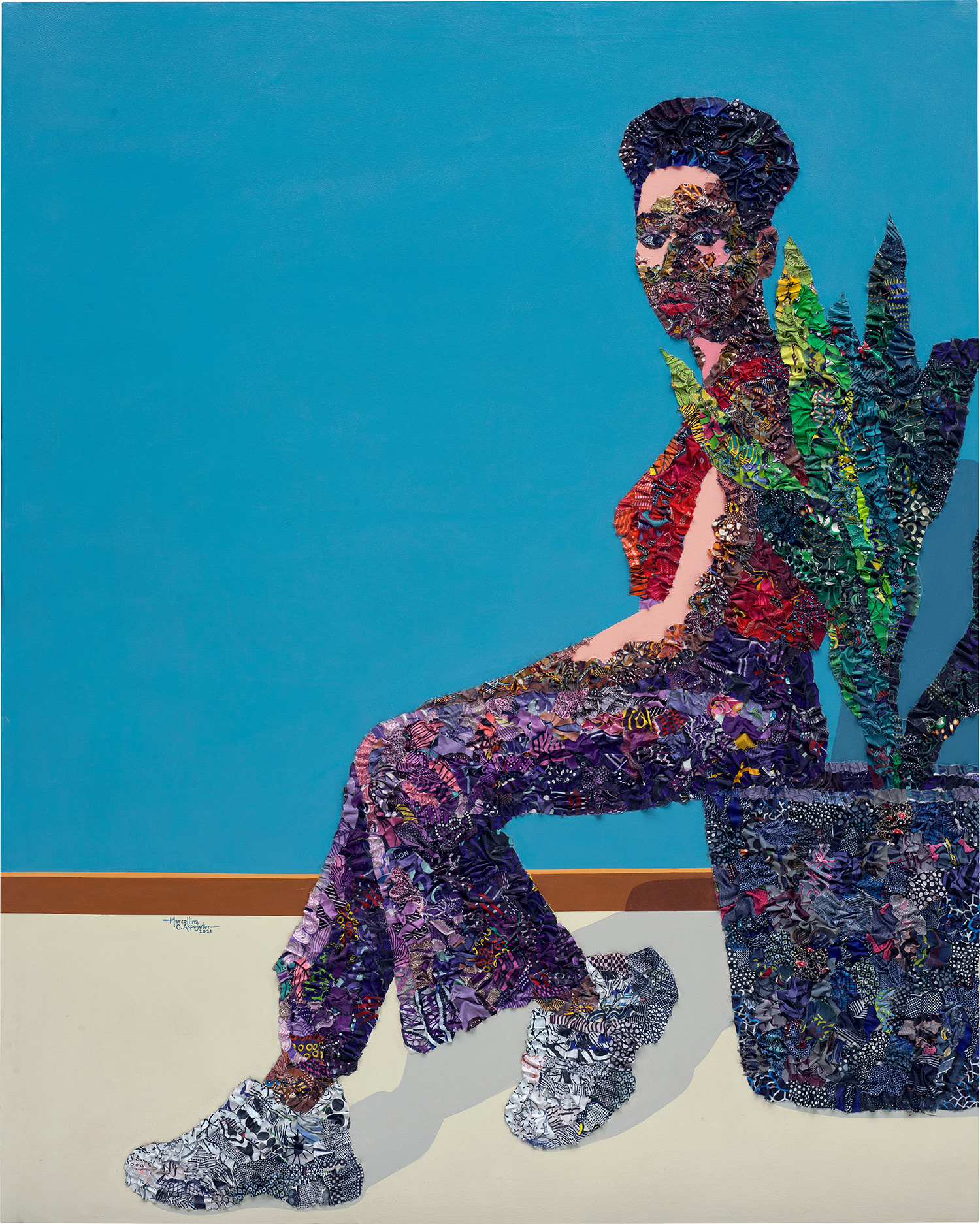
Set to Flourish I, 2021
Growing up in Nigeria, she developed an intimate relationship with fabric and pattern, materials that carry enormous social and cultural weight across West Africa, where cloth has long been used to communicate identity, status, celebration, and grief. This early immersion in textile as a language, not merely as decoration, would become foundational to her artistic voice. The tactile intelligence she brings to her canvases is not the result of formal experimentation alone but of a lifelong literacy in the stories that cloth can tell. Her artistic formation brought together the discipline of fine art training with the expressive freedom she found in combining media.
Rather than treating fabric and paint as competing materials, Akpojotor understood them as collaborators. This insight is central to everything she makes. Her canvases do not feel assembled or constructed in a mechanical sense. They feel grown, organic, as though the materials have arrived at their arrangement through their own logic.
Marcellina Akpojotor
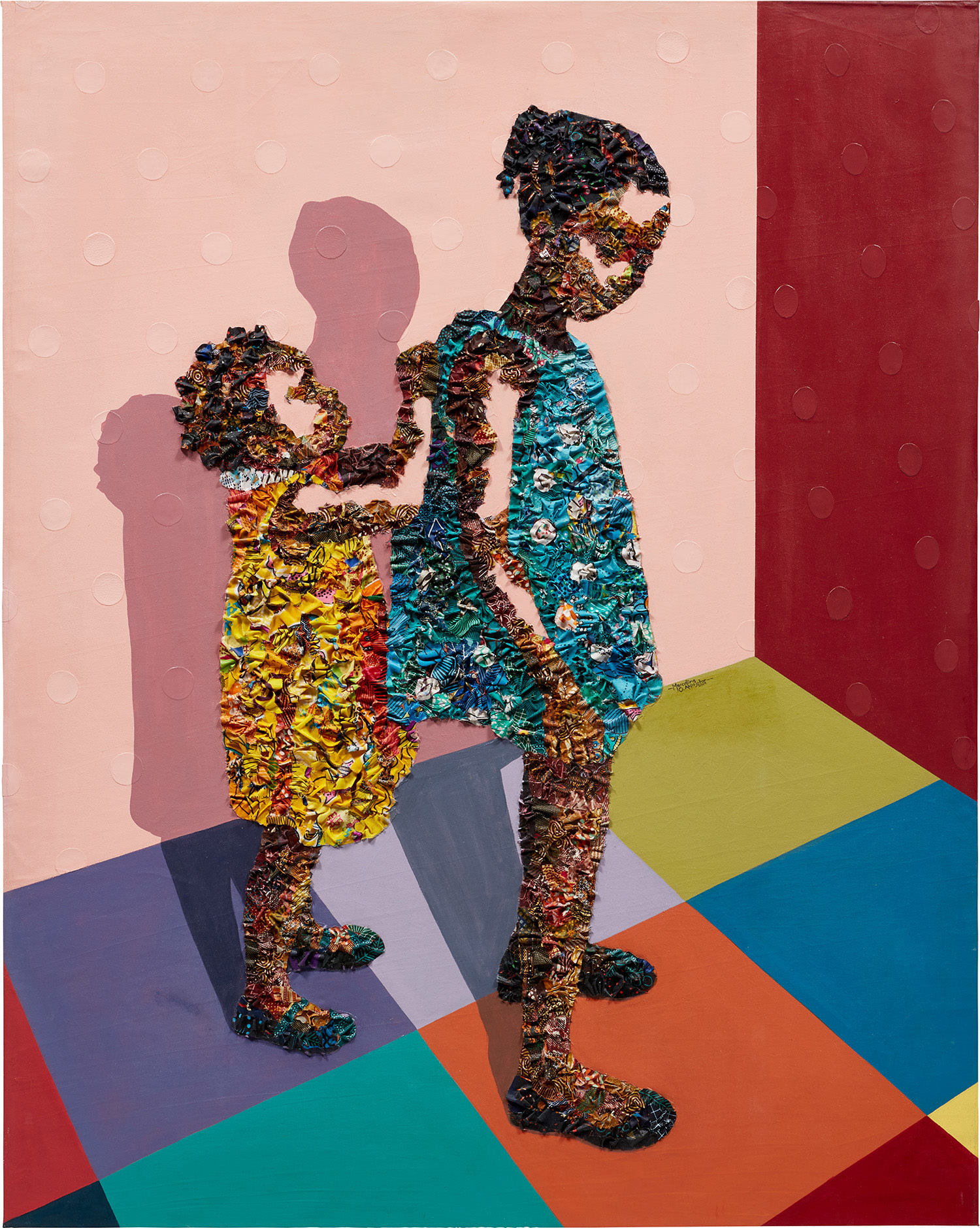
A Beautiful Day (Kasiena's diary), 2019
She builds surfaces that reward sustained looking, where the longer you remain with a work, the more it gives back. Among the works that best represent the range and depth of her practice, "Set to Flourish I" from 2021 stands as a particularly strong statement. The combination of fabric and acrylic on canvas speaks to a sensibility that is both grounded and aspirational. The title alone is a declaration, a quiet confidence that feels characteristic of Akpojotor at her most assured.
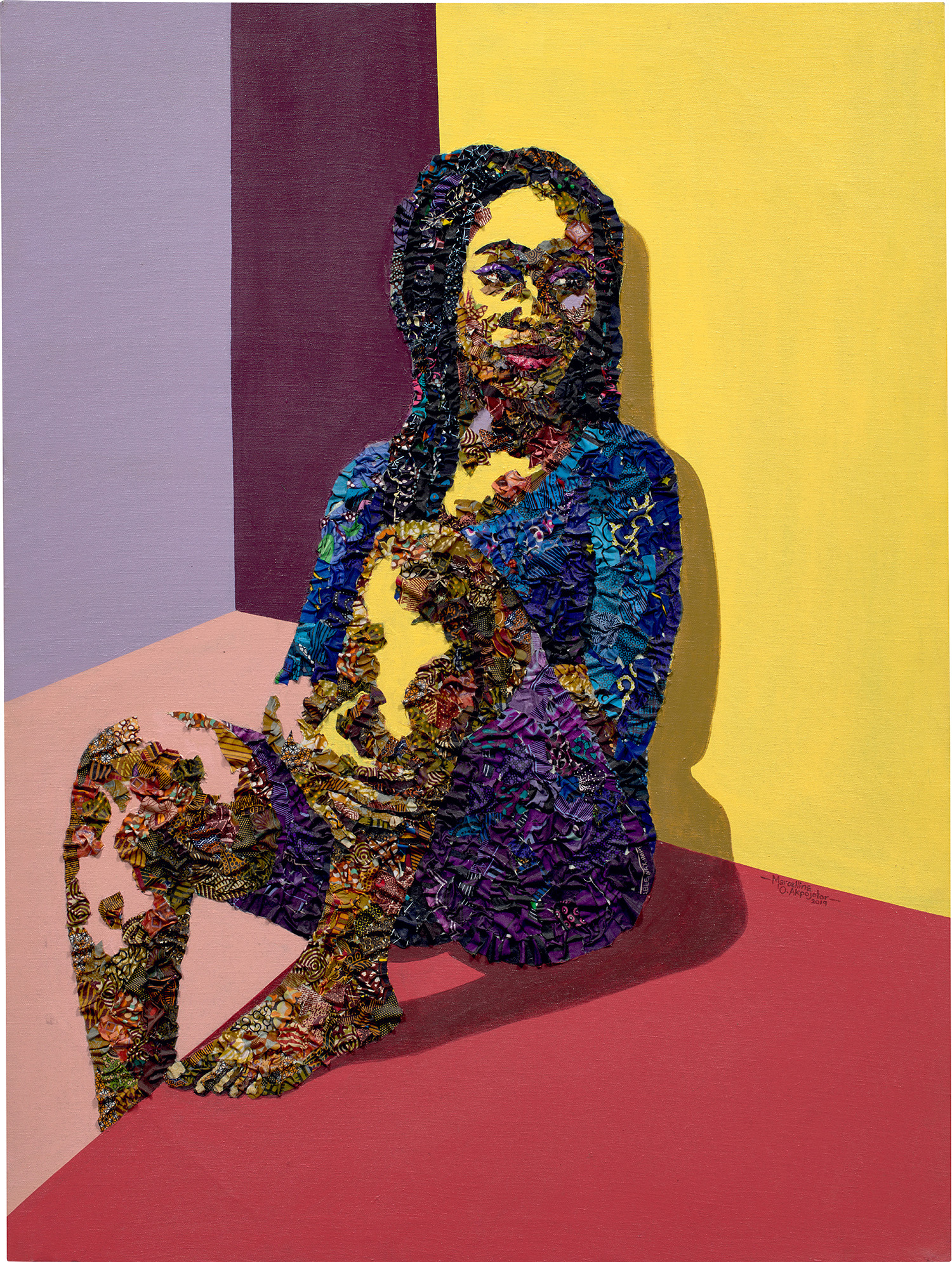
Her 2019 work "A Beautiful Day (Kasiena's diary)" introduces a deeply personal register, drawing on the diary as a form of intimate record and expanding it into the painted surface through acrylic, fabric, and paper collage. The naming of Kasiena, the specificity of that dedication, gives the work an emotional precision that is moving without being sentimental. Also from 2019, "Here and Now II" uses textile collage and acrylic to insist on the present tense, on the value and richness of the immediate moment. Together these works trace a practice concerned with flourishing, with marking time, and with insisting on the beauty available in ordinary days.
Marcellina Akpojotor
Here and Now II, 2019
The materials Akpojotor chooses are themselves arguments. Fabric in the context of fine art carries a long and contested history. Artists such as Faith Ringgold, El Anatsui, and Billie Zangewa have each demonstrated how textile can carry the full weight of cultural and emotional meaning, resisting the dismissal that soft materials once faced from the mainstream art world. Akpojotor belongs to this lineage and extends it in her own direction.
Where Zangewa works with silk mosaic to render intimate domestic scenes, and Anatsui transforms discarded metal into monumental tapestry like forms, Akpojotor fuses fabric with the painted surface in a way that makes the boundary between the two media genuinely difficult to locate. Her work reminds you that painting and textile were never as separate as Western art history has sometimes insisted. From a collecting perspective, Akpojotor represents precisely the kind of artist that thoughtful collections are built around. Her practice has coherence and ambition in equal measure.
The works available on The Collection offer an entry point into a body of work that is still developing, which means that collectors who engage now are participating in something genuinely alive. The intimacy of works like "A Beautiful Day (Kasiena's diary)" makes them the kind of pieces that do not simply decorate a wall but change the feeling of a room, asking something of everyone who passes through it. Her palette, her compositional instincts, and her material intelligence all point to an artist whose best work may still be ahead. The broader context in which Akpojotor's work sits is one of the most exciting in contemporary art.
The global recognition of African artists and artists of African heritage working across painting, textile, and mixed media has reshaped the collecting landscape over the past decade. Galleries and institutions from Lagos to New York to London have expanded their attention and their walls to accommodate this shift. Artists such as Njideka Akunyili Crosby, who also works with collage and painted surfaces to explore identity and cultural duality, offer a useful point of comparison, though Akpojotor's relationship to textile is more materially direct and her emotional register more intimate. She is also in conversation with a generation of artists across West Africa for whom the vernacular visual cultures of their upbringing are not reference points to be cited but living languages to be spoken.
What Akpojotor ultimately offers is a practice grounded in care, care for materials, care for the people and experiences she represents, and care for the viewer who comes to the work without knowing what they are about to feel. Her canvases make a case for the importance of the everyday, for the way that ordinary days, when looked at closely enough, reveal themselves to be beautiful. In a cultural moment that can feel saturated by spectacle, this is a quietly radical position. Collectors and institutions that invest their attention in her now will find that her work repays that investment not once but continuously, offering new reasons to look each time you return to it.