Marcel Dzama
Marcel Dzama's Wonderfully Strange and Enchanting Universe
Artist Spotlight · The Collection Editorial
“I want the work to feel like it comes from some other world, but one that is deeply connected to this one.”
Marcel Dzama, David Zwirner interview
In recent years, Marcel Dzama has cemented his place as one of the most singular and beloved figures in contemporary art, with exhibitions at David Zwirner gallery in New York and London continuing to draw devoted audiences and critical acclaim. His most recent large scale presentations have reminded collectors and curators alike that his vision, far from dimming, grows richer and more layered with each passing year. The art world returns to Dzama again and again because his work occupies a space that feels genuinely unlike anything else: at once childlike and sinister, mythological and urgently political, deeply personal and hauntingly universal. Dzama was born in Winnipeg, Manitoba, Canada in 1974, and the landscape of the Canadian prairies, vast, cold, and quietly strange, left an indelible mark on his imagination.
Marcel Dzama
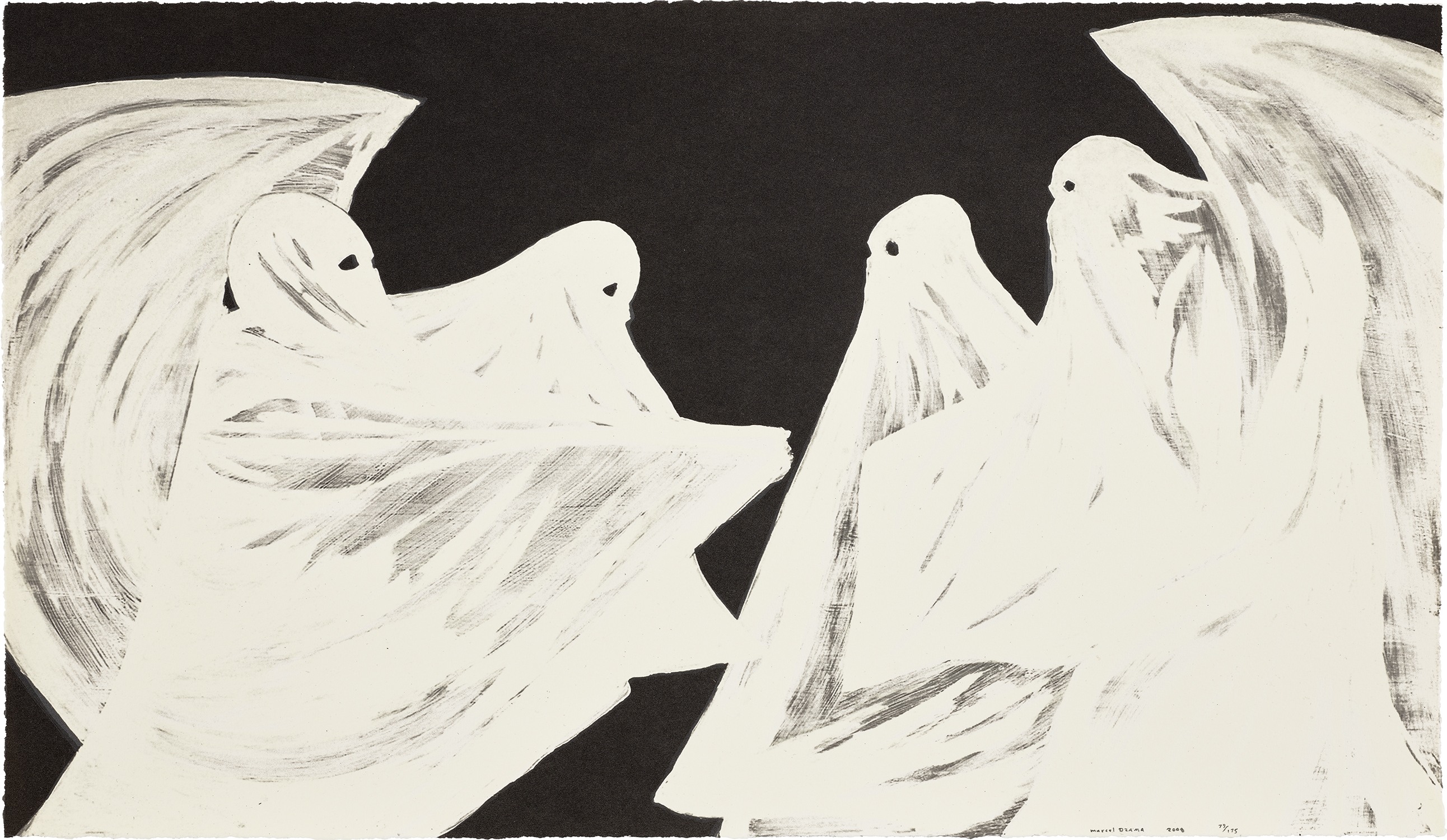
Scared of his own ghost
He studied at the University of Manitoba, where he became a founding member of the Royal Art Lodge, an artist collective that formed in 1996 and would become an important early incubator for his sensibility. The collective, which included artists Michael Dumontier and Neil Farber among others, operated through collaborative drawing sessions fueled by beer, conversation, and a shared appetite for the absurd and the folkloric. This formative community gave Dzama permission to embrace the handmade, the intimate, and the eccentric at a moment when much of the art world was moving toward sleek conceptualism. His early practice was built almost entirely on small watercolors and ink drawings on paper, works that he produced in enormous quantities throughout the late 1990s and early 2000s.
These drawings, featuring his now iconic cast of bears, soldiers, dancers, masked figures, and skeletal creatures rendered in a deliberately naive style against pale or tea stained grounds, caught the attention of dealer Tim Blum and eventually the New York gallery scene. The works felt like dispatches from a private mythology, one that borrowed freely from Goya, from folk art, from silent film, and from the illustrated margins of medieval manuscripts. Collectors responded with immediate and lasting enthusiasm, drawn to the sense that each work was both a complete world and a fragment of something larger and stranger still. Over the following decade Dzama expanded his practice considerably, moving into sculpture, film, chess sets, shadow puppetry, and large scale installation.
Marcel Dzama
The Revolution will be Female
His collaboration with director Spike Jonze and his ongoing creative dialogue with musicians including members of The Flaming Lips and Beck brought his imagery into new cultural contexts without diluting its essential strangeness. Works such as The 1919 Revolution from 2009, a sweeping ink and graphite composition across four adjoined sheets, demonstrate his ability to scale his hand drawn sensibility into something monumental and politically charged. The title alone signals his fascination with historical rupture, collective action, and the theater of ideology, themes that run like a current beneath even his most seemingly whimsical compositions. His prints and multiples deserve particular attention from collectors who are approaching his work for the first time or deepening an existing engagement.
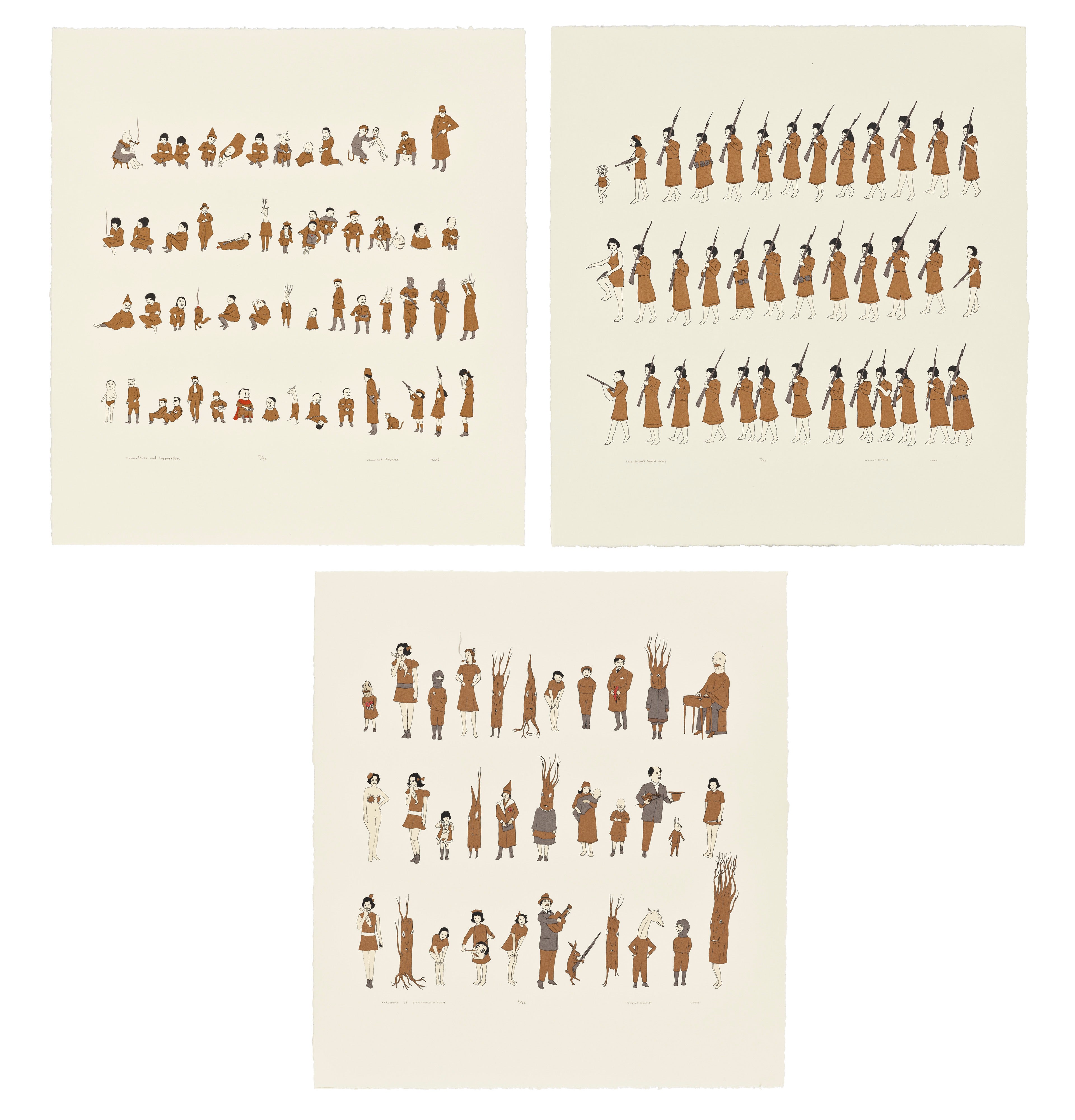
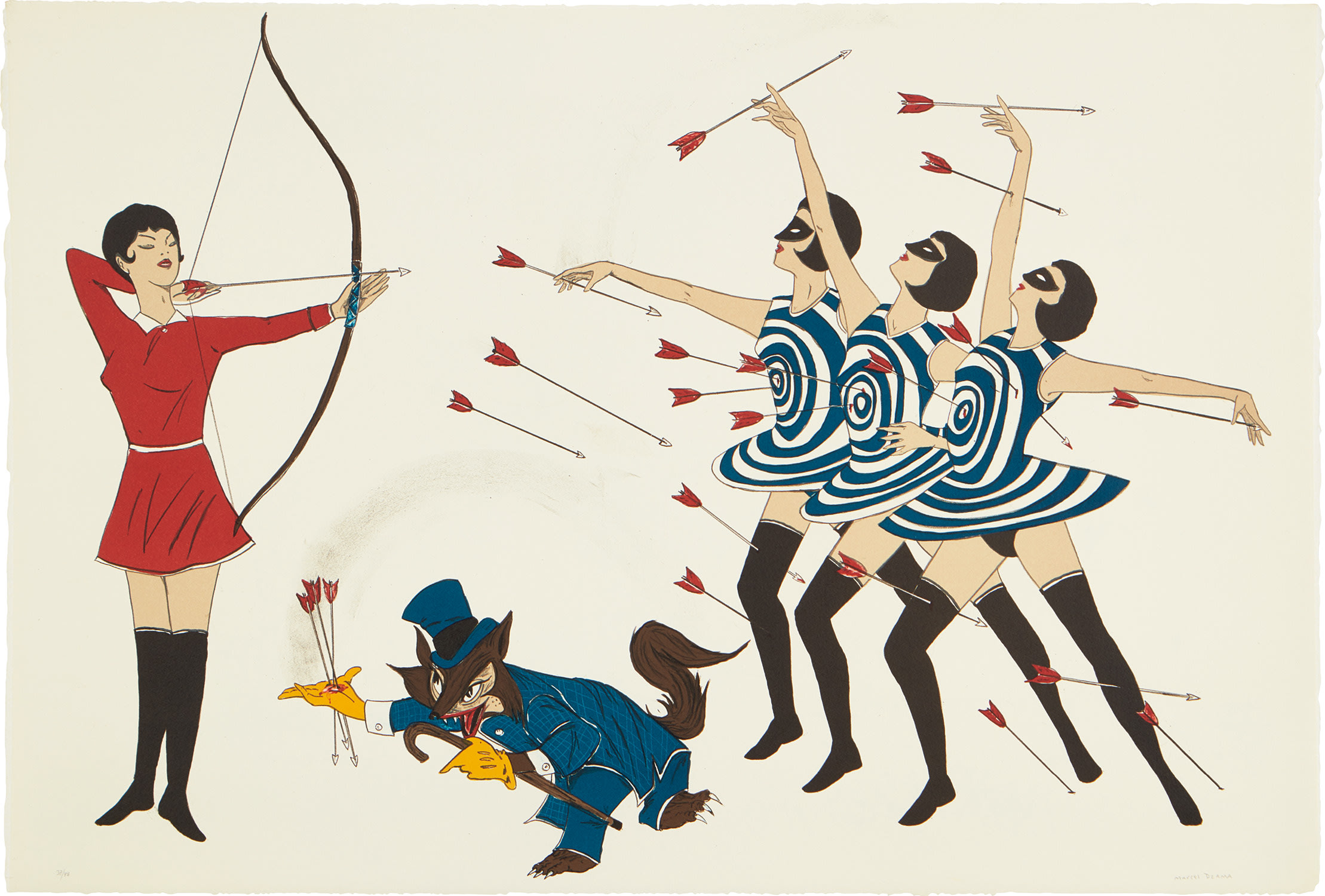
Works such as The Revolution will be Female, a lithograph in colors on Arches paper, and Don't Make Me A Target, a lithograph with hand additions in graphite, reveal how seriously Dzama treats the print medium. These are not mere reproductions of paintings but fully realized works in their own right, often incorporating hand intervention that makes each example subtly unique. Scared of his own ghost, with its photoluminescent ink, and Snowflake Defense both demonstrate his appetite for material experimentation within the ostensibly traditional format of the lithograph. The suite Casualties and Hypocrites; The Avant Guard Army; and Citizens of Regimentation, published by I.
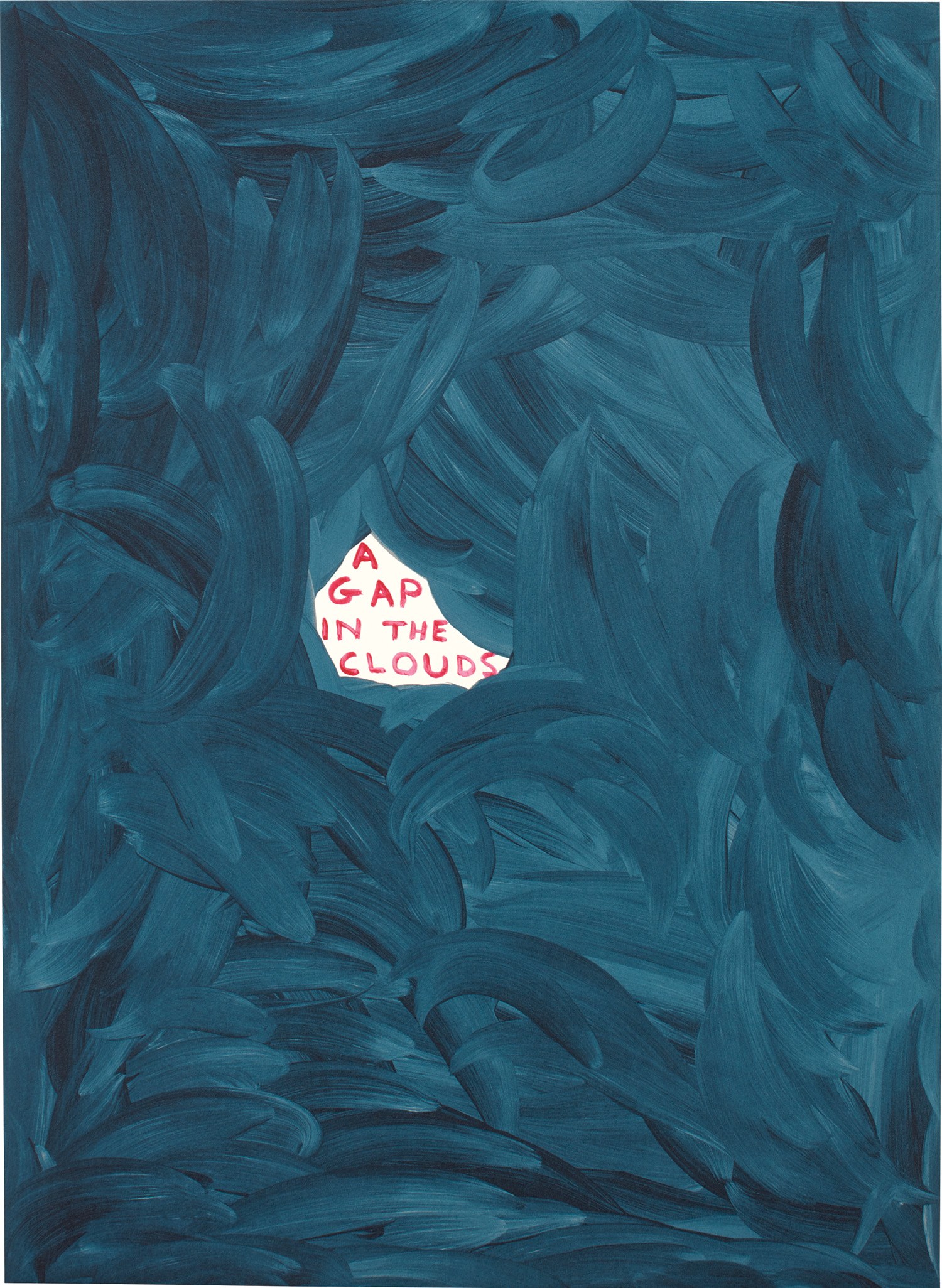
Marcel Dzama
Don't Make Me A Target
C. Editions in a limited edition of 26 plus artist proofs, has become a touchstone for collectors who understand the depth and ambition of his graphic work. In terms of the broader art historical conversation, Dzama occupies a fascinating position. His lineage connects him to artists such as Henry Darger, whose outsider sensibility and epic private mythologies feel like a distant cousin to Dzama's own world building, as well as to Paul Klee, whose marriage of childlike mark making with formal sophistication and psychological depth Dzama clearly shares.
There is also a strong connection to the tradition of political caricature and satirical illustration, from Daumier forward, though Dzama filters all of this through a thoroughly contemporary and distinctly North American lens. His work sits comfortably alongside that of Raymond Pettibon, a fellow traveler in the territory where drawing, narrative, and cultural critique converge. The market for Dzama has remained consistently strong and genuinely passionate rather than speculative, a distinction that speaks well of the collector base his work has attracted. Buyers tend to be people who live closely with art, who want works that reveal new things over years of looking, and who appreciate the generosity of an artist who produces across a wide range of price points and formats.
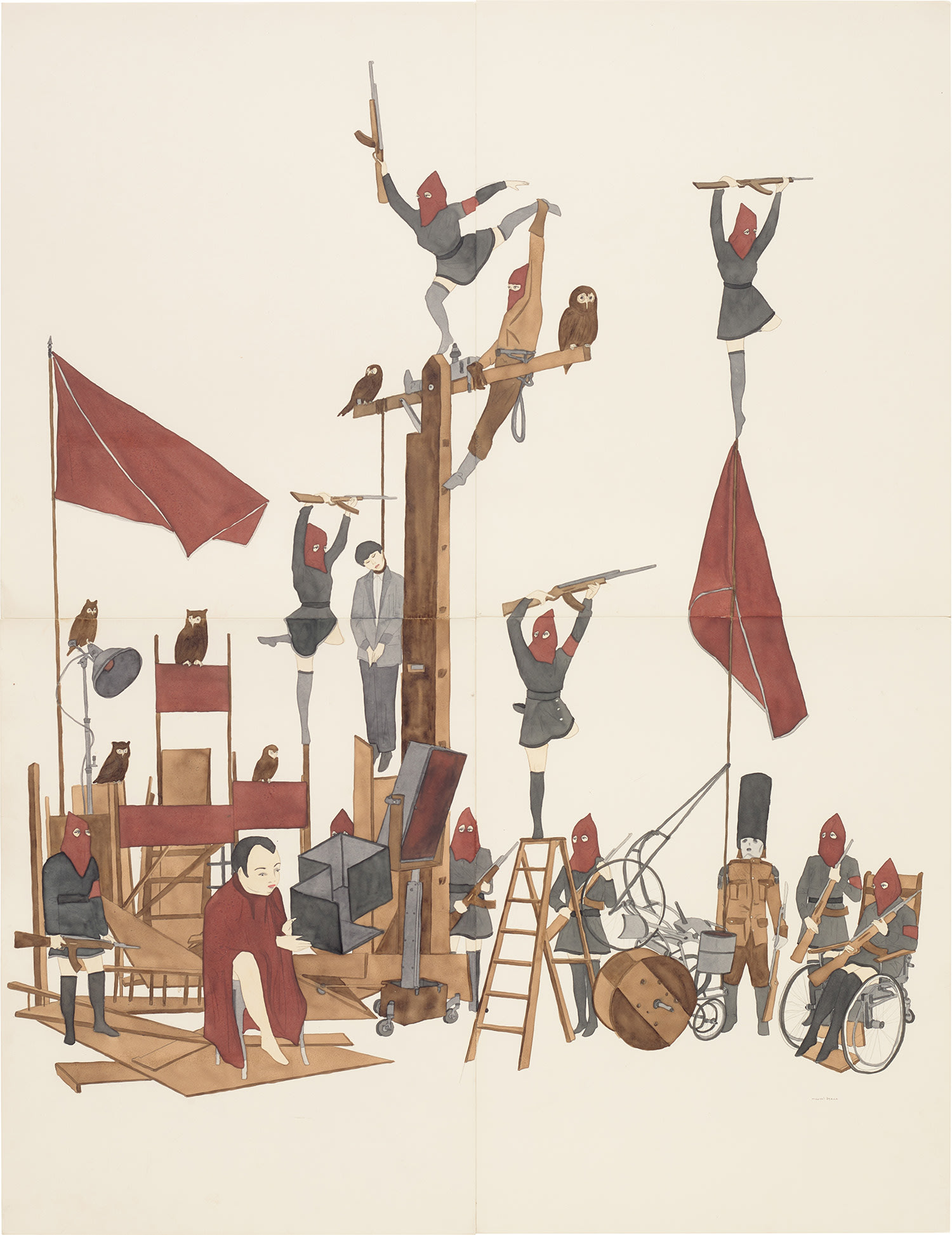
Marcel Dzama
The 1919 Revolution, 2009
His paintings on canvas, such as the acrylic work Soon to Change from 2007, represent the higher end of his market and are held by serious private collections internationally. His works on paper and prints, including his celebrated watercolors and ink drawings such as the Untitled pair from 2002 and the Seven drawings grouping of unique colored ink works, offer a more accessible entry point without any sacrifice of quality or artistic integrity. Marcel Dzama matters today because he has spent nearly three decades building a visual language that is entirely his own and yet speaks to something collectively felt: a sense that history is cyclical, that power is theatrical, that tenderness and violence are never far apart, and that beauty can be found in the most unexpected corners of the human imagination. His work rewards patience, curiosity, and a willingness to sit with ambiguity, qualities that define the best of what collecting can be.
To live with a Dzama is to have a permanent guest in your home who is never quite what you expect and never quite the same twice.
Explore books about Marcel Dzama