Marc Quinn
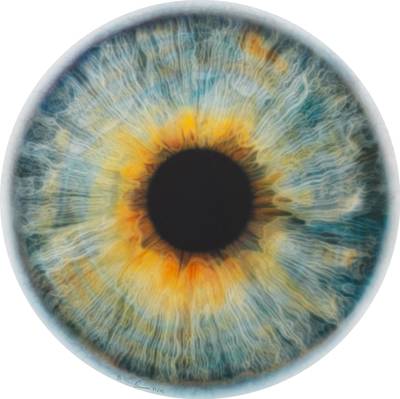
Marc Quinn: Beauty, Blood, and Bold Vision
Artist Spotlight · The Collection Editorial
“Art should capture the moment when the unexpected happens, when something shifts and suddenly you see the world differently.”
Marc Quinn, interview with The Guardian
When the fourth iteration of Marc Quinn's monumental 'Self' series was acquired by the National Portrait Gallery in London, the cultural conversation around the work shifted decisively. What had once seemed provocative for provocation's sake revealed itself as something far more tender and philosophically rigorous: a sustained meditation on what it means to exist in a body, to age, to persist. Quinn, now six decades into a life defined by restless inquiry, stands today as one of the most intellectually serious and visually commanding artists working in contemporary British art. His practice spans frozen blood and molten bronze, oil on linen and large scale installation, yet every material choice traces back to the same animating questions about identity, transformation, and the fragile beauty of being alive.
Marc Quinn
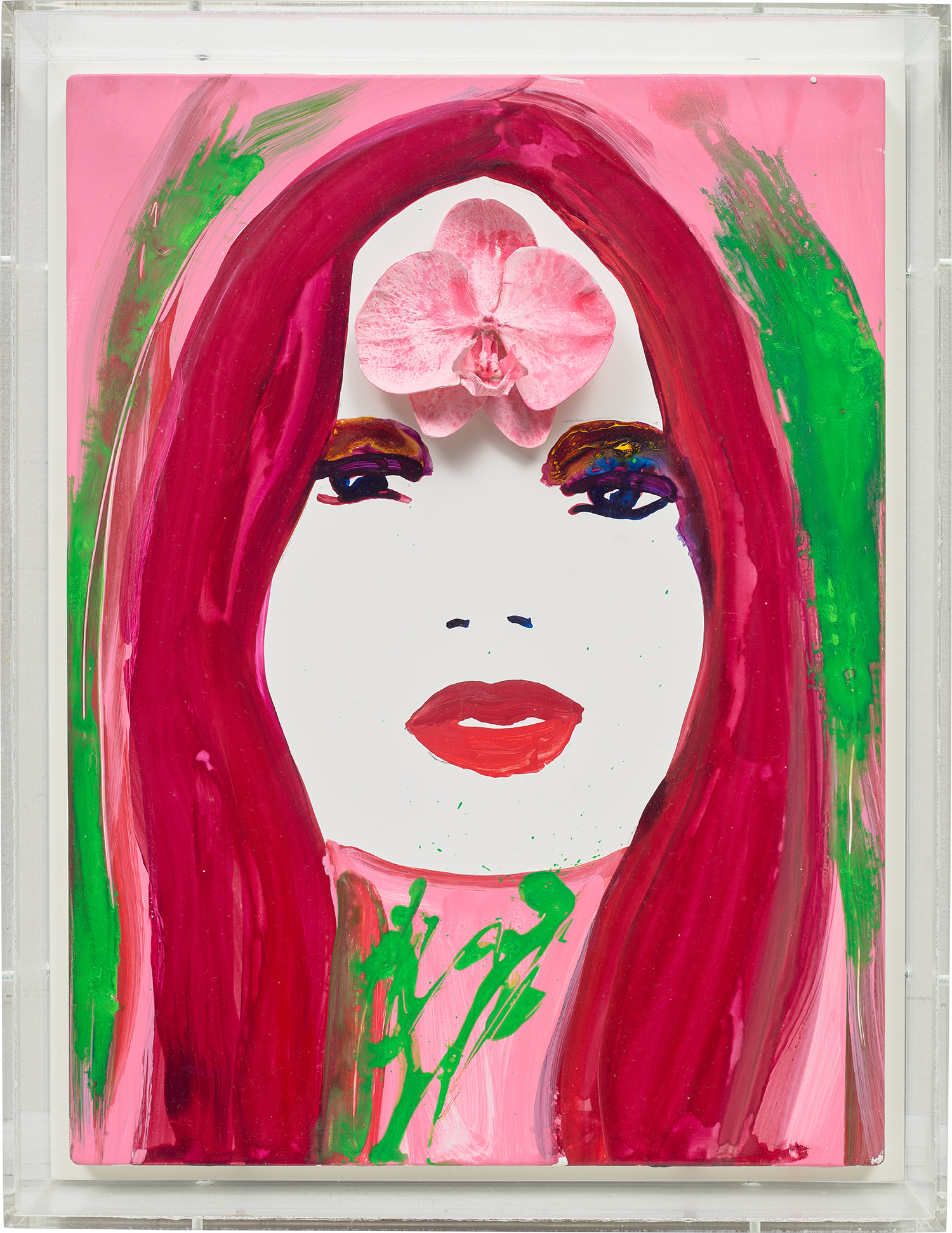
Kate Moss - Hallucination, 2007
Quinn was born in London in 1964, and his early education at Robinson College, Cambridge, where he studied history of art and philosophy, gave his practice an intellectual armature that distinguishes him from many of his peers. Where some artists arrive at ideas through intuition alone, Quinn thinks architecturally. He builds arguments in three dimensions. His time studying under the sculptor Barry Flanagan proved formative, instilling in him a respect for the physical properties of materials and the way those properties carry meaning.
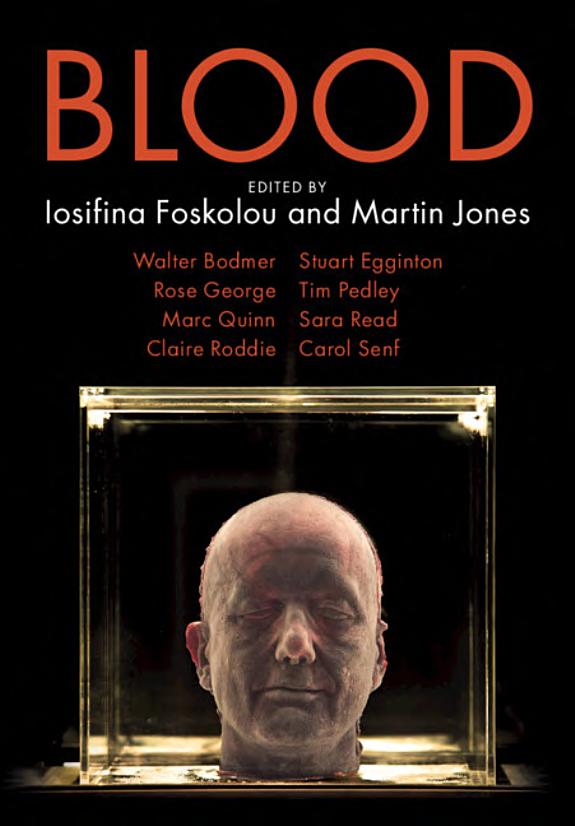
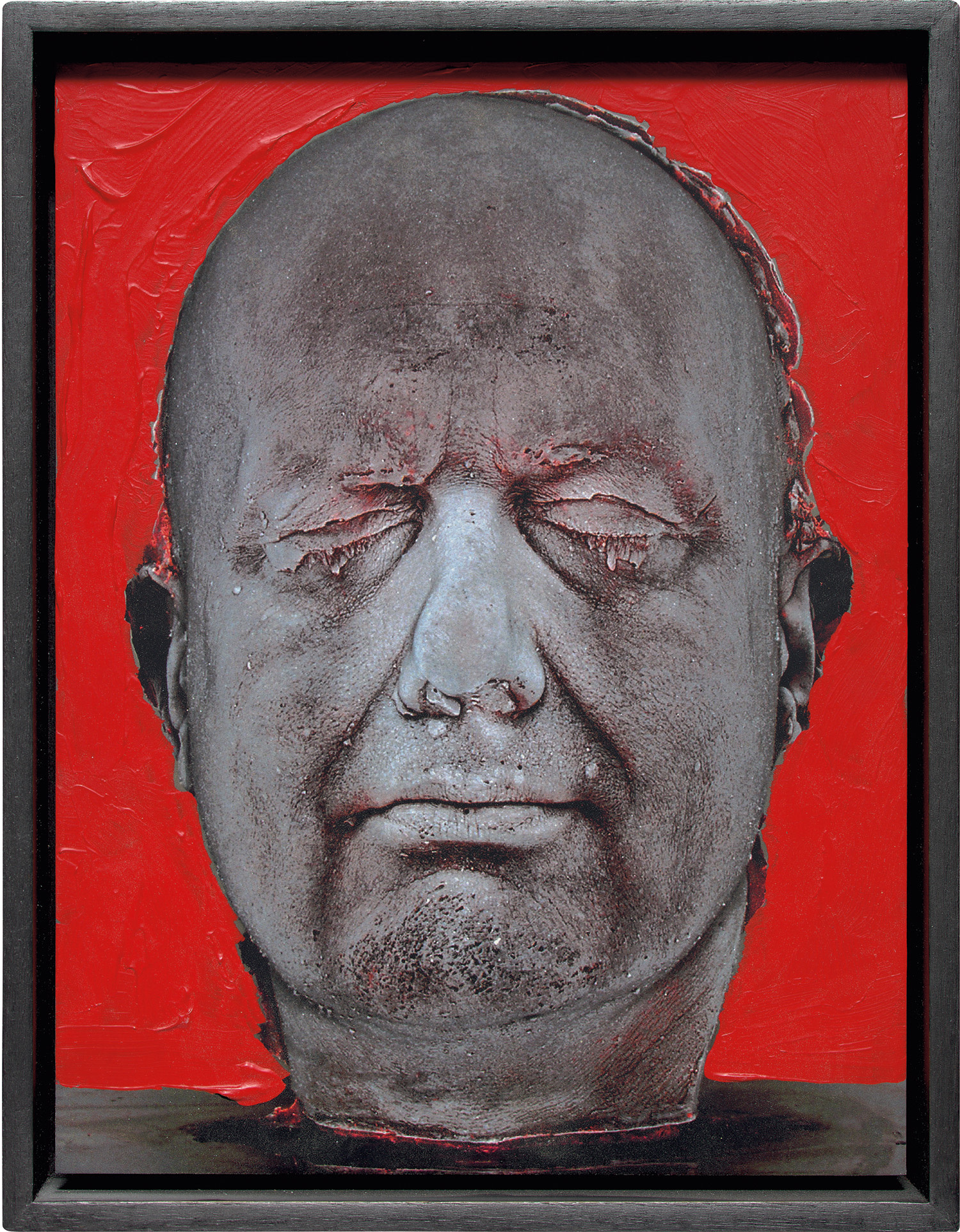
London in the late 1980s and early 1990s was a city crackling with creative ambition, and Quinn found himself at the center of a generation that would fundamentally reshape how British art was seen internationally. The Young British Artists movement, which coalesced around figures including Damien Hirst, Tracey Emin, and Sarah Lucas, provided Quinn with a context and a community, but his work always had a particular gravity that set it apart. While the YBA generation was broadly united by a willingness to court controversy and use unconventional materials, Quinn pursued something more sustained: a philosophical project about the nature of human existence. His first major breakthrough came in 1991 with 'Self,' a cast of his own head made from nine pints of his frozen blood, the approximate amount in an adult human body.
Marc Quinn
Self (Red)
The work required a refrigeration unit to remain intact, making the sculpture literally dependent on an external support system to survive. The metaphor was irresistible and entirely intentional. Quinn has returned to this work every five years, creating a series that functions as a kind of biological self portrait in time, each version capturing his face at a different point in his life. As Quinn's practice matured through the 1990s and into the 2000s, his range of materials and subjects expanded dramatically.
“The blood self portrait is really about the fact that you need external systems to survive. We are all dependent on something.”
Marc Quinn, Tate interview
He became deeply interested in the interplay between nature and culture, producing his celebrated 'Garden' series, large scale installations of frozen flowers and plants preserved in silicone oil at extreme temperatures. These works, luminous and almost impossibly beautiful, spoke to ideas about preservation and loss, about humanity's desire to hold nature fixed in a moment of perfection. His 'Alison Lapper Pregnant' sculpture, unveiled on the fourth plinth in Trafalgar Square in 2005, brought his thinking about the body to an enormous public audience, celebrating a form of physical existence that monumental sculpture had historically ignored. The work was quietly radical: it placed a disabled, pregnant woman on the same plinth that had hosted generals and monarchs, asking viewers to reconsider entirely what a heroic body looks like.
Marc Quinn
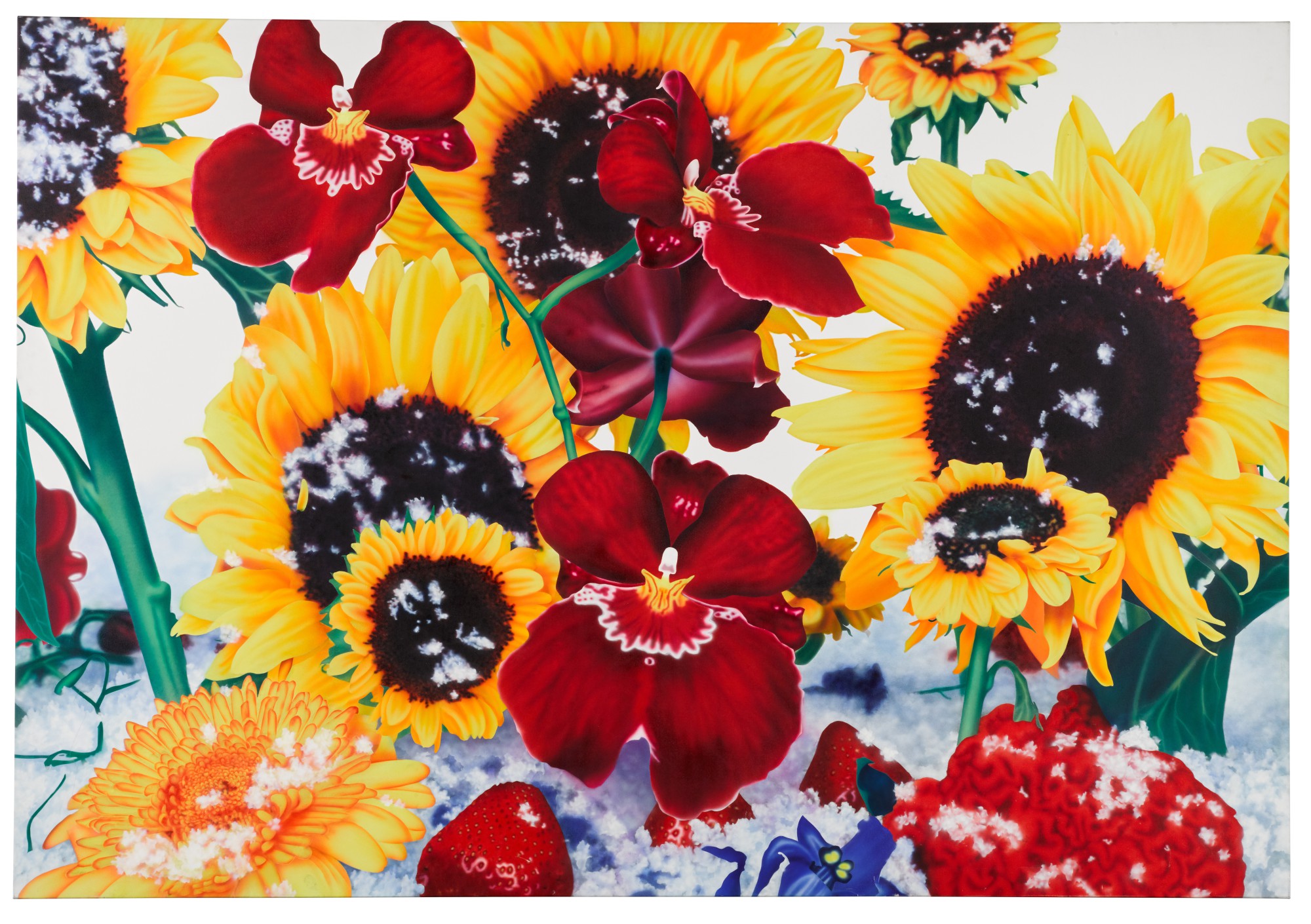
Seasonal Shift
The works available through The Collection offer collectors a rich cross section of Quinn's mature practice. 'Kate Moss: Hallucination' from 2007 is among his most celebrated explorations of celebrity, beauty, and distortion, using the supermodel's body as a lens through which to examine how culture simultaneously elevates and contorts its icons. The 'Labyrinth' series, represented here in its striking monochrome form, reflects Quinn's longstanding engagement with fingerprint imagery, the idea that each individual carries on their body a completely unique map of themselves. His oil paintings, including 'Seasonal Shift,' 'Blue Arctic Circle,' and 'Tropical Dawn,' reveal a painter of genuine ambition, someone for whom color and surface are not decorative concerns but epistemological ones, ways of knowing and feeling the world more fully.
The bronze 'Jenny Sculpture' from 2018 continues his dialogue with classical form, creating tender, monumental presences that feel simultaneously ancient and entirely contemporary. From a collecting perspective, Quinn represents a compelling proposition at multiple levels of the market. His prints, editions, and works on paper offer accessible entry points into a practice of major art historical significance, while his unique paintings and sculptures have achieved substantial results at auction through Sotheby's and Christie's. Collectors are drawn to the consistency of his intellectual vision as much as to any individual object: owning a Quinn is to participate in an ongoing conversation about the deepest questions of human experience.
Marc Quinn
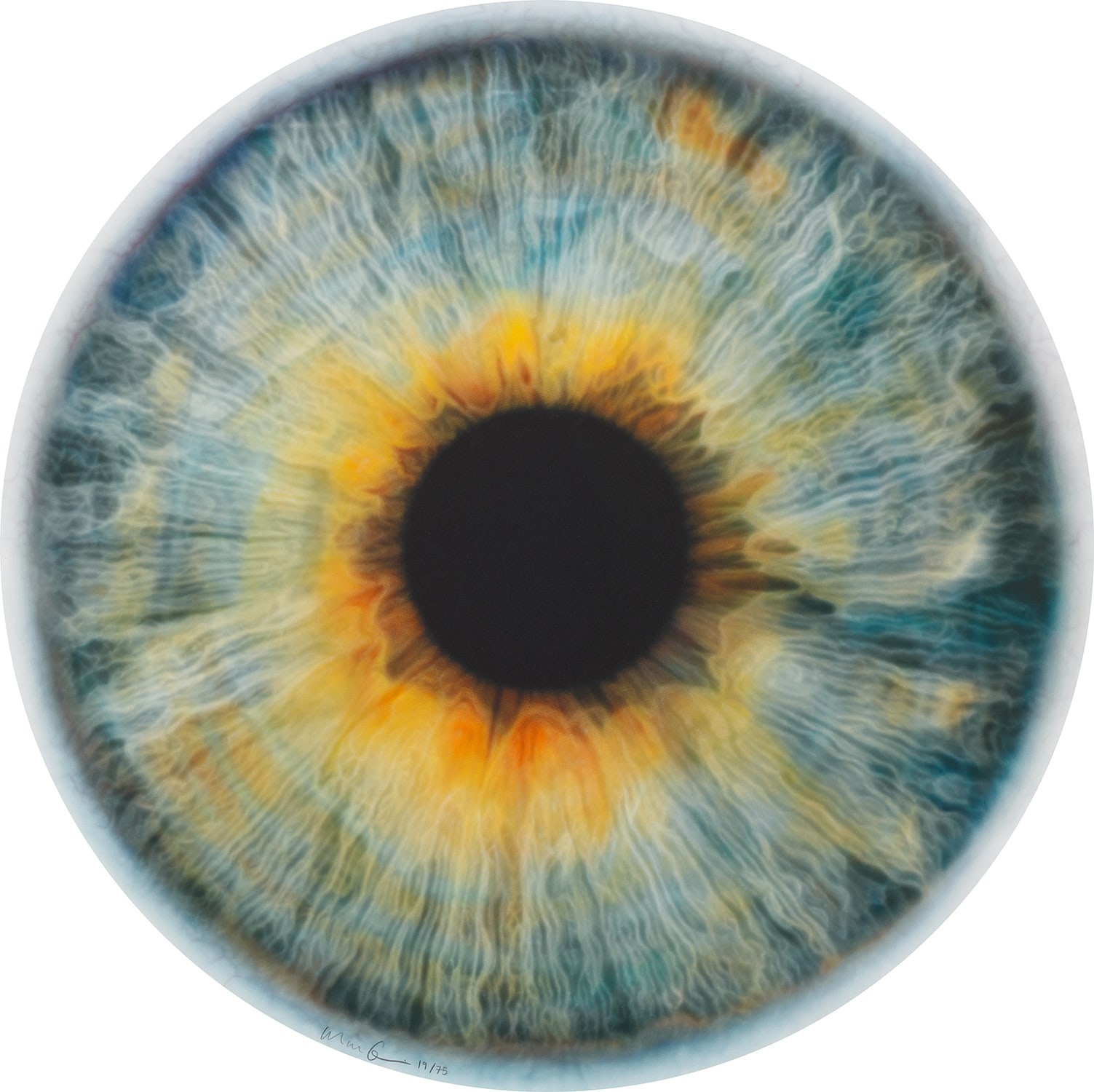
Chromosphere
His edition works, including the 'Emotional Detoxification' portfolio of etchings and drypoints and the richly layered 'Aragonitesphere,' reward close attention and repay repeated looking in ways that mark the work of an artist thinking at the highest level. The breadth of his output means that a thoughtful collector can build a meaningful dialogue between works across different media, each illuminating the others. In the broader landscape of contemporary art, Quinn occupies a position alongside artists including Antony Gormley, Kiki Smith, and Matthew Barney: figures who have made the human body the central site of their investigation without reducing it to spectacle. Like Gormley, Quinn is interested in the body as a philosophical subject rather than merely a visual one.
Like Smith, he brings genuine tenderness to what might otherwise be clinical material. His British lineage connects him backward through Francis Bacon's anguished figures and forward to a younger generation of artists grappling with questions of representation and identity. He is a bridge figure in the best sense: rooted in a specific moment and movement while speaking to concerns that feel urgently present. What makes Quinn's practice so enduring is ultimately its generosity.
Despite working with materials and subjects that might seem forbidding, the experience of standing before his work is one of expansion rather than constriction. He asks large questions and trusts the viewer to sit with the uncertainty those questions produce. His art does not resolve the tension between nature and culture, between life and its representation, between the body we inhabit and the self we imagine ourselves to be. It holds that tension open, beautifully and rigorously, and invites us to live inside it for a while.
For collectors, for institutions, and for anyone who cares about what art can do at its most ambitious, that is a very great gift indeed.
Explore books about Marc Quinn