Marc Newson
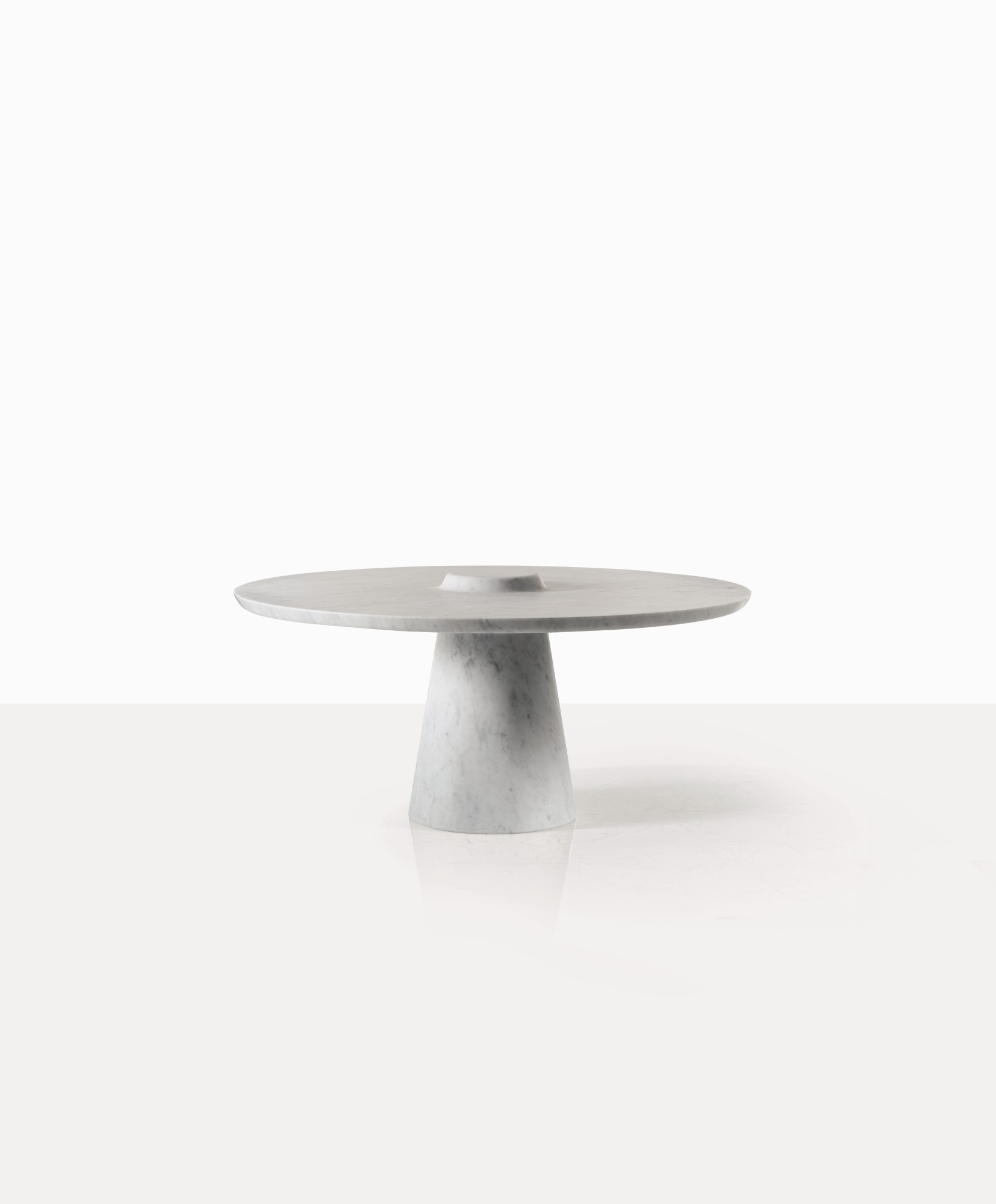
Marc Newson: Design Elevated to Pure Poetry
Artist Spotlight · The Collection Editorial
“I want to make things that last forever. Things that are timeless.”
Marc Newson, Wallpaper* interview
When Sotheby's London offered the Lockheed Lounge in 2023, the room held its breath. The riveted aluminum chaise, first conceived by a twenty two year old Australian dreamer in Sydney in 1986, sold for a price that reaffirmed what the design world has long understood: Marc Newson does not merely make objects. He makes monuments to human optimism, artifacts from a future that feels perpetually, tantalizingly close. That a single piece of furniture could achieve auction results that rival blue chip painting is a testament to Newson's singular ability to collapse the distinction between art and design entirely.
Marc Newson
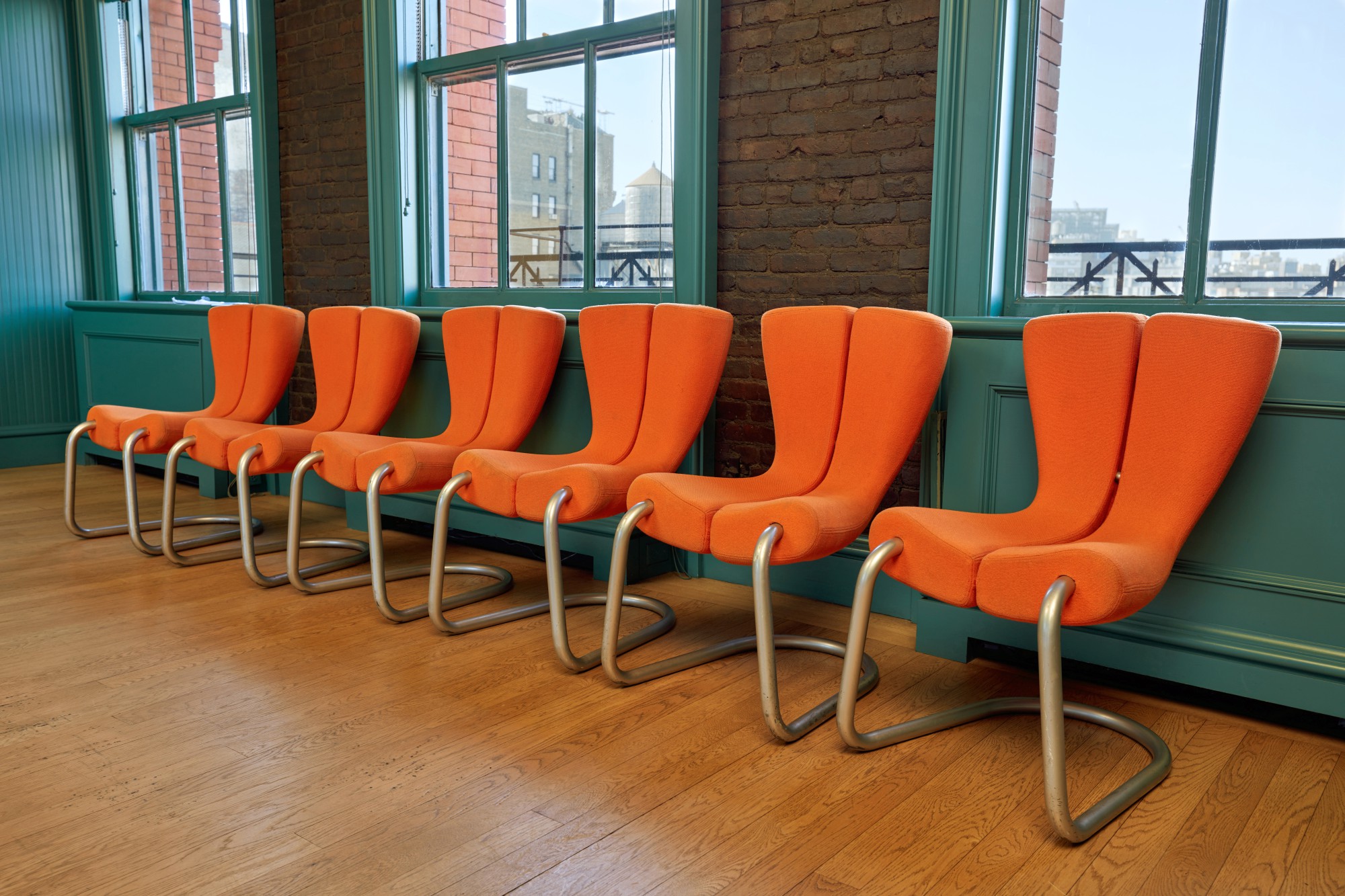
Set of Six "Komed" Chairs
Newson was born in Sydney in 1963 and spent parts of his childhood in the Canary Islands and Greece, an itinerant early life that seems, in retrospect, perfectly calibrated to produce someone constitutionally allergic to fixed categories. He returned to Australia and studied jewelry and sculpture at the Sydney College of the Arts, graduating in 1984. It was a formation rooted in material intimacy, in understanding how things are made at the most tactile, immediate level. That sensibility never left him.
Decades on, you can still feel the jeweler's precision in every rivet of the Lockheed Lounge and every curve of his resin furniture. His breakthrough came almost immediately after graduation. The Lockheed Lounge, exhibited at the Roslyn Oxley9 Gallery in Sydney in 1986, announced a fully formed vision with startling confidence. The piece borrowed its name from the American aerospace manufacturer and its visual logic from the world of aviation and science fiction, yet it was also unmistakably a body conscious object, shaped to hold and flatter a reclining human form.
Marc Newson
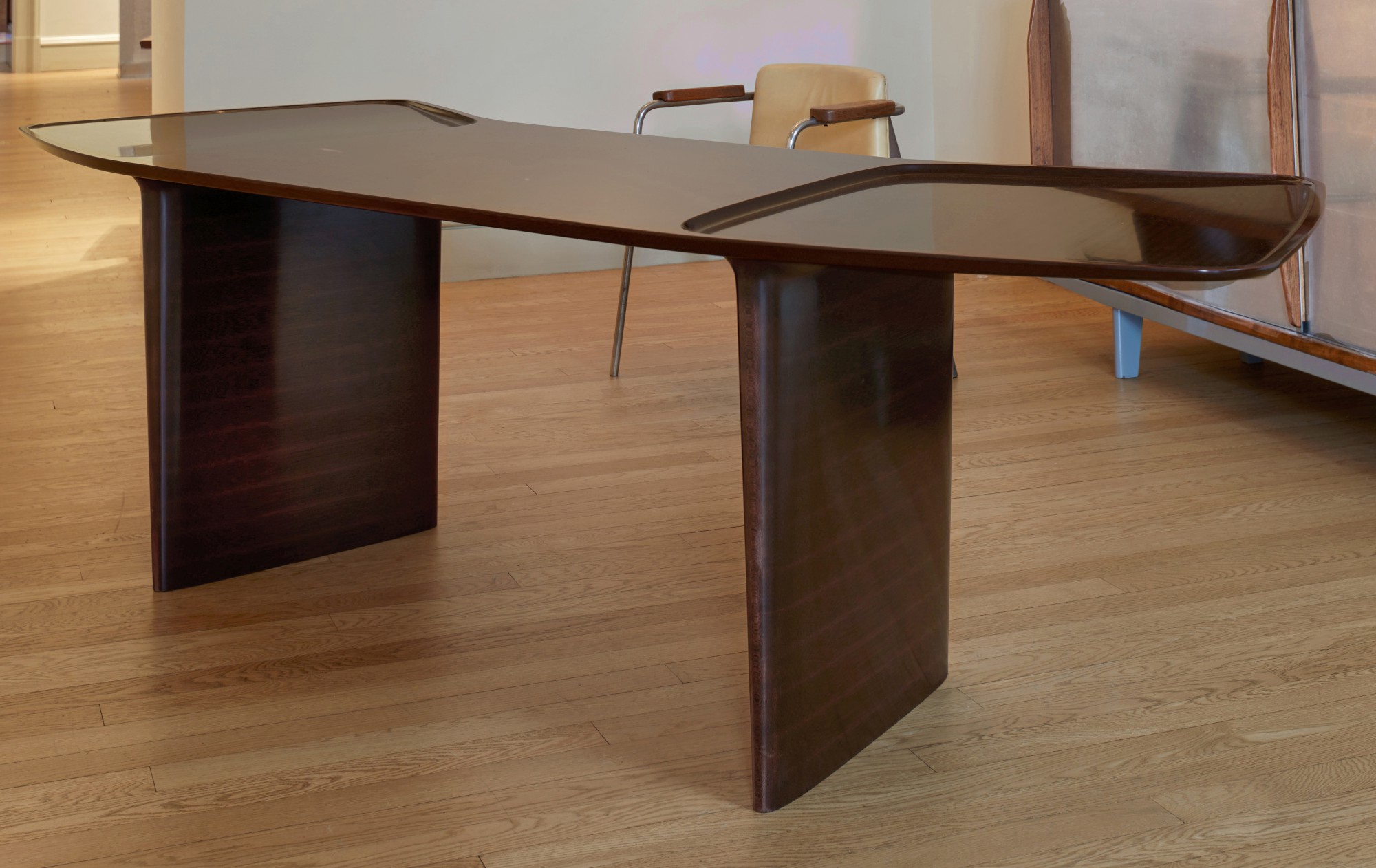
"Micarta" Desk
Newson relocated to Tokyo in the late 1980s, where he found a culture attuned to the poetry of precision manufacture, and then to Paris, where he established his studio and began attracting the attention of European design houses and collectors who recognized that something genuinely new had arrived. His London studio, founded in 1997, became the operational center of an expanding practice that touched every conceivable discipline. What defines Newson's artistic development is a relentless pursuit of the organic within the industrial. Where much modernist design prized the rectilinear and the rational, Newson reached instead for the biomorphic, for forms that suggest growth, speed, and breath.
“Design is not something you do. It is the way you live your life.”
Marc Newson
His Event Horizon table, with its polished aluminum surface that curves and folds like a living thing, belongs to a tradition that runs through Brancusi and Arp and yet feels like nothing that came before it. The Micarta Desk, constructed from linen phenolic resin composite, gives that utilitarian material a warmth and depth that borders on the geological. The Komed chairs, in painted steel with fabric upholstery, demonstrate his ability to bring wit and elegance to serial production without sacrificing any of the sculptural authority he brings to unique works. Each material Newson selects is chosen not merely for appearance but for what it can say about time, touch, and the relationship between the body and the made world.
Marc Newson
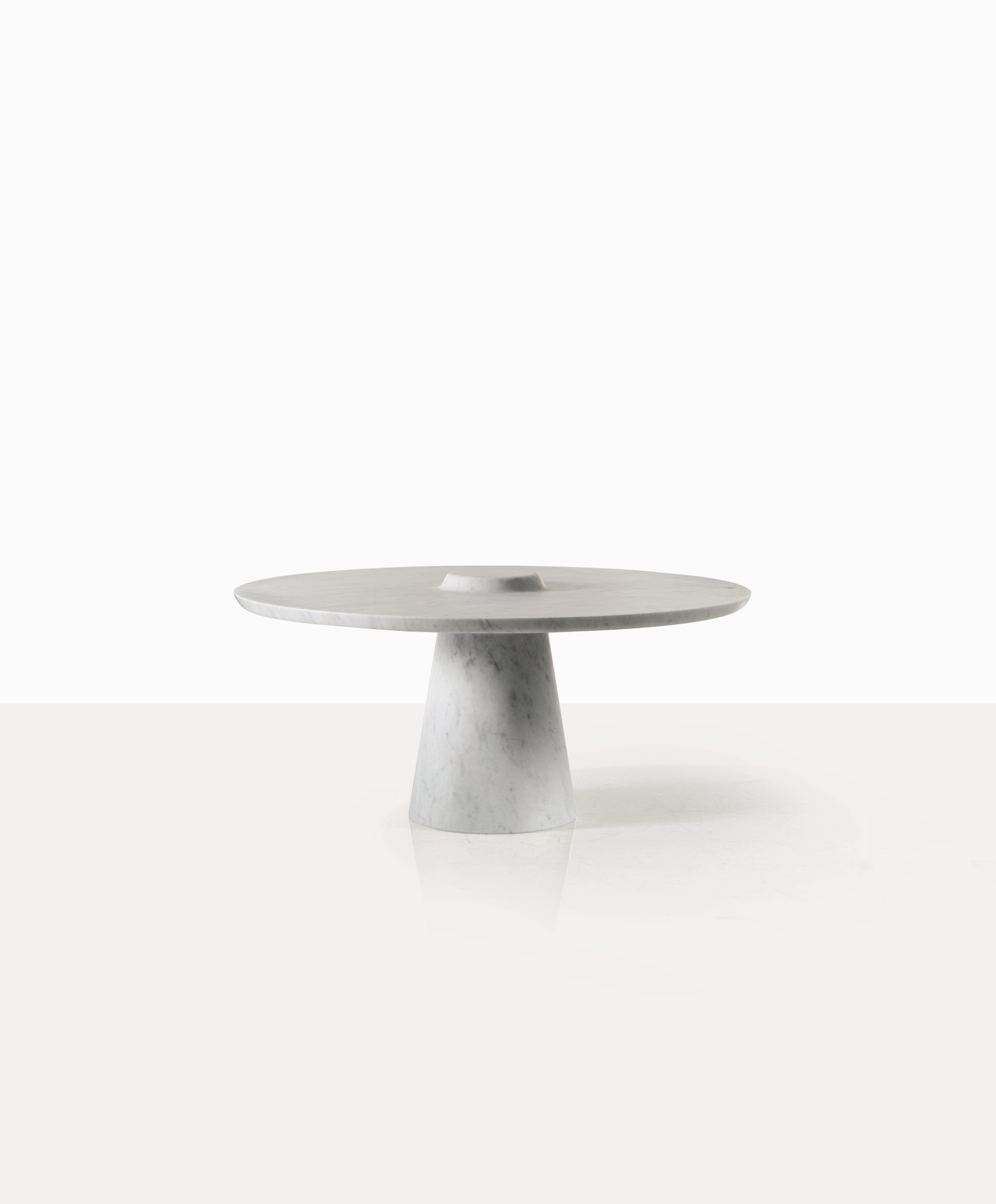
Table Lathed
Newson's collaborations read like a map of contemporary culture at its most ambitious. His work with Apple, where he joined as a design consultant working alongside Jony Ive, brought his thinking to products used by hundreds of millions of people. His designs for Qantas reshaped how Australians understood air travel as an aesthetic experience. Nike, Ikepod, Cappellini, and Gaggenau all bear the mark of his involvement.
Yet these commercial partnerships never diluted his standing as an artist. If anything, they amplified it, demonstrating that the division between the fine and the applied is a bureaucratic fiction that Newson has cheerfully dismantled across a four decade career. His Atmos 561 clock for Jaeger LeCoultre, rendered in Baccarat crystal and aluminum, sits as comfortably in a museum vitrine as it does on a collector's desk, which is precisely the point. For collectors, Newson's work occupies a particularly compelling position in the market.
Marc Newson
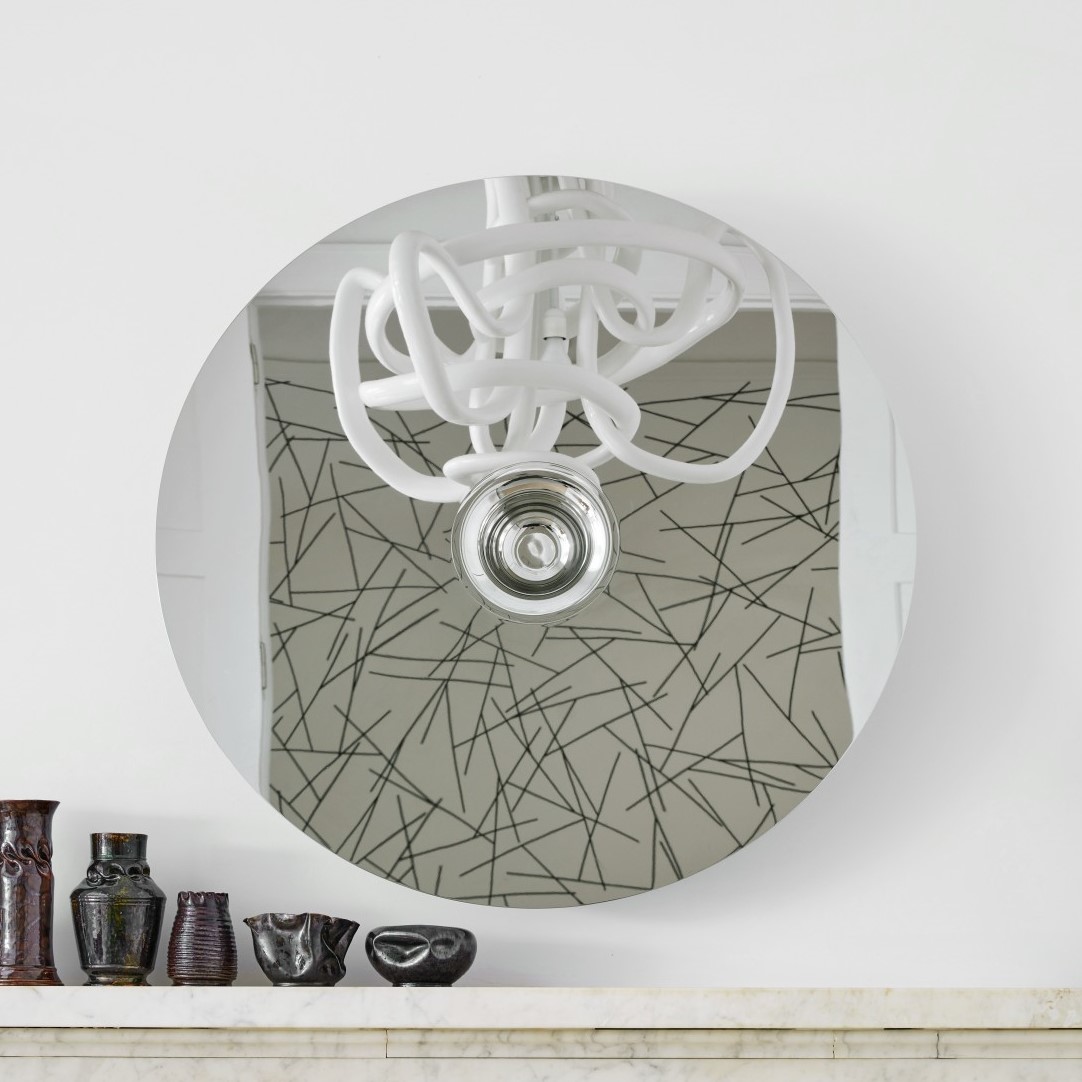
"Black Hole" Mirror
His limited editions and unique pieces have demonstrated consistent appreciation, with the various editions of the Lockheed Lounge setting successive auction records over the years, including the landmark sale at Phillips de Pury in 2006 when a version sold for nearly one million dollars, a figure that redefined what the market would pay for contemporary design. The range of works available to collectors is genuinely broad. Unique sculptures and one off prototypes such as the Prototype Black Hole Table sit alongside carefully produced limited editions like the Black Hole Mirror, from an edition of eight, that make serious collecting accessible without sacrificing rarity. Works in carved Carrara marble, polished aluminum, and linen phenolic composite each offer different entry points while sharing the unmistakable Newson signature: that quality of inevitability, of forms that seem to have always existed and were simply waiting to be discovered.
Newson's place in design history invites comparison with a select group of figures who similarly refused the constraints of a single practice. Ron Arad, with whom he shares a commitment to sculptural furniture as fine art, is a natural point of reference. So too is the legacy of Charles and Ray Eames, who demonstrated that democratic design and genuine artistry were not in competition. In the broader art world, Newson's biomorphic language connects him to the surrealist inflected object making of Salvador Dali and to the organic abstraction of Henry Moore, even as his future facing aesthetic looks forward rather than back.
He is, in the fullest sense, a designer who thinks like a sculptor and a sculptor who never forgets that objects must be lived with and loved. What endures about Marc Newson is not simply the beauty of individual objects, though that beauty is real and considerable. It is the coherence of a vision sustained across materials, scales, and disciplines over four decades without repetition or diminishment. The Super Guppy standard lamp in tubular aluminum carries the same animating intelligence as the Lockheed Lounge, as the Chaise Wingless Micarta, as the Table Lathed in Carrara marble.
To collect Newson is to acquire a piece of a unified artistic universe, one built on the conviction that the future can be warm, sensuous, and generous. In an era that often rewards irony and anxiety, that conviction feels not naive but genuinely radical.
Explore books about Marc Newson
Marc Newson
Deyan Sudjic
Marc Newson: A Life in Design
Charlotte Cotton
Marc Newson: Autobarn
Marc Newson
Marc Newson: Objects and Furniture Design
Various

Marc Newson: Work in Progress
Paola Antonelli

Technological Primitivism: Marc Newson
Peter Reed