Mao Yan
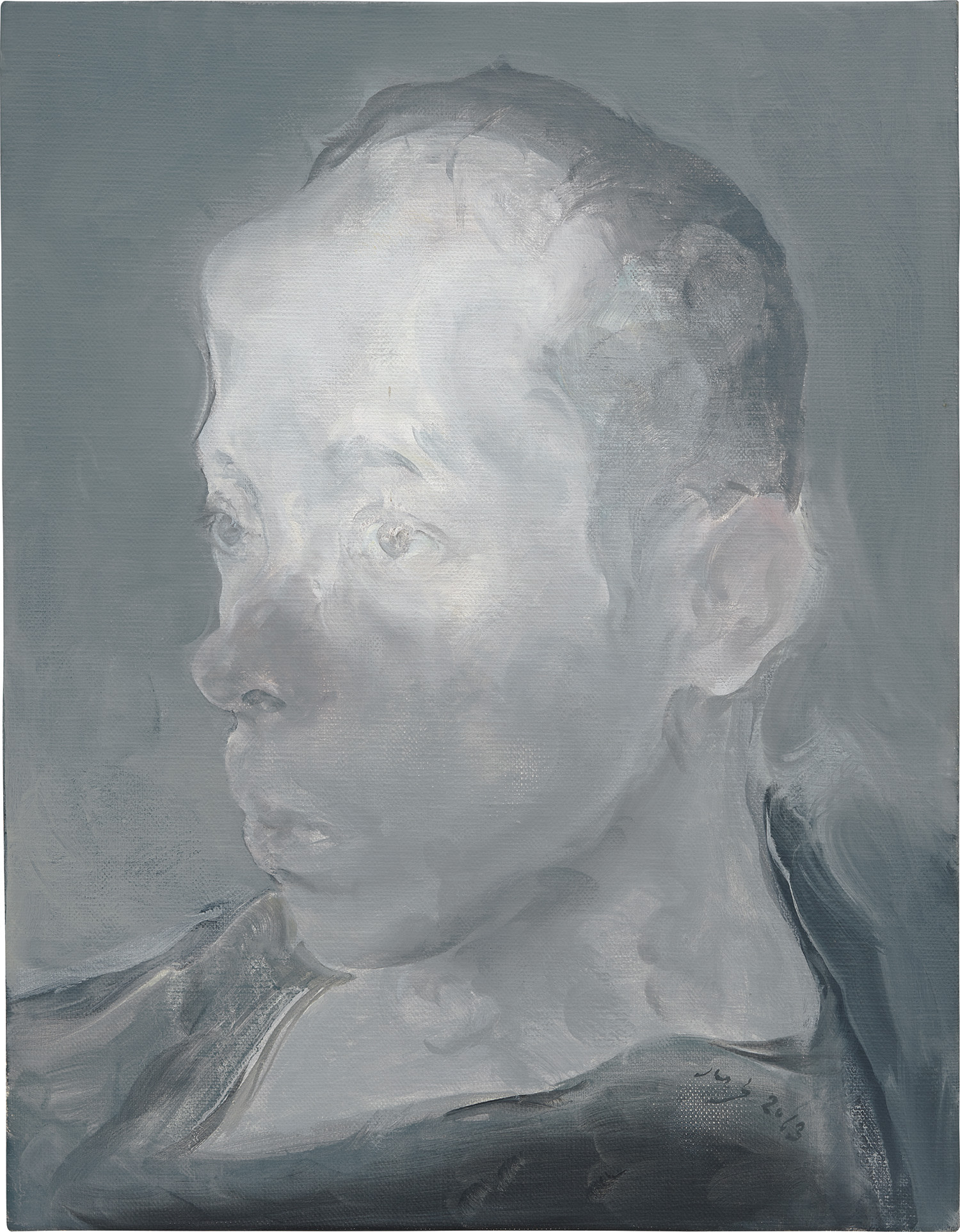
Mao Yan's Portraits Glow With Quiet Radiance
Artist Spotlight · The Collection Editorial
There is a particular kind of stillness that settles over a room when one of Mao Yan's paintings is present. Visitors to his solo exhibitions at institutions across China and beyond have described the experience in almost devotional terms, a sense of being watched from within a mist, of encountering a human consciousness rendered at the very threshold of visibility. In recent seasons, his reputation has continued its steady, purposeful ascent, with major auction results at Christie's and Sotheby's confirming what the critical community has long understood: Mao Yan is among the most significant figurative painters working anywhere in the world today. Mao Yan was born in 1968, a year of profound turbulence not only in China but across the globe.
Mao Yan
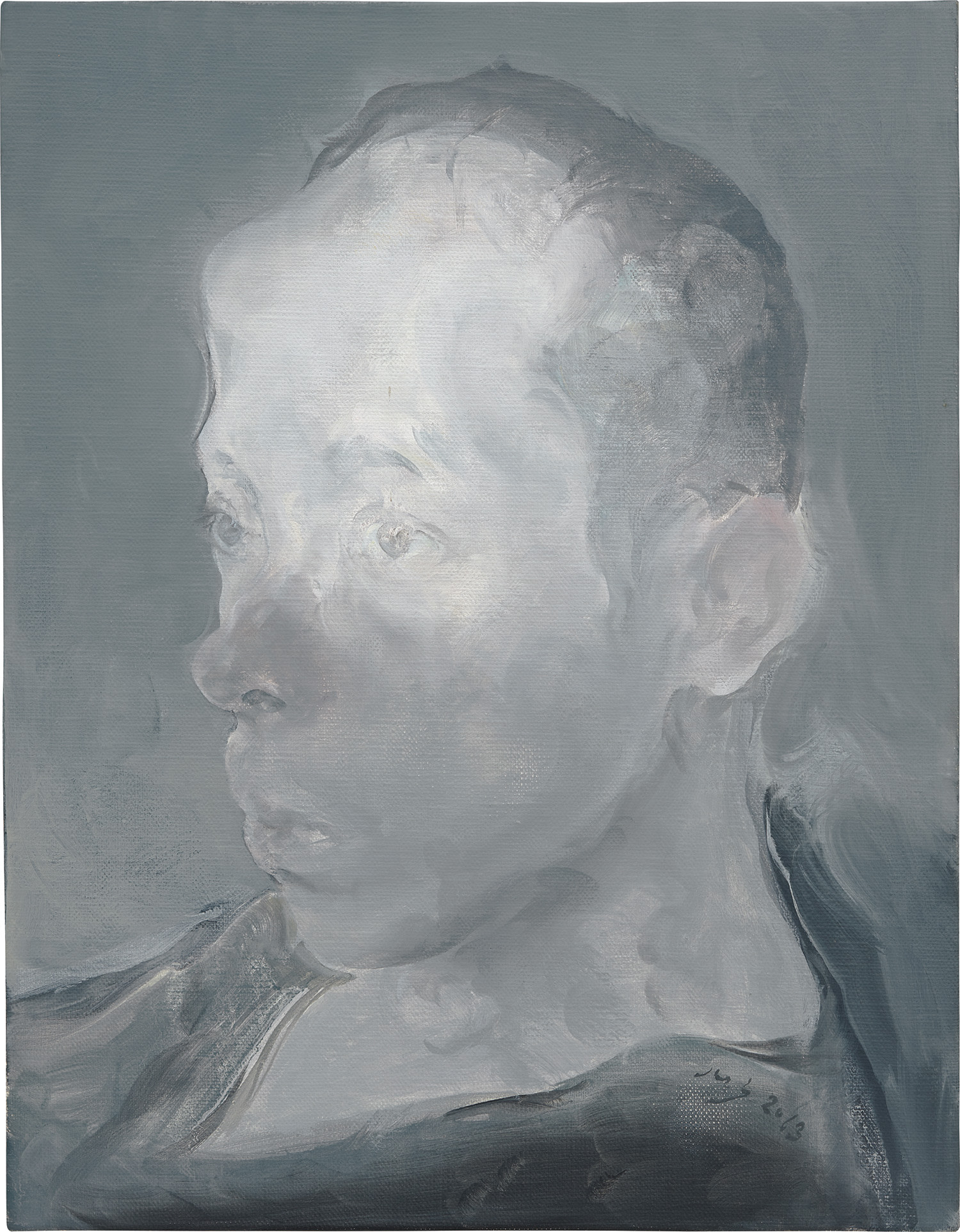
Dou, 2013
Growing up during the waning decades of the Cultural Revolution and the extraordinary transformation that followed, he came of age in a China that was simultaneously reaching inward toward its own history and outward toward modernity. This dual pull, between interiority and exposure, between tradition and the contemporary, would come to define the emotional architecture of his entire body of work. He studied painting with rigorous commitment, absorbing both the Western academic tradition and the quieter, contemplative visual philosophies embedded in Chinese ink painting and portraiture. His formation as an artist accelerated when he began engaging seriously with European figurative painting, particularly the legacy of painters who understood that the human face was not merely a likeness but a landscape of feeling.
Lucian Freud's unflinching psychological excavation, Gerhard Richter's photo based blurring and its philosophical implications, and the spectral portraiture of Luc Tuymans all resonate as touchstones when considering the lineage Mao Yan occupies. Yet his voice is entirely his own. Where Freud pressed into flesh with insistence and Richter introduced blur as a meditation on memory and loss, Mao Yan uses dissolution as a form of tenderness, allowing his subjects to breathe, to recede, to exist in a state of becoming rather than being fixed. Based in Nanjing, he has built a practice deeply rooted in sustained attention.
Mao Yan
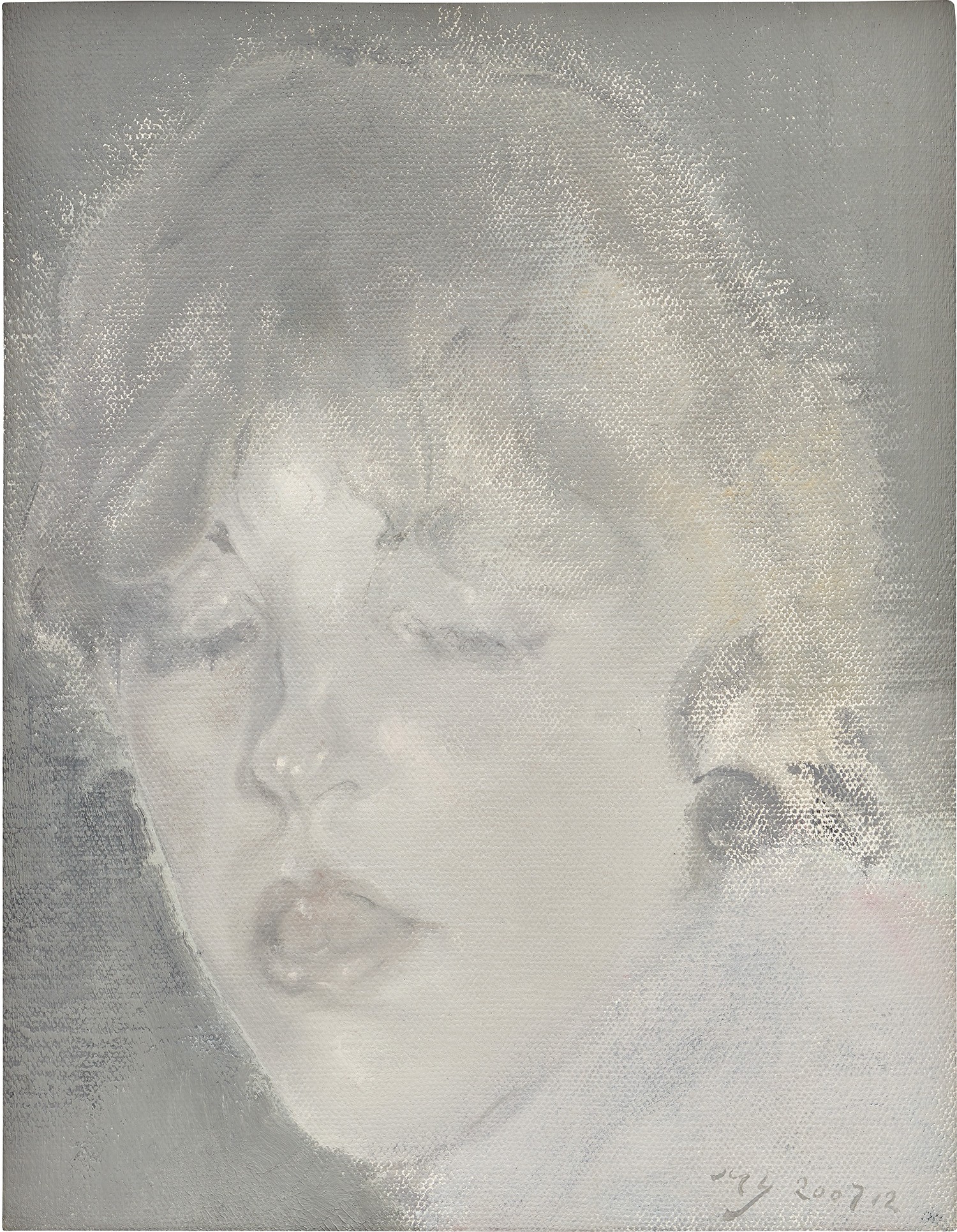
Mona
He is known to work from photographs as source material, not to reproduce them but to interrogate them, to ask what remains when the sharp certainties of photography are released into the slower, more forgiving time of paint. The result is a signature aesthetic that collectors and curators have come to identify immediately: pale, chalky grounds suffused with silvery grays and muted greens, figures that seem to emerge from or dissolve into an ambient luminosity, and a psychological presence so concentrated that the viewer cannot look away. The faces in his paintings are often those of people close to him, rendered with the particular intimacy of someone who has looked long and carefully and chosen to share only what cannot be easily described in words. Among the works that have defined his critical reputation, "Dou" from 2013 stands as an exceptional example of his mature practice.
Rendered in oil on canvas, the painting exemplifies the qualities that distinguish him most forcefully: a subject rendered with extraordinary delicacy, the paint surface built in translucent layers that accumulate into something resembling atmosphere rather than description. The figure seems to exist in a private interior light, as though the canvas itself were softly illuminated from behind. Equally celebrated is "Mona," another oil on canvas that demonstrates his willingness to engage with the long history of portraiture while refusing any nostalgia for it. Rather than invoking the famous Leonardo reference as pastiche, Mao Yan uses the title as a quiet frame through which to explore what a contemporary portrait can carry in terms of psychological and cultural weight.
Mao Yan
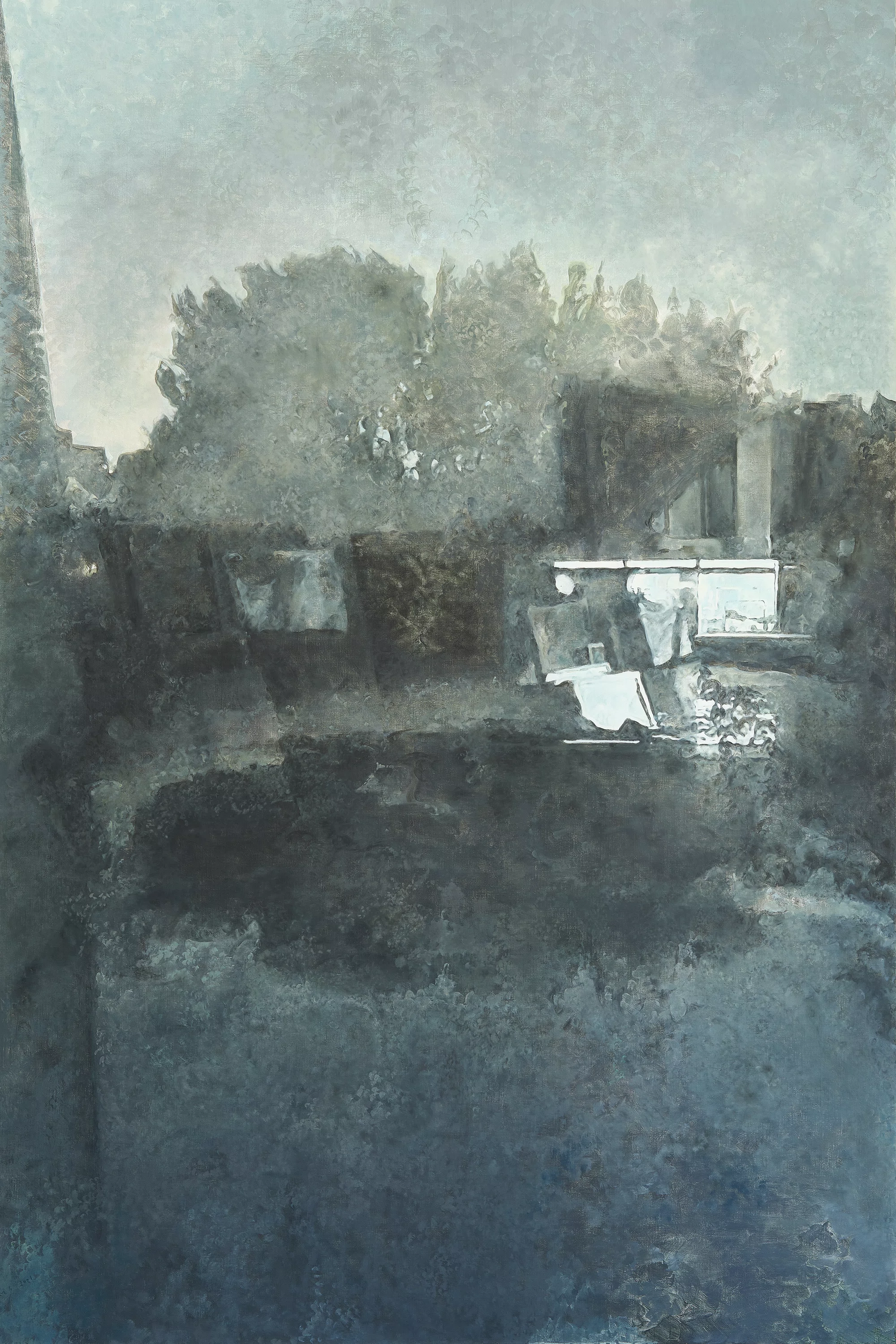
Reflection in a Night Scene (Studio), 2021
From a collecting perspective, Mao Yan occupies a position that serious advisors regard with considerable enthusiasm. His work has been acquired by significant private and institutional collectors across Asia, Europe, and North America, and auction records have reflected sustained and growing demand, particularly for works from his most concentrated periods. Collectors drawn to the tradition of psychological portraiture, those who respond to artists like Peter Doig, Neo Rauch, or the aforementioned Tuymans, frequently find in Mao Yan a related but distinctly different kind of intelligence. His canvases reward extended looking in ways that reproductions cannot fully convey: the surface quality, the layering of thinned oil, the way light activates the pale grounds, all of this belongs to the physical experience of standing before the actual work.
Within the broader context of contemporary Chinese art, Mao Yan represents a practice that resists easy categorization within the more internationally visible currents of political pop or cynical realism that dominated the market perception of Chinese contemporary art through the 1990s and early 2000s. His concerns are more internal, more philosophical, more aligned with a tradition of quiet inquiry. He shares certain preoccupations with his countryman Zhang Xiaogang, who also uses portraiture and family imagery as a medium for exploring identity and history, though Mao Yan's palette and his approach to paint as a substance of feeling distinguishes him sharply. He is, in this sense, a painter's painter, admired intensely by fellow artists and by collectors who have developed an eye for the long term.
What endures in Mao Yan's work is a deep confidence in slowness, in the value of attention paid without demand. In an era that privileges immediacy and legibility, he insists on the productive uncertainty of the barely seen, the almost there, the face that holds its secrets while still offering itself to the viewer's gaze. His paintings ask nothing aggressive of those who encounter them, and yet they are not passive. They accumulate, they stay, they return to mind at unexpected moments the way certain conversations or certain faces do.
For collectors building bodies of work that will speak across generations, and for any institution serious about representing the full range of contemporary figurative achievement, Mao Yan is not simply a name to know. He is a reason to look more carefully at the world, and at what painting, at its most considered and most humane, can still reveal.