Manuel Álvarez Bravo
Manuel Álvarez Bravo: Mexico's Eternal Eye
Artist Spotlight · The Collection Editorial
“I have tried to be attentive to Mexican life, to what is profound and vital in it.”
Manuel Álvarez Bravo
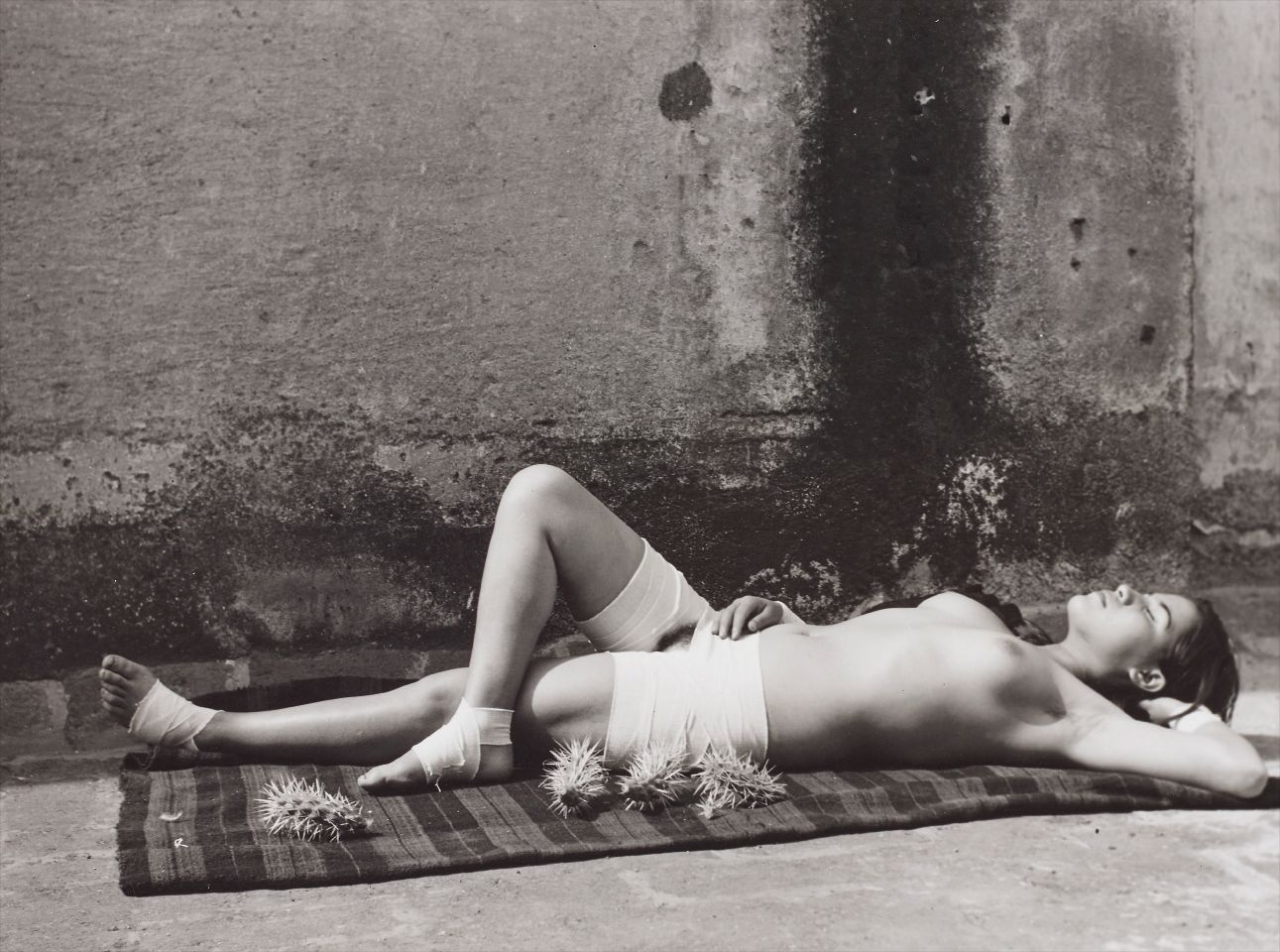
There is a photograph of a woman sleeping in a courtyard, her body draped in white muslin and ringed with cactus spines, a garland of flowers at her feet. It is called La Buena Fama Durmiendo, or Good Reputation Sleeping, and it was made in 1938 at the suggestion of André Breton, who had come to Mexico City and found there something he could not manufacture in Paris. The image has since become one of the defining icons of twentieth century photography, a work that belongs simultaneously to surrealism, to the Mexican muralist tradition, and to no movement whatsoever. It is entirely, unmistakably, its own thing.
Manuel Álvarez Bravo
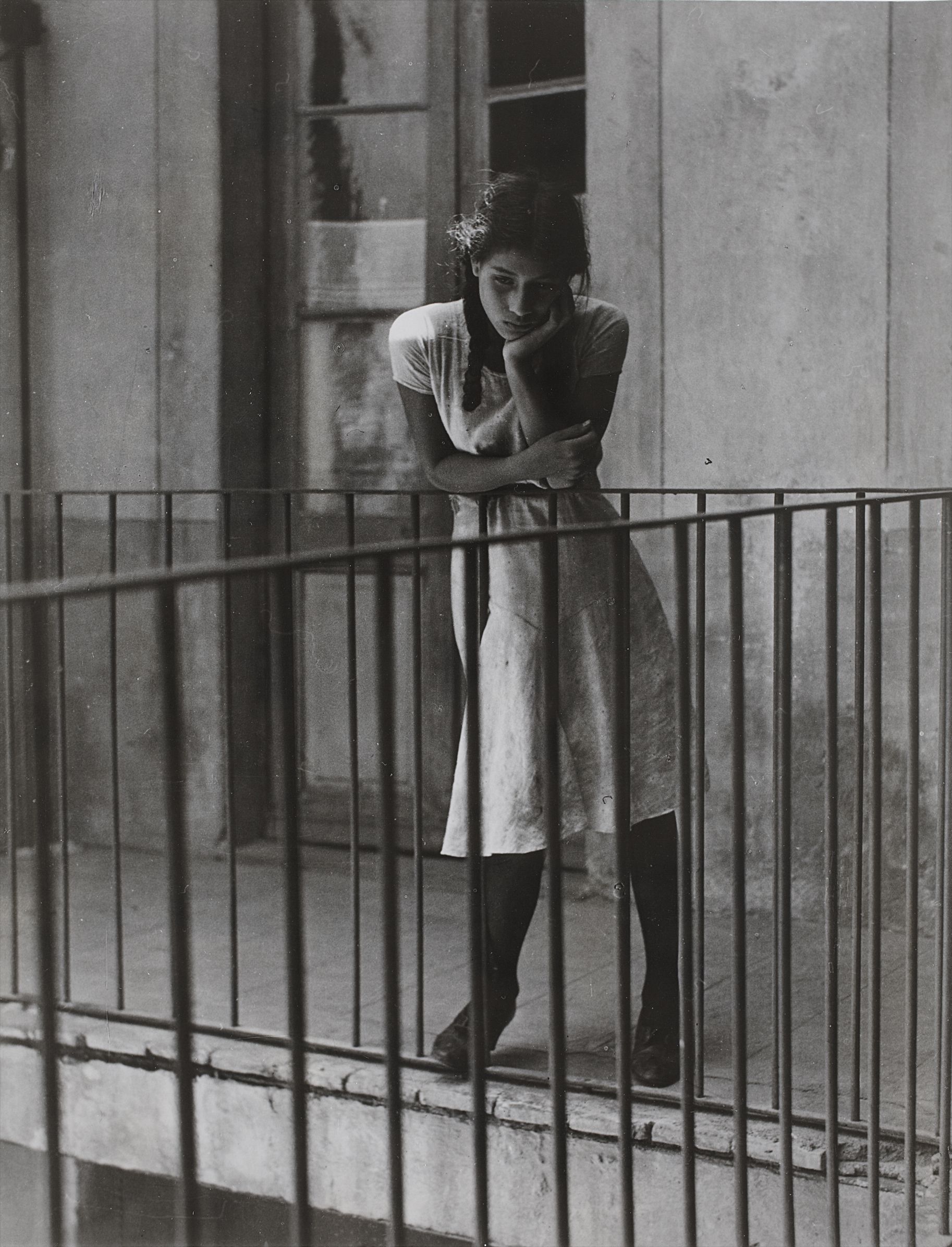
El ensueño (Daydreaming), Mexico
That quality of sovereign originality is what collectors and curators have been responding to for nearly a century, and why Álvarez Bravo's work continues to command serious attention in galleries and auction rooms around the world. Manuel Álvarez Bravo was born in Mexico City on February 4, 1902, into a family with deep roots in the visual arts. His grandfather was a painter, and the young Manuel grew up surrounded by images at a moment when Mexico itself was in a state of tremendous creative ferment. He was largely self taught as a photographer, learning from books and from the example of Hugo Brehme, a German photographer then working in Mexico whose formal rigor left a lasting impression.
By his early twenties Álvarez Bravo had acquired his first camera and begun the systematic, patient exploration of Mexican life and landscape that would occupy him for the next eight decades. He lived to one hundred years old, dying in Mexico City in 2002, and he was photographing almost to the end. The 1920s and 1930s were decisive for Álvarez Bravo. He met Tina Modotti around 1927, and through her was drawn into the circle of artists and intellectuals gathered around Diego Rivera, Frida Kahlo, and the muralist movement.
Manuel Álvarez Bravo
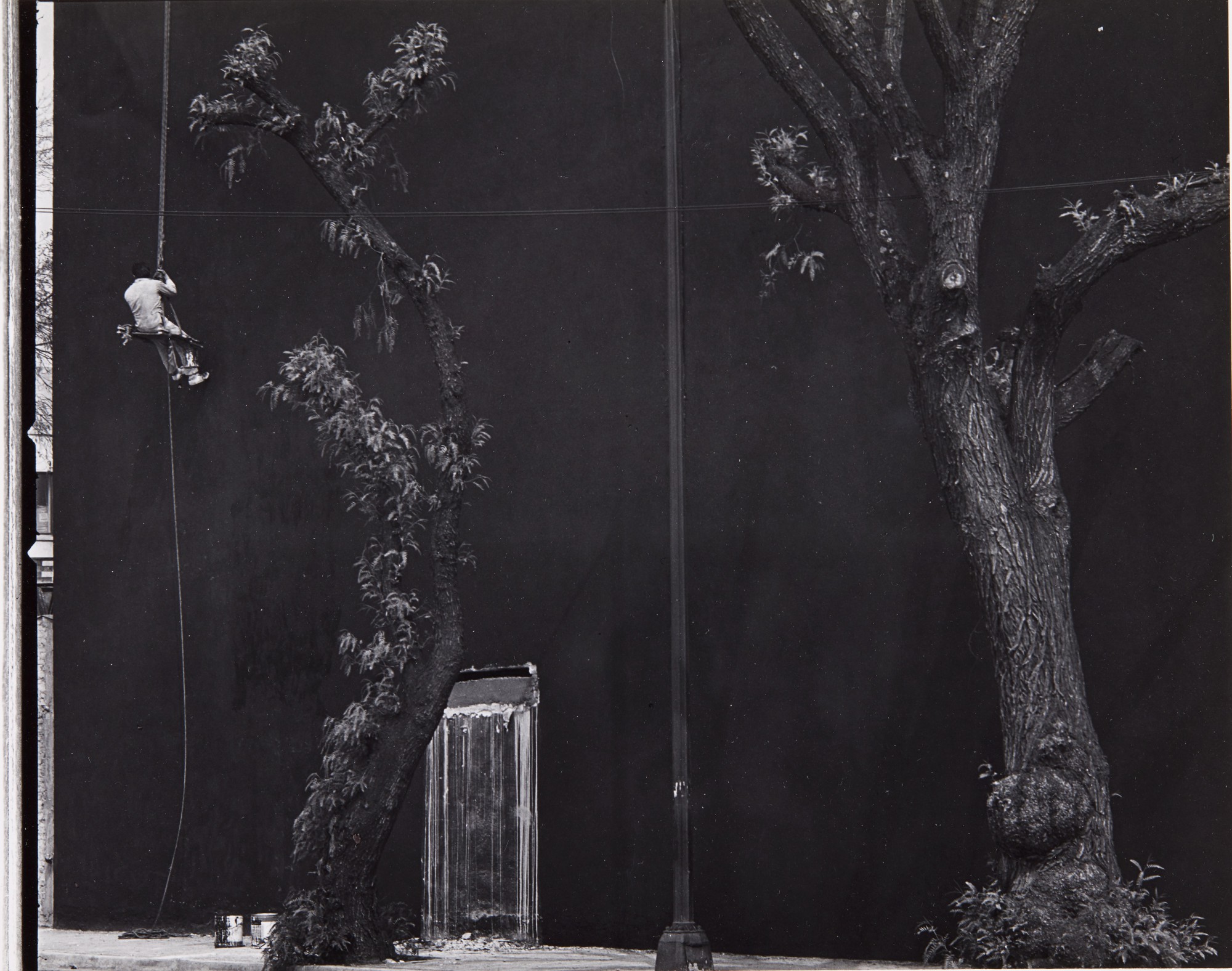
'Pintor de Negro', Mexico, 1971
When Modotti was expelled from Mexico in 1930, Álvarez Bravo inherited her position as the principal photographer associated with that world, contributing images to the journal Mexican Folkways and building relationships with some of the most important cultural figures of the era. His early contact with Edward Weston, who had worked closely with Modotti, exposed him to a rigorous modernist approach to form and light. Yet Álvarez Bravo never became a follower. He absorbed these influences and transmuted them into something deeply rooted in Mexican sensibility, in the textures of adobe walls, the geometry of market stalls, the bodies of workers and vendors and children in the streets of his city.
“Photography is a way of shouting, of freeing oneself, not a timid representation of a fact.”
Manuel Álvarez Bravo
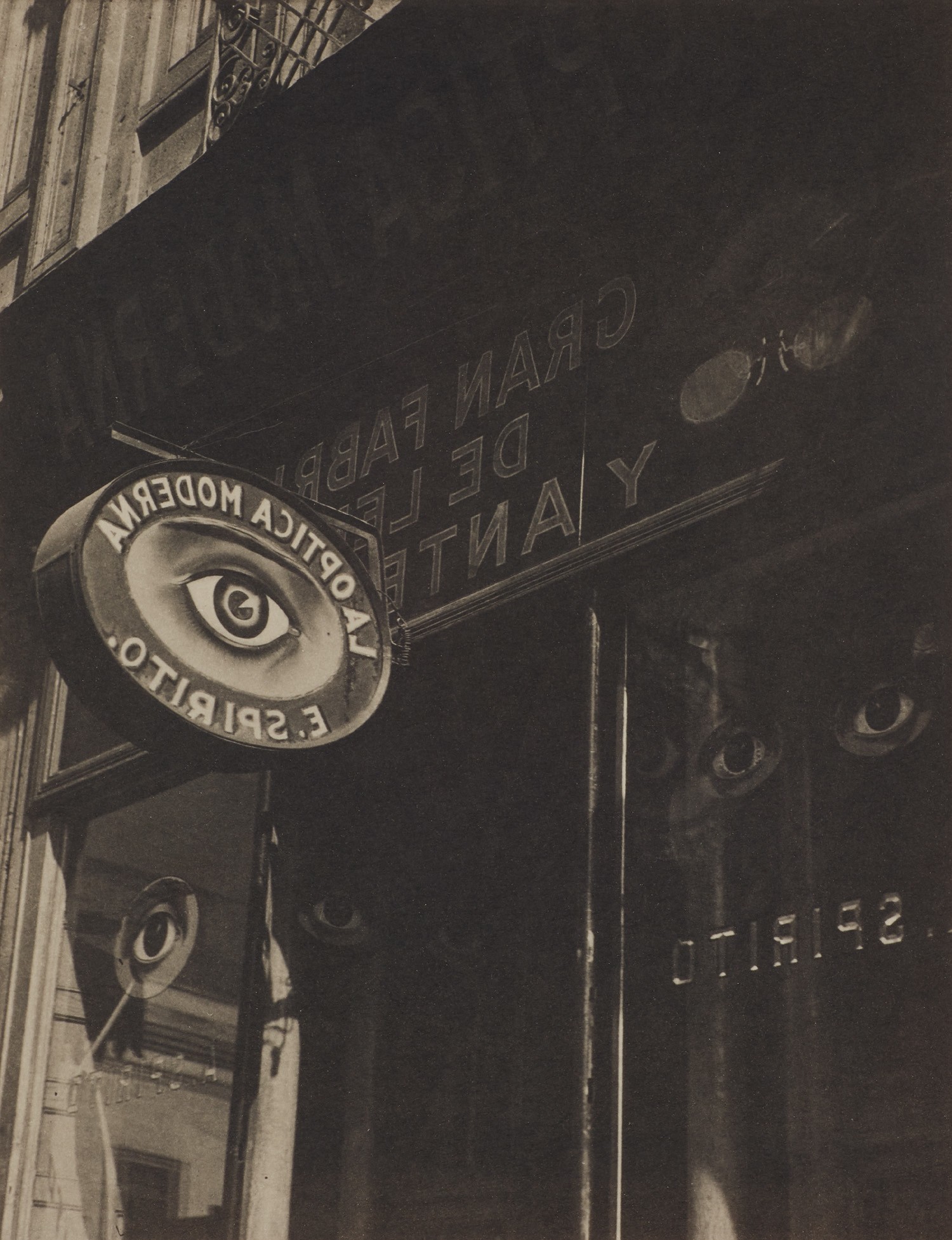
His artistic development moved through several overlapping registers. On one level he was a documentarian of extraordinary acuity, attuned to the social reality of Mexico through decades of upheaval and transformation. On another level he was a poet of the unconscious, drawn to the dreamlike, the ambiguous, and the quietly uncanny. Works like Parábola Óptica, made in 1931 and showing an optician's sign reflected and refracted across a storefront, demonstrate his instinct for finding surrealist possibility in the most ordinary urban encounter.
Manuel Álvarez Bravo
Parábola óptica (Optical Parable), 1970
El Ensueño, also from the early 1930s, shows a young woman with her eyes closed and her blouse slipping from her shoulder, suspended in a reverie that is somehow both intimate and entirely mysterious. These images do not illustrate surrealism. They arrive at it through a different door, one opened by the specific light and culture of Mexico. Among the works that define his legacy, Los Agachados, meaning the crouched ones, is particularly beloved.
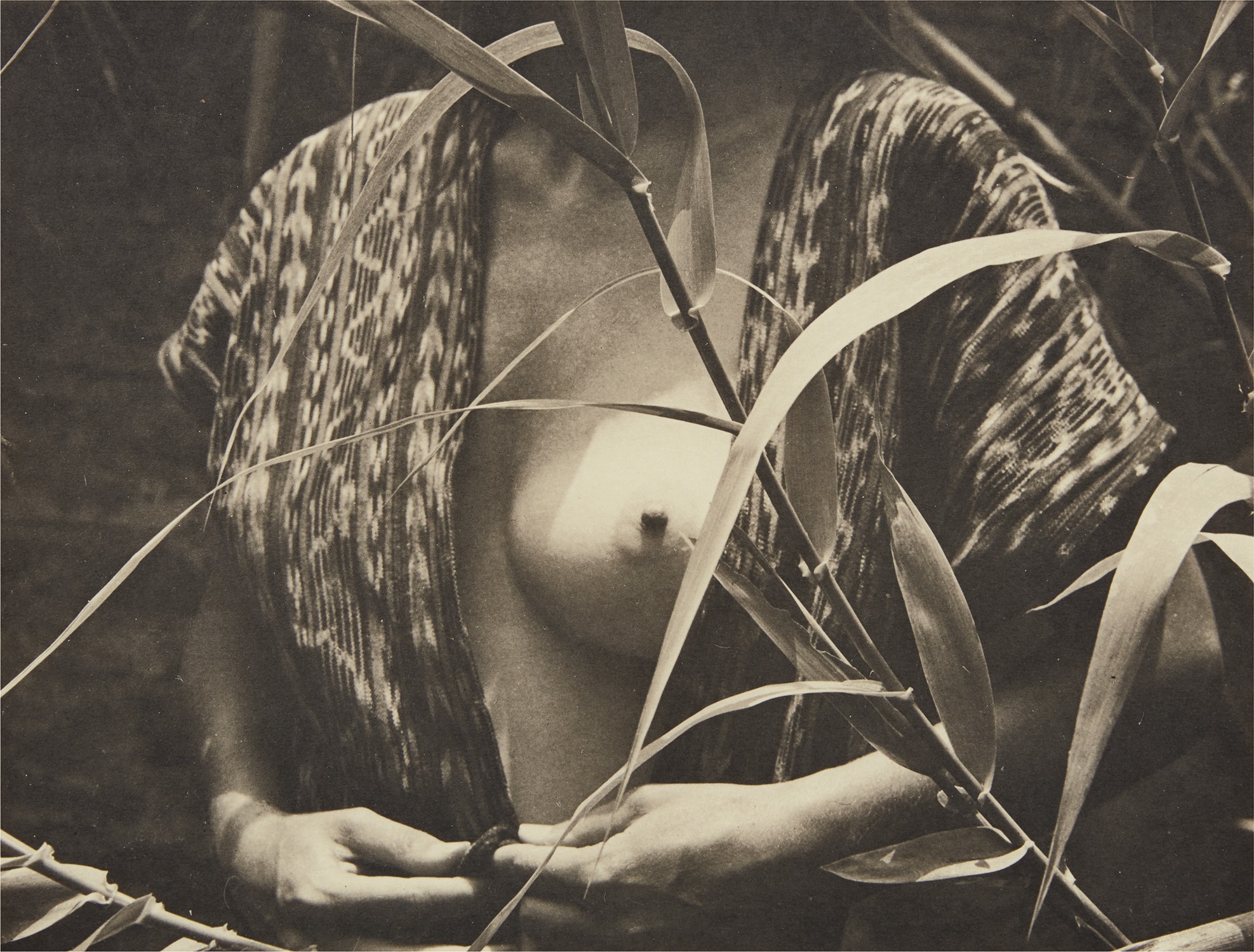
Made in 1934, it captures a row of men hunched over a lunch counter, their backs forming a gentle curve that reads almost as abstract form. The image is politically conscious without being didactic, formally beautiful without being cold. Dos Pares de Piernas and Un Cuarto Para Las Doce demonstrate his gift for finding the monumental in the incidental, for cropping and composing in ways that transform fragments of the visible world into something closer to myth. The portfolio Diez Desnudos, ten nudes presented in a red clothbound clamshell case with a poem by Heinrich Heine, reveals the care he brought to the presentation of his work as object, as book, as intimate experience rather than merely exhibition spectacle.
Manuel Álvarez Bravo
La Buena Fama Durmiendo (Good Reputation, Sleeping)
For collectors, Álvarez Bravo represents one of the great stable pillars of the photography market. Gelatin silver prints from his own hand, particularly those printed in the 1970s when he revisited many of his most celebrated negatives, are the works most frequently encountered and most actively sought. His prints appear regularly at Christie's, Sotheby's, and Phillips, where they attract both institutional buyers and private collectors with a serious commitment to the medium. Signed examples with annotations in his distinctive handwriting carry particular resonance, a direct material connection to a man who was, in the most literal sense, a witness to a century.
Later printed editions are also collectible and accessible, offering an entry point for those building a photography collection with historical depth and international scope. To understand Álvarez Bravo fully it helps to place him in a constellation of contemporaries and successors. His friendship with Henri Cartier Bresson, who admired him enormously, and his association with Walker Evans situate him within the great tradition of humanist documentary photography. Yet he was never quite a humanist in the European sense.
He was closer in spirit to the magical realism that would later define Latin American literature, finding in the surface of daily life a layer of strangeness and ceremony that other photographers might have walked past. Graciela Iturbide, who studied under him and later became one of Mexico's most celebrated photographers, carries forward something of his sensibility, as does Flor Garduño. His influence on Mexican visual culture is comprehensive and still being measured. What Álvarez Bravo offers the collector and the viewer in equal measure is the experience of being slowed down, of being asked to look again at what seemed already seen.
His photographs do not announce themselves. They accumulate. A wall, a shadow, a pair of legs on a staircase, a woman dreaming in a garden: each image is a small argument for the radical sufficiency of the visible world, made by a man who spent a hundred years finding it inexhaustible. The Collection is honored to present a significant group of his works, and to offer collectors the opportunity to live with images that have already earned their permanent place in the history of art.
Explore books about Manuel Álvarez Bravo