Man Ray
Man Ray: The Visionary Who Remade Everything
Artist Spotlight · The Collection Editorial
“I paint what cannot be photographed, and I photograph what I do not wish to paint.”
Man Ray
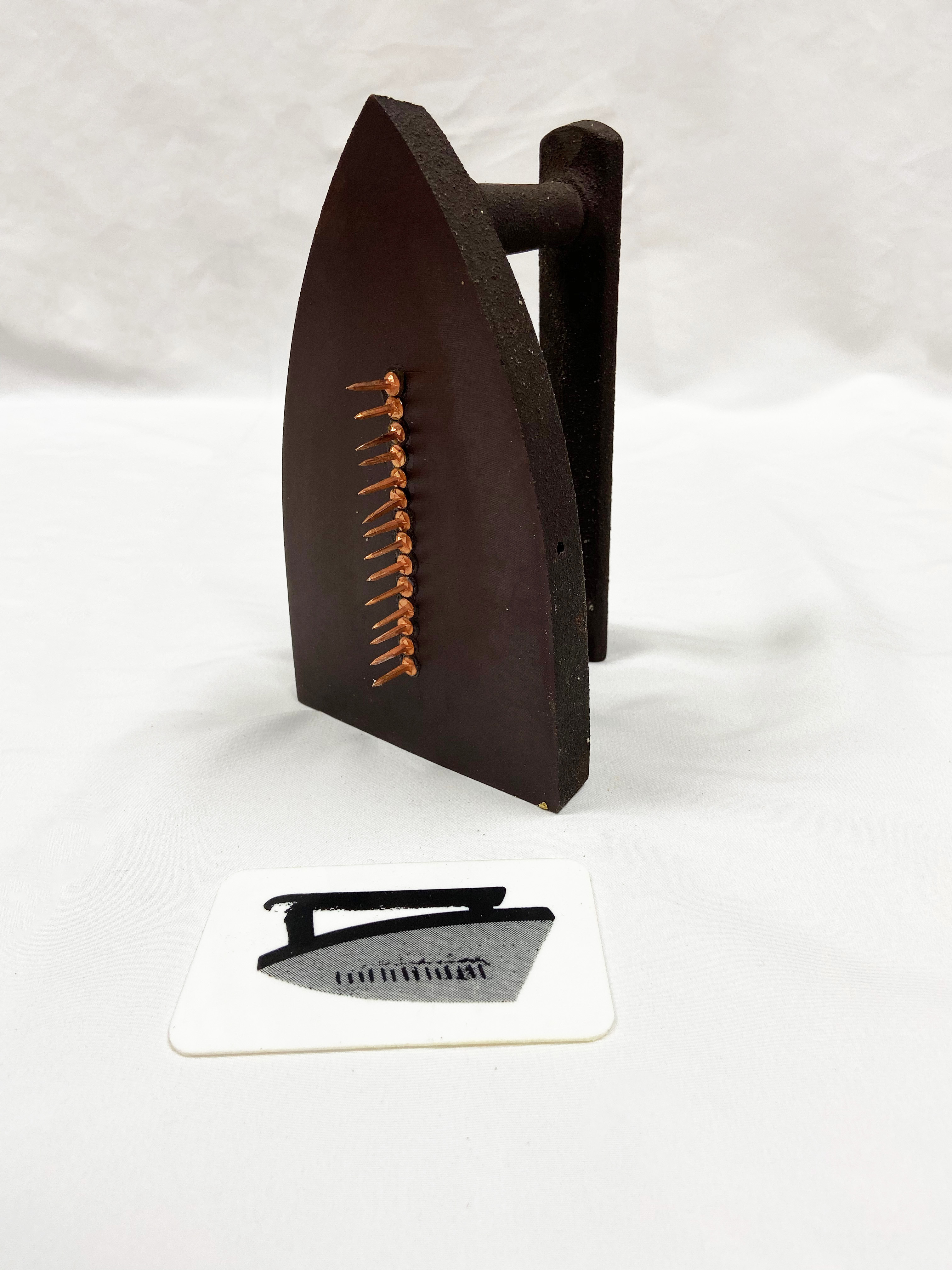
There is a moment in the permanent collection of the Centre Pompidou in Paris where visitors reliably pause longer than anywhere else. It is in front of a pressed iron, its flat sole bristling with a row of tacks, and it asks a question that has never stopped being relevant: what is an object for, and who decides? That object is "Cadeau," first created by Man Ray in 1921 and subsequently editioned across his lifetime, and it remains one of the most quietly radical gestures in the history of modern art. More than a century after its conception, collectors and institutions alike continue to seek it out, drawn by its playful menace and its refusal to be categorized.
Man Ray
Cadeau, 1972
Man Ray belongs to no single medium, no single country, and no single movement, and that restless multiplicity is precisely what makes him so endlessly compelling. Manuel Radnitzky was born in Philadelphia in 1890, the eldest child of Russian Jewish immigrants who had settled in Brooklyn. His father was a tailor and his mother a seamstress, and the household was one where making things with the hands was simply a fact of daily life. He studied at the National Academy of Design and took mechanical drawing classes at the Ferrer Center in New York, where he also encountered the anarchist ideas that would quietly energize his practice throughout his career.
He adopted the name Man Ray in his early twenties, a reinvention as deliberate and decisive as anything he would later produce in the studio. That act of self naming carries its own Dadaist logic: identity as material, the self as a work in progress. New York in the 1910s was electric with modernist ambition, and Man Ray absorbed it fully. He became a close friend of Marcel Duchamp following the seismic 1913 Armory Show, and together with Duchamp and Francis Picabia he helped establish a distinctly American strand of Dada.
Man Ray
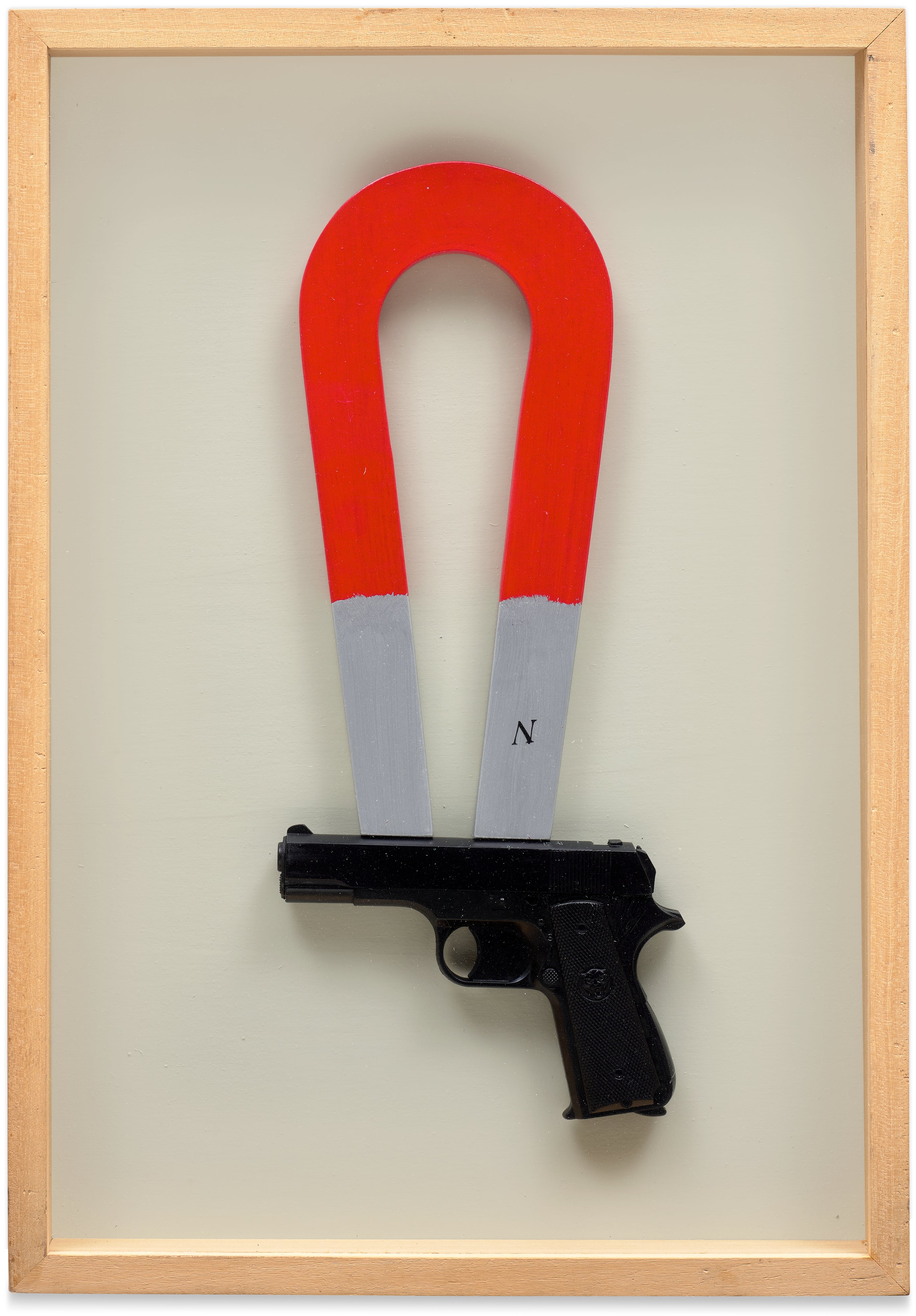
Compass
His early paintings showed the influence of Cubism and Cézanne, but he was already pushing toward something harder to name. In 1920 he and Duchamp co founded the New York Dada group, and the following year Man Ray made the decision that would define the next phase of his life: he moved to Paris. He arrived with almost no money and almost no French, and within weeks he had been taken into the heart of the Montparnasse scene, befriended by Tristan Tzara, Gertrude Stein, and Ernest Hemingway. It was in Paris that Man Ray discovered photography, not as a secondary craft but as a primary language.
“I have finally solved the problem of painting. All I need is one more week to finish.”
Man Ray, Self Portrait, 1963
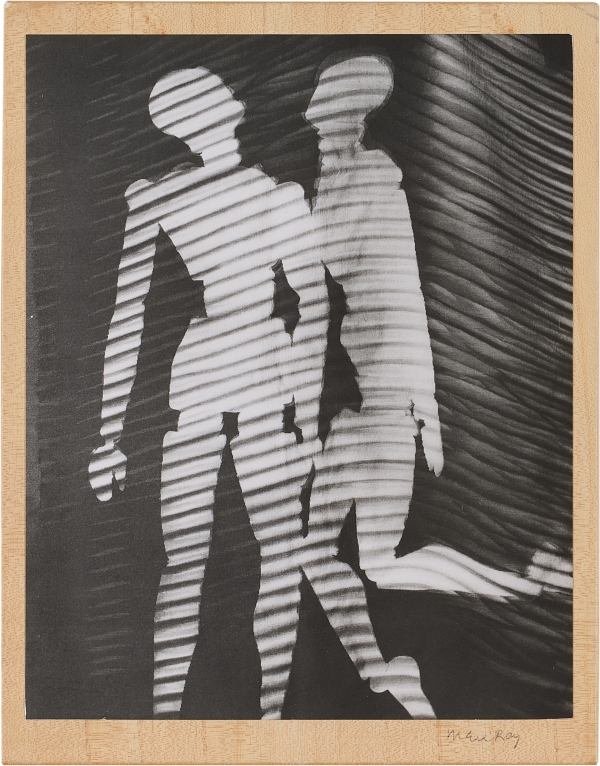
Working as a portraitist and fashion photographer for clients including Vogue and Harper's Bazaar, he supported himself while simultaneously pursuing work of radical originality in the darkroom. Around 1921 he stumbled upon the process that would bear his name: the Rayograph, a cameraless photogram made by placing objects directly onto light sensitive paper and exposing them. The resulting images, ghostly and precise at once, felt like visual poetry. Objects lost their mass and gained new meaning.
Man Ray
Untitled
A gyroscope, a pair of hands, a coil of wire became something between a drawing and a dream. André Breton embraced the Rayographs enthusiastically, and Man Ray became one of the defining figures of Surrealism, though he was always too independent to be fully absorbed by any single manifesto. The signature works span a remarkable range of media and intention. "Le Violon d'Ingres," the 1924 photograph of his lover Kiki de Montparnasse with f holes painted onto her back, is one of the most reproduced images in photographic history, a work that is simultaneously a love letter, a formal experiment, and a sly critique of the classical male gaze.
“To create is divine, to reproduce is human.”
Man Ray
His "Objets de mon Affection," the assembled series of found and altered objects including the tack studded iron, translate Duchampian readymade logic into something more overtly emotional and absurd. His portraits of Wallis Simpson, Lee Miller, and numerous luminaries of the Paris art world are among the finest photographic likenesses of the twentieth century, combining technical mastery with genuine psychological intimacy. Lee Miller herself went on to become a celebrated photographer partly through her close collaboration with Man Ray, adding another layer of creative legacy to his story. For collectors, Man Ray presents one of the most genuinely varied bodies of work available in the modern and contemporary market.
![Man Ray — Still Life [Interior] (A. 10)](https://rtwaymdozgnhgluydsys.supabase.co/storage/v1/object/public/artwork-images/auction-lots/NY030424-272024-lot58.jpg)
Man Ray
Still Life [Interior] (A. 10)
Photographs and Rayograph prints appear regularly at major auction houses including Christie's, Sotheby's, and Phillips, where original vintage silver prints have commanded figures well into the six and seven figures. Editioned works such as the various iterations of "Cadeau" and multiples like the painted wood and plastic constructions he produced later in his career offer points of entry across a broad range of budgets. Lithographs and aquatints from his graphic work, including the delicate colour aquatints printed on Arches paper, are prized for their tonal sophistication and their accessibility relative to unique works. Collectors are advised to attend carefully to provenance and the condition of silver prints, as well as to distinguish between lifetime editions and posthumous productions, where values differ considerably.
Man Ray exists in conversation with a constellation of artists whose work collectively defined the avant garde of the early and mid twentieth century. His relationship with Marcel Duchamp was the most formative, a dialogue between two of the most agile conceptual minds of the era. His place within Surrealism connects him to Salvador Dalí, Max Ernst, and Joan Miró, while his photographic practice speaks to contemporaries like László Moholy Nagy and Brassaï. Later generations of artists working with the found object, with appropriation, and with the blurring of fine art and commercial photography owe substantial debts to the territory Man Ray mapped.
His influence can be felt in the work of artists as different as Cindy Sherman and Maurizio Cattelan. Man Ray returned to the United States during the Second World War, spending a decade in Los Angeles before returning to Paris in 1951, where he remained until his death in 1976. He was awarded the Gold Medal at the 1961 Cannes Film Festival in recognition of his experimental films, another dimension of a practice that always refused limitation. He is buried at Père Lachaise cemetery with an epitaph of his own choosing: "Unconcerned, but not indifferent.
" It is a phrase that captures something essential about him: the calm refusal to be owned by categories or expectations, combined with a deep and genuine engagement with the world and its possibilities. To collect Man Ray is to bring into your home a piece of that attitude, a reminder that the most interesting question is always the one that has not yet been asked.
Explore books about Man Ray
Man Ray: A Biography
Neil Baldwin
Man Ray: 1890-1976
Merry Foresta
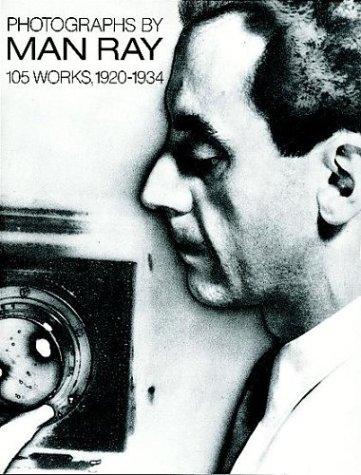
Man Ray: Photographs
Man Ray
Man Ray: American Artist
Francis M. Naumann
Man Ray: The Art of Seeing
Jennifer L. Roberts
Perpetual Motif: The Art of Man Ray
Merry Foresta
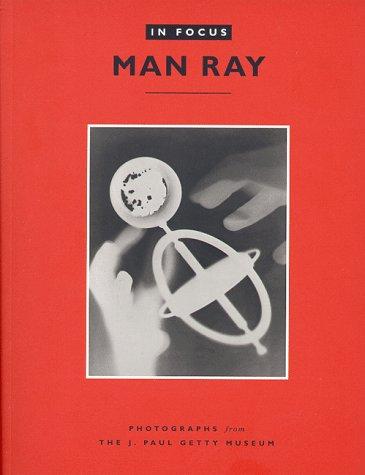
Man Ray: Portraits
Paul Pennyslvania
Self Portrait
Man Ray