Maki Hosokawa
Maki Hosokawa Finds Beauty in Between
Artist Spotlight · The Collection Editorial
There is a particular kind of attention required to stand before a work by Maki Hosokawa. It is not the attention demanded by scale or spectacle, though her canvases can hold their own in any room. It is something quieter, more interior, the kind of looking that slows the breath and asks the viewer to arrive fully present. In recent years, her acrylic and mixed media works have appeared with growing frequency in gallery exhibitions across Asia and in international auction contexts, drawing the notice of collectors who recognise in her practice something rare: a visual language that is entirely her own, rooted in Japanese tradition yet restless with contemporary energy.
Maki Hosokawa
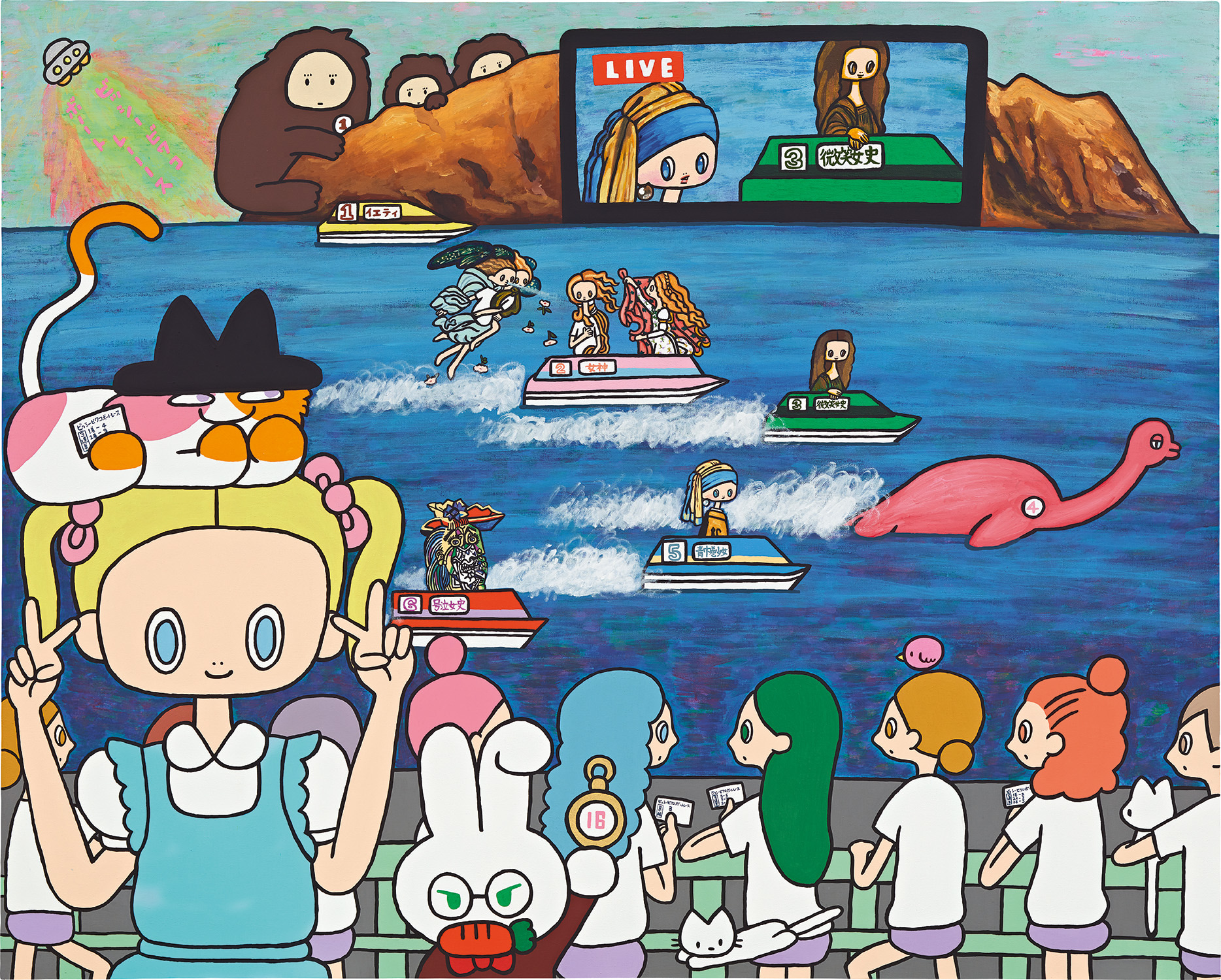
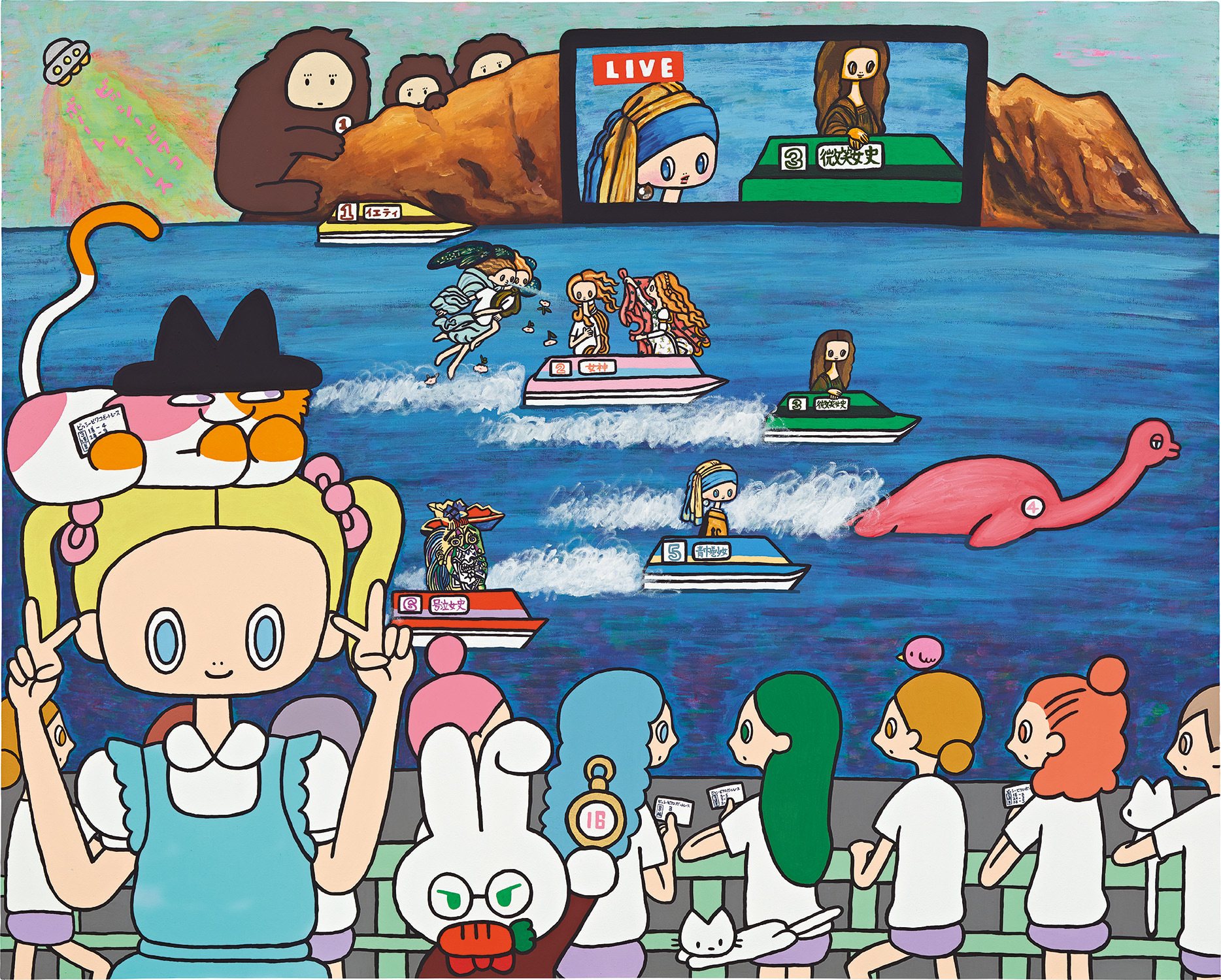
Alice in Bisshi Biwa-lake Boat Race, 2018
Hosokawa was born in Japan, and her formation as an artist is inseparable from the cultural inheritance that shapes her instincts at every level. Japanese aesthetics carry within them an entire philosophy of restraint, of negative space, of the beauty found in transience, what the culture has long called mono no aware, the bittersweet awareness of impermanence. These are not simply decorative ideas for Hosokawa. They are structural principles, embedded in the way she builds a composition, distributes colour across a surface, and allows line to breathe.
Growing up surrounded by a visual culture that prizes refinement over excess, she developed an eye attuned to subtlety, to the weight a single brushstroke can carry when everything unnecessary has been removed. Her development as a painter reveals an artist who has never been content to remain in one register. Early works on paper, such as the 2011 piece "Let's Go Seattle," executed in pen, coloured pencil, and marker, show an artist working with immediate, expressive energy, layering mark upon mark with a confidence that suggests both rigorous draughtsmanship and genuine delight in the act of making. The drawing is animated, almost musical in its rhythms, and it signals something important about Hosokawa's practice: that she moves fluidly between mediums and moods, bringing the same intelligence to a work on paper as to a large scale canvas.
Maki Hosokawa
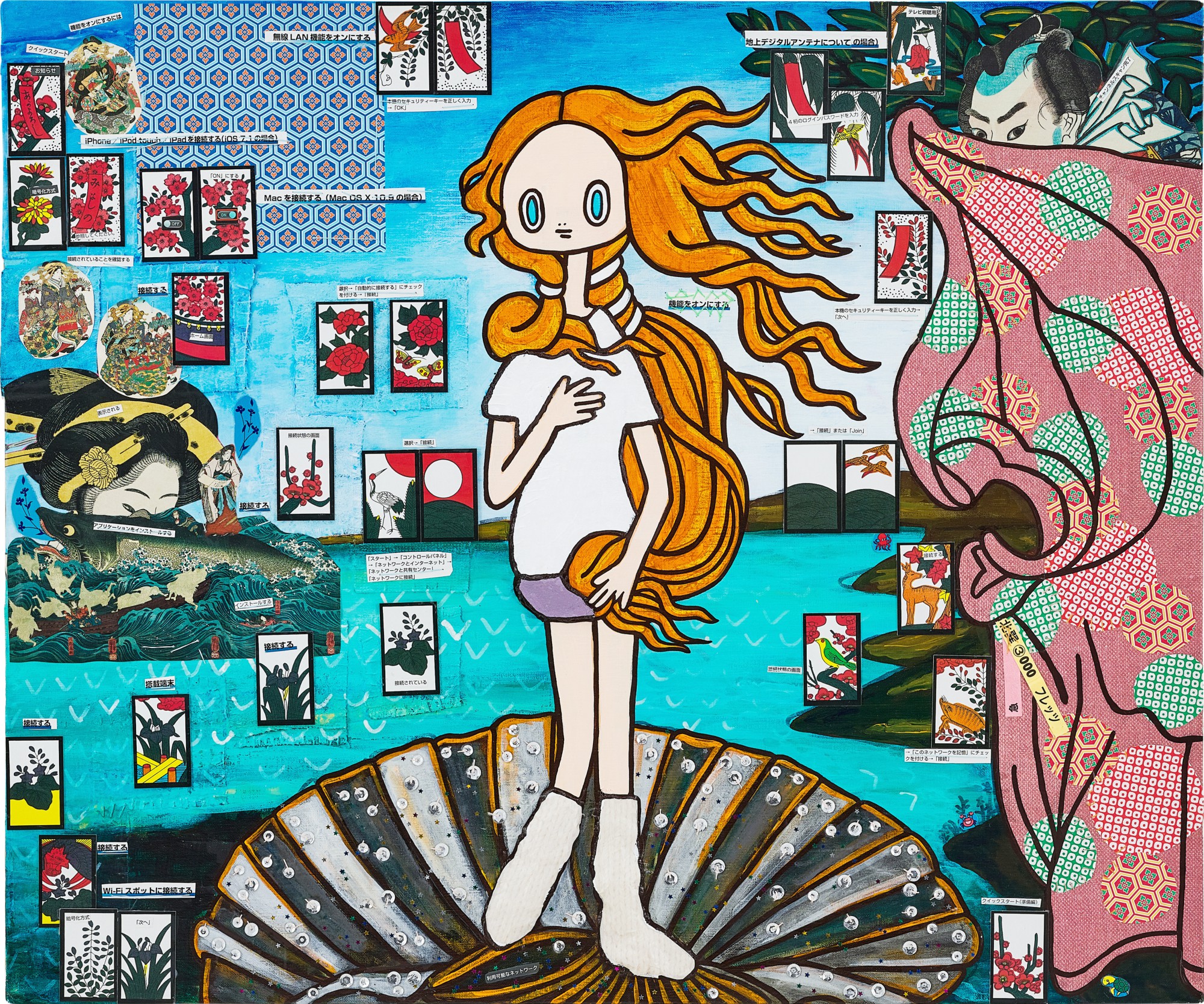
日本誕生的維納斯
This versatility is not restlessness. It is evidence of an artist who trusts the work to tell her what it needs. By 2018, Hosokawa had arrived at a body of work that speaks with remarkable cohesion and authority. "Alice in Bisshi Biwa Lake Boat Race," also from 2018, is among the most discussed of her recent canvases.
The work brings together two seemingly disparate imaginative worlds, the dreamlike logic of Lewis Carroll's Alice and the specificity of a Japanese landscape and tradition, and holds them in a tension that feels genuinely earned. Hosokawa does not merely juxtapose East and West; she finds the psychological territory they share, the experience of navigating a world whose rules are always slightly out of reach. Painted in acrylic on canvas, the work demonstrates her command of colour as emotional instrument, her palette at once subtle and vivid, never strident, always purposeful. "Skyscraper Ramen," from the same year, shows another facet of this sensibility: urban, playful, deeply affectionate toward the textures of contemporary Japanese life.
Maki Hosokawa
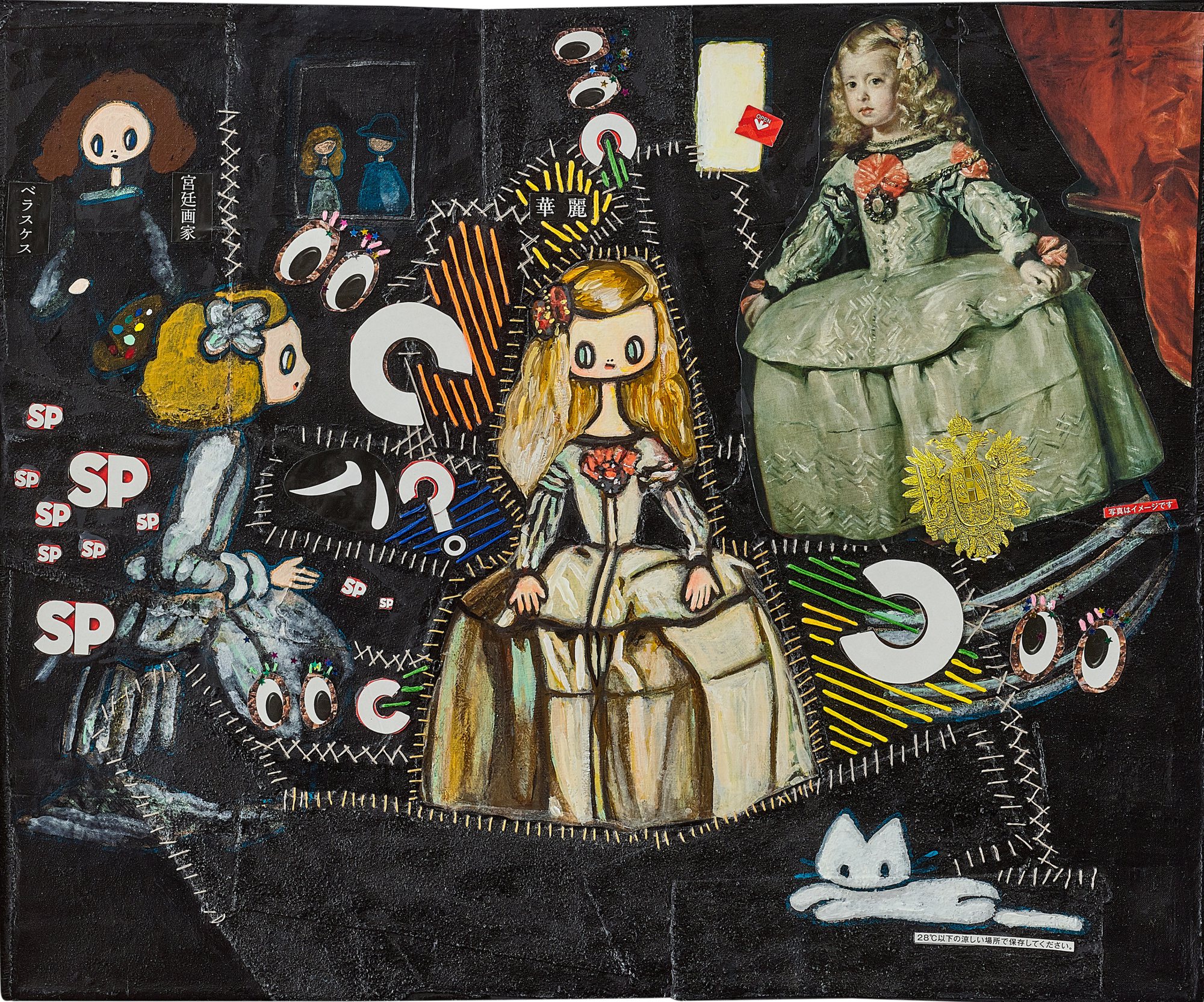
瑪加麗塔愛孤獨
The mixed media works, particularly "Magarita Loves Solitude" and "The Birth of Venus," titles rendered in Chinese characters that carry their own layered resonances, reveal an artist in conversation with art history on her own terms. Hosokawa is not intimidated by the weight of canonical imagery. She absorbs it, transforms it, and returns it inflected with her own perspective, her own cultural position. "Hanami," the cherry blossom viewing work rendered in the single Japanese character that condenses an entire seasonal ritual into one word, is perhaps the most distilled expression of her relationship to Japanese aesthetics.
It asks the viewer to hold the transience of flowering trees, the fragility of beauty, and the communal joy of witness all at once. That Hosokawa achieves this in paint, without sentimentality, is a measure of her maturity as an artist. For collectors, the appeal of Hosokawa's work rests on several converging qualities that the market has begun to recognise with increasing clarity. Her works sit at an intersection that is genuinely unusual: they are accessible in the sense that they invite rather than exclude, they carry emotional warmth and a sense of narrative possibility, and yet they reward sustained attention with layers of cultural reference and technical sophistication that do not exhaust themselves on first encounter.
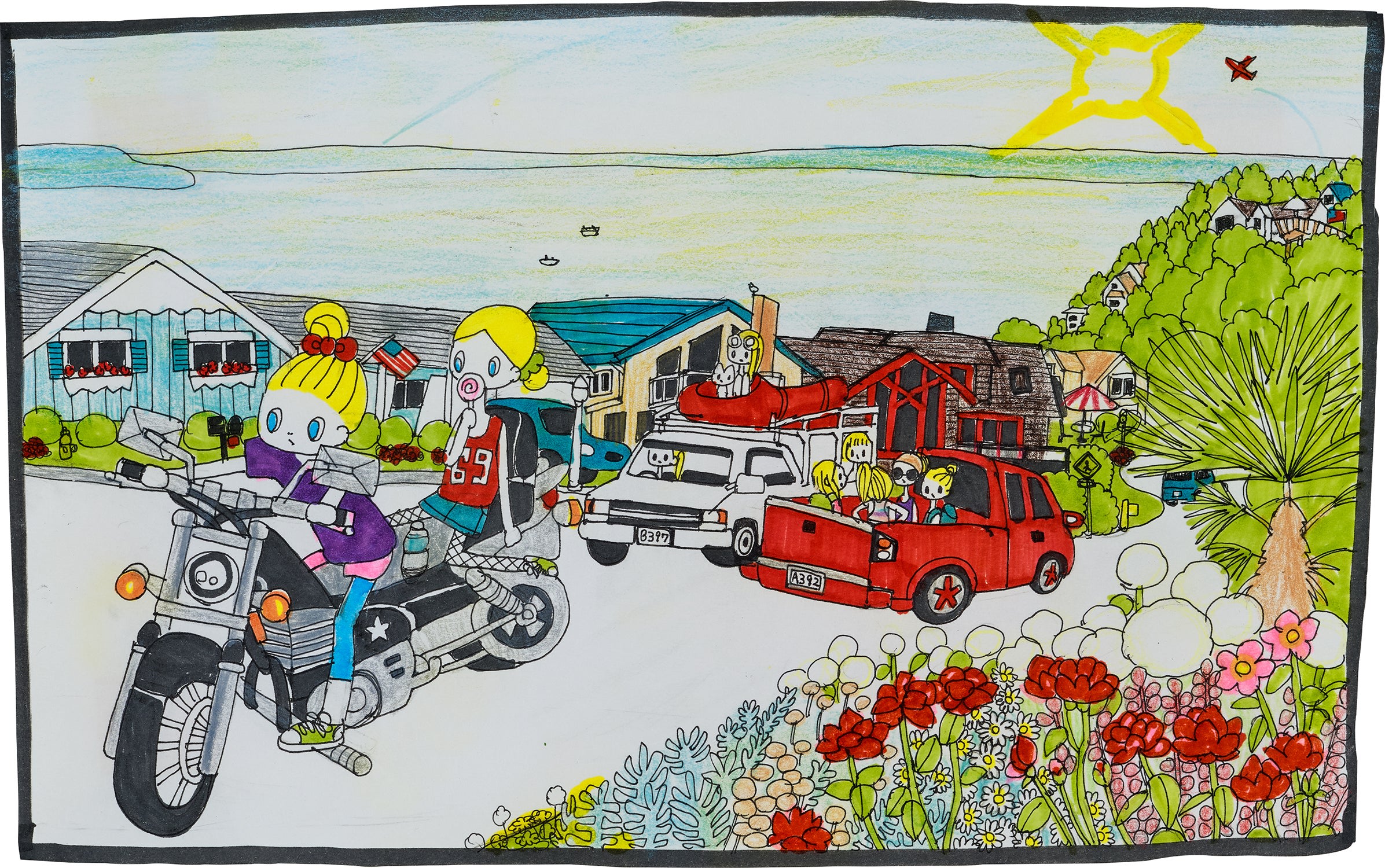
Maki Hosokawa
Let's Go Seattle!, 2011
Works on paper such as "Let's Go Seattle" represent an accessible point of entry into her practice, while the larger acrylic canvases offer the kind of presence and staying power that serious collectors seek. Her auction appearances across Asia and internationally have demonstrated steady interest, and the trajectory of her recognition suggests that early engagement with her work is a decision future collectors may well look back on with satisfaction. In the broader context of contemporary art, Hosokawa belongs to a lineage of artists working at the intersection of Japanese tradition and global contemporary practice. One thinks of the way Yoshitomo Nara transformed manga and folkloric imagery into something emotionally complex and internationally resonant, or the manner in which artists associated with the Gutai movement insisted that Japanese modernism was not a derivative conversation but an originating one.
Hosokawa's practice is distinct from both, more intimate in scale and more concerned with memory and interiority than with either pop iconography or gestural rupture, but she is part of the same ongoing argument that Japanese artists have been making to the world: that there is a way of seeing rooted in this culture that has things to say which no other culture can say in quite the same way. What endures in Hosokawa's work, and what will continue to draw collectors and institutions toward it, is the quality of presence she creates. Her canvases feel inhabited. They carry within them the evidence of sustained thought, of a mind that has moved slowly through its own materials and arrived at images that feel both discovered and inevitable.
In a moment when the art world moves quickly and rewards spectacle, there is something genuinely countercultural about an artist who insists on the value of delicacy, on the intelligence of the quiet gesture. Maki Hosokawa is making work that asks us to slow down, and in that invitation lies both her distinctiveness and her importance.