Ma Quan (18th Century)
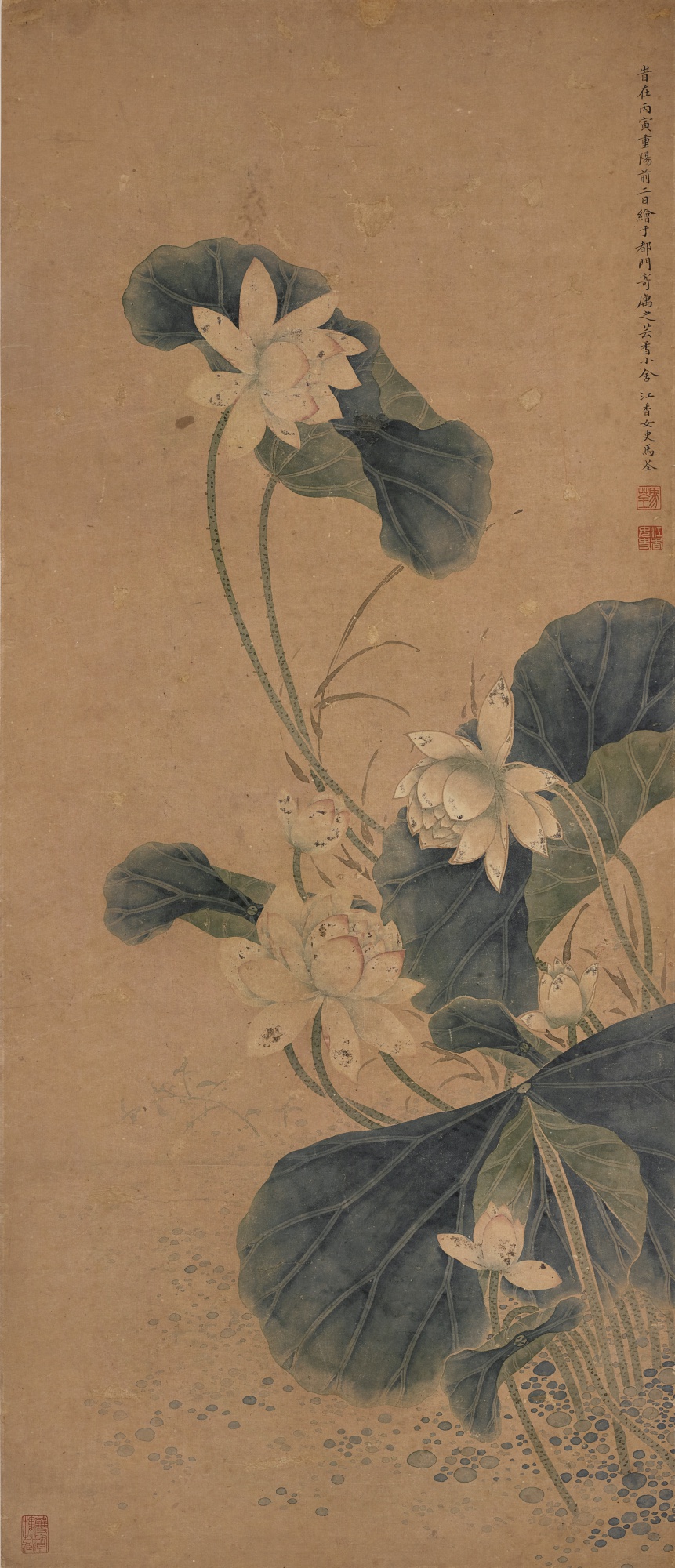
Brushstrokes of Stillness, Blooming Forever
Artist Spotlight · The Collection Editorial
There is a moment, standing before a finely wrought ink painting of lotus flowers, when time seems to collapse entirely. The petals hold their breath. The water implied beneath them is perfectly still. This is the sensation that the work of Ma Quan, the eighteenth century Chinese master of botanical and landscape painting, continues to deliver across three centuries of distance.
Ma Quan (18th Century)
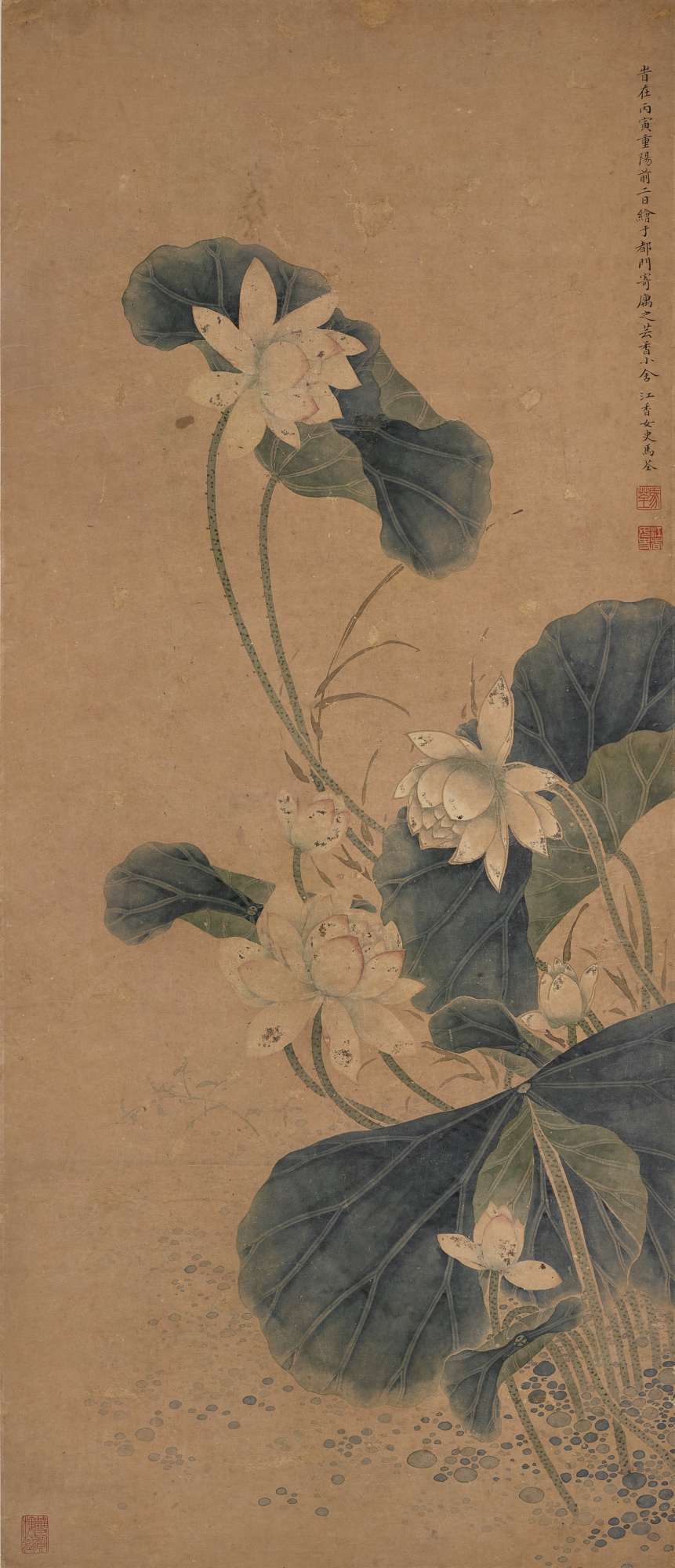
Lotus 彩荷圖
As scholarly interest in Qing Dynasty literati painting deepens globally, and as major institutions from the Palace Museum in Beijing to the Metropolitan Museum of Art in New York revisit their holdings of this period with fresh curatorial attention, the quiet brilliance of artists like Ma Quan finds itself more legible, and more treasured, than ever before. Ma Quan worked during one of the most culturally fertile periods in Chinese history. The Qing Dynasty, under emperors Kangxi, Yongzheng, and Qianlong, presided over a remarkable flourishing of the arts, and the eighteenth century in particular saw the literati painting tradition reach a point of extraordinary refinement. This was a world in which scholarly accomplishment and artistic practice were understood as inseparable.
Painters were expected to be poets, calligraphers, and philosophers as much as image makers. Ma Quan emerged from and contributed to this richly integrated intellectual culture, and her work bears all the hallmarks of someone who understood painting not merely as representation but as a form of thought made visible. What distinguishes Ma Quan within this tradition is her gender, a fact that was remarkable then and remains significant now. She was one of the notable women artists to work within the literati framework during the Qing period, navigating a world in which female painters, though not entirely absent, faced considerable constraints on their public recognition.
Ma Quan (18th Century)
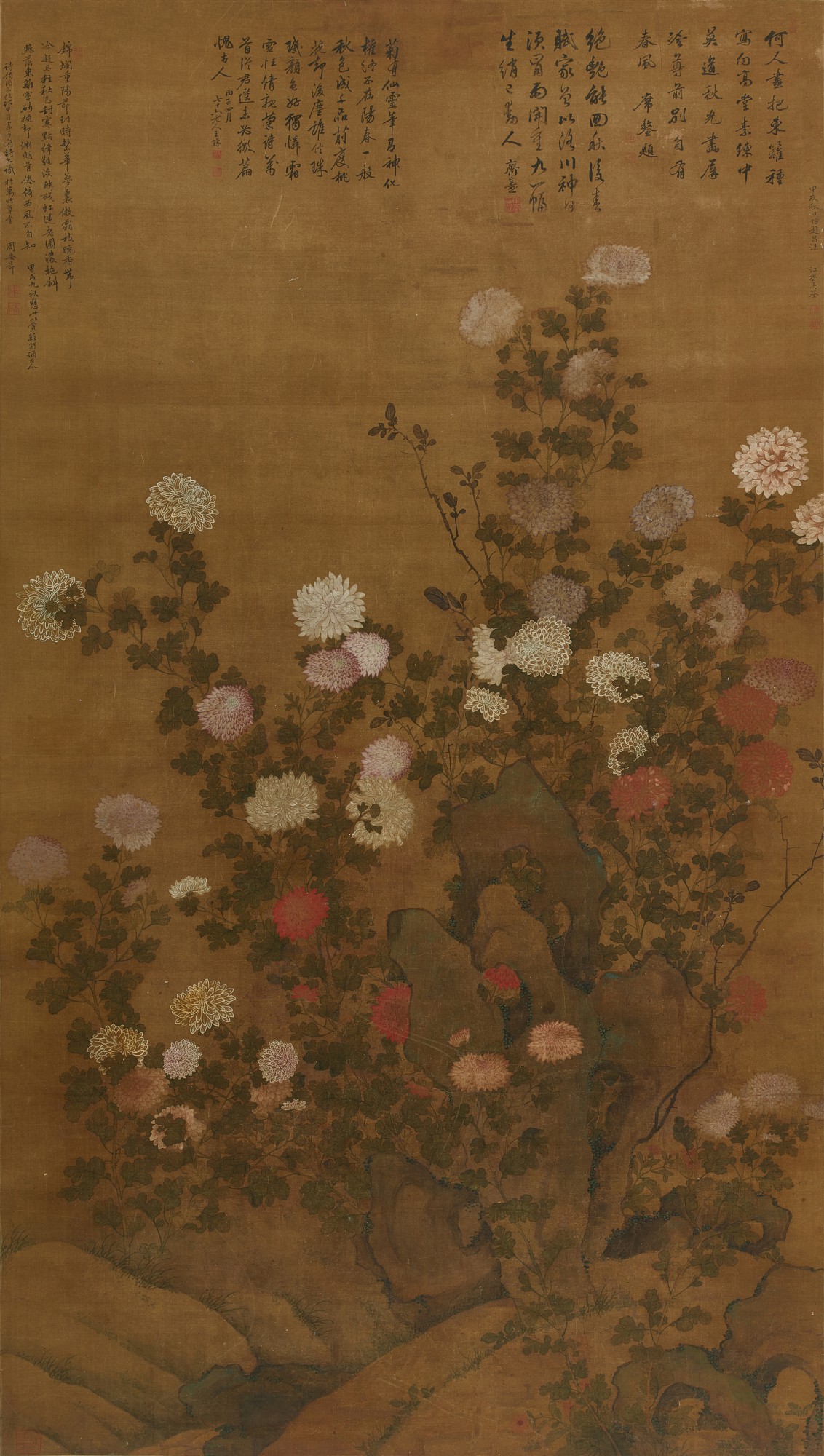
Chrysanthemums 菊花
Her achievements place her alongside a small but important group of women artists from the same era whose reputations have grown steadily as art historians have worked to recover and reassess their contributions. That her work survives and circulates today is a testament to the quality of her vision and the care with which her paintings were preserved and valued by collectors over the generations. Ma Quan's practice centred on flower painting, a genre that in the Chinese tradition carried enormous symbolic and philosophical weight. Flowers were not merely decorative subjects.
The lotus, rising from muddy water to bloom in perfect clarity, embodied Buddhist ideals of purity and spiritual transcendence. The chrysanthemum, blooming in the chill of autumn when other plants have retreated, represented integrity, resilience, and the cultivation of inner virtue. When Ma Quan painted these subjects she was engaging with a language that her educated contemporaries would have read fluently, understanding each compositional choice as a statement of values as much as an aesthetic decision. Her two most celebrated works held in significant collections, the luminous Lotus known as 彩荷圖 and the elegant Chrysanthemums titled 菊花, demonstrate exactly this depth of intention.
The Lotus 彩荷圖, executed in ink and colour on paper and mounted for framing, is a work of remarkable tonal sophistication. Ma Quan's handling of colour here is restrained but precise, the pinks and whites of the petals given life by the careful modulation of ink washes that suggest depth and atmosphere without ever becoming heavy or laboured. There is an ease to the brushwork that speaks of long practice and genuine mastery. The Chrysanthemums 菊花, painted in ink and colour on silk and presented as a hanging scroll, shows another facet of her skill.
Silk as a support demands confidence, as it accepts ink differently from paper and punishes hesitation. The blooms in this work have a quiet solidity, each petal rendered with a clarity that feels earned rather than merely technical. Together these works reveal an artist who had completely absorbed the traditions available to her and then made something distinctly her own. For collectors, Ma Quan represents an opportunity that sits at a compelling intersection of art historical significance and aesthetic pleasure.
Works from the Qing Dynasty literati tradition have attracted sustained attention from serious collectors for decades, and the additional dimension of Ma Quan's identity as a woman artist in this context adds a layer of meaning that resonates strongly with contemporary collecting sensibilities. The market for classical Chinese painting has deepened considerably in the twenty first century, with auction houses including Christie's, Sotheby's, and Poly Auction in Beijing regularly achieving strong results for works of comparable period and quality. For a collector drawn to the meditative qualities of ink painting, the philosophical richness of the flower painting tradition, and the particular historical significance of female artistic achievement in imperial China, Ma Quan's work offers something rare and genuinely moving. Within the broader context of Qing Dynasty painting, Ma Quan's work invites comparison with several major figures whose reputations have long been established.
The flower painting tradition she worked within connects her to artists like Yun Shouping, the seventeenth and eighteenth century master whose boneless flower painting technique transformed the genre and whose influence was felt throughout the period. The literati emphasis on brushwork and scholarly meaning links her practice to the wider world of artists who balanced personal expression with deep engagement with classical precedents. Understanding Ma Quan in relation to these figures enriches the experience of her work and situates it properly within one of the great artistic traditions of the world. The enduring power of Ma Quan's painting lies in its ability to hold complexity lightly.
These are works that reward slow looking, that open gradually to the patient viewer and reveal more of their intelligence the longer one spends with them. In a cultural moment when there is growing appetite for art that offers genuine contemplation rather than immediate spectacle, her paintings feel not like historical artefacts but like living presences. To collect Ma Quan is to participate in a tradition of care that stretches back centuries and to bring into one's home something that carries, in every brushstroke, the weight and the grace of a remarkable mind.
Explore books about Ma Quan (18th Century)