Lynn Davis
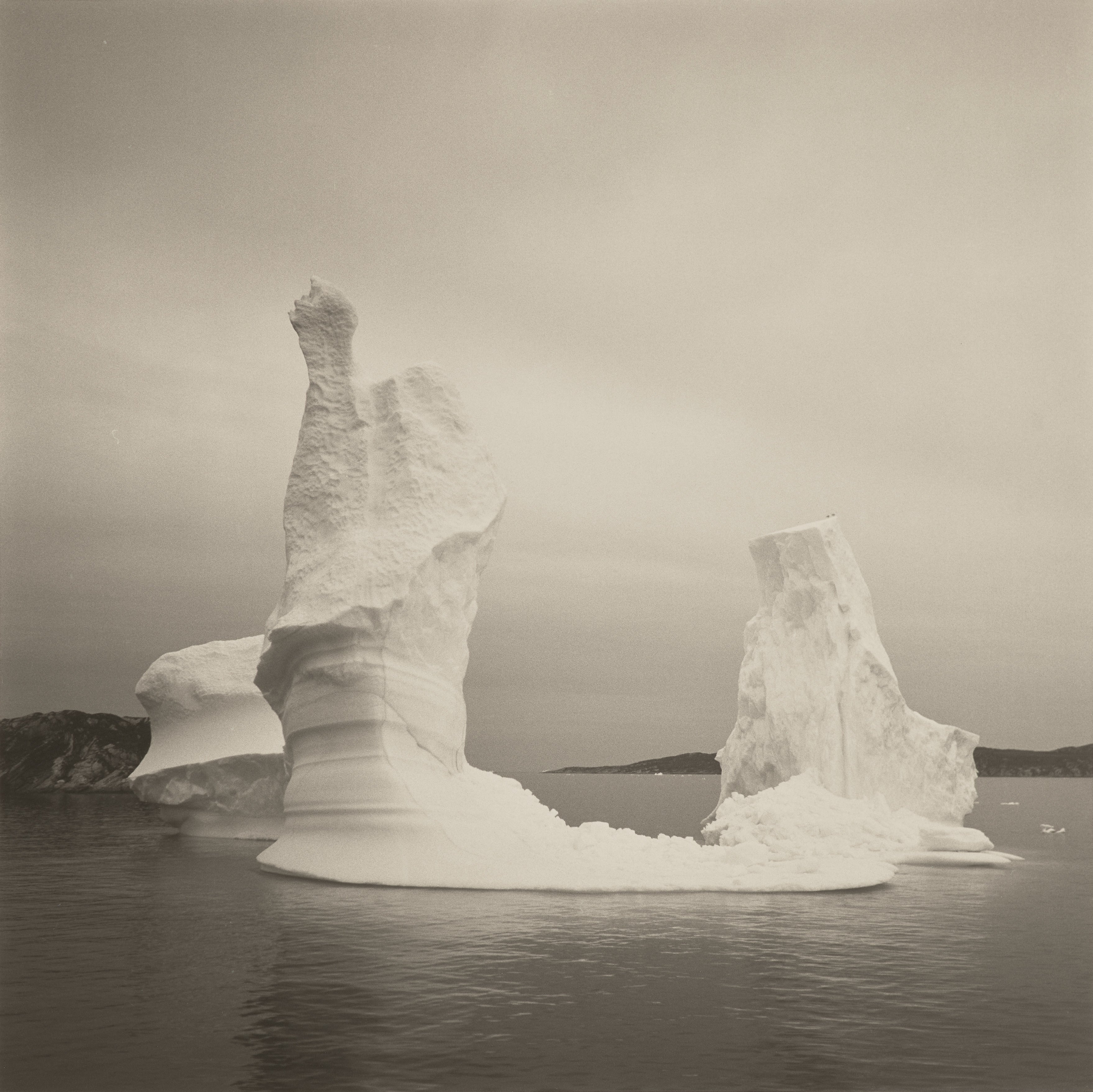
Lynn Davis: Witness to the Infinite
Artist Spotlight · The Collection Editorial
There is a particular quality of silence that inhabits the photographs of Lynn Davis, the kind that settles over a vast frozen sea or rises from the stones of an ancient monument at dawn. Her large scale gelatin silver prints have earned their place in major institutional collections across the United States and Europe, and in recent years museum audiences have returned to her work with renewed urgency, finding in her images of glaciers and ruins a profound meditation on fragility and endurance that feels more timely than ever. The Metropolitan Museum of Art, the Whitney Museum of American Art, and the Museum of Modern Art all number her prints among their holdings, a testament to the critical seriousness with which her practice has long been regarded. Davis was born in 1944 and came of age in a postwar America animated by restlessness and reinvention.
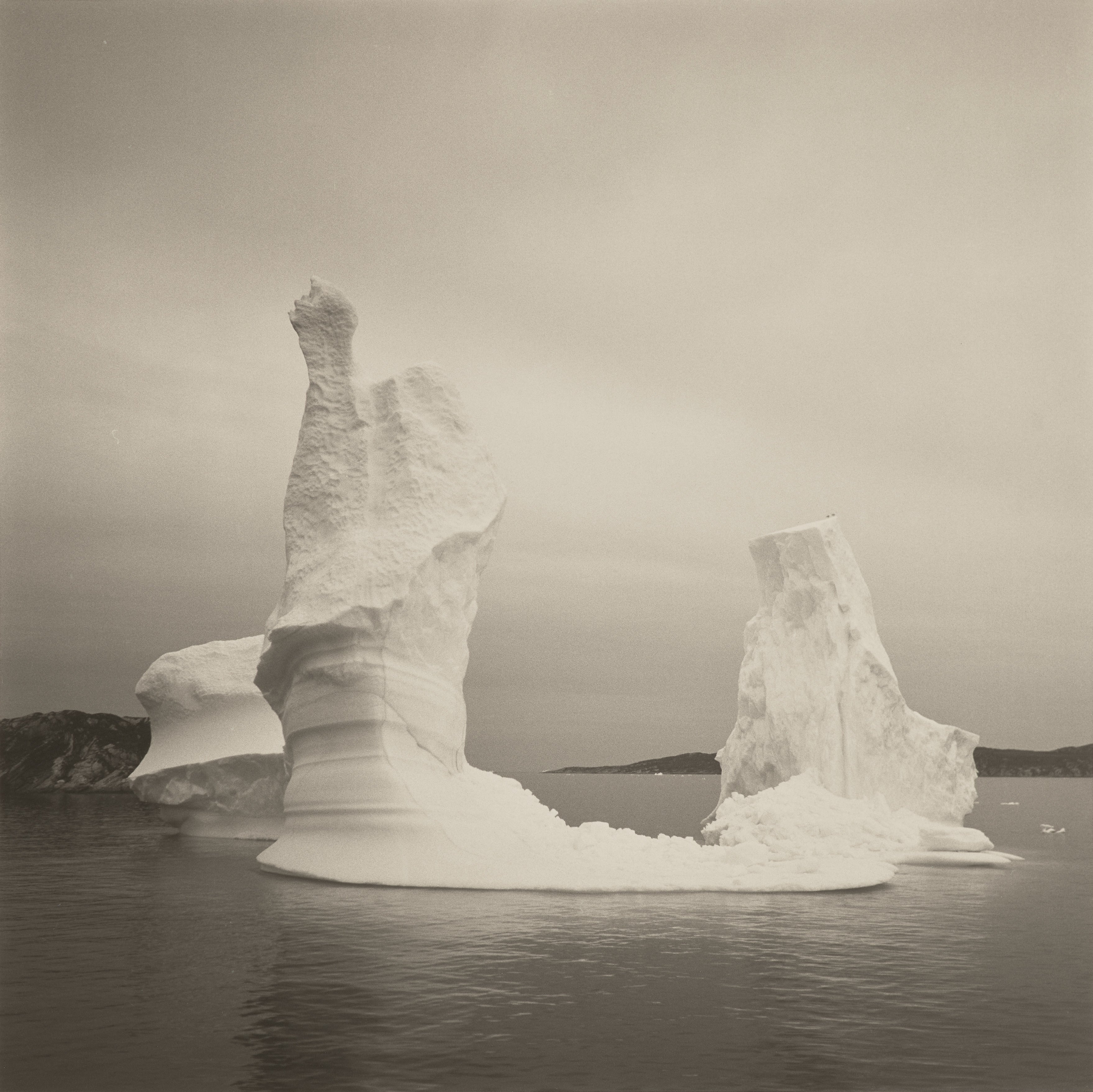
Lynn Davis
Iceberg #19, Disko Bay, Greenland, 1986, 1986
She studied photography seriously in New York during the late 1960s and early 1970s, a period of extraordinary creative ferment in that city, and it was in those years that she formed one of the most celebrated friendships in the history of American photography. Her close bond with Robert Mapplethorpe, whom she knew before either had arrived at the full flowering of their respective visions, shaped her early sensibility in ways both practical and philosophical. The two photographers shared a devotion to formal rigor and to the transformative power of black and white, even as their subject matter would eventually diverge dramatically. Davis spent formative years working through portraiture and documentary modes before a pivotal journey northward redirected the course of her entire practice.
Her first encounter with the icebergs of Disko Bay, Greenland, in the mid 1980s was not merely a subject discovery but something closer to a revelation of purpose. She returned repeatedly to those frigid waters, building a body of work that would come to define her legacy. The sheer scale at which she printed these images, often several feet across, was itself an artistic decision of consequence: it forced the viewer into a physical relationship with the subject, making the encounter feel less like looking at a photograph and more like standing at the edge of the world. The Iceberg series from Disko Bay remains the cornerstone of her achievement.
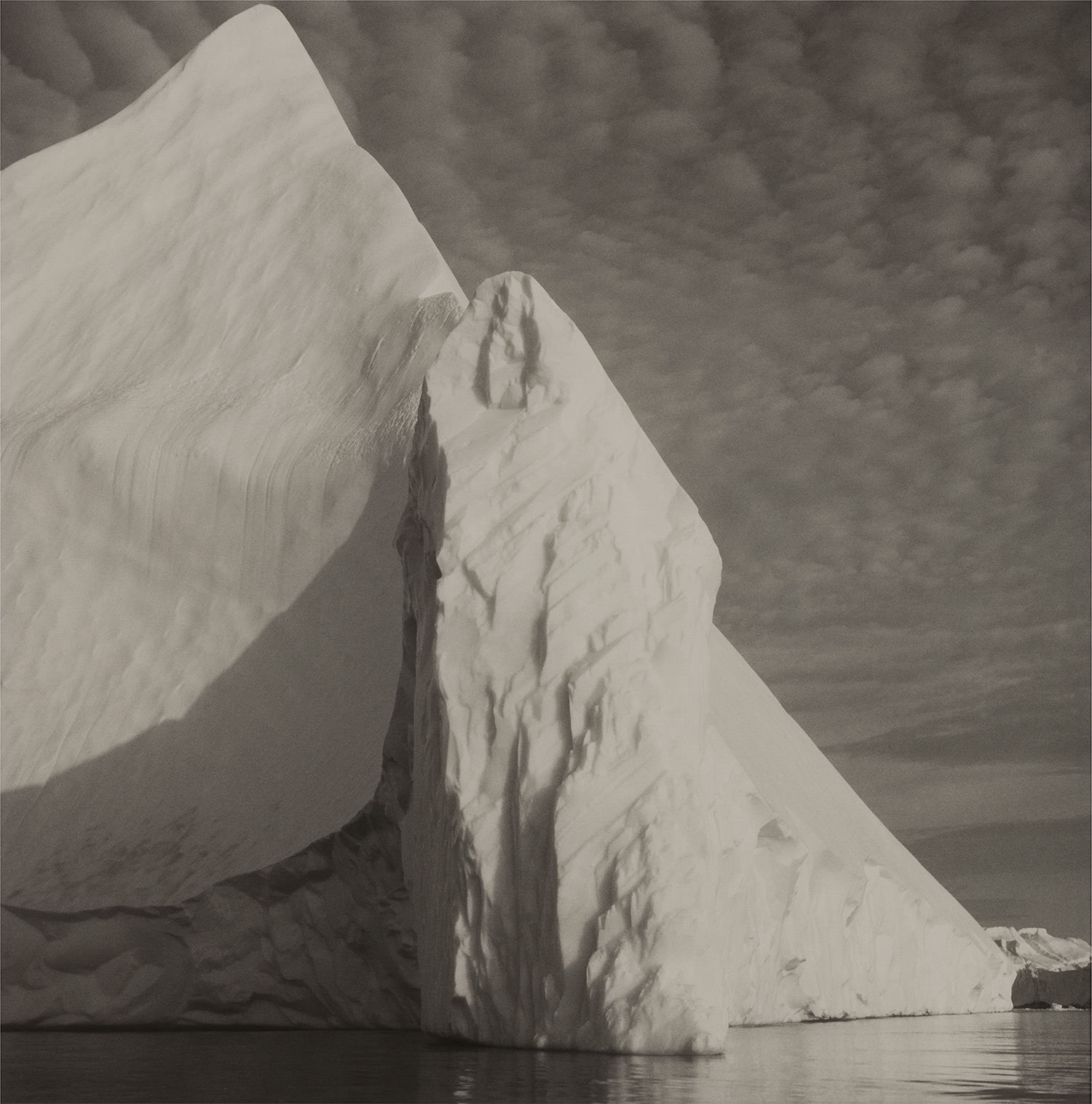
Lynn Davis
Iceberg #2, Disko Bay, Greenland
Works such as Iceberg 19, Disko Bay, Greenland, 1986 and the subsequent variants numbered through the series demonstrate Davis at the height of her formal powers. The icebergs she photographs are not picturesque curiosities but monumental presences, ancient masses of compressed time rendered with a tonal richness that rewards sustained attention. Her use of selenium and gold toning in certain prints, visible in works like Iceberg VI and Victoria Falls, Zimbabwe, adds warmth and depth to what might otherwise read as austere imagery, inflecting the geological with the elegiac. The Old Faithful print from Yellowstone National Park and the Indian Ocean image from Zanzibar extend the same sensibility to thermal and oceanic phenomena, confirming that Davis is less a documentarian of specific places than a philosopher of natural force.
Her travels to Egypt and Cambodia brought the ancient human world into conversation with the natural one. The Red Pyramid, Dashur, Cairo, Egypt stands among her most striking architectural images, presenting one of the oldest true pyramids on earth with the same stillness and gravity she brings to ice formations. In this sense Davis belongs to a lineage of photographers and painters drawn to what Edmund Burke and Immanuel Kant theorized as the sublime, that quality of overwhelming beauty tinged with the awareness of human smallness. Her sensibility connects her to the tradition of nineteenth century landscape painting, to the luminists and to photographers such as Carleton Watkins and later Edward Weston, even as her scale and her toning techniques place her firmly within the late twentieth century revival of the gelatin silver print as an artistic medium of genuine ambition.
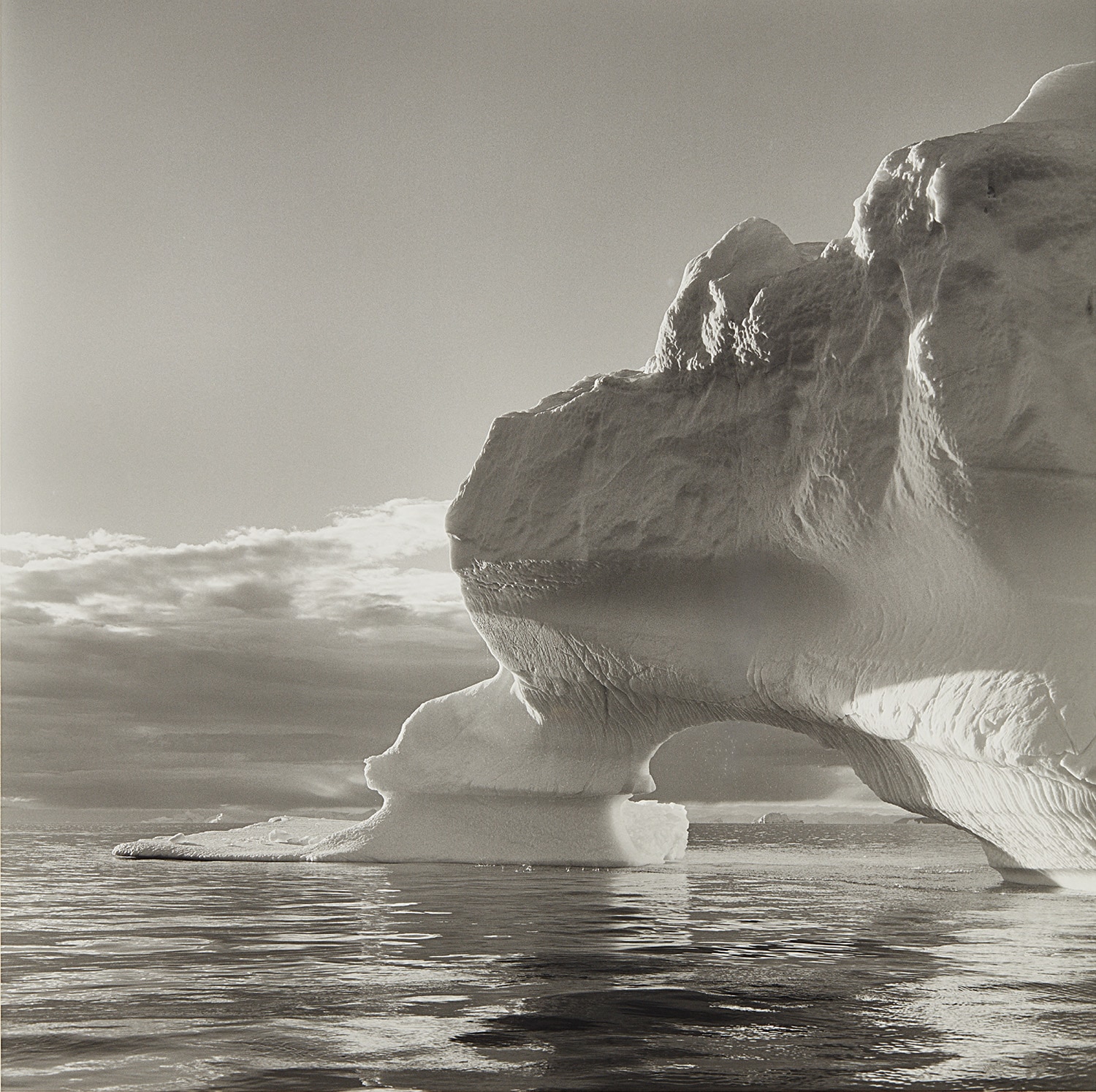
Lynn Davis
Iceberg #24, Disko Bay Greenland
For collectors, the Davis market offers a genuinely compelling proposition. Her prints are held in distinguished private collections alongside museum acquisitions, and her work appears regularly through specialist photography dealers and at major auction houses including Christie's and Sotheby's. The Iceberg prints, particularly those from the late 1980s through the 1990s, represent the most sought after tier of her output, prized for both their visual authority and their historical resonance at a moment when the landscapes she recorded are themselves changing. Collectors new to her work would do well to consider the range of toning techniques across the series, as selenium and gold toned prints carry distinct visual personalities and different long term appeal.
Condition and print date are important factors, as Davis oversaw editions with care and the earlier prints carry a particular freshness and intention. Considered within the broader context of late twentieth century photography, Davis occupies a singular position. She shares with photographers such as Hiroshi Sugimoto a dedication to long duration thinking, to subjects that dwarf human timescales, and a belief that the photograph can aspire to the condition of meditation. Like Sebastiao Salgado she works at monumental scale with a commitment to formal beauty that has sometimes drawn critical debate about aestheticization, but her images consistently reward scrutiny on their own terms.
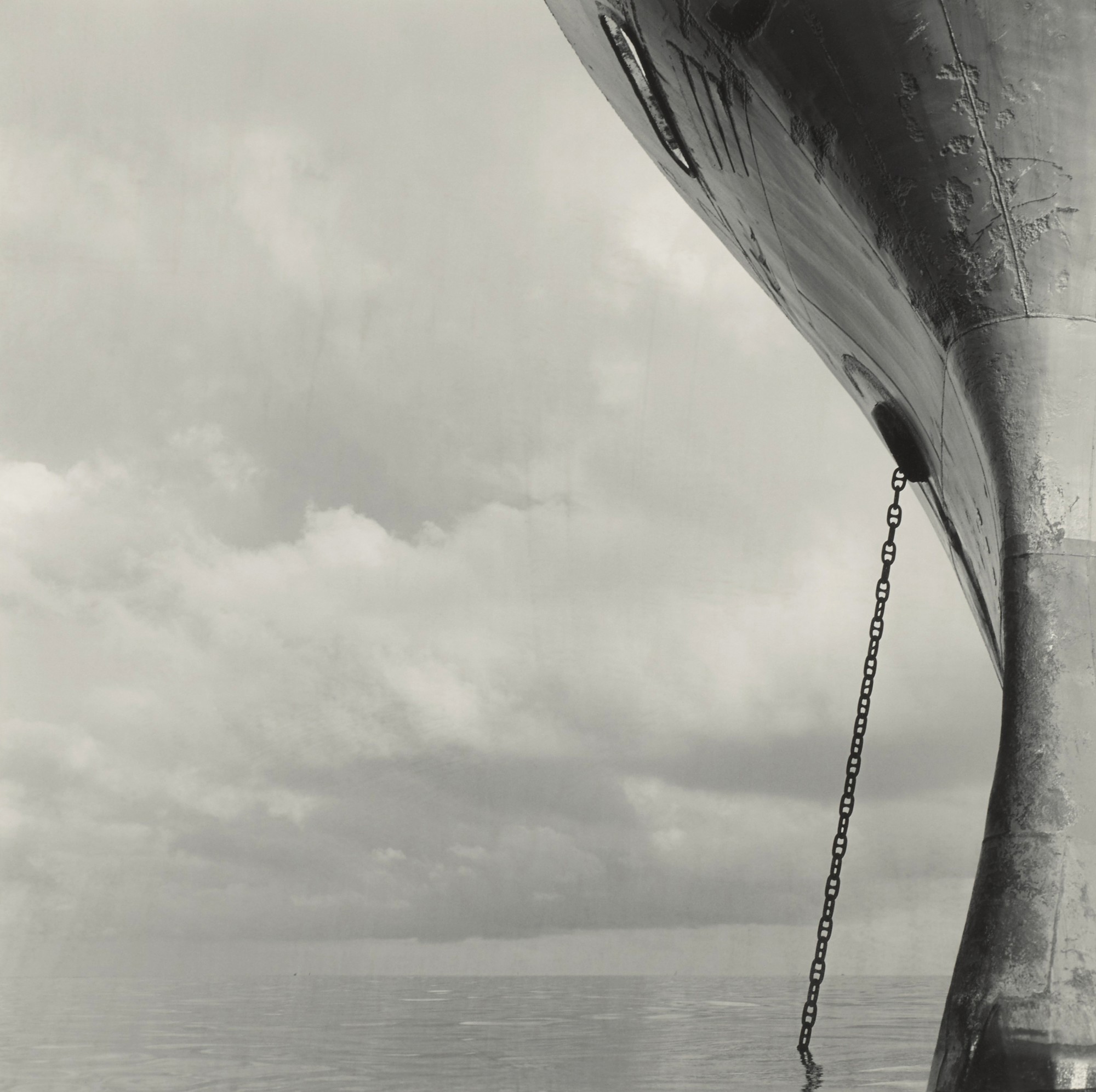
Lynn Davis
Indian Ocean, Zanzibar, Tanzania #19
She predates and in some ways anticipates the ecological awareness that now pervades discussions of landscape photography, though her work has always been less activist than contemplative, more interested in witness than argument. Lynn Davis has spent six decades looking at the places on earth where time becomes visible, where ice carries centuries and stone carries millennia, and she has found in those places a grammar of image making that is entirely her own. Her photographs ask us to slow down, to stay with a surface until its depths reveal themselves, to accept that some things are simply larger than our capacity to contain them in language. For those who collect her work, and for those who encounter it in museums and galleries, that invitation has lost none of its power.
In a cultural moment saturated with images produced and consumed in fractions of a second, the sustained, deliberate, luminous world of a Lynn Davis print feels not like nostalgia but like necessity.
Explore books about Lynn Davis