Lynn Chadwick
Lynn Chadwick, Sculptor of Enduring Human Forms
Artist Spotlight · The Collection Editorial
There is a moment, standing before a Lynn Chadwick bronze, when the figure seems to breathe. The geometry is severe, the surfaces rough and crackled with texture, and yet something unmistakably human pulses beneath the metal. It is this quality, at once elemental and deeply felt, that has made Chadwick one of the most compelling British sculptors of the twentieth century, and it is why his work continues to draw serious collectors and museum audiences decades after his death in 2003. Major institutions from the Tate in London to the Museum of Modern Art in New York and the Centre Georges Pompidou in Paris hold his pieces in permanent collection, and the secondary market for his bronzes has remained robustly active, a testament to the sustained conviction that his vision belongs among the defining achievements of postwar sculpture.
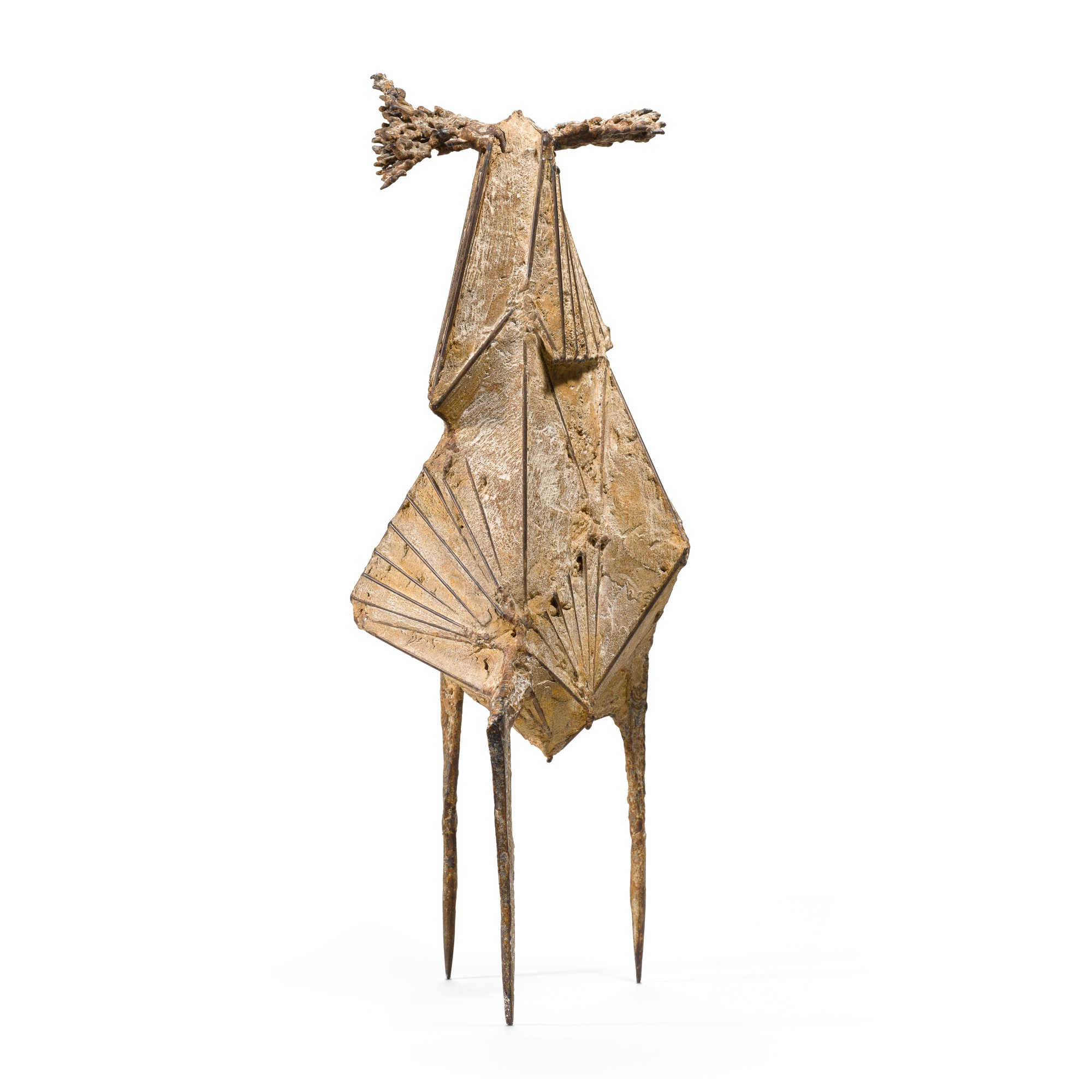
Lynn Chadwick
Winged Figures, 1970
Lynn Russell Chadwick was born in London in 1914, and his path to sculpture was anything but direct. He trained as an architectural draughtsman, a formation that proved decisive: the structural logic, the respect for mass and tension, the attention to how forms inhabit space all entered his artistic thinking early and never left. His work during the Second World War as a Fleet Air Arm pilot added another layer to this sensibility, an awareness of precariousness, of bodies under pressure, of figures braced against the world. When he returned from service and began making art in earnest during the late 1940s, he brought to the studio the mind of someone who had thought seriously about structure and seriously about human vulnerability.
Chadwick came to sculpture through mobile constructions, initially working with iron and wire in ways that showed the influence of Alexander Calder. But by the early 1950s he had developed something distinctly his own: welded iron figures in which the body was reduced to angular, almost crystalline forms, then filled with Stolit, a compound of iron filings and plaster, to create the dense, textured surfaces that became his signature. These early works announced a sculptor working urgently against abstraction's tendency to evacuate human content. His figures were never portraits, never naturalistic, but they were always, unmistakably, presences.
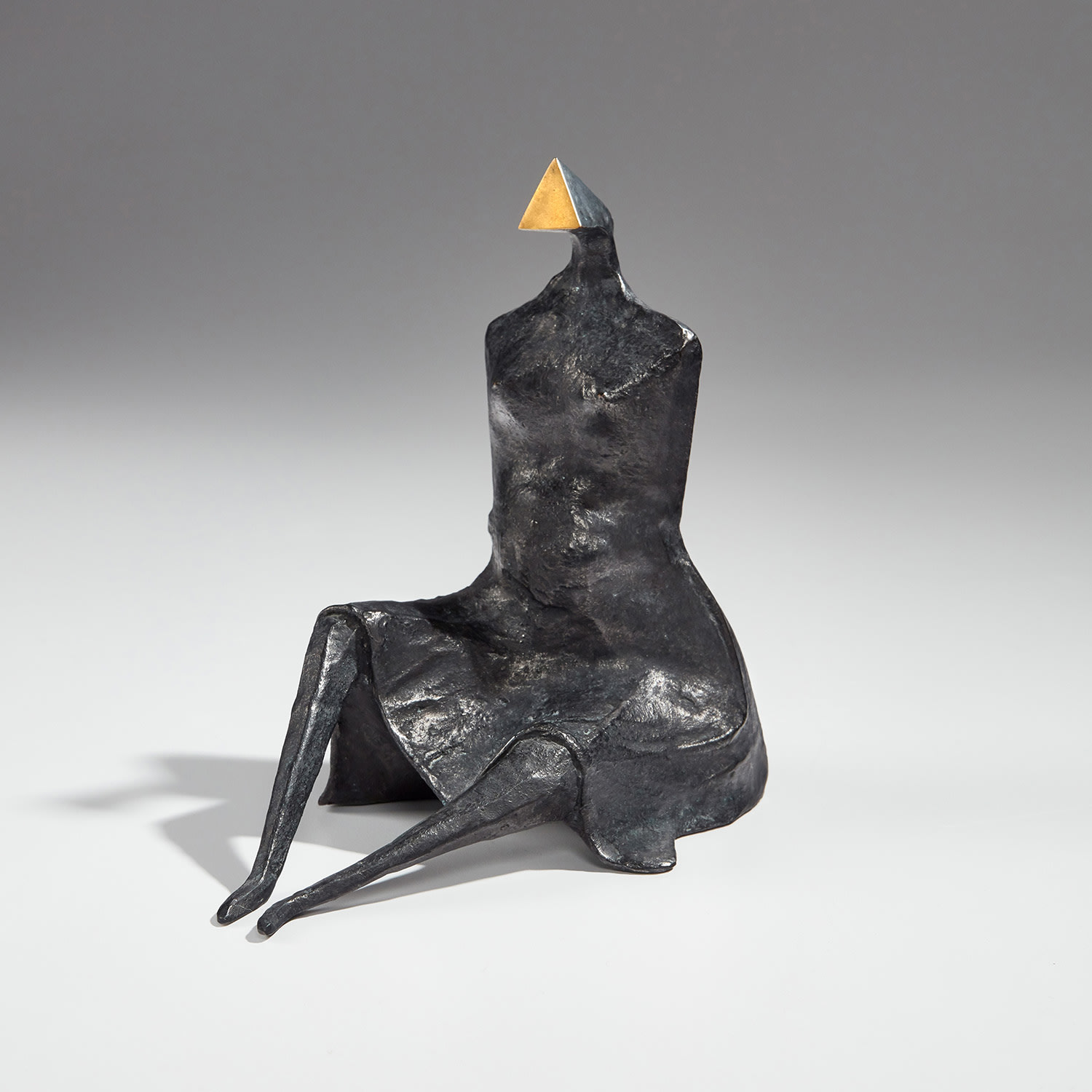
Lynn Chadwick
Sitting Figure I, 1982
They stood, they hunched, they balanced on points of tension. They felt alive in the way that ancient votive figures feel alive, stripped of ornament and charged with intention. The international moment of recognition came in 1956, when Chadwick was awarded the International Sculpture Prize at the Venice Biennale, one of the most prestigious honors in contemporary art. He was selected alongside artists of the generation reshaping sculpture globally, and the prize placed him firmly in the conversation that included Alberto Giacometti, whose attenuated figures shared something of Chadwick's existentialist charge, and Reg Butler, another British sculptor whose welded iron works drew comparisons from critics of the period.
The Venice recognition was not simply an institutional endorsement; it crystallized what many had sensed, that Chadwick was articulating a new formal language for representing the human condition in an age of anxiety and reconstruction. Through the 1960s and 1970s, Chadwick's practice deepened and diversified. Working from his home and studio at Lypiatt Park in Gloucestershire, a Cotswold estate he had acquired and which became inseparable from his identity as an artist, he moved into larger bronzes and began the great thematic series that define his mature achievement. The Cloaked Couples, the Sitting Figures, the Winged Figures, the Elektras: these sequences of works return obsessively to the drama of two figures together, of solitude in proximity, of shelter and exposure.
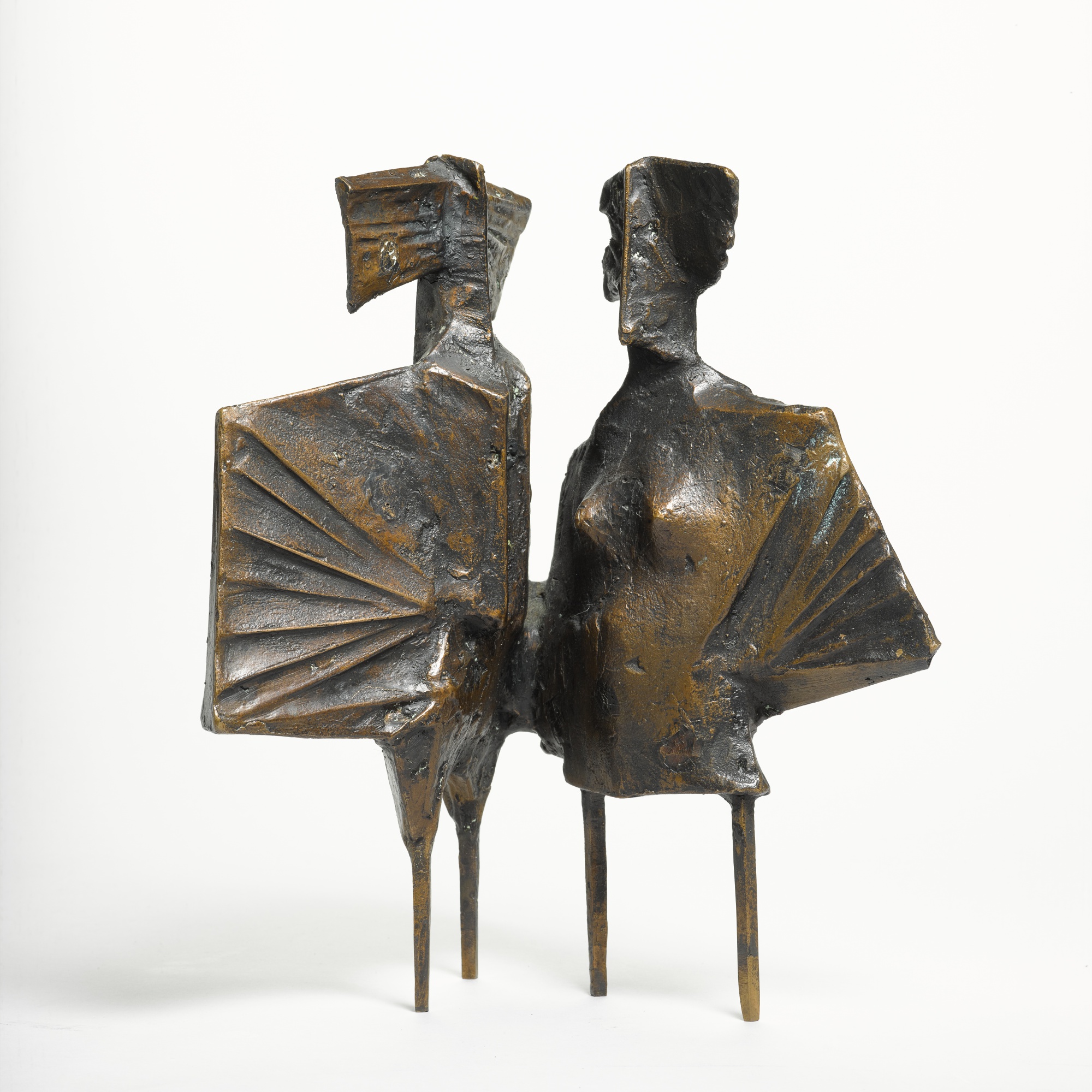
Lynn Chadwick
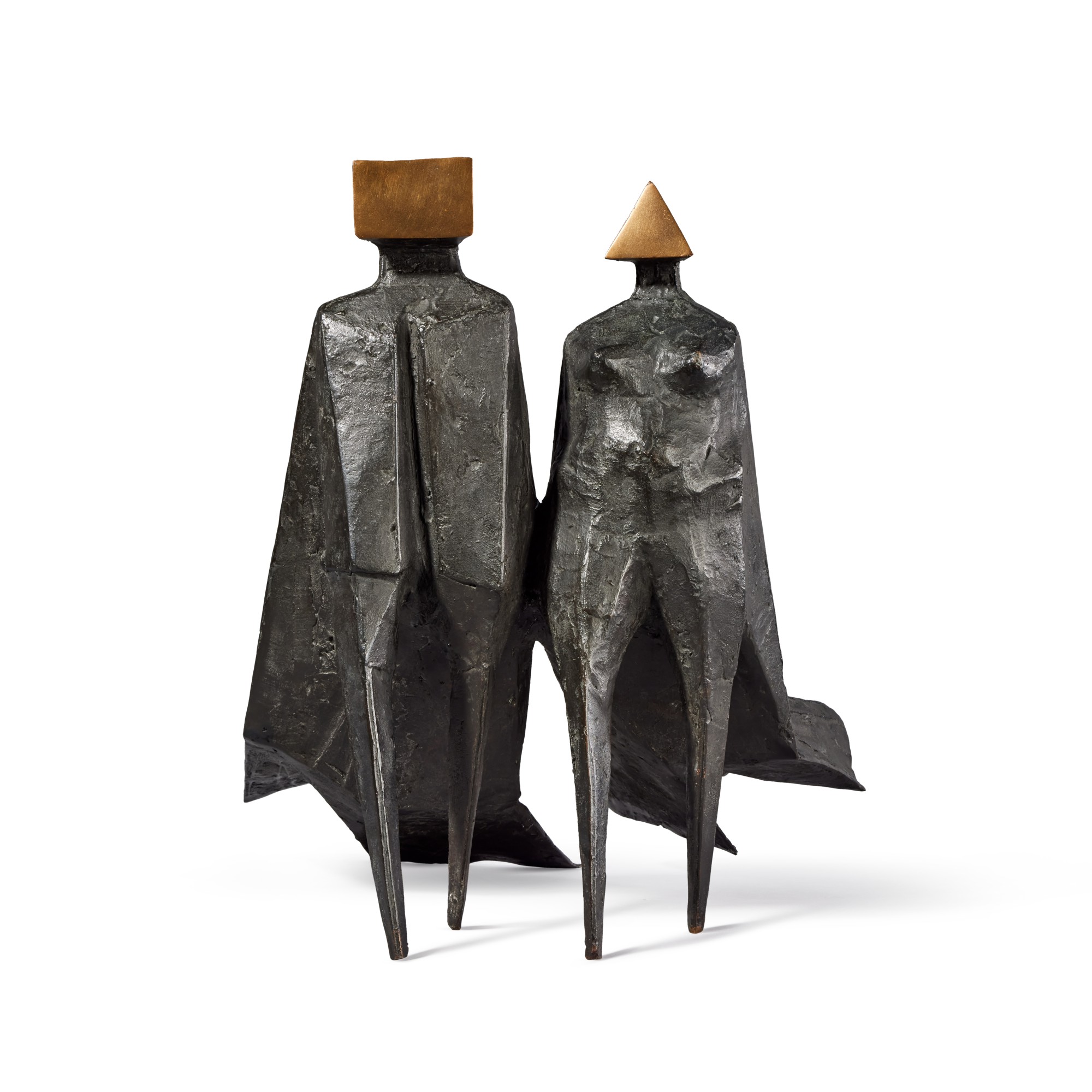
Cloaked Couple IV, 1977
The cloaked works in particular, in which two forms huddle beneath a shared carapace of metal, carry an extraordinary emotional weight. They are, in the deepest sense, sculptures about companionship and its ambiguities, about how we protect and are protected, about the geometry of intimacy. For collectors, the range of Chadwick's output offers genuine breadth of entry. His bronzes exist across scales, from intimate maquettes and table sculptures to monumental works intended for public or institutional settings.
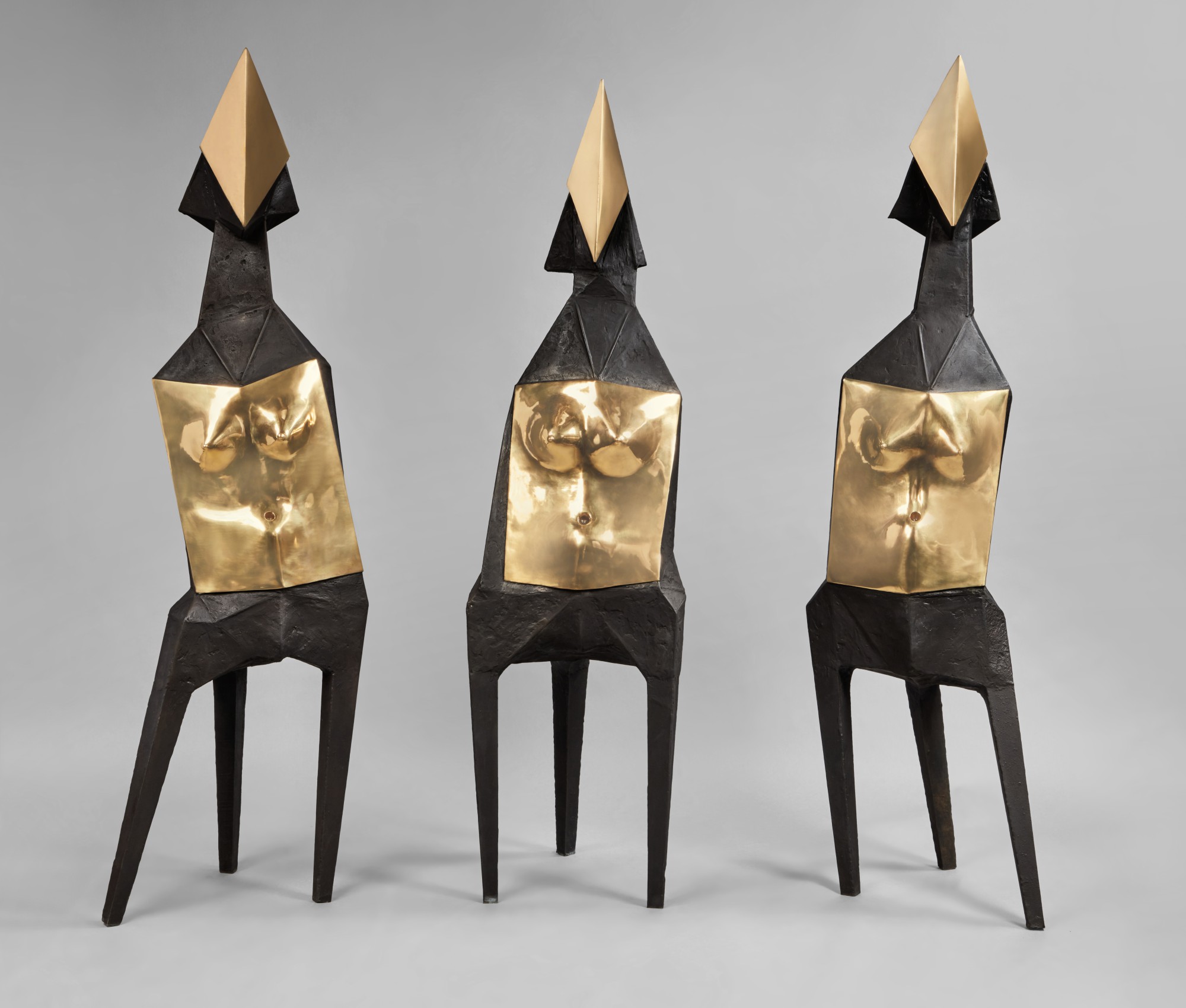
Works such as Winged Figures from 1970, Cloaked Couple IV from 1977, and Three Elektras from 1969 represent the sculptor at the height of his powers, and they appear with some regularity at auction houses including Christie's, Sotheby's, and Bonhams, where strong results reflect the sustained demand from both European and American collectors. Equally appealing to those approaching the market for the first time are his works on paper, including lithographs produced on fine papers such as Rives BFK, which bring the same formal intelligence of his sculpture into a more accessible register. Collectors who respond to postwar European sculpture more broadly, particularly those drawn to Giacometti, Eduardo Chillida, or Germaine Richier, consistently find that Chadwick's work holds in excellent company, sharing a commitment to the figure as a site of existential inquiry. What distinguishes Chadwick within postwar British sculpture is partly the consistency of his preoccupations and partly the sheer physical authority of his objects.
Lynn Chadwick
Three Elektras, 1969
Where some of his contemporaries worked toward increasingly conceptual territory, Chadwick remained committed to the encounter between viewer and object, to the kind of meaning that can only be made through mass, surface, and form in space. His late works, including pieces from the 1980s such as Sitting Figure I from 1982 and Maquette I Sitting Couple on Bench from 1984, show no diminishment of inventive energy. If anything, they achieve a kind of refined warmth, the angular severity softened by decades of accumulated feeling. Lynn Chadwick's legacy is secure and still unfolding.
There is a renewed appetite among younger collectors and curators for the great figurative sculptors of the mid twentieth century, artists who held the human form as the irreducible subject of art even as abstraction dominated critical conversation around them. Chadwick did not resist his moment; he shaped it. His bronzes stand in public squares, museum gardens, and private collections across the world, and each one poses the same quiet, insistent question that great sculpture always asks: what does it mean to be a body in the world, upright and finite, reaching toward something unnamed. In Chadwick's hands, the question is never answered, only beautifully, endlessly posed.
Explore books about Lynn Chadwick