Lynda Benglis
Lynda Benglis, Gloriously Uncontainable and Ever Vital
Artist Spotlight · The Collection Editorial
“I wanted to make something that had never been seen before, that had its own life.”
Lynda Benglis, Interview Magazine, 1974
In the spring of 2024, the Hepworth Wakefield in England mounted a significant survey of Lynda Benglis's work, drawing new attention to an artist whose practice has never stopped evolving across more than six decades. The exhibition reminded a broad international audience of something her most devoted collectors have long understood: Benglis is not a historical figure to be studied at a respectful distance but a living force whose newest pieces carry the same provocative energy as her earliest experiments. At 83, she remains one of the most consequential sculptors working in the world today, and the conversation around her legacy feels more alive and more urgent than ever. Benglis was born in 1941 in Lake Charles, Louisiana, a detail that feels significant when you stand before her most exuberant works.
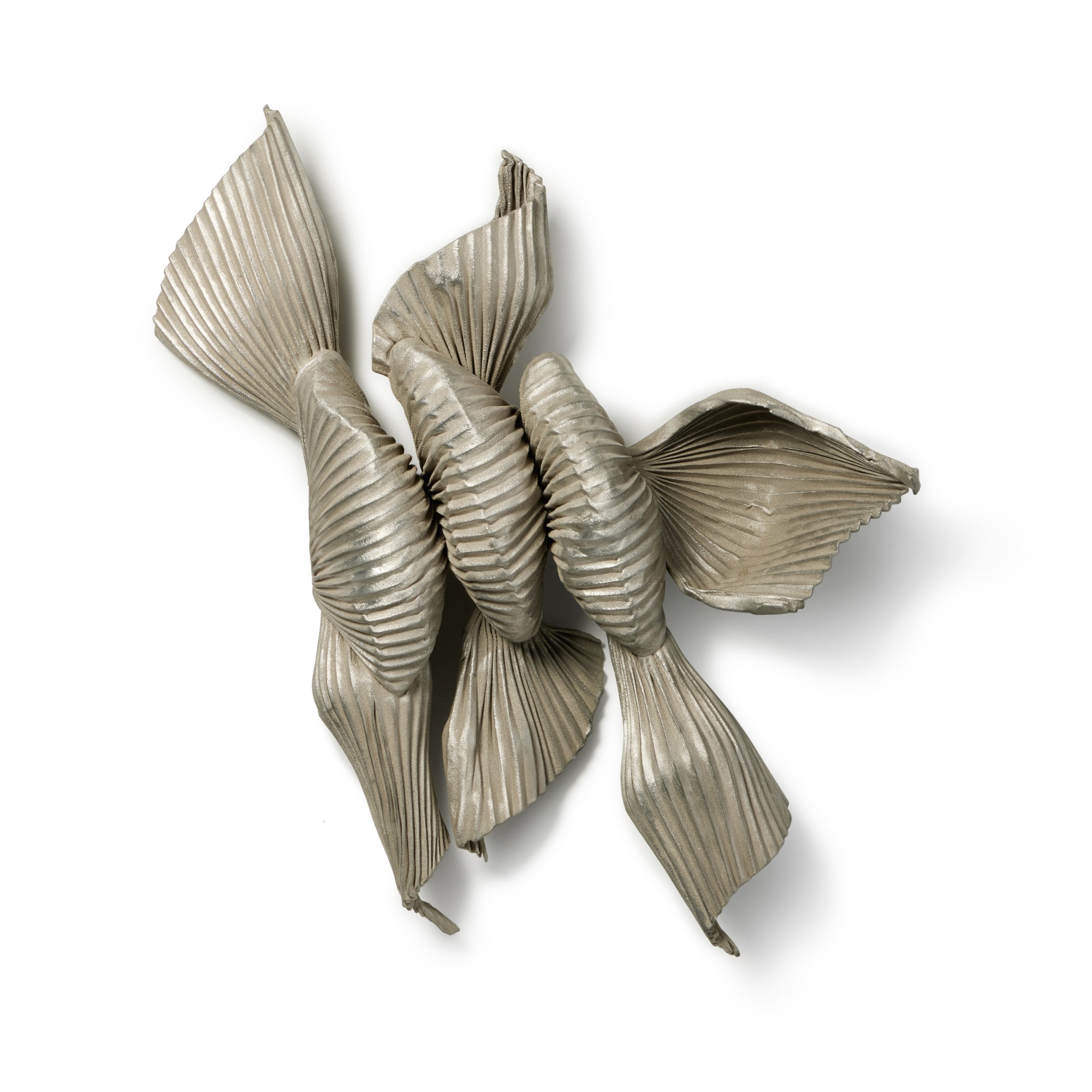
Lynda Benglis
Fedden, 1990
The American South, with its lush organic abundance and its deep traditions of craft, left a permanent imprint on her sensibility. She studied at the Newcomb College of Art in New Orleans before moving to New York in 1964, arriving at precisely the moment when the rigid hierarchies of Abstract Expressionism were beginning to crack open. The city was teeming with artists testing the limits of painting, sculpture, and performance, and Benglis moved through those circles with both curiosity and fierce independence. She was never content to simply belong to a movement.
She wanted to explode them. Her early breakthrough came through a radical reimagining of what painting could do in space. Beginning in the late 1960s, she poured latex and foam directly onto gallery floors, allowing gravity, viscosity, and time to become her collaborators. These poured works challenged the authority of the stretched canvas while also pushing back against the cool detachment of Minimalism, which dominated the art world at the time.
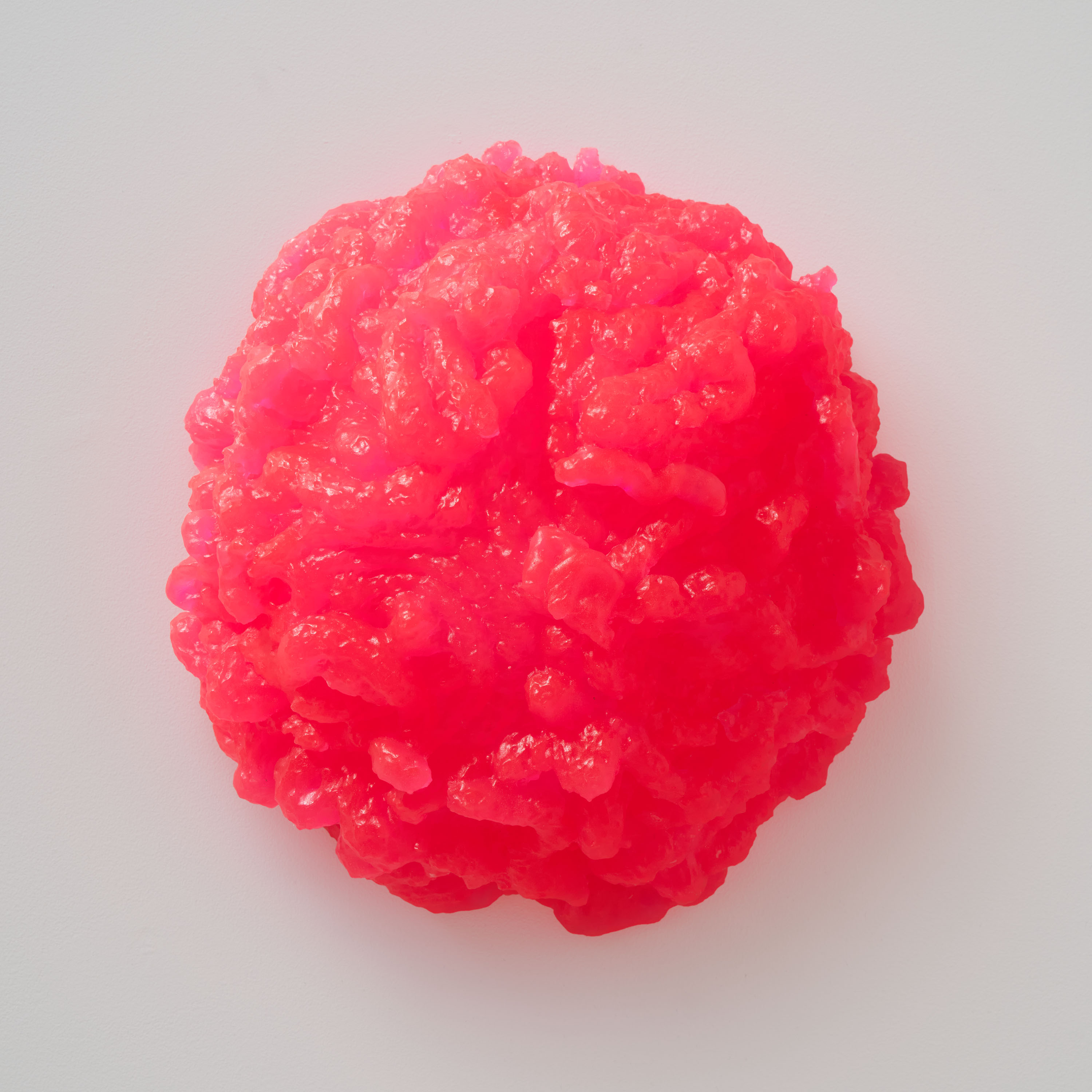
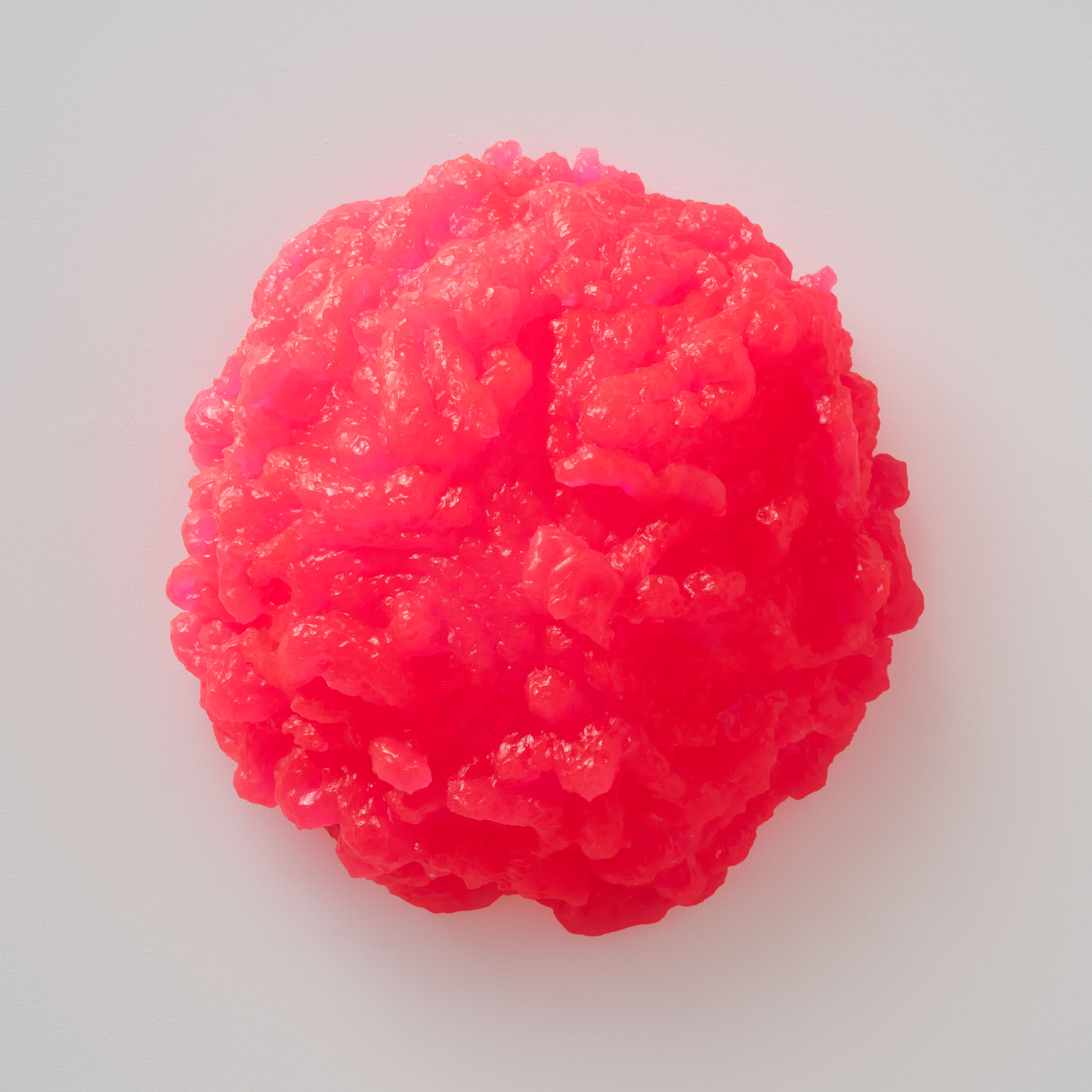
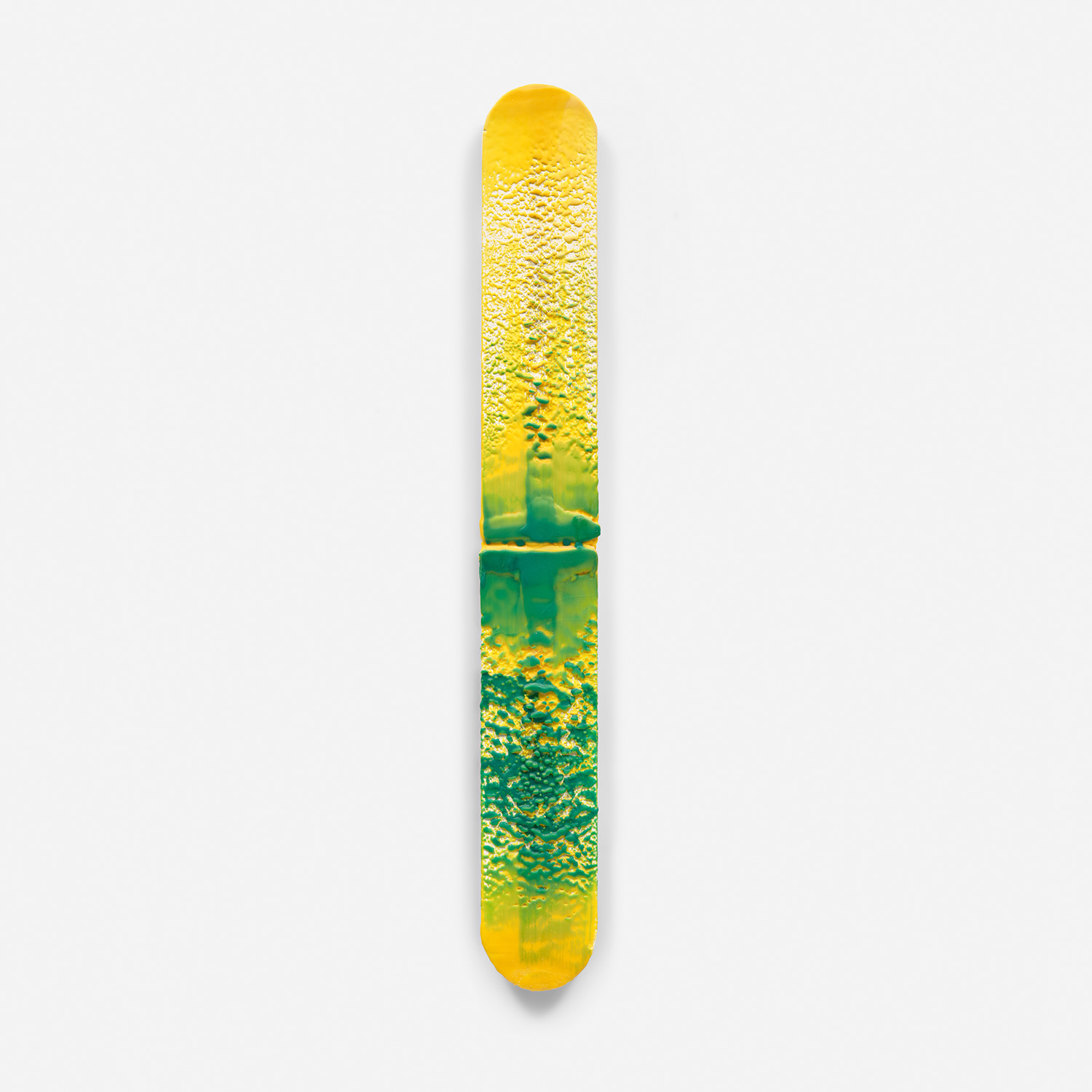
Lynda Benglis
Hot Lips, 2020
Where Minimalism prized restraint and industrial fabrication, Benglis embraced mess, color, and the unmistakable trace of the body. Her pours felt alive, even slightly dangerous, like matter caught in the act of becoming something. The Guggenheim Museum holds examples of this early work, and seeing them in person confirms their continued power to unsettle and delight in equal measure. From the 1970s onward, Benglis expanded her practice in directions that surprised even her most attentive admirers.
“The knot is a metaphor for something that holds things together while remaining in flux.”
Lynda Benglis, Artforum interview
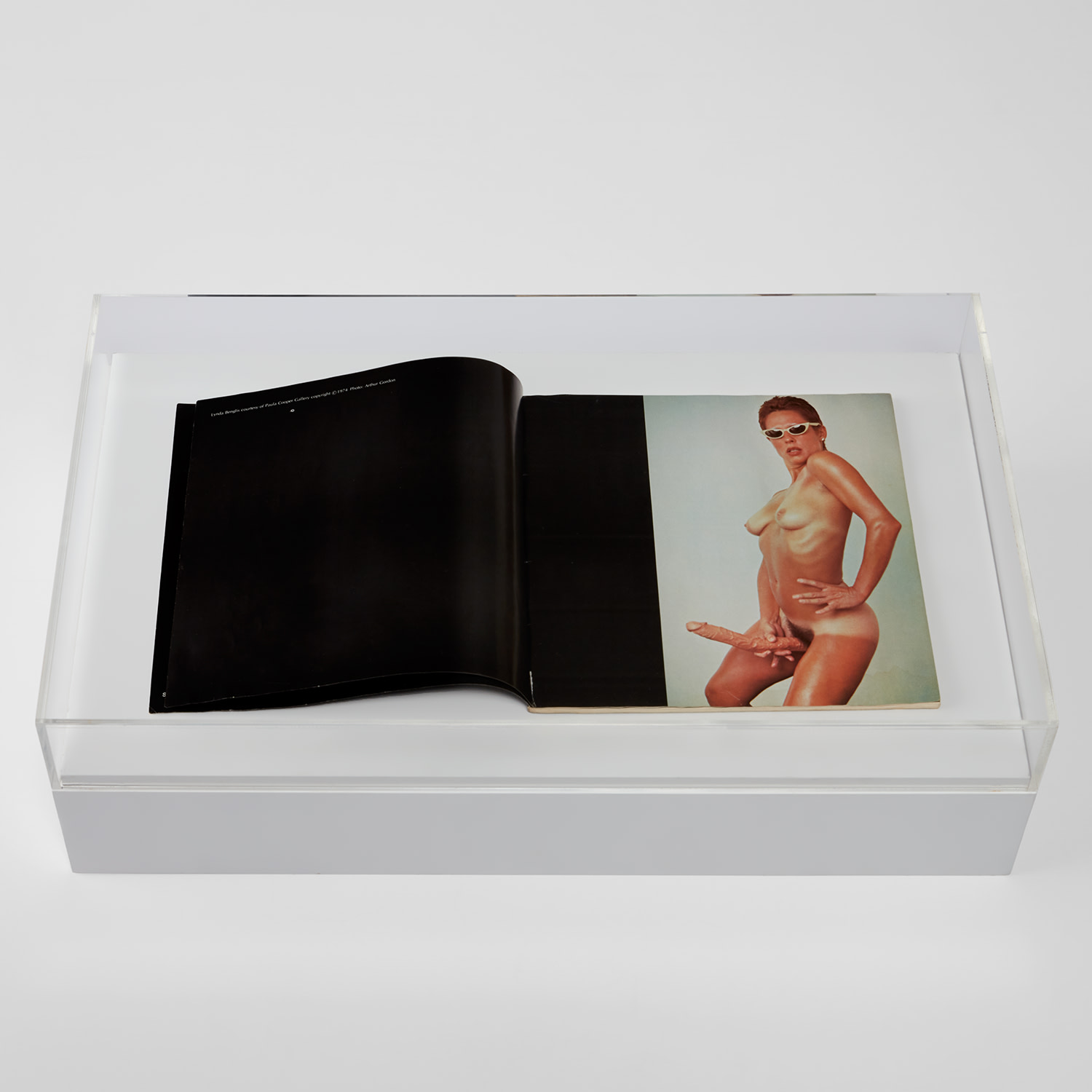
She turned to video art at a moment when almost no serious sculptors were doing so, producing works that examined desire, self representation, and the politics of the gaze with a wit that was years ahead of its time. Her 1974 advertisement placed in Artforum, in which she appeared nude holding a dildo, remains one of the most discussed and debated gestures in feminist art history, a piece of calculated provocation that was also a genuine act of courage. The work known as Artforum vol. 13, no.
Lynda Benglis
Devil's Bath, 1993
3, representing that intervention, has become an important collectible document of a pivotal cultural moment, cherished by those who understand how fundamentally it shifted the conversation around women, sexuality, and artistic authority. By the 1980s and 1990s, Benglis had arrived at the material vocabulary that defines much of her most celebrated mature work. Her knotted and pleated metal sculptures, formed from wire mesh and then coated with sprayed metals such as zinc, copper, and aluminum, are extraordinary achievements of both technical invention and formal beauty. Works like Moretti from 1988, in sprayed zinc and copper over stainless steel wire mesh, and Fedden from 1990, in copper and babbitt on stainless steel mesh, demonstrate her mastery of surfaces that seem simultaneously ancient and futuristic, geological and bodily.
The knot, a recurring form across her practice, reads as a kind of signature philosophy made physical: the knot has no beginning and no end, it holds tension in dynamic equilibrium, and it refuses to resolve itself into a simple shape. These sculptures reward patient looking. The more time you spend with them, the more they give back. Her wax works from the 1990s, including Devil's Bath, Flesh Spot, and Elephant Butte, all created with purified pigmented beeswax and dammar resin, occupy a very different register but are equally compelling.
Lynda Benglis
Artforum vol. 13, no. 3
The encaustic tradition stretches back to ancient Egypt, and Benglis was drawn to it precisely because of its alchemical qualities: the way beeswax holds color with an almost luminous depth, the way it preserves the evidence of every gesture made upon its surface. These works have a warmth and an intimacy that contrasts beautifully with the cool metallic drama of her wire mesh pieces, and collectors who have the chance to live with them report that they change throughout the day as the light shifts around them. On the market, Benglis has attracted sustained and serious collector interest for decades, with her work held in major institutional collections including the Museum of Modern Art in New York, the Whitney Museum of American Art, the Smithsonian American Art Museum, and the Walker Art Center in Minneapolis. Her prints and works on paper, including lithographs with gold leaf such as Dual Nature (Blue) I, offer an accessible entry point for new collectors, while her large metal sculptures represent significant investments that have demonstrated consistent strength at auction.
Those advising collectors often note that Benglis sits at a fascinating intersection: she is canonical enough to carry institutional validation yet still undervalued relative to some of her male contemporaries from the same generation. Works like Weaver, in aluminum with gold leaf, exemplify the kind of piece that looks extraordinary in both private residences and corporate spaces, and her newer work such as Hot Lips from 2020 confirms that her creative appetite shows no signs of diminishing. In the broader context of art history, Benglis is most productively understood alongside artists who similarly refused easy categorization. Her relationship to process connects her to Eva Hesse, whose organic latex and fiberglass works share a fascination with material vulnerability.
Her feminist interventions place her in dialogue with Hannah Wilke and Carolee Schneemann. Her engagement with painting, sculpture, and new media simultaneously anticipates the interdisciplinary ambitions of younger generations working today. Yet Benglis remains irreducibly herself, an artist who absorbed every influence and transformed it into something wholly original. What makes Benglis so important now is not merely her historical significance, though that alone would be enough to guarantee attention.
It is the quality of aliveness that radiates from her work, the sense that each piece was made by someone genuinely excited by the possibilities of form, material, and meaning. To collect Benglis is to bring that energy into your life and to participate in one of the great ongoing conversations in American art. There are very few artists of her generation whose work continues to feel this contemporary, this necessary, and this full of joy.
Explore books about Lynda Benglis