Lucy McKenzie
Lucy McKenzie Makes the Everyday Utterly Extraordinary
Artist Spotlight · The Collection Editorial
When Lucy McKenzie exhibited at the Venice Biennale, the art world took notice in the way it reserves for artists who have been quietly, rigorously building something genuinely singular. Her presence at that most scrutinised of international stages felt less like an arrival than a confirmation: here was a painter whose intellectual commitments and formal gifts had been compounding for years, producing a body of work that resists easy categorisation while remaining, at every turn, deeply pleasurable to spend time with. That combination of conceptual rigour and sensory generosity is rare, and collectors who have encountered her work firsthand tend to describe a feeling of being simultaneously educated and seduced. McKenzie was born in Glasgow in 1977, and the city left a permanent mark on her artistic sensibility.
Lucy McKenzie
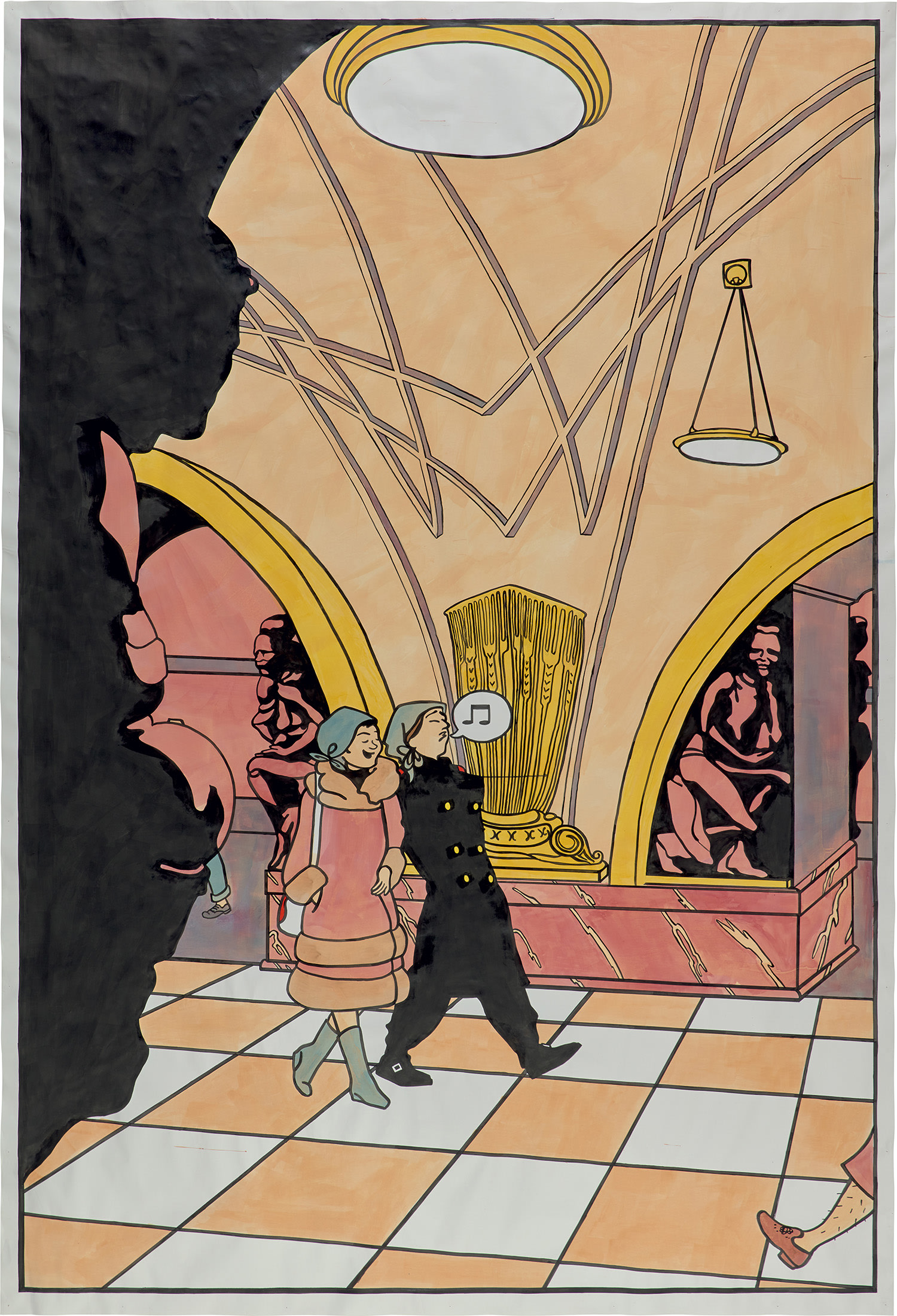
Lucy and Paulina in the Moscow Metro (Ploschad Revolutsii), 2005
Glasgow in the 1990s was an extraordinary place to be a young artist, crackling with the energy of a scene that would go on to shape British and international contemporary art for decades. The Glasgow School of Art provided her formal training, but the broader cultural atmosphere of the city, its deep relationship with music, graphic design, subcultural communities, and a particular strand of politically engaged creative practice, gave her work its characteristic fusion of the rigorous and the exuberant. She absorbed lessons from that environment that no curriculum alone could have provided. From the beginning, McKenzie demonstrated an unusual willingness to move across disciplines and registers.
Her early paintings showed a command of trompe l'oeil technique that recalled the great decorative traditions of European art, yet she deployed that skill not in service of academic nostalgia but as a means of asking sharp questions about illusion, authorship, and the cultural weight of surface. She has long been interested in the history of craft and decoration as gendered categories, fields that have been systematically devalued precisely because of their associations with women's labour and domestic space. By bringing these traditions into dialogue with conceptual and feminist frameworks, she recovers their complexity and insists on their seriousness. Her collaborative project Atelier E.
Lucy McKenzie
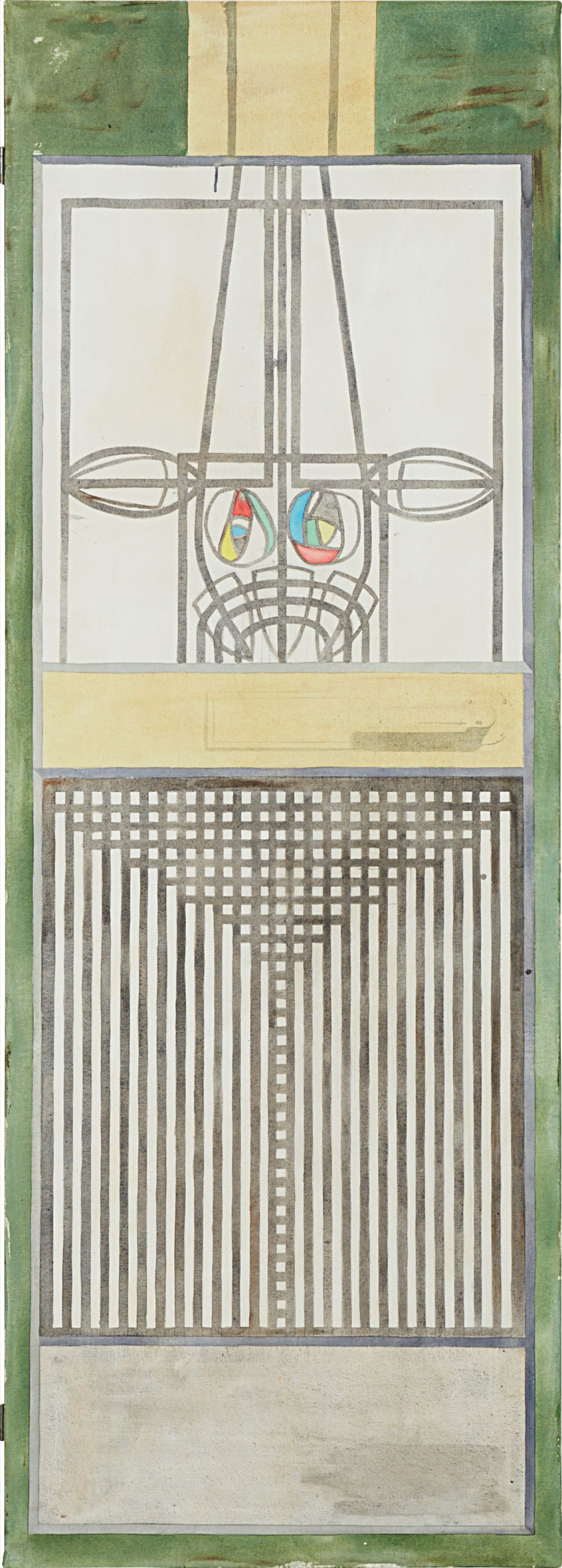
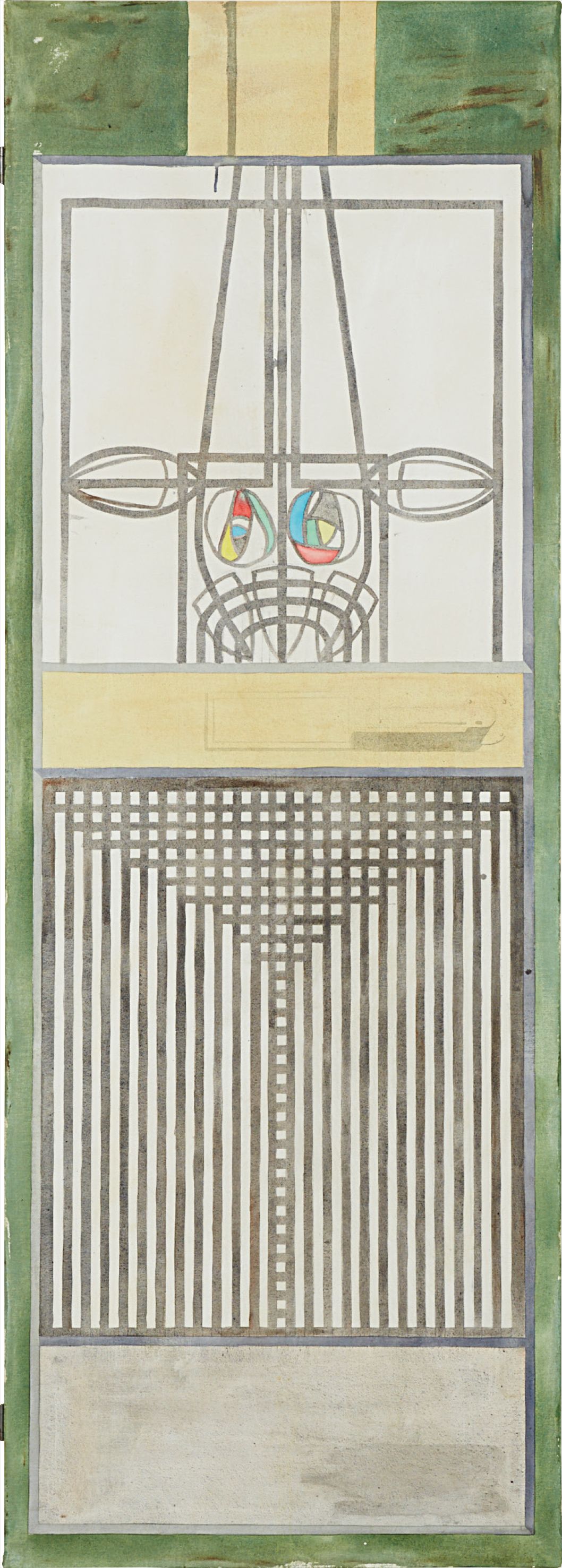
Door 2, 2000
B., developed alongside the fashion designer Beca Lipscombe, extended this thinking into the world of fashion and display. The project produced clothing, interiors, and shop fittings that blurred the line between artwork and functional object, between gallery and boutique, between the handmade and the commercially produced. This collaborative dimension is central to understanding McKenzie: she has never been interested in the myth of the solitary genius, preferring instead to think about how creative knowledge is transmitted, shared, and transformed through collective endeavour.
Her approach to collaboration is itself a kind of argument about how art and culture actually work. Among the works available on The Collection, "Lucy and Paulina in the Moscow Metro (Ploschad Revolutsii)" from 2005 stands as one of the most compelling entries into her practice. Executed in acrylic and ink on paper, the work places two figures within the monumental Soviet architecture of the Moscow Metro, a space that is itself a kind of totalising aesthetic project, a built argument about the relationship between the state, beauty, and the everyday citizen. McKenzie's treatment of this space is tender and knowing simultaneously, finding in its heroic decorative ambition something that speaks to her broader fascination with how official culture attempts to shape feeling and identity.
Lucy McKenzie
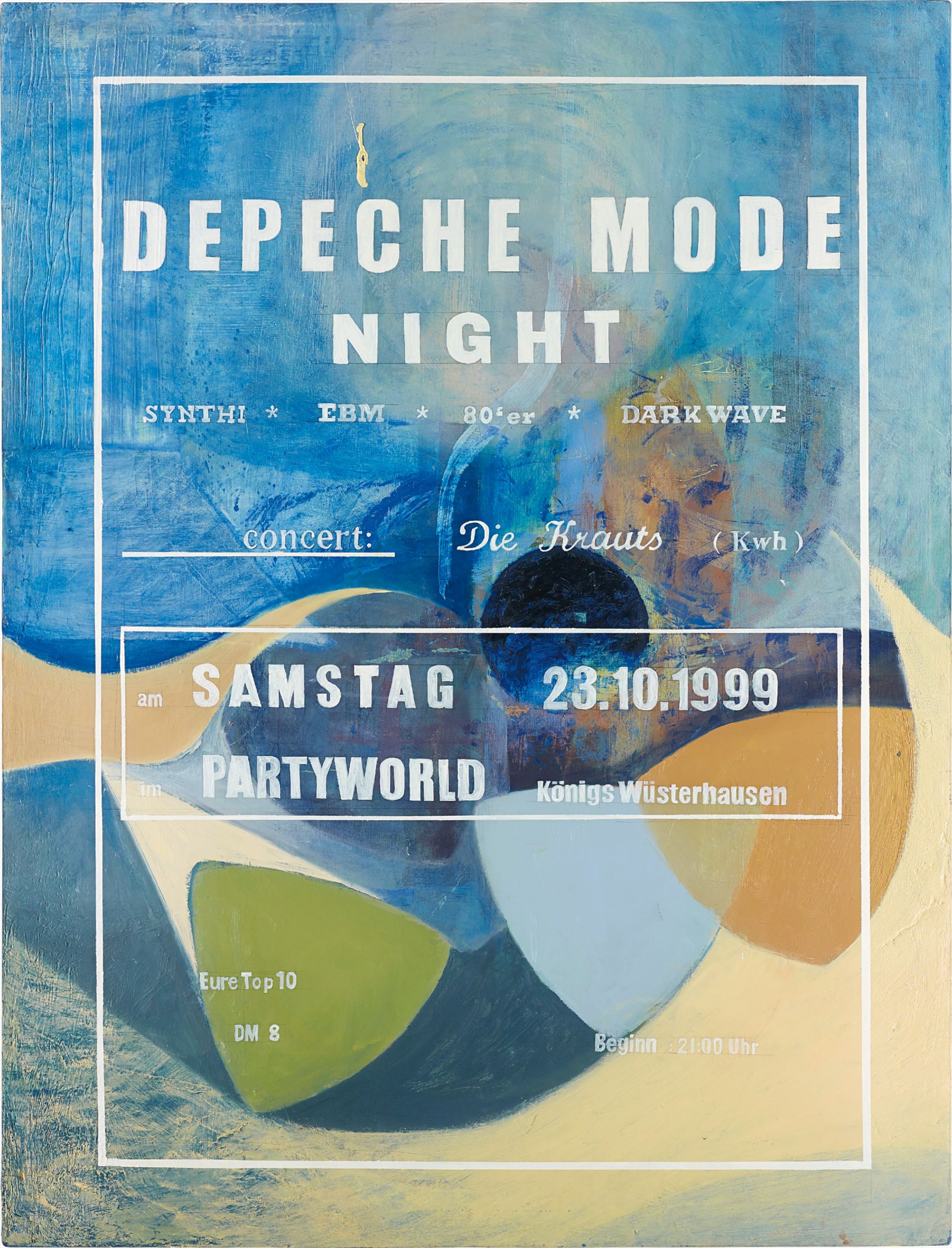
Depeche Mode Night
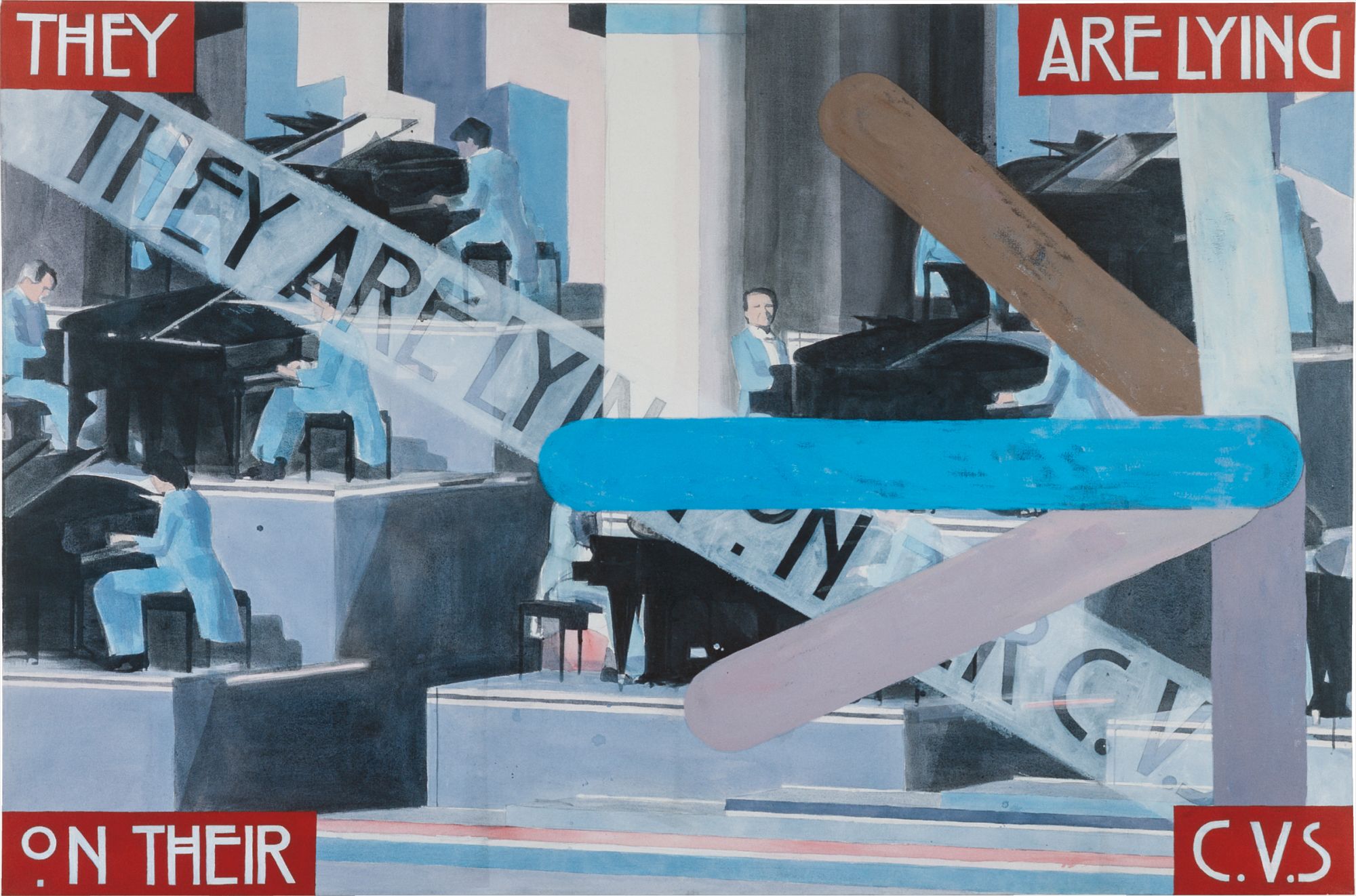
"Door 2" from 2000, acrylic on canvas with actual metal hinges, is a characteristic exercise in productive confusion: a painted door that is also a canvas, an object that insists on being both representation and thing. The hinges are not painted but real, and that detail carries an enormous amount of conceptual weight, collapsing the distance between image and object in a way that is both witty and philosophically pointed. "Depeche Mode Night" and "They're Lying on their CV's" further demonstrate the range of McKenzie's cultural references, from the subcultural nostalgia of post punk Britain to the dry comedy of contemporary professional life. Across all these works, her paint handling is assured and her compositional intelligence is evident.
From a collecting perspective, McKenzie occupies a genuinely distinctive position in the current market. She is an artist whose work has been validated by major institutional support, including exhibitions at the Stedelijk Museum in Amsterdam and the Carnegie Museum of Art in Pittsburgh, contexts that place her firmly within serious international contemporary art discourse. Yet her work retains the intimacy and specificity that makes it feel personal rather than institutional. Collectors drawn to artists working at the intersection of painting, feminism, and cultural history will find McKenzie's practice richly rewarding.
Lucy McKenzie
They're Lying on their CV's
Her works on paper in particular offer an entry point that is accessible without being secondary to her larger canvases. The market for her work has been growing steadily among collectors who understand that the artists reshaping the conversation about decoration, craft, and European cultural memory are among the most significant voices of her generation. McKenzie's closest affinities in art historical terms are with artists who have similarly interrogated the boundaries between fine art and applied art, between high culture and subcultural life. One thinks of artists such as Goshka Macuga, whose archival and collaborative instincts echo McKenzie's own, or of the earlier German painter Sigmar Polke, whose promiscuous mixing of cultural registers and his scepticism about painterly hierarchies clearly anticipates McKenzie's approach.
Her interest in trompe l'oeil places her in dialogue with a much longer tradition stretching back through the history of European illusionistic painting, yet she wears that learning lightly, using it as a tool rather than a credential. What makes McKenzie matter today, and what will ensure that her work continues to matter, is the precision and integrity with which she pursues her concerns. She is not an artist who follows fashion, which means that the cultural questions she has spent her career asking, about gender and decoration, about subcultural memory and official aesthetics, about what gets valued and what gets dismissed in the history of art, feel more urgent now than when she first posed them. In an art world that increasingly prizes the theatrical and the immediately legible, McKenzie's patient, layered intelligence is a genuine counterweight.
To own her work is to invest in a practice that rewards looking, thinking, and looking again.
Explore books about Lucy McKenzie