Lowell Blair Nesbitt
Lowell Nesbitt, Where Nature Becomes Radiant
Artist Spotlight · The Collection Editorial
There is a moment, standing before one of Lowell Blair Nesbitt's large scale flower paintings, when the eye simply stops arguing with the canvas. A single iris, rendered with almost surgical fidelity yet humming with emotional heat, fills the entire picture plane. The effect is neither cold nor clinical. It is, unexpectedly, overwhelming.
Lowell Blair Nesbitt
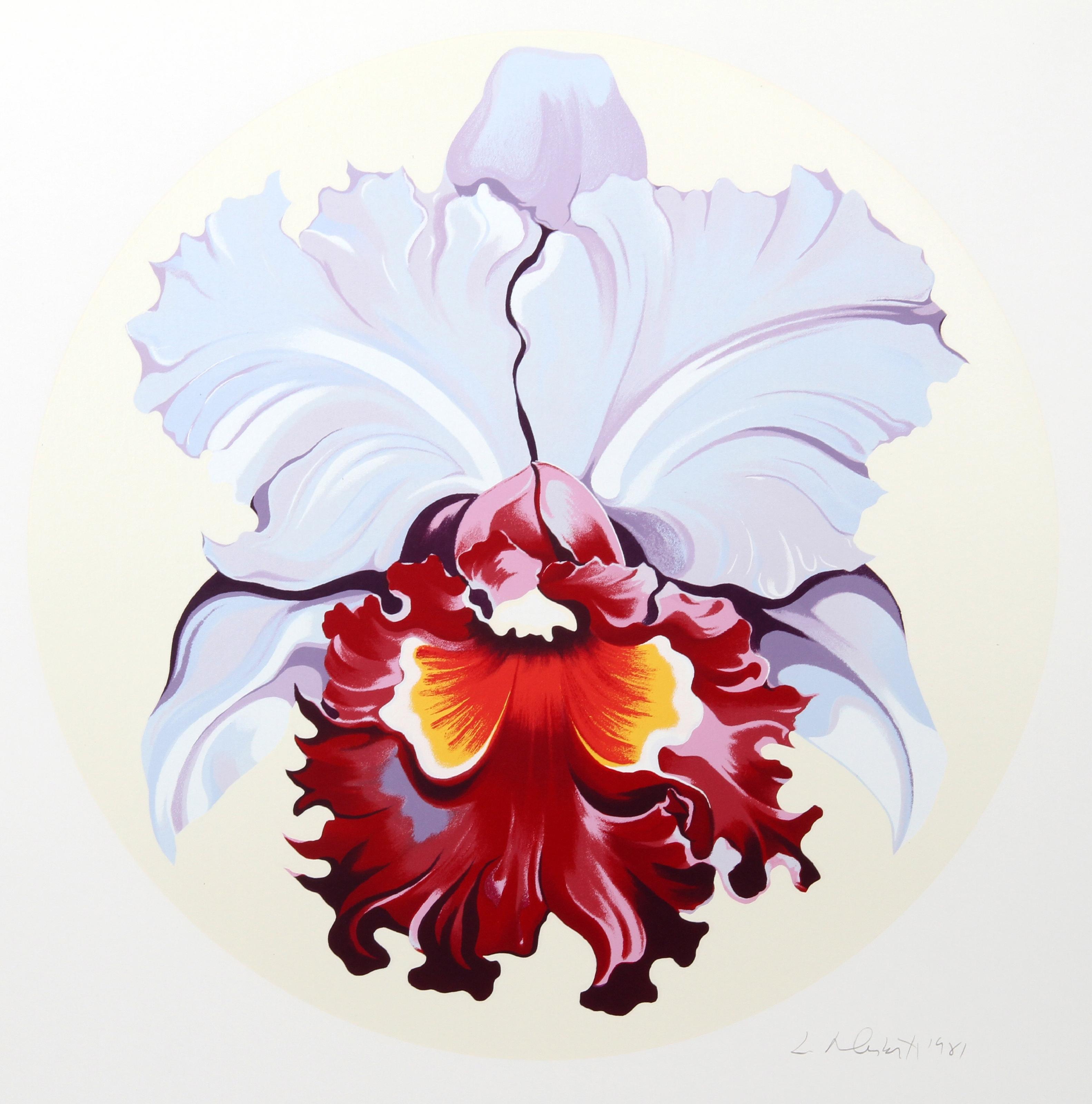
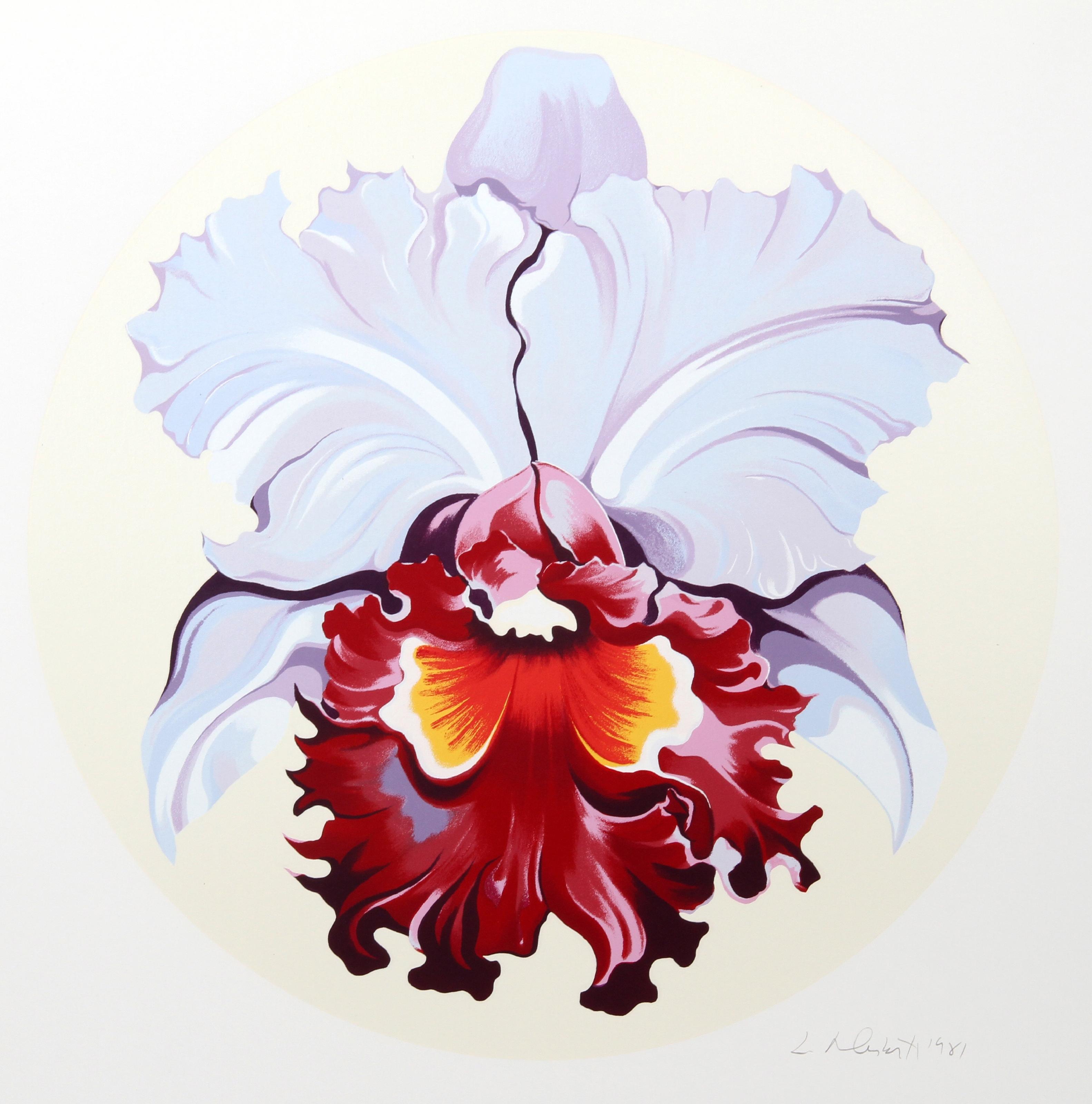
Yellow and Blue Cattleya Orchid
Decades after his most celebrated works were made, Nesbitt's paintings continue to exert this pull on viewers and collectors alike, a testament to an artist who understood that the most intimate subjects can carry the greatest monumental weight. Lowell Blair Nesbitt was born in Baltimore, Maryland in 1933, a city with a rich tradition of figurative painting and institutional support for the arts through institutions like the Maryland Institute College of Art, where Nesbitt studied and developed his foundational skills. He later pursued studies at the Royal College of Art in London, an experience that opened his eyes to European traditions of botanical illustration while sharpening his instinct for scale and surface. These early years gave him an education that was simultaneously rigorous and expansive, grounding him in draftsmanship while encouraging him to look beyond conventional genre boundaries.
Nesbitt's artistic development in the 1960s placed him at an intriguing crossroads in American art. The decade belonged, in the public imagination, to Pop Art and the first waves of Minimalism, yet Nesbitt was charting a different course. He began producing large, close up depictions of flowers and plants that shared the bold frontality and graphic clarity of Pop while retaining an almost obsessive attention to natural form. His approach anticipated and in some ways paralleled the Photorealist movement that would gain momentum through the late 1960s and into the 1970s, aligning him with artists who believed that meticulous observation could itself become a radical act.
Lowell Blair Nesbitt
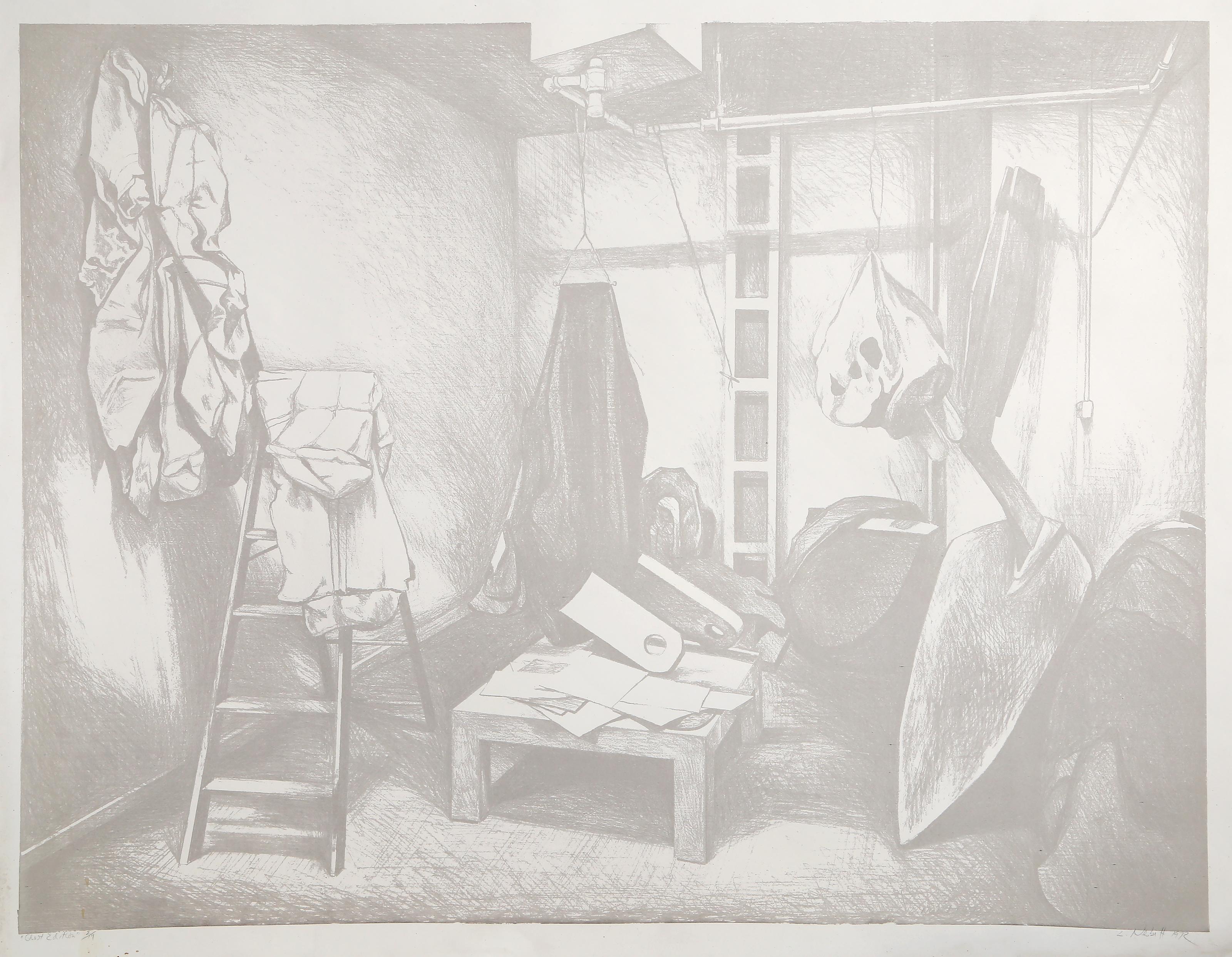
Claes Oldenburg Studio (Ghost Edition)
His canvases grew progressively larger, the flowers ever more dominant, as if the work were insisting on its own seriousness. By the 1970s Nesbitt had established himself as one of the most distinctive voices in American botanical and floral painting. Works like his iris series and his celebrated orchid paintings demonstrated his ability to translate the specific textures and luminosities of living plants into paint with breathtaking precision while never sacrificing warmth or sensuality. His "Iris on Blue III" is a masterclass in this approach: the violet and purple tones of the bloom are set against a resonant blue ground that transforms a natural subject into something approaching pure abstraction.
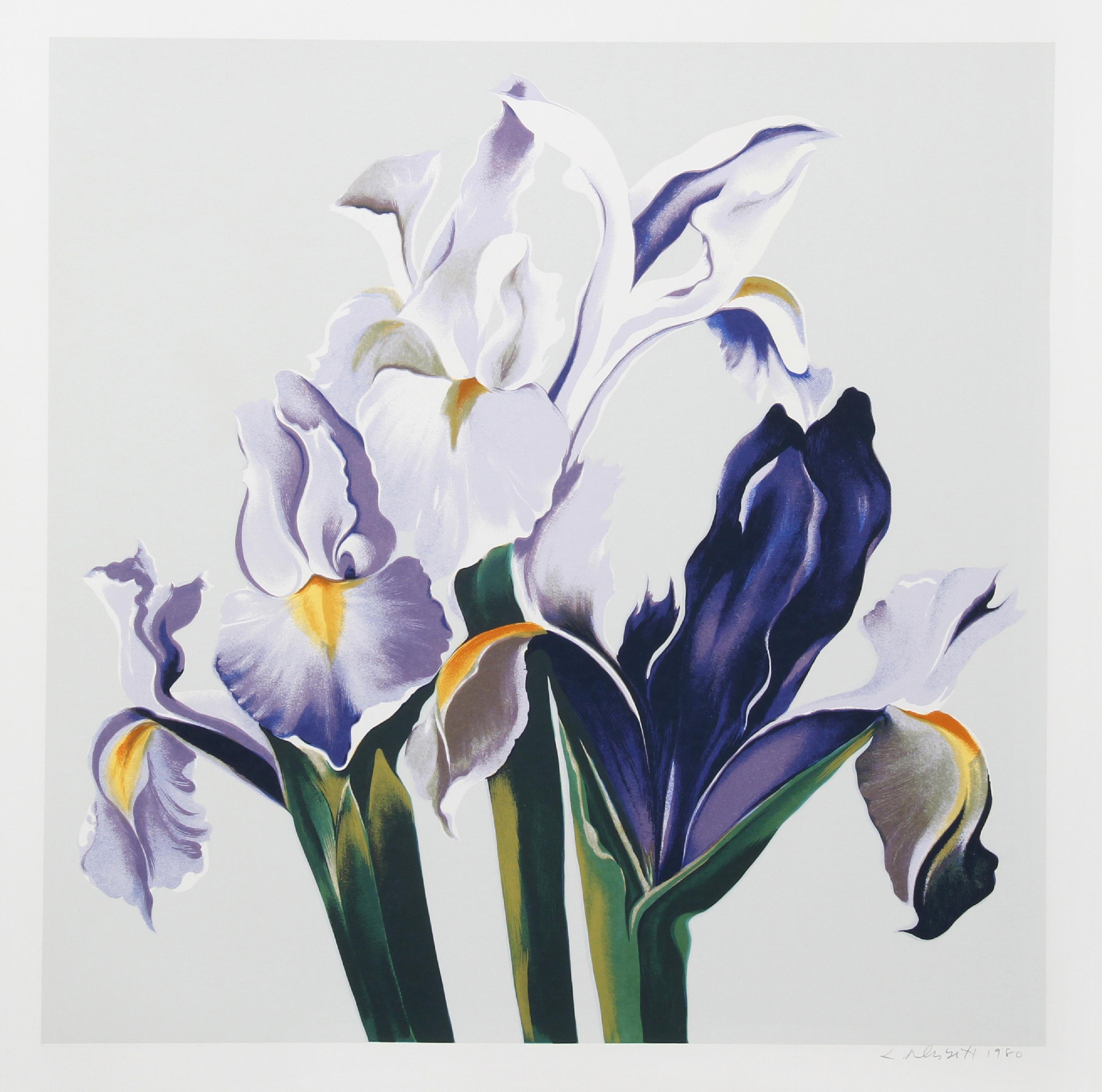
Similarly, "Yellow and Blue Cattleya Orchid," available as a screenprint, reveals how effectively his compositions translated across media, his bold outlines and confident color relationships lending themselves beautifully to the graphic demands of printmaking. These works found enthusiastic audiences in New York galleries and beyond, attracting collectors who responded to their combination of technical virtuosity and emotional directness. Nesbitt's screenprint editions deserve particular attention from collectors today. Works such as "Three Irises" and "Iris on Blue III" in screenprint form represent an accessible entry point into his practice without sacrificing any of the visual authority that defines his larger painted works.
Lowell Blair Nesbitt
Three Irises
Screenprinting suited Nesbitt's aesthetic instincts well: the process rewards bold contour, flat areas of saturated color, and strong compositional decisions, all qualities central to his vision. "Claes Oldenburg Studio (Ghost Edition)" offers a revealing glimpse into another dimension of his work and his place within the New York art world of the 1960s and 1970s, connecting him to the broader community of artists who were redefining American visual culture in that transformative period. For collectors building a considered collection, these works offer both historical resonance and enduring visual pleasure. The market for Nesbitt's work has shown consistent appreciation among collectors who prize American art of the late twentieth century.
His paintings and prints appear regularly at auction and through secondary market dealers, with his floral works commanding particular attention. Collectors are drawn to the clarity of his vision, the quality of his execution, and the sense that his work occupies a genuinely singular position in art history. He was not simply a botanical illustrator elevated to fine art, nor was he merely a Photorealist with a fondness for flowers. He was an artist who used the flower as a philosophical instrument, exploring questions of perception, scale, and the relationship between the living world and its representation.
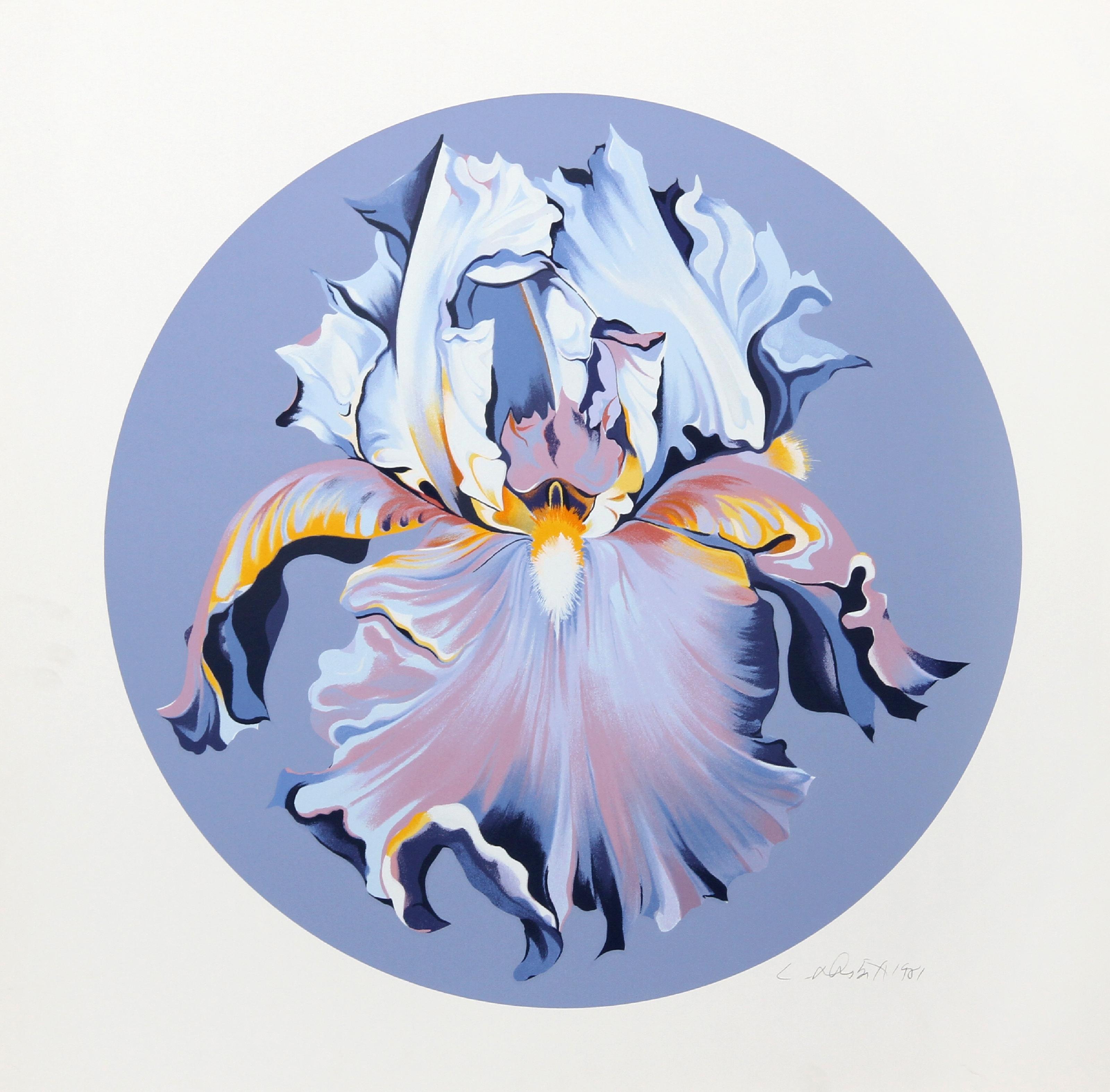
Lowell Blair Nesbitt
Iris on Blue III
Works in good condition with strong provenance are reliably sought after, and his prints in particular represent excellent value for collectors at multiple levels of engagement. Within the broader arc of American art history, Nesbitt belongs to a lineage that stretches from Georgia O'Keeffe's monumental flower paintings through the Photorealist generation toward the present moment. Like O'Keeffe, he understood that scale transforms subject matter, that a flower enlarged to fill a six foot canvas is no longer merely a flower but a landscape, an atmosphere, a world. His contemporaries in Photorealism, artists like Richard Estes and Chuck Close, pursued similar ideas of heightened optical fidelity applied to urban and figural subjects.
Nesbitt brought that same precision and seriousness to the natural world. Artists who share his sensibility, combining rigorous observation with painterly ambition in the service of natural subjects, include Alex Katz in his more distilled figural works and the broader tradition of American artists who have found in close looking a kind of spiritual discipline. Lowell Blair Nesbitt passed away in 2007, leaving behind a body of work that grows more interesting with each passing year. His flowers have not aged.
They remain as urgent and alive as they were when first exhibited, proof that genuine artistic vision transcends the fashions of any particular moment. As collectors and institutions revisit the full breadth of American art in the second half of the twentieth century, Nesbitt's contribution is increasingly recognized as essential rather than peripheral. He showed that beauty, rendered with complete commitment and seriousness, is not a lesser ambition. It is, in its own way, the most demanding ambition of all.