Louise Giovanelli
Louise Giovanelli, Painting Light Into Being
Artist Spotlight · The Collection Editorial
Something shifted in the British art world when Louise Giovanelli's canvas Entr'acte appeared at the 2022 John Moores Painting Prize exhibition at the Walker Art Gallery in Liverpool. The work, depicting a shimmering theatre curtain rendered in cascading folds of deep crimson and gold, stopped visitors in their tracks. It went on to win the prize outright, one of the most prestigious awards in British painting, and announced to a wider audience what collectors and gallerists in Manchester and London had already understood for several years: Giovanelli is one of the most technically gifted and conceptually assured painters working in Britain today. Born in 1993, Giovanelli grew up in the north of England and completed her fine art training in Manchester, a city whose industrial history and distinct cultural identity have quietly shaped her sensibility.
Louise Giovanelli
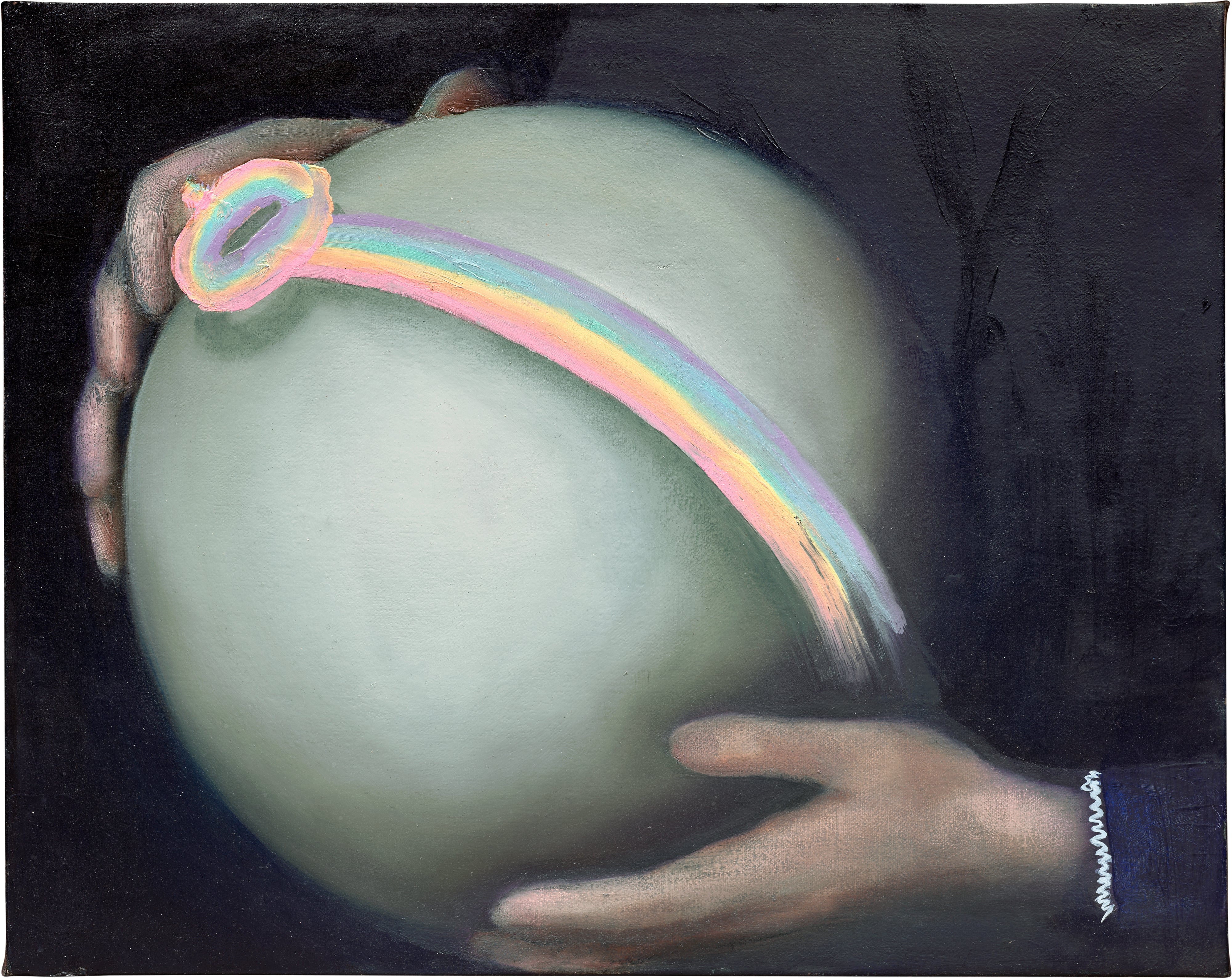
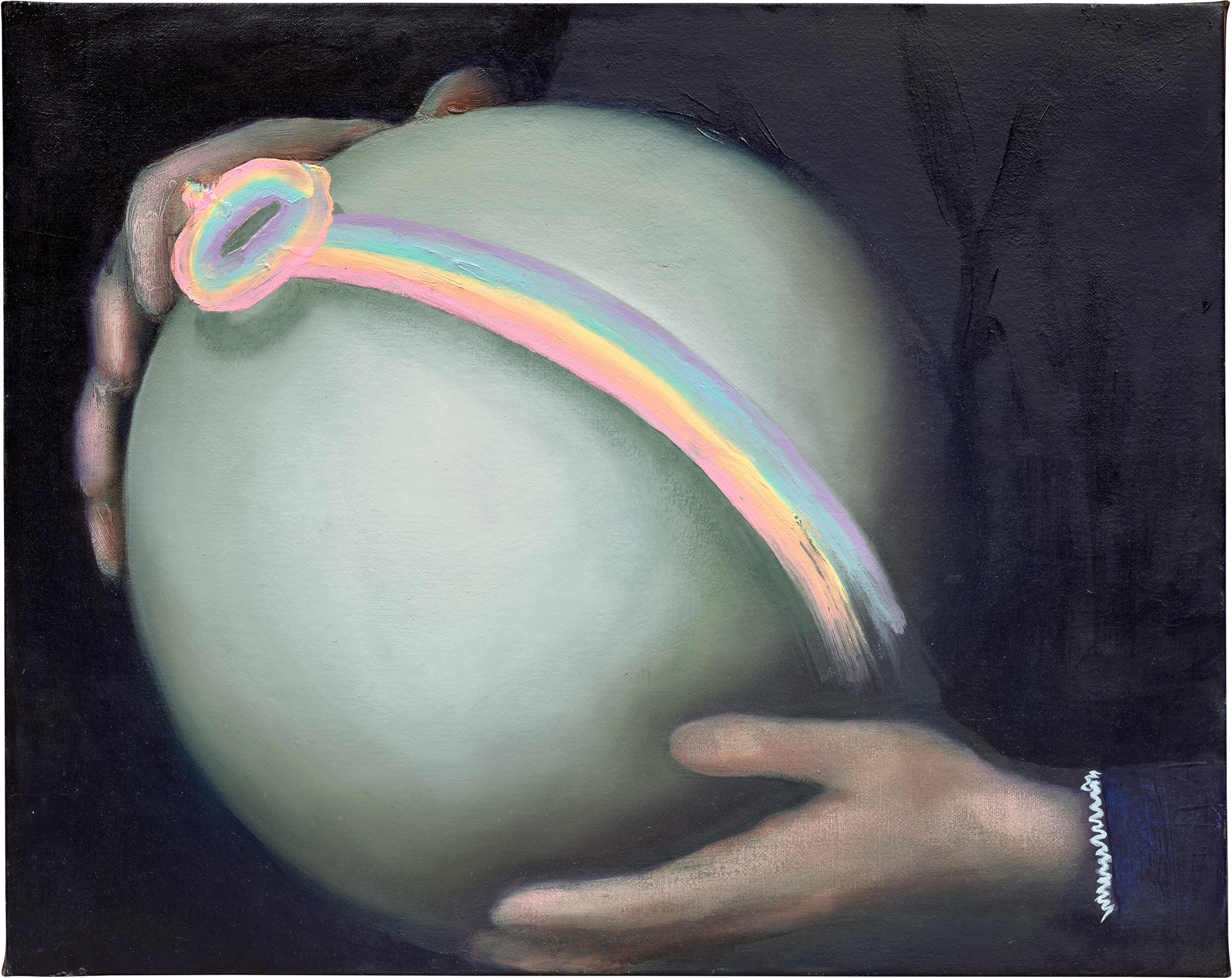
The Globe, 2016
Manchester's music scene, its Victorian civic grandeur, its theatres and cinemas, all feed into a practice that is deeply engaged with spectacle and the constructed image. She studied at the Manchester School of Art, part of Manchester Metropolitan University, where she developed the disciplined, patient approach to painting that now defines her work. The city has remained her base, and there is something quietly significant about that loyalty, a commitment to making serious, internationally resonant painting outside the gravitational pull of London. Giovanelli's artistic development has been marked by a sustained and deepening engagement with the history of painting itself.
She has absorbed the lessons of the Old Masters, particularly the Venetian tradition of luminous, glazed surfaces exemplified by Titian and Veronese, and brought them into dialogue with cinema, fashion photography, and popular visual culture. Her technique involves building up layers of translucent oil glazes over extended periods, sometimes weeks or months for a single canvas. The result is a surface that appears to generate its own internal light, as though the image exists somewhere between the painted support and the viewer's eye. This is not nostalgia for historical technique but a rigorous investigation of what paint can uniquely do that no other medium can replicate.
Louise Giovanelli
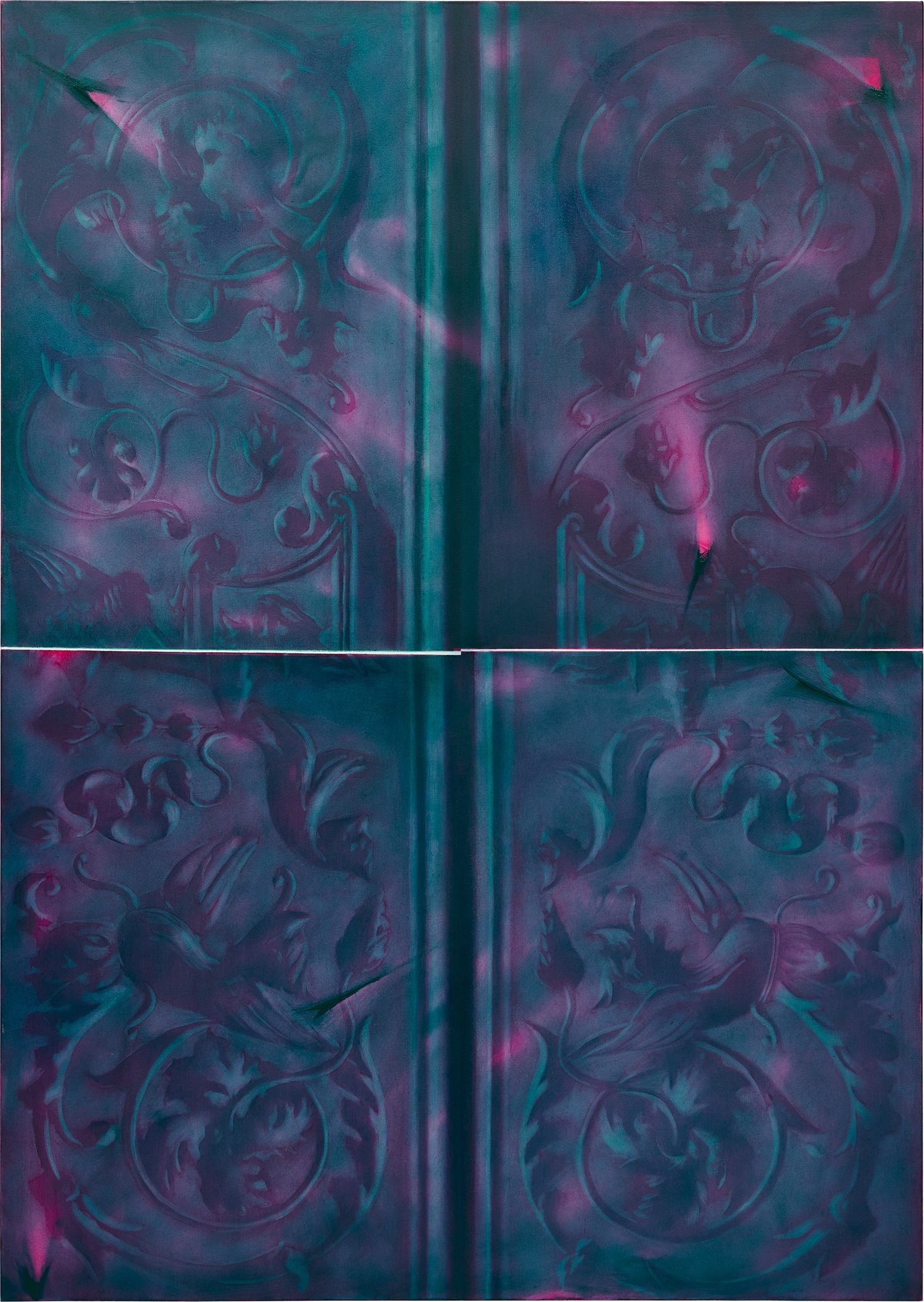
Stele, 2020
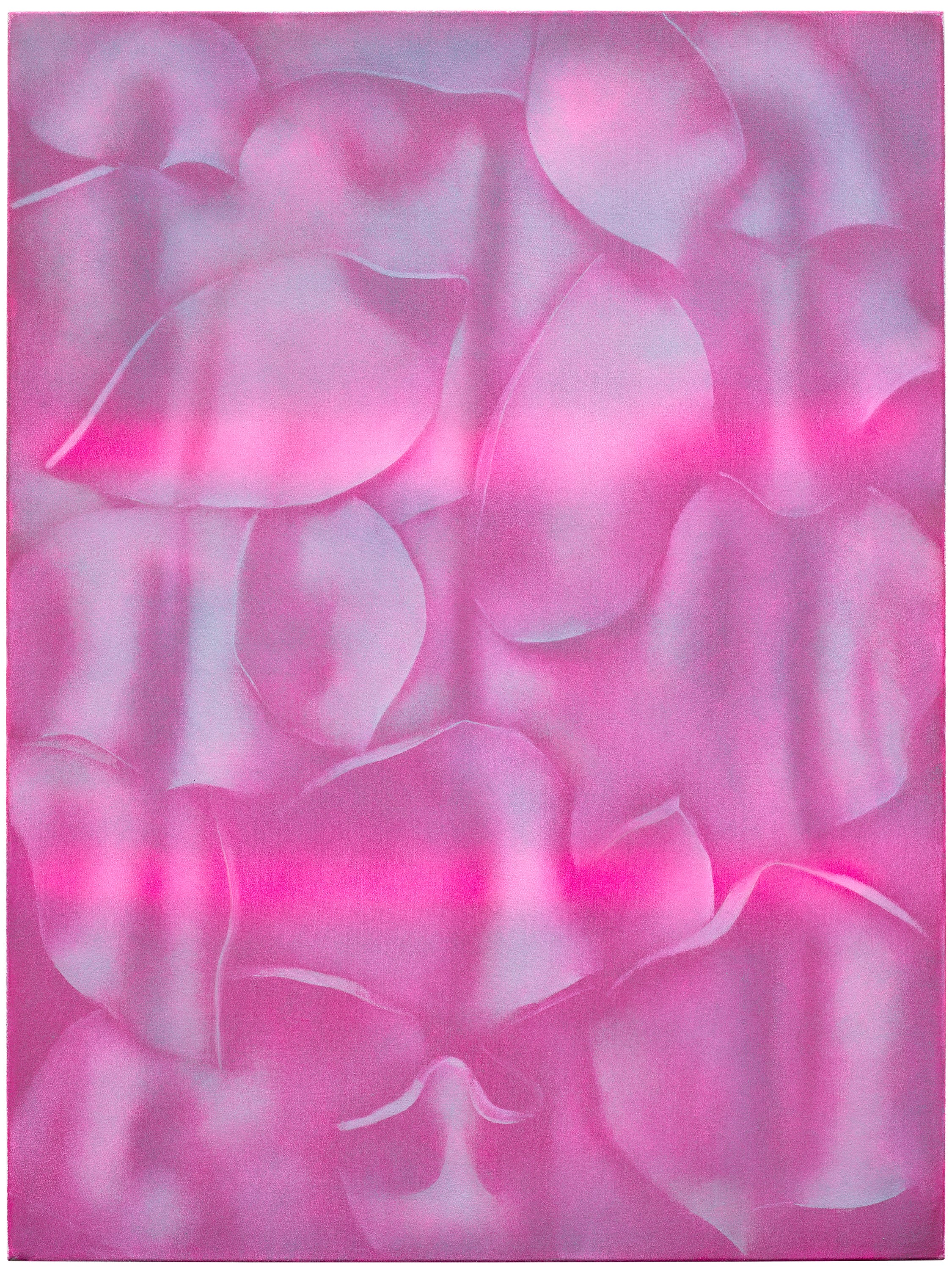
Her body of work reveals an artist in confident, purposeful evolution. Among her most celebrated paintings, The Globe from 2016 shows an early command of her characteristic formal concerns: theatrical drapery, refracted light, and a subject that oscillates between the sensual and the abstract. By the time of Palisade and Billyo V, both completed in 2019, her handling of fabric and figure had become extraordinarily assured, the weave and sheen of textiles rendered with a jeweller's precision while simultaneously dissolving into pure painterly incident. Stele and An Ex, both from 2020, mark a further maturation, images that carry an almost cinematic stillness and an emotional register that is harder to name but impossible to ignore.
Peeping Tom, also from 2020 and painted on linen in the artist's own frame, signals her expanding ambition, the frame itself becoming part of the work's meaning, implicating the viewer in the act of looking. The themes running through Giovanelli's practice are rich and interconnected. Desire, spectacle, and the mechanics of the gaze are persistent concerns, addressed not through didactic imagery but through the seductive, troubling beauty of the paintings themselves. She is interested in how images seduce, how looking is always already entangled with wanting, and how the history of painting is a history of staging that entanglement.
Louise Giovanelli
Palisade, 2019
Her subjects, whether curtains, figures, or architectural fragments, are chosen for their capacity to hold this ambiguity. A velvet drape becomes a meditation on concealment and revelation. A face caught in theatrical light becomes a question about who is watching and why. These are paintings that reward sustained attention precisely because their meanings are not delivered all at once.
For collectors, Giovanelli's work represents a compelling proposition at a moment when serious painting is attracting renewed institutional and market attention. Her win at the John Moores Painting Prize was a significant cultural endorsement, and her gallery representation through Workplace in London has brought her work to an increasingly international audience. Collectors drawn to painters in the lineage of Luc Tuymans, Lisa Yuskavage, or Jenny Saville will find in Giovanelli a sensibility that is equally serious and equally distinct. Her works on linen, in particular, carry a material richness that translates exceptionally well in domestic and institutional settings alike.
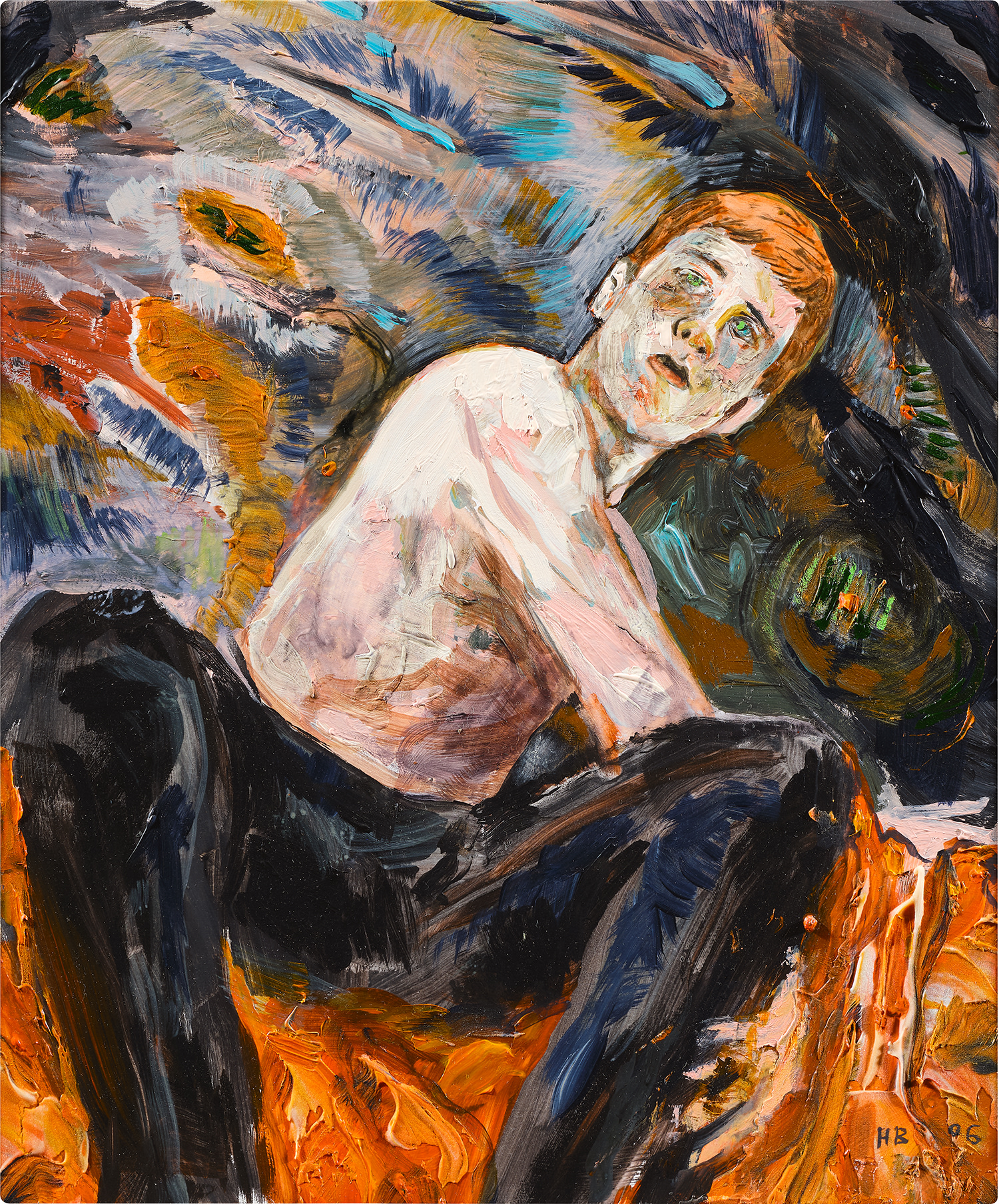
Louise Giovanelli
Billyo V, 2019
Given the trajectory of her career and the growing institutional recognition she commands, early works such as Blue House from 2017 and Seal from 2019 are likely to be regarded in time as formative pieces from a defining period. Within the broader landscape of contemporary painting, Giovanelli occupies a position that is both historically grounded and urgently contemporary. She belongs to a generation of painters, alongside artists such as Jadé Fadojutimi and Cecily Brown, who have demonstrated that painting can carry genuine intellectual and emotional weight without sacrificing sensory pleasure. Her engagement with art history is not reverential but active and interrogative, using the tools of the past to ask questions that could only be posed now.
The glazing technique she has mastered is not a recreation of Renaissance practice but a living conversation with it, inflected by everything she has absorbed from film noir lighting, fashion editorial photography, and the grammar of the cinematic close up. Giovanelli matters today because she is doing something genuinely difficult with great seriousness and beauty. At a moment when the art world is rightly scrutinising questions of representation and the gaze, she makes paintings that do not simplify those questions but hold them open, inviting the viewer into a space of complexity and visual pleasure simultaneously. Her canvases remind us that painting, at its best, is not illustration or decoration but a form of thinking, one that leaves traces of a particular human mind working through what it means to look, to want, and to make something luminous from the materials of the world.