Louise Dahl-Wolfe
Light, Life, and Louise Dahl-Wolfe
Artist Spotlight · The Collection Editorial
“I always tried to make a woman look as beautiful as possible, as natural as possible.”
Louise Dahl-Wolfe
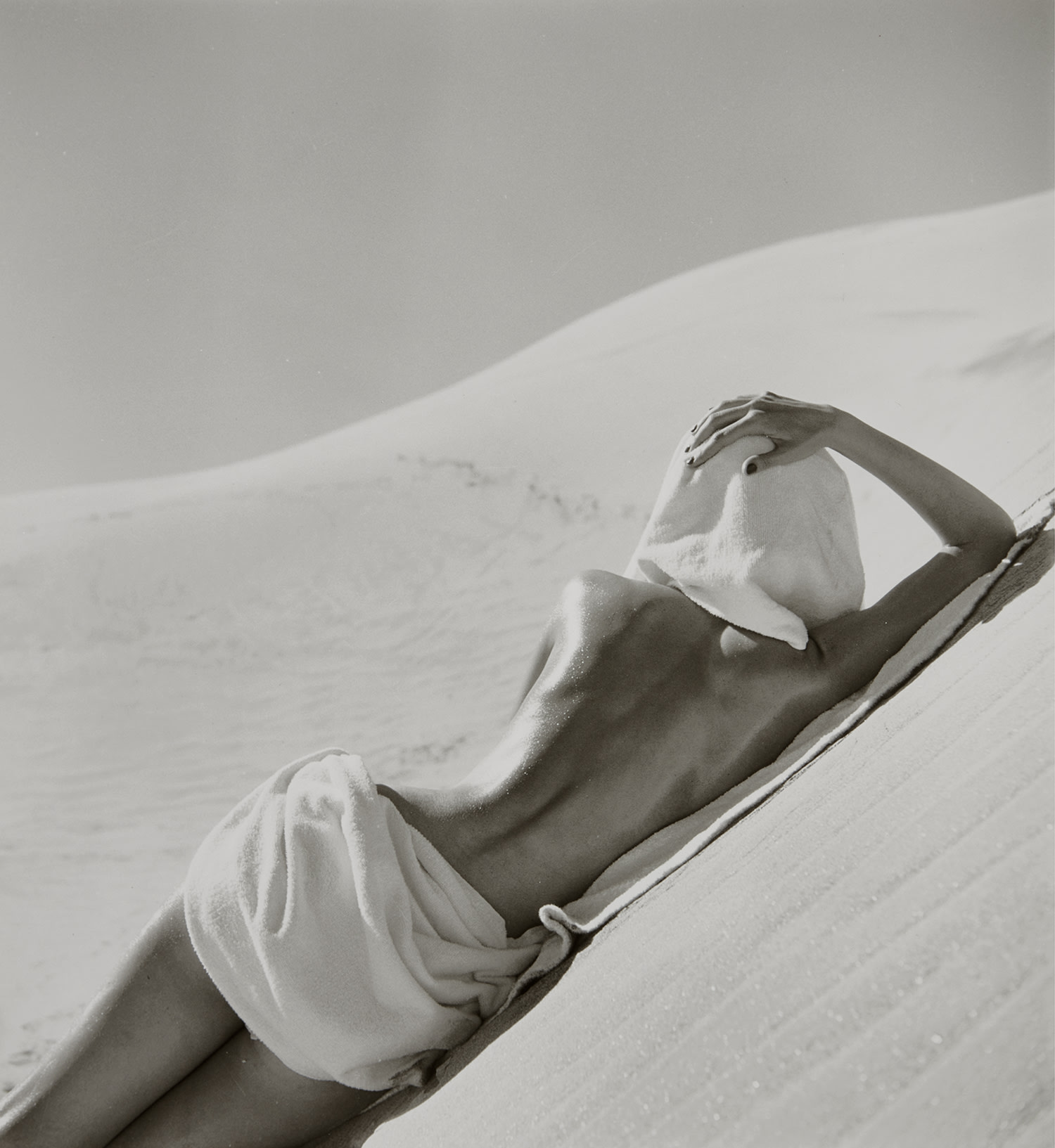
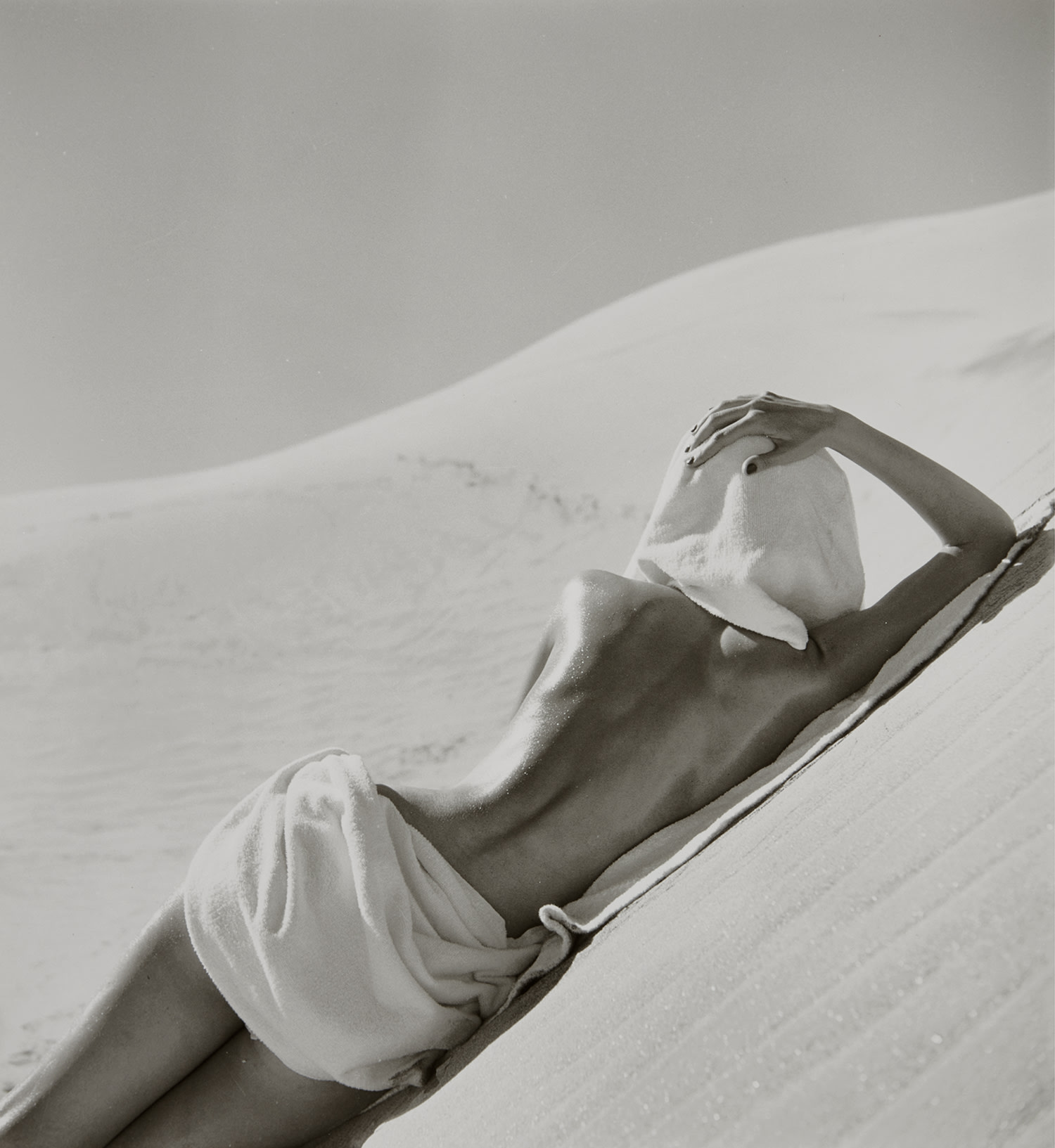
There is a photograph that stops you cold. A woman reclines in a vast desert, her form carved by sun and shadow against cracked earth that stretches to the horizon. No studio, no artifice, no apology. Louise Dahl Wolfe made this image at the California and Arizona border sometime in the middle of the twentieth century, and it remains as arresting today as the moment it was taken.
Louise Dahl-Wolfe
Nude in Desert, California Arizona Border
It is a picture that belongs equally to fine art and to the history of the body, to the American West and to the long tradition of the nude, and it announces, with quiet authority, an artist who understood that the most powerful photographs are the ones that trust the world as they find it. Dahl Wolfe was born in San Francisco in 1895, and the light of the American West never quite left her eyes. She studied at the California School of Arts and Crafts, where she absorbed a rigorous education in color, form, and design that would distinguish her work from that of contemporaries who came to photography through more purely commercial routes. Her early years brought her into contact with the painter Rudolph Schaeffer, whose theories of color harmony deepened her instinct for tone and palette in ways that would later make her color work feel less like illustration and more like painting.
She moved to New York in the late 1920s, carrying with her an eye already formed by landscape, by craft, and by a genuine passion for the visual arts beyond the camera. Her professional ascent was swift once she found her footing. By the early 1930s she had begun contributing to Harper's Bazaar, and what followed was one of the most sustained and celebrated partnerships in the history of American magazine publishing. Over nearly three decades and more than six hundred covers and editorial spreads, Dahl Wolfe and Bazaar under the art direction of Alexey Brodovitch created a visual world that felt simultaneously glamorous and real.
Louise Dahl-Wolfe
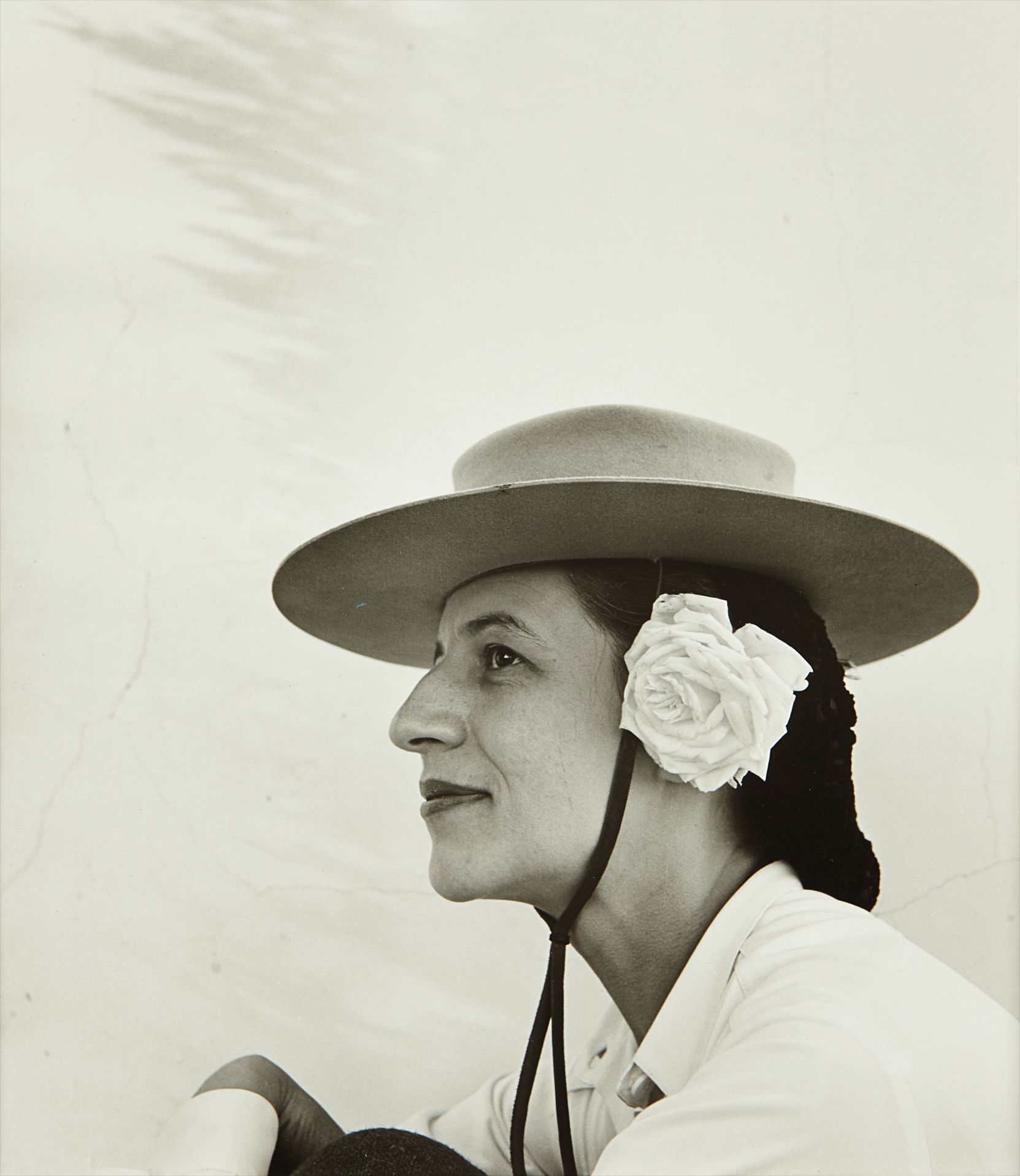
Diana Vreeland
Where other fashion photographers of the era favored the controlled environment of the studio and the cool remove of artificial light, Dahl Wolfe took her subjects outdoors: to the desert, to the coast, to markets in North Africa and the ruins of Europe. She brought fashion into life rather than life into fashion, and the distinction was everything. Her mastery of natural light was not simply a stylistic preference but a technical achievement of the first order. Working with early Kodachrome film, which was unforgiving and demanded precise understanding of how light fell and shifted across a scene, she produced color photographs of a warmth and fidelity that astonished her contemporaries.
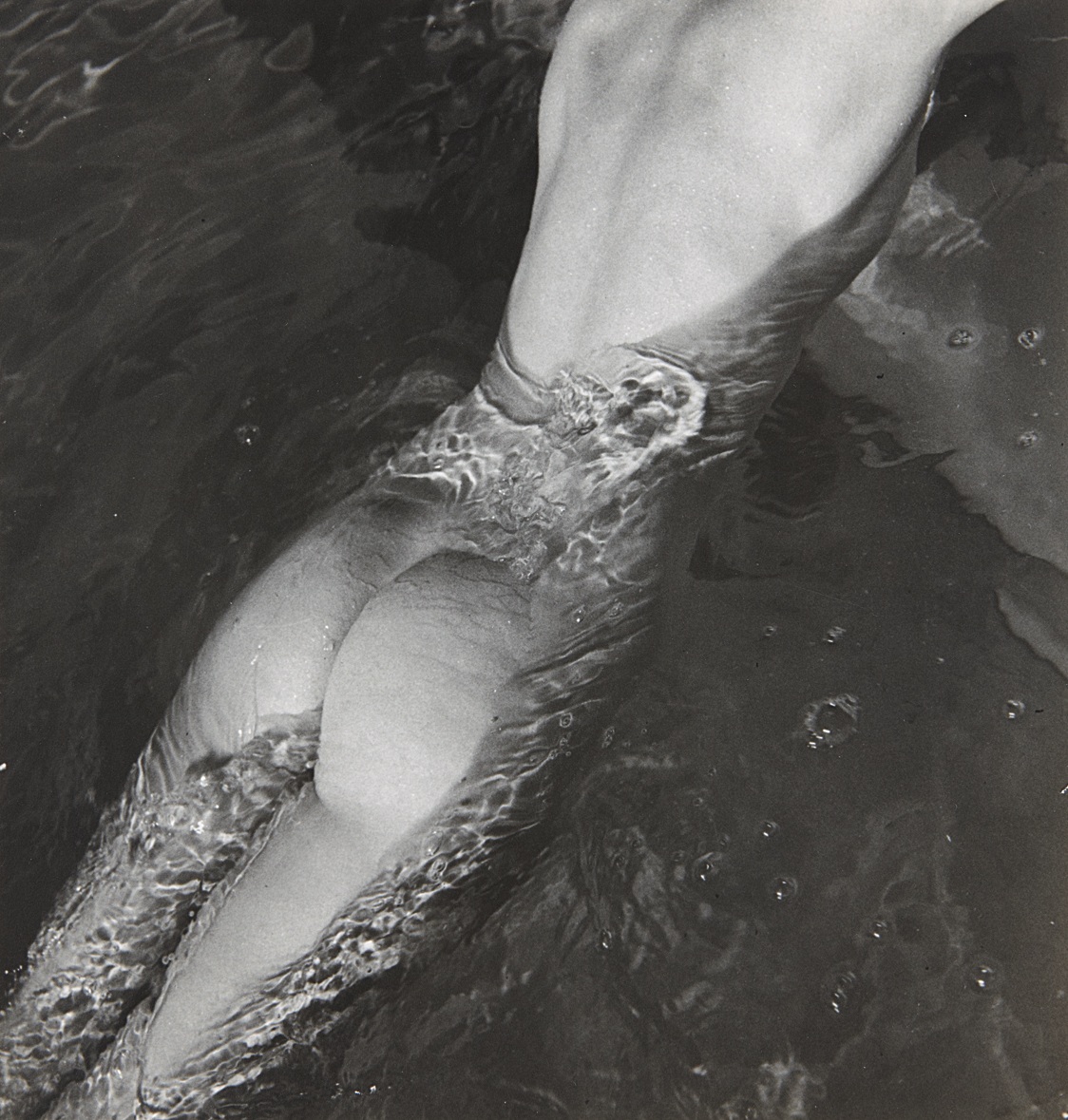
Her portraits were equally commanding. Her image of Diana Vreeland, the legendary editor and taste maker, is a study in character as much as likeness: Vreeland rendered not as icon to be worshipped but as a specific, formidable, deeply human presence. That Dahl Wolfe could move between the lyric freedom of a nude in open water and the precise psychological observation of a formal portrait speaks to the range of a genuinely major artist. The works available to collectors today reward close attention precisely because they traverse such varied emotional and visual terrain.
Louise Dahl-Wolfe
Nude in the Water
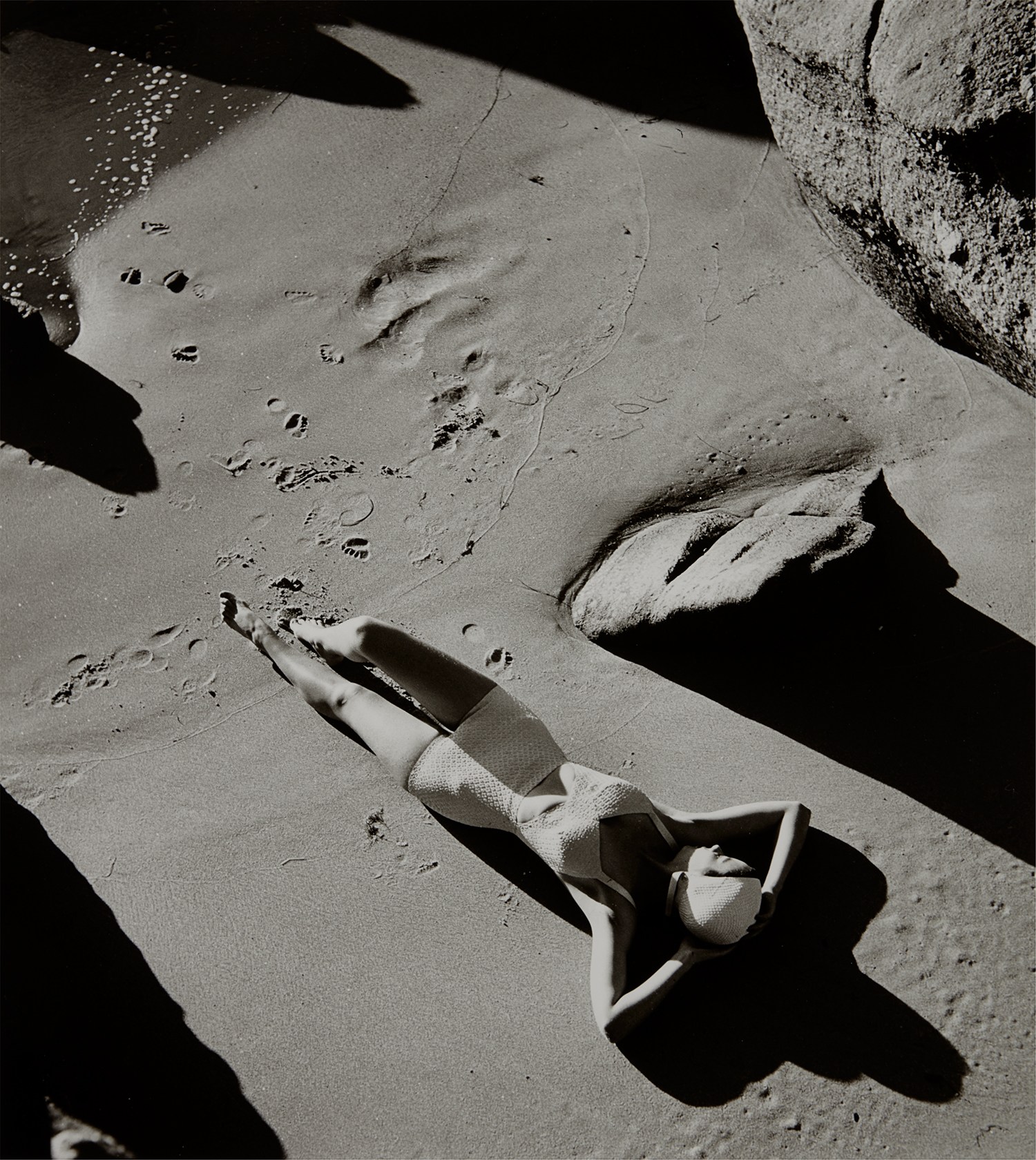
The desert nudes are among her most sought after images, pictures in which the American landscape becomes both setting and subject, the body held within a geography that dwarfs and yet dignifies it. "Rubber Bathing Suit, California" places fashion within the same expansive outdoor sensibility, the model not posed so much as placed, belonging to a particular moment of American coastal life with an ease that feels entirely unstudied. "Japanese Bath" extends her range into a more intimate register, its attention to water and skin and reflection anticipating interests that would come to preoccupy photographers and artists for generations. Collectors drawn to mid century photography will find in her gelatin silver prints a consistency of vision and a quality of printing that holds up against the finest work of her era.
In the broader history of photography, Dahl Wolfe occupies a position of real significance alongside artists such as Irving Penn, Richard Avedon, and Horst P. Horst, all of whom were reshaping what fashion and portrait photography could aspire to be in the middle decades of the twentieth century. But where Penn refined and compressed the world into a kind of elegant tension, and Avedon pursued psychological extremity, Dahl Wolfe moved always toward warmth, toward the pleasure of the visible world, toward a generosity of feeling that made her work beloved rather than merely admired. She influenced photographers who came after her, among them Lillian Bassman and Frances McLaughlin Gill, who recognized in her practice a model of how to bring genuine artistic intelligence to work that was also expected to sell.
Louise Dahl-Wolfe
Rubber bathing suit, California
The market for her work has strengthened steadily as the critical reassessment of mid century American photography has deepened. Major institutions including the Smithsonian's National Portrait Gallery and the Fashion Institute of Technology have held exhibitions of her work, and the Staley Wise Gallery in New York has been a consistent and important advocate for her legacy. Her gelatin silver prints, many printed later under her supervision or from her original negatives, offer collectors a point of entry into a body of work that is both historically significant and visually inexhaustible. Condition, provenance, and the quality of the printing are the key variables to consider, as is the relative rarity of her outdoor nude studies compared to her more widely circulated fashion work.
What endures about Louise Dahl Wolfe is not simply what she made but the spirit in which she made it: a belief that the world outside the studio was richer, more alive, and more surprising than anything that could be constructed within one. She photographed women as though they were entirely capable of inhabiting the world on their own terms, which in the 1940s and 1950s was a quiet form of radicalism. She brought an artist's eye and a craftsperson's discipline to work that commercial culture often treated as disposable, and she left behind a body of photographs that the passage of time has only made more beautiful. To collect her work is to own a piece of mid century American vision at its most confident and most generous.
Explore books about Louise Dahl-Wolfe
Louise Dahl-Wolfe: A Photographer's Scrapbook
Louise Dahl-Wolfe
Louise Dahl-Wolfe: Photographer
Constance Sullivan
Louise Dahl-Wolfe: The Sight of Things
Louise Dahl-Wolfe
Louise Dahl-Wolfe: Light and Shadow
Peter MacGill
Louise Dahl-Wolfe: A Life in Photography
Anne Tucker