Louisa Gagliardi
Louisa Gagliardi Renders the Tender and Strange
Artist Spotlight · The Collection Editorial
Something quietly extraordinary has been happening in the world of contemporary painting, and Louisa Gagliardi is at its center. The Swiss artist, born in 1989, has spent the better part of a decade building a body of work that feels entirely singular: figurative scenes suspended in a kind of luminous gel, figures caught between waking and dreaming, surfaces that seem to breathe with an inner digital light. Galleries across Europe and beyond have taken notice, and collectors who discovered her early speak about her work with a particular reverence, as though they stumbled upon something the rest of the world was not yet ready to name. Gagliardi grew up in Switzerland, a country whose precision and reserve seem, at first glance, an unlikely incubator for work this emotionally ambiguous and atmospherically charged.
Louisa Gagliardi
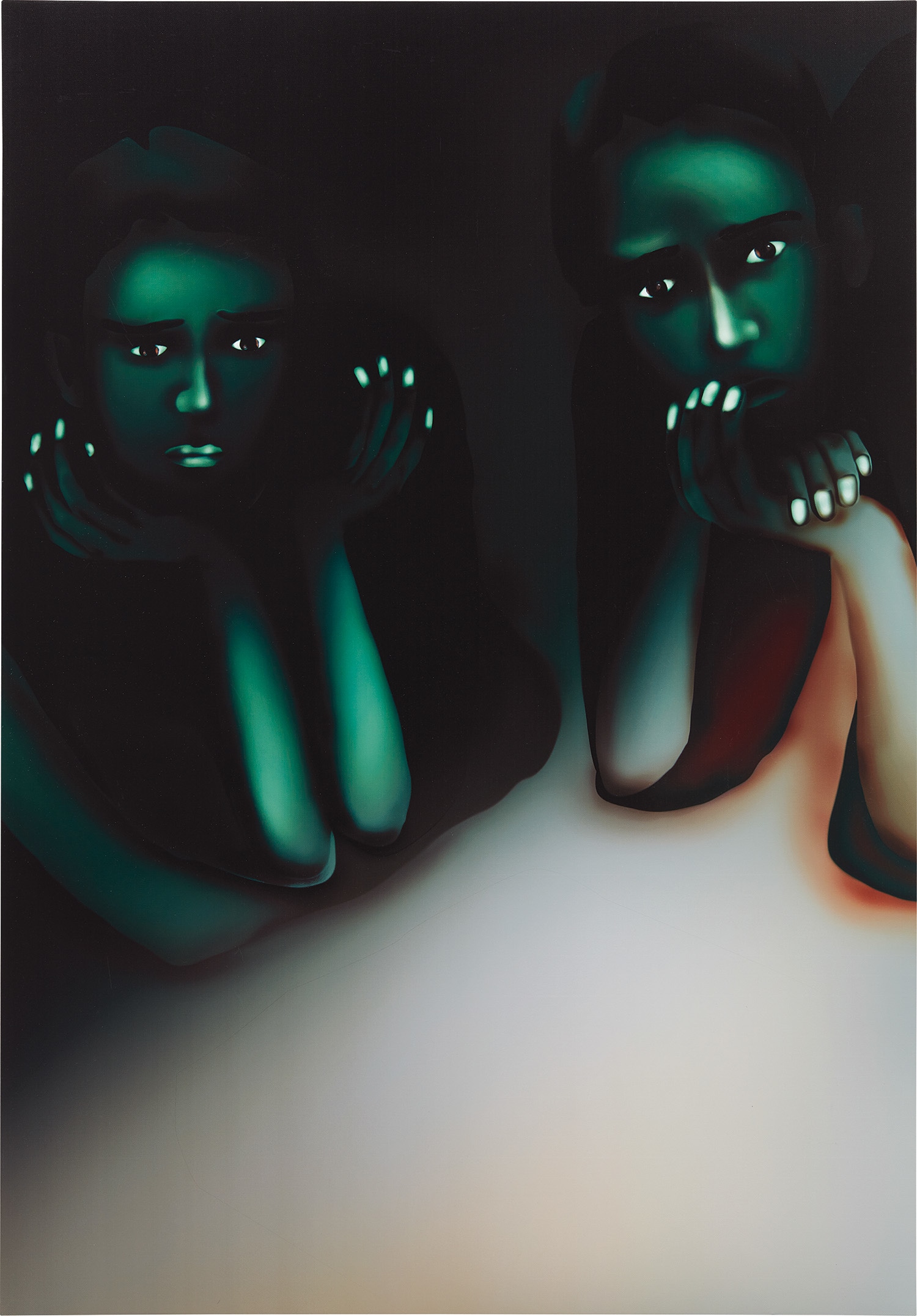
Powerful relief, 2016
Yet there is something in the Swiss sensibility, its attention to surfaces, its quiet perfectionism, its comfort with restraint, that runs through everything she makes. She came of age in a moment when the boundary between analog and digital experience was dissolving in real time, and rather than resist that dissolution, she leaned into it completely. Her training led her toward graphic design and illustration before she found the material language that would define her practice, a combination of ink, gel medium, nail polish, and PVC or silk supports that no one else was using in quite the same way. The breakthrough came gradually, then all at once.
In the mid 2010s, Gagliardi began producing works on vinyl that looked unlike anything in the broader conversation about digital painting. Where other artists were using digital tools to simulate the texture of oil or the grain of canvas, she was doing something more philosophically provocative: she was using physical materials to simulate the look of a screen, to make painting feel like something rendered rather than touched. Works from 2015 and 2016, including the early piece titled "Yannick" and the haunting "It's Mine I Spend It," announced an artist who had found her voice with remarkable confidence. The figures in these paintings occupy spaces that feel borrowed from social media timelines and private messaging apps, caught in moments of connection or withdrawal that are achingly familiar to anyone who has lived a life partly conducted through a glowing rectangle.
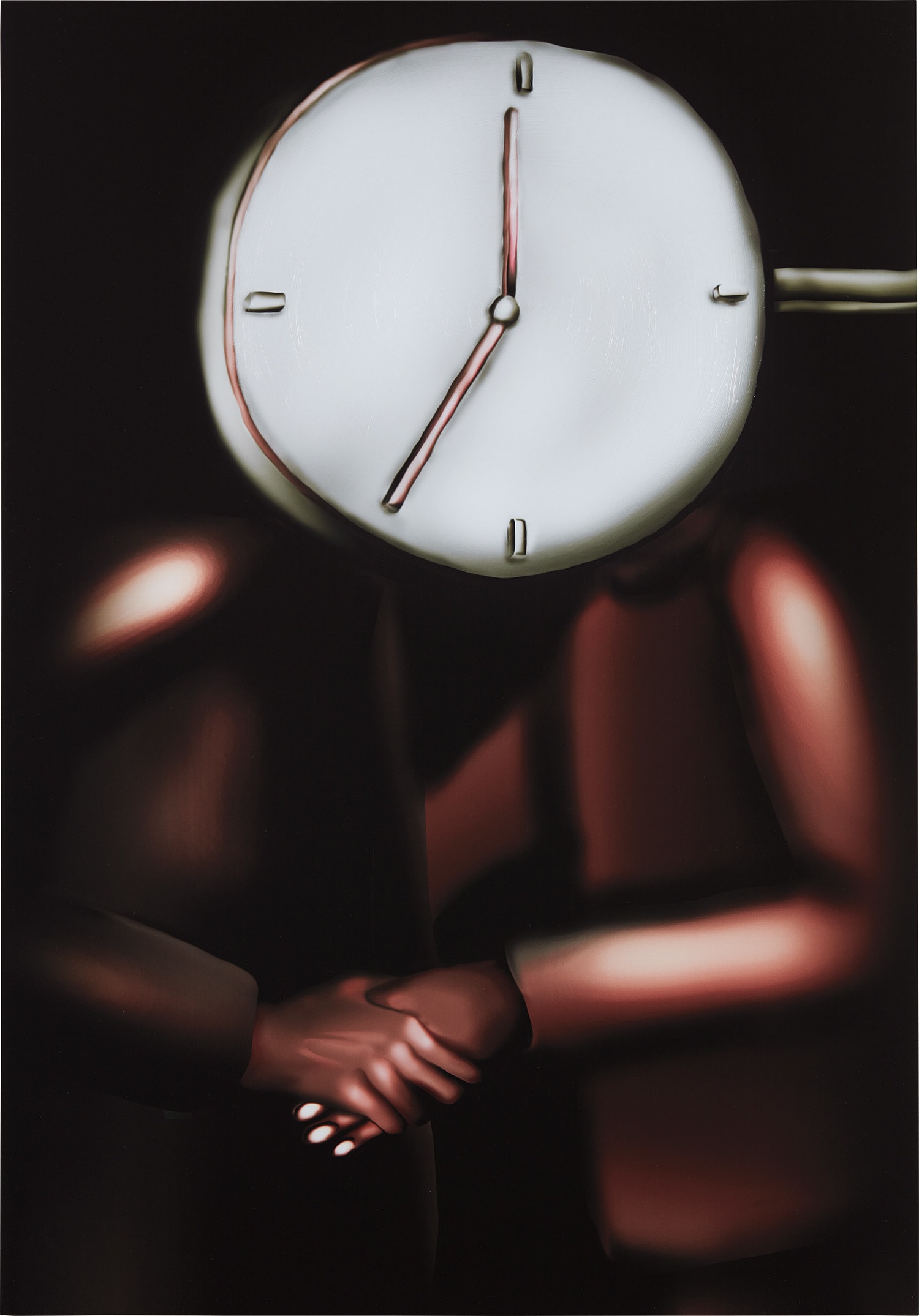
Louisa Gagliardi
8:30 p.m., 2016
By 2017 and 2018, her practice had deepened considerably. "Wet Feet" from 2017 and "Cold Shoulders" from 2018 demonstrate how fully she had mastered the tension at the heart of her work: the gel medium creates surfaces that are simultaneously tactile and repellent, inviting and sealed. You feel the urge to press a finger into these paintings, to test whether they are as soft as they appear. The figures themselves offer little resolution.
Their emotional states hover in a space that resists easy narrative. Are they melancholy or content, present or absenting themselves? Gagliardi refuses to answer, and that refusal is the work's greatest strength. "Bathing in an Ocean of Time," also from 2017, extends this ambiguity into something almost mythological, a figure given over to a surrounding element, time itself made visible as an enveloping medium.
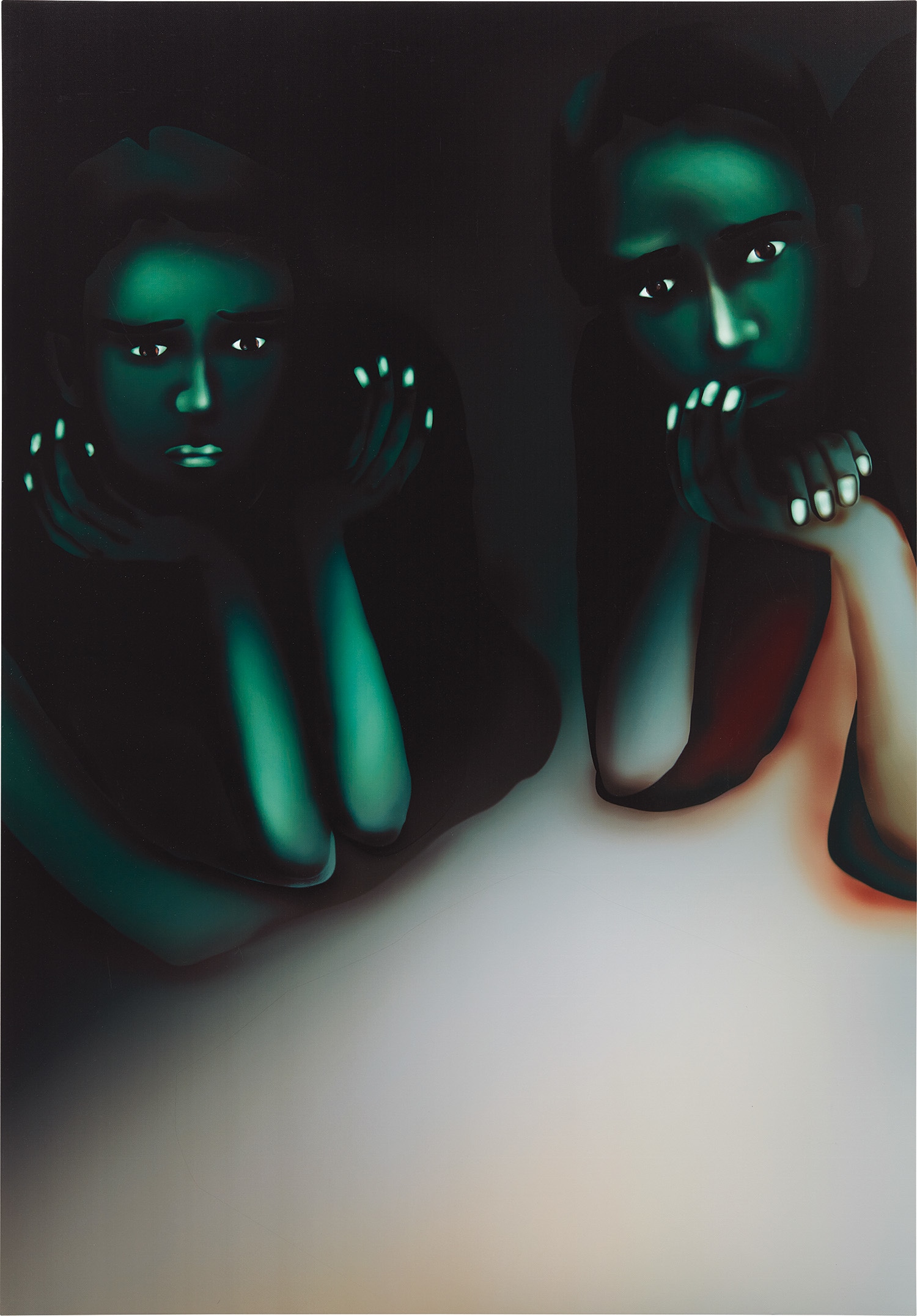
Louisa Gagliardi
Cold shoulders, 2018
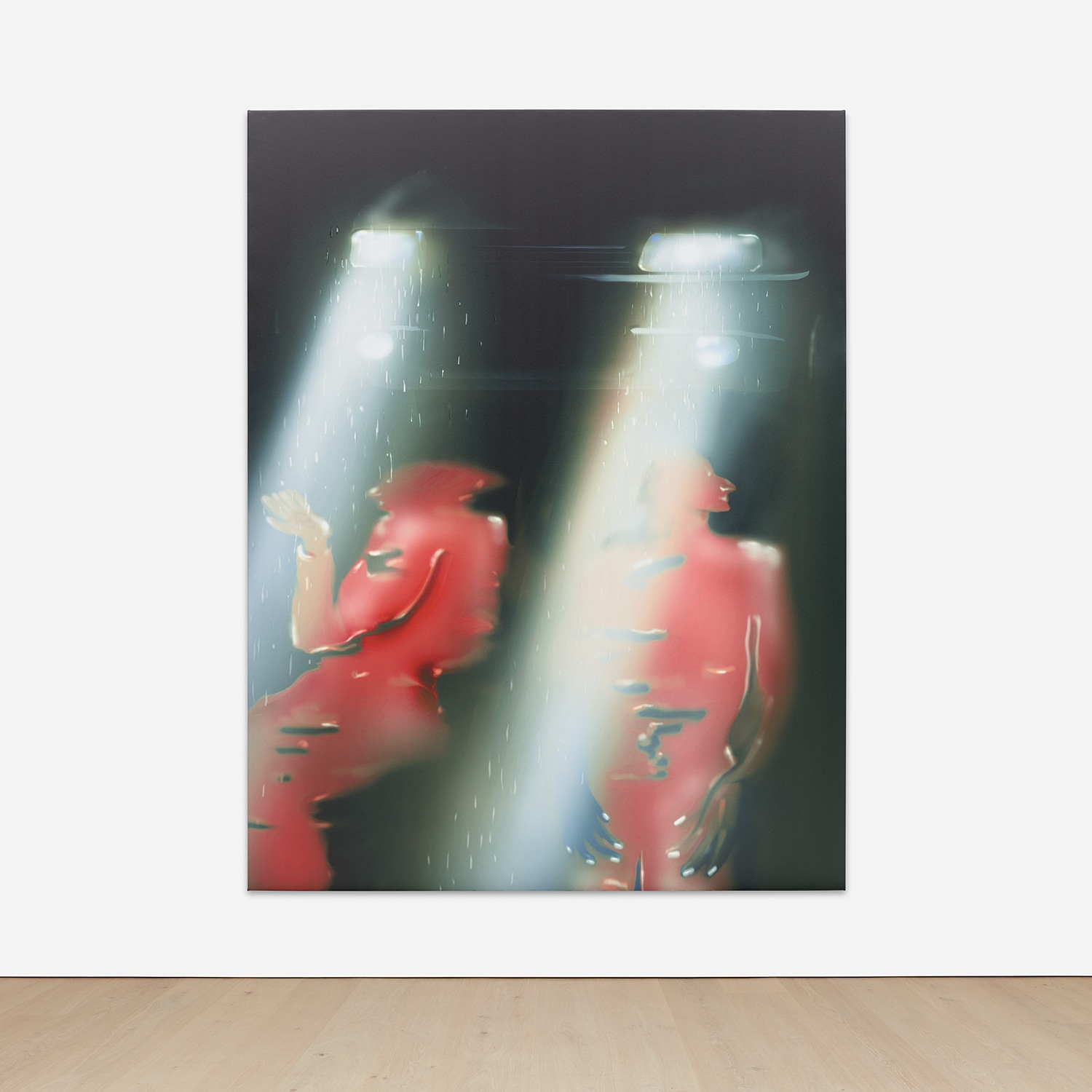
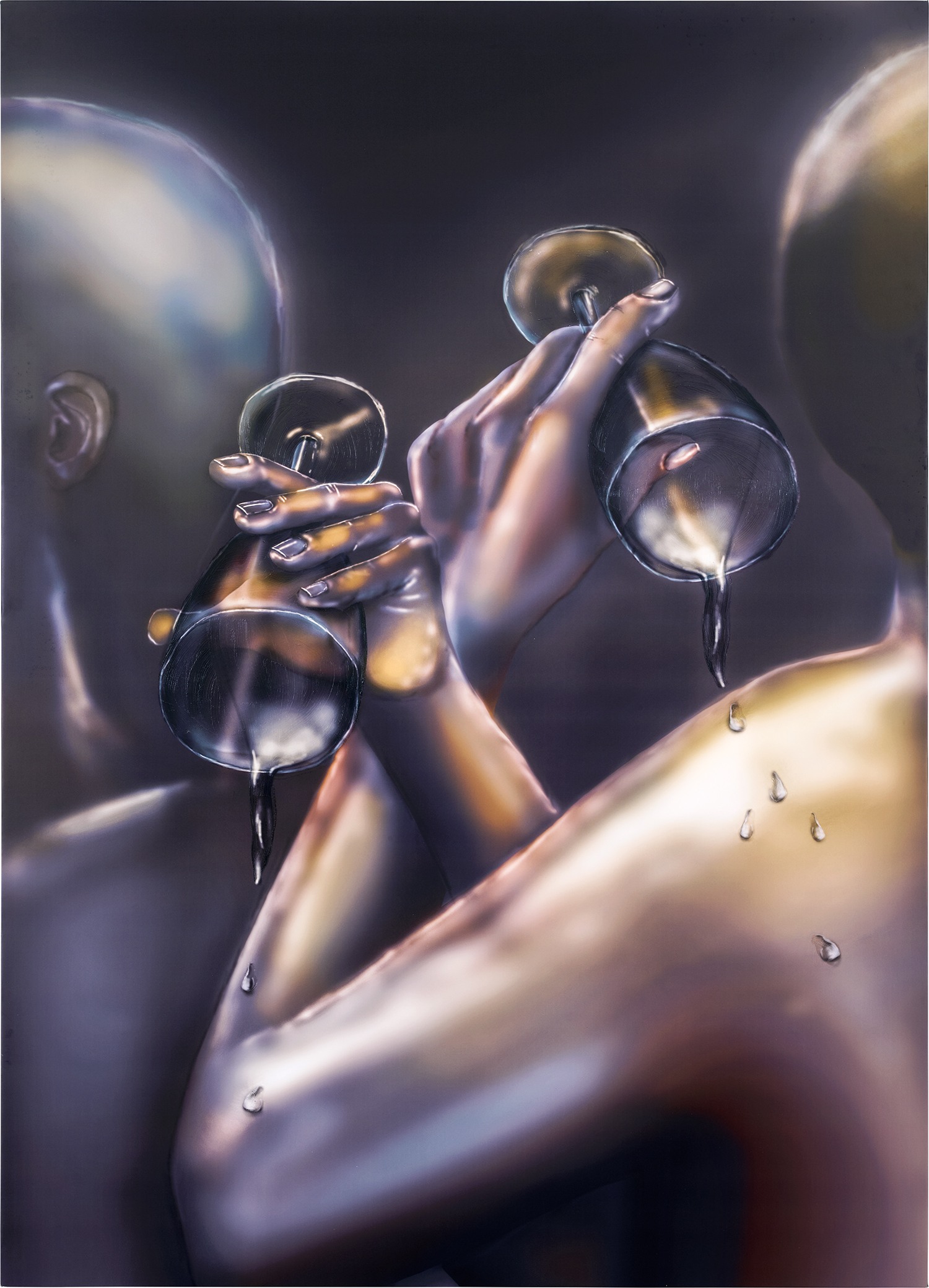
"Pouring" from 2020 represents a further evolution, one that arrived in the strange suspended atmosphere of that particular year with an almost uncanny relevance. The work captures a gesture of release, of letting something flow outward, at a moment when the world was desperate to understand what might still move, still spill, still continue. It became one of the clearest demonstrations of how Gagliardi's preoccupations, always personal and precise, can suddenly rhyme with collective experience in ways that feel unforced and genuine. Her gallery relationships, including her work with Longtang in Zurich, have helped build a careful and considered presence for her internationally, placing her work in front of audiences who recognize the seriousness of her project.
For collectors, Gagliardi represents a compelling combination of qualities that are rarely found together. Her work is immediately visually arresting, the kind of painting that holds a room and changes the feeling of a wall. But it also rewards sustained attention in ways that purely decorative work never can. The material choices are conceptually coherent and historically literate: PVC and vinyl carry associations with mass production, with the synthetic, with the post industrial body, while the ink and gel medium applied to these surfaces transform them into something intimate and even vulnerable.
Louisa Gagliardi
Pouring, 2020
Collectors who approach her work as an investment in a developing international career are also responding to something that feels emotionally necessary, work that addresses the particular texture of contemporary interiority in terms that oil on canvas, however masterful, cannot quite reach. In the context of art history, Gagliardi belongs to a generation of painters rethinking figuration through the lens of digital life, alongside artists who share her interest in the mediated image, the constructed self, and the uncanny familiarity of the screen. Her work engages a lineage that includes the cool emotional distance of Eric Fischl, the surface obsessions of John Currin, and the dreamlike atmospheric quality that runs through painters like Cecily Brown, while remaining entirely her own. She is less interested in critiquing the digital world than in inhabiting it as a painter, finding within its logic new ways to speak about longing, presence, and the body.
What makes Gagliardi's work matter today, beyond its considerable formal achievement, is the honesty of its preoccupation. She is making paintings about what it feels like to be a person in a specific historical moment, one in which the self is both more visible and more elusive than ever before. The gel surfaces seal her figures in a kind of amber, preserving them and isolating them simultaneously. In doing so, she has created a visual language for experiences that most of us have felt but few of us could articulate.
That is the rarest thing a painter can do, and Gagliardi does it with grace, intelligence, and a formal confidence that grows richer with every new work.