Louis Fratino
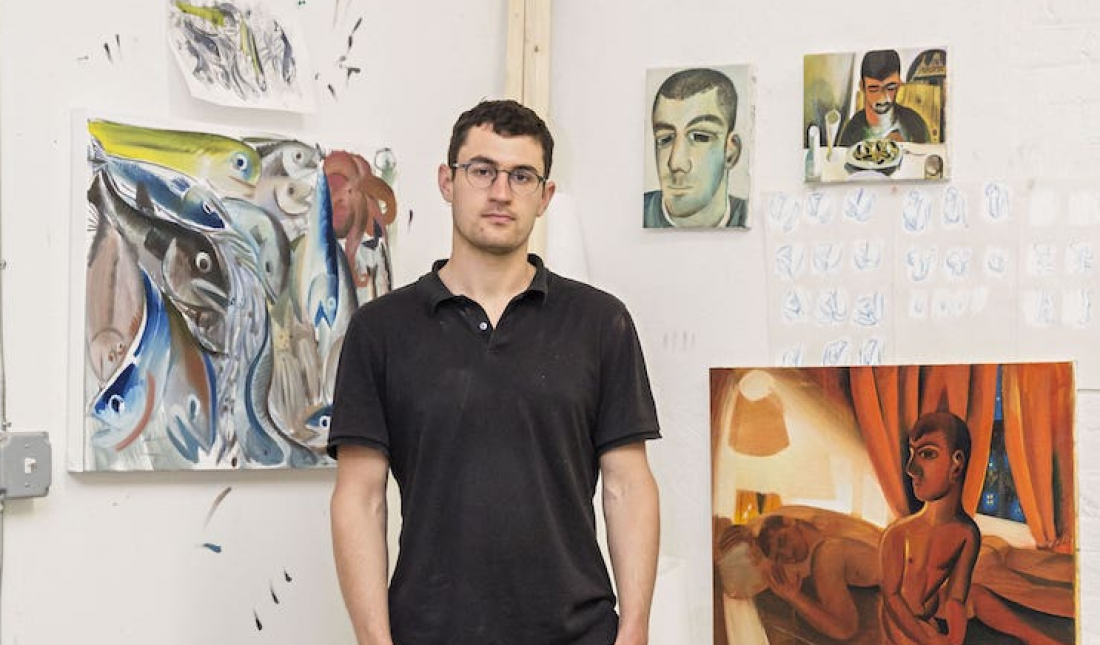
Louis Fratino Paints Love Into Being
Artist Spotlight · The Collection Editorial
“I want to make paintings that feel like they could only have been made by me, that are totally mine.”
Louis Fratino, Interview Magazine
When Louis Fratino's paintings arrived at Sikkema Jenkins & Co. in New York, something shifted in the room. Visitors leaned in close, then stepped back, then leaned in again, caught between the intimate scale of the works and the overwhelming generosity of their feeling. That quality, the sense that you are being trusted with something private and precious, has become the defining signature of one of the most celebrated young painters working in America today.
Louis Fratino
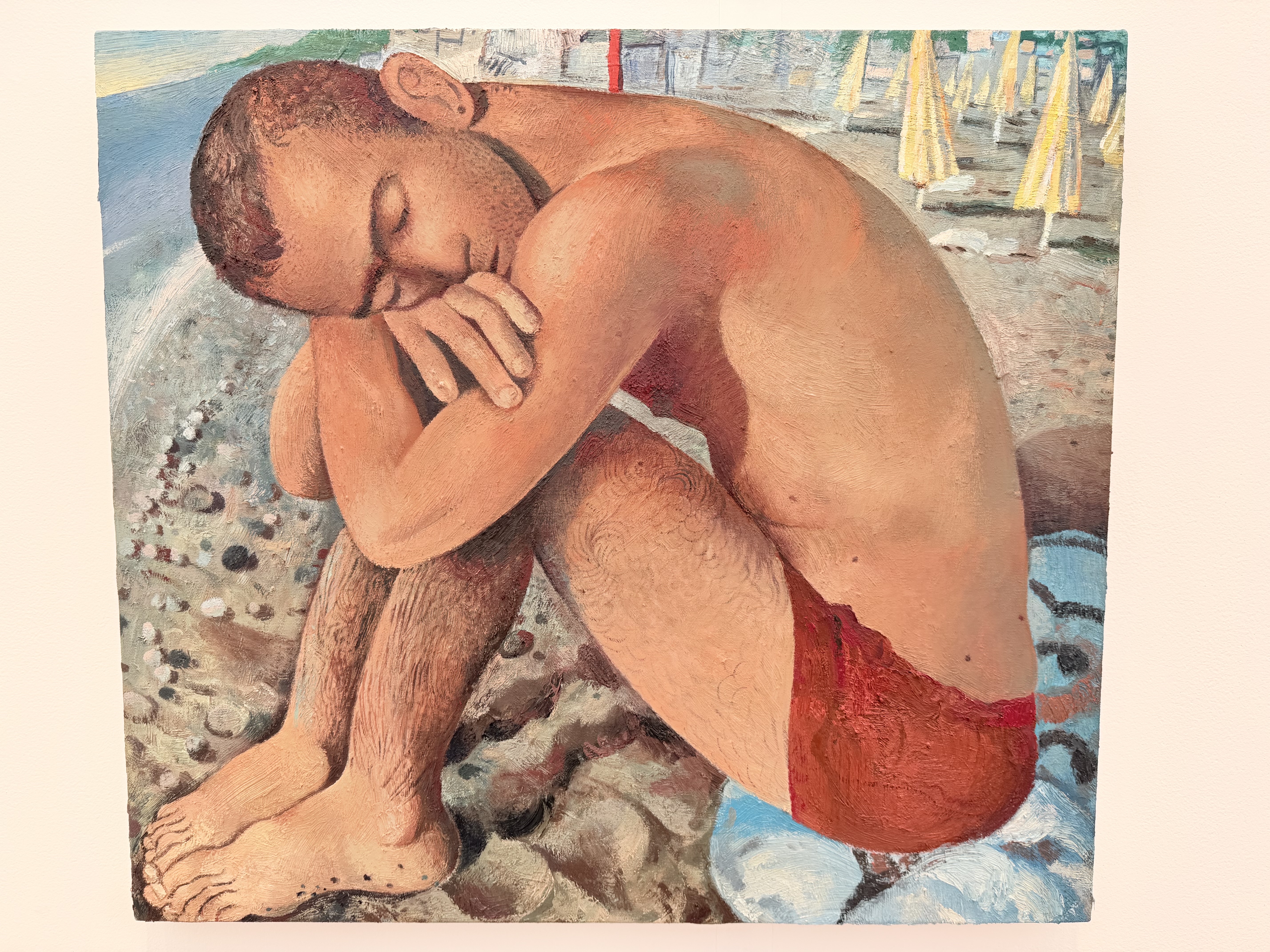
Ale in Liguria, 2025
At just over thirty years old, Fratino has achieved a rare and enviable thing: a body of work that feels entirely his own. Fratino was born in 1993 in Annapolis, Maryland, a city of sailboats and colonial architecture that sits at the edge of the Chesapeake Bay. There is something in his upbringing along that particular stretch of the Eastern Seaboard, unhurried and rooted in the rhythms of domestic life, that seems to have lodged itself permanently in his artistic sensibility. He went on to study at the Maryland Institute College of Art, one of the great incubators of American art education, before completing his MFA at the New York Academy of Art in 2017.
The Academy is known for its rigorous commitment to traditional figurative technique, to life drawing and the slow accumulation of craft, and that foundation is visible in every mark Fratino makes, even when those marks appear spontaneous or fleet. His development as an artist has been shaped as much by the European tradition as by his American context. Fratino has spoken openly about his deep love for Italian Renaissance and Mannerist painting, and his time spent in Italy has left a visible trace across his canvases. Works like the luminous oil on canvas Ale in Liguria, from 2025, carry the warm, coastal light of the Italian Riviera and place his figures within a long lineage of Mediterranean pleasure and repose.
Louis Fratino
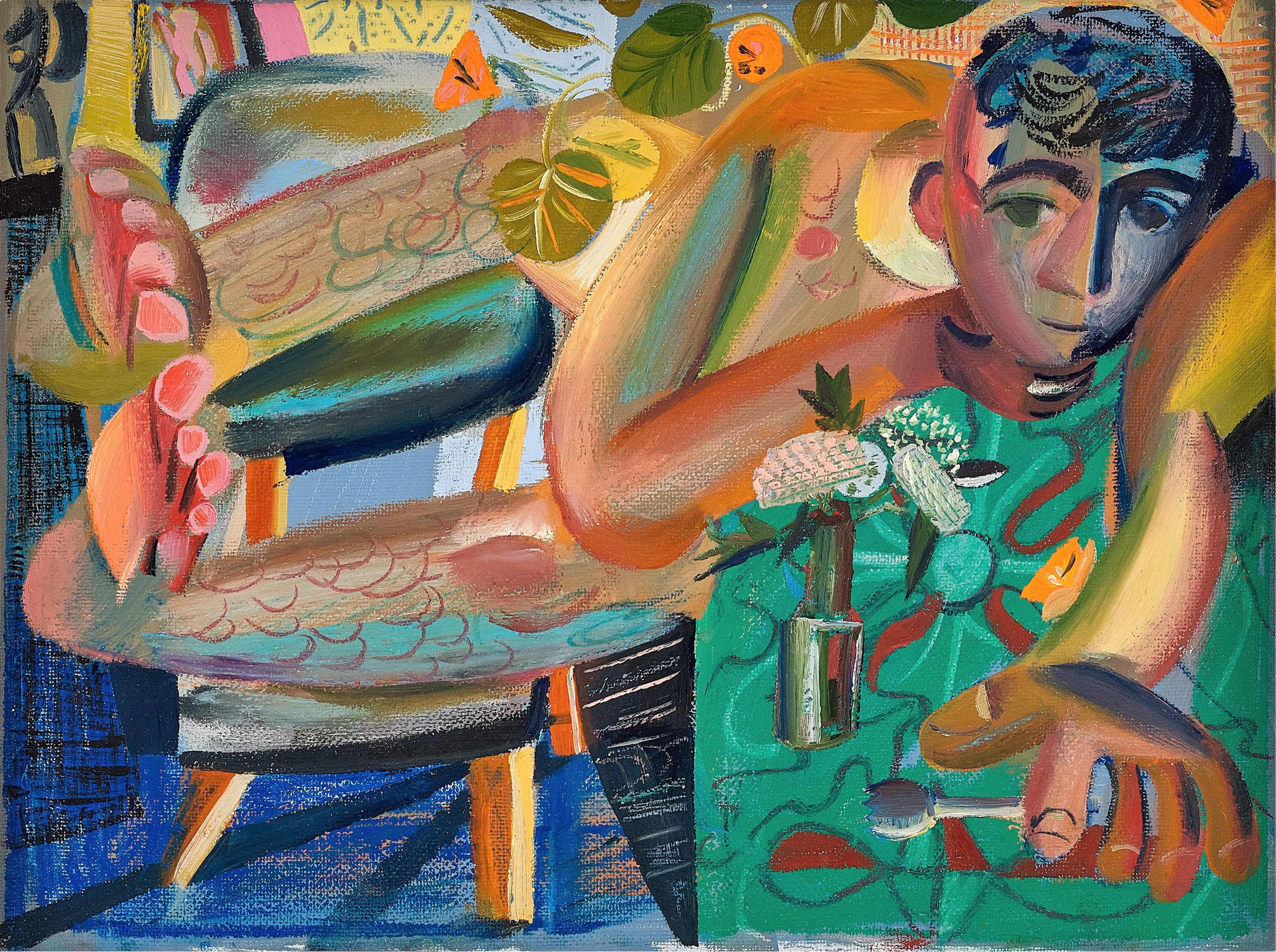
Nasturtiums, 2017
The influence of painters like Pontormo and Bronzino, with their elongated forms and psychological interiority, is something Fratino has engaged with directly, as in his charcoal and oil pastel work After Bronzino, which translates the cool formality of the Florentine court portrait into something urgent and alive with queer desire. He absorbs history without being trapped by it. What makes Fratino's practice so compelling is the way it holds together tenderness and formal rigor without either quality diminishing the other. His paintings and works on paper most often depict scenes drawn from his own daily life: a partner undressing, a friend asleep in a sunlit room, a tabletop scattered with fruit and wine glasses, two bodies together in the particular comfort of long familiarity.
These are not grand subjects in the conventional sense, and that is precisely the point. Fratino insists on the dignity and the beauty of the ordinary queer life, on love and domesticity and friendship as subjects fully worthy of the highest painterly attention. Jamie's Room, a 2019 pastel on paper, captures a bedroom interior with the quality of a held breath, every object imbued with the quiet significance of belonging. His 2019 pencil work Undressing and his 2018 crayon and graphite Nude Cowboy both demonstrate his ability to transform the figure study into something emotionally complex, almost novelistic, with the lightest possible means.
Louis Fratino
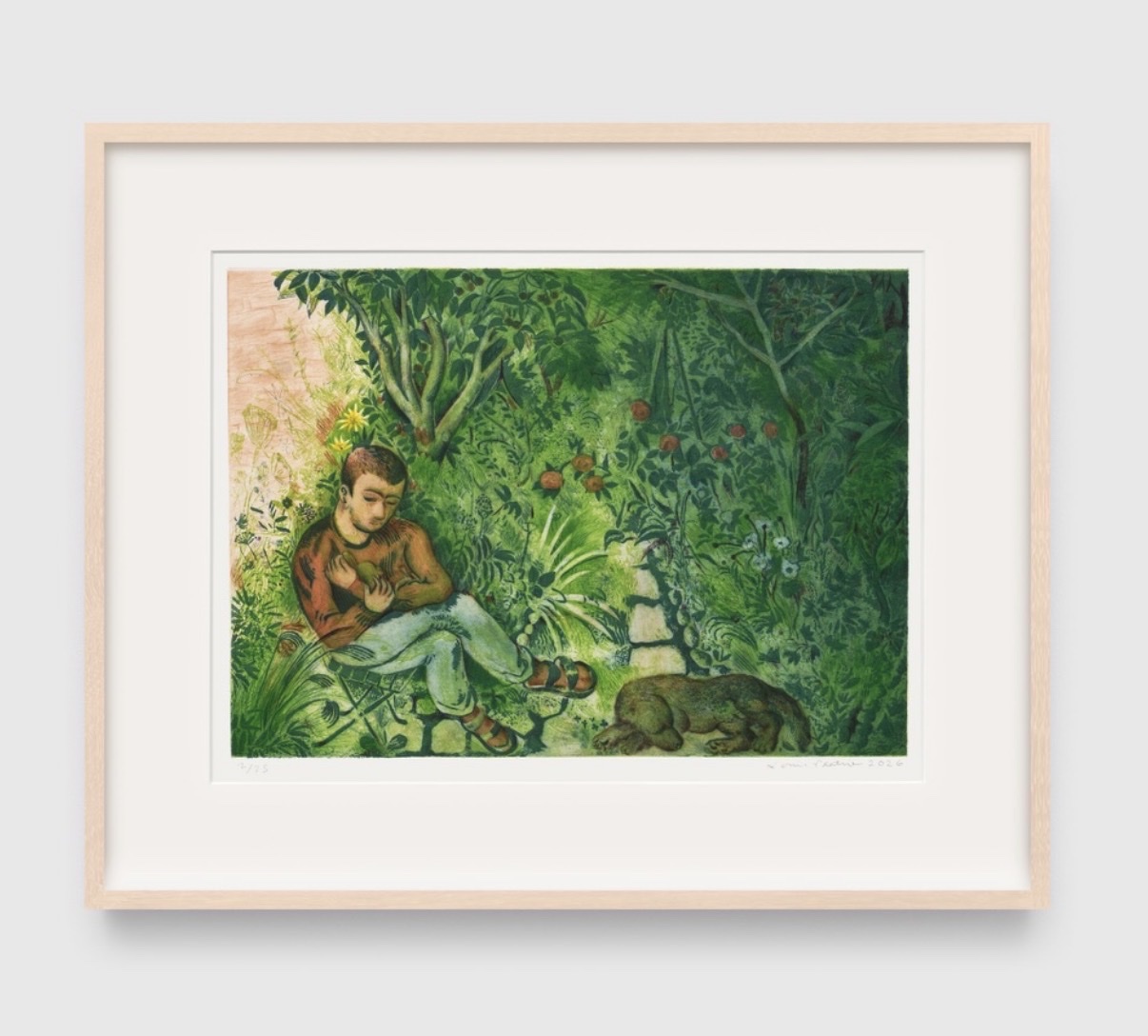
September 3, 2026
Fratino's printmaking practice, which has expanded significantly in recent years, reveals another dimension of his sensibility. His 2026 etching September 3, executed with greased aquatint, sugar lift, spit bite, and drypoint on Hahnemuhle Copperplate paper, shows a painter who is genuinely curious about the peculiar resistances of each medium, the way etching demands patience and indirection in a manner that oil paint does not. The intimacy that characterizes his canvases translates naturally into the graphic arts, where every line carries the weight of a considered decision. Collectors who follow his work on paper are rewarded with some of his most searching and spontaneous image making.
Within the broader landscape of contemporary painting, Fratino occupies a meaningful position in the conversation that has been taking place around figuration, identity, and the politics of visibility for the past decade. His work sits in dialogue with painters like Nicole Eisenman, whose figurative practice similarly navigates queer experience and art historical memory, and with the legacies of artists like Marsden Hartley and Paul Cadmus, who worked within and against the limits of what could be shown and celebrated in their own times. There is also something of David Hockney's chromatic joy and his insistence on domestic love as a legitimate subject for serious art. But Fratino's voice is distinctly his own generation's: more fragmented, more willing to let the surface of the canvas stay rough and searching, more openly autobiographical in its emotional claims.
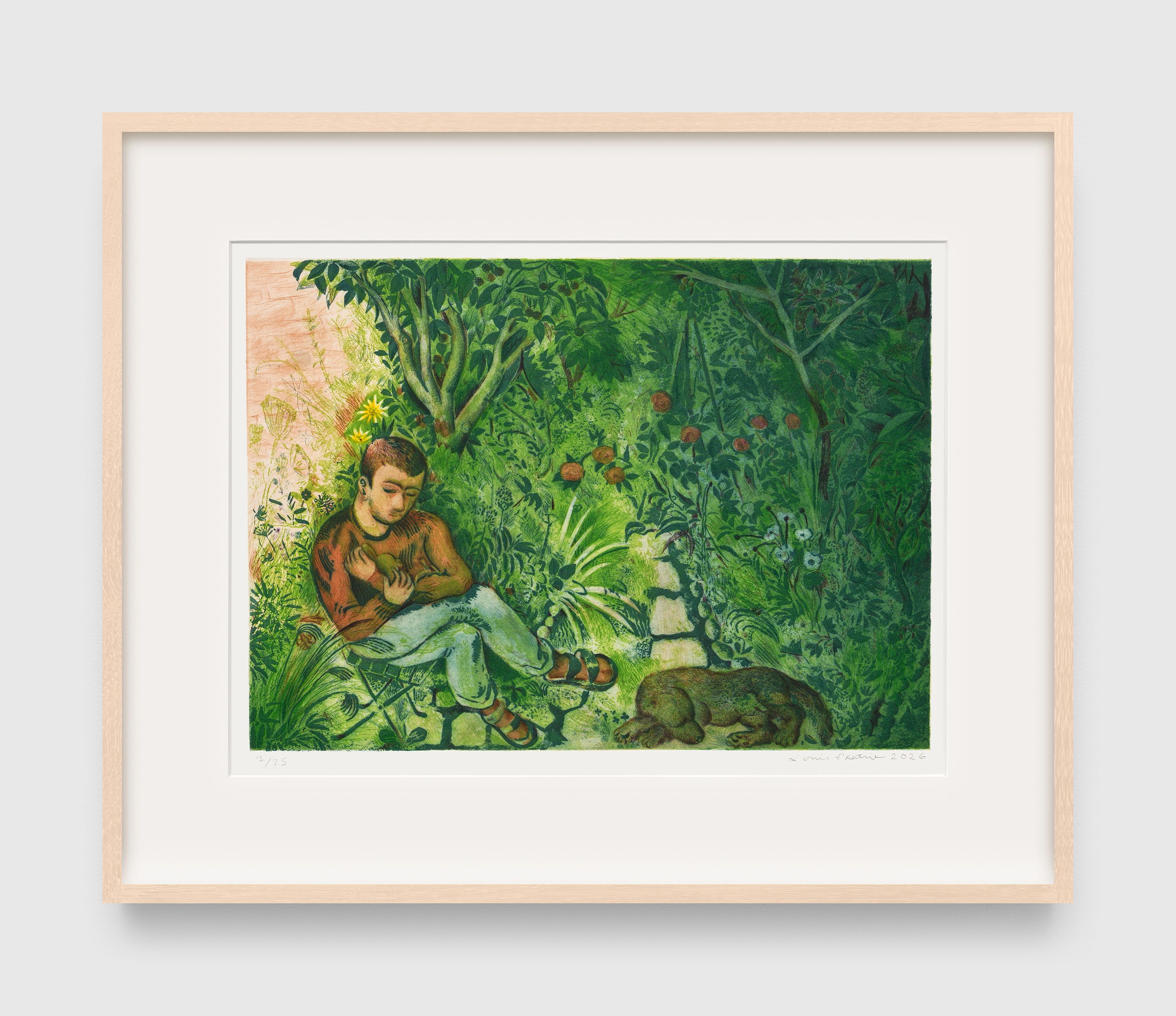
Louis Fratino
September 3, 2026
For collectors, Fratino represents one of the clearest and most compelling opportunities in the current market for mid career American painting. His gallery representation at Sikkema Jenkins & Co. has positioned him carefully and well, and institutional interest in his work has grown steadily alongside his critical reputation. Works on paper from his early career, including pieces from 2017 and 2018, offer entry points into a practice that continues to deepen and expand.
Oil paintings command the greatest attention at auction and in the primary market, and works like Nasturtiums, with its layered color and botanical warmth, demonstrate why collectors return to his canvases again and again. The emotional charge of a Fratino painting does not diminish with time or familiarity. It tends, if anything, to grow. What Fratino ultimately offers, both to the culture at large and to the collectors who live with his work, is a reminder of why painting still matters.
In an era of spectacular scale and conceptual abstraction, his commitment to the small, the felt, and the close is an act of genuine artistic courage. He paints love, in all its quotidian and extraordinary forms, with a seriousness and a skill that place him firmly in the company of the painters who will define this era for future generations. To own a Fratino is to own a piece of that insistence, the belief that a life lived with care and attention is always worth painting.