Loretta Lux
Loretta Lux and Childhood's Luminous Mystery
Artist Spotlight · The Collection Editorial
There are artists whose work, once seen, becomes impossible to unsee. Loretta Lux belongs to this rare company. Since the early 2000s, when her otherworldly portraits of children began appearing at major art fairs and in the collections of serious photographers worldwide, she has occupied a singular position in contemporary photography, one that resists easy categorisation and rewards sustained looking. Her presence in the market has remained quietly powerful, with her dye destruction prints consistently attracting collectors who prize technical mastery alongside genuine conceptual depth.
Loretta Lux
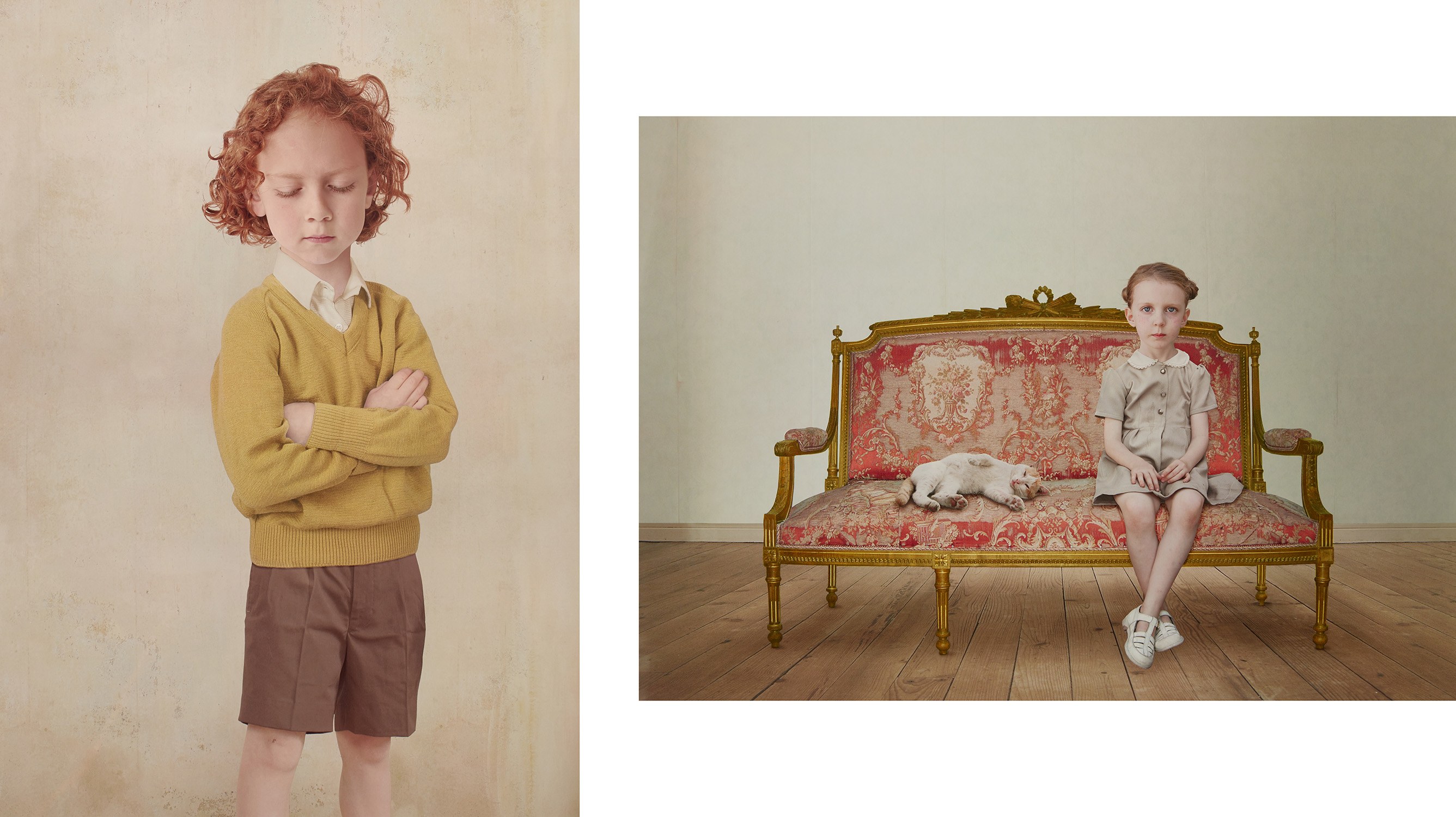
Boy in Yellow Pullover; The Waiting Girl
Lux was born in Dresden in 1969, growing up in East Germany during the final decades of the German Democratic Republic. This origin is not incidental to her work. The particular quality of stillness and displacement that saturates her images carries something of the interior world that shaped her early years, a landscape where the boundaries between official reality and private imagination were necessarily distinct. She later studied painting at the Academy of Fine Arts in Munich, and this foundation in classical technique is visible in every photograph she has ever made.
She approaches the photographic image the way a draughtsman approaches a drawing, with attention to tonal gradation, spatial recession, and the precise weight of a figure within a composition. Lux came to photography relatively late, after establishing herself as a painter, and brought her painterly intelligence with her fully intact. Her process is famously meticulous: she photographs children in her studio, then composites those figures into painted or digitally constructed backgrounds derived from landscape painting traditions stretching back through the German Romantic period toward the Dutch Golden Age. The results sit in a productive uncertainty between photograph and painting, between the documentary and the invented.
Loretta Lux
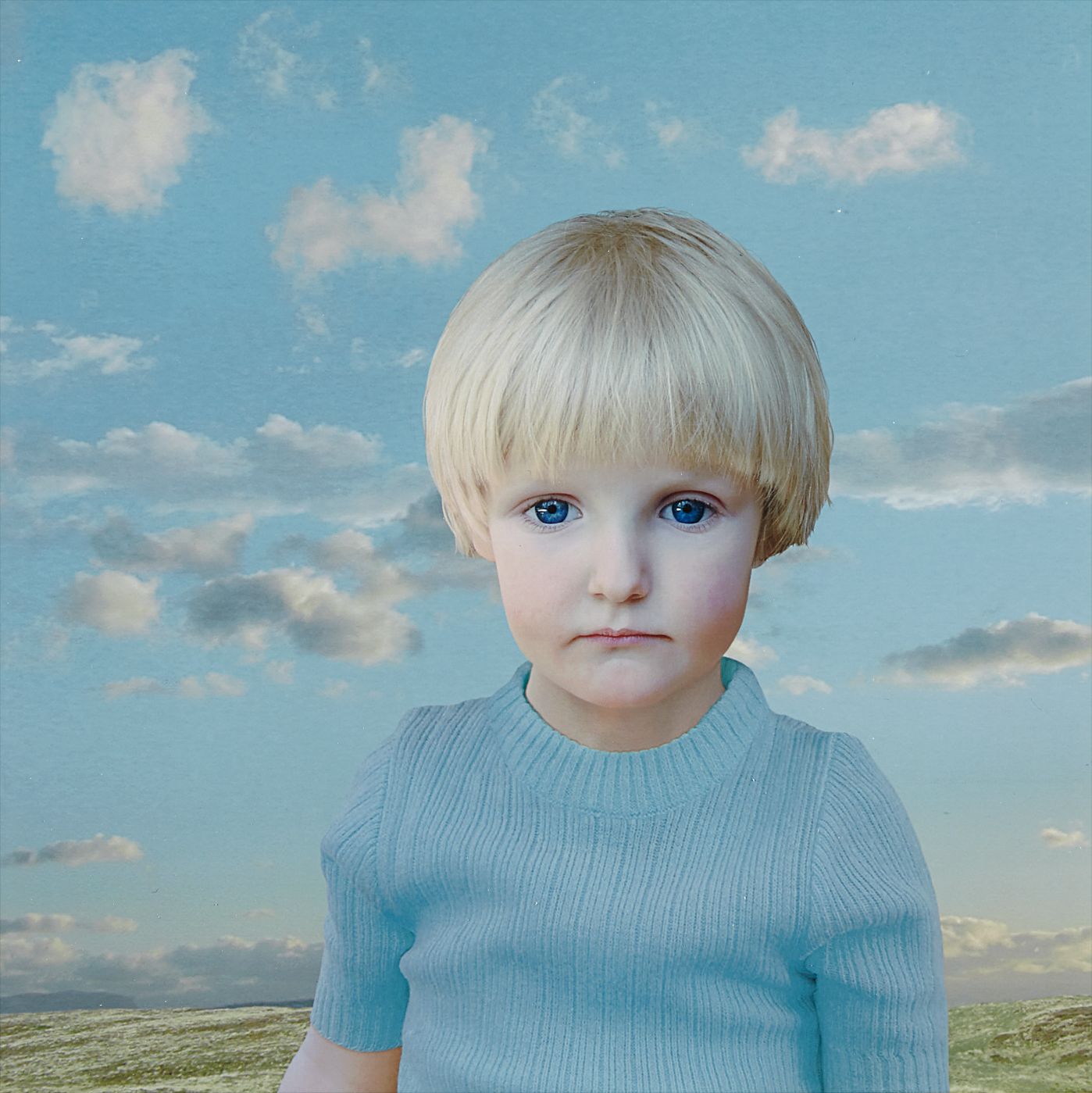
Isabella
This ambiguity is not a trick or a technical flourish; it is the conceptual core of her practice. She is making pictures about the way childhood exists simultaneously inside lived experience and inside cultural fantasy. The works for which Lux is best known share a distinctive visual grammar. Her child subjects gaze outward with expressions of profound self containment, neither welcoming the viewer nor refusing them.
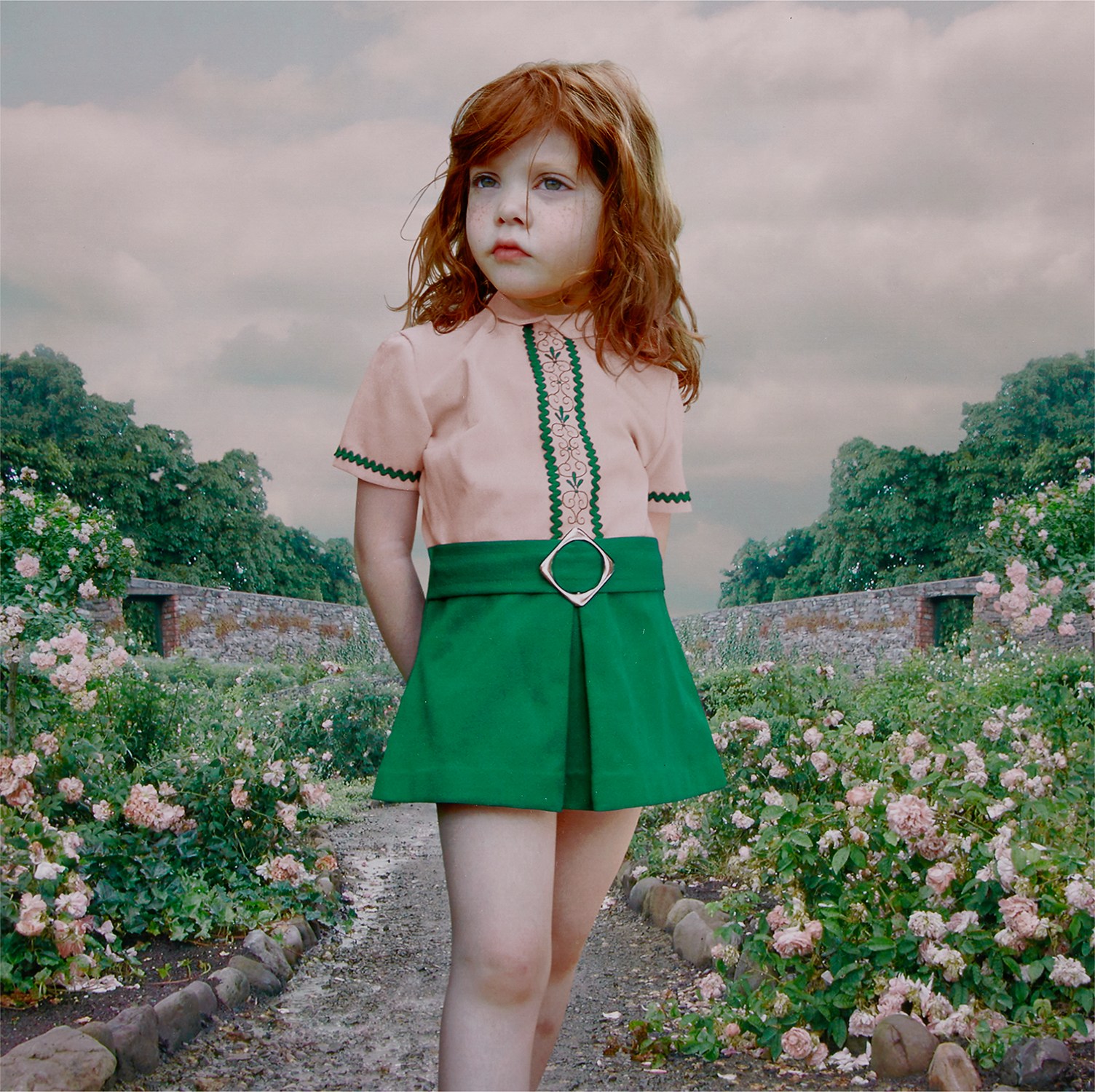
They inhabit spaces that feel both familiar and inaccessible, meadows, interiors, and undefined atmospheric zones bathed in a diffused northern light that seems to come from no identifiable source. Works such as The Rose Garden, The Waiting Girl, and The Waving Girl carry this quality with particular intensity. In each, the figure is rendered with extraordinary precision while the surrounding world dissolves into something closer to memory or anticipation than observed reality. Study of Boy 1, Study of Boy 2, and Study of a Girl 1 operate with an even more concentrated simplicity, placing the subject against minimal grounds that recall both formal portraiture and scientific illustration, as though the child were being catalogued by some gentle and attentive civilization.
Loretta Lux
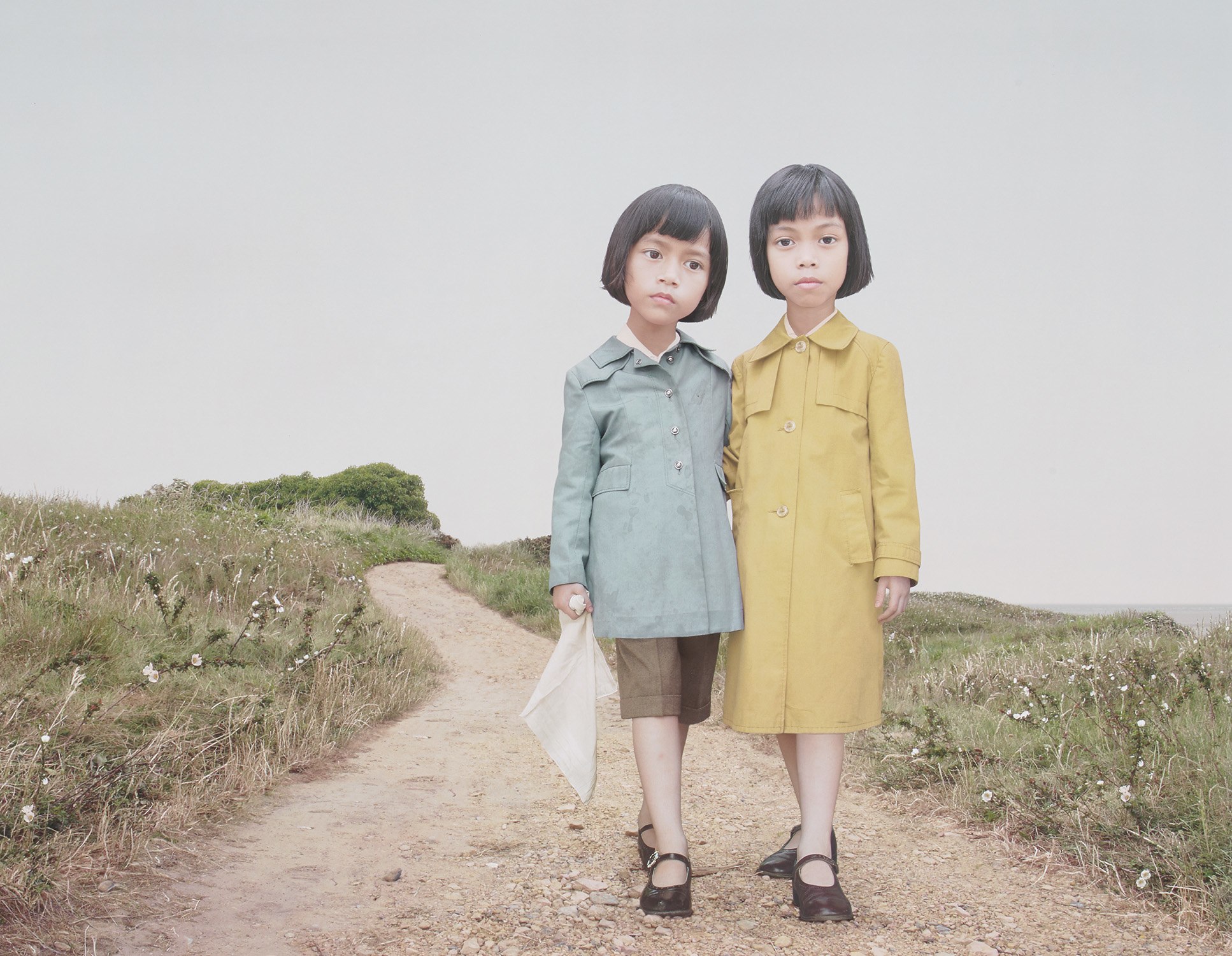
The Walk
The dye destruction print, the process Lux favours almost exclusively, is itself a significant choice. Also known as the Ilfochrome or Cibachrome process, it produces prints of extraordinary colour saturation and archival stability from positive film originals. The process is demanding and the results are materially sumptuous, with a depth and luminosity that cannot be replicated by inkjet or other digital output methods. For collectors, this matters enormously: the physical object one acquires is genuinely beautiful in its own right, and its longevity is well established.
Lux produces her editions in small numbers, which has supported consistent demand in the secondary market. Her works have appeared regularly at Phillips, Sotheby's, and Christie's, where her most sought after images have achieved results that reflect both their rarity and the enduring seriousness with which major collectors regard her practice. In terms of artistic lineage and context, Lux emerged at a moment of intense international attention to constructed and staged photography. She shares certain formal affinities with the Dusseldorf School tradition that produced Andreas Gursky, Thomas Ruff, and Thomas Struth, though her sensibility is far more intimate and psychologically concentrated than the cool, analytical distance associated with that group.
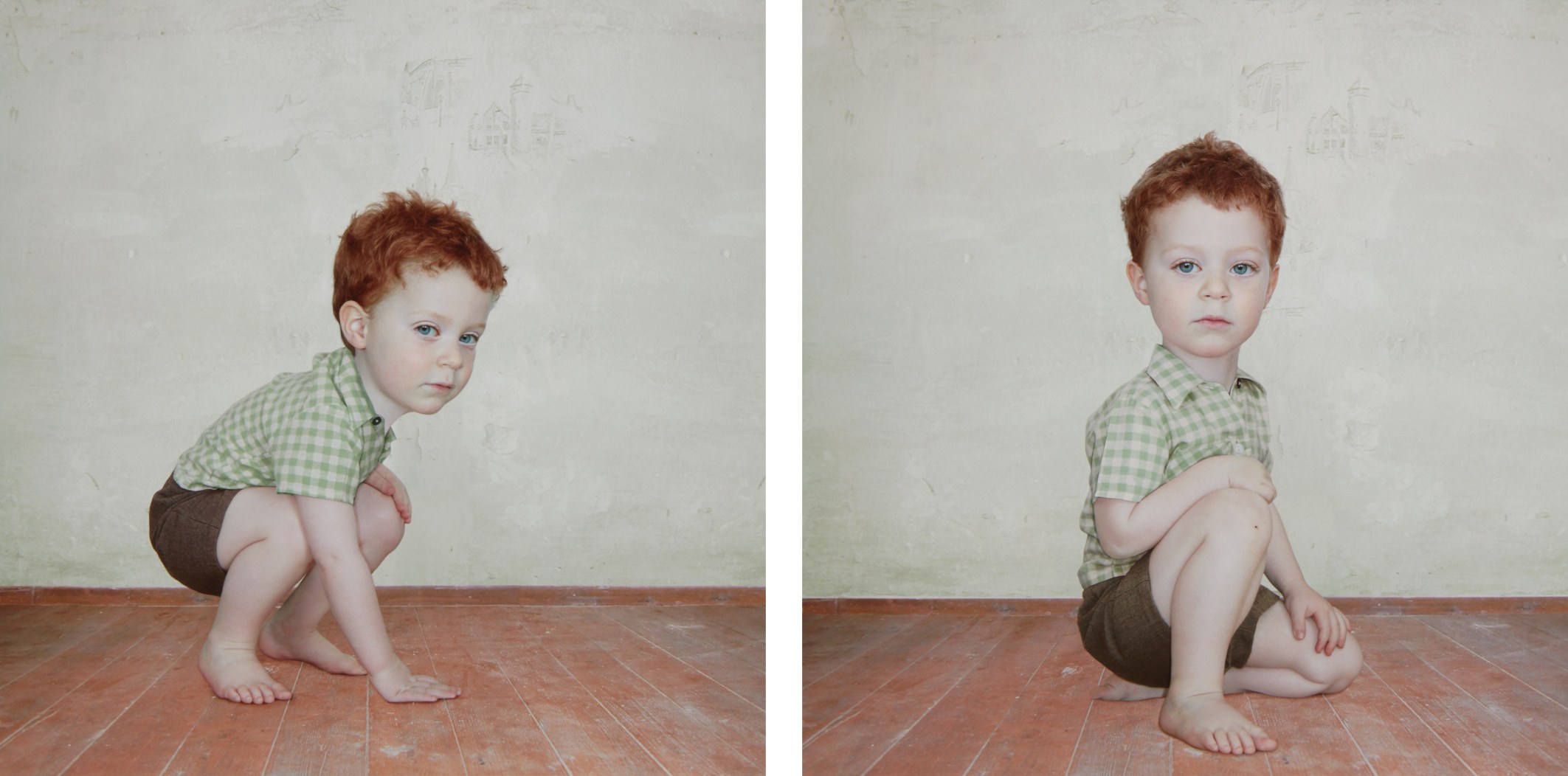
Loretta Lux
Study of Boy 1 and Study of Boy 2
The more revealing comparisons are with photographers such as Rineke Dijkstra, whose portraits of young people at threshold moments carry a related quality of suspended time, or with Julia Margaret Cameron, whose Victorian portraits of children and women she likewise suspends between idealization and intense human specificity. The art historical context that feels most accurate, however, is the tradition of Northern European painting itself. Standing before a Lux print, one thinks of Caspar David Friedrich's atmospheric grounds, of Vermeer's treatment of interior light, of the way Flemish portraiture used a still figure to hold an entire psychological universe in suspension. For collectors approaching Lux for the first time, the breadth of her available works presents both an opportunity and a useful guide to her range.
The solo figure studies reward extended contemplation and work beautifully in intimate spaces; they have a quality of presence that is almost impossible to attribute to technique alone. The paired works such as Boy in Yellow Pullover and Sasha and Ruby 1 introduce a relational dimension that opens the work toward questions of companionship, difference, and the social world of childhood. Hopper, face mounted to Plexiglas, demonstrates how the physical presentation of her work can amplify its dreamlike quality, the reflective surface adding another layer of remove between the viewer and the image. Collectors with an eye for the long term would do well to note that her output has been deliberately limited and that institutional interest in her practice continues to grow.
Loretta Lux matters today precisely because the questions her work poses have not become easier with time. In an era of ubiquitous images of children, saturating social media and commercial culture alike, she makes work that insists on the strangeness and the privacy of childhood. Her images do not illustrate childhood; they think about it, formally and philosophically, with the full resources of the Western painting tradition deployed through a contemporary photographic intelligence. She has built a body of work that is both deeply rooted in art history and completely without precedent, a combination that the best collecting instincts have always recognised and valued.
Explore books about Loretta Lux