Lois Dodd
Lois Dodd Sees Everything Worth Seeing
Artist Spotlight · The Collection Editorial
“I like the transient things, the light changing, a truck going by.”
Lois Dodd, interview with the Brooklyn Rail
In the autumn of 2023, the art world paused to take proper stock of Lois Dodd, a painter who has spent the better part of a century doing something deceptively simple: standing before the world and looking at it with unflinching honesty. Now in her late nineties, Dodd continues to paint, a fact that strikes those who encounter her work not as remarkable for its rarity but as utterly inevitable. Her canvases and panels feel less like finished objects than like ongoing conversations with the light, the land, and the quiet architectures of everyday American life. Dodd was born in 1927 in Montclair, New Jersey, and came of age artistically in postwar New York, a city crackling with ambition and argument.
Lois Dodd
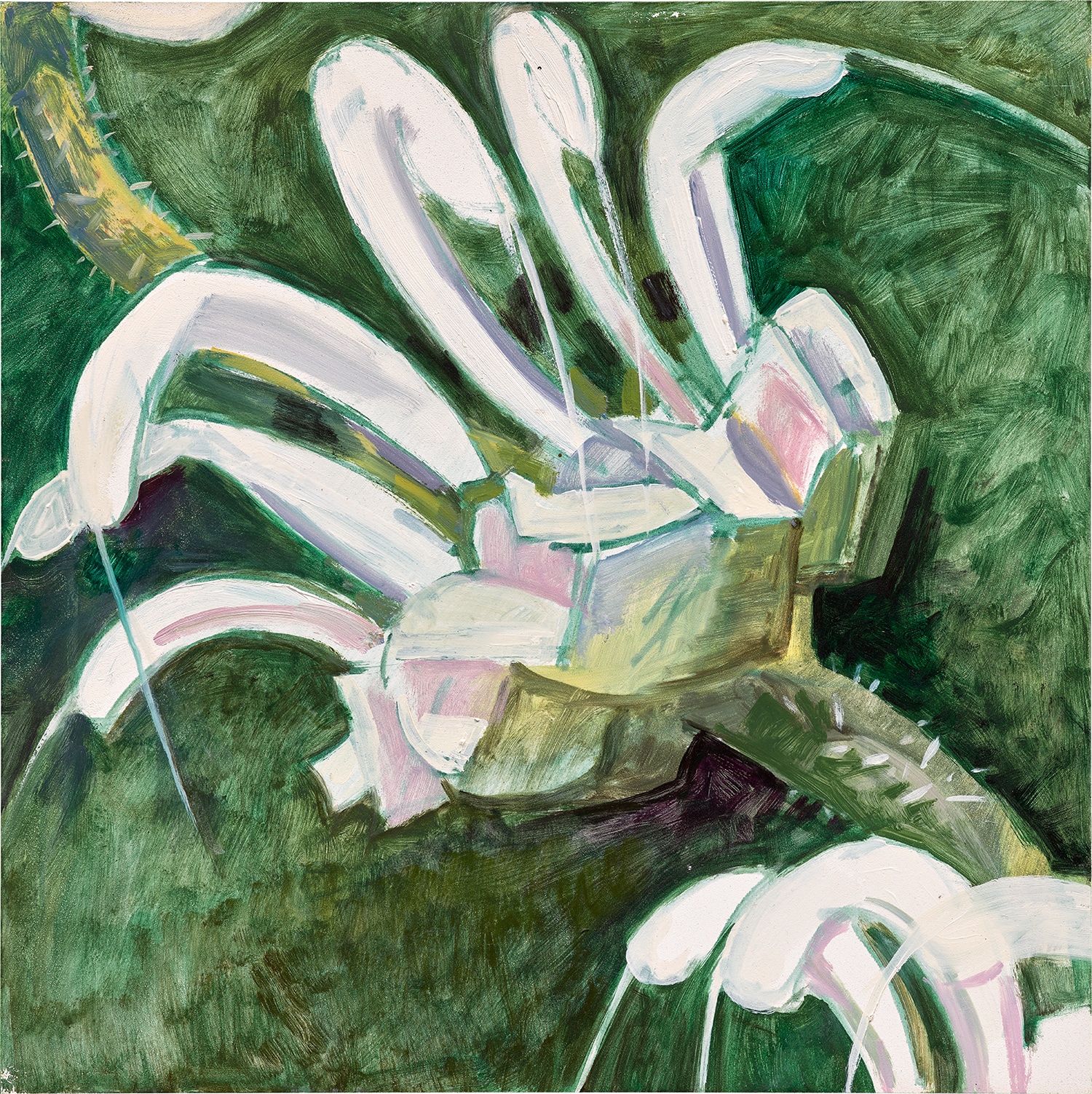
Salvia Argentea II, 2010
She studied at the Cooper Union in Manhattan, where she absorbed the rigorous training that would serve as ballast against the tides of abstraction sweeping through the studios around her. The New York of the late 1940s and early 1950s was a place where Abstract Expressionism commanded enormous prestige, where painters like Willem de Kooning and Franz Kline were rewriting the rules of what a painting could be. Dodd absorbed those energies without surrendering to them, a choice that required genuine confidence and a clear sense of her own artistic priorities. In 1952, Dodd helped found the Tanager Gallery on East Tenth Street, one of the very first artist run cooperative galleries in New York City.
This was a foundational act, both for the downtown art scene and for Dodd herself. The cooperative model placed artists in control of their own exhibition lives, outside the gatekeeping structures of commercial galleries and institutional tastemakers. Among the artists who showed at the Tanager and participated in the downtown milieu were figures who would go on to define American art across several decades. Dodd moved through this world as a peer and a participant, showing her work and sharpening her vision in dialogue with others who were equally serious about painting.
Lois Dodd
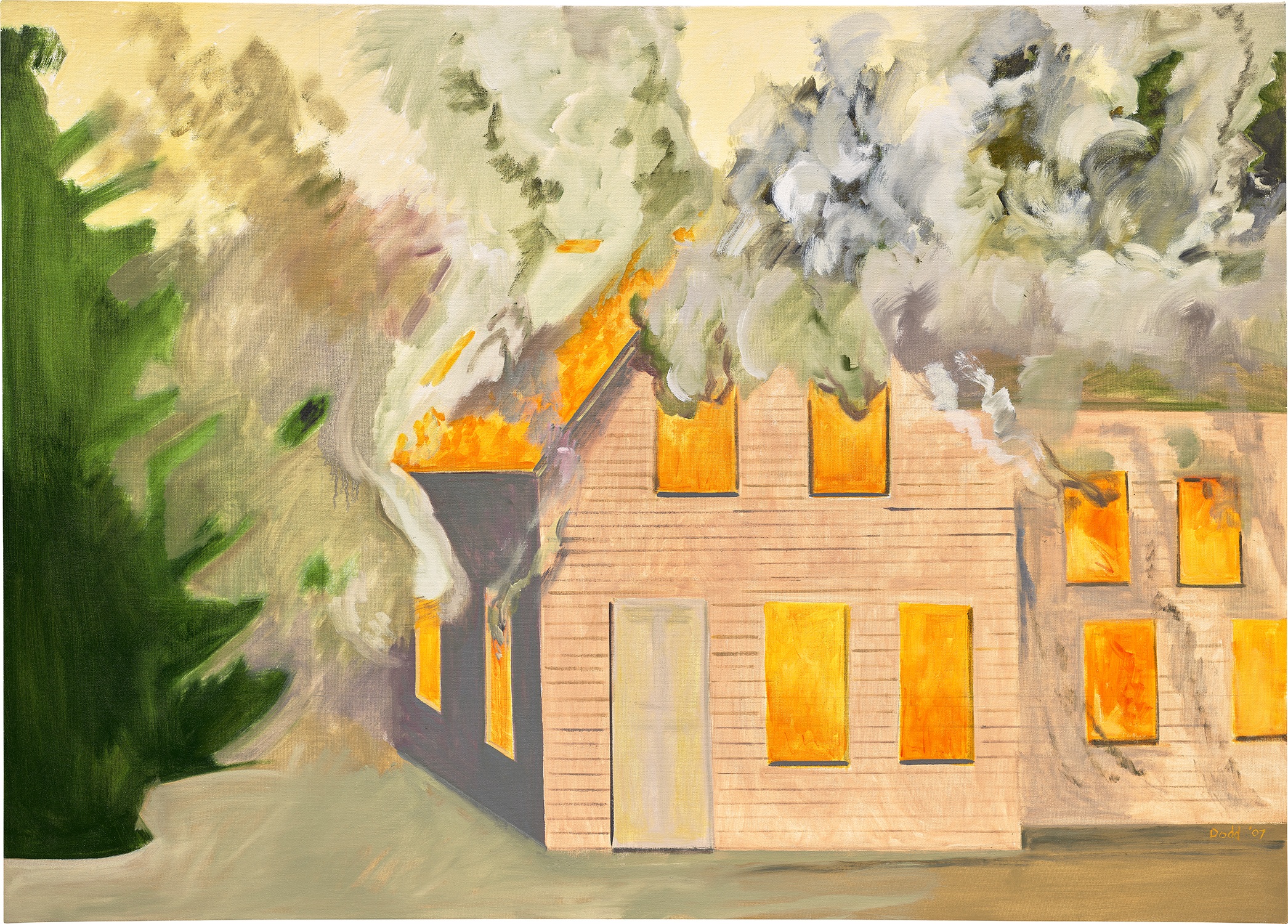
Burning House with Clapboards, 2007
Her artistic development across the 1960s and 1970s charts a steady deepening of her commitment to direct observation. Dodd divides her time between New York City, Maine, and Delaware, and the particular qualities of light in those places have shaped her palette and her compositional instincts profoundly. She paints outdoors whenever possible, working quickly to capture the specific conditions of a given moment: the angle of afternoon sun through a window frame, the way snow absorbs shadow, the almost electric stillness of a garden in midsummer. Acrylic gave way to oil as her medium of choice, and the surfaces of her panels and boards carry the evidence of a practiced hand that never loses its appetite for the seen world.
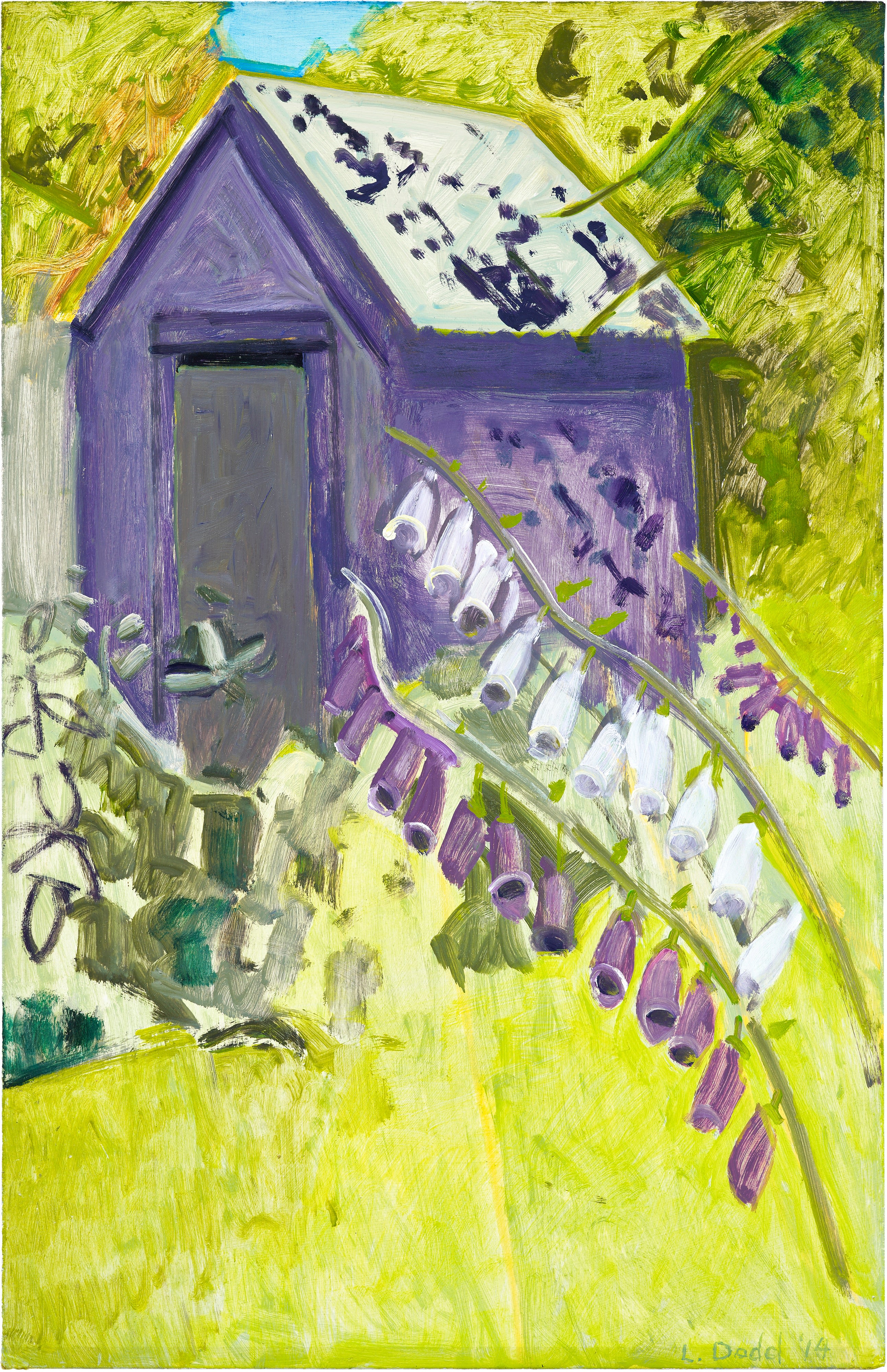
Among the works available through The Collection, several stand as particularly persuasive arguments for Dodd's importance. "Burning House with Clapboards" from 2007 is one of her most arresting images, a painting in which architecture and atmosphere enter into an almost theatrical confrontation. The clapboard siding, so distinctly American in its modesty and its ubiquity, becomes something monumental when filtered through Dodd's gaze. "Foxglove and Shed" from 2014 demonstrates her ability to find the lyrical within the overlooked: the shed is not a backdrop but a presence, and the foxglove surges upward with an energy that feels genuinely observed rather than composed.
Lois Dodd
Foxglove + Shed, 2014
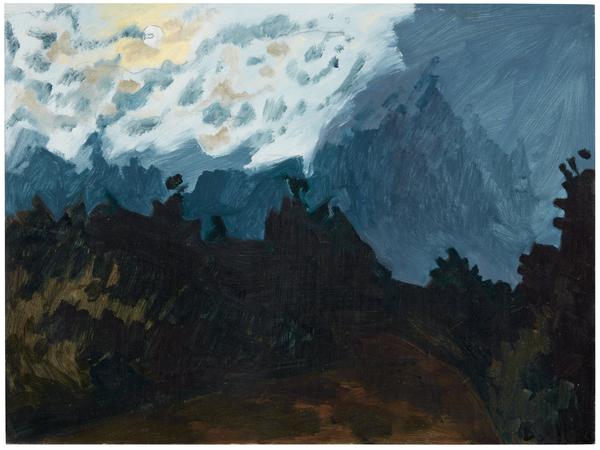
"Moon and Road" from 1983 and "View through Broken Tree" from 1986 show her at her most quietly adventurous, using the geometry of landscape elements to organize pictures that feel both accidental and precise. Earlier works like "Wild Geraniums" from 1974 reveal how long she has been pursuing this particular quality of attentiveness. For collectors, Dodd presents a compelling and still relatively accessible opportunity within the canon of American realist painting. Her career spans seven decades, which means that works from different periods carry quite different characters and speak to different moments in her artistic evolution.
Early oils from the 1970s and 1980s have a certain looser energy; later works show a painter who has earned every shortcut she takes, every area of paint left to breathe without overworking. Her monoprints, including works like "Two Nudes and Laundry" and "White Truck," offer a different register of her sensibility, one that is more graphic and gestural, and they represent an excellent entry point for collectors who want to live with her way of seeing without committing to the investment a major oil on panel requires. As institutional recognition of her work continues to grow, including holdings at the Metropolitan Museum of Art and the Whitney Museum of American Art, the market for her paintings is likely to reflect that seriousness with increasing consistency. To place Dodd within art history is to understand her as part of a lineage that includes Fairfield Porter, Neil Welliver, and Alex Katz, painters who held the observed world as the primary source of meaning at a time when that position required defending.
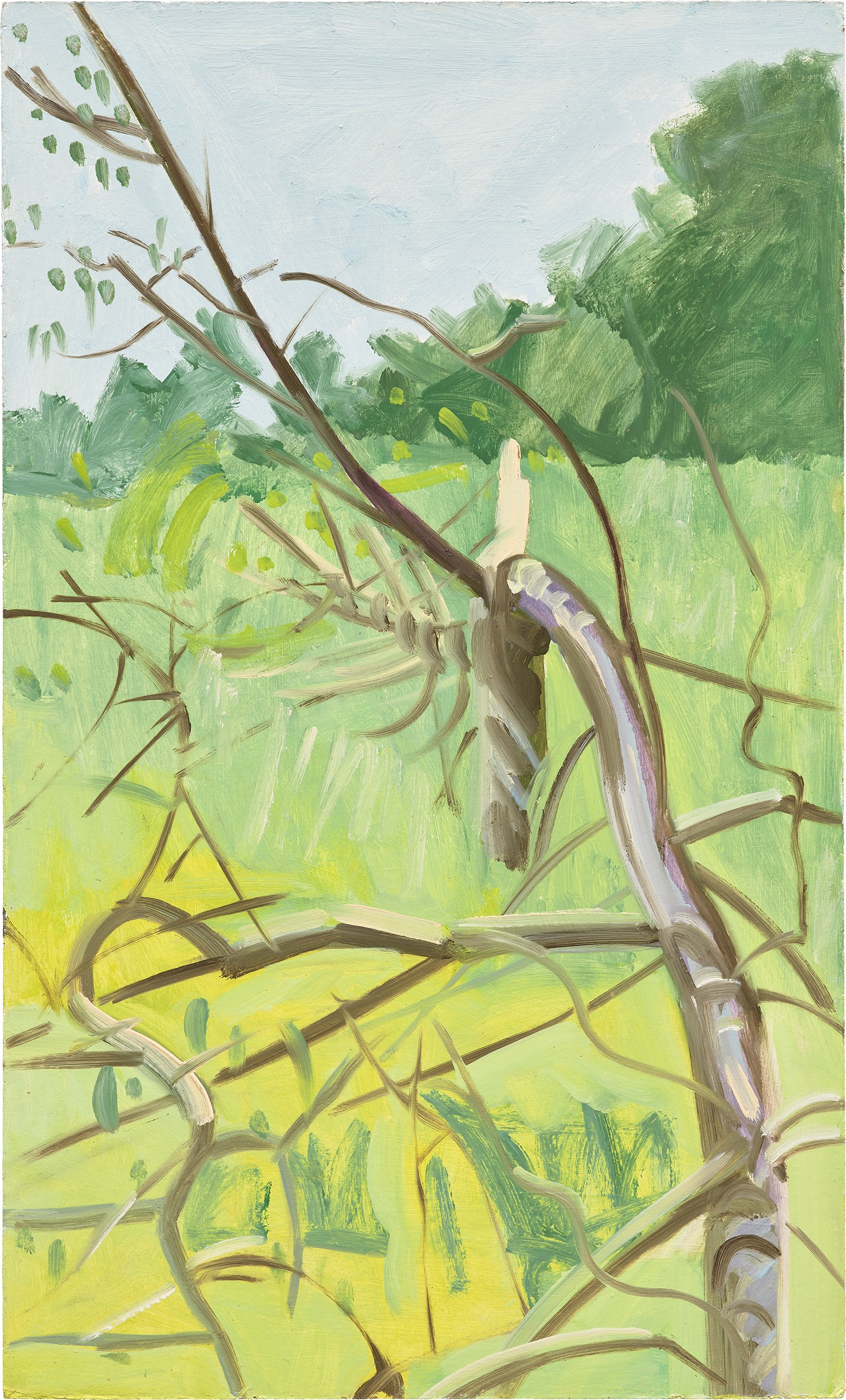
Lois Dodd
View through Broken Tree, 1986
Like Porter, she brings a painterly sophistication to subjects that might seem humble at first glance. Like Welliver, she understands landscape as a structural problem as much as an emotional one. But Dodd has her own frequency, her own particular attunement to the in between moments of the day and the season, the moments when light does something specific and temporary that no one thought to record before she arrived with her board and her brushes. What makes Dodd matter today, in a cultural moment saturated with images and skeptical of sincerity, is precisely her refusal to be anything other than genuinely present to her subject.
Her paintings do not argue for themselves; they simply show what she saw, and that turns out to be enough. More than enough. The institutions that have collected her work recognized something that private collectors are now catching up to: that Dodd has built, painting by painting across decades, one of the most coherent and quietly radical bodies of work in American art. To own one of her pictures is to receive a sustained lesson in attention, in the patience required to see the world rather than simply move through it.