Lizard-Man Figure
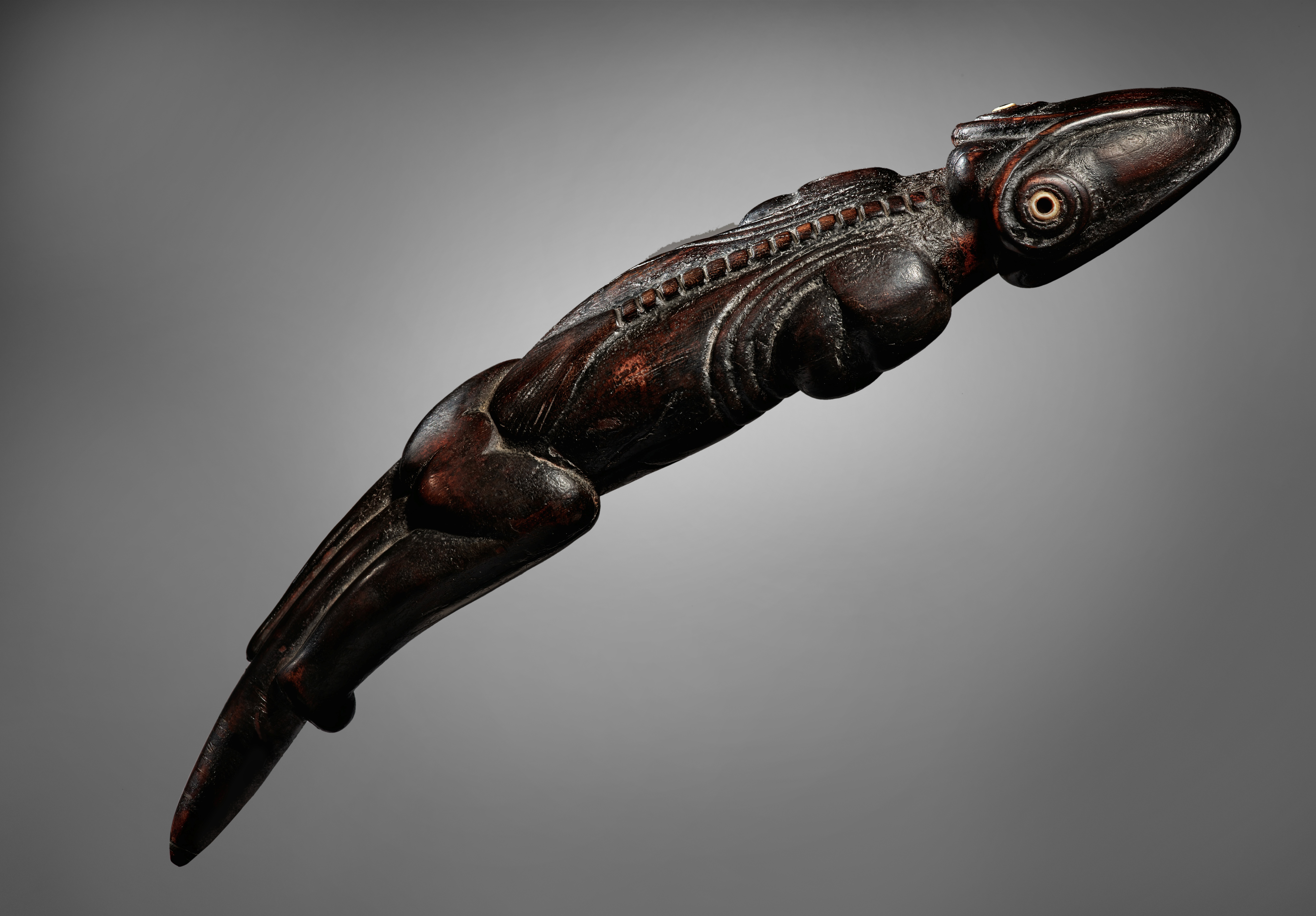
Ancient Spirits Carved Into Living Stone
Artist Spotlight · The Collection Editorial
In the windswept volcanic landscape of Rapa Nui, an island sitting alone in the southeastern Pacific Ocean more than two thousand miles from the nearest continental coastline, a particular category of sculptural object has captured the imagination of anthropologists, collectors, and art historians for centuries. Among the most compelling of these objects is the lizard man figure, a sculptural form that occupies a singular place in the visual culture of Easter Island and in the broader story of Polynesian art. Recent years have seen renewed scholarly and collecting interest in these works, as institutions including the Musée du quai Branly in Paris and the Bishop Museum in Honolulu have deepened their engagements with Rapa Nui material culture, inviting new generations of collectors to look seriously at one of the most spiritually charged artistic traditions in the Pacific world. The origins of Rapa Nui sculptural tradition reach back to the island's first settlement, now generally dated by archaeologists to somewhere between 700 and 1200 CE, when Polynesian voyagers arrived after extraordinary feats of open ocean navigation.
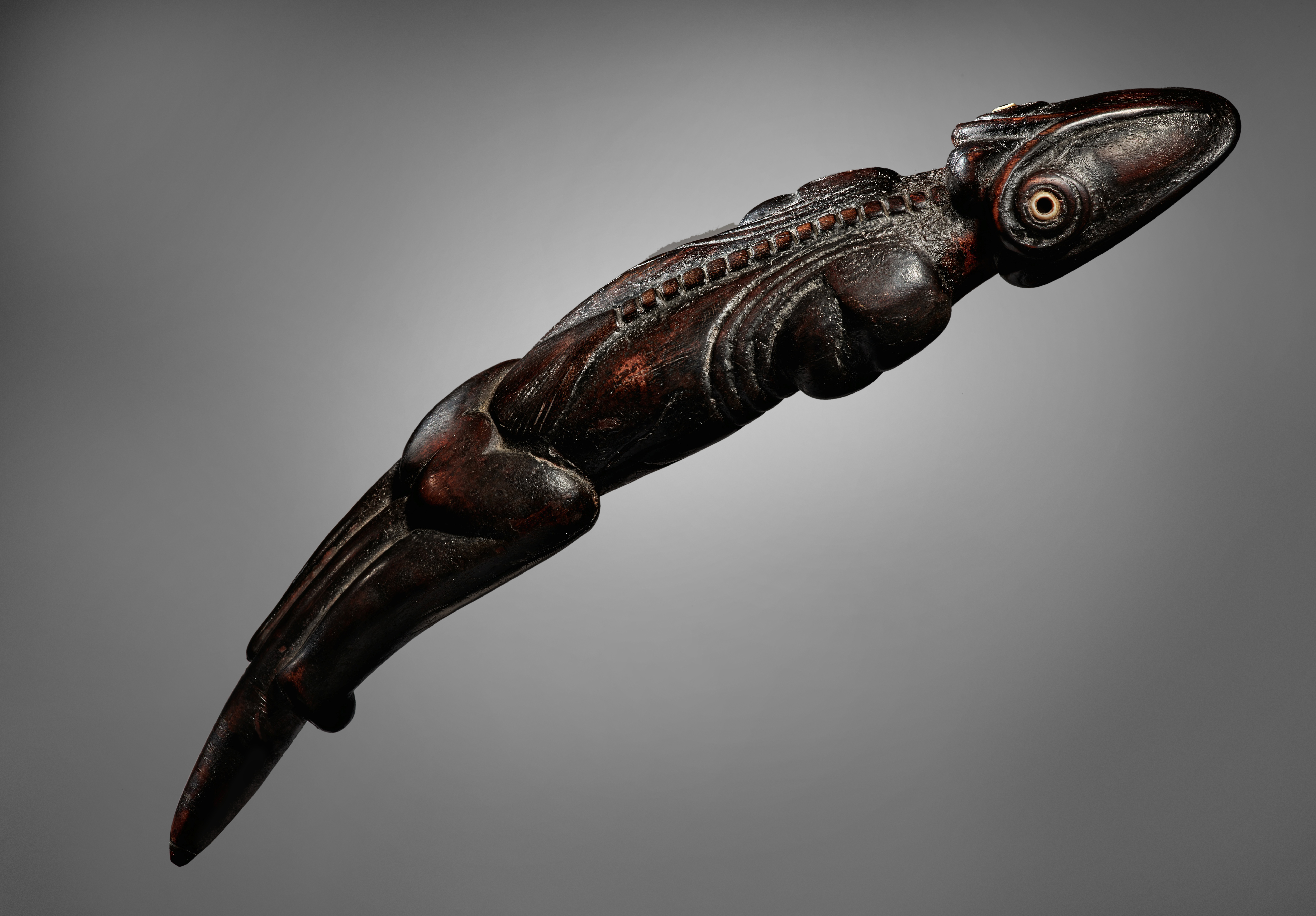
Lizard-Man Figure
Lizard-Man Figure, Easter Island (Rapa Nui)
The people who came to this remote island brought with them a rich tradition of carving, a relationship with ancestor veneration, and a cosmological framework in which the boundary between the human and the non human was understood to be permeable and alive. This foundational worldview would give rise over the following centuries to one of the most distinctive sculptural canons anywhere in the world, encompassing the great stone moai, the intricate rongorongo script tablets, and a remarkable range of smaller carved figures that mediated between the living and the spirit realm. The lizard man figure, known in the Rapa Nui language as moko miro when carved from toromiro wood, represents one of the most visually arresting expressions of this tradition. These figures combine human and reptilian characteristics in ways that reflect deep cosmological significance rather than mere decorative invention.
Lizards held a particular status in Rapa Nui belief as manifestations of ancestral spirits and as liminal beings capable of moving between worlds. The figures that embody this duality are carved with elongated bodies, articulated limbs, and faces that register an intensity of presence that feels immediate even across the distance of centuries. The carving is not naturalistic in a Western sense but rather operates according to a formal logic that prioritizes spiritual legibility over anatomical accuracy. What distinguishes the finest examples of lizard man figures is the quality of attention brought to their surface and proportion.
The carvers of Rapa Nui worked primarily in toromiro, a wood native to the island that has extraordinary density and a fine grain ideally suited to detailed work. The best preserved examples show a mastery of negative space and silhouette that rewards sustained looking, with forms that read differently depending on the angle of light and the position of the viewer. Museum quality examples, including those held in the collections of the Smithsonian Institution and the Ethnologisches Museum in Berlin, demonstrate the range of scale and formal invention within this tradition, from small portable figures that could be held in the hand to larger ceremonial objects of considerable presence. For collectors, the lizard man figure represents a rare intersection of aesthetic power and art historical significance.
The market for authentic Rapa Nui carved objects is both active and properly scrutinized, with serious buyers working closely with provenance specialists and anthropological advisors to ensure the ethical integrity of any acquisition. Auction houses including Sotheby's and Christie's have periodically offered examples of Pacific material culture, and pieces with documented pre 1970 collection histories, in line with the UNESCO Convention on cultural property, are the benchmark standard for institutional and serious private acquisition. Collectors drawn to this tradition tend to have a broad interest in the sculpture of the ancient world and often place Rapa Nui objects in dialogue with works from pre Columbian Mesoamerica, sub Saharan Africa, and the ancient Mediterranean, traditions that share a commitment to making visible the forces that govern human experience. Within the broader context of Pacific and Oceanic art history, the lizard man figure occupies a position analogous in some ways to the ancestor figures of the Sepik River region of Papua New Guinea or the tiki forms of the Marquesas Islands.
All of these traditions are concerned with the materialization of ancestral power and the maintenance of relationships between the living community and those who came before. Scholars including Alfred Métraux, whose foundational ethnographic work on Easter Island in the 1930s remains essential reading, and Jo Anne Van Tilburg, whose contemporary research through the Easter Island Statue Project has transformed understanding of the moai, have helped establish the intellectual framework within which collectors and institutions now approach these objects. The lizard man figure benefits from this growing body of scholarship, which has moved Pacific art decisively from the margins of the art historical canon toward a more central position. The legacy of Rapa Nui sculptural tradition is inseparable from questions of cultural survival and revival.
The Rapa Nui people themselves have maintained continuous connection to their carving traditions, and contemporary artists of Rapa Nui descent continue to work with the forms and motifs of their ancestors while bringing new intentions and contexts to bear. This living continuity gives the lizard man figure a significance that extends well beyond the museum vitrine or the collector's gallery. It is an object that belongs to a tradition still being made and still being thought about by the community that originated it. For collectors who approach these works with the seriousness and respect they deserve, the reward is access to one of the great sculptural imaginations of the ancient world, one that continues to speak with remarkable directness across time and distance.