Liam Gillick
Liam Gillick Builds the Future Together
Artist Spotlight · The Collection Editorial
“I am interested in the space between things being proposed and things being resolved.”
Liam Gillick, interview with Mousse Magazine
When the Venice Biennale selected Liam Gillick to represent Germany in 2009, it was not merely an institutional honour but a declaration about the direction of contemporary art itself. Gillick, a British artist working from New York and London, filled the German Pavilion with a sprawling installation that questioned labour, productivity, and collective imagination. The choice was deliberately provocative, a non German artist speaking for a national pavilion, and it crystallised everything that makes Gillick one of the most intellectually vital figures of his generation. That moment remains a useful entry point into a practice that has never been content to simply make beautiful objects, even as it consistently produces them.
Liam Gillick
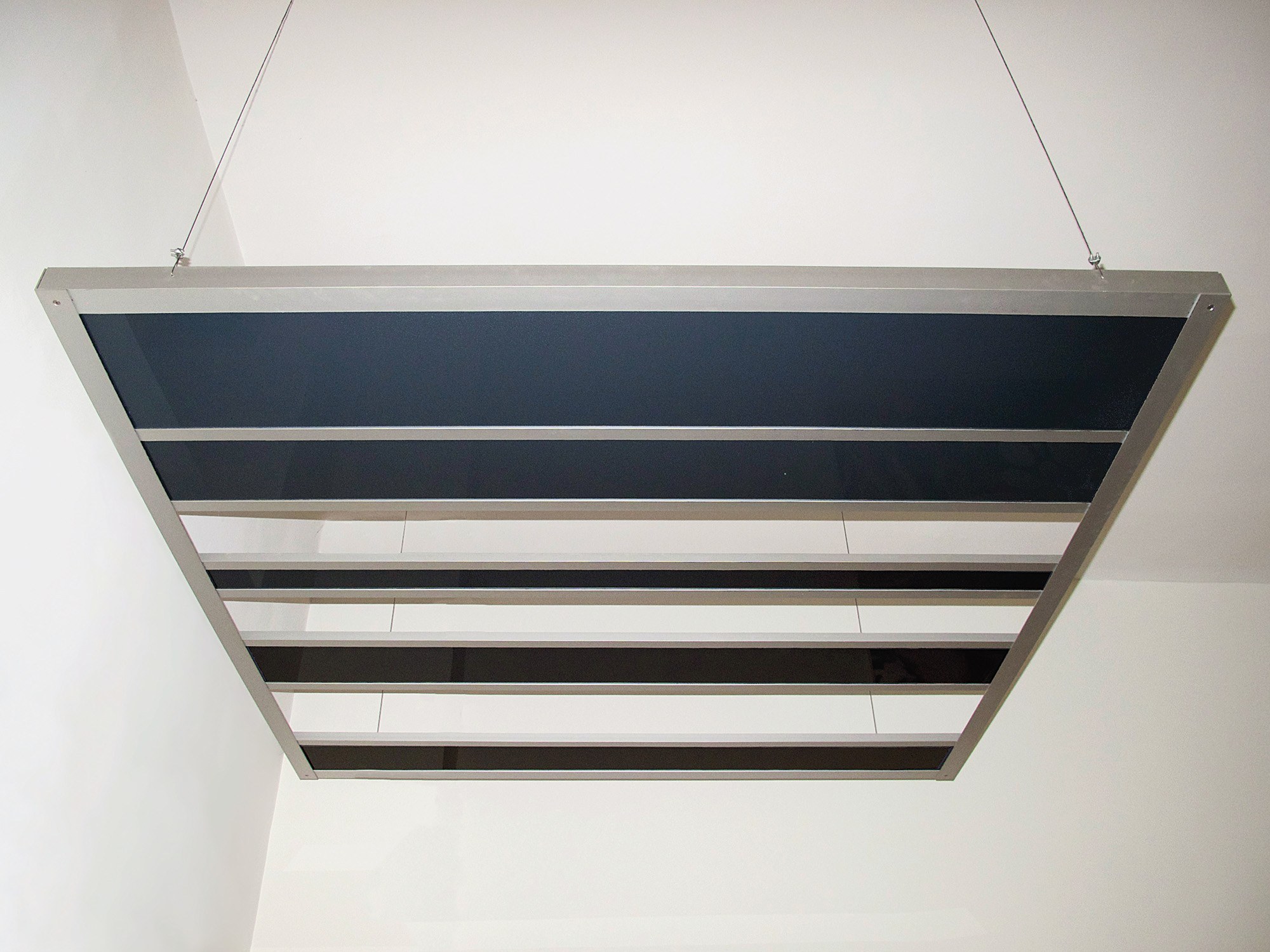
Multiplied Discussion Structure
Gillick was born in Aylesbury, England in 1964, and came of age at a moment when British art was undergoing a profound transformation. He studied at Hertfordshire College of Art and Design before completing his degree at Goldsmiths College in London in the late 1980s, a period and institution now legendary for the cohort it produced. Goldsmiths in those years was a crucible of ideas, shaped by tutors including Michael Craig Martin and by the energy of peers who would go on to define the Young British Artists movement. Gillick absorbed the conceptual rigour of that environment while charting his own course, one more interested in philosophy, political theory, and speculative fiction than in shock or spectacle.
What distinguished Gillick early on was his refusal to separate writing from making. From the beginning of his career in the early 1990s, he produced texts, books, and discursive projects alongside physical works, treating language as a material as real as aluminium or Plexiglas. His first major texts, including works that imagined alternative histories around figures like Robert McNamara, established a mode of practice in which narrative and object exist in genuine dialogue. This was not the artist as theorist producing work to illustrate ideas, but rather a thinker for whom the fabricated structure and the written sentence were equally capable of holding meaning.
Liam Gillick
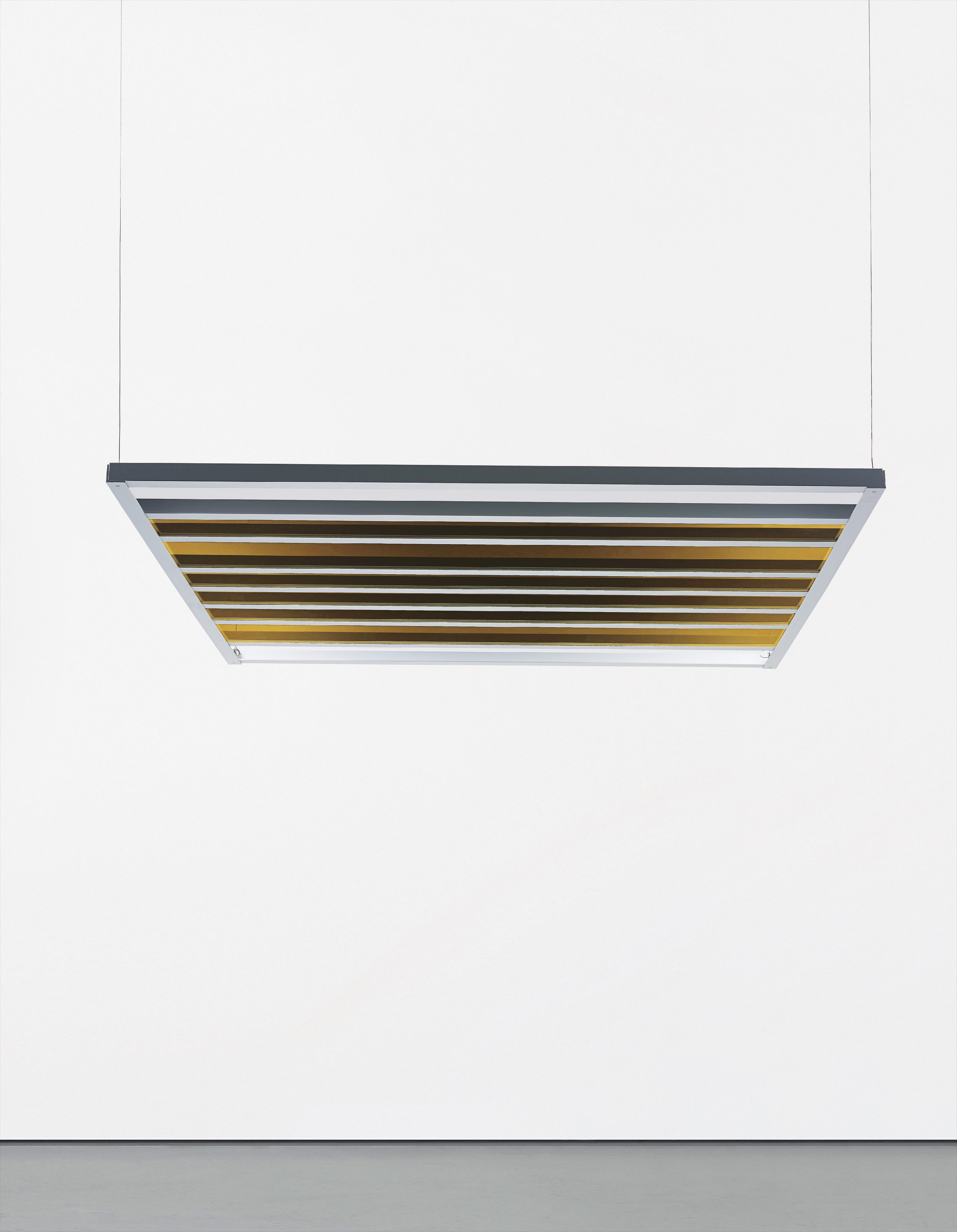
Potentiated Discussion Platform, 2004
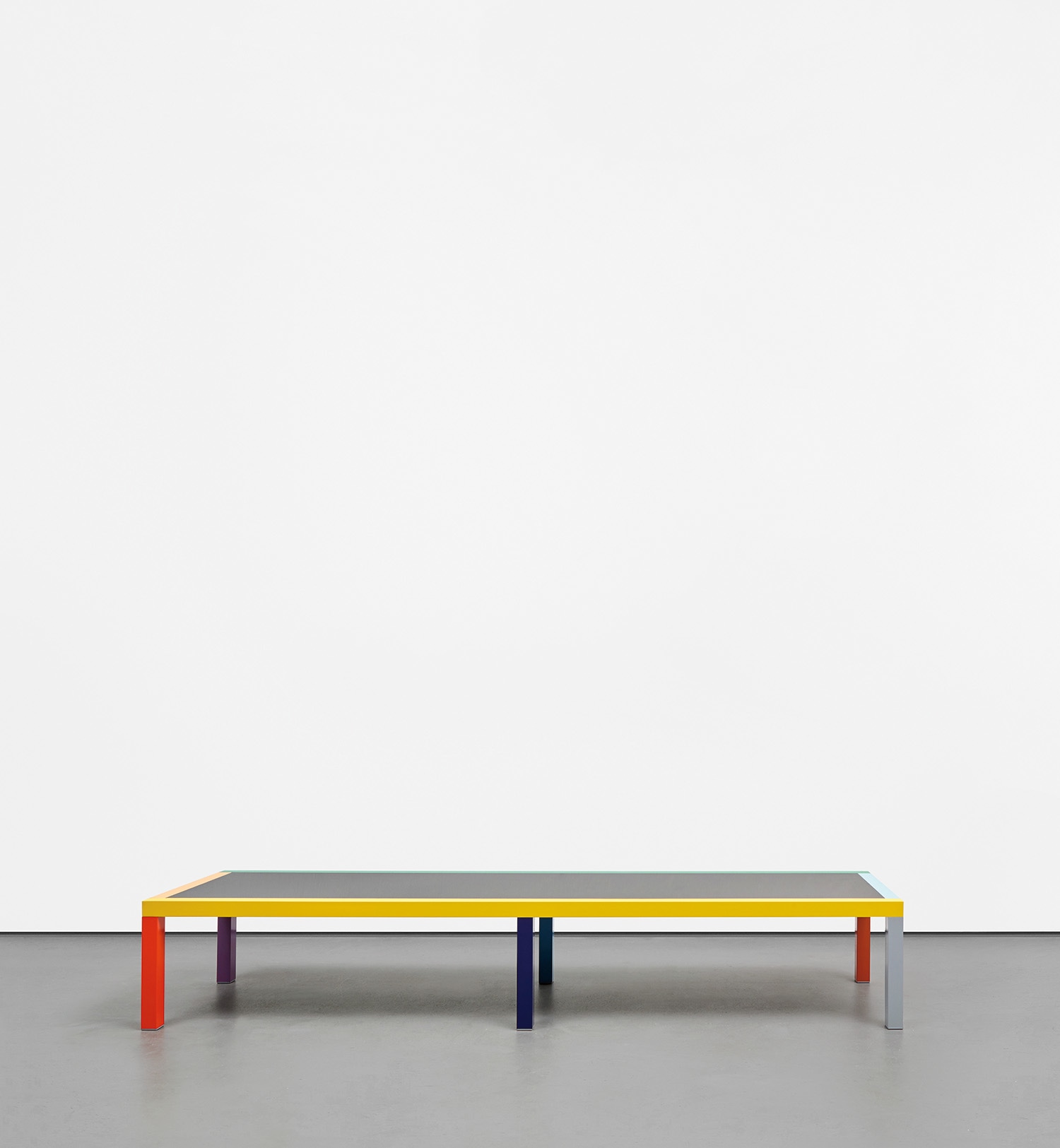
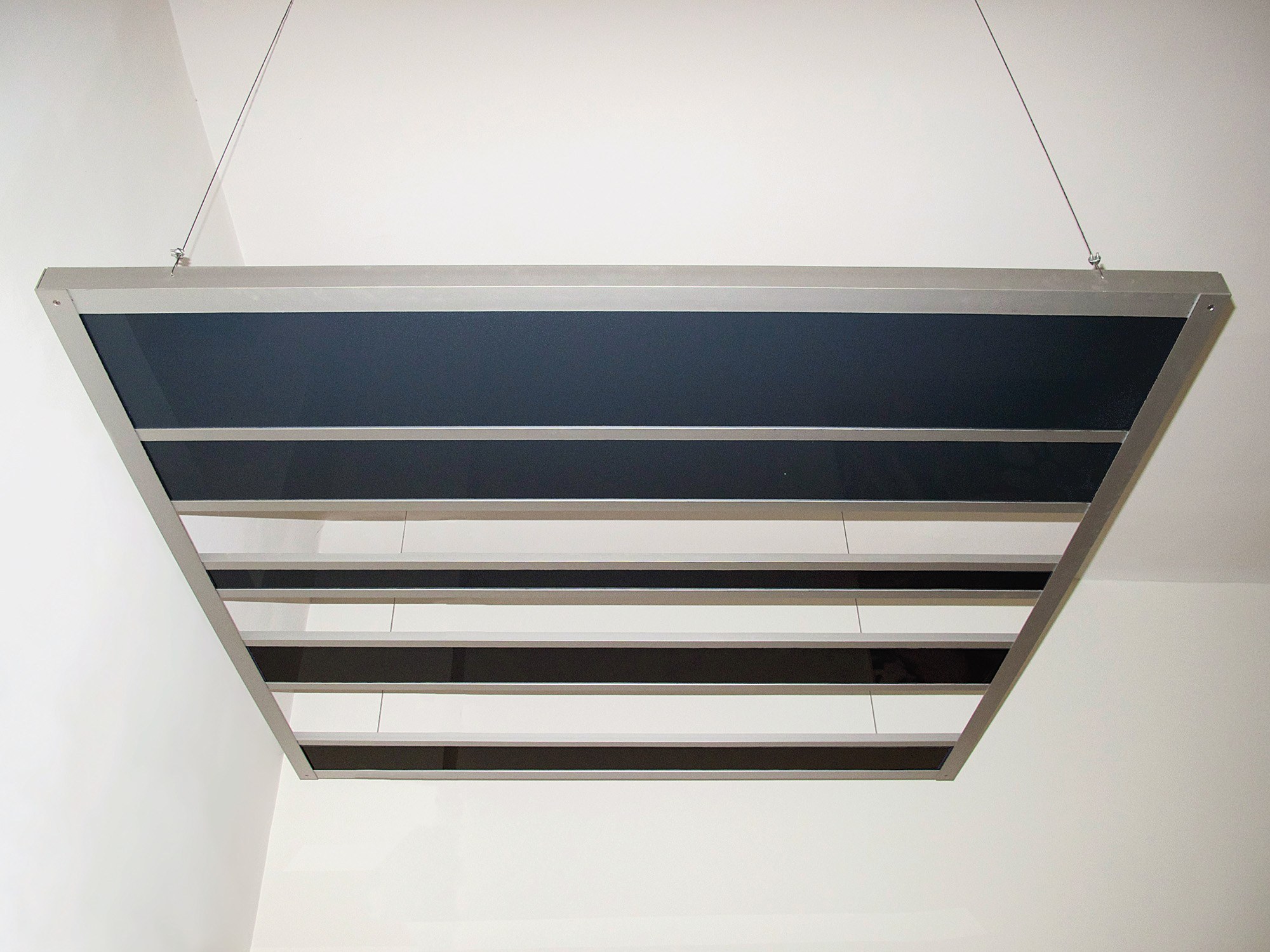
Galleries including Corvi Mora in London and Esther Schipper in Berlin became important homes for this work as it evolved through the 1990s and into the following decade. The signature formal language that collectors and institutions have come to associate with Gillick emerged most forcefully during the late 1990s and continued developing through the 2000s. Suspended aluminium platforms, coloured Plexiglas screens, and powder coated structures became his vocabulary, works that occupy space with the confidence of architecture while retaining the openness of furniture or stage sets. Titles like Potentiated Discussion Platform, Registration Platform, and Projected Location Platform, all from around 2000, carry the bureaucratic weight of corporate planning documents while simultaneously describing something genuinely poetic.
“The work is always about a potential that has not yet been realised, a future that keeps being deferred.”
Liam Gillick, Venice Biennale catalogue, 2009
The work sits in the space between the office and the utopia, between the meeting room and the dream of what the meeting room might someday produce. Obediens from 2001 and works such as Discussion Island Legitimation Platform extend this logic further, using the language of governance and process to construct objects of quietly radical beauty. The materials Gillick chooses are never arbitrary. Anodized aluminium carries associations with modernist architecture and industrial production.
Liam Gillick
Projected Location Platform #4, 2000
Coloured Plexiglas screens the light and filters perception, turning the act of looking into something mediated and self conscious. Works like A Game of War Structure from 2011 and Relieved Production Cycle sit on painted steel tables or rest against walls in ways that suggest function without fully committing to it. They are, as Gillick himself has articulated many times, proposals rather than conclusions, structures that anticipate a use which may or may not arrive. This quality of open potentiality is central to the emotional experience of living with these works, and it is a quality that collectors who acquire them frequently describe as inexhaustibly rewarding.
From a collecting perspective, Gillick occupies a fascinating position in the market. His editions and multiples, including works like Multiplied Discussion Structure and the complete set known as Literally No Place, offer access to his formal concerns at a range of price points, while unique sculptures and large scale installations represent significant institutional grade acquisitions. Major museums including the Museum of Modern Art in New York, the Tate in London, and the Centre Pompidou in Paris hold his work in their permanent collections, providing the kind of institutional endorsement that anchors long term value. Collectors drawn to the relational aesthetics movement of the 1990s, a theoretical framework that Gillick helped shape alongside figures such as Rirkrit Tiravanija and Philippe Parreno, often find his objects to be the most resolved and materially satisfying expressions of that tendency.
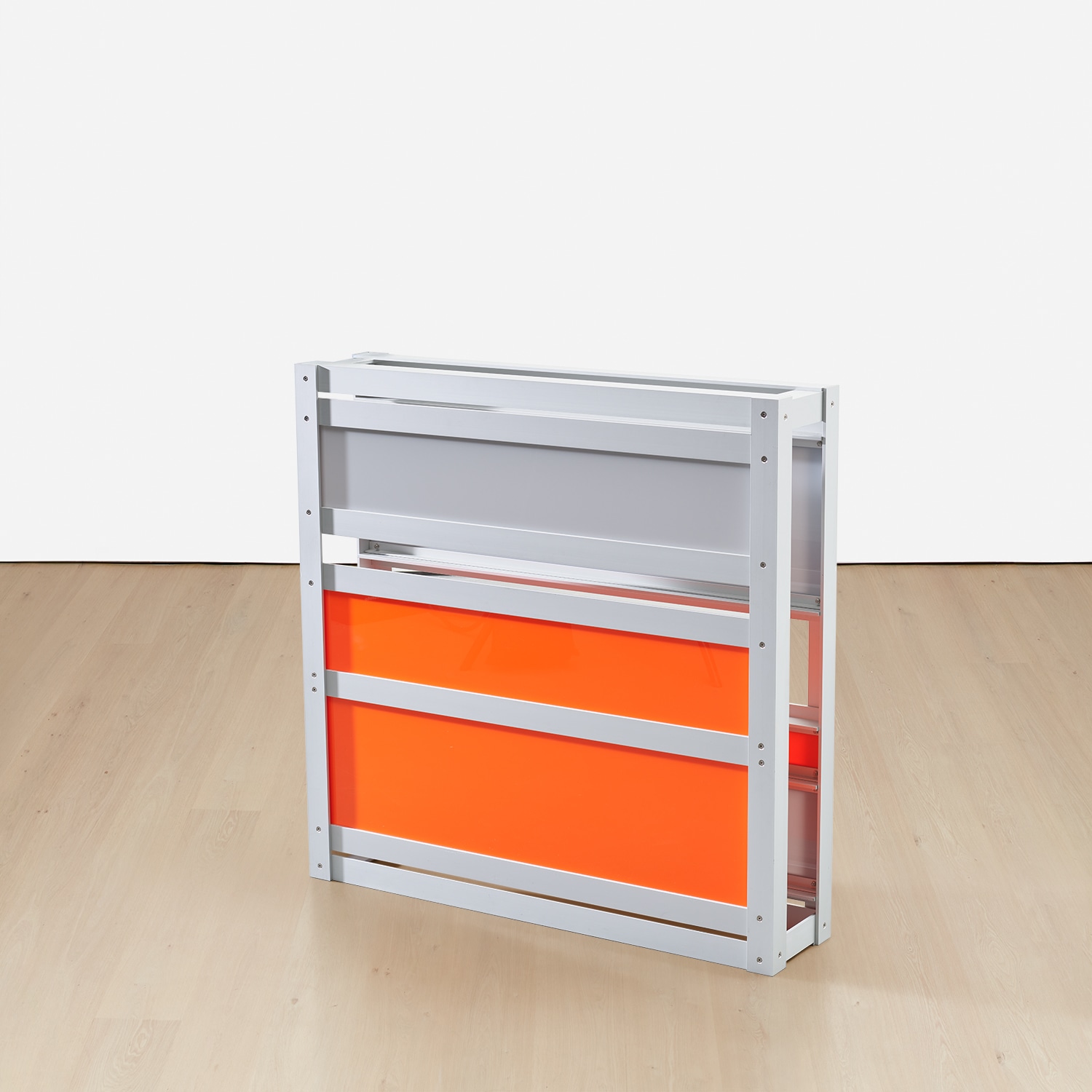
Liam Gillick
Obediens, 2001
To understand Gillick fully it helps to place him in the company of artists who share his interest in systems, structures, and the social dimensions of space. The work of Tiravanija invites comparison for its concern with participation and atmosphere, while the architectural installations of Carsten Höller and the text based practices of Lawrence Weiner offer adjacent reference points. There is also a clear lineage to the conceptual furniture and institutional critique of artists like Dan Graham and Andrea Fraser, practitioners for whom the conditions of exhibition are as meaningful as the objects exhibited. Gillick inherits and extends this tradition while bringing to it a distinctly literary sensibility and a formal elegance that is entirely his own.
What makes Gillick matter so urgently today is precisely the quality that has always defined his practice: an insistence that art can think seriously about how human beings organise themselves without becoming didactic or joyless. In an era of renewed anxiety about democracy, work, and collective life, his platforms and screens and discussion structures feel less like historical artefacts and more like live questions. They ask who gets to speak, where decisions are made, and what the designed environment assumes about the people moving through it. These are not small questions, and the fact that Gillick poses them through objects of such considered visual intelligence is a genuine gift.
For collectors, for institutions, and for anyone who believes that art has something meaningful to say about the world we share, his work continues to reward attention with extraordinary generosity.
Explore books about Liam Gillick
Liam Gillick
Museum of Modern Art
Liam Gillick: Recent Works
Whitechapel Gallery
Liam Gillick: The Wood Way
Various curators
Liam Gillick: Unified Field Theory
Barbara Steiner
Liam Gillick: Literally No Place
Serpentine Gallery