Li Chen
Li Chen: Where Heaven Meets Earthly Form
Artist Spotlight · The Collection Editorial
“I want my sculptures to have a spirit, to transcend the material world and touch the divine.”
Li Chen, artist statement
In the spring of 2019, visitors to the grounds of Château La Coste in Provence encountered something unexpected among the vineyards: a vast, luminous bronze figure, rotund and serene, appearing to drift effortlessly above the earth as though gravity were merely a suggestion. The work belonged to Li Chen, the Taiwanese sculptor who has spent more than three decades perfecting an art of impossible lightness. That a figure so massive in material terms could communicate such profound buoyancy is the central miracle of his practice, and it has earned him a place among the most celebrated sculptors working anywhere in the world today. Li Chen was born in 1963 in Taiwan, an island whose cultural identity sits at a rich and sometimes turbulent crossroads between ancient Chinese tradition and the modernizing currents of the twentieth century.
Li Chen
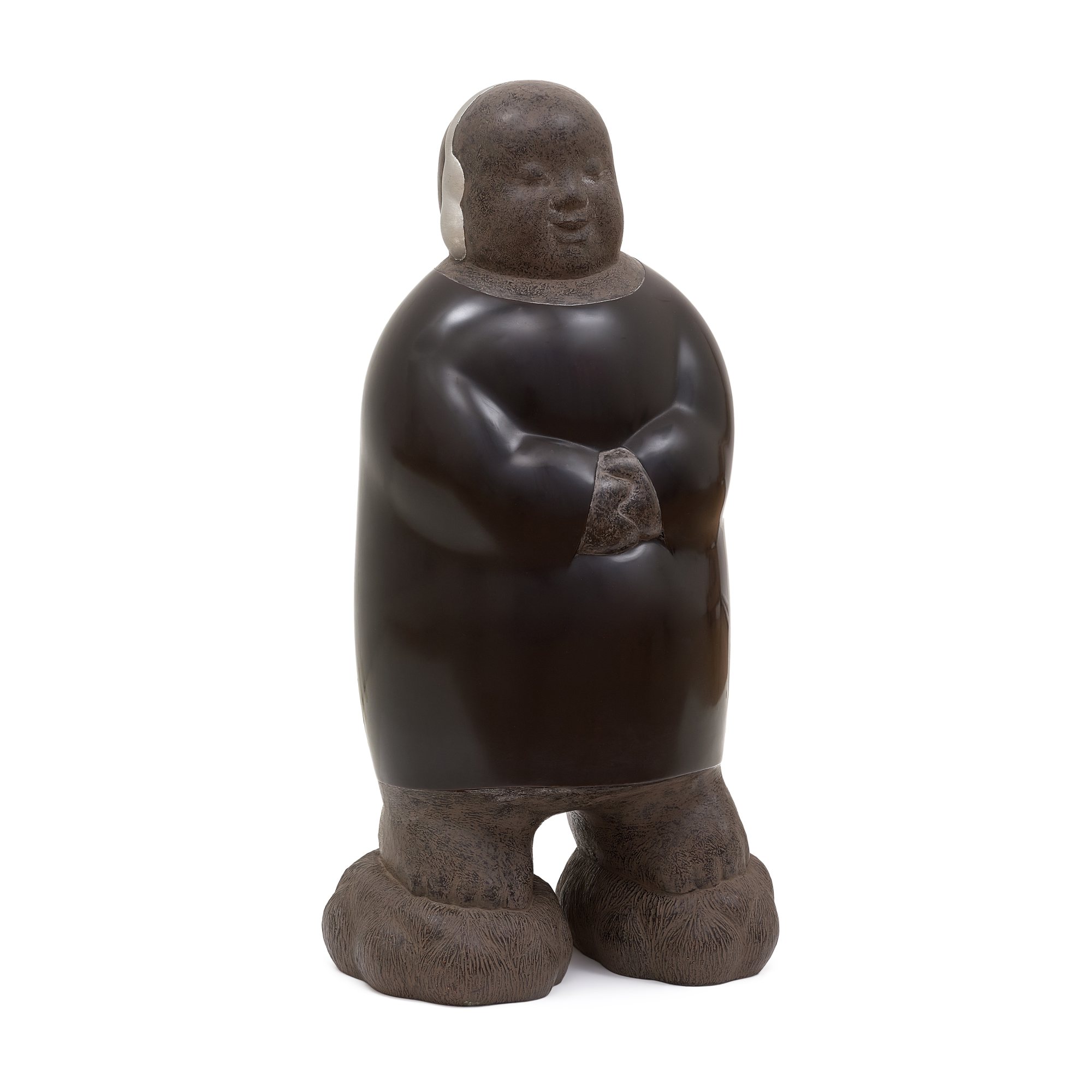
Harmonize without compromise 和而不同, 2000
Growing up in this environment, he was immersed from an early age in Buddhist thought, Taoist philosophy, and the visual languages of classical Chinese art. These were not merely academic influences but lived ones, woven into the fabric of daily life, ceremony, and contemplation. He pursued formal training in fine arts and developed an early fluency in sculpture, but it was his deepening engagement with Buddhist spirituality that gave his practice its defining direction. By the 1990s, Li Chen had begun working in bronze, a material with deep roots in both Eastern ritual and Western sculptural tradition.
His choice was deliberate and resonant: bronze carries the weight of history, of ceremonial objects and temple guardians, yet in his hands it becomes the vehicle for something altogether more ethereal. He developed a vocabulary of rounded, full bodied figures, often rendered with eyes closed in meditation, their forms swelling with an interior energy that reads less as physical mass than as concentrated spiritual presence. The paradox at the heart of his work, that the heaviest of metals might express the lightest of states, became his signature proposition. The early 2000s marked a period of remarkable creative productivity.
Li Chen
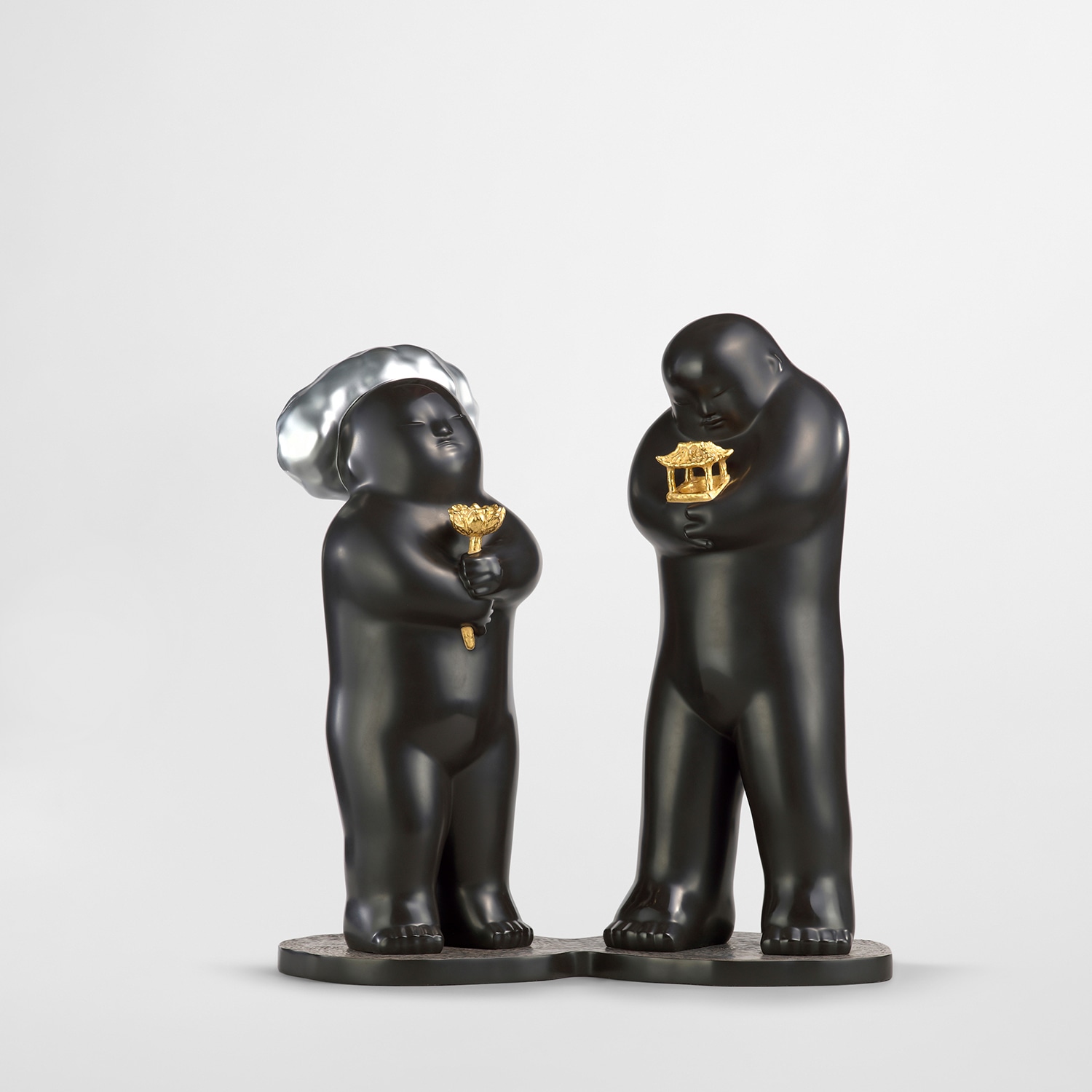
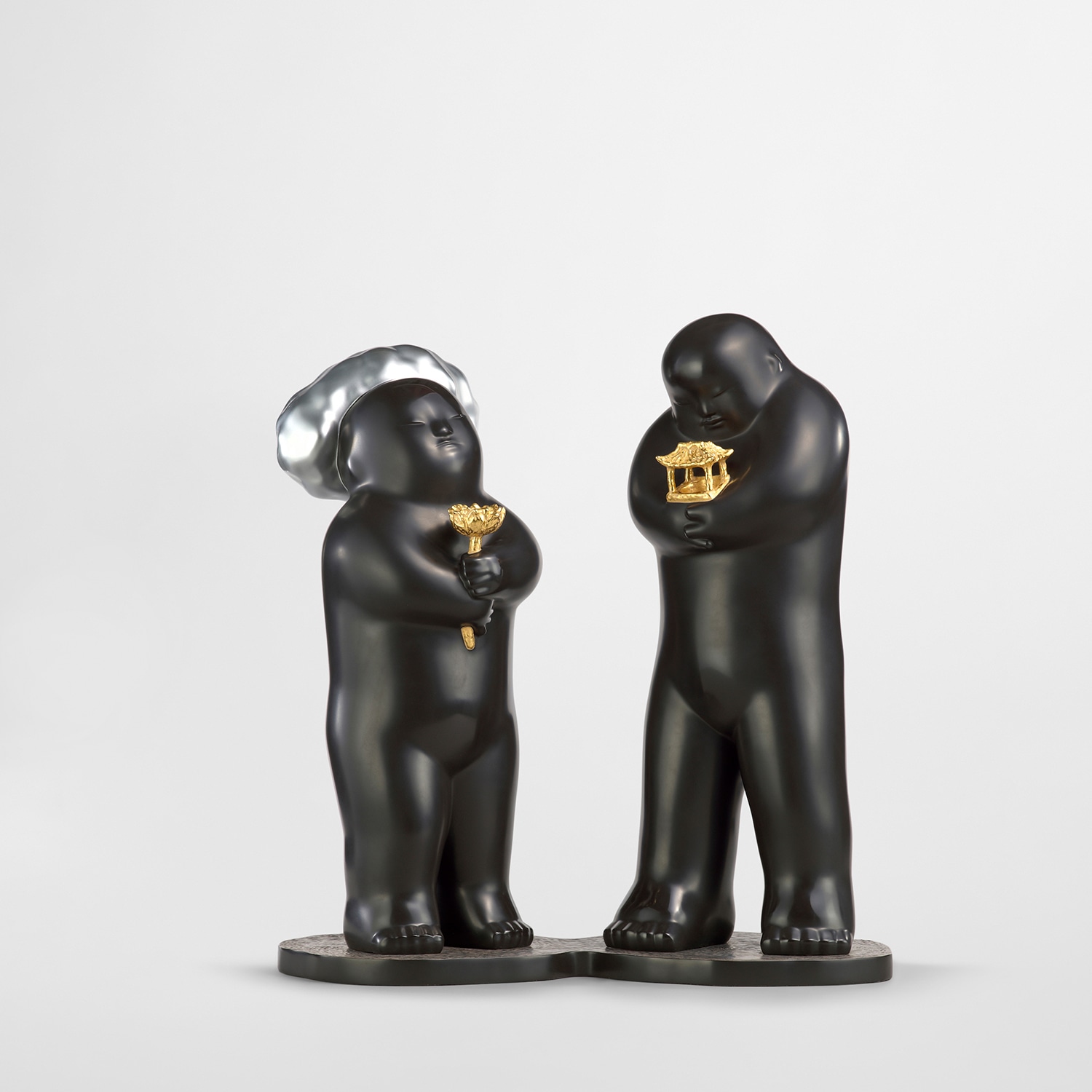
The Pavilion and Angelic Smile, 2010
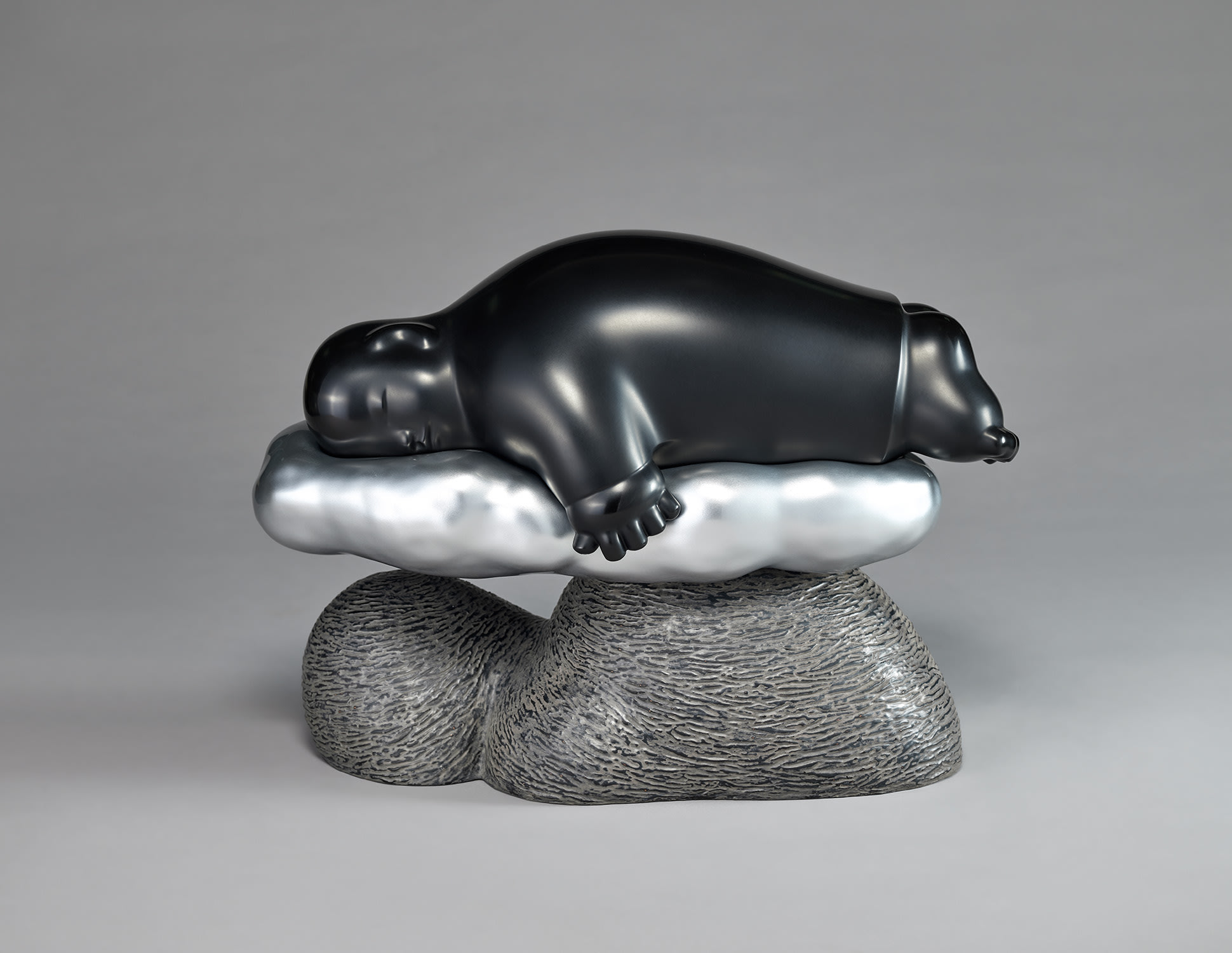
Works such as Float to Sukhavati from 2002 and The Buddha in the Cloud, also from 2002, announced his mature vision with full confidence. Sukhavati, the Buddhist pure land of bliss, provided both title and aspiration: these figures do not merely rest or stand but seem genuinely to be in transit between realms. Harmonize without Compromise, created in 2000 and titled in both English and Chinese as a reminder of his bicultural fluency, explored the Confucian ideal of harmony that does not require sameness, a meditation on coexistence that feels as politically resonant today as it did at its creation. Soothing Breezes Floating Clouds from 2005 deepened this exploration of atmospheric stillness, the bronze surface given a warmth and finish that makes the figures seem less cast than exhaled.
As the decade progressed, Li Chen's work grew in both scale and philosophical ambition. Causal from 2008 engages with the Buddhist concept of dependent origination, the idea that all phenomena arise in relation to one another rather than independently. The Pavilion and Angelic Smile from 2010 introduced a more architectural sensibility, figures inhabiting or becoming structures, the boundary between body and built space made beautifully permeable. Works from the early 2010s such as Ephemeral Beauty and Peony brought a new tenderness to his practice, the flower as a symbol of impermanence and grace finding unexpected kinship with his meditative figures.
Li Chen
Float to Sukhavati, 2002
Reverberance from 2015 suggested sound as much as sight, a sculpture that seems to hum with residual spiritual energy. Collectors have responded to Li Chen's work with sustained and growing enthusiasm across Asia, Europe, and the Americas. His sculptures occupy a rare position in the contemporary market: they are immediately legible as objects of beauty and spiritual invitation while also sustaining serious critical engagement. Major museums and cultural institutions in Asia have collected his work, and his large scale installations have appeared at international venues including the National Palace Museum in Taipei and prominent art fairs across the globe.
For collectors drawn to work that bridges Eastern and Western philosophical traditions without flattening the complexity of either, Li Chen offers something genuinely irreplaceable. His bronzes tend to hold their value with quiet confidence, appreciated by those who understand that truly singular artistic visions do not age into irrelevance but deepen with time. Within the broader landscape of contemporary sculpture, Li Chen occupies a distinctive position that invites comparison with several of his peers while remaining entirely his own. Those who admire the way Yin Xiuzhen reframes Chinese materiality for a global audience, or who have followed the career of Ju Ming, the Taiwanese sculptor whose Taichi Series brought Chinese martial philosophy into dialogue with Western modernism, will find in Li Chen a natural conversation partner.
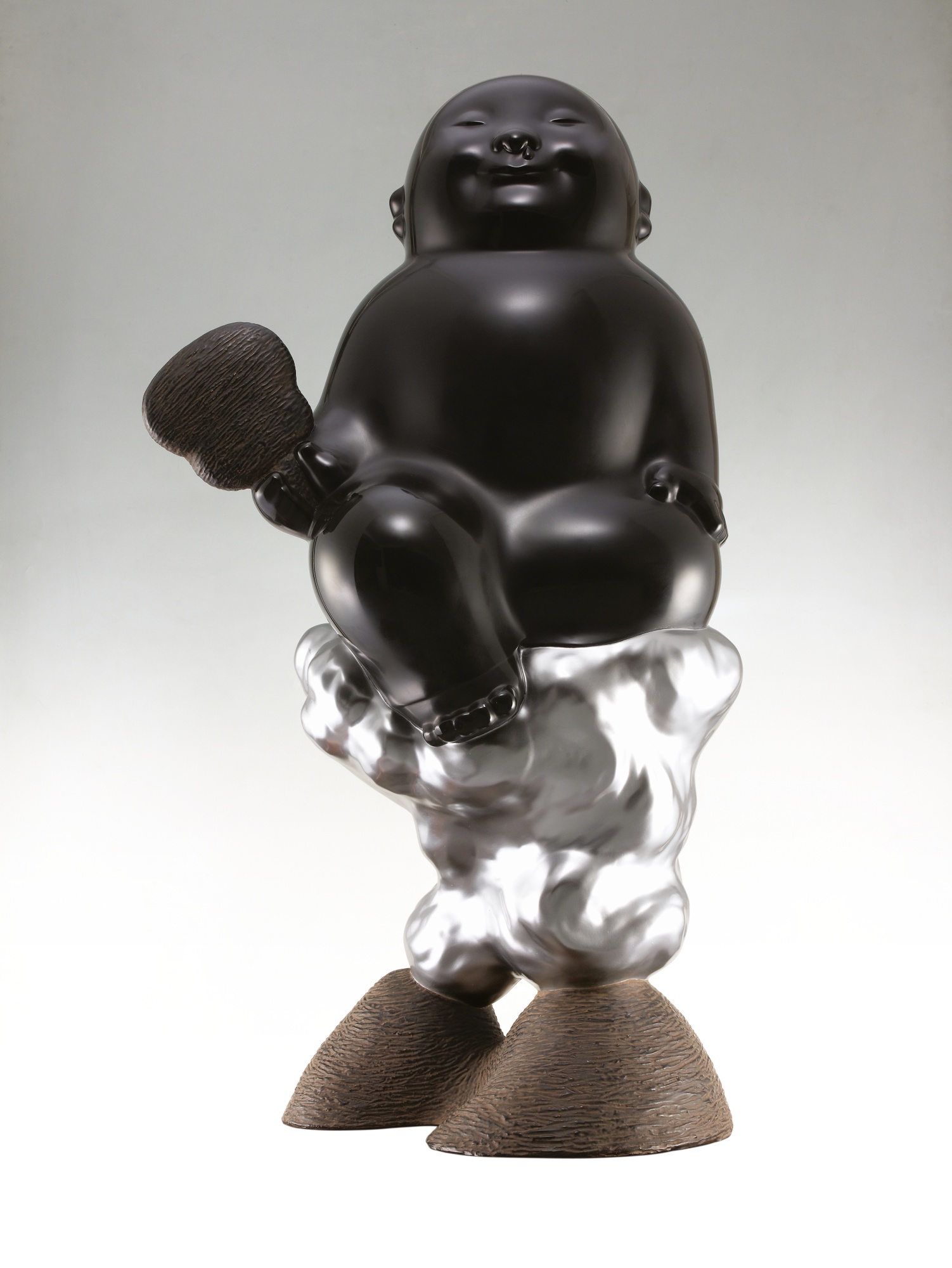
Li Chen
Soothing Breezes Floating Clouds 清風雲露, 2005
There are also resonances with the work of Antony Gormley in the shared preoccupation with the body as a site of spiritual enquiry, though Li Chen's figures are warmer, more benevolent presences than Gormley's often austere sentinels. He belongs to a generation of Asian artists who came of age when the question of how to be both deeply rooted in tradition and genuinely contemporary was not yet fully answered, and whose work constitutes part of that answer. What makes Li Chen's achievement so enduring is precisely its refusal to choose between poles that lesser artists treat as opposites. He does not pit the spiritual against the material, the Eastern against the Western, the ancient against the contemporary.
Instead, his sculptures hold all of these tensions in a state of luminous suspension, much like the figures themselves, neither fully earthbound nor fully departed. In a cultural moment marked by fragmentation and haste, his work offers something rare and necessary: an invitation to pause, to breathe, to feel the strange and consoling weight of things that appear, against all odds, to float. For collectors, for institutions, and for anyone who has stood before one of his great bronzes and felt something shift quietly in the chest, Li Chen is an artist whose time has never been more fully arrived.
Explore books about Li Chen
Li Chen: Sculpture
Li Chen

Li Chen: The Art of Bronze
Maggie Keswick
Contemporary Taiwanese Sculpture: Li Chen and His Contemporaries
Chang Tsong-zung
Li Chen: Spiritual Forms in Bronze
Jerome Silbergeld
The Sculpture of Li Chen: A Retrospective
Taipei Fine Arts Museum