Lewis Carroll (Reverend Charles Lutwidge Dodgson)
Through the Lens, Wonderland Comes Alive
Artist Spotlight · The Collection Editorial
“I am fond of children, except boys.”
Lewis Carroll
Long before the world understood photography as a serious art form, a soft spoken mathematics lecturer at Christ Church, Oxford was quietly producing some of the most arresting portrait photographs of the Victorian era. The work of Reverend Charles Lutwidge Dodgson, known to the world by his pen name Lewis Carroll, has enjoyed sustained critical reappraisal over the past several decades, with his photographs appearing in major institutional collections including the National Portrait Gallery in London, the Gernsheim Collection at the Harry Ransom Center in Austin, and the Metropolitan Museum of Art in New York. The ongoing scholarly attention to his photographic practice has firmly repositioned him not merely as a literary figure who dabbled in a new technology, but as a genuine artist of the Victorian period whose visual sensibility deserves to stand on its own terms. Dodgson was born on January 27, 1832, in Daresbury, Cheshire, the third child and eldest son of eleven children born to the Reverend Charles Dodgson and Frances Jane Lutwidge.
Lewis Carroll (Reverend Charles Lutwidge Dodgson)
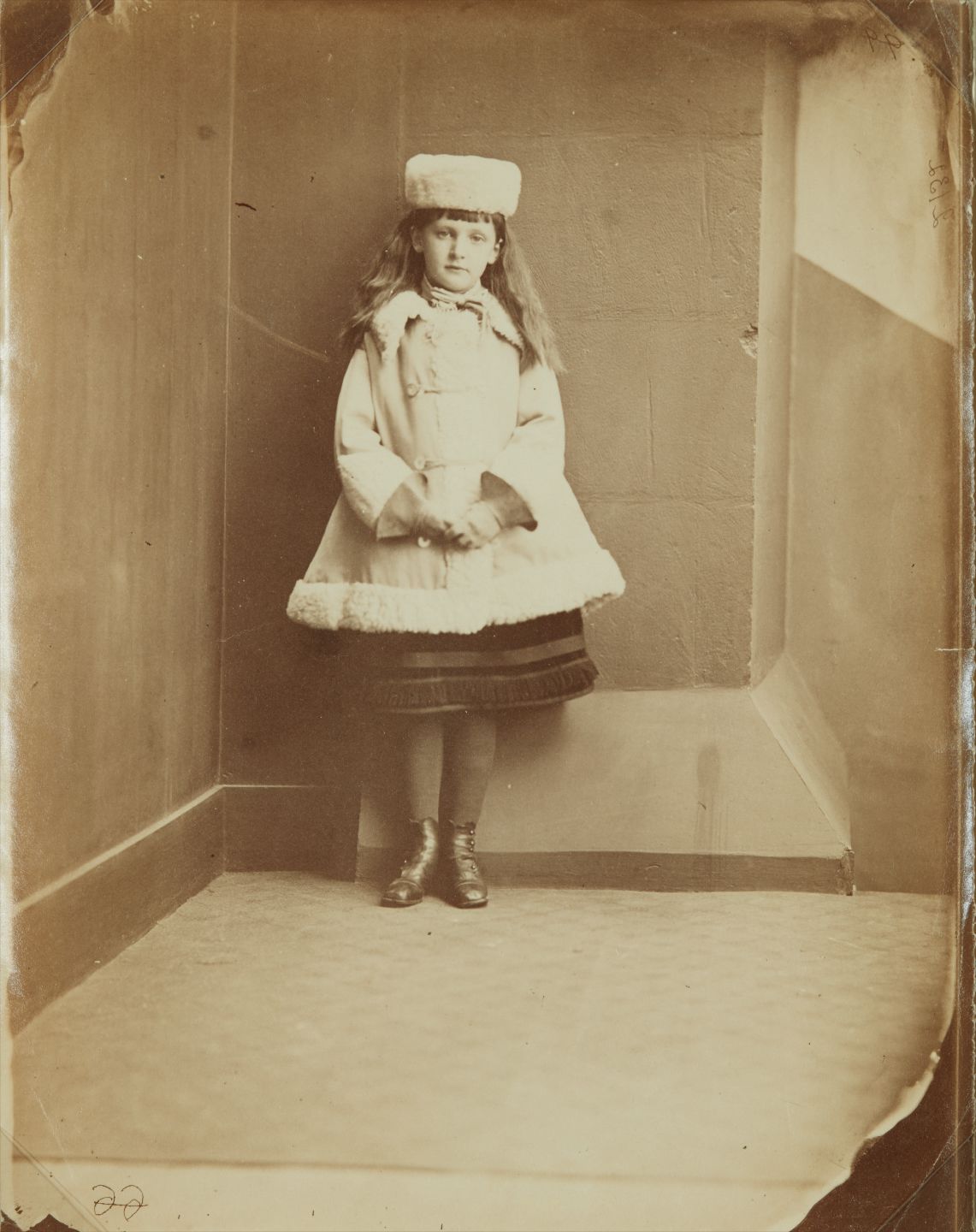
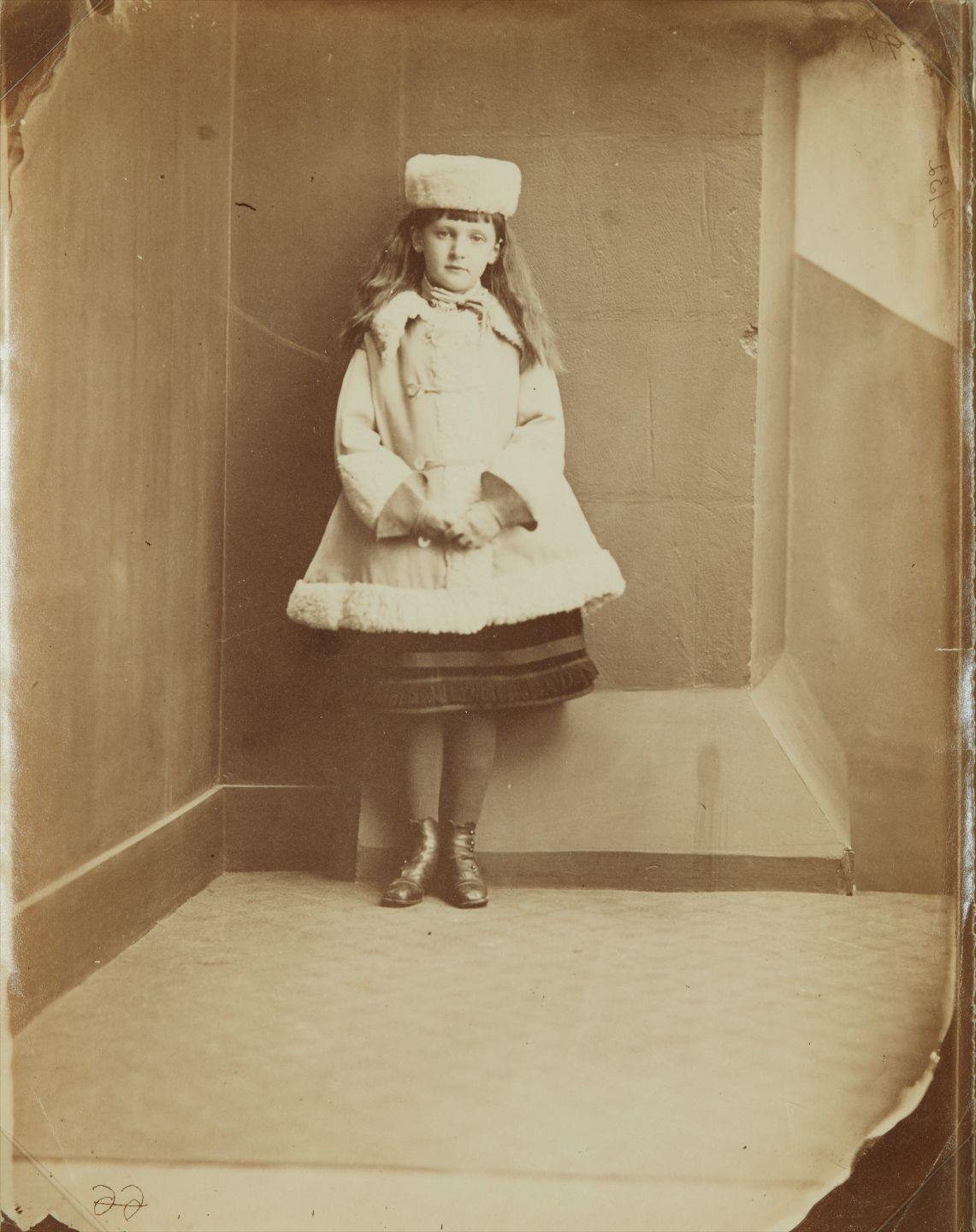
Xie (Alexandra) Kitchin as a “Dane”
He grew up in a household that was deeply intellectual and warmly familial, where storytelling, wordplay, and amateur theatrics were encouraged. From an early age he displayed an unusual aptitude for mathematics and logic, eventually winning a place at Christ Church, Oxford, where he would remain for virtually the rest of his life as a student and later as a lecturer in mathematics. The ordered, rule governed world of mathematics and the anarchic, playful world of nonsense literature existed in him not as contradictions but as complementary impulses, two sides of a sensibility that was always reaching for hidden structures beneath the surface of things. Dodgson took up photography in 1856, at a moment when the medium was still new enough to feel genuinely experimental.
He worked primarily with the wet collodion process, a technically demanding method that required coating a glass plate with collodion, sensitizing it with silver nitrate, exposing it in the camera while still wet, and developing it immediately before it dried. The unforgiving nature of this process meant that every successful image represented real technical mastery. Over the course of roughly twenty years of active practice, from the mid 1850s through the mid 1870s, Dodgson produced an estimated three thousand photographs, of which fewer than a thousand survive. He photographed notable contemporaries including the poet Alfred Lord Tennyson and the painter John Everett Millais, and he created portraits of the children of Oxford's academic and ecclesiastical families with a tenderness and compositional intelligence that set his work apart from the more formal conventions of Victorian studio photography.
Lewis Carroll (Reverend Charles Lutwidge Dodgson)
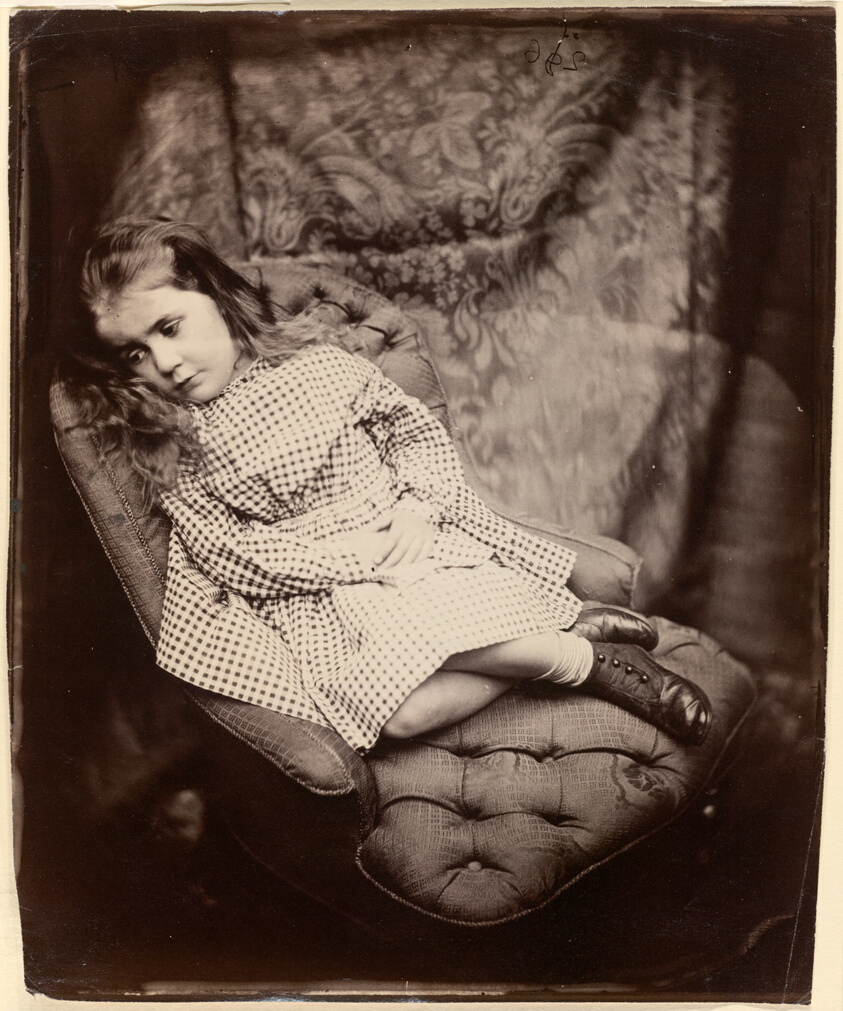
Margaret Frances Langton Clarke, 1864
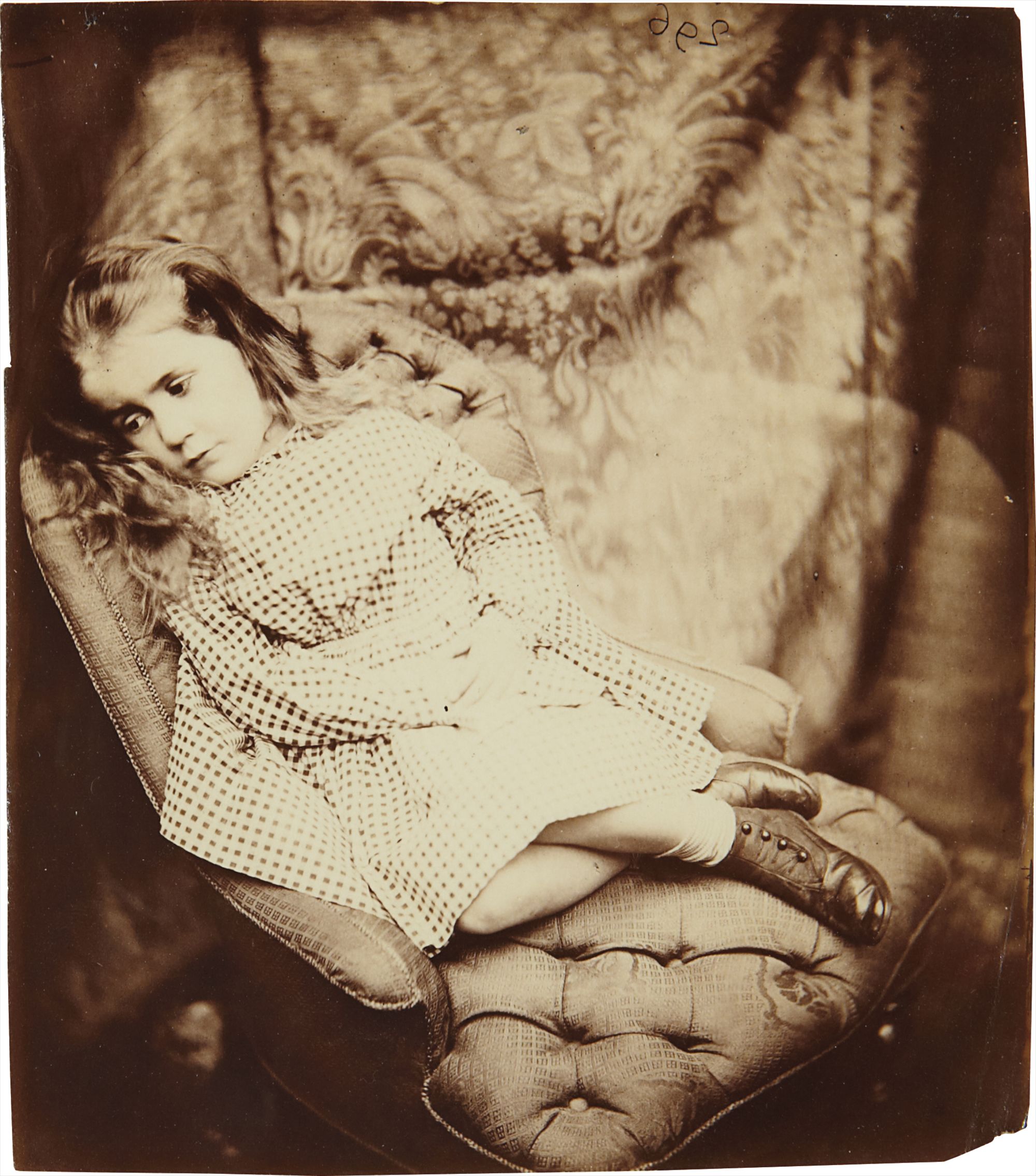
The works available through The Collection offer a rich window into the qualities that make Dodgson's photographs so compelling to contemporary eyes. His portrait of Xie, or Alexandra, Kitchin, costumed as a Dane, is one of the finest examples of his tendency to cast his young subjects in imaginative roles that bring out a kind of dreaming seriousness in their expressions. Alexandra Kitchin, the daughter of the Dean of Winchester, was one of Dodgson's most frequent and most photographed subjects, and the images he made of her across several years constitute a sustained artistic project of unusual depth. The two known photographs of Margaret Frances Langton Clarke, dating to 1864, demonstrate his gift for achieving a natural, unposed quality within the highly staged conditions of Victorian photographic portraiture.
“One of the secrets of life is that all that is really worth doing is what we do for others.”
Lewis Carroll
His early study of Annie and Henry Rogers, dating to approximately 1860 and annotated in an unidentified hand on the mount, captures something of the spontaneous warmth he brought to his sittings with children, a quality that was far from universal among photographers of his time. For collectors, Dodgson's photographs occupy a genuinely rare position in the market. Victorian photography as a category has attracted serious institutional and private attention since at least the 1970s, when the pioneering collector Helmut Gernsheim helped establish the field as worthy of sustained scholarly and commercial interest. Within that field, Dodgson's work is scarce almost by definition: the total surviving body of photographs is small, and many of the finest examples are held by institutions that have no intention of deaccessioning them.
Lewis Carroll (Reverend Charles Lutwidge Dodgson)
Margaret Frances Langton Clarke
When pieces do appear at auction or through specialist dealers, they attract attention from collectors working across several distinct areas: those focused on Victorian photography, those interested in the history of portraiture, and those drawn by the extraordinary cultural resonance of the Lewis Carroll name. The albumen silver print process he used gives his surviving works a characteristic warmth of tone, a slightly amber quality that reads as deeply and distinctly nineteenth century without feeling archaic. Condition is paramount in this market, as albumen prints are vulnerable to fading and silver mirroring, and well preserved examples command a significant premium. In art historical terms, Dodgson belongs to a remarkable generation of Victorian photographer amateurs who brought genuine artistic ambition to a medium that was still defining its own possibilities.
“It's a poor sort of memory that only works backwards.”
Through the Looking-Glass, Lewis Carroll, 1871
His work invites comparison with that of Julia Margaret Cameron, his contemporary and in many ways his stylistic opposite: where Cameron favored soft focus, dramatic chiaroscuro, and allegorical or literary subjects rendered in a painterly idiom, Dodgson tended toward clarity, directness, and a psychological naturalism that feels startlingly modern. He also stands in productive relation to the work of Oscar Gustave Rejlander and Henry Peach Robinson, both of whom were exploring the expressive and compositional possibilities of the medium in roughly the same period. What distinguishes Dodgson is the intimacy of his approach, the sense that his subjects trusted him and relaxed in front of his lens in ways that produced images of unusual emotional honesty. The legacy of Dodgson as a visual artist is still being written, and in many ways the most exciting chapters are ahead.
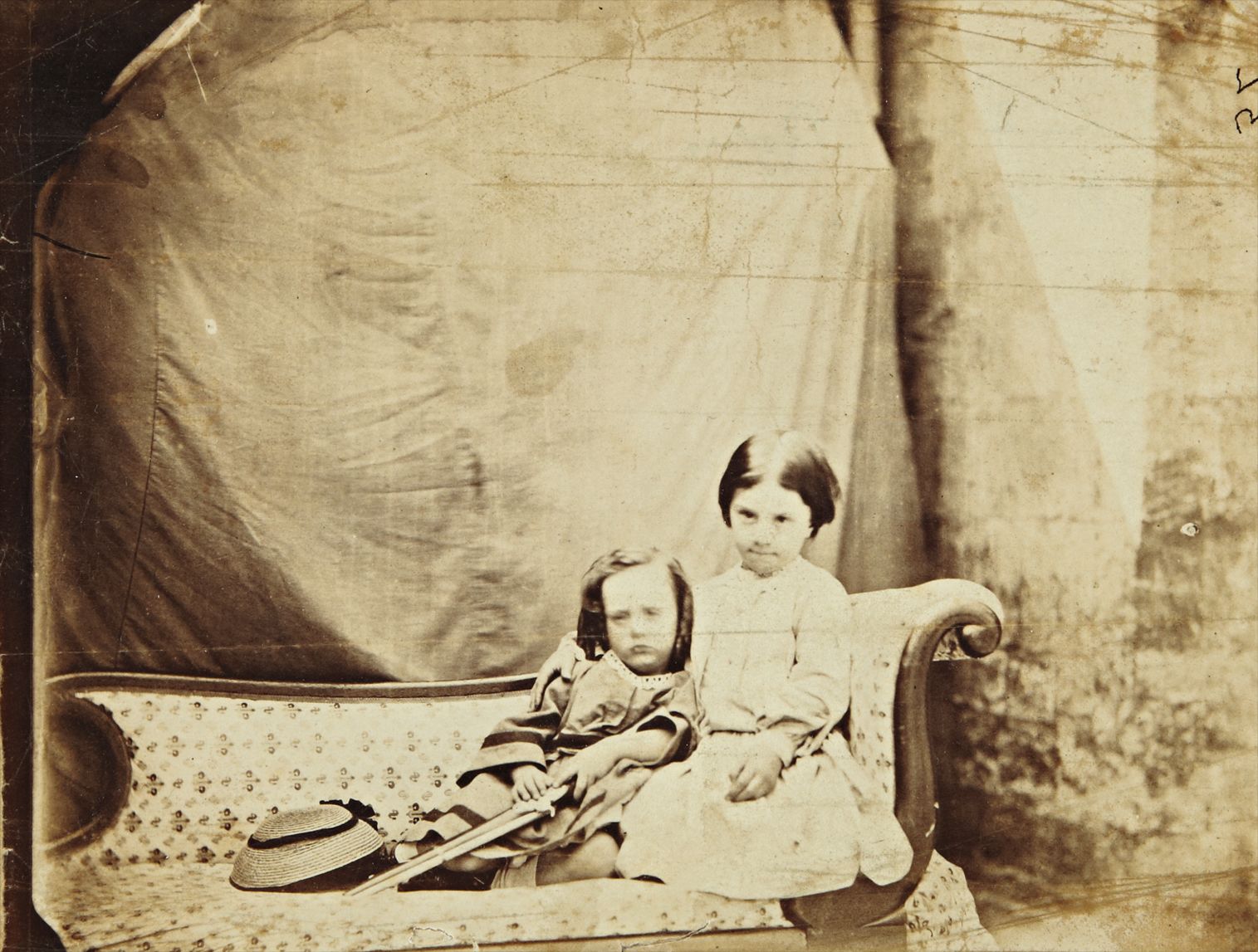
Lewis Carroll (Reverend Charles Lutwidge Dodgson)
Annie and Henry Rogers, June
As photography continues to assert itself as one of the central art forms of modernity, the Victorian pioneers who established its expressive language are receiving the kind of sustained critical attention that their work has always merited. Dodgson's photographs remind us that the author who sent Alice tumbling down the rabbit hole was not merely dreaming in words but also in images, that the same sensibility that imagined Wonderland was also capable of seeing, with great clarity and care, the particular reality of individual children, friends, and colleagues as they stood before his camera in the studios and gardens of Victorian Oxford. To collect his work is to hold a piece of that double vision, literary and photographic, imaginative and precise, and to participate in an ongoing reassessment of one of the most genuinely original minds of the nineteenth century.
Explore books about Lewis Carroll (Reverend Charles Lutwidge Dodgson)
The Life and Letters of Lewis Carroll
Stuart Dodgson Collingwood
Lewis Carroll: A Biography
Morton N. Cohen
The Annotated Alice
Martin Gardner
Lewis Carroll: A Reference Guide
James R. Kincaid
Lewis Carroll: Writer of Nonsense
Jean Gattégno
The Story of a Friendship: E.L. Mactaggart and Lewis Carroll
Karoline Leach
Lewis Carroll: Inventor of Wonderland
Catherine Gough Thomas
The Pamphleteer: The Life and Works of Lewis Carroll
David Day