Leonardo Drew
Leonardo Drew Transforms Time Into Beauty
Artist Spotlight · The Collection Editorial
“Everything I do is about time. It is about what happens to things, to people, to places over time.”
Leonardo Drew, Studio Museum in Harlem
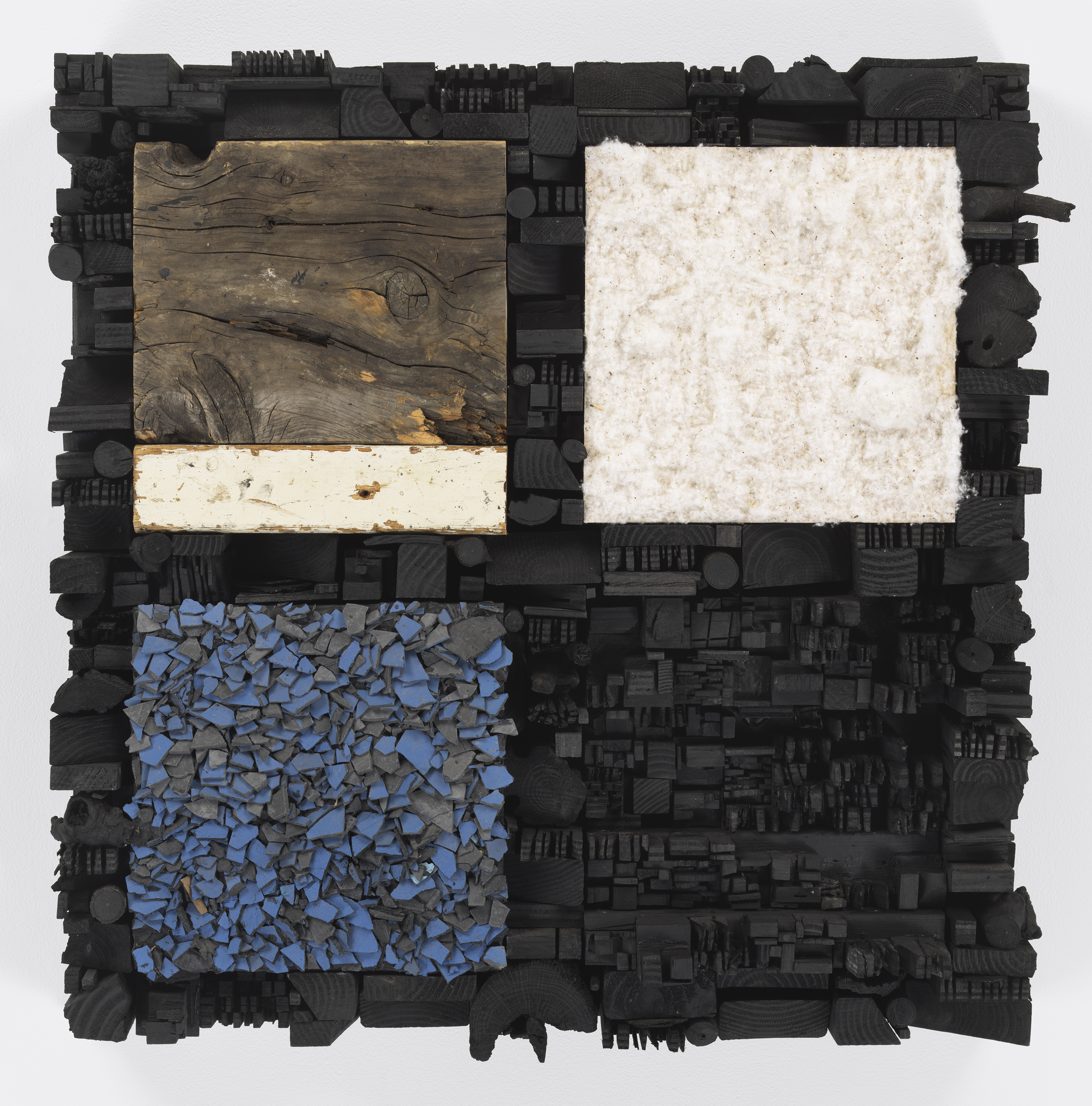
In 2023, Leonardo Drew unveiled Number 372, a commanding work composed of wood, cotton, plaster, and paint that once again announced his singular position in contemporary sculpture. The piece arrived at a moment when institutions and collectors alike were deepening their engagement with artists whose practices speak to both material history and cultural memory. Drew, now in his seventh decade, continues to produce work of extraordinary ambition, and the reception of Number 372 confirms what his most devoted collectors have known for thirty years: few artists working today command raw materials with such philosophical authority. Drew was born in Tallahassee, Florida in 1961 and raised in Bridgeport, Connecticut, an industrial city whose textures of rust, decay, and working class resilience would imprint themselves permanently on his visual imagination.
Leonardo Drew
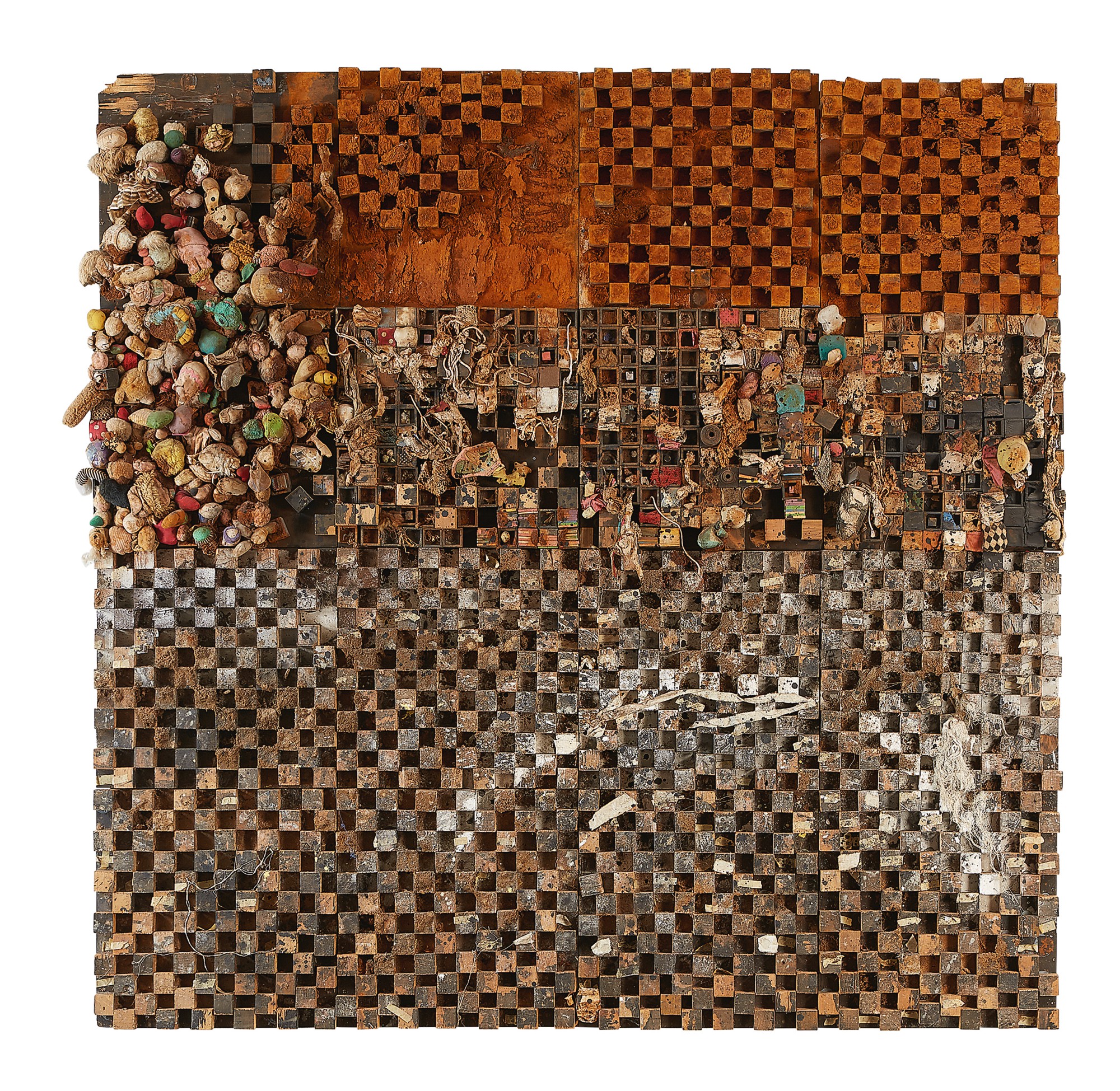
Number 30a, 1999
He came of age in a landscape shaped by factory labor, economic pressure, and the complicated inheritances of the African American experience in the post civil rights era. Those early encounters with the material world, with things worn down, cast off, and left to transform, became the foundational grammar of his art. He went on to study at the Corcoran School of Art in Washington, D.C.
, and later at the Cooper Union in New York, where he developed a rigorous conceptual framework around the questions of time, entropy, and survival that continue to animate his practice. Drew emerged into prominence in the late 1980s and early 1990s, a period when the New York art world was grappling seriously with artists who worked outside the traditions of painting and conventional sculpture. His breakthrough came with a body of work that assembled cotton, wood, metal, and found objects into densely layered, large scale panels and installations. Cotton in particular carried enormous weight, both literally and historically, as a material bound up with the history of enslaved labor in America.
Leonardo Drew
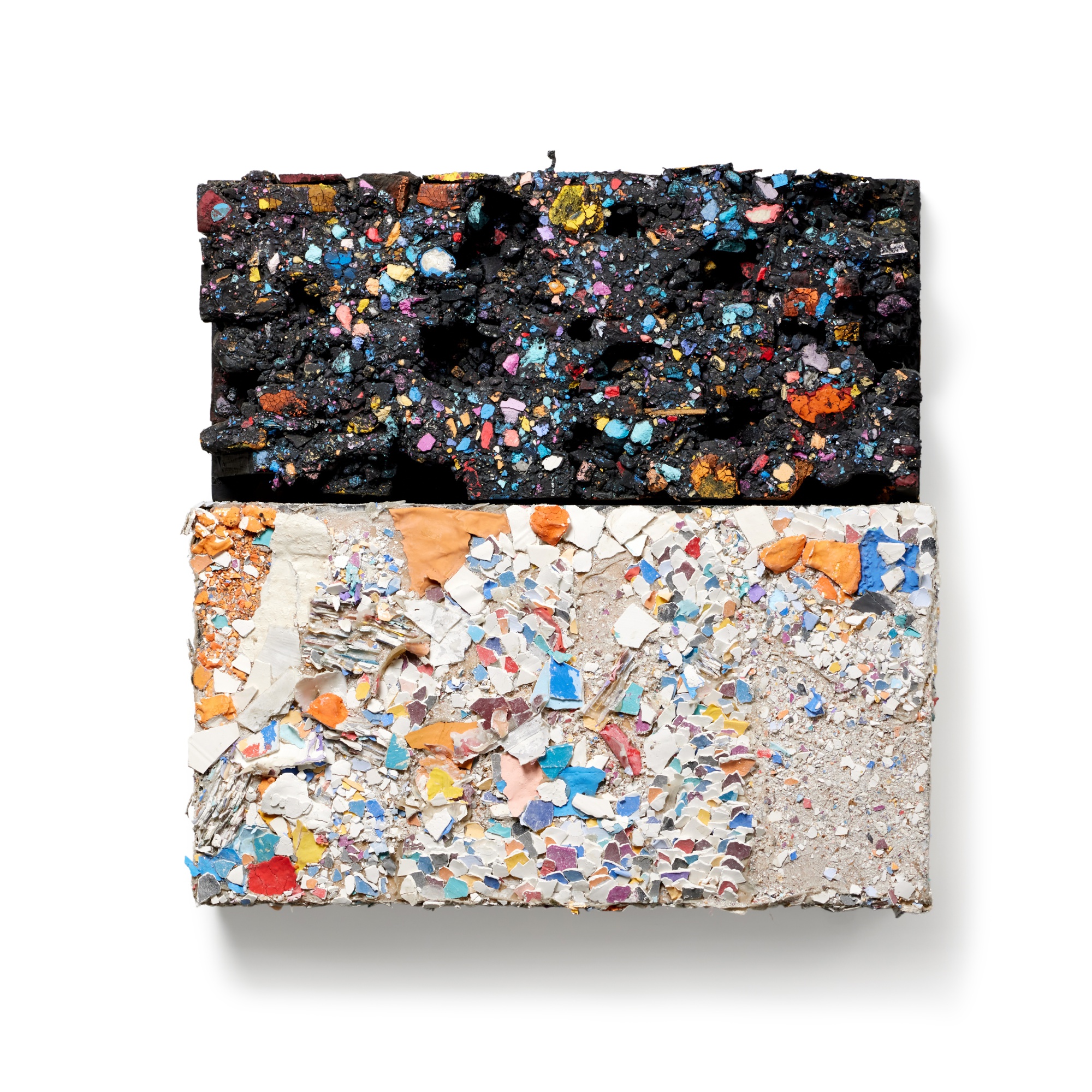
Number 44X, 2017, 2017
Drew never reduced this association to simple statement. Instead he allowed the material to accumulate meaning through process, through oxidation, through the patient layering of substance upon substance until the work achieved something that felt less like a made object and more like an artifact of lived time. The numbered works series, which Drew has sustained across his entire career, represents one of the most coherent and commanding bodies of work in contemporary art. Number 23, created in 1992, stands as an early landmark, establishing the formal vocabulary of stacked and arranged organic materials that would define his practice for decades.
Number 30a from 1999, with its toys and rust assembled on a wood panel in four parts, reveals the way Drew incorporates the detritus of childhood and consumer culture into his meditations on decay. These toys, ordinary plastic objects transformed by oxidation and time, become something elegiac in his hands, a record of what passes and what persists. Number 44X from 2017, combining acrylic, plaster, ceramic, and wood, shows the continued evolution of his material intelligence, his willingness to introduce new substances into the established language of his practice without disrupting its essential voice. What makes Drew's work so compelling to collectors and curators is the way it holds contradiction in productive tension.
Leonardo Drew
Number 372, 2023
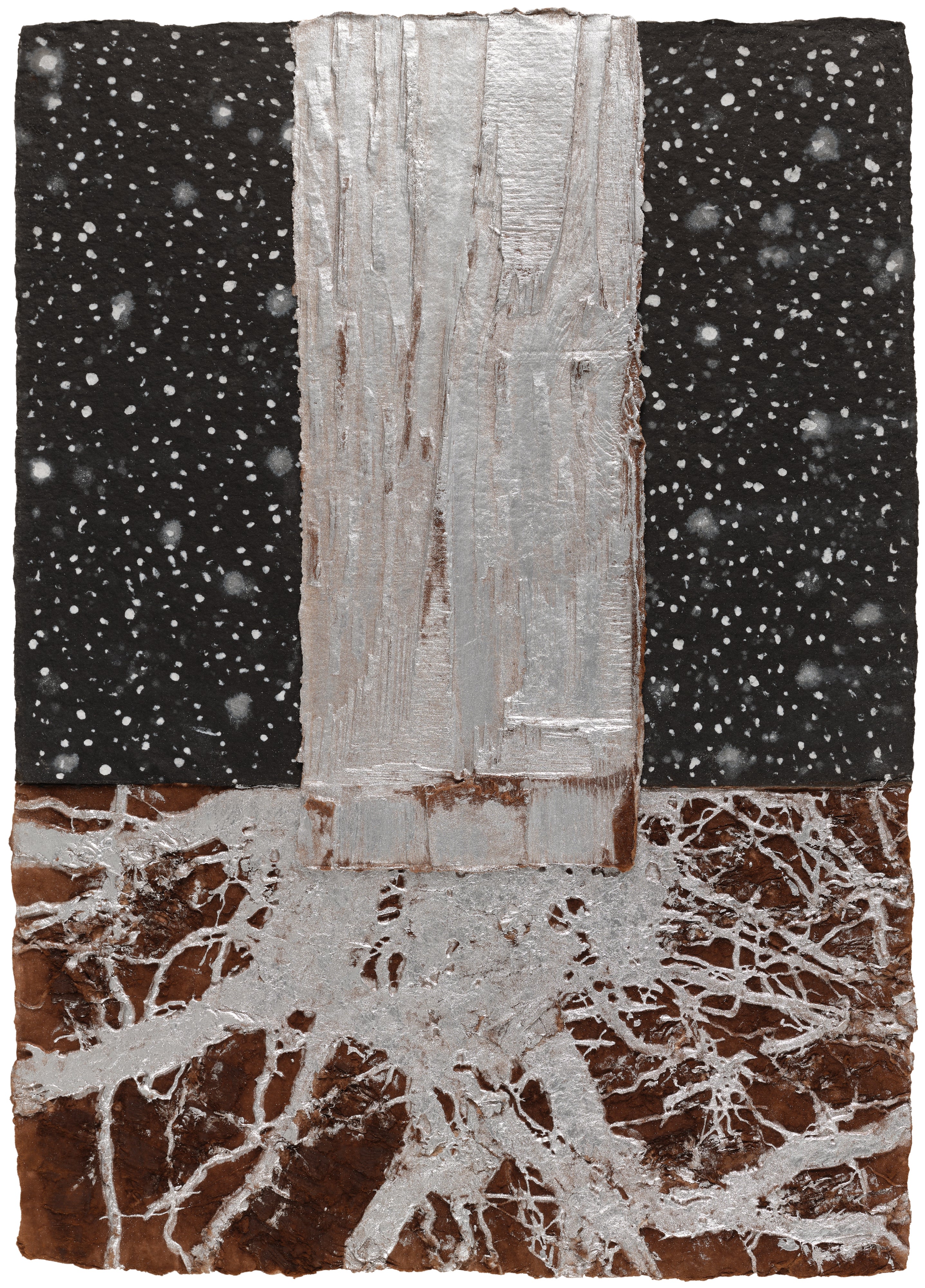
His compositions are simultaneously catastrophic and serene, chaotic in their accumulation and deeply ordered in their spatial logic. Works like 138l from 2018, a gesso on wood piece presented in eleven parts, demonstrate his mastery of scale and seriality. The fragmentation into multiple panels is never arbitrary; it reflects the nature of the experience Drew is describing, a history that does not arrive whole but in pieces, in layers, in the slow revelation of what has been buried or overlooked. His works on paper, such as 61P, a pigmented and printed handmade paper work with collage and silver ink, extend this sensibility into a more intimate register, offering collectors an entry into his world through a different but equally compelling material approach.
On the market, Drew commands serious attention. His works appear regularly at the major auction houses, and prices for significant pieces from the numbered series have grown substantially over the past decade as his critical stature has solidified. Collectors who have followed his practice from the early 1990s have been rewarded not only financially but with the deeper satisfaction of holding work that has aged into cultural significance. For newer collectors, works on paper and smaller panel pieces offer an accessible point of entry into a practice that can otherwise command prices in the six figures and beyond for major installations.
Leonardo Drew
61P
Galleries including Sikkema Jenkins and Co. in New York have played an important role in stewarding his market and ensuring that his work reaches the collectors and institutions best positioned to care for it. Draws place in art history becomes clearer when considered alongside artists who share his commitment to material accumulation and cultural memory. The work of Thornton Dial, David Hammons, and Kara Walker each engages the African American experience through formal strategies that resist easy categorization, and Drew belongs firmly in that company.
His practice also invites comparison with Arte Povera artists such as Jannis Kounellis, who similarly elevated humble and industrial materials to the status of high art. Yet Drew's work is distinctly and irreducibly American in its emotional register, rooted in a specific history of labor, loss, and transformation that gives his assemblages their particular gravity and beauty. What endures in Leonardo Drew's practice, across more than three decades and dozens of major works, is a commitment to allowing materials to speak their own truth. He does not impose narrative so much as create conditions in which narrative accumulates, as rust accumulates on metal, as cotton fibers mat and compress under time and pressure.
In a cultural moment that demands immediacy and legibility, his patient, layered approach feels not only necessary but quietly radical. For collectors, institutions, and anyone who stands before one of his large scale works and feels the floor of history shift slightly beneath them, Drew remains one of the essential artists of his generation.