Leonardo Cremonini
Leonardo Cremonini: A Tender Vision Endures
Artist Spotlight · The Collection Editorial
There are painters whose work rewards you slowly, whose canvases ask you to linger rather than glance. Leonardo Cremonini was emphatically one of them. When the Musée d'Art Moderne de la Ville de Paris presented a significant survey of his work in the 1980s, visitors reportedly returned more than once, drawn back by the uncanny feeling that something in those interiors and beachscapes had shifted since their last visit. That quality, the sense of a world perpetually caught between the familiar and the strange, defines Cremonini's achievement and explains why serious collectors continue to seek out his canvases with real urgency.
Leonardo Cremonini
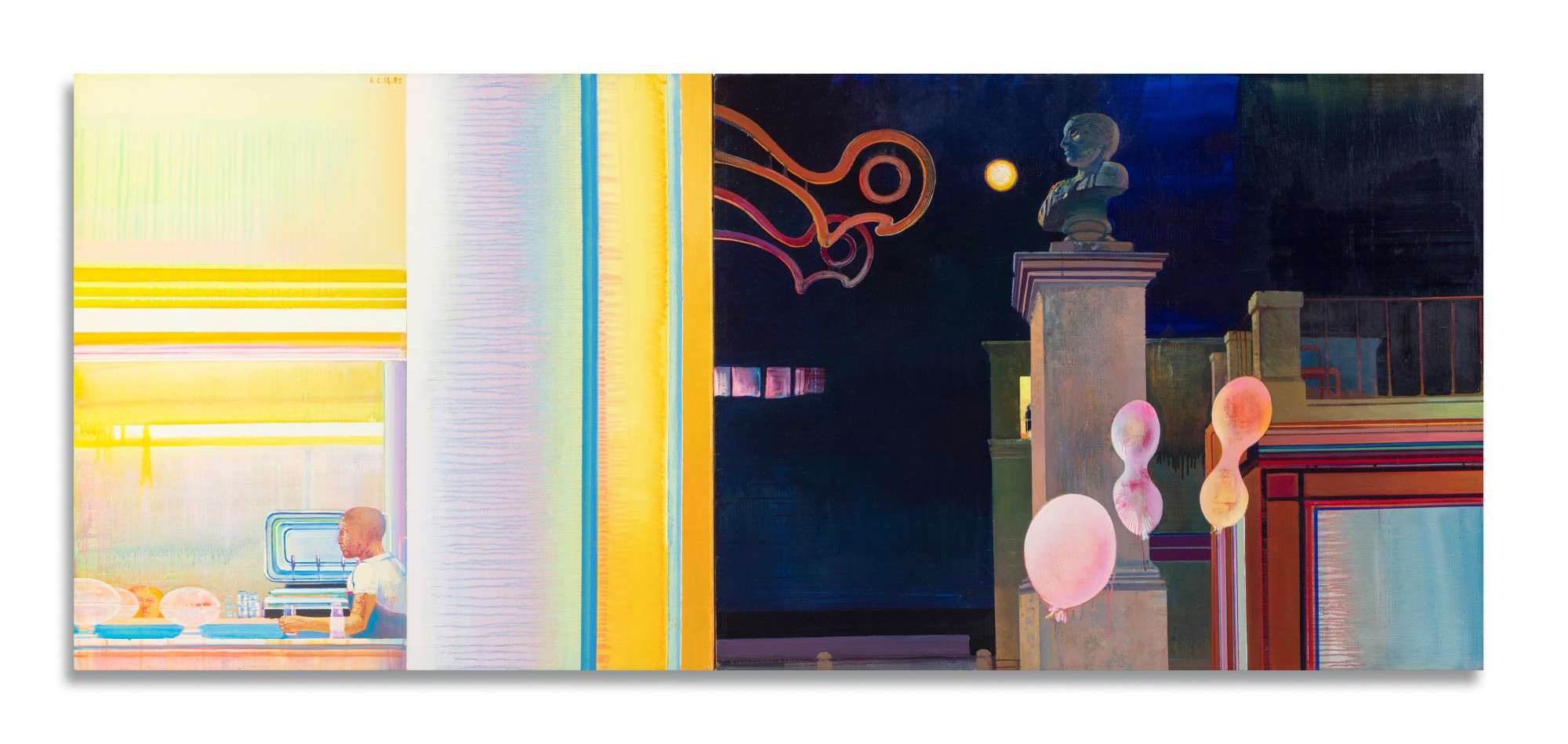
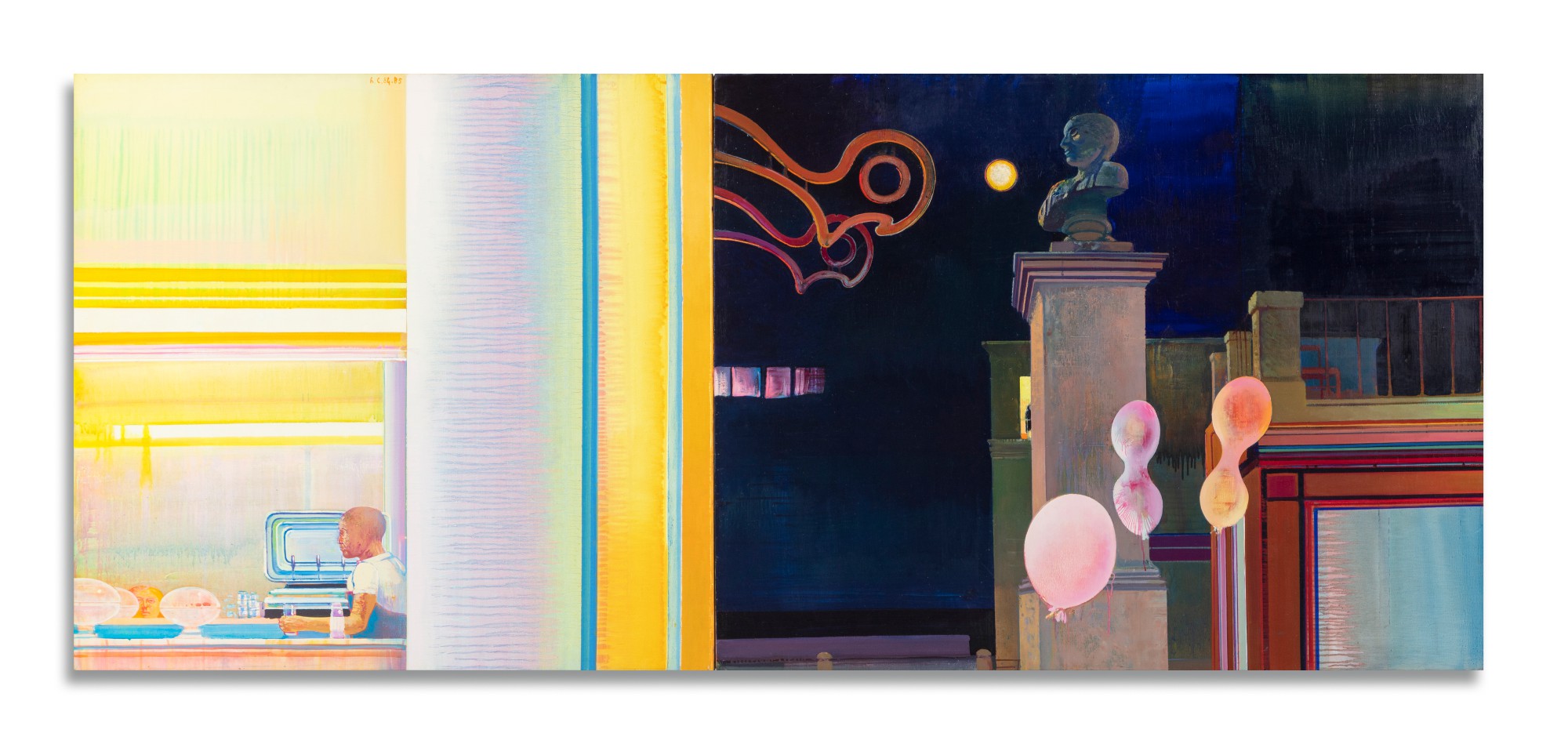
The End of the party (La Fine di una festa), 1984
Cremonini was born in Bologna in 1925, a city whose deep traditions of civic humanism and craft would leave a permanent mark on his sensibility. He trained at the Accademia di Belle Arti in Bologna before moving to Rome, where contact with the city's postwar artistic ferment proved decisive. The Scuola Romana, with its commitment to a humanist figuration rooted in observable reality rather than abstraction, gave Cremonini an intellectual framework he would spend the rest of his career both embracing and interrogating. He later settled in Paris, where he would remain a significant presence in European cultural life for decades, moving between the French capital and the island of Elba with a rhythmic devotion that fed directly into the motifs of sea, shore, and intimate domestic space that recur throughout his mature work.
The arc of Cremonini's development is one of progressive refinement and deepening psychological complexity. His early works from the 1950s showed a painter working confidently within a broadly figurative tradition, attentive to the lessons of Cézanne and the Italian masters without being overwhelmed by them. By the 1960s, something more distinctive and unsettling had emerged. Figures began to lose their faces or turn away from the viewer entirely.
Leonardo Cremonini
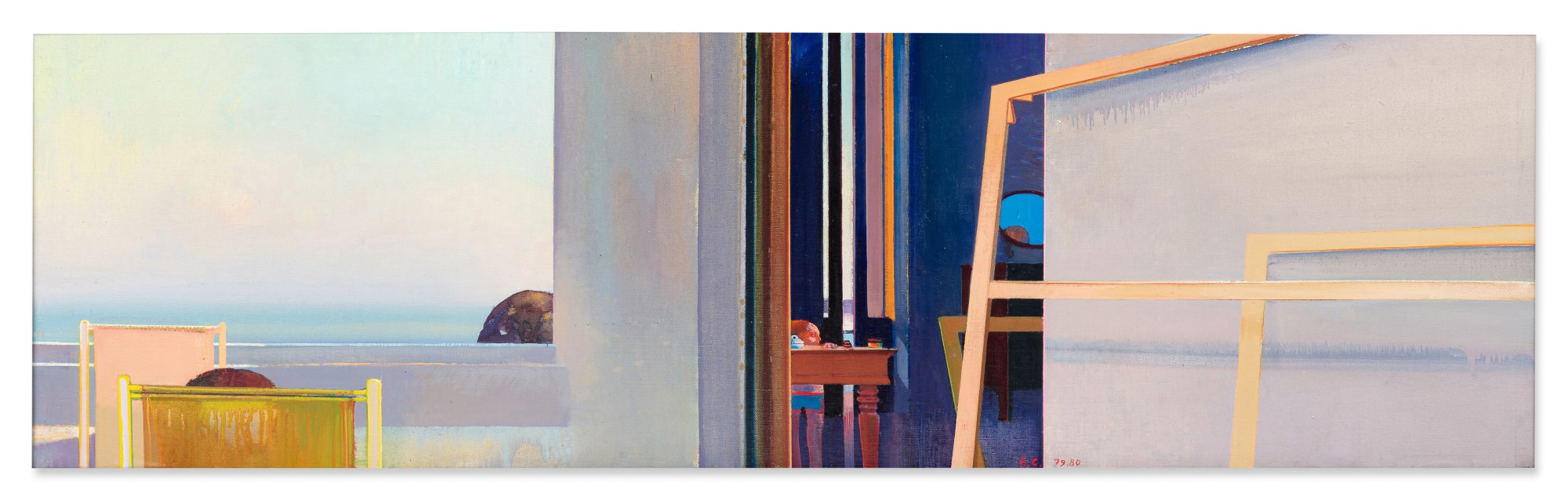
Au dos du père, 1979
Children appear in shallow pools or at the edges of beds, absorbed in private worlds. Adults are glimpsed from behind or in profile, their identities withheld. This systematic refusal of the frontal gaze became Cremonini's most recognisable formal strategy, a way of generating intimacy and alienation simultaneously, making the viewer feel like a thoughtful witness to scenes that were never quite meant to be observed. The works available on The Collection offer an exceptional window into the breadth and ambition of his practice across several pivotal decades.
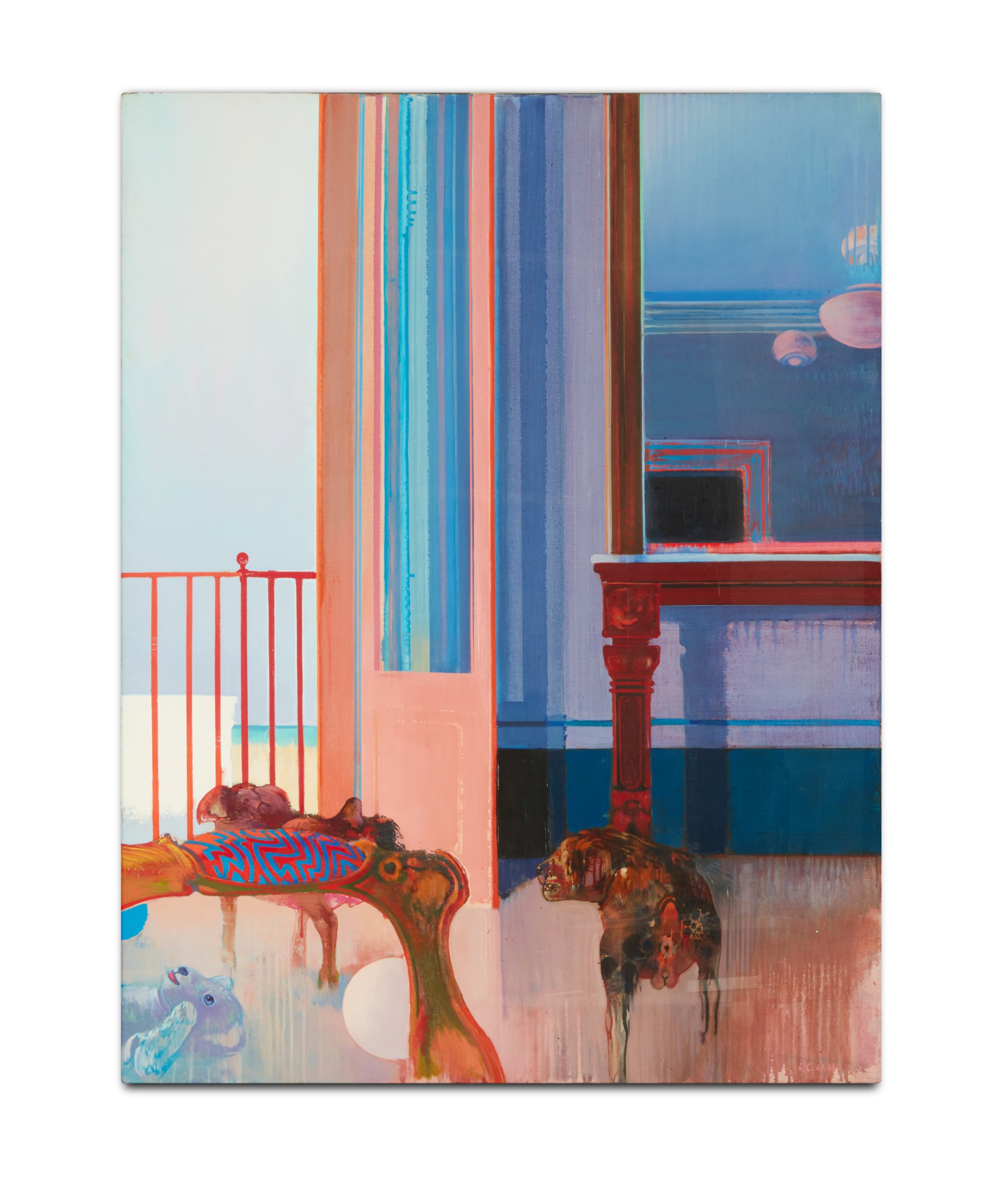
Les animaux domestiques from 1967 is a strong example of his middle period, where domestic subject matter carries an almost surreal emotional weight, ordinary life rendered with a precision that tips gently into the oneiric. Au dos du père, painted in 1979, exemplifies the turned back that became so central to his iconography, a father figure seen from behind, the relationship between parent and child charged with tenderness and distance in equal measure. The End of the Party (La Fine di una festa), a diptych from 1984, represents Cremonini at his most formally ambitious: the diptych format allows for a meditation on duration and aftermath, the specific melancholy of pleasure concluded. And Le chez soi des autres from 1991, executed in tempera and oil on two canvases sewn together, demonstrates his continued willingness to experiment with surface and support even in his later career, the technique itself reinforcing themes of seams and joinings, of domestic spaces that belong to others and yet feel hauntingly recognisable.
Leonardo Cremonini
Les animaux domestiques, 1967
For collectors, Cremonini presents a compelling proposition. His career unfolded primarily in France and Italy, and his reputation has long been strongest among European collectors with a taste for rigorous postwar figuration. His works appeared regularly at Parisian auction houses from the 1970s onward, and museum holdings in France and Italy attest to the institutional respect his practice commanded during his lifetime. He exhibited with Galerie Claude Bernard in Paris, one of the most respected galleries of European figuration in the second half of the twentieth century, and this association placed him in distinguished company alongside other painters who resisted the orthodoxies of abstraction while refusing mere academic convention.
Collectors who have focused on this strand of postwar European painting will recognise immediately how well Cremonini holds his own against peers whose market profiles have since grown considerably louder. In art historical terms, Cremonini's work sits at a fascinating intersection. He shares with Balthus an interest in the charged atmosphere of interiors and the psychological complexity of childhood, though without that artist's more troubling provocations. His attention to the geometry of domestic space and the anonymity of figures connects him to the concerns of painters like Gianfranco Ferroni and Antonio Recalcati, fellow travellers in a broadly humanist figurative tradition that refused to treat the human presence as either heroic or wholly absent.
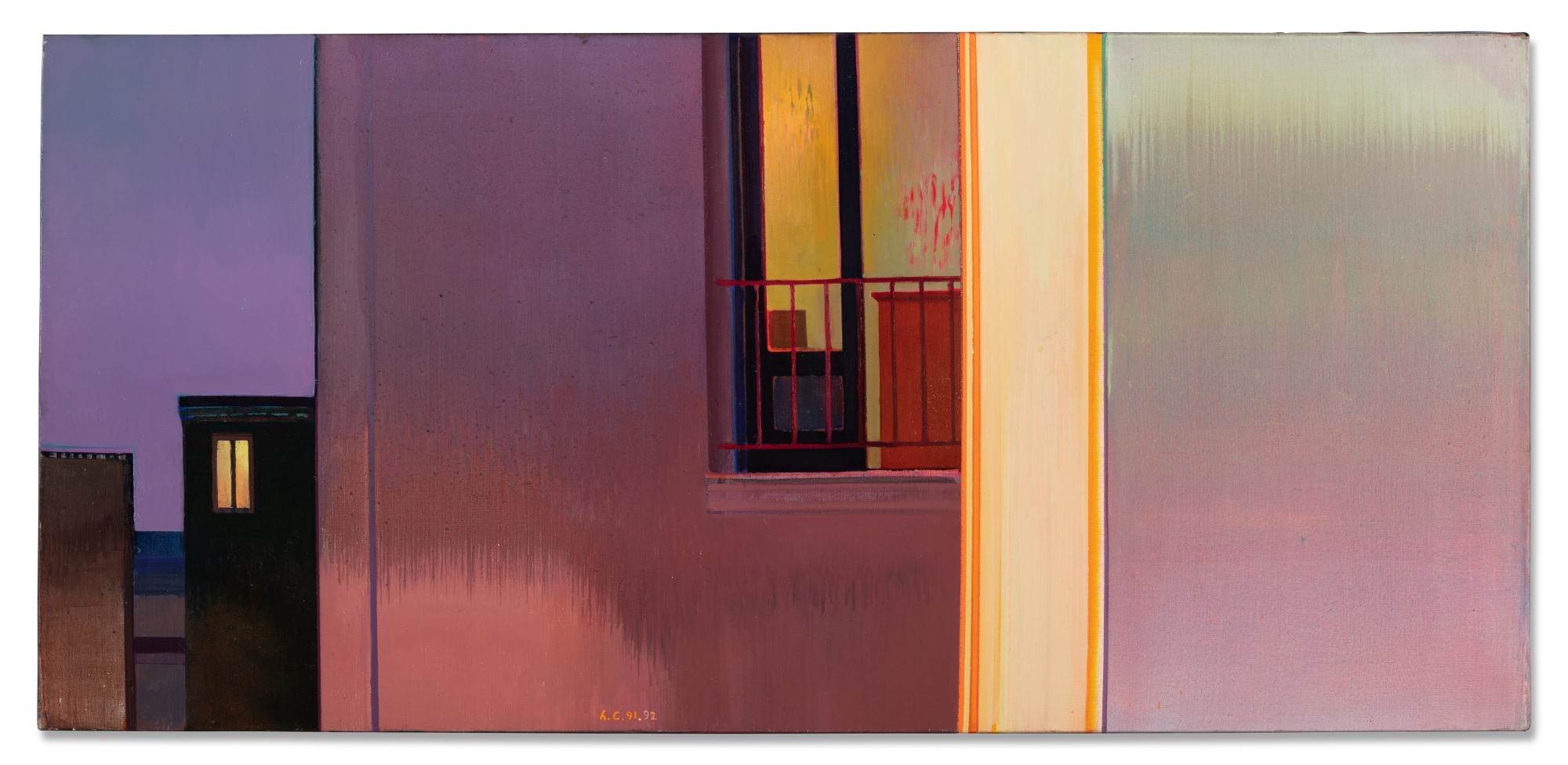
Leonardo Cremonini
Le "chez soi" des autres, 1991
There is also, in his best canvases, something that resonates with the later figurative works of Lucian Freud and the atmospheric painting of Avigdor Arikha, artists equally committed to the idea that looking carefully and honestly at the world around us remained one of painting's most vital obligations. Cremonini's legacy rests on the particular quality of attention his paintings demand and reward. In an era when art historical narratives were dominated by the successive waves of abstraction, conceptualism, and neo expressionist spectacle, he continued to make work of quiet, accumulative power, canvases that insist on the emotional complexity of ordinary life without sentimentality or bombast. That the scenes he painted, children at the edge of water, figures turning away in sunlit rooms, a party whose guests have just departed, feel so timelessly resonant is not an accident but the product of a lifetime's disciplined looking.
For collectors approaching his work now, the question is not whether Cremonini matters but rather why it has taken this long for his reputation to receive the sustained international attention it deserves. The canvases, once seen, make a persuasive case entirely on their own terms.