Leonard Baby
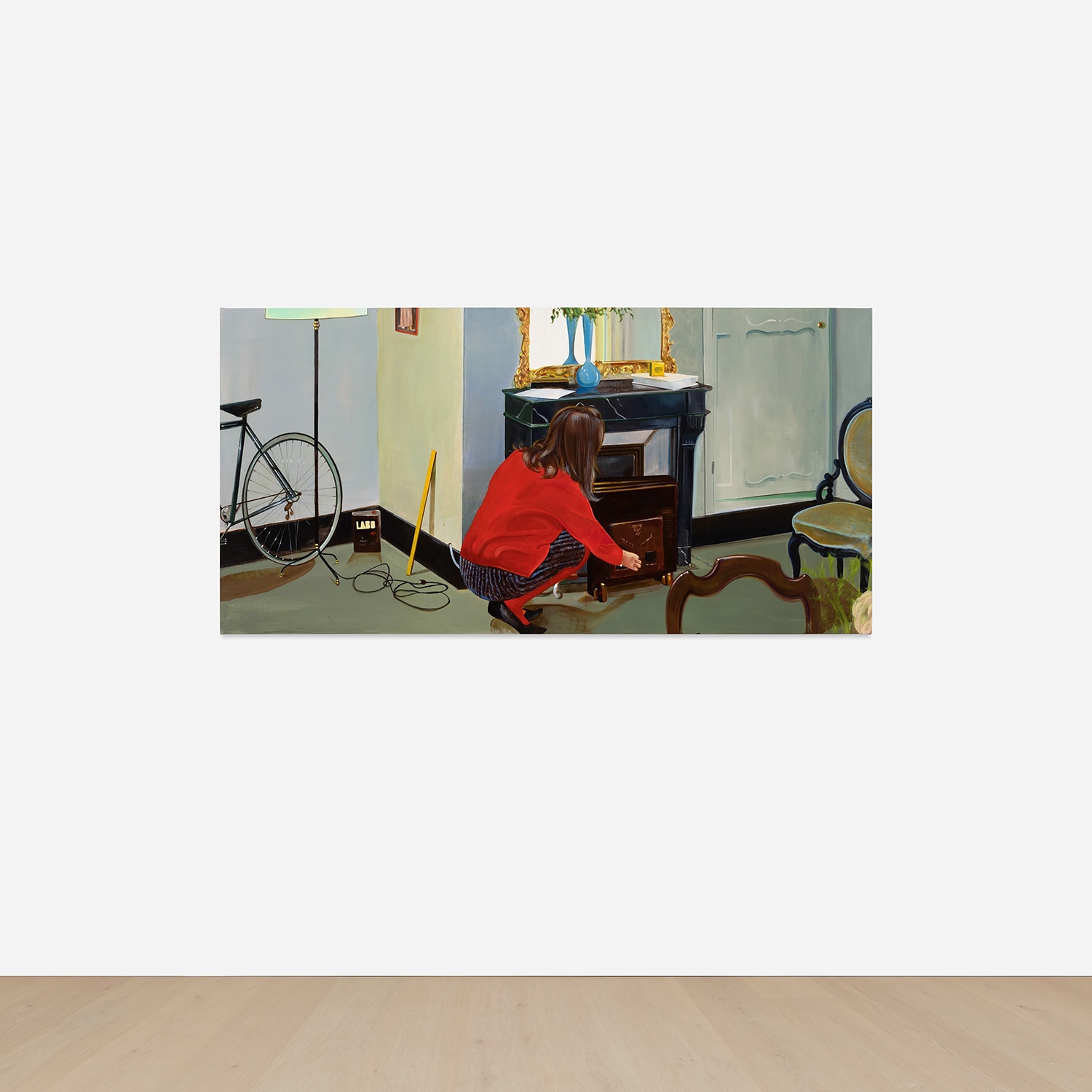
Leonard Baby Finds Beauty in the Everyday
Artist Spotlight · The Collection Editorial
There is a particular kind of painter who earns attention not through spectacle but through sustained, quiet insistence on the importance of small things. Leonard Baby is that kind of painter. His acrylic works, many completed across 2022 and 2023, have begun drawing serious attention from collectors who recognize in his canvases and panels something rare: an unflinching emotional intelligence wrapped inside compositions that feel simultaneously familiar and deeply strange. Baby works in a mode that is at once confessional and universal, and the art world is catching up to what his earliest admirers already knew.
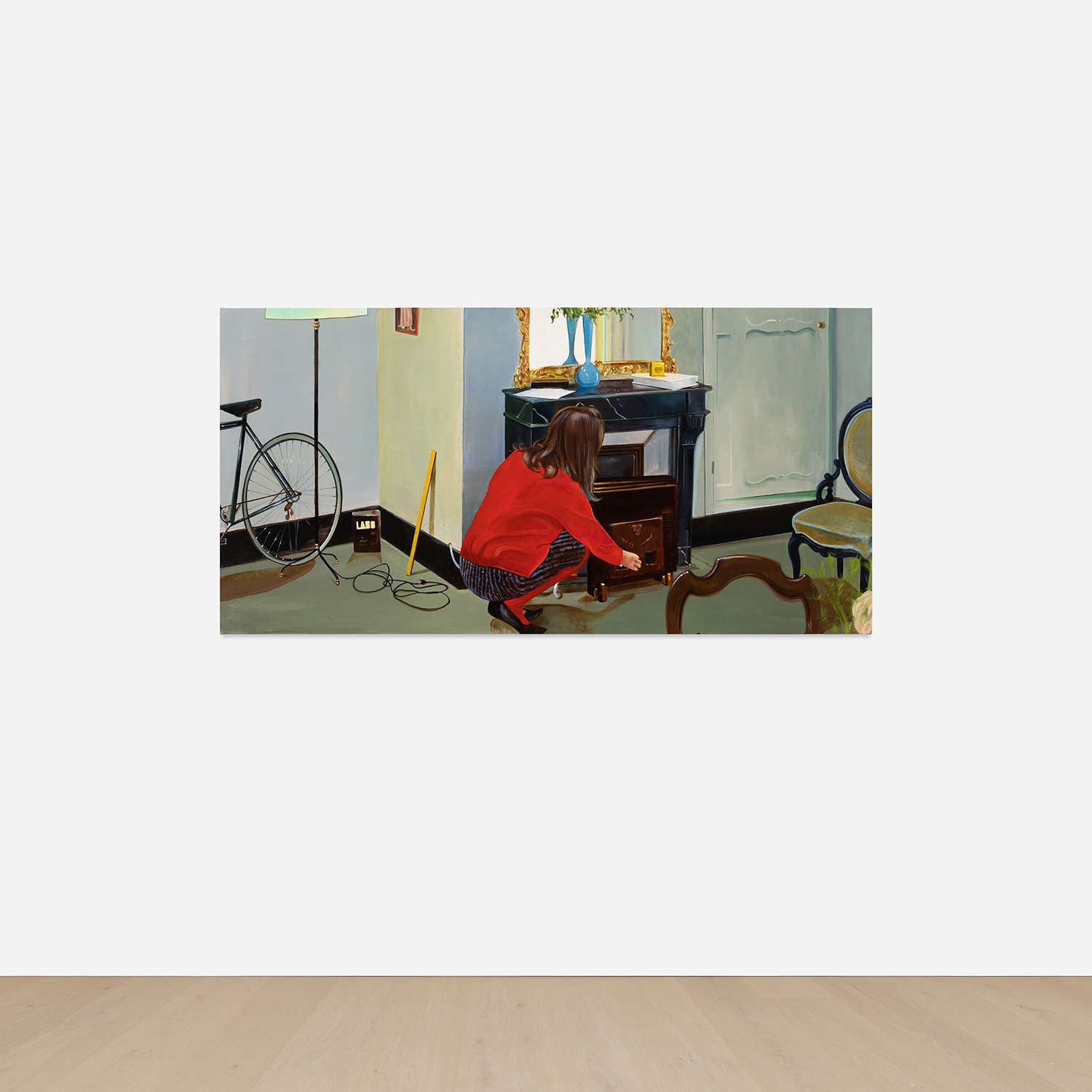
Leonard Baby
Party of One, 2023
While biographical details about Baby's early life remain close to the vest, the work itself speaks fluently about formation and influence. His paintings carry the visual grammar of American vernacular culture, the medicine cabinets, the birthday rituals, the quiet corners of domestic life where people do their private grieving and their private celebrating. There is a Midwestern directness to his choices, a sense that he grew up around people who expressed love through action rather than declaration, and that he has spent his painting life translating that gap between feeling and speech into image. The titles alone, conversational and a little bruised, suggest an artist shaped by real human texture rather than academic abstraction.
Baby works primarily in acrylic, applying it to canvas, wood panel, and panel supports with a control that belies how emotionally raw the subject matter tends to be. His paintings are not gestural in the expressionist sense, yet they carry tremendous feeling. He achieves this through careful attention to light, to the way objects occupy space, and to the charged silence that surrounds the figures and items he chooses to depict. His practice appears to have deepened considerably between 2022 and 2023, with the body of work from that period showing both greater formal confidence and a widening emotional range.
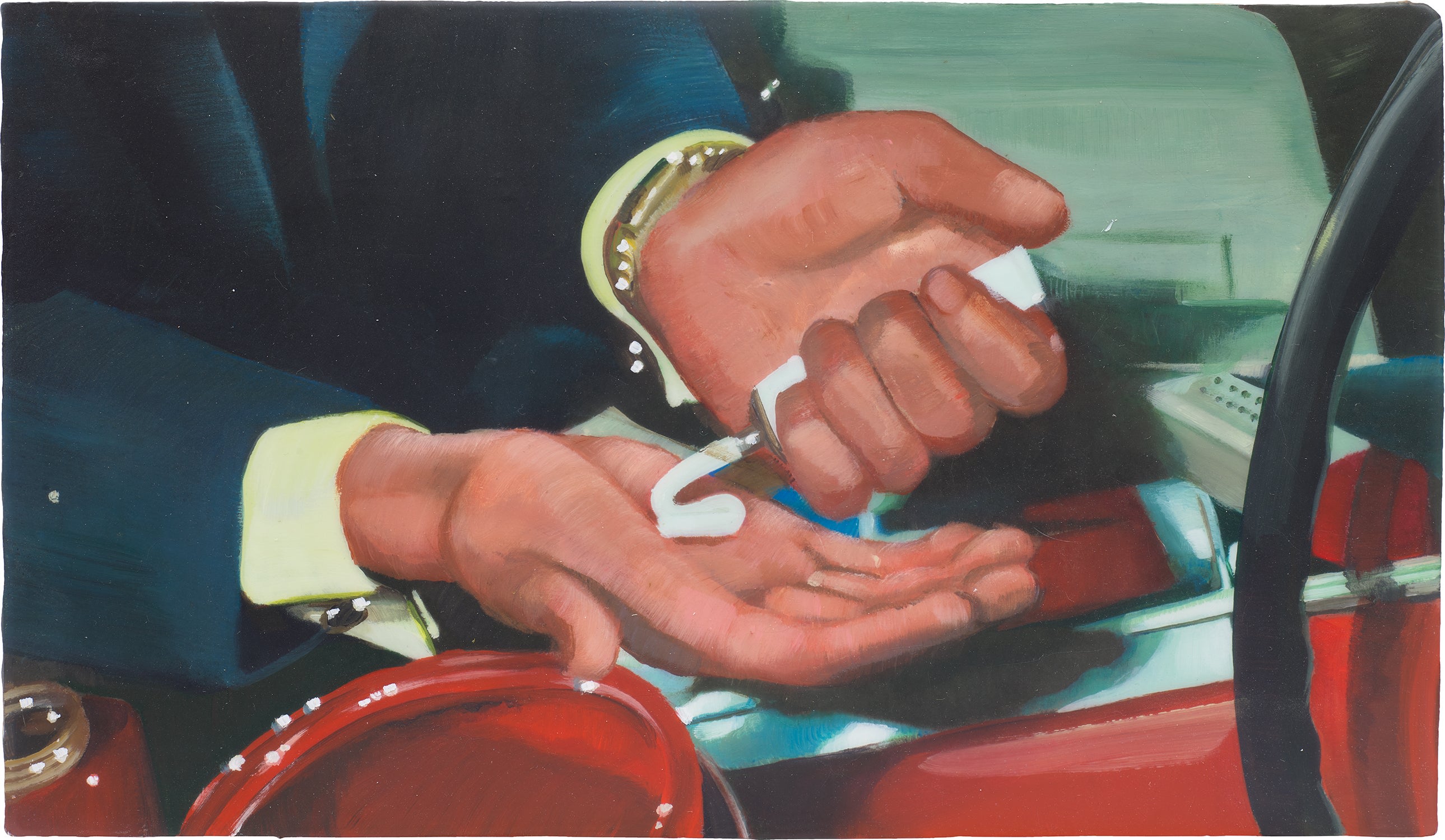
Leonard Baby
If You Don’t Bleed, You Don’t Die, 2023
He is an artist in full command of his tools at a relatively early stage of his public career. The titles of Baby's works function almost as first lines of poems, and they reward close reading. "If You Don't Bleed, You Don't Die" and "Can I Stand in Your Light For A While?" sit in productive tension with one another, one asserting the necessity of vulnerability, the other reaching toward connection with a kind of tender uncertainty.
"The Glad Game" invokes the determined optimism of a character who chooses joy as a discipline, not a reflex. "Liquid Courage" and "Party of One" together map the social terrain of the person who is still learning how to be present in the world. These are not decorative titles. They do real conceptual work, preparing the viewer to encounter the painted surface as a site of emotional negotiation rather than mere aesthetics.
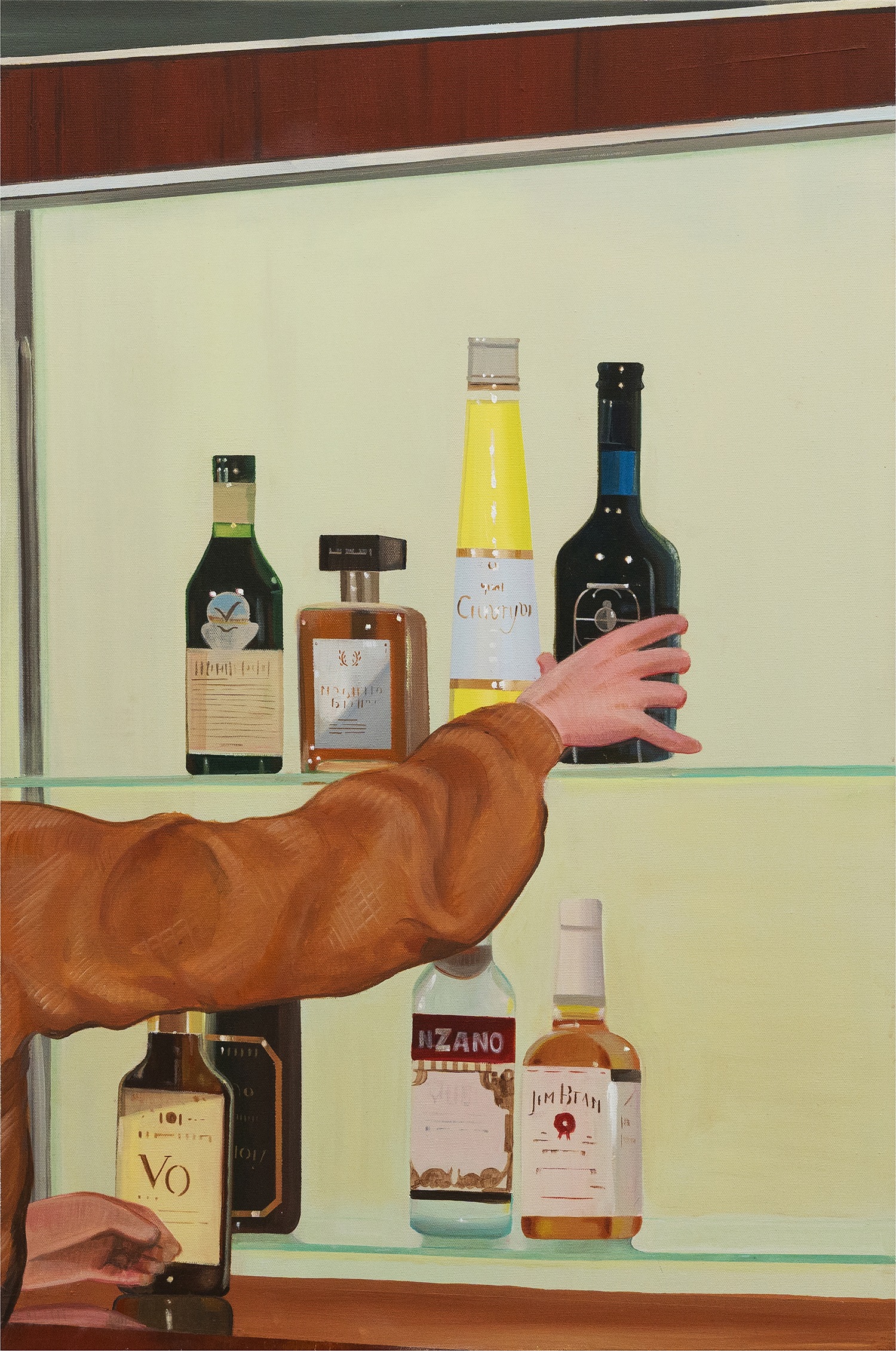
Leonard Baby
Medicine Cabinet, 2022
"Medicine Cabinet" from 2022 stands as one of Baby's most discussed works among collectors who have followed his development closely. The painting takes an object of profound domestic intimacy, the cabinet where people keep the things that hurt and the things that heal, and renders it with a seriousness that transforms it into something close to portraiture. "Our Short Lives," completed in 2023, operates on a similarly grand emotional register, compressing mortality and tenderness into a composition that does not announce its ambitions loudly but delivers them with conviction. "Happy Birthday" from that same year demonstrates his ability to take a ritual moment, one that sits at the intersection of joy and the passage of time, and hold it open long enough for the viewer to feel both things at once.
Taken together, these works suggest an artist building a coherent body of thought, not simply a series of technically accomplished paintings. From a collecting perspective, Baby represents exactly the kind of opportunity that serious collectors and advisors recognize as meaningful. He is working at a high level of artistic maturity while his market profile is still in its early formation, which is the precise moment when thoughtful acquisition makes the most sense. His works on panel and canvas offer a range of scale and surface that allows collectors to place his work in varied contexts, whether in intimate domestic settings where the emotional content resonates most immediately, or in more formal environments where his formal rigor asserts itself.
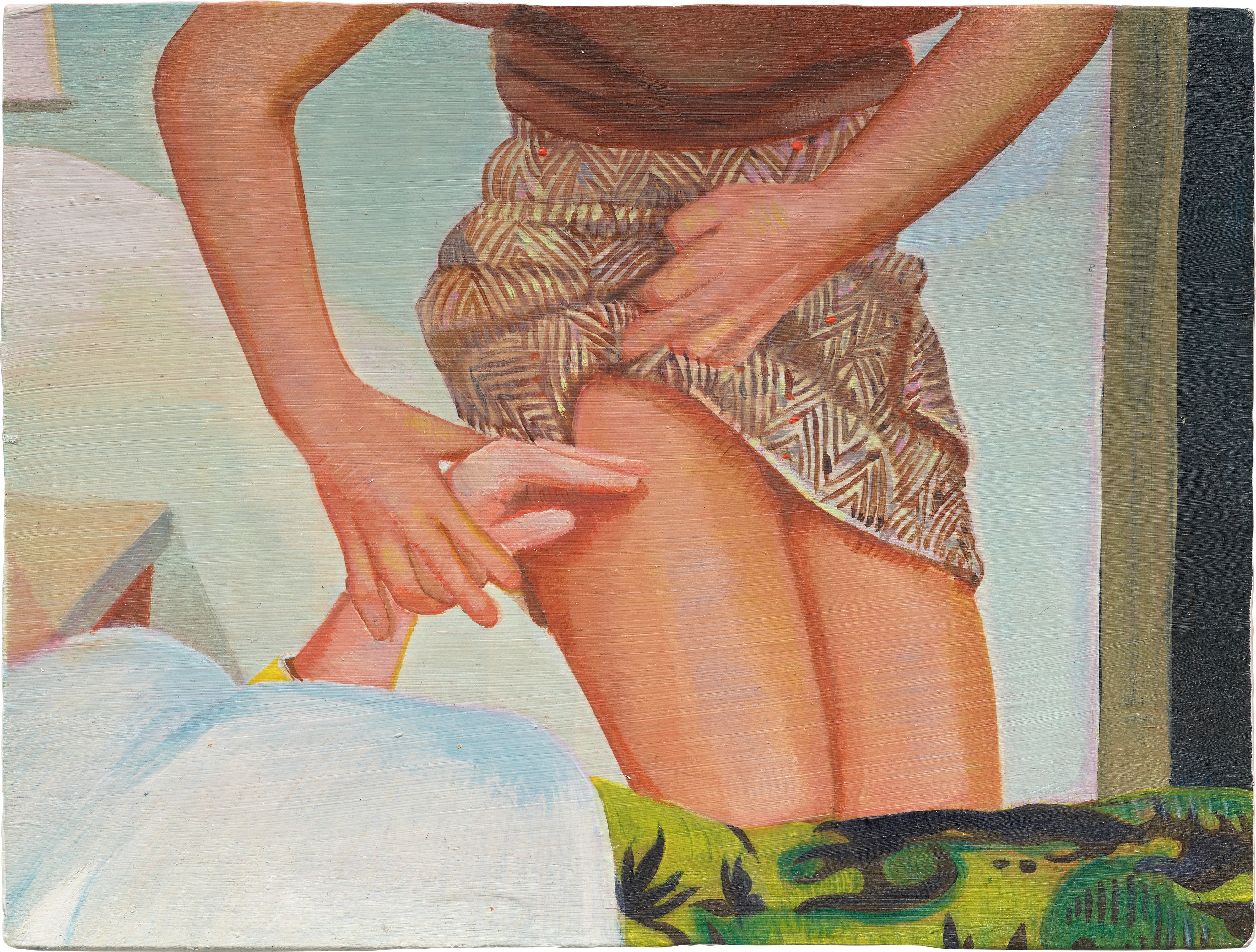
Leonard Baby
Can I Stand in Your Light For A While?, 2022
The consistency of his 2022 to 2023 output suggests an artist with a clear vision and the discipline to execute it across multiple works without repetition or dilution. Baby's practice invites comparison to a lineage of American painters who have treated the everyday as worthy of serious artistic inquiry. The spirit of his work resonates with painters like Eric Fischl, who found psychological depth in the surfaces of ordinary American life, and with artists in the tradition of Alex Katz and Bo Bartlett, who demonstrated that representational painting could carry genuine emotional and intellectual weight. There is also something in Baby's titling sensibility and his attention to the charged object that echoes the conceptual care of painters like Amy Sillman and Nicole Eisenman, artists who understand that what a painting is called is part of what it means.
Baby belongs to a generation that has absorbed these influences without being beholden to them, and that synthesis is part of what makes his work feel both rooted and alive. Leonard Baby matters right now because he is making work that addresses how it feels to be a person navigating ordinary life with full emotional awareness, and he is making it with exceptional craft and seriousness. In a moment when the art world often rewards novelty above all else, his commitment to the slow, accumulating power of the painted object feels both countercultural and necessary. Collectors who engage with his work are not simply acquiring beautiful objects.
They are investing in a sustained conversation about the things that make life both difficult and worth living. That conversation is only just beginning, and it is already saying something worth hearing.