Leon Polk Smith

Leon Polk Smith: Color's Most Eloquent Architect
Artist Spotlight · The Collection Editorial
“I am not interested in texture, in brushwork, in accident. I want the color to be the painting.”
Leon Polk Smith
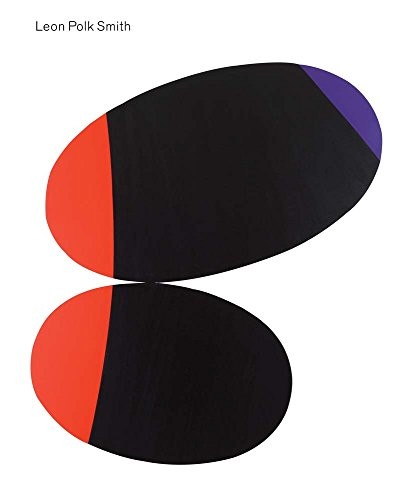
There is a moment in the permanent collection galleries of the Whitney Museum of American Art when a Leon Polk Smith canvas stops you cold. Two arcs of color, bold and uncompromising, curve toward one another across a shaped canvas with the quiet confidence of something inevitable. No drama, no gesture, no anxiety. Just color, form, and a silence so complete it feels almost musical.
Leon Polk Smith
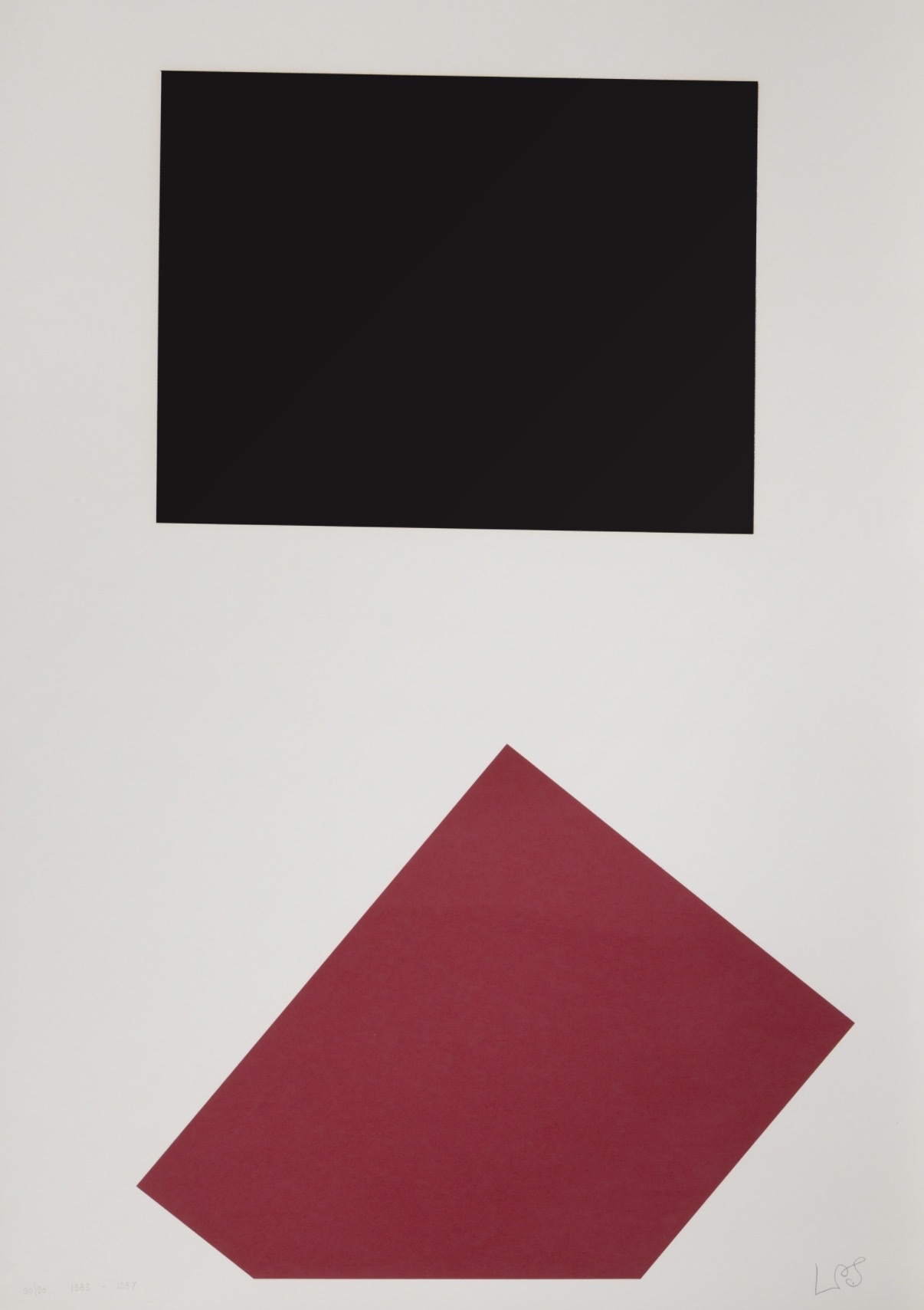
Werkubersicht/Work-Overview J, 1987
That experience, repeated in museums and private homes across America and Europe, is why Smith's reputation has only grown richer in the decades since his death in 1996, and why a new generation of collectors and curators is returning to his work with fresh urgency. Smith was born in 1906 in Chickasha, Indian Territory, in what would become the state of Oklahoma. He was of Cherokee and Choctaw heritage, and that origin shaped not only his sensibility but the particular independence of his artistic vision. Growing up far from the cultural centers of the East Coast, he came to abstraction without the weight of received wisdom, developing instead a self reliance that would define his entire career.
He trained as a teacher and worked in rural Oklahoma schools before eventually making his way to New York in 1936, arriving in a city electric with modernist experiment. New York in the late 1930s was transforming rapidly, as European emigres brought the full force of the Bauhaus and de Stijl movements to American shores. For Smith, the encounter with the work of Piet Mondrian was nothing short of revelatory. He studied Mondrian's grid based compositions with deep attention, but rather than adopting the Dutch master's rectilinear language wholesale, Smith began asking a different question: what would happen if those relationships between colors were expressed through curves instead of straight lines?

Leon Polk Smith
Beyond the Blue
That question would occupy him for the next six decades and produce one of the most distinctive bodies of work in postwar American art. By the late 1950s and early 1960s, Smith had arrived at the visual vocabulary that would make him famous. Working with flat, unmodulated areas of color separated by crisp, curving boundaries, he created compositions of extraordinary tension and poise. His so called constellation series, produced across several decades, deployed rounded biomorphic fields on shaped or multi panel canvases, allowing the edges of the support itself to become part of the composition.
Works such as Constellation Black and Orange, created in 1972 in acrylic on canvas across two parts, demonstrate the full power of his method: two colors locked in a relationship that is simultaneously simple and inexhaustible. The shaped canvas was not a novelty for Smith but a logical extension of his belief that the boundary between painting and object should be as active as the boundary between two fields of color. Smith's relationship to the broader movements of his era was always slightly oblique, which is part of what makes him so interesting to study. He is correctly associated with Hard edge painting and Color Field abstraction, and he shared sensibilities with artists such as Ellsworth Kelly, Frank Stella, and Karl Benjamin.
Leon Polk Smith
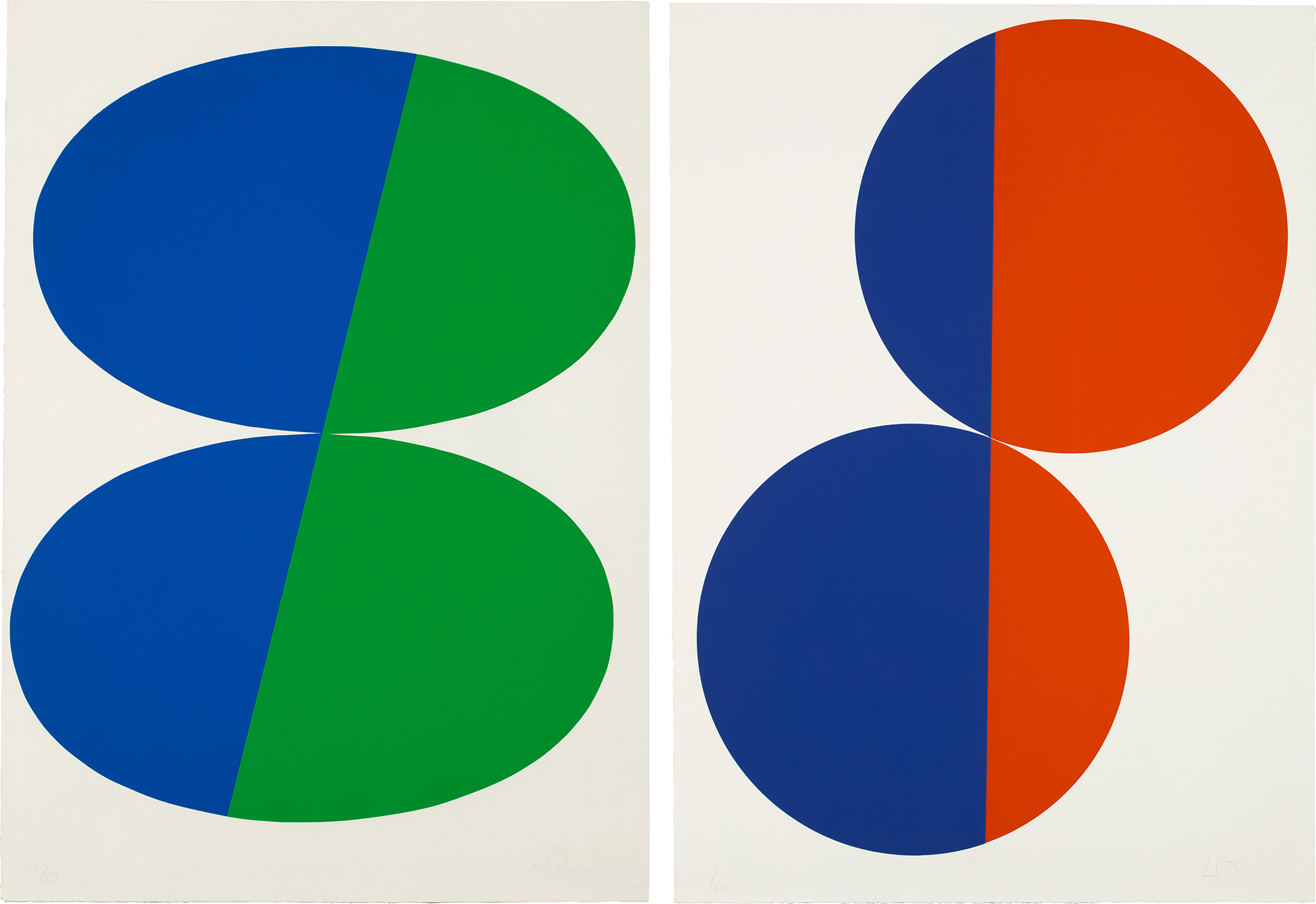
Volair Constellation Series: two plates
Yet his work predates much of what would come to define those movements, and he was long underrecognized as a pioneer. Critics and historians have increasingly acknowledged that Smith was working with shaped canvases and reduced color relationships at a moment when most American painters were still in the thrall of Abstract Expressionism's gestural intensity. His restraint was, in its own way, radical. The market for Smith's work has reflected this gradual reassessment.
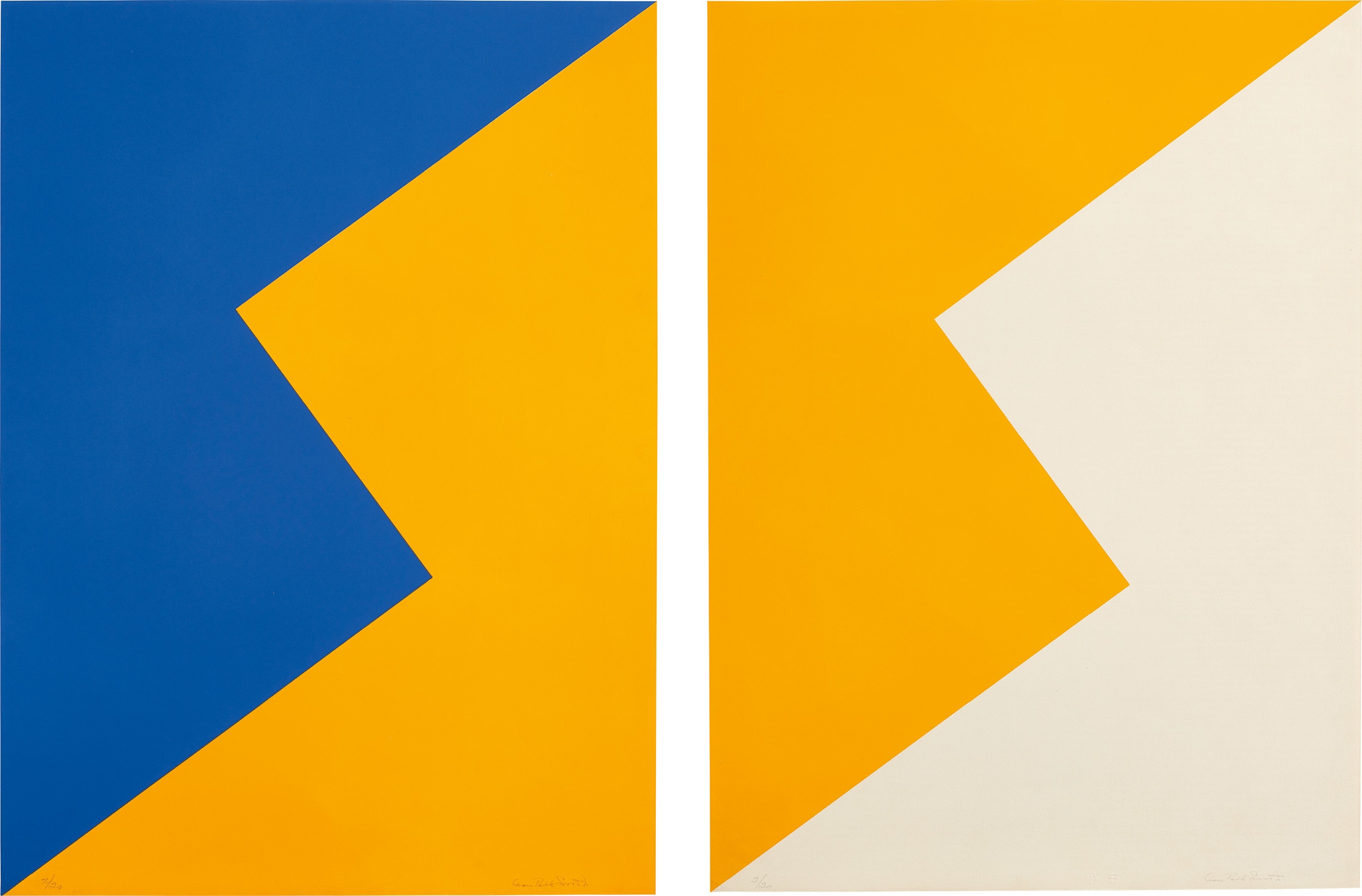
His prints and works on paper, including the Volair Constellation series of screenprints and the Color Forms series, offer collectors an accessible point of entry into his world, with the same formal clarity that defines his canvases rendered in editions that circulate regularly through the secondary market. His painted works command serious attention at auction, and institutional collecting of his output has been steady and growing. Collectors drawn to the work of Ellsworth Kelly or Carmen Herrera often find that Smith provides a compelling and historically significant complement, offering a perspective that is distinctly American yet deeply informed by European geometric tradition. The two part and multi panel compositions are particularly sought after, as they embody the full complexity of his thinking about how color and form can be made to speak across a physical gap.
Leon Polk Smith
Leon Polk Smith
The prints available through The Collection represent the full range of Smith's graphic sensibility, from the Werkubersicht overview works of the late 1980s to the Volair Constellation plates that translate his arcing forms into the language of the screenprint with remarkable fidelity. The Color Forms series, with its numbered editions and Smith's characteristically spare initials, shows how seriously he approached the print medium, not as a commercial sideline but as a genuine arena for formal exploration. Collecting these works is an opportunity to engage with a body of thought that rewards long acquaintance: the more time you spend with a Smith composition, the more you begin to understand how much is contained in what first appears to be almost nothing. Smith's legacy sits at the intersection of several conversations that feel urgently contemporary.
As the art world reckons more seriously with the contributions of Indigenous American artists to the broader history of modernism, his Cherokee and Choctaw heritage is no longer a biographical footnote but a meaningful part of the story. His insistence on simplicity, on the power of the unadorned relationship between two colors, anticipates debates about reduction and presence that are very much alive in painting today. And his long career, which stretched from the Depression era through the digital age, demonstrates that a single, deeply held formal conviction, pursued with patience and rigor, can generate an inexhaustible variety of expression. Leon Polk Smith did not change his mind about what painting could be.
He just kept finding new ways to prove he was right.
Explore books about Leon Polk Smith