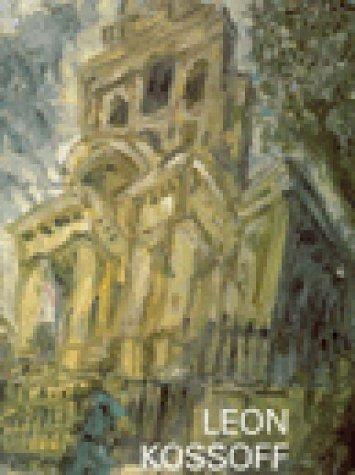
Leon Kossoff
Leon Kossoff, London's Most Devoted Witness
Artist Spotlight · The Collection Editorial
“I have always worked from life. Without that immediate experience, painting becomes an exercise in style.”
Leon Kossoff, artist's statement
In 2019, the Royal Academy of Arts paid tribute to Leon Kossoff as one of the defining painters of postwar British art, a recognition that felt both overdue and entirely fitting for an artist who had spent seven decades in quiet, ferocious devotion to a single city and its people. That same year, the art world mourned his passing at the age of 93, and the retrospective attention that followed only deepened appreciation for the extraordinary consistency and emotional power of his life's work. Kossoff never sought the limelight, yet the limelight has found him again and again, as museums, scholars, and collectors continue to recognise what they are looking at: one of the most searching and humane painters England ever produced. Leon Kossoff was born in 1926 in the East End of London, the son of Jewish immigrants from Eastern Europe.
Leon Kossoff
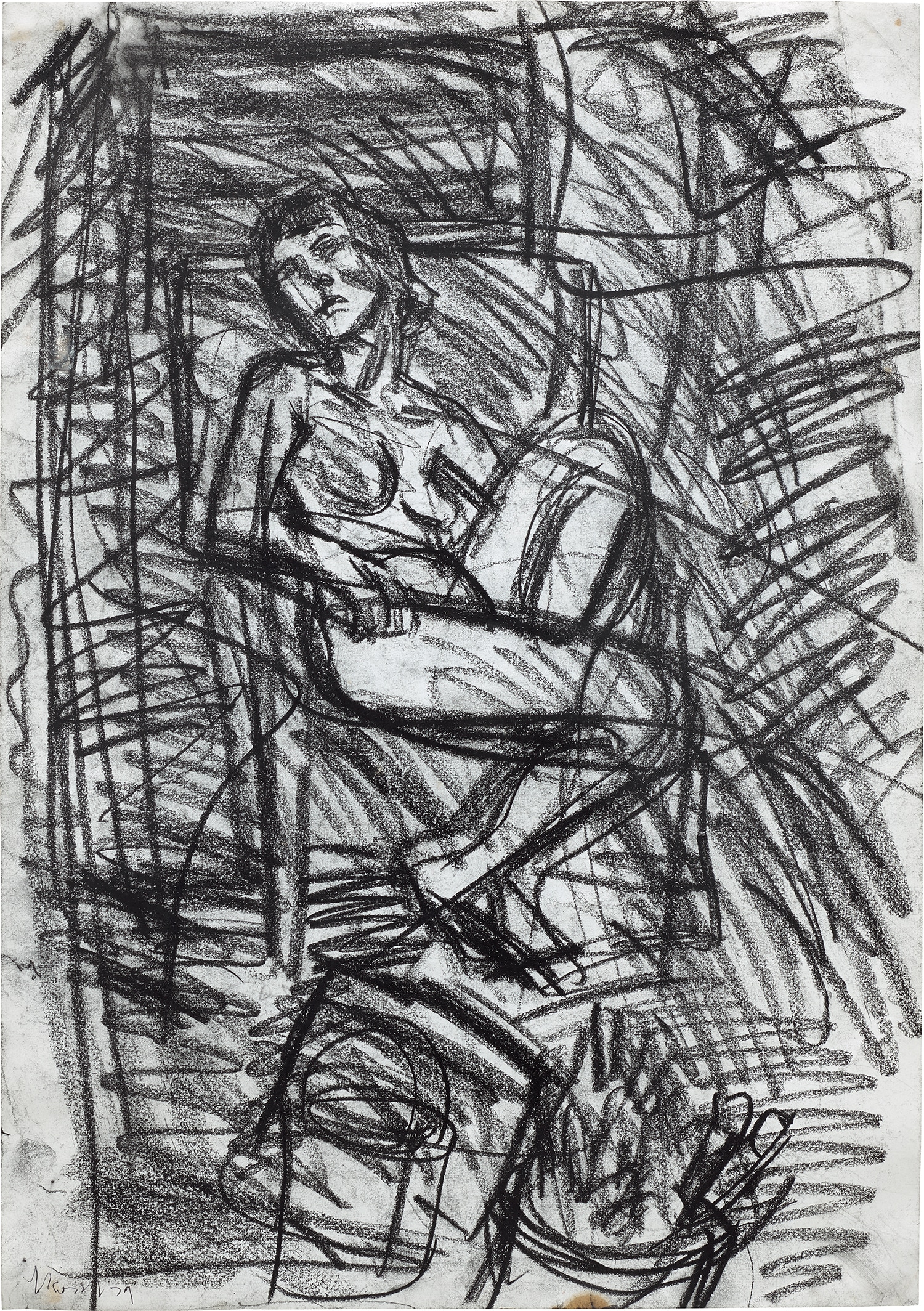
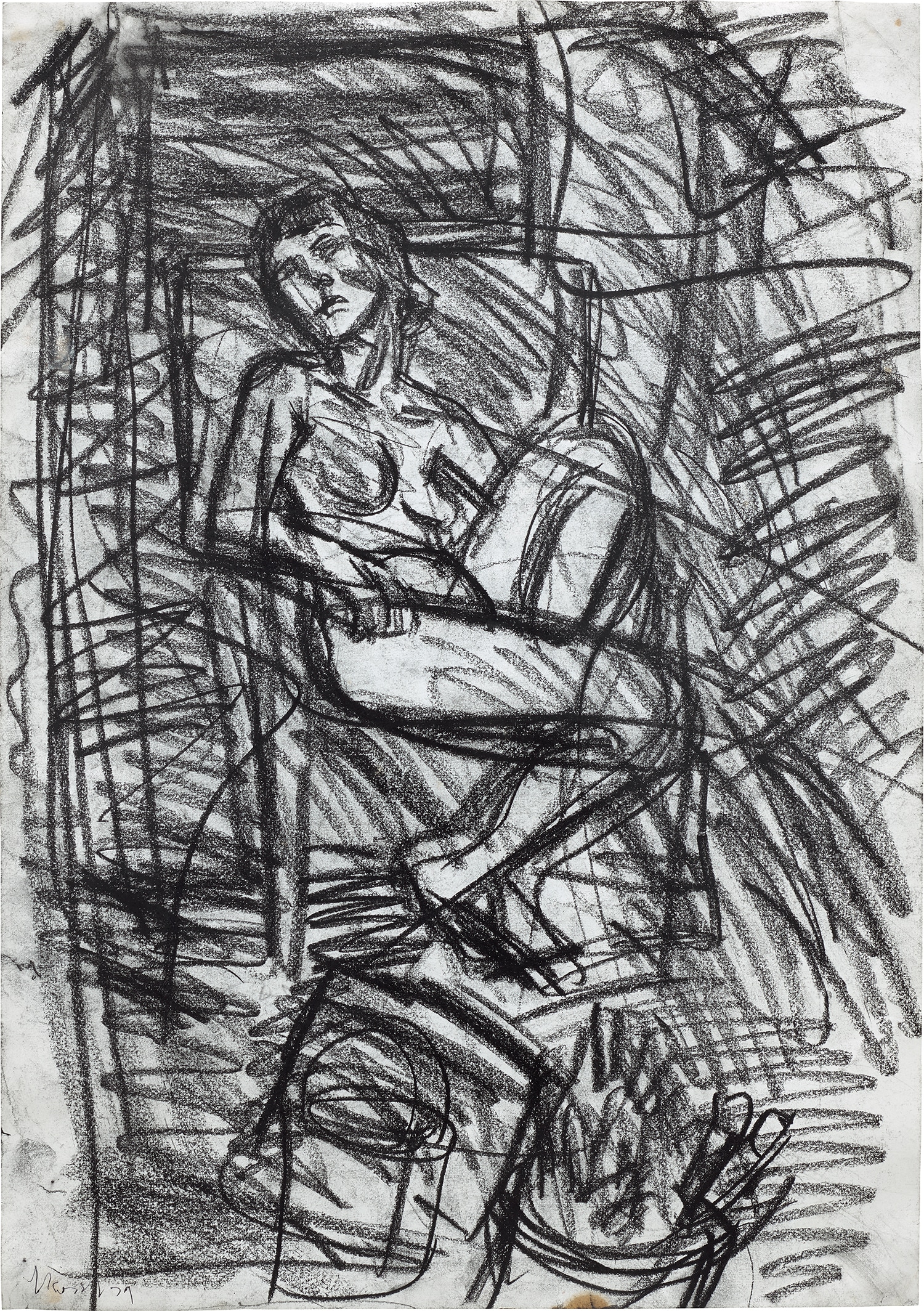
Female Nude Study, 1979
He grew up in a neighbourhood shaped by displacement, community, and the textures of working life, and those formative surroundings left permanent marks on his artistic imagination. As a young man he studied at Saint Martin's School of Art and then at the Borough Polytechnic under David Bomberg, whose legendary teaching placed emphasis on the felt sense of mass and weight in drawing and painting. Bomberg's influence was profound, instilling in Kossoff a belief that art must come from genuine encounter with the world rather than from stylistic fashion or intellectual programme. That lesson stayed with him for the rest of his life.
After his studies, Kossoff also attended evening classes at the Royal College of Art, where he developed friendships and working relationships that would define the landscape of British figurative painting for generations. His long friendship and mutual respect with Frank Auerbach is among the most celebrated artistic bonds in postwar British culture. Both men worked in the same intense, physically committed manner, building up paint to extraordinary thickness and then scraping it back, beginning again, never satisfied until the image carried the weight of real experience. Kossoff's early paintings of the 1950s and 1960s already showed his characteristic density of surface, his willingness to destroy and rebuild a canvas many times over in pursuit of something truthful.
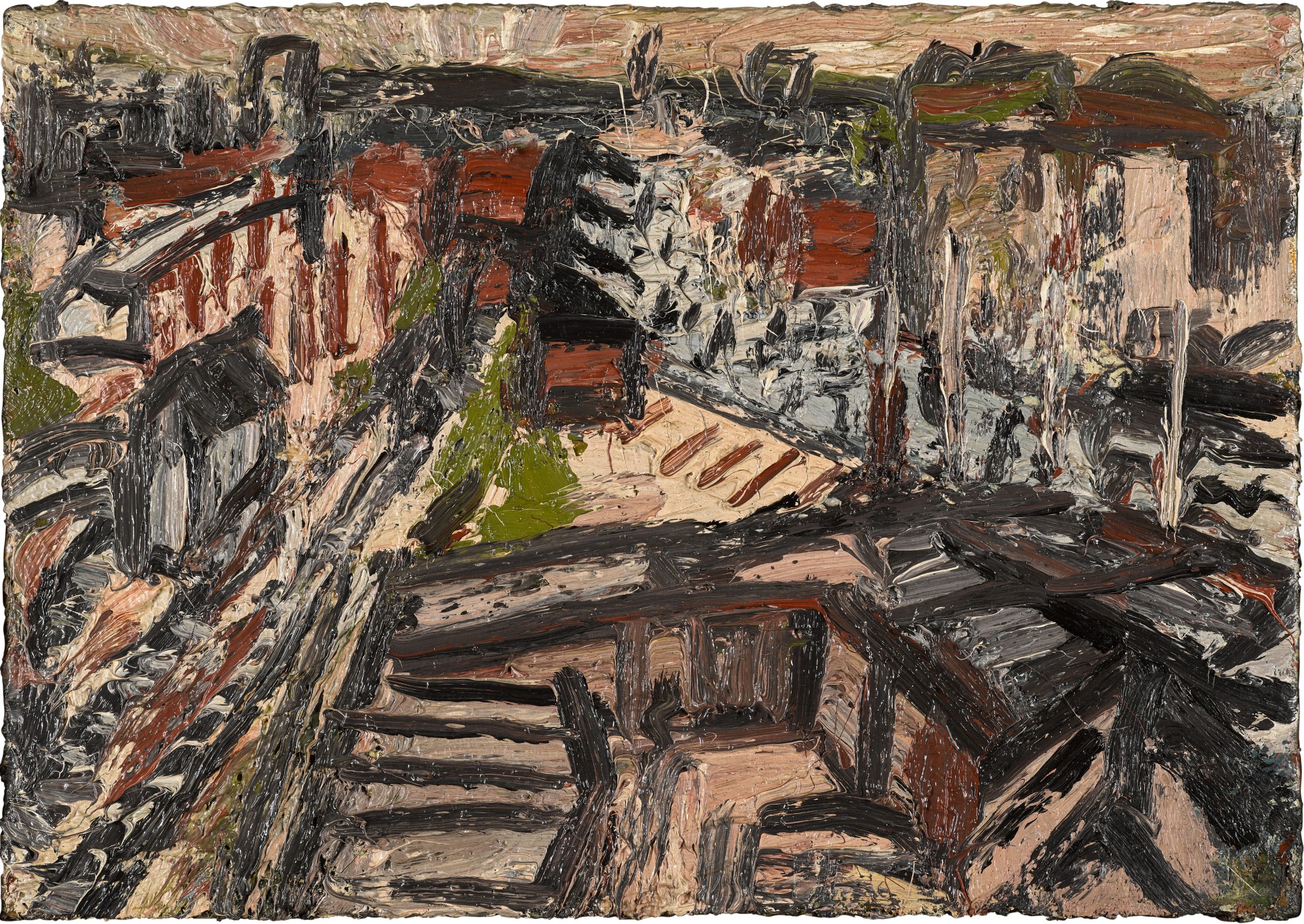
Leon Kossoff
Dalston Junction No.1
The geography of Kossoff's art is as specific as it is resonant. He painted Dalston Junction, Kilburn Underground Station, the streets around his home and studio in north London, the building sites and bombsites of a city still reconstructing itself after the Second World War. Works such as Dalston Junction No.1 and Stormy Summer Day, Dalston Lane from 1975 are not merely topographical records but charged psychological portraits of urban life, full of the energy and fatigue of ordinary people moving through familiar spaces.
“The drawing must contain the feeling of the subject, not just its appearance.”
Leon Kossoff, interview with the Tate
His interiors of the Kilburn Underground booking hall, rendered in dense charcoal or thickly applied oil paint, transform a functional civic space into something almost sacred, as though the act of sustained looking could unlock the hidden dignity of any place. These works represent some of the most distinctive achievements in British urban painting. Kossoff's practice encompassed both oil painting and works on paper, and his drawings in charcoal deserve particular attention. The charcoal figure studies, including Female Nude Study from 1979 and the tender portrait Head of Rosalind from 1977, reveal a draughtsman of tremendous sensitivity.
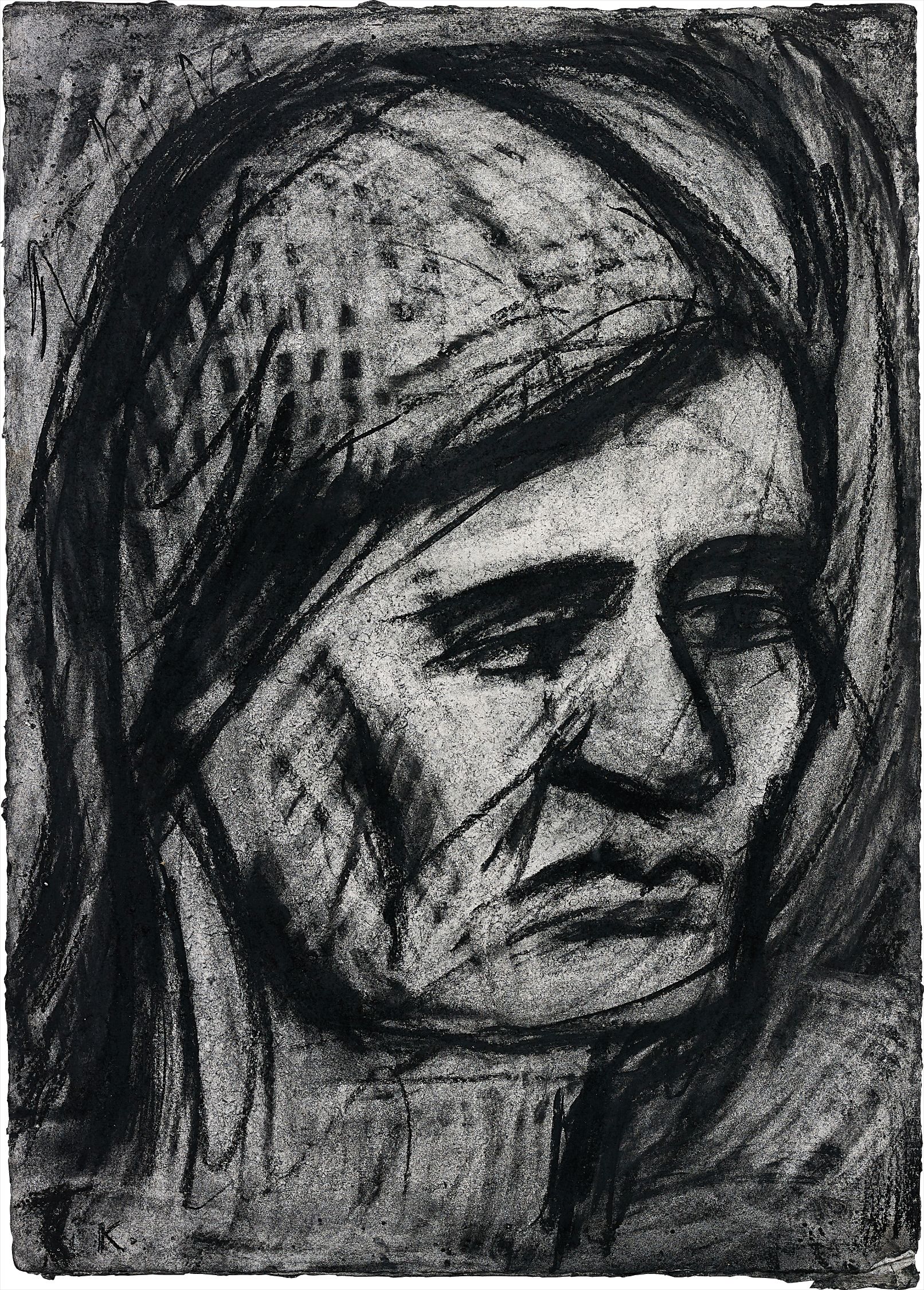
Leon Kossoff
Head of Rosalind, 1977
His line is searching and accumulative rather than elegant, building form through repeated marks that trace the effort of genuine looking. The drawing Father Seated in an Armchair Asleep from 1978 captures something quietly moving: the vulnerability of a sleeping figure observed with a child's attentiveness and an artist's unwavering eye. Throughout his career Kossoff returned again and again to the same subjects, the same people, the same streets, because he understood that familiarity does not diminish subject matter but deepens it. For collectors, the range of Kossoff's output across media offers multiple points of entry.
His prints, including the drypoint with etching and aquatint known as Going Home, demonstrate that his way of thinking through mark and texture translated powerfully to the printmaking process. Works on paper such as the 2008 Arnold Circus in charcoal and pastel represent Kossoff late in his career, still energetically engaged with London's topography. Auction results over the past decade have reflected growing institutional and private appetite for his work, with his paintings commanding significant prices at Christie's and Sotheby's as collectors recognise both the quality and the relative scarcity of his strongest pieces. For those beginning to engage with his work, the drawings and prints offer an accessible way into a practice of remarkable depth.
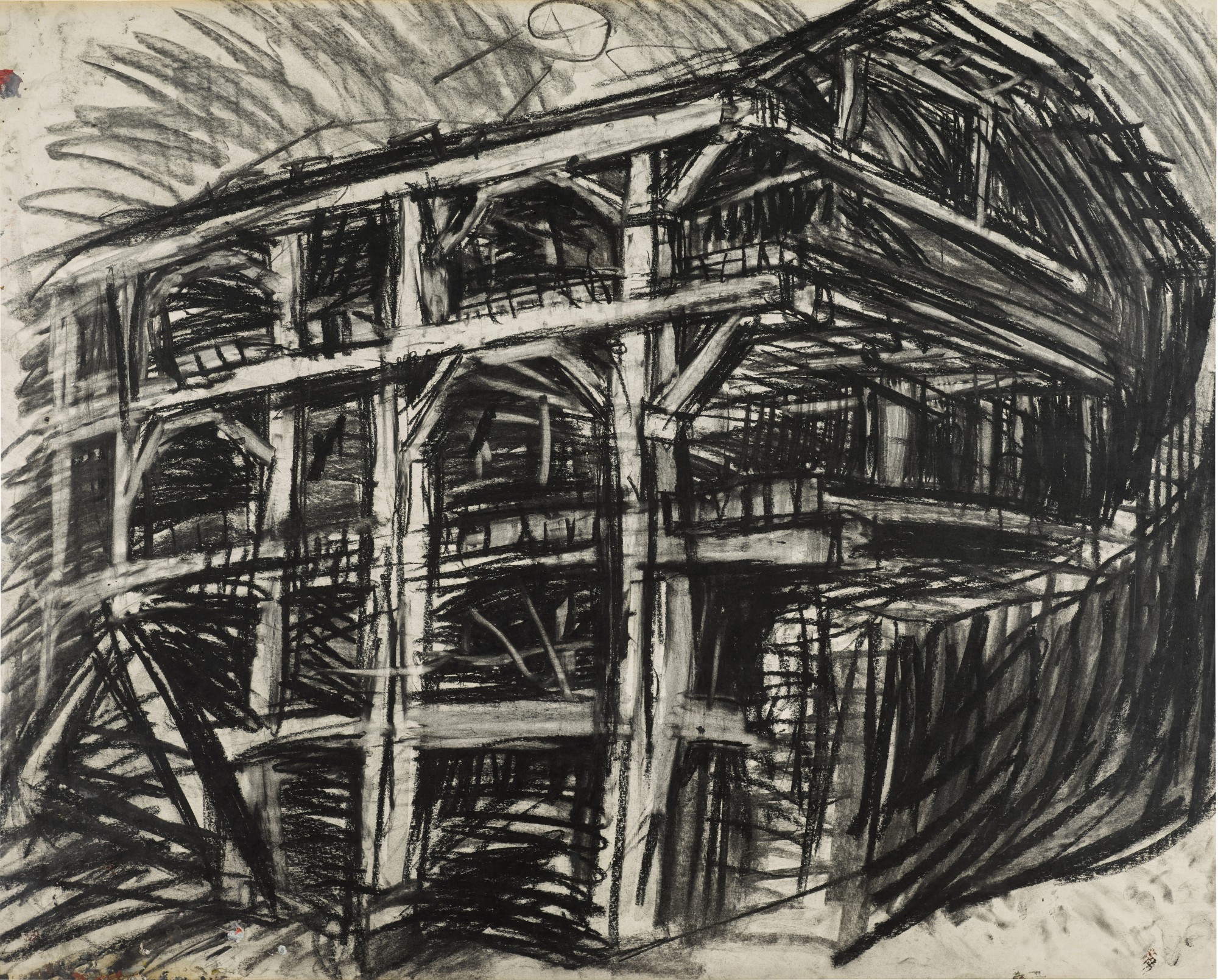
Leon Kossoff
Partly Demolished Warehouse, St. Katharine Dock, London, Spring 1973, 1973
Within art history, Kossoff belongs to the generation sometimes grouped as the School of London, alongside Auerbach, Lucian Freud, Francis Bacon, and R.B. Kitaj. These painters shared a commitment to figuration at a moment when abstraction dominated critical conversation, and their collective achievement has grown steadily in stature as the decades have passed.
Kossoff is perhaps the most quietly emphatic of the group: less theatrical than Bacon, less coolly analytical than Freud, but possessed of a warmth and communal feeling that is entirely his own. His art is rooted in belonging, in the love of a particular place and its particular people, and that rootedness gives it a quality of earned truth that transcends period or movement. Leon Kossoff's legacy rests on the courage to be unfashionable, the discipline to return to the same subjects over decades, and the technical conviction to make paint and charcoal carry genuine feeling. He demonstrated that staying in one place and looking harder is a radical act in an art world that often prizes novelty and spectacle.
Institutions including Tate Britain hold significant examples of his work, and retrospective exhibitions have consistently confirmed the depth and coherence of his vision. For those discovering his work now through platforms dedicated to thoughtful collecting, the encounter is invariably affecting: here is an artist who trusted the world around him enough to look at it his entire life, and who made that looking into something extraordinary.
Explore books about Leon Kossoff