Lee Krasner
Lee Krasner: Force of Nature, Forever
Artist Spotlight · The Collection Editorial
“I can't conceive of anything that doesn't have this kind of organic, rudimentary form. My work is founded in this prescribed thing called nature.”
Lee Krasner, 1962
In 2019, the Barbican Art Gallery in London mounted a landmark retrospective of Lee Krasner's work, the largest survey of her painting and collage to be held in Europe in decades. The exhibition drew record crowds and, perhaps more significantly, reframed a long overdue conversation about where Krasner truly belongs in the canon of twentieth century art. Not as a footnote, not as a supporting character in someone else's story, but as one of the defining voices of Abstract Expressionism, a painter whose vision was entirely, irreducibly her own. The moment felt like a reckoning, and the art world was ready for it.
Lee Krasner
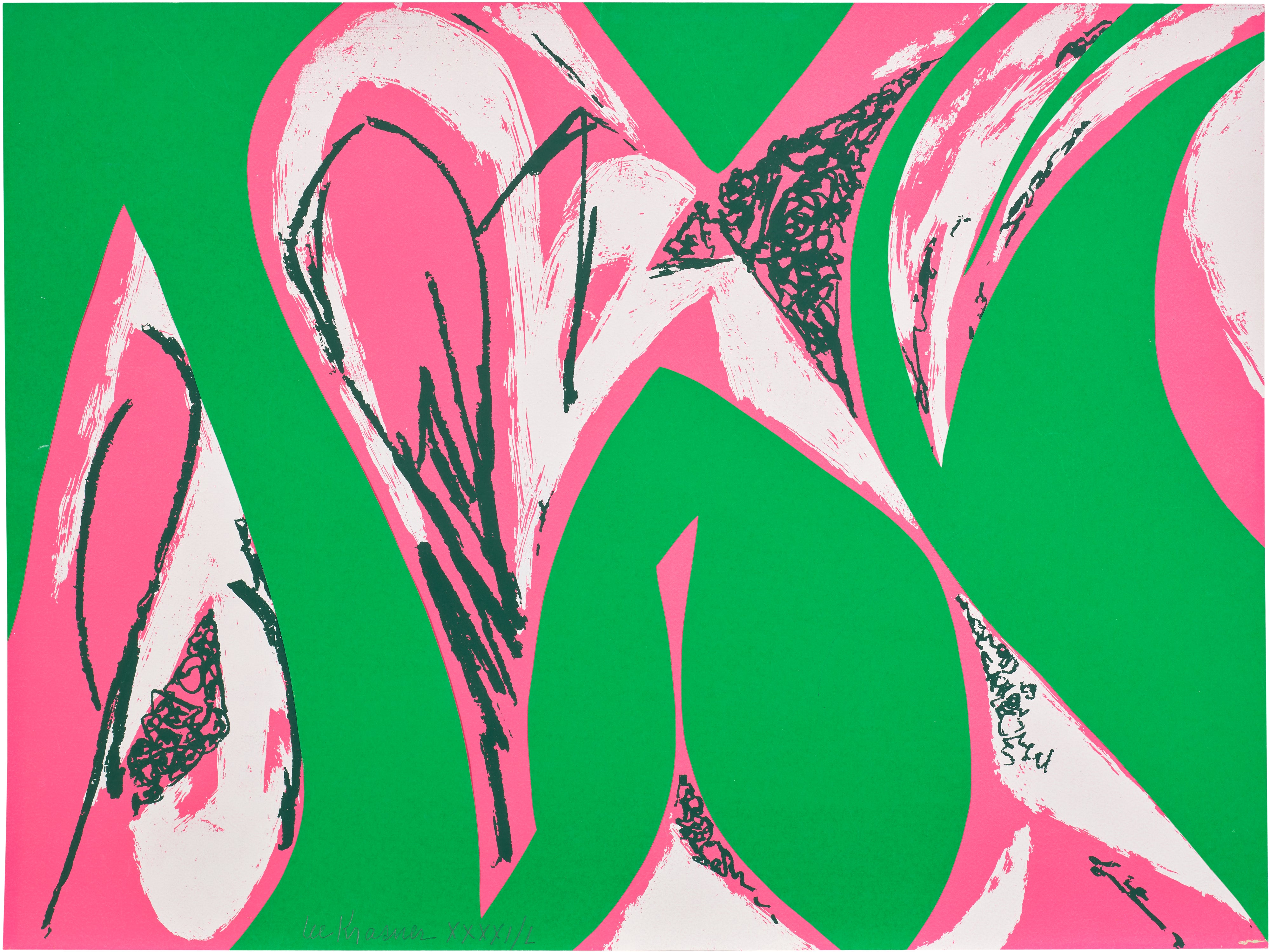
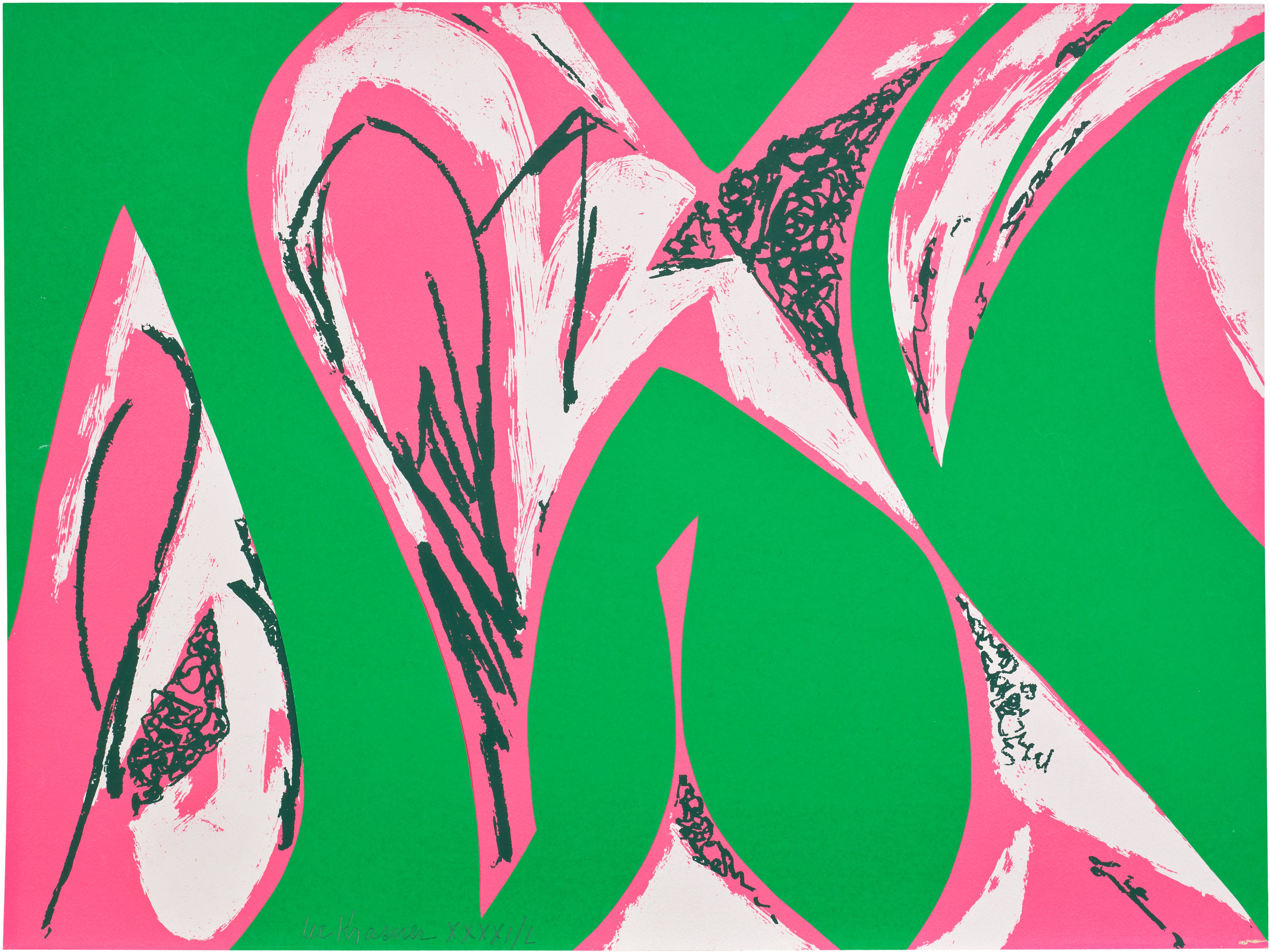
Free Space (Pink)
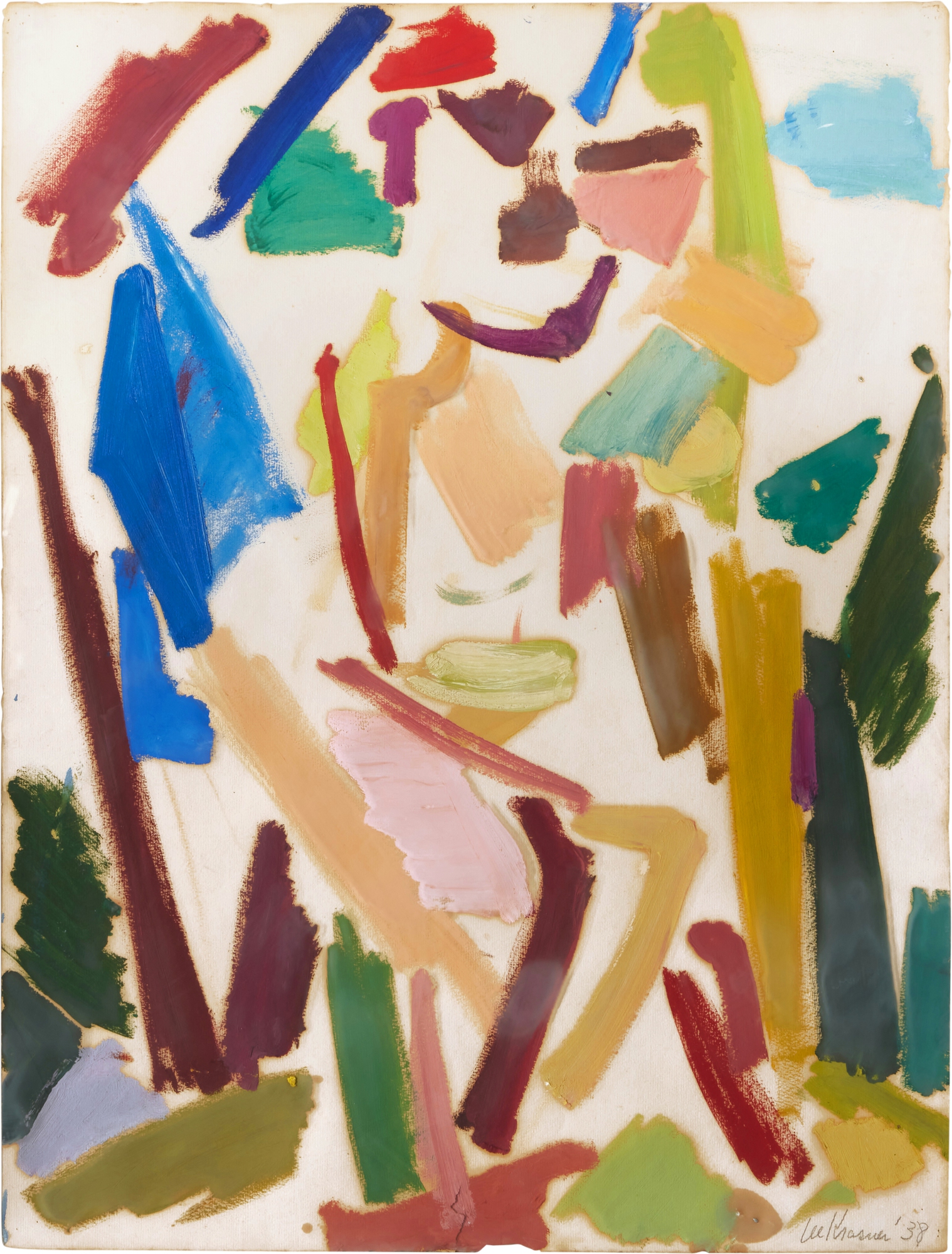
Lee Krasner was born Lena Krasner in 1908 in Brooklyn, New York, the sixth child of Jewish immigrants from Shpykiv, in what is now Ukraine. From early on, she was drawn with unusual seriousness to the visual arts, enrolling at the Washington Irving High School for girls, one of the few schools in New York City at the time that offered a rigorous arts curriculum. She went on to study at the Cooper Union and later at the National Academy of Design, where she trained in a classical figurative tradition that would inform, and ultimately be dismantled by, everything she made afterward. Her nude studies from the late 1930s, including the quietly assured oil on paper work known as Untitled (Nude Study) from 1938, reveal an artist fully in command of the human form, even as she was beginning to look beyond it.
The pivotal turn in Krasner's artistic formation came through her studies with Hans Hofmann, the influential German American teacher whose studio became a crucible for a generation of American modernists. Hofmann's emphasis on the push and pull of pictorial space, on color as a structural force rather than a decorative one, planted deep roots in Krasner's practice. She also encountered the work of Mondrian and Matisse with a seriousness that her contemporaries often underestimated. By the early 1940s she was exhibiting with the American Abstract Artists group and was already moving toward the gestural, emotionally charged abstraction that would define her mature work.
Lee Krasner
Untitled (Nude Study), 1938
Her marriage to Jackson Pollock in 1945 brought a profound creative dialogue but also, for years, an overshadowing that history has since worked to correct. Krasner's artistic development unfolded in distinct and daring phases, each one a kind of reinvention undertaken without apology. In the early 1950s, she began cutting up her own drawings and earlier canvases and reassembling them into collages of startling energy, works that anticipated the material experimentation of later decades. Lame Shadow from 1955, an oil and collage on canvas, exemplifies this restless intelligence: fragments of earlier work are woven into a new whole, the surface alive with tension between what was and what is becoming.
“I have never been able to understand the artist whose image never changes.”
Lee Krasner
Porcelain from the same year, rendered in oil on paper and fabric collage on Masonite, carries a similar quality of transformation, of something hard won and continually questioned. These are not comfortable paintings. They ask something of the viewer. The Earth Green series of the late 1950s marked another surge of ambition, as Krasner moved toward larger canvases and a palette drawn from the organic world.
Lee Krasner
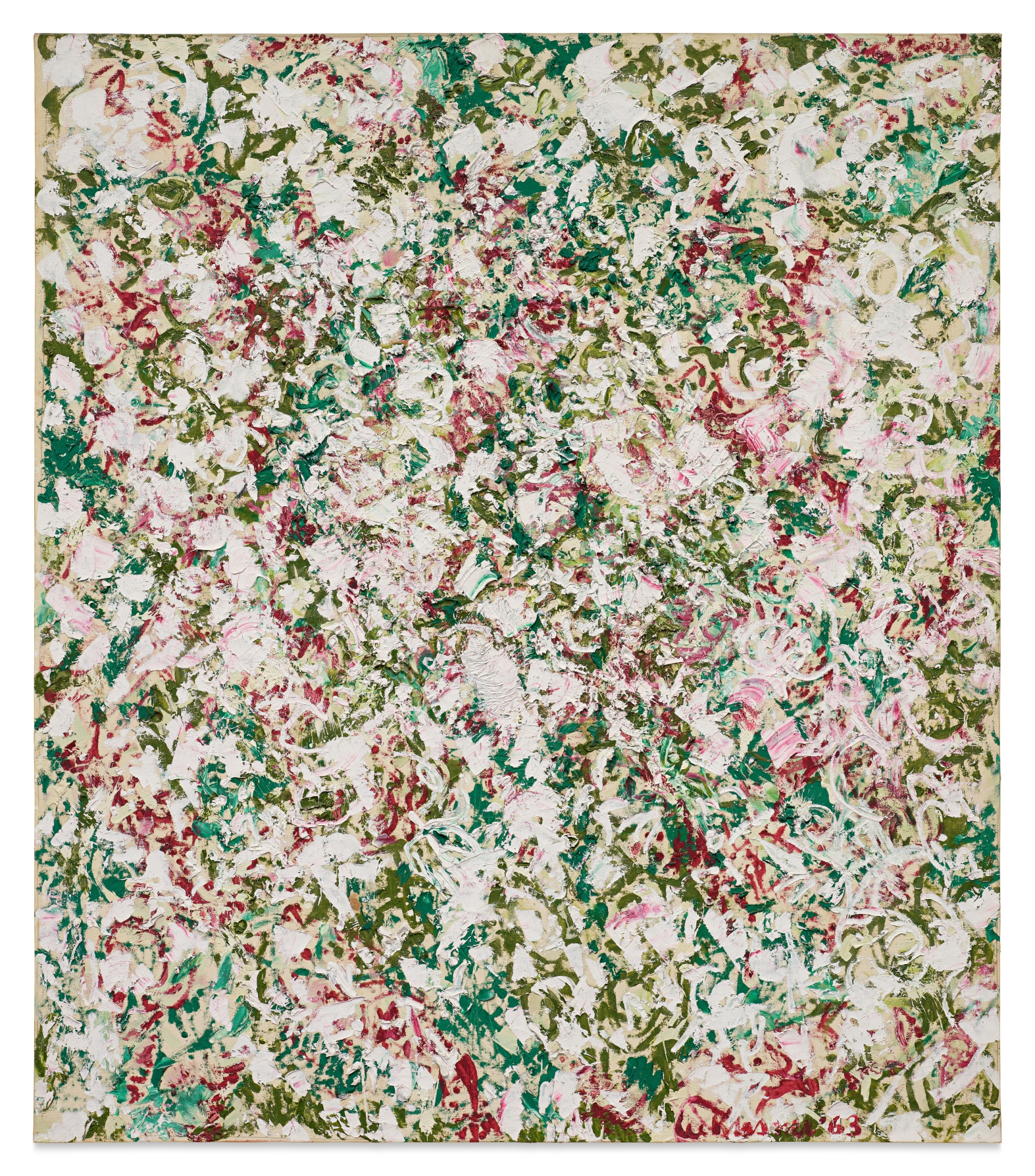
August Petals, 1963
After Pollock's death in 1956, she relocated to the studio he had built at their Springs, Long Island property and began working on an enormous scale, the physical demands of the large canvases matching the emotional intensity of her circumstances. Then in 1963, following a period of illness and recovery, she produced the Night Journeys series, working in near darkness with only artificial light, resulting in paintings of deep ochres, blacks, and earthy reds that feel primal and unguarded. August Petals from that same year, oil on canvas, belongs to this charged period, its forms swelling and receding like something breathing. Seed No.
3 from 1969 continues this language of organic form, rooted in the natural world but reaching toward something beyond description. Krasner was eloquent about her relationship to nature as an artistic source. Her conviction that all meaningful form is grounded in the organic and the living shaped not just her imagery but her entire approach to making. Works such as the watercolor and oil stick composition from 1962, in which she articulated this belief directly, feel less like studies than like manifestos rendered in paint.
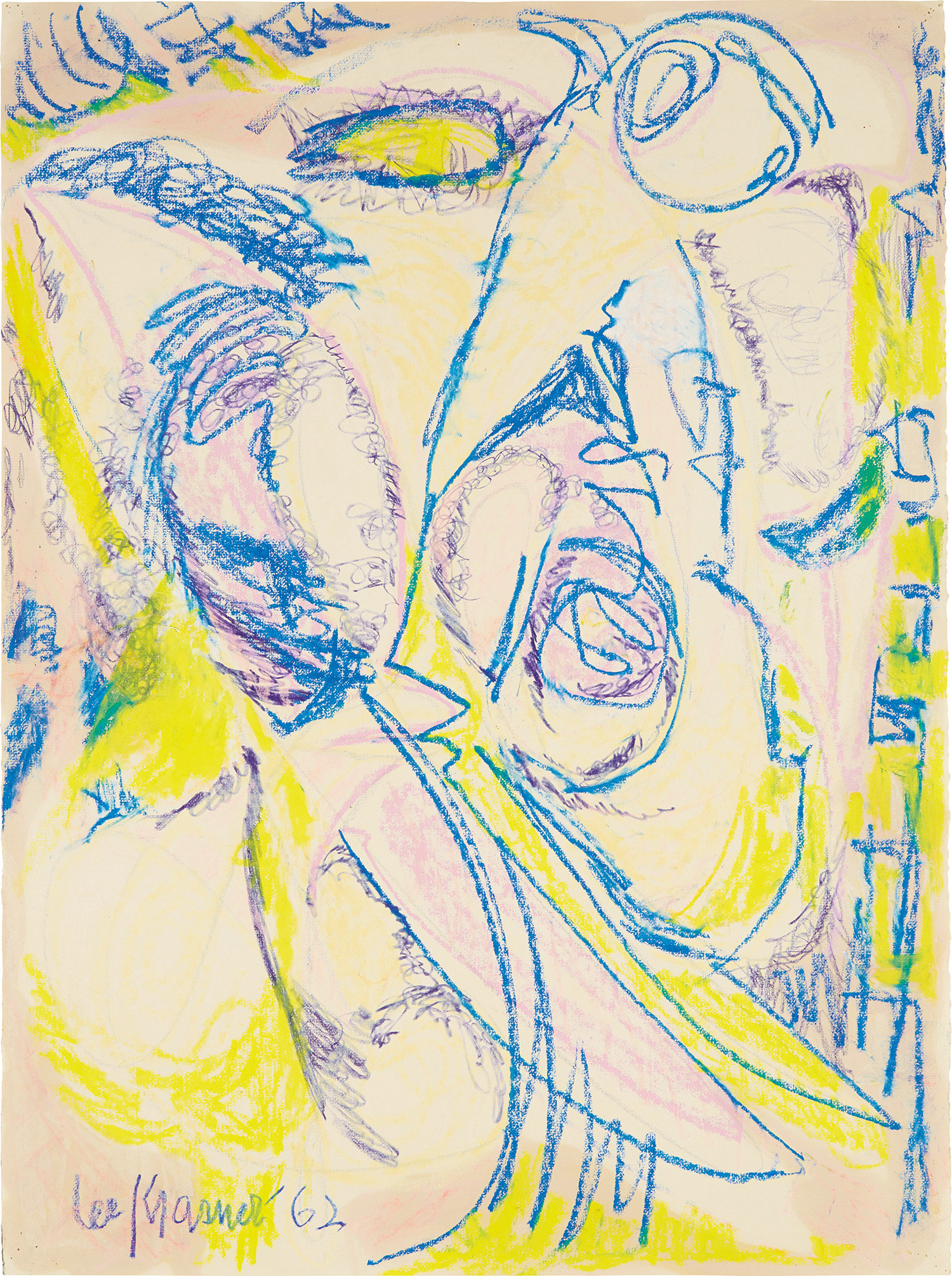
Lee Krasner
“I can’t conceive of anything that doesn’t have this kind of organic, rudimentary form... My work is founded in this prescribed thing called nature.” Lee Krasner, 1962
The Primary Series, published by Marlborough Gallery in London and available as signed and numbered prints, along with works like Obsidian and the screenprint Embrace, demonstrate that her facility extended across media without any loss of force or intention. These editions offer collectors a genuine point of entry into a practice of rare depth. For collectors, Krasner represents one of the most compelling propositions in postwar American art. Her work has appeared at major auction houses with increasing frequency and ambition, with significant paintings achieving prices that reflect her firmly established historical status.
What distinguishes collecting Krasner is the breadth of entry points available: from the intimacy of works on paper and collage to the commanding scale of her large canvases, and from unique paintings to carefully produced editions. Works from her collage periods of the mid 1950s carry particular art historical significance, as they anticipate movements in assemblage and materiality that would only become widely recognized years later. Collectors who have been drawn to her peers such as Willem de Kooning, Franz Kline, and Helen Frankenthaler often find in Krasner a practice that holds its own in precisely that company, while bringing something distinctly considered and intellectually rigorous to the conversation. Krasner received a major retrospective at the Museum of Modern Art in 1984, the year of her death, a recognition that arrived late but was nonetheless definitive.
The Brooklyn Museum has also honored her work with significant institutional attention, and the ongoing presence of her paintings in major permanent collections worldwide confirms what the Barbican retrospective announced so clearly: she is not a rediscovery. She was always here. What has shifted is the world's willingness to look without the filters of biography or gender or proximity to more celebrated names. Lee Krasner made work of ferocious originality across more than five decades, and the full arc of that achievement is only growing more visible.
To collect her is to participate in one of art history's most satisfying acts of recognition.
Explore books about Lee Krasner

Lee Krasner: A Biography
Jeffrey D. Grove
Lee Krasner: Living Colour
Robert Hobbs
Lee Krasner: Paintings, Drawings and Collages
Barbara Rose

Lee Krasner: Abstract Paintings from the 1990s
Michael Auping
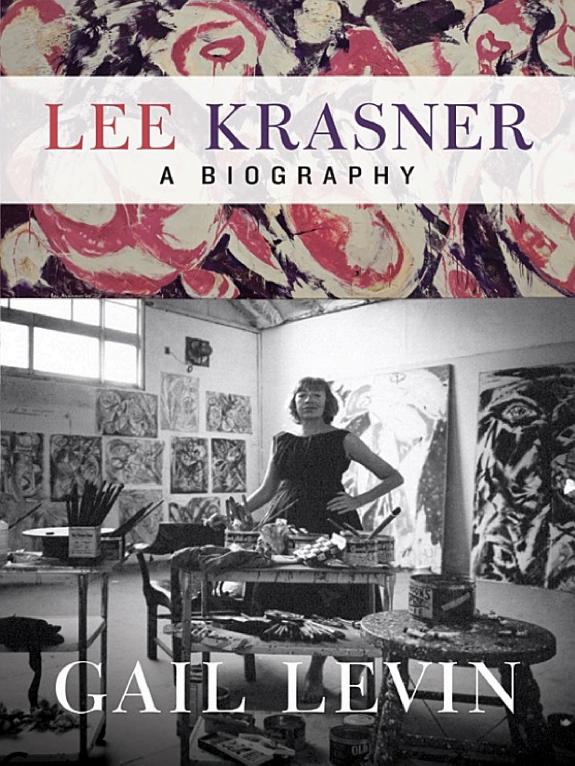
Lee Krasner: Collages
Gail Levin

Lee Krasner: Works on Paper
Helen A. Harrison
The Eye is the First Circle: Paintings by Lee Krasner
Barbara Rose and Robert Hobbs

Lee Krasner: A Catalogue Raisonné
Gail Levin