Lee Friedlander
Lee Friedlander Sees America Like No One Else
Artist Spotlight · The Collection Editorial
“I only wanted Uncle Vern standing by his new car on a Sunday afternoon.”
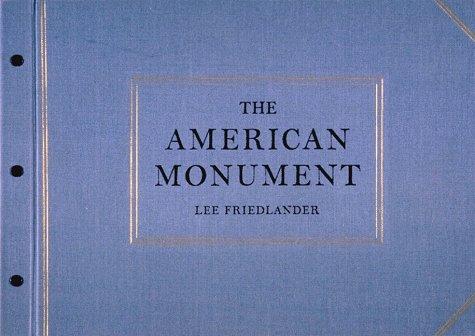
Lee Friedlander, The American Monument, 1976
There are photographers who document the world, and then there is Lee Friedlander, who reimagines it entirely. When the Museum of Modern Art in New York mounted its landmark retrospective of his work in 2005, curators faced a challenge that few artists ever pose: how do you contain a vision so restless, so formally daring, and so warmly human that it refuses to sit still? The answer, ultimately, was that you cannot. You simply open the doors and let viewers follow him down the street.
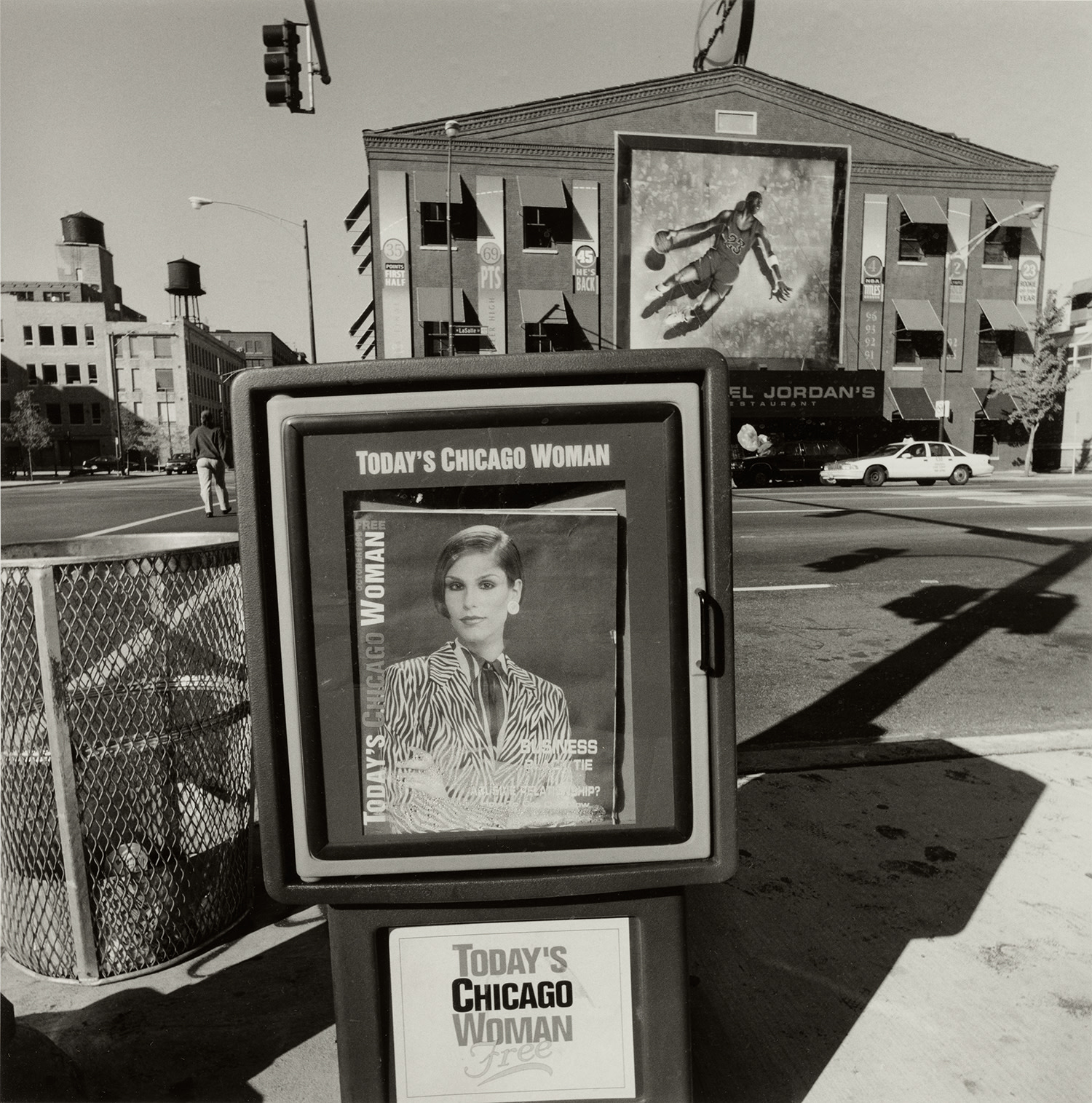
Lee Friedlander
Chicago
Friedlander was born in Aberdeen, Washington in 1934, and he came of age photographing in an America that was simultaneously prosperous and quietly strange. He moved to New York in the 1950s, immersing himself in the jazz world and beginning a long career shooting album covers and portraits of musicians. Those early years gave him an education in improvisation, in the beauty of what happens when a skilled practitioner trusts instinct over plan. The influence of jazz never left his photographs.
There is a syncopated rhythm to his compositions, a willingness to let unexpected elements collide and resolve into something surprising. His formal education was limited in the institutional sense, but Friedlander learned from the streets themselves, and from the company he kept. He was part of a remarkable generation of American photographers that included Garry Winogrand and Diane Arbus, artists who together reinvented what documentary photography could be. In 1967, curator John Szarkowski brought all three together in the now legendary exhibition New Documents at the Museum of Modern Art, a show that reframed street photography as a vehicle for personal vision rather than mere reportage.
Lee Friedlander
Two Selected Images
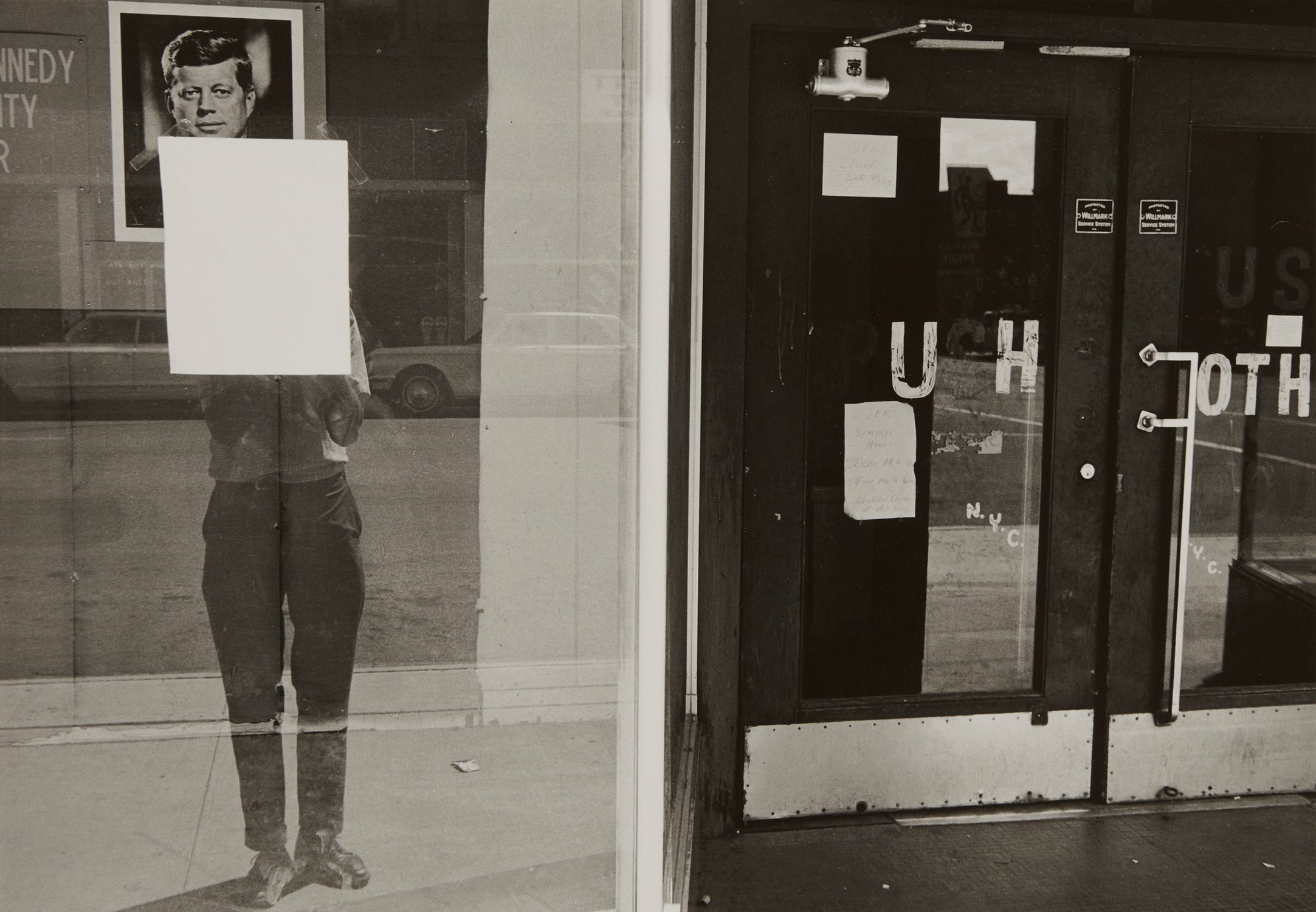
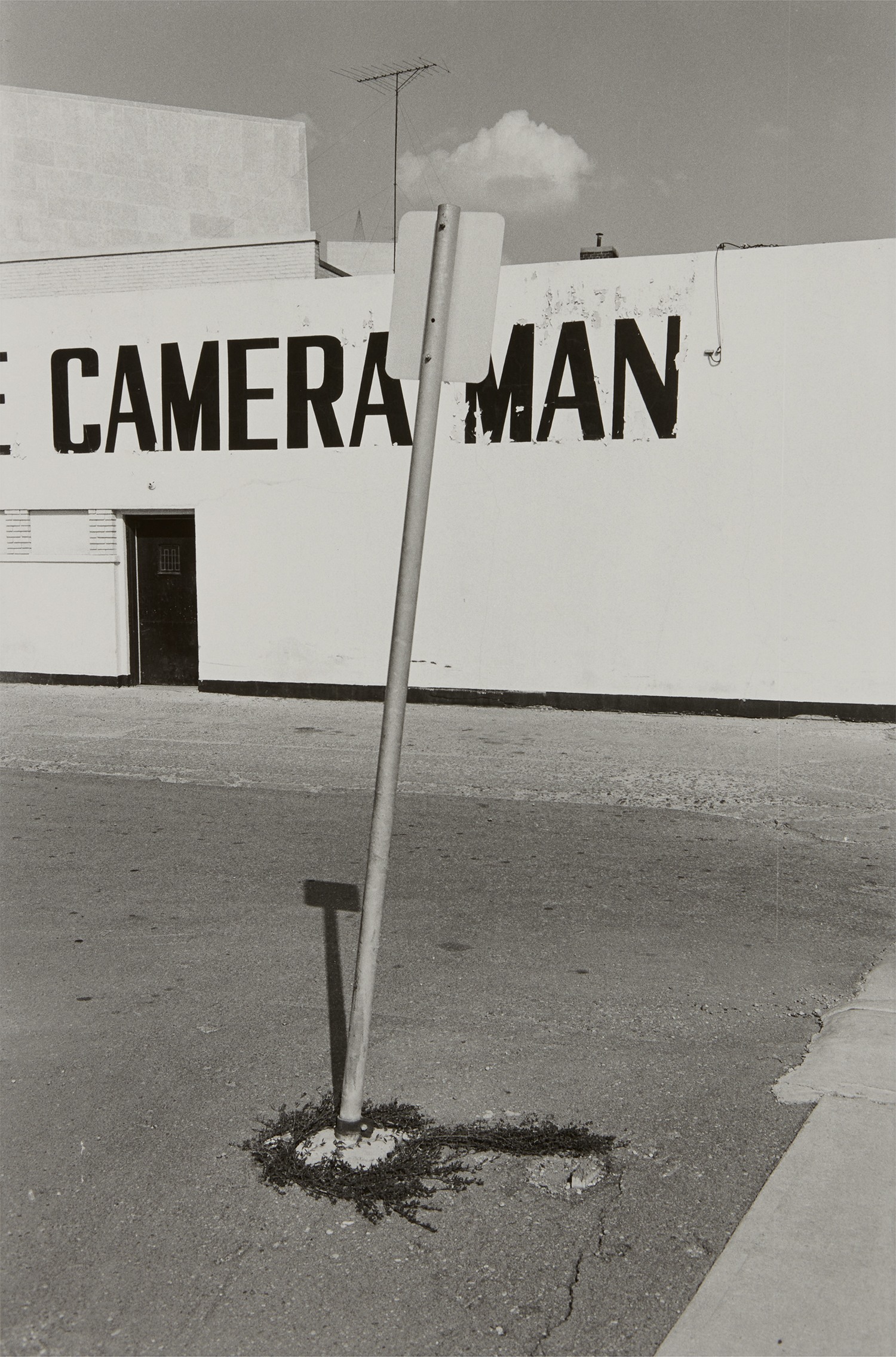
That exhibition changed the course of photographic history, and Friedlander stood at its center. What sets Friedlander apart from his contemporaries, and from nearly everyone who has followed, is his extraordinary relationship with visual complexity. His photographs are dense with information: reflections in shop windows, the intrusion of his own shadow, television screens glowing in motel rooms, telephone wires cutting across open sky. Where other photographers might clear the frame, Friedlander embraces the clutter.
“I suspect it is for one's self-interest that one looks at one's surroundings and one's self.”
Lee Friedlander
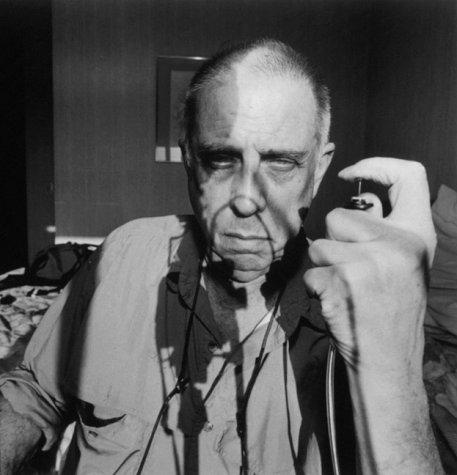
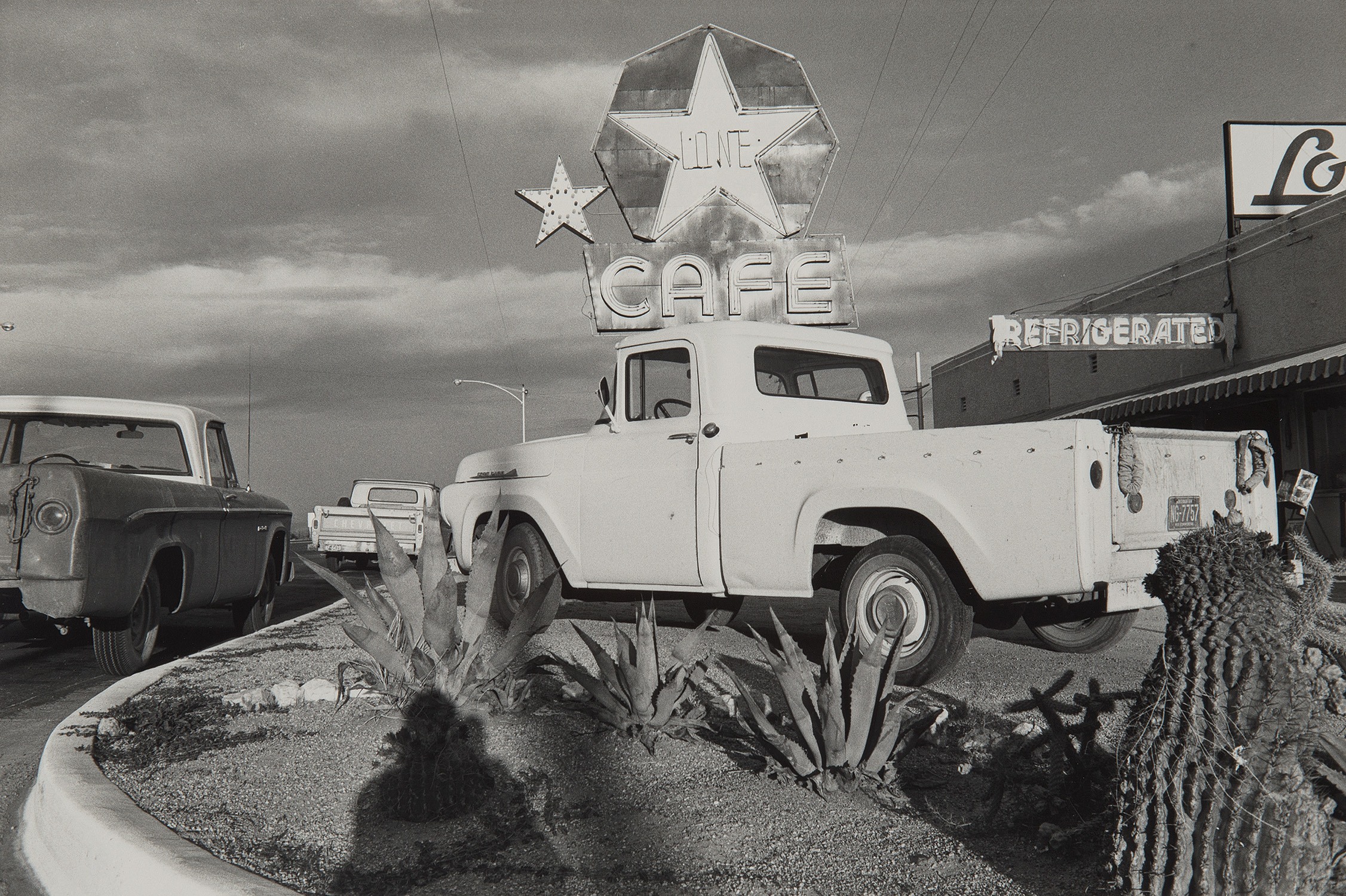
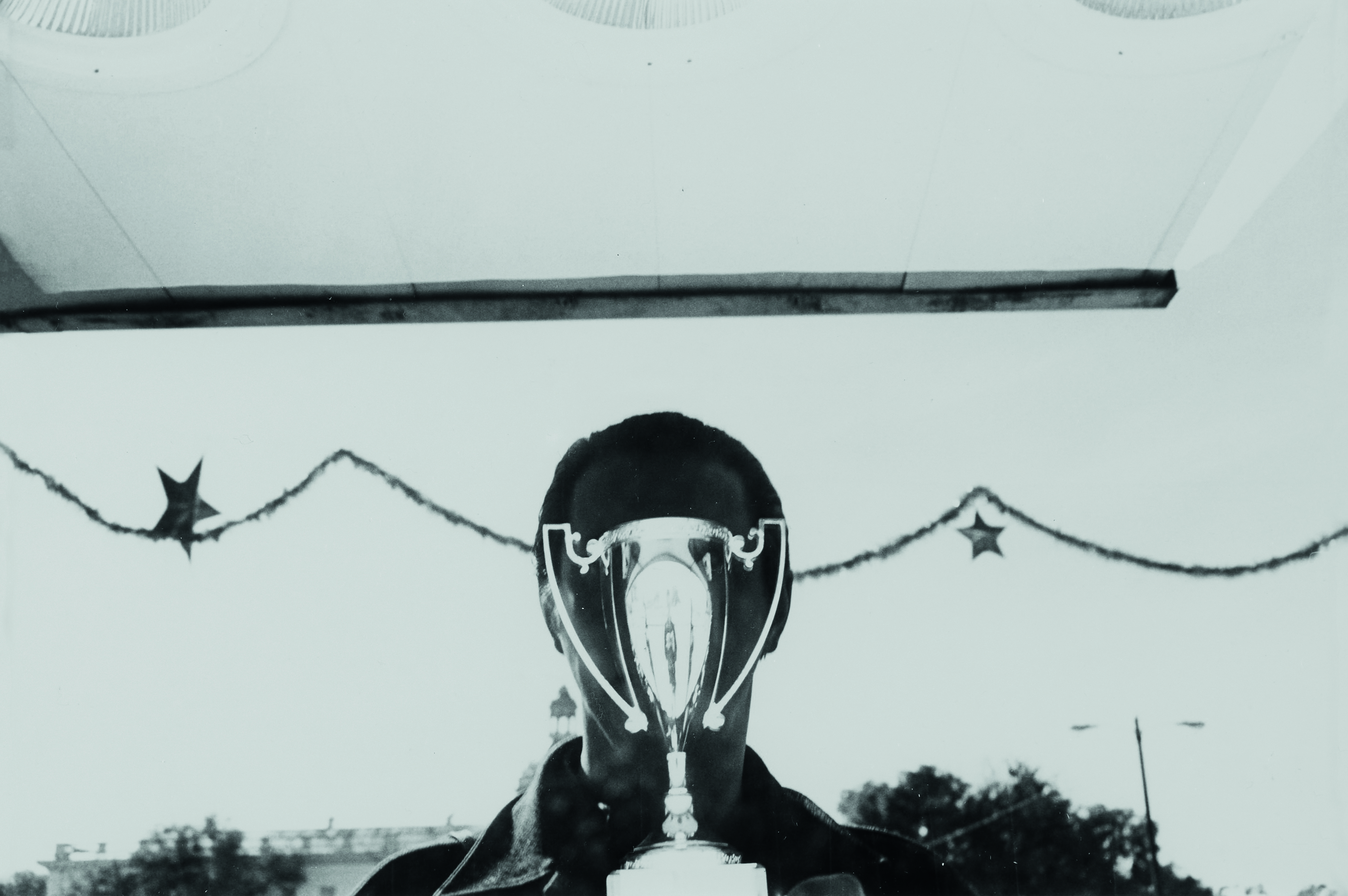
His images of American roadside culture, with their storefronts and signage and endless suburban sprawl, feel both affectionate and rigorously observed. He is never condescending toward his subjects. He is always a participant, always implicated in the scene. The self portraits in which his shadow stretches across a sidewalk or his reflection appears in a darkened window are among the most witty and philosophically rich works in all of photography.
Lee Friedlander
Tallahassee, Florida
His series work is another dimension of his genius. Over decades he pursued sustained investigations into specific subjects: the American monument, the urban landscape, the working class interior, the natural landscape of the American West, and even the female nude. Each series represents years of commitment, a photographer returning again and again to a problem until he has exhausted its possibilities. Works like those from his Mannequin series reveal an artist finding the uncanny in the commercial, locating something unsettling and beautiful in department store figures that haunt plate glass windows like ghosts.
His images of television sets, collected under the title The Little Screens, captured the early intrusion of broadcast media into domestic American life with a prescience that grows more remarkable with each passing decade. For collectors, Friedlander's work offers something rare: a body of prints that spans multiple decades, multiple formats, and multiple emotional registers, all held together by an unmistakable sensibility. Gelatin silver prints from his peak decades of the 1960s through the 1980s are particularly prized, offering the tactile richness and tonal depth that made him one of the supreme practitioners of black and white photography in the twentieth century. His prints have appeared at major auction houses including Christie's and Sotheby's, where works on paper and vintage prints have achieved strong results among serious photography collectors.
Lee Friedlander
Western Canada
The breadth of his output means that collectors at various levels of the market can find entry points, from later printed editions to significant vintage examples that carry the weight of photographic history. Friedlander's place within art history is secure and continues to deepen. He is in conversation not only with Winogrand and Arbus but with the longer tradition of American vernacular photography that includes Walker Evans, whose cool, clear eyed observation of American life clearly informed Friedlander's own rigorous gaze. Yet where Evans maintained a certain formal distance, Friedlander inserts himself, literally and figuratively, into his pictures.
He is also a forerunner of photographers who came after him, from Stephen Shore to Alec Soth, artists who learned from his willingness to find the epic in the ordinary and the formal structure hidden in apparent disorder. The Guggenheim Foundation recognized his gifts early, awarding him fellowships in 1960 and 1977, and the MacArthur Foundation named him a fellow in 1990. His prints are held in the permanent collections of the Metropolitan Museum of Art, the Museum of Modern Art, the Art Institute of Chicago, and major institutions around the world. None of these honors, impressive as they are, quite capture what makes his work so enduring.
What endures is the feeling, looking at a Friedlander photograph, that you are seeing your own country, your own ordinary life, made suddenly and permanently strange, and that this strangeness is not a flaw but a gift. He remains, at ninety years old, one of the great living artists working in any medium, a photographer whose eye has never stopped asking questions of the world around him.
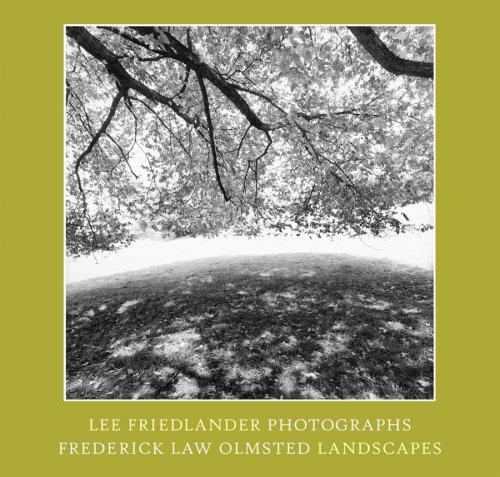
Explore books about Lee Friedlander