Laurens Legiers
Laurens Legiers Finds Wonder in Still Waters
Artist Spotlight · The Collection Editorial
There is a particular kind of painter who does not chase the spectacular, who instead turns toward the quiet and the elemental and finds there something inexhaustible. Laurens Legiers is such a painter. Working primarily in oil on canvas, this Belgian artist has built a practice around the sea, its vessels, and the creatures that inhabit its margins, creating works that feel simultaneously rooted in the great Northern European tradition of maritime painting and utterly alive to the sensibility of our present moment. As collectors and institutions across Europe grow increasingly attentive to painters who work in dialogue with art history rather than in opposition to it, Legiers represents one of the most compelling and genuinely pleasurable discoveries available to anyone building a thoughtful collection today.
Laurens Legiers
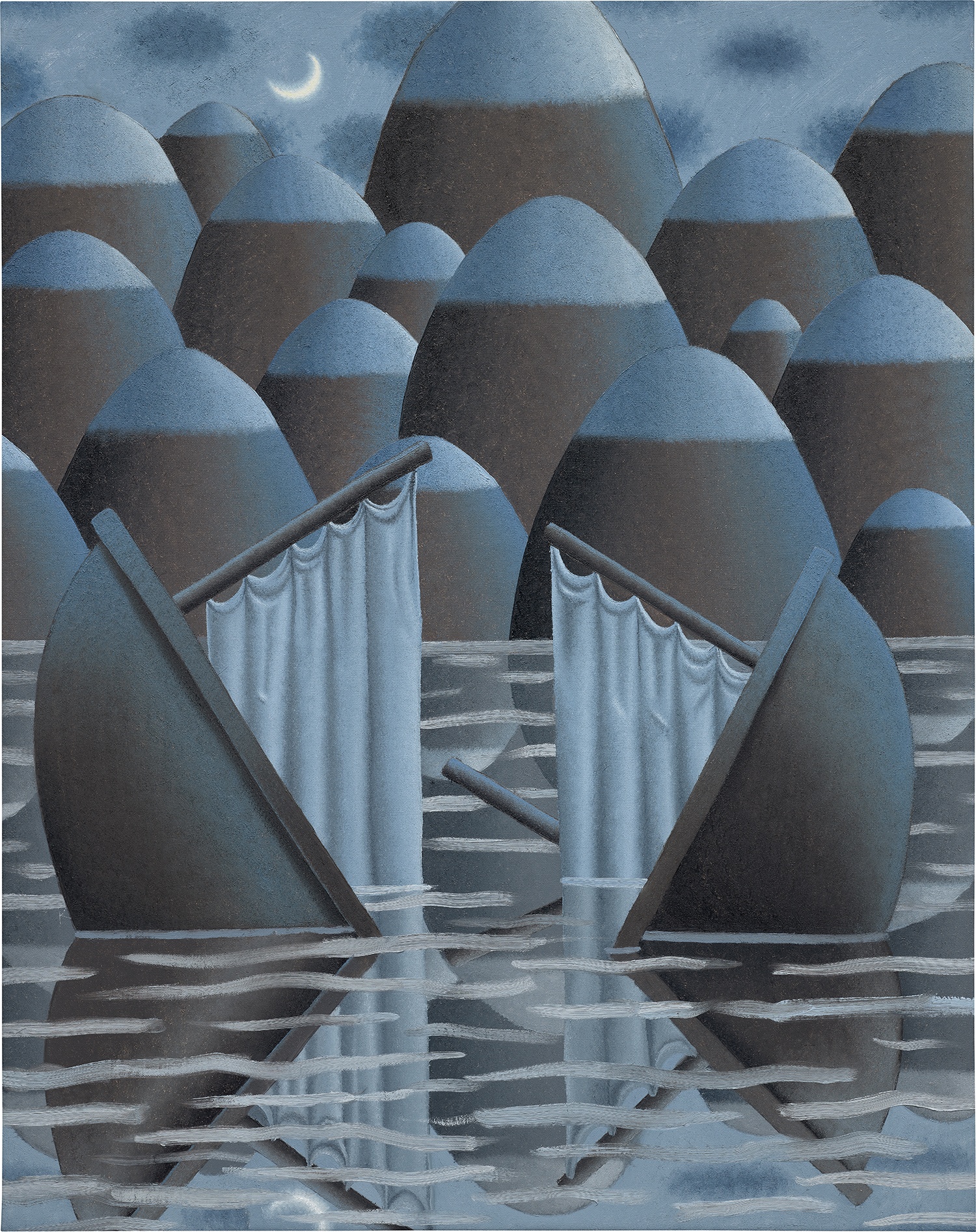
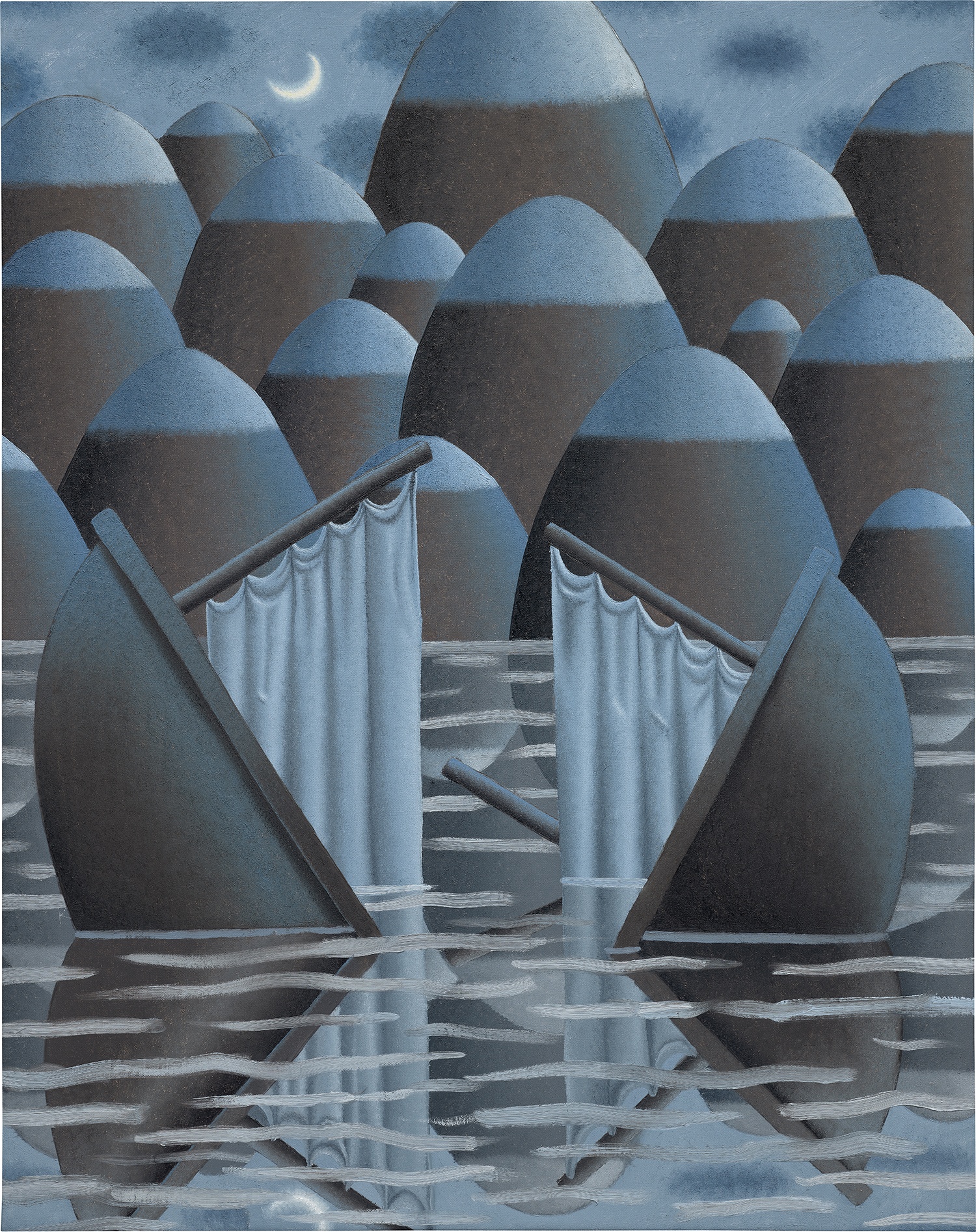
sinking ship, 2020
The maritime tradition that Legiers draws upon is among the most storied in Western art. From the golden age of Dutch and Flemish seascape painting in the seventeenth century, through the luminous coastal work of the Barbizon painters, and into the brooding atmospheric canvases of the Romantics, the sea has served as a space onto which painters project the full range of human feeling. Legiers enters this lineage with evident knowledge and genuine affection. He understands that painting ships and water is not a nostalgic exercise but a living conversation, one that each generation must take up on its own terms and with its own emotional vocabulary.
His canvases speak that language fluently. Legiers works out of Belgium, a country whose relationship to the sea and to painting is long and distinguished. The Flemish masters established a standard of observational precision and atmospheric sensitivity that still resonates through European painting, and while Legiers is very much his own artist, that inheritance is visible in the care he brings to surface, to light, and to the material qualities of paint itself. His choice to present several works in the artist's own frame is itself a meaningful gesture, one that connects the painted image to a tradition in which the frame was considered an extension of the artwork rather than merely its container.
Laurens Legiers
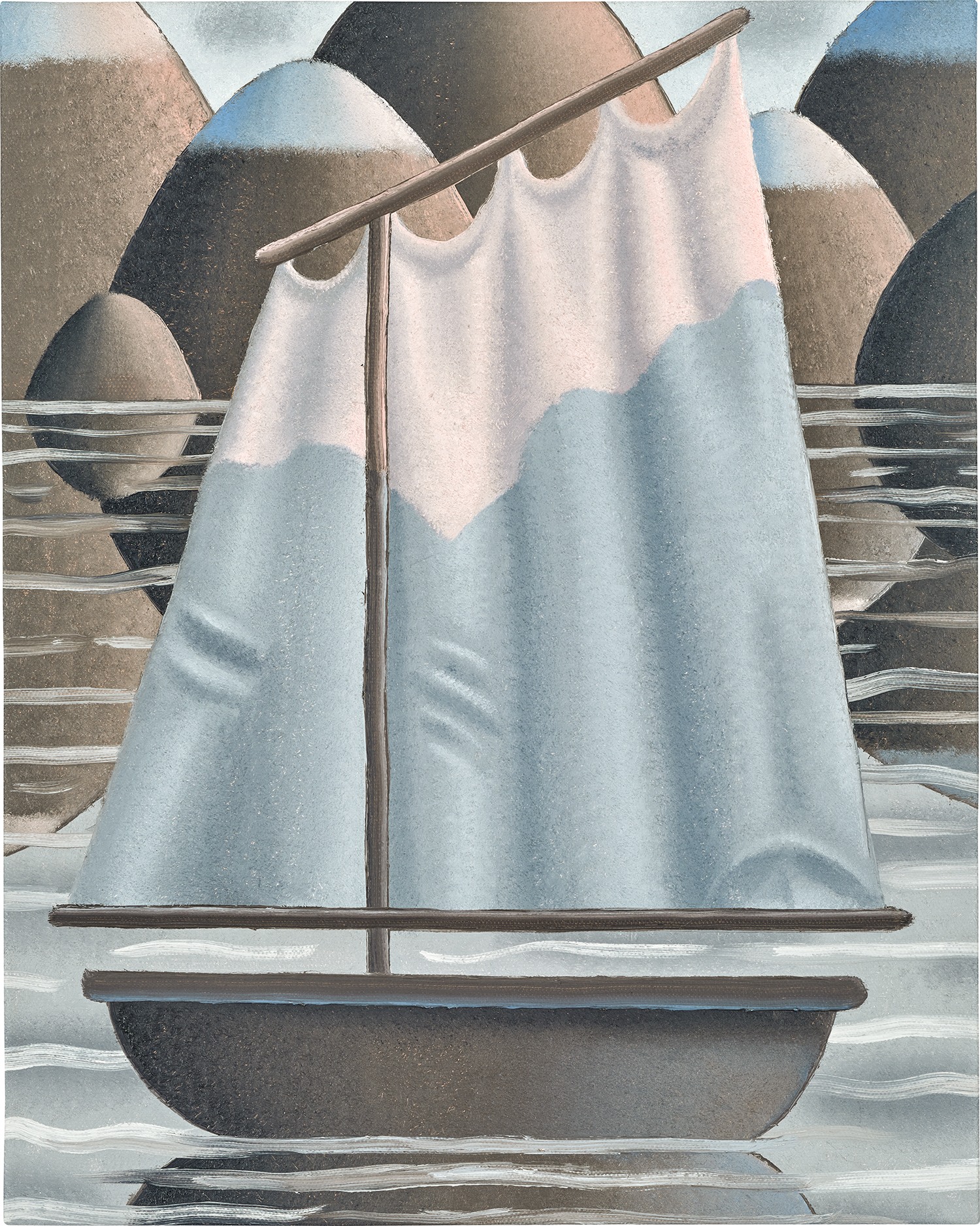
Ship in the Evening Light, 2020
This attention to the complete object speaks to a seriousness of purpose that collectors who spend time with his work quickly come to appreciate. The body of work Legiers has produced demonstrates a quietly confident range within a focused set of concerns. "Sinking Ship" from 2020 is perhaps the most arresting of his known works, a painting that takes on one of the most charged subjects in the maritime tradition and handles it with restraint and formal intelligence rather than drama for its own sake. The vessel in that painting is not a spectacle of catastrophe but a meditation on transience and weight, on the way things that were built to endure eventually yield to forces larger than themselves.
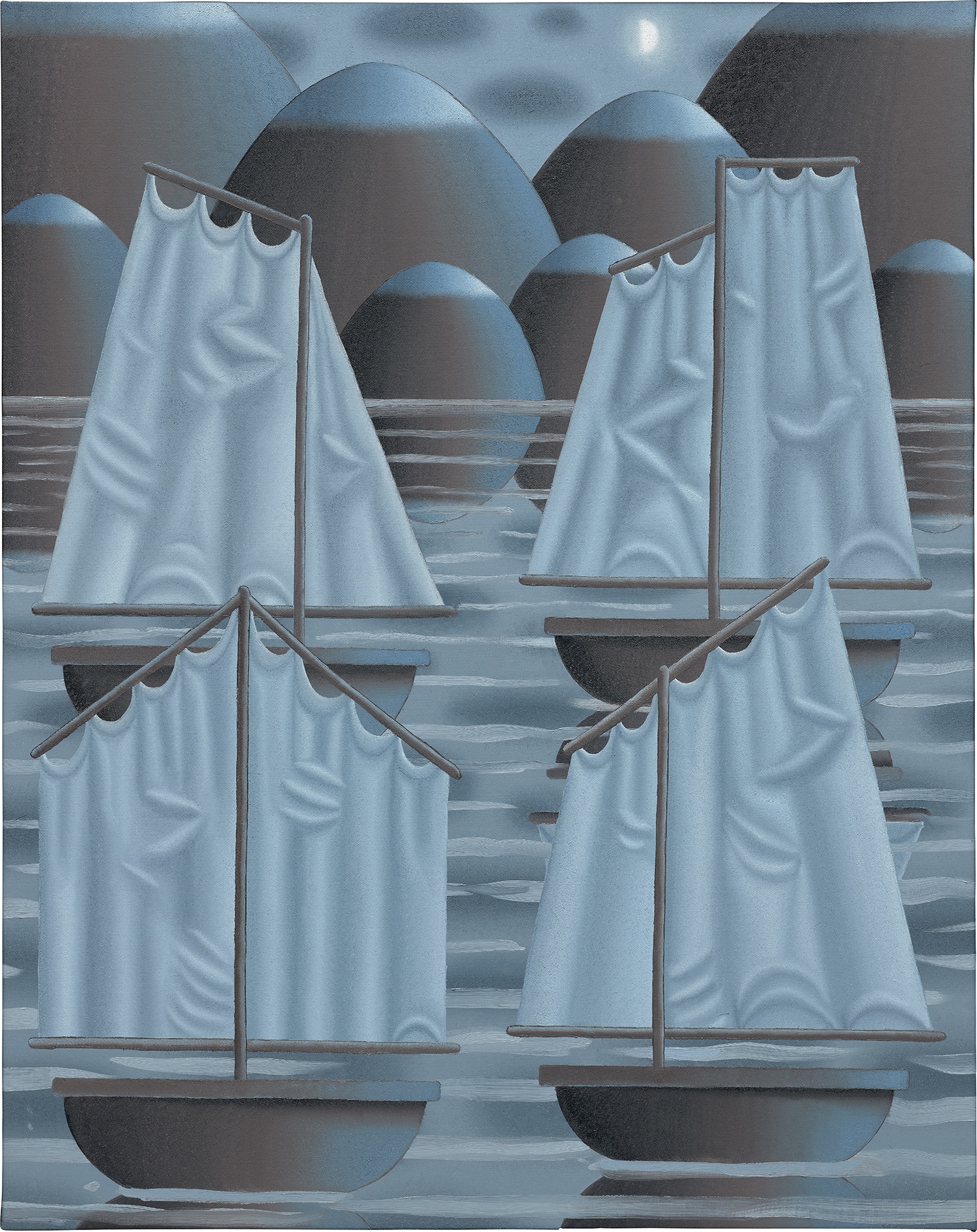
"Ship in the Evening Light," also from 2020 and presented in the artist's own frame, moves in a different emotional register, suffused with the particular warmth of a low sun on open water. The light in that painting does what the best light in painting always does: it makes time feel suspended, as though the moment captured is also the moment most worth keeping. The year 2020 appears to have been a period of significant productivity and focus for Legiers. "Four Ships" from that year shows his ability to organize a canvas around multiple forms without losing the sense of spaciousness that gives his seascapes their breath.

Laurens Legiers
Ships and Blue Lilies, 2022
"Resting Sea Stars" and "Three Resting Seastars," both from 2020 and both presented in the artist's own frames, introduce a different but related subject, the starfish at rest being a creature both humble and strange, a form that has fascinated naturalist painters and still life artists for centuries. Legiers brings to these works the same quality of attention he gives to his vessels: a willingness to look slowly, to let the subject be what it is, and to trust that careful looking is itself a form of meaning. By 2022, with "Ships and Blue Lilies," he demonstrated a confident move toward a more openly poetic combination of subjects, the lilies introducing a note of botanical beauty that sits alongside the ships in a way that feels surprising but earned. For collectors, the work of Legiers occupies an appealing position.
He is a painter of genuine skill whose commitment to oil on canvas and to the handmade object places him in a collecting tradition that has proven durable across generations. The presentation of several works in the artist's own frame adds a layer of provenance and artistic intentionality that serious collectors find meaningful. His subject matter, maritime scenes and natural forms observed with care, has historically proven to hold value well, both because it connects to deep veins in art history and because it speaks to something genuinely felt in the viewer. Artists who work in a comparable vein of thoughtful, European figurative painting rooted in observation and tradition include painters in the lineage of Luc Tuymans's Belgian contemporaries, as well as those associated with the broader revival of interest in European figurative and representational painting that has energized the market over the past decade.
Laurens Legiers
Four Ships, 2020
Legiers is not derivative of any single influence but sits comfortably within a conversation that the market is paying close attention to. What makes Legiers matter now is precisely the quality of his attention. In a moment when painting is often required to make large claims about itself, to announce its own importance with scale or conceptual architecture, there is something quietly radical about a painter who simply asks what the sea looks like in the evening, or what it means for a ship to be weighted down, or what beauty a starfish at rest contains. These are ancient questions and they are also permanent ones.
Collectors who find Legiers early are finding an artist whose best qualities, precision, patience, and a genuine feeling for the painted surface, are the qualities that tend to deepen and compound over a career. His work asks to be lived with, and that is not a small thing to ask. It is, in fact, exactly the right thing.