Lauren Quin
Lauren Quin Paints the Body From Within
Artist Spotlight · The Collection Editorial
There is a particular quality of attention that Lauren Quin's paintings demand. Standing before one of her oils, you become aware of the body not as a surface to be observed but as a system of forces, pressures, and sensations pressing outward from the inside. Her canvases hum with this interior logic. In recent years, collectors and curators drawn to painting that operates at the intersection of somatic experience and poetic language have found in Quin an artist whose work rewards sustained looking and repeated return.
Lauren Quin
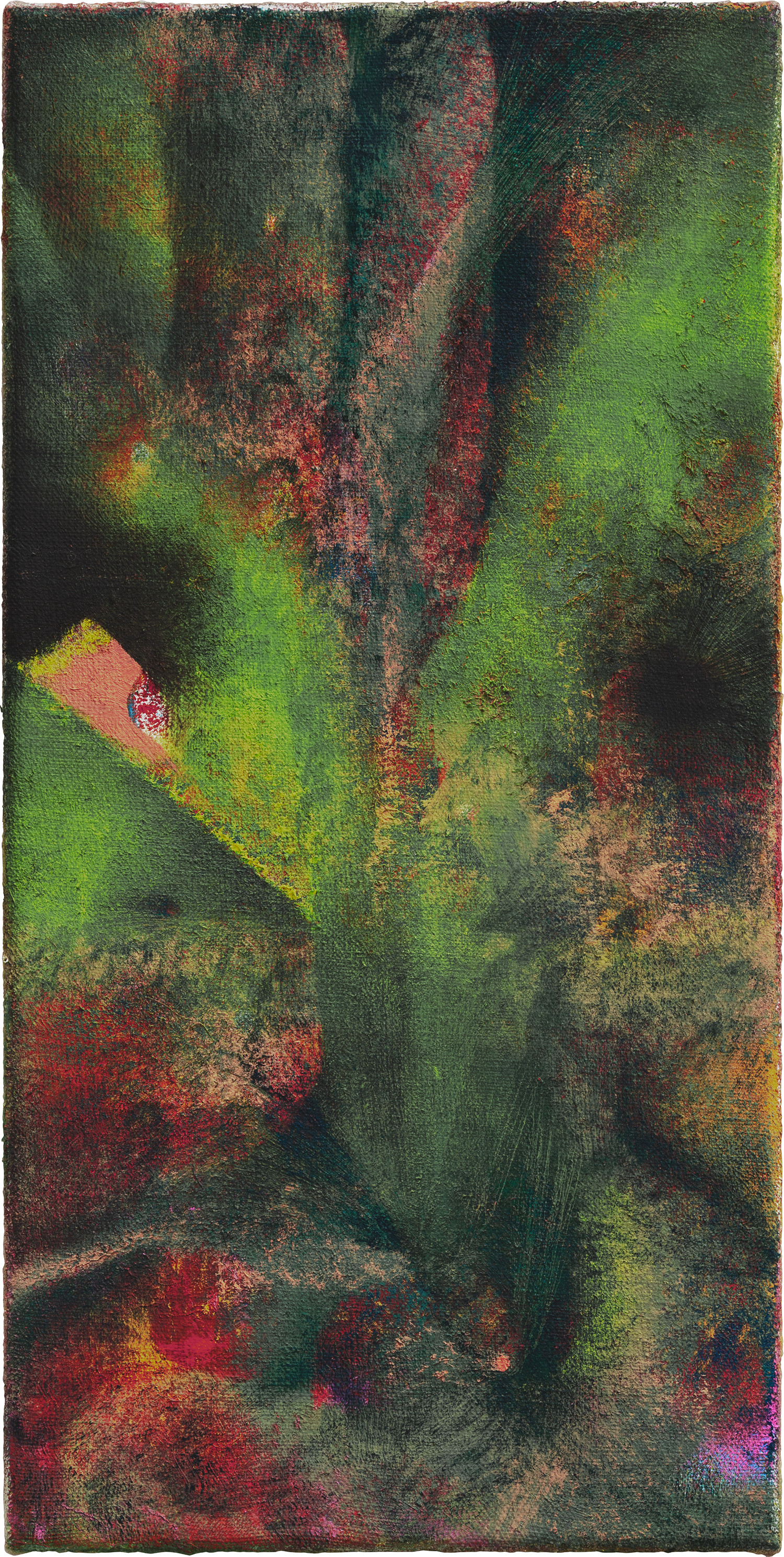
Hook for Helianthus, 2019
Quin's titles alone signal the kind of artist she is. Works such as "Hook for Helianthus," "Clutch for an Open Palm," and "Blow a Gasket" arrive already charged with the tension between mechanical function and bodily feeling. The language is vernacular, sometimes clinical, occasionally slang, and always precise in its ambiguity. This is not accidental.
Quin appears deeply interested in the vocabulary we reach for when the body exceeds polite description, when sensation insists on being named even if the naming is imperfect or borrowed from the toolbox or the factory floor. The paintings themselves are executed in oil on canvas, a medium Quin handles with evident fluency and genuine conviction. Oil paint, with its capacity for both translucency and opacity, for surfaces that breathe and surfaces that close, is well suited to the phenomenological territory she explores. Her works from 2019, including "Hook for Helianthus," "Ulter Bearing," "Numbness," and "I Know Where I Am," establish a set of concerns that she deepens and complicates across subsequent years.
Lauren Quin
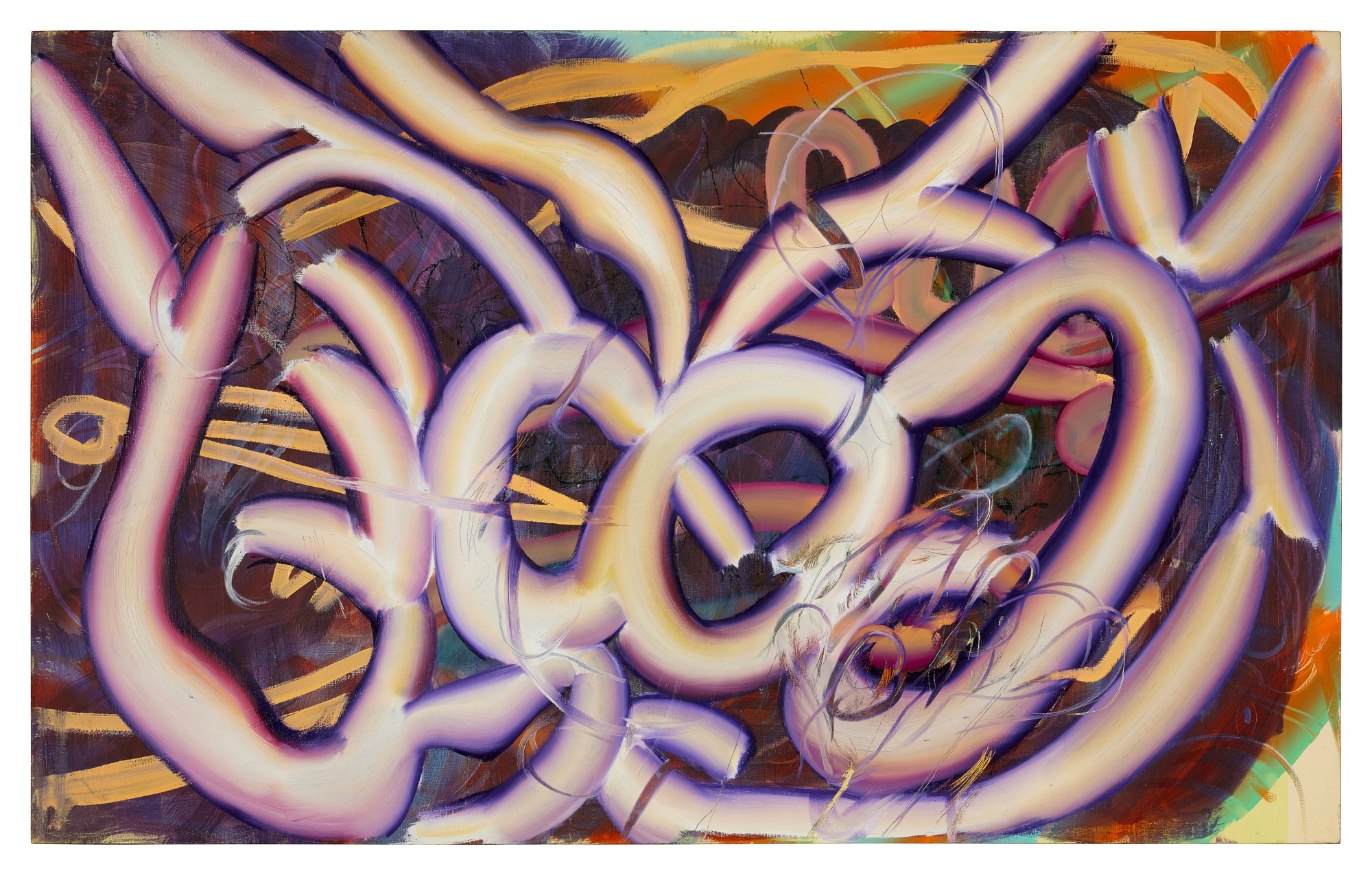
Clutch for an Open Palm, 2020
These early works feel like propositions, paintings that are staking out the coordinates of a world. There is something both tender and unflinching in how they hold the viewer. By 2020, works such as "Clutch for an Open Palm," "Second Mercury Mounts," and "Arrow" suggest an artist consolidating her visual grammar while pushing it toward greater formal risk. The body in these paintings is rarely depicted in any straightforward representational sense.
Instead, Quin seems to render the experience of having a body: the dull ache, the sudden grip, the drift toward numbness, the unexpected electrical charge of a nerve firing. "Second Mercury Mounts" in particular evokes the astrological tradition's old association of Mercury with the hands, communication, and the swift translation of impulse into gesture, though Quin filters this through something more immediate and physical than mythology. The paintings speak in a language that feels personal and yet immediately recognizable. The 2021 works, among them "Blow a Gasket," "Backbiting," and "Airsickness," carry a heightened intensity.
Lauren Quin
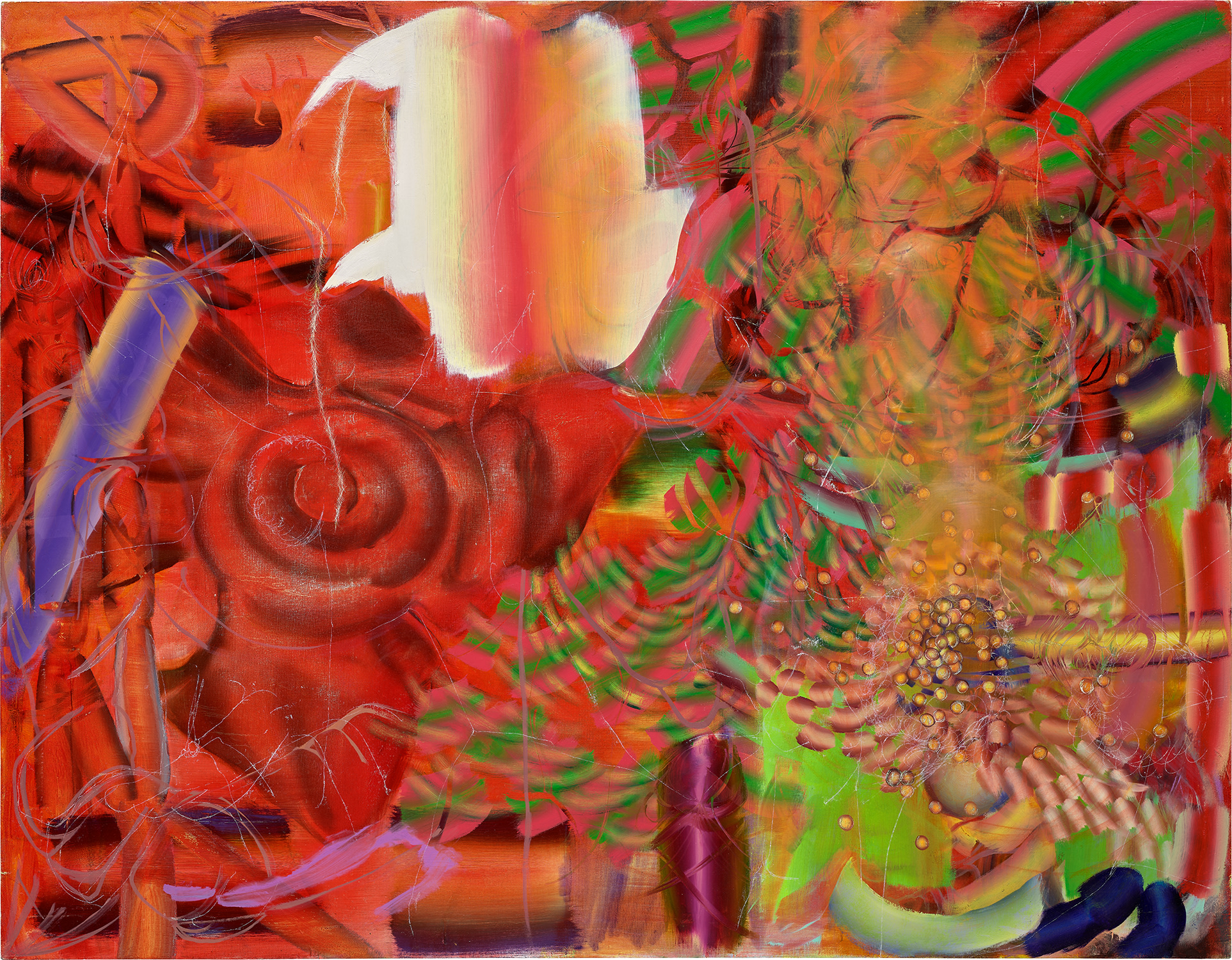
Blow a Gasket, 2021
The titles press into more visceral and even aggressive territory. "Backbiting" conjures betrayal, yes, but also the literal sensation of pain radiating through the spine, the kind of ache that makes the body feel like its own antagonist. "Airsickness" suggests disorientation, the loss of a reliable horizon, the stomach's rebellion against altitude and velocity. If the 2019 paintings were propositions, these later works feel more like confrontations, with sensation, with language, with the viewer's own somatic memory.
Artists working in adjacent territory, including Dana Schutz, whose paintings similarly find the comedic and the horrifying coexisting in the represented body, or Amy Sillman, whose gestural canvases map the body's instabilities and recoveries, offer useful points of orientation. Quin shares with these painters a refusal to aestheticize the body away from its own discomforts. For collectors, Quin's practice offers something relatively rare in contemporary painting: genuine conceptual rigor held together by strong material intelligence. The works are not decorative, though they are often visually arresting.
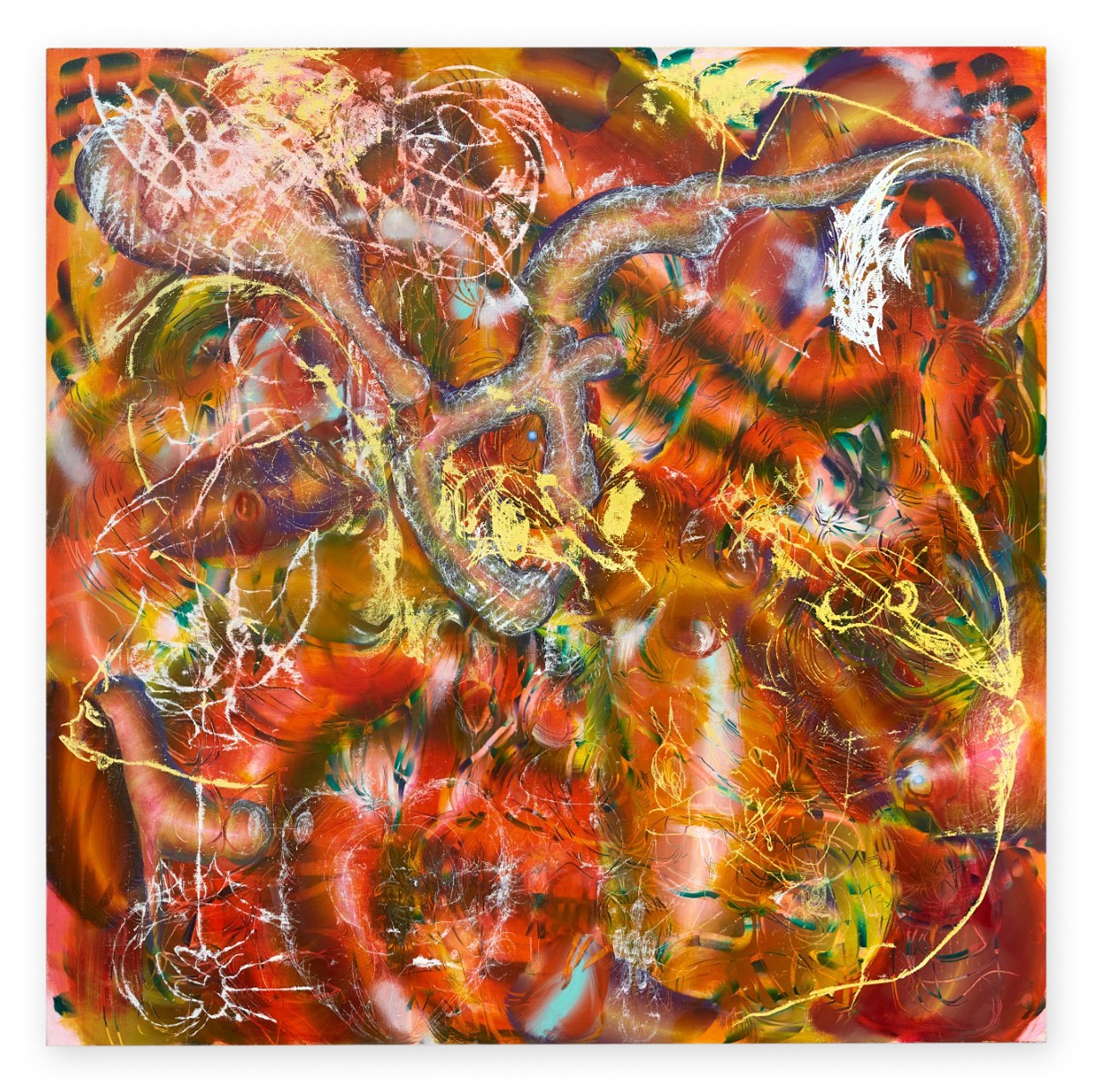
Lauren Quin
Backbiting, 2021
They are not illustrational, though the titles orient the imagination with precision. They sit in a tradition of painting that takes seriously the body as a site of knowledge, a tradition with roots in the feminist body art of the 1970s, in the somatic philosophies of Merleau Ponty, and in the long history of painting that has tried to make visible what cannot quite be said. Collectors who respond to work by painters such as Cecily Brown, Laura Lancaster, or Kara Walker, artists for whom paint is a medium of psychological as much as visual meaning, will find in Quin a natural point of dialogue. The 2019 through 2021 period represented on The Collection forms a coherent and significant chapter, one that documents an artist working at high intensity across a concentrated span of time.
What makes Quin's work particularly compelling from a collecting perspective is the way individual paintings function both independently and in relation to one another. "Numbness" and "I Know Where I Am," both from 2019, reward being considered together: one describes a negation of sensation, the other a hard won orientation in space. The movement between them feels almost narrative, a small phenomenological drama. Similarly, the pairing of "Blow a Gasket" and "Airsickness" from 2021 creates a kind of duet between industrial failure and bodily vertigo.
Collectors building a collection with depth and internal conversation will find that Quin's works speak to one another across walls and across time. Lauren Quin is an artist whose practice is grounded in the conviction that painting can do something that other mediums cannot: render the felt life of the body in its complexity, its contradictions, and its insistence on being acknowledged. Her canvases do not resolve into comfort. They remain open, slightly pressurized, alive to the viewer's own physical presence in front of them.
In a contemporary moment when painting is once again asserting its centrality to the broadest conversations about experience and representation, Quin's work stands as a significant and quietly urgent contribution. To encounter these paintings is to be reminded that the body is always already a question, and that the best painting does not answer that question so much as hold it with exceptional care.