Larry Zox
Larry Zox: Color, Edge, and Pure Vision
Artist Spotlight · The Collection Editorial
There is a particular kind of thrill that comes with standing before a Larry Zox canvas and feeling the geometry press forward, almost physically, from the picture plane. It is a sensation that visitors to the Whitney Museum of American Art and the Solomon R. Guggenheim Museum have known for decades, and one that a new generation of collectors is rediscovering with genuine excitement. As institutions and the secondary market turn renewed attention toward the painters of Post Painterly Abstraction, Zox stands out as one of the movement's most inventive and underappreciated voices, a colorist of rare discipline whose work rewards sustained looking.
Larry Zox
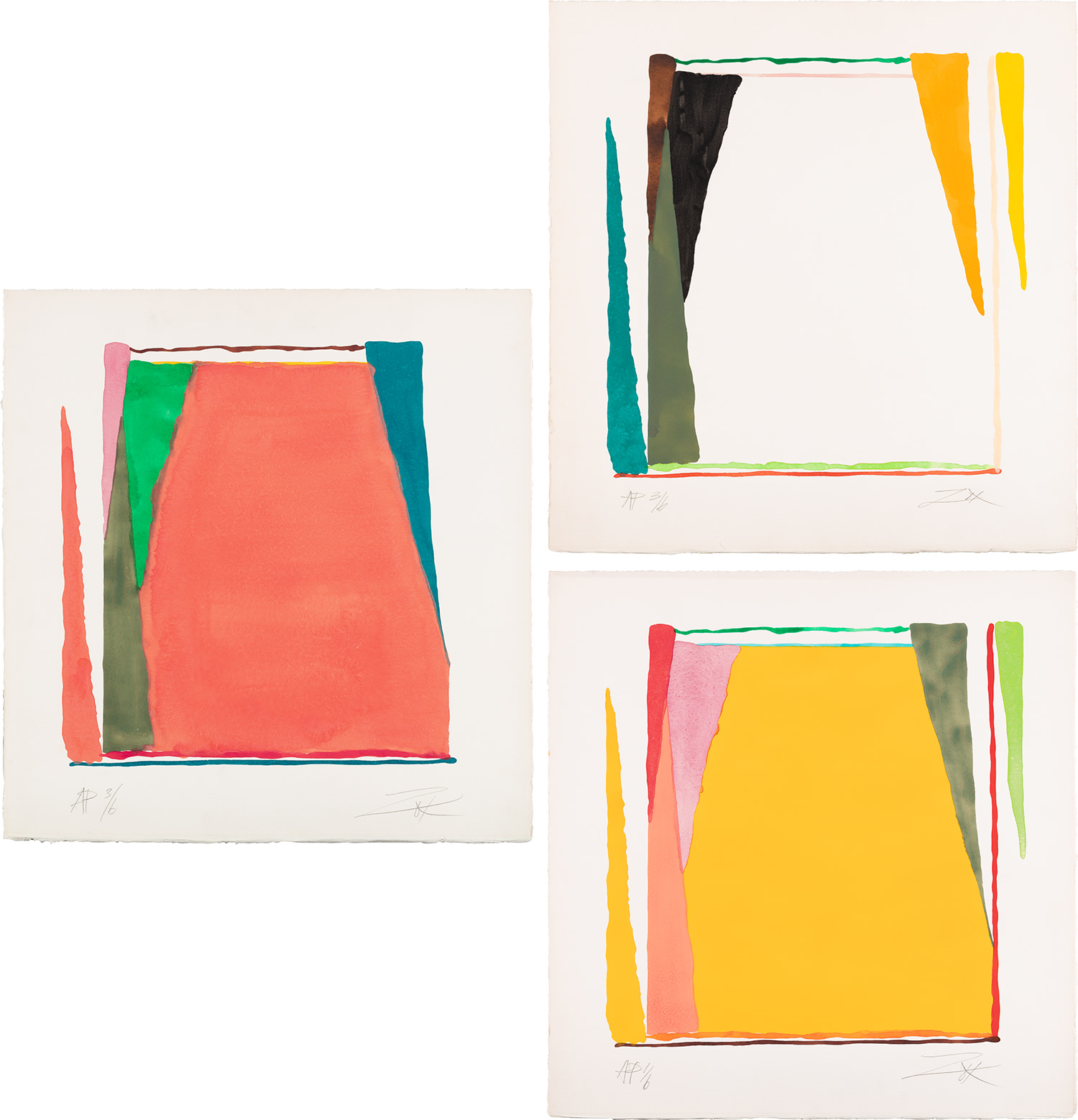
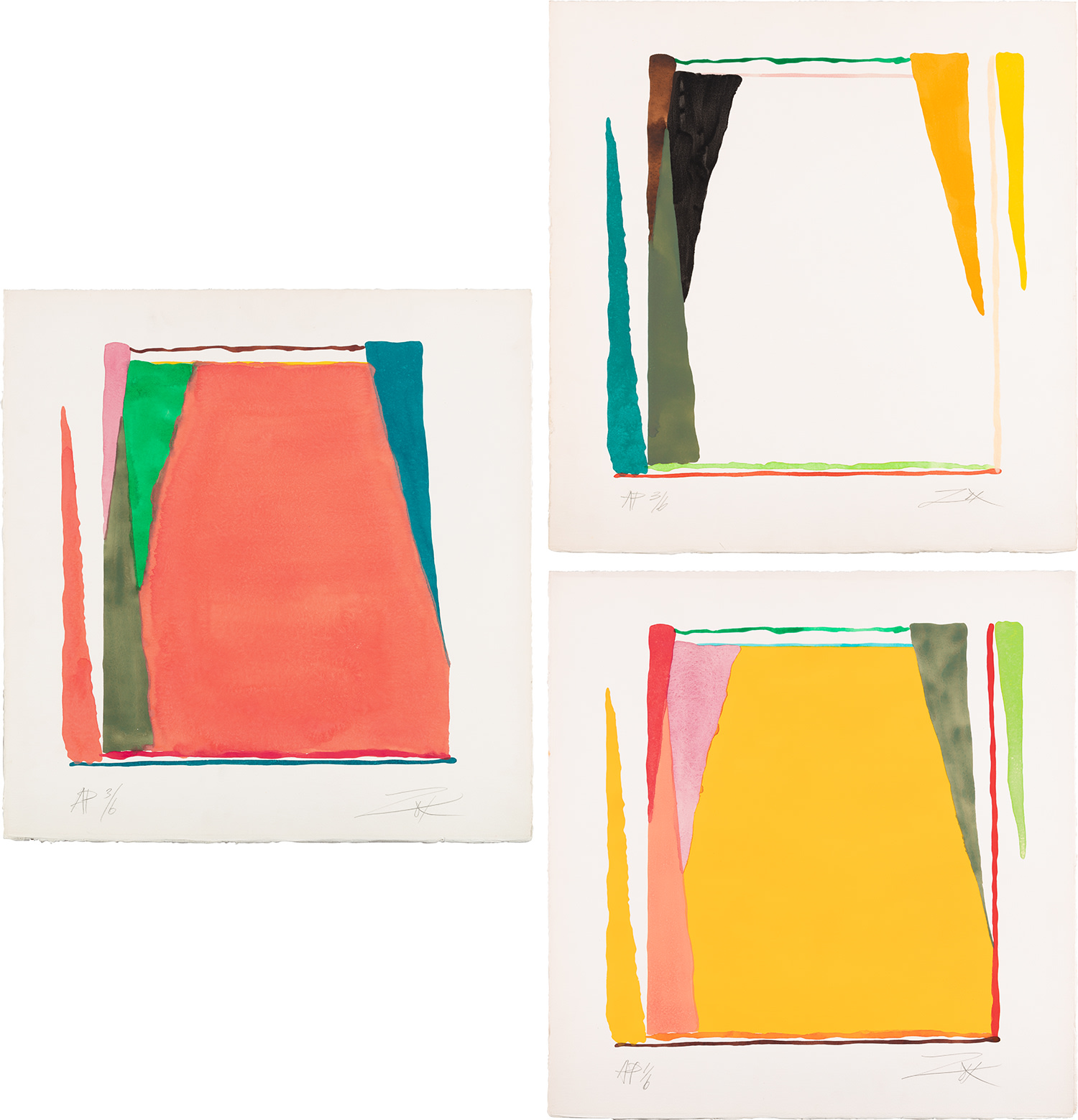
Stencil Series: three plates
Larry Zox was born in Des Moines, Iowa in 1936, and his formation as an artist carried the open, optimistic energy of the American Midwest. He studied at the University of Oklahoma and later at the Des Moines Art Center, before making the decisive move to New York City that would define his mature practice. New York in the late 1950s and early 1960s was a city crackling with possibility, and Zox arrived just as the conversation was shifting away from the gestural intensity of Abstract Expressionism toward something cooler, more structured, and more rigorously concerned with the optical and perceptual properties of color. He absorbed all of it, and responded with a clarity of purpose that distinguished him from the beginning.
His development through the 1960s was rapid and assured. Zox became closely associated with Post Painterly Abstraction, the movement defined and named by critic Clement Greenberg whose landmark 1964 exhibition at the Los Angeles County Museum of Art brought together painters committed to hard edges, flat color fields, and a deliberate rejection of painterly expressiveness. Alongside contemporaries such as Frank Stella, Kenneth Noland, and Ellsworth Kelly, Zox was working through questions about how color could function structurally, how shape could generate tension without recourse to illusionism or narrative. His canvases from this period are decisive and beautifully controlled, built from interlocking geometric forms that seem to rotate and shift against one another even as they remain perfectly still.
Larry Zox
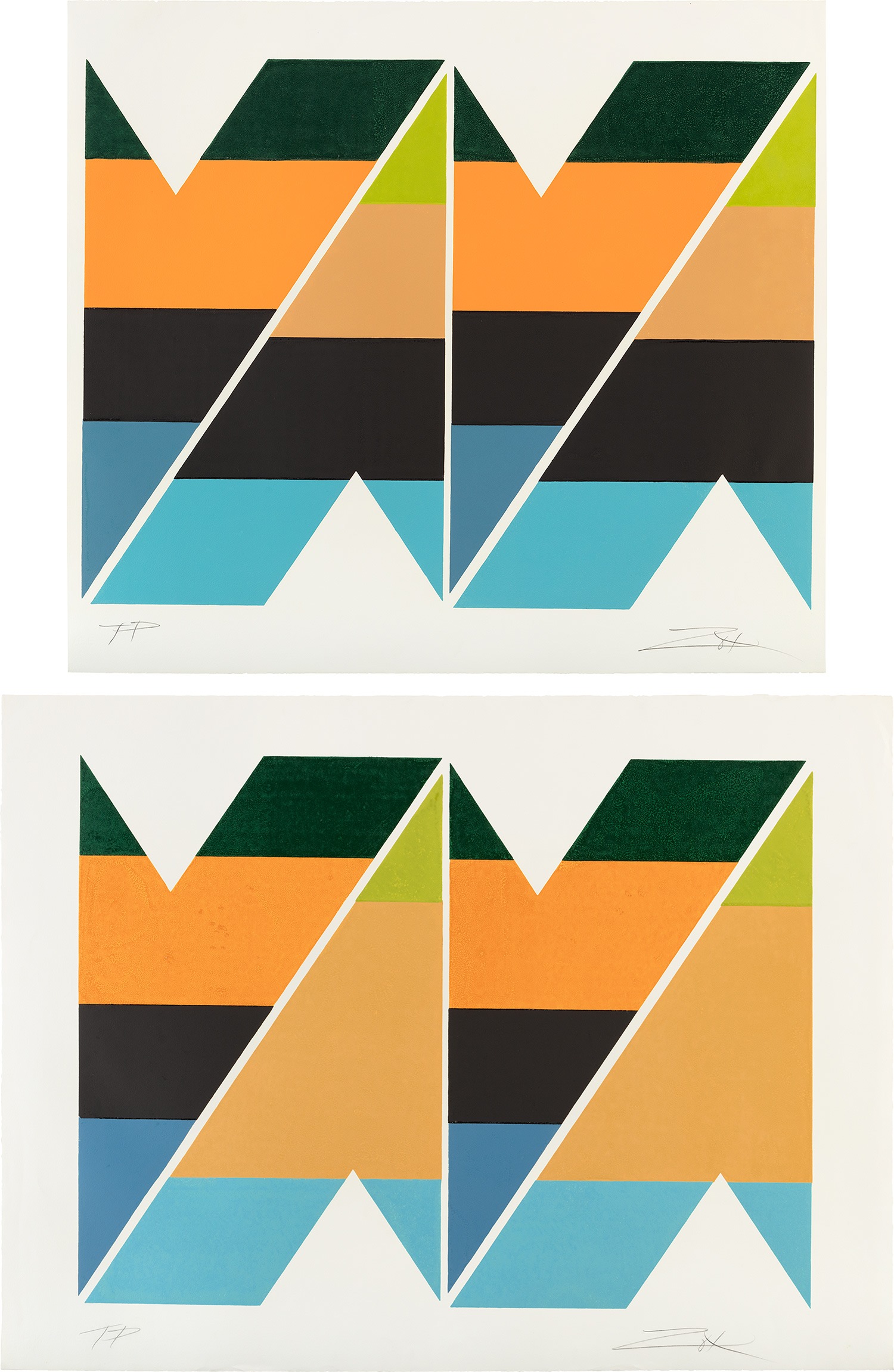
Scissors Jack I; and Scissors Jack II
What makes Zox genuinely singular within this company is the warmth that persists beneath the rigor. Where some hard edge painters pursue a deliberate chill, Zox allowed his color relationships to breathe with a kind of quiet vitality. His Scissors Jack series, which became one of the defining bodies of work in his output, takes its name from the mechanical device whose crossed diagonal arms suggested a compositional armature of extraordinary dynamism. The paintings and works on paper in this series demonstrate how deeply Zox thought about the relationship between drawing and painting, between the structural idea and its chromatic realization.
Trial proof prints from the Scissors Jack series reveal the working intelligence behind the finished canvases, showing an artist who used preparatory work not as a means to an end but as a form of thinking in its own right. Studies for Scissors Jack executed in graphite and colored pencil on graph paper carry a particular intimacy, the graph paper itself becoming a kind of dialogue between the systematic and the sensory. The Stencil Series, published by Barbara Gladstone Editions in New York, offers another window into the precision and range of Zox's practice. Barbara Gladstone was among the most discerning publishers of her era, and her decision to work with Zox reflects the serious regard in which he was held within the New York art world.
Larry Zox
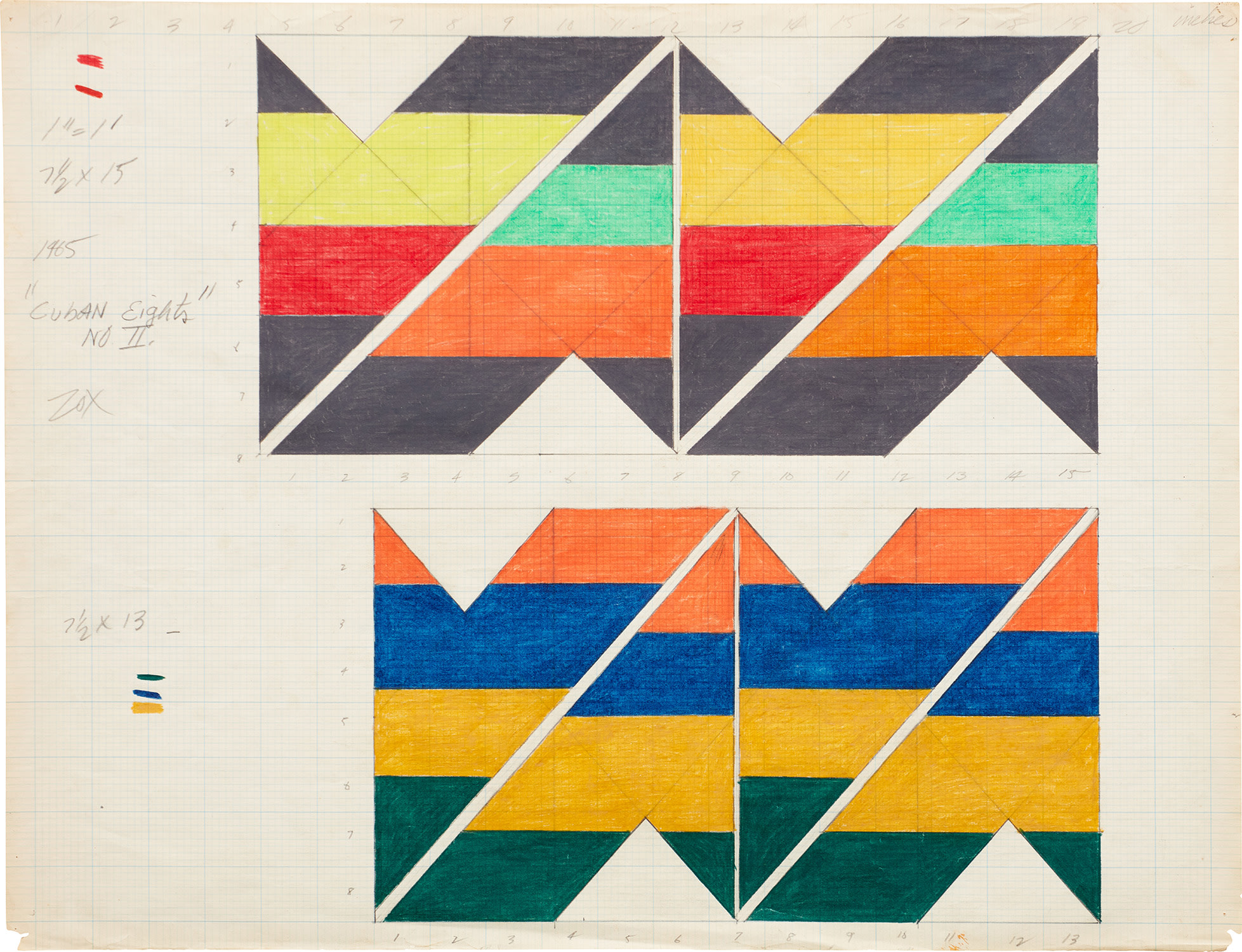
Two studies, for Cuban Eights No. II
The Stencil Series prints, produced in a limited edition, demonstrate the same spatial intelligence that animates the paintings, with color relationships that feel both inevitable and surprising. Works from this series, signed and numbered by the artist in pencil, represent an accessible and historically significant entry point for collectors building a relationship with Zox's output. The Cuban Eights series, another important body of work, takes its title from an aerobatic maneuver, a characteristically Zox touch that combines formal precision with a sense of exhilaration just below the composed surface. Preparatory studies for Cuban Eights No.
II, rendered in colored pencil and graphite on graph paper, show the artist mapping spatial relationships with the focused attention of someone who understood that the drawing was never merely preliminary but was itself a complete act of pictorial thinking. From a collecting perspective, Zox represents one of the more compelling opportunities within American geometric abstraction of the postwar period. His work is held in the permanent collections of the Whitney Museum of American Art, the Solomon R. Guggenheim Museum, and major American institutional and private collections, which establishes a clear provenance context and institutional validation for collectors approaching the market.
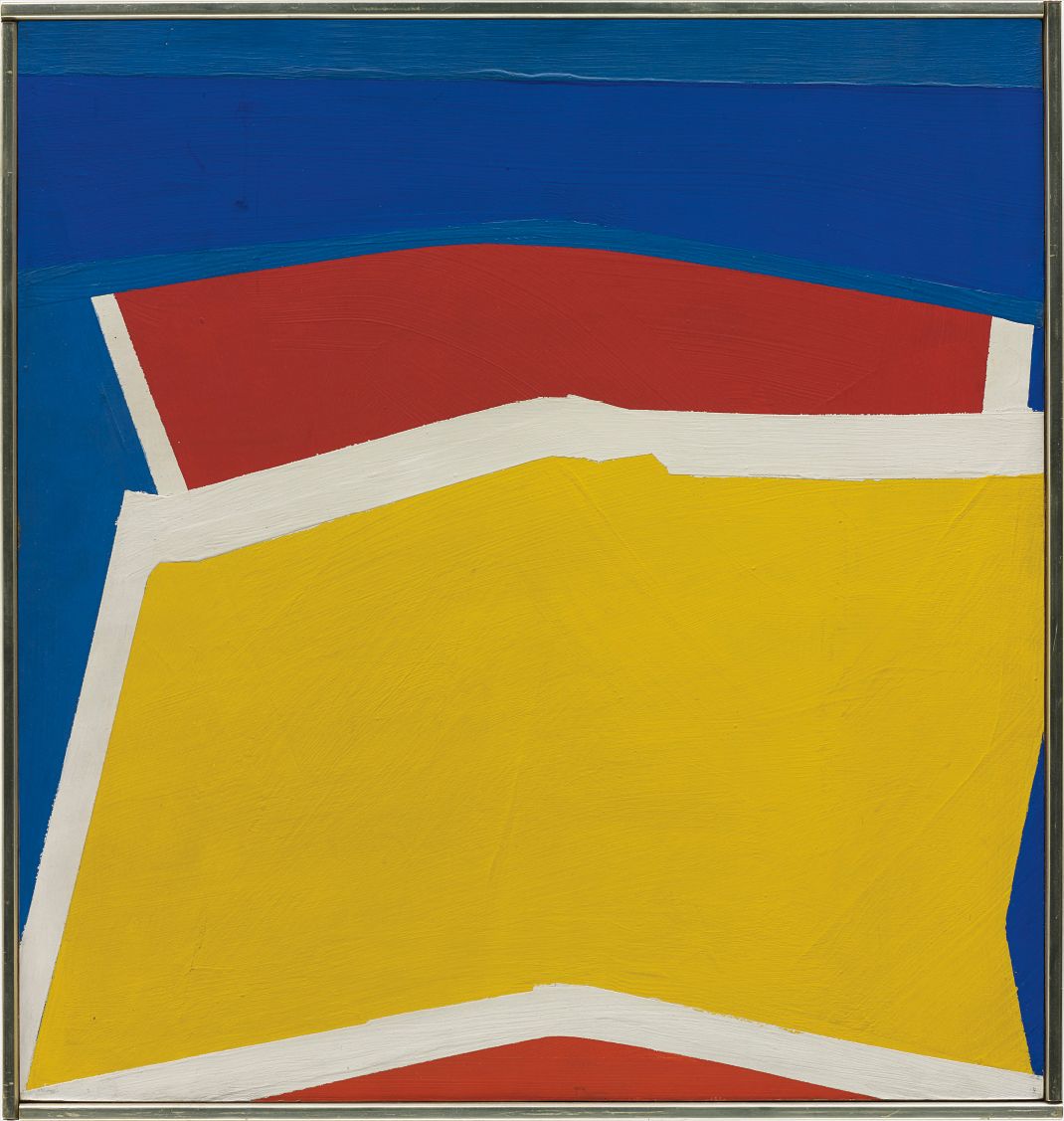
Larry Zox
Liquitex on board, in artist's frame
Works on paper and prints, particularly those with strong publication histories such as the Barbara Gladstone Editions, offer points of entry that combine accessibility with genuine art historical weight. Early paintings, including works from 1963 when Zox was working in Liquitex on board and beginning to develop the visual language that would define his major period, carry particular significance for collectors who want to trace the emergence of a fully formed artistic sensibility. The artist's practice of framing his own work, as seen in certain Liquitex on board pieces, adds another layer of intentionality and presence that speaks to his deep investment in how the work was ultimately experienced. To understand Zox fully, it helps to hold him in the same field of vision as his peers.
Frank Stella's early stripe paintings, Kenneth Noland's chevrons and circles, and Ellsworth Kelly's shaped canvases all share with Zox a commitment to color and form as sufficient unto themselves, requiring no supplementary narrative or symbolic content. Zox was perhaps more willing than some of these painters to allow something playful and kinetic to enter the work, a quality that connects him sideways to the energy of Op Art even as he remained fundamentally committed to the flatness and structural clarity of Post Painterly Abstraction. He exhibited widely through the 1960s and 1970s, building a reputation that was substantial and well founded within the New York art world. Larry Zox died in 2006, leaving behind a body of work that has proven more durable and more resonant than the fluctuations of critical fashion might sometimes have suggested.
His paintings and works on paper continue to find new admirers among collectors who have discovered that geometric abstraction at its finest is not cold or cerebral but deeply alive, full of the particular intelligence that comes from a painter who trusted color and form to carry everything the work needed to say. In an era when the history of American abstraction is being revisited and expanded with welcome thoroughness, Zox deserves to be understood as a central figure, not a footnote, and his work as essential rather than supplementary. The canvases hold. The color sings.
The edges remain exactly as decisive as the day they were made.