Laksamana Ryo
Laksamana Ryo Paints the Mind Awake
Artist Spotlight · The Collection Editorial
There is a quiet momentum building around Laksamana Ryo, an artist whose canvases arrive with the force of a thought you cannot stop thinking. Working across acrylic and oil on canvas, Ryo has been developing a body of work that fuses psychological introspection with the visual language of cultural identity, producing paintings that feel simultaneously personal and universal. Collectors who have encountered the work firsthand describe an experience of immediate recognition, as though the paintings articulate something the viewer had always felt but never seen rendered so directly. That quality of emotional precision is rare, and it is what distinguishes Ryo from peers working in similarly expressive modes.
Laksamana Ryo
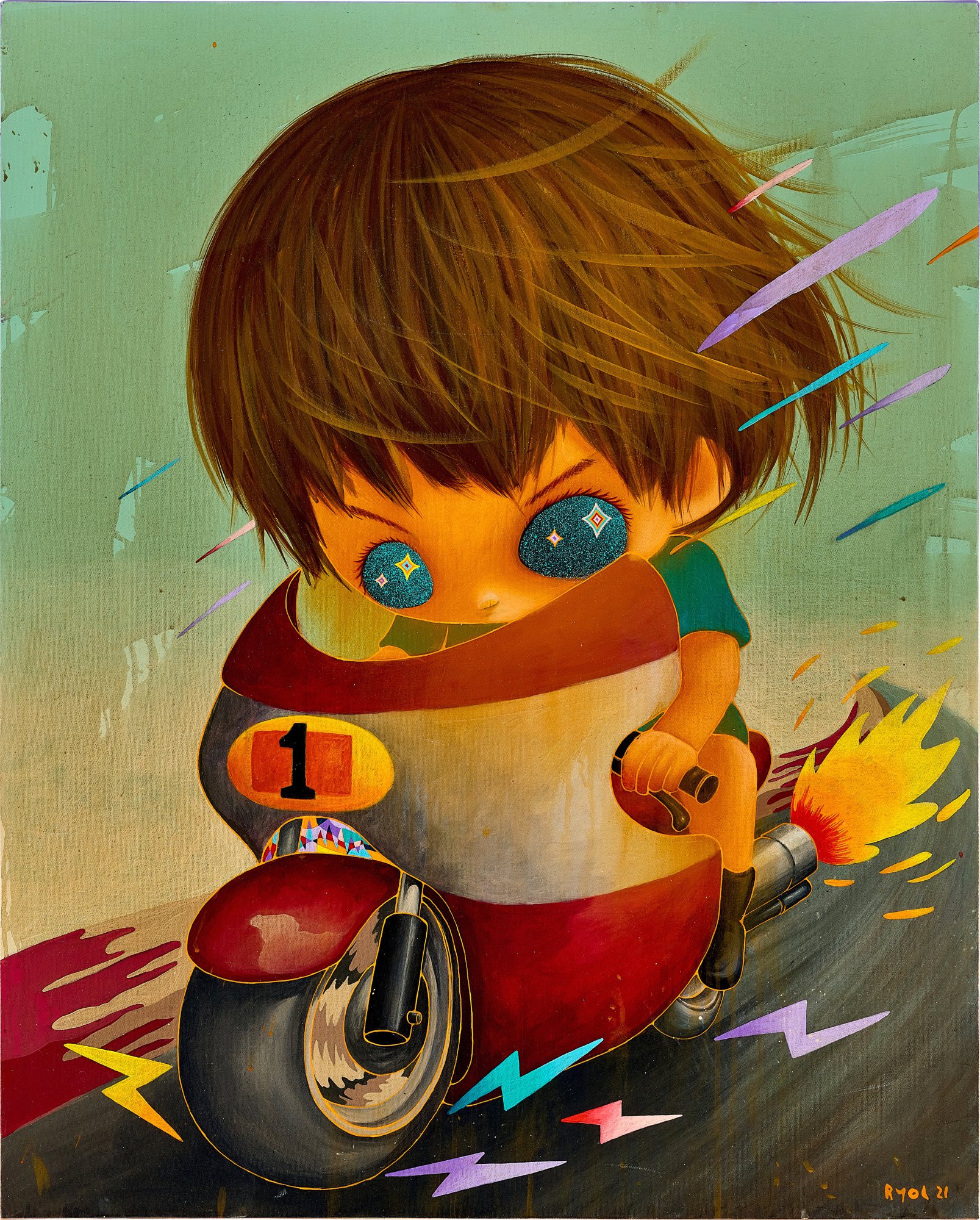
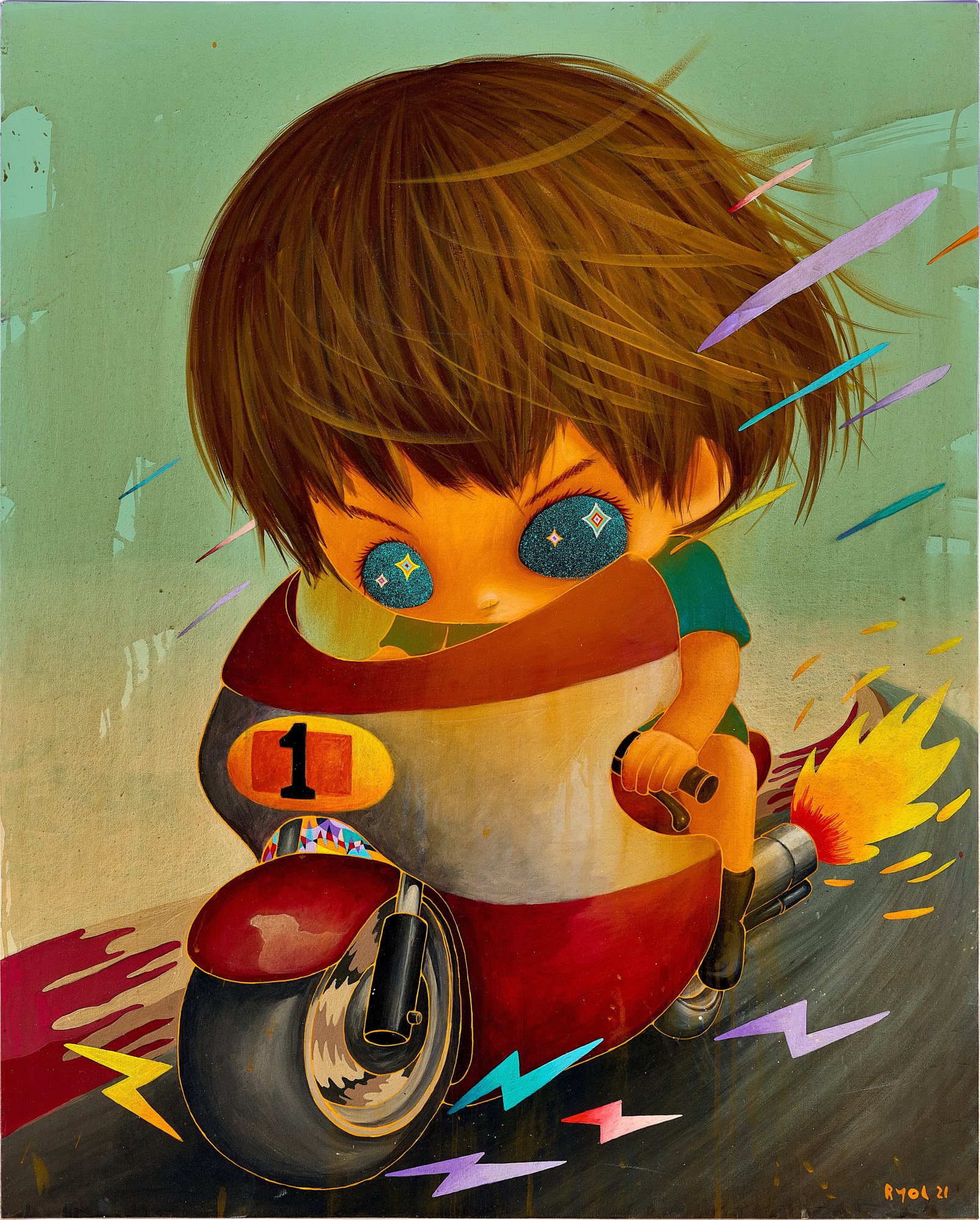
但是,我是第一名
The biographical details of Ryo's formation remain part of what makes the practice so compelling to trace. The multilingual titles of the works, drawing on Chinese script alongside more direct declarative phrasing, suggest an upbringing or artistic education shaped by more than one cultural context. Artists who navigate multiple languages and visual traditions often develop a particular sensitivity to the gap between what can be said and what must be shown, and Ryo seems to have built an entire practice around that gap. The decision to name a painting in Chinese, or to blend languages within a title, is never incidental in work like this.
It is a structural choice that tells the viewer where to look and, more importantly, how to feel upon arrival. Ryo's artistic development shows a painter working with increasing confidence across different material approaches. The use of acrylic on canvas in several works points toward a practice comfortable with speed and layering, with the capacity to revise and build up surfaces that carry traces of earlier decisions. The turn to oil in other works suggests a willingness to slow down, to let the medium itself participate in the meaning making.
Laksamana Ryo
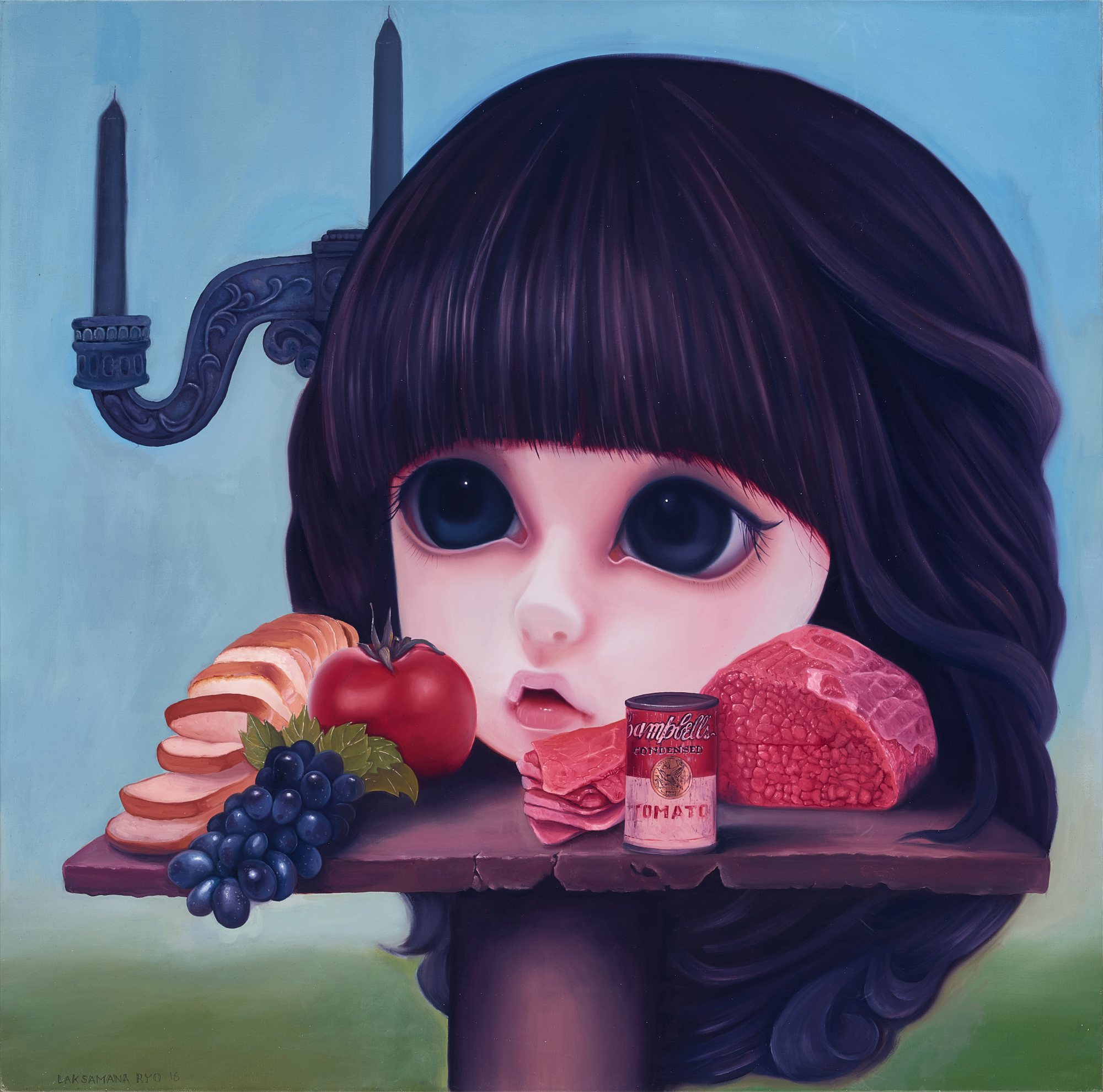
Psychological Morning Mood 早上的心理情緒
Oil paint carries weight and history in a way acrylic does not, and when Ryo reaches for it, there is a sense of occasion, of wanting the material to bear witness to something the artist considers significant. This fluency across media is a mark of a painter who understands that the choice of material is never neutral. Among the works that best represent what Ryo is doing at the highest level, "但是,我是第一名" stands out immediately. The title, which translates roughly as "But I am number one," carries a charge that is at once defiant and tender, the kind of assertion that sounds like bravado on the surface but reveals, on closer examination, a deeply personal negotiation with expectation and self worth.
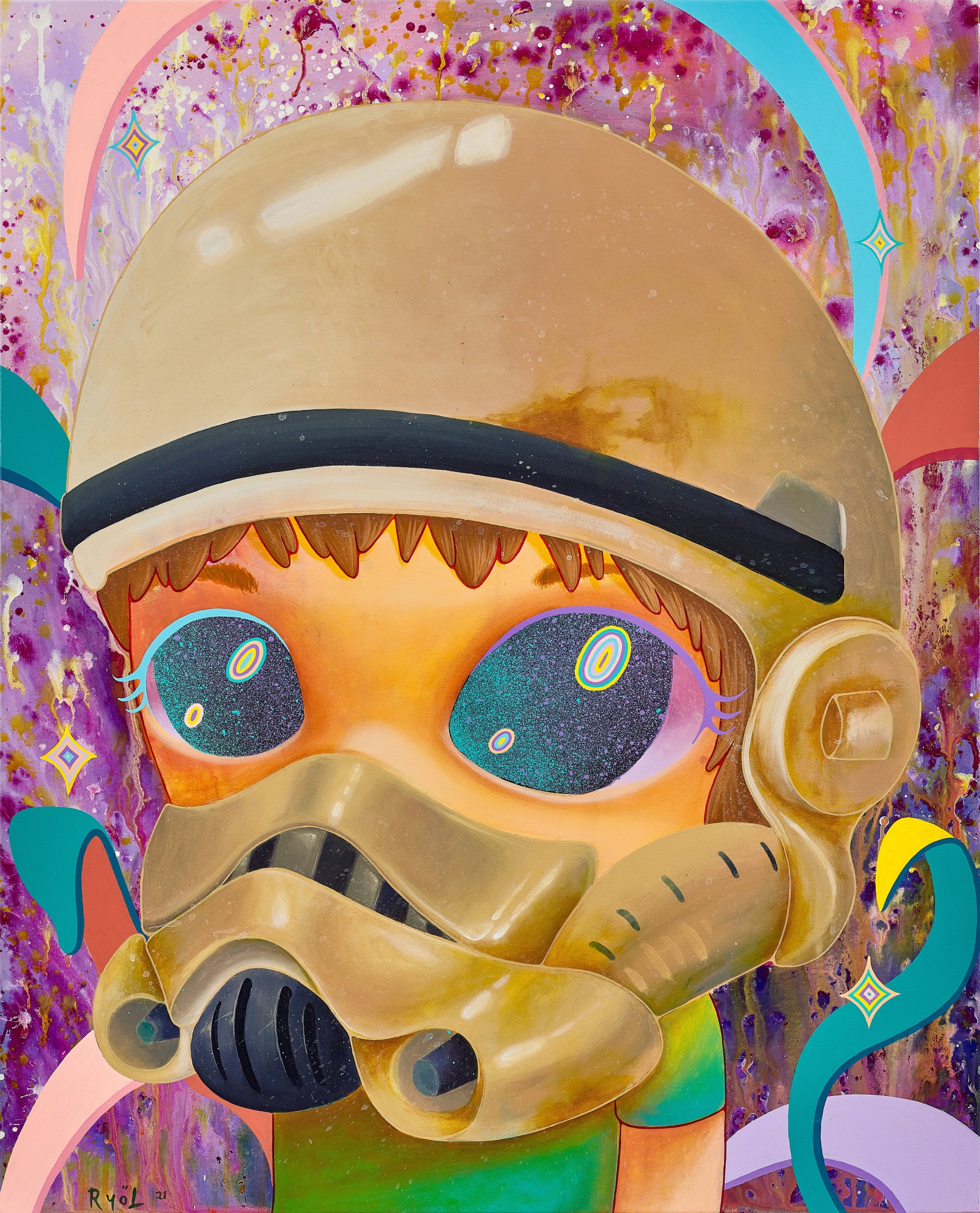
The painting operates in that emotional register with real intelligence. "星戰" offers a different register entirely, its title evoking both the cosmic and the combative, and the acrylic surface delivers on that promise with an energy that feels charged and alive. Then there is "Psychological Morning Mood 早上的心理情緒," an oil work whose bilingual title enacts the very theme it explores, the way a mood at the start of a day exists in multiple registers at once, felt in the body before it can be named in any single language. That this work comes with a certificate of authenticity speaks to the seriousness with which Ryo and those around the practice approach questions of provenance and collecting.
Laksamana Ryo
星戰
From a market and collecting perspective, Ryo represents precisely the kind of opportunity that serious collectors have historically understood before the broader art world catches up. The works available through The Collection offer entry into a practice that is clearly still in active development, which means early collectors are acquiring not just individual paintings but a stake in an evolving conversation. Works with certificates of authenticity provide the documentation that supports long term value and institutional confidence. Collectors drawn to artists working at the intersection of psychological painting and cultural identity, a space populated by figures such as Neo Rauch, whose dreamlike narratives reward extended looking, or Adrian Ghenie, whose canvases carry emotional and historical density, will find in Ryo a voice that is doing something genuinely its own within that broader conversation.
The art historical context that surrounds Ryo's practice is rich and worth dwelling on. The tradition of painters who treat the canvas as a space for psychological investigation is long and distinguished, running from the Expressionist impulses of the early twentieth century through the figurative revivals of the 1970s and 1980s and into the present moment, where painters like Jenny Saville and Cecily Brown have demonstrated that emotionally direct painting retains enormous critical and commercial currency. Ryo's use of language within titles, and the way those titles function almost as a second artwork layered over the visual one, also connects to a tradition of conceptually inflected painting where the name of a work is not merely a label but an active component of the meaning. This is sophisticated territory, and Ryo navigates it with the instincts of someone who has thought carefully about where painting has been and where it can still go.
What ultimately makes Laksamana Ryo a painter worth watching, collecting, and writing about at this stage is the clarity of the artistic commitment on display. There is no confusion in these canvases about what they are trying to do. They want to account for interior experience, to give form to the psychological weather of being alive in a world that asks you to perform confidence while privately negotiating doubt. That is a subject with no expiration date.
Collectors who live with this work will find, as the best collecting relationships always reveal, that the paintings continue to offer something new each time they are encountered. That quality of sustained discovery is the surest sign of lasting significance, and in Ryo's case, the best is very likely still to come.